Powernews Section Archive

TCM Qigong & Energy Movement Archive

Page 2 of 11
Gaohuangshu Cavity Vital Region Shu: Interscapular Fascial Decompression, Deep Constitutional Tonification, and Scapulothoracic Kinetic Tensegrity in Classical Neigong
TCM QIGONG & ENERGY MOVEMENT

Gaohuangshu Cavity Vital Region Shu: Interscapular Fascial Decompression, Deep Constitutional Tonification, and Scapulothoracic Kinetic Tensegrity in Classical Neigong

At its simplest, this practice is a gentle, precise method of moving the upper back and shoulder blades to unlock a deep, hidden pocket of tension between your spine and ribs. In everyday life, this region becomes frozen into an unyielding armor, trapping physical exhaustion and restricting our natural breathing rhythm. By learning how to gently glide the shoulder blades apart while breathing into the lower abdomen—the pelvic bowl situated about two inches below your navel—you mechanically unclamp the muscles of the upper back and restore fluid, whole-body vitality.

⚡ 5,939 Tokens • $0.00 Cost
Fuliu Cavity Returning Current: Medial Crural Fascial Decompression, Renal Fluid Transformation Dynamics, and Calcaneal Kinetic Transmission in Classical Neigong
TCM QIGONG & ENERGY MOVEMENT

Fuliu Cavity Returning Current: Medial Crural Fascial Decompression, Renal Fluid Transformation Dynamics, and Calcaneal Kinetic Transmission in Classical Neigong

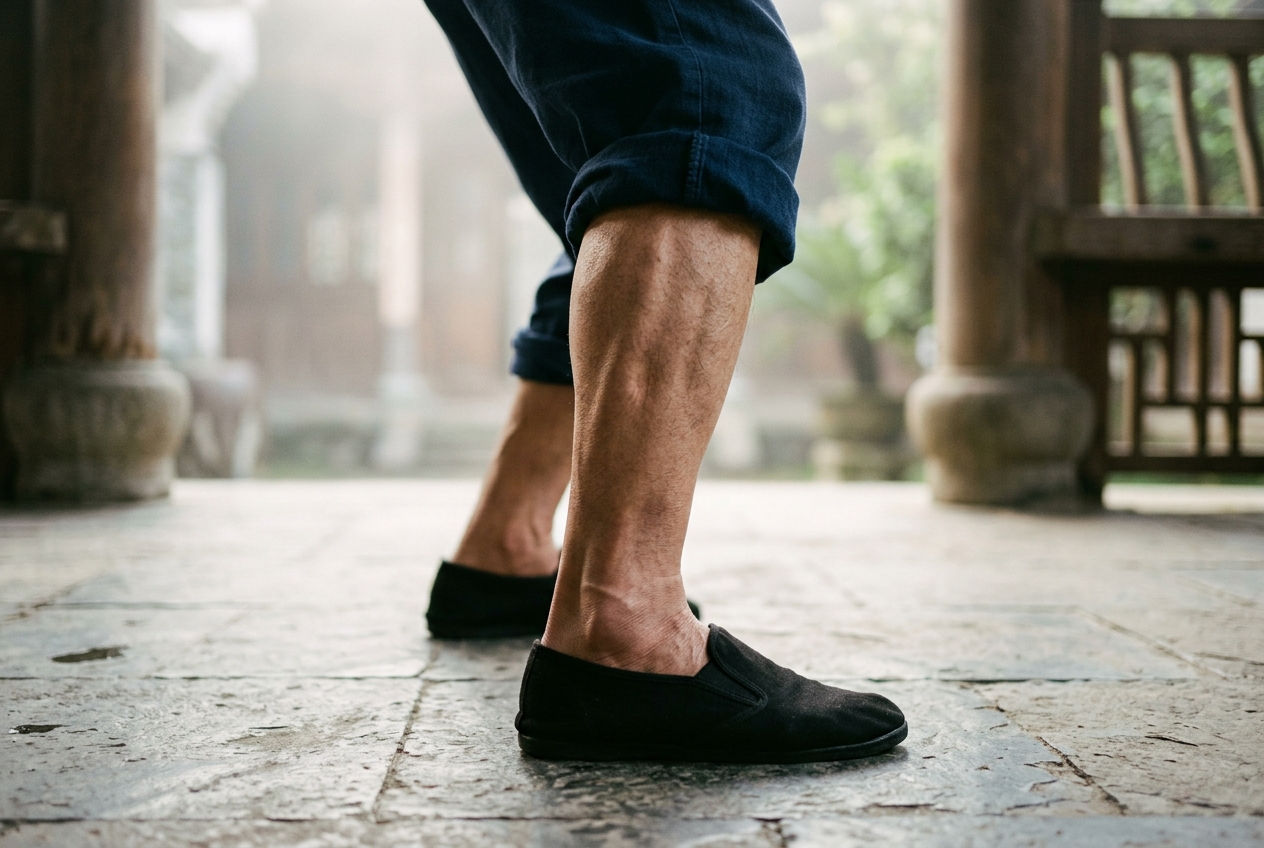
At its core, this practice is the conscious unlocking of a vital anatomical and energetic gateway located just above your inner ankle: an acupoint and fascial hub known in classical Chinese medicine as *Fuliu* (KI7), translated poetically as the "Returning Current" (复溜). In plain terms, it is a method of relaxing the deep tissues of your lower calves and the front border of your Achilles tendon so that your legs can act like living springs, transmitting movement and physical power effortlessly from the earth into your spine.

⚡ 7,794 Tokens • $0.00 Cost
Fengshi Cavity Wind Market: Iliotibial Tract Fascial Decompression, Lateral Femoral Kinetic Tensegrity, and Shaoyang Channel Conduction in Classical Neigong
TCM QIGONG & ENERGY MOVEMENT

Fengshi Cavity Wind Market: Iliotibial Tract Fascial Decompression, Lateral Femoral Kinetic Tensegrity, and Shaoyang Channel Conduction in Classical Neigong

At its fundamental level, this practice is a method of conscious physical alignment and deep fascial release designed to unclamp the outer thighs, free the hips, and restore fluid, spring-like power to the entire lower body. In modern sedentary life, prolonged sitting and asymmetrical standing patterns cause the tough fibrous bands along the outside of our legs to shorten and lock down, acting like overtightened guy-wires on a tent pole. This continuous tension compresses the hip joints, twists the knees, and creates a chronic sense of stiffness throughout the lower back and legs.

⚡ 6,835 Tokens • $0.00 Cost
Fenglong Cavity Abundant Bulge: Anterolateral Crural Fascial Decompression, Phlegm-Turbid Transformation Dynamics, and Lower-Limb Kinetic Vectoring in Classical Neigong
TCM QIGONG & ENERGY MOVEMENT

Fenglong Cavity Abundant Bulge: Anterolateral Crural Fascial Decompression, Phlegm-Turbid Transformation Dynamics, and Lower-Limb Kinetic Vectoring in Classical Neigong

At its core, this practice is an ancient Chinese method of lower-body myofascial decompression and breath-guided energy cultivation. In traditional somatic arts, the body is understood not as a collection of isolated muscles, but as an interconnected network of connective tissue and energetic pathways that regulate fluid movement, metabolic vitality, and structural balance. When we stand, walk, or breathe with chronic tension, metabolic waste and physical stiffness settle into the lower extremities, creating what classical practitioners called "turbid dampness and phlegm" (*Tan Yin* / 痰饮)—a state of systemic heaviness, lethargy, and mental cloudiness.

⚡ 7,354 Tokens • $0.00 Cost
Fengfu Cavity Palace of Wind: Atlanto-Occipital Fascial Decompression, Sea of Marrow Ingress, and Sub-Occipital Dural Vectoring in Classical Neigong
TCM QIGONG & ENERGY MOVEMENT

Fengfu Cavity Palace of Wind: Atlanto-Occipital Fascial Decompression, Sea of Marrow Ingress, and Sub-Occipital Dural Vectoring in Classical Neigong

In the classical internal cultivation systems of China known as *Neigong* (internal skill) and *Daoyin* (guiding and stretching), the body is understood as an integrated network of structural fascial pathways and bio-energetic channels. Among the most critical anatomical intersections in this entire architecture is an acupoint situated at the craniovertebral junction known as *Fengfu* (Governing Vessel 16, or Du 16), which translates poetically and functionally as the "Palace of Wind."

⚡ 6,755 Tokens • $0.00 Cost
Daling Cavity Great Mound: Carpal Tunnel Fascial Decompression, Palmar Arch Tensegrity, and Pericardium Channel Conduction in Classical Neigong
TCM QIGONG & ENERGY MOVEMENT

Daling Cavity Great Mound: Carpal Tunnel Fascial Decompression, Palmar Arch Tensegrity, and Pericardium Channel Conduction in Classical Neigong

At its core, this practice is a specialized method of posture, breath, and joint alignment drawn from classical Chinese internal martial arts and medical movement traditions. Instead of treating the wrists as mere hinges at the end of the arms, classical standing meditation (*Zhan Zhuang*) and longevity exercises (*Daoyin*) train the practitioner to open the wrists three-dimensionally, decompressing the tight connective tissue channels that run from the fingertips all the way to the heart.

⚡ 8,453 Tokens • $0.00 Cost
Cuanzhu Cavity Gathering Bamboo: Supraorbital Fascial Decompression, Ophthalmic Neurovascular Modulation, and Bladder Channel Cranial Conduction in Classical Neigong
TCM QIGONG & ENERGY MOVEMENT

Cuanzhu Cavity Gathering Bamboo: Supraorbital Fascial Decompression, Ophthalmic Neurovascular Modulation, and Bladder Channel Cranial Conduction in Classical Neigong

At its physical core, this cultivation method is a delicate, non-invasive protocol for releasing deep-seated muscular contraction, arterial restriction, and nerve compression at the inner edges of the eyebrows. In modern life, prolonged screen exposure, analytical mental strain, and sustained emotional stress cause us to chronically furrow, squint, and tighten the upper third of the face without our conscious awareness. This practice teaches you how to systematically open this cranial crossroad using a combination of micro-tactile contact, precise spatial intention, and coordinated breathing, melting chronic tension patterns that lock the eyes, forehead, and base of the skull into chronic hyper-vigilance.

⚡ 6,698 Tokens • $0.00 Cost
Chize Cavity Cubital Marsh: Anterior Cubital Fascial Decompression, Pulmonary Qi Descending Dynamics, and Brachial Kinetic Vectoring in Classical Neigong
TCM QIGONG & ENERGY MOVEMENT

Chize Cavity Cubital Marsh: Anterior Cubital Fascial Decompression, Pulmonary Qi Descending Dynamics, and Brachial Kinetic Vectoring in Classical Neigong

To the untrained eye, human posture is often conceived as a static stack of bones held upright by muscular effort. In the internal movement arts of *Qigong* and *Neigong*, however, the human body is experienced as a continuous, fluid network of tensegrity—a resilient web where tension and compression balance seamlessly across connected pathways of connective tissue. When we lock or stiffen our joints, particularly high-traffic intersections like the elbow, we introduce mechanical pinch-points that distort our fascial lines and elevate our physiological stress response.

⚡ 6,229 Tokens • $0.00 Cost
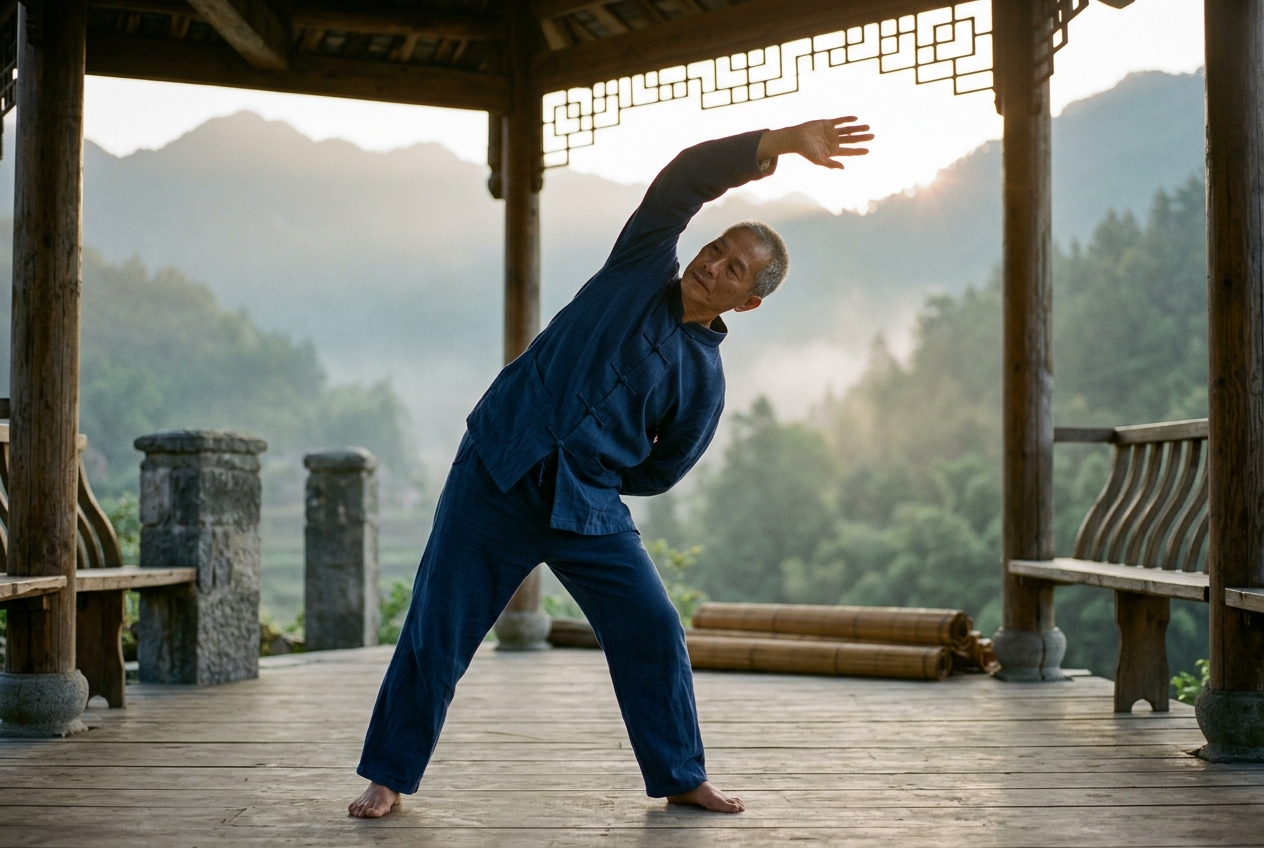
Chengshan Cavity Supporting Mountain: Gastrocnemius Fascial Decompression, Posterior Kinetic Chain Unweighting, and Calcaneal Ground Force Rooting in Classical Neigong
TCM QIGONG & ENERGY MOVEMENT

Chengshan Cavity Supporting Mountain: Gastrocnemius Fascial Decompression, Posterior Kinetic Chain Unweighting, and Calcaneal Ground Force Rooting in Classical Neigong

At its core, the bioenergetic decompression of Chengshan is the art of learning how to stand without gripping your calves. Most people navigate their daily lives in a state of habitual forward lean, unconsciously contracting the back of their lower legs to prevent themselves from toppling forward. In Daoist *Neigong* (internal skill cultivation), we systematically reverse this dysfunction by shifting our gravitational center slightly backward into the heels, allowing the deep postural skeleton to carry our mass while the superficial calf muscles completely soften and "unweight."

⚡ 7,074 Tokens • $0.00 Cost
Chengjiang Cavity Container of Fluids: Mentolabial Fascial Decompression, Sublingual Salivary Secretion, and Ren Mai Terminal Confluence in Classical Neigong
TCM QIGONG & ENERGY MOVEMENT

Chengjiang Cavity Container of Fluids: Mentolabial Fascial Decompression, Sublingual Salivary Secretion, and Ren Mai Terminal Confluence in Classical Neigong

At its core, Chengjiang cultivation is the art of completely relaxing the lower lip, chin, and jaw to unlock deep-seated tension throughout the front of your neck, chest, and abdomen, while activating the body's natural resting reflexes. In everyday life, stress and mental fatigue cause us to unconsciously tighten our jaw, purse our lips, and clamp the muscles around our mouth, which pulls upward on the throat and locks the body into a low-grade state of fight-or-flight.

⚡ 7,886 Tokens • $0.00 Cost
Changqiang Cavity Long Strong: Sacrococcygeal Fascial Decompression, Du Mai Luo-Connecting Dynamics, and Pelvic Kinetic Rooting in Classical Neigong
TCM QIGONG & ENERGY MOVEMENT

Changqiang Cavity Long Strong: Sacrococcygeal Fascial Decompression, Du Mai Luo-Connecting Dynamics, and Pelvic Kinetic Rooting in Classical Neigong

In the classical taxonomy of internal energy work, or [Traditional Chinese Medicine](https://www.who.int/health-topics/traditional-complementary-and-integrative-medicine), this focal point is known as *Changqiang* (translated as "Long Strong" and designated in modern acupuncture nomenclature as Governing Vessel 1 or GV1). Situated precisely between the tip of the coccyx and the anus, *Changqiang* serves as the physical and bioenergetic anchor of the *Du Mai*—the [Governing Vessel](https://en.wikipedia.org/wiki/Governing_vessel), which is the primary meridian governing the entire dorsal spine, central nervous system, and ascending Yang energy of the human body.

⚡ 7,902 Tokens • $0.00 Cost
Baliao Cavities Eight Bone Holes: Sacral Foraminal Fascial Decompression, Pelvic Parasympathetic Entrainment, and Posterior Kinetic Rooting in Classical Neigong
TCM QIGONG & ENERGY MOVEMENT

Baliao Cavities Eight Bone Holes: Sacral Foraminal Fascial Decompression, Pelvic Parasympathetic Entrainment, and Posterior Kinetic Rooting in Classical Neigong

In the classical tradition of Chinese movement and breath cultivation (*Neigong* and *Daoyin*), this practice is known as opening the *Baliao* (八髎), literally translated as the "Eight Bone Cavities" or "Eight Seams." These eight points are not abstract energetic ideas; they correspond exactly to the four pairs of anatomical openings, known as the [sacral foramina](https://en.wikipedia.org/wiki/Sacral_foramina), that perforate the back of your sacrum. In everyday terms, this exercise uses subtle pelvic alignments, diaphragmatic breathing, and microscopic joint adjustments to release tension across the base of the spine, decompressing the vital nerves and blood vessels that pass directly through these eight bone apertures.

⚡ 6,659 Tokens • $0.00 Cost
Jianyu Cavity Shoulder Bone: Subacromial Fascial Decompression, Yangming Kinetic Vectoring, and Glenohumeral Joint Tensegrity in Classical Neigong
TCM QIGONG & ENERGY MOVEMENT

Jianyu Cavity Shoulder Bone: Subacromial Fascial Decompression, Yangming Kinetic Vectoring, and Glenohumeral Joint Tensegrity in Classical Neigong

At its core, this somatic discipline is the systematic decompression of the shoulder joint to restore natural skeletal alignment, release chronic muscular bracing, and unlock whole-body kinetic power. Modern daily life—dominated by prolonged keyboard typing, sedentary desk postures, and chronic psychological stress—conditions the upper trapezius and neck muscles to remain permanently contracted. This chronic contraction hauls the shoulder blades upward and jams the upper arm bone tightly into its socket, pinching delicate nerves, tendons, and blood vessels while severing the body's natural lines of movement.

⚡ 10,015 Tokens • $0.00 Cost
Zusanli Cavity Leg Three Miles: Tibial Fascial Decompression, Post-Heaven Qi Fortification, and Anterior Kinetic Chain Integration in Classical Neigong
TCM QIGONG & ENERGY MOVEMENT

Zusanli Cavity Leg Three Miles: Tibial Fascial Decompression, Post-Heaven Qi Fortification, and Anterior Kinetic Chain Integration in Classical Neigong

In traditional East Asian medicine and internal martial arts (*Neigong*), this exact anatomical crossroad is known as *Zusanli* (足三里), translated poetically as "Leg Three Miles" or designated in clinical nomenclature as Stomach 36 (ST36). In simple terms, this practice is a method of bodily alignment, conscious breathing, and neuromuscular activation designed to invigorate your digestion, soothe chronic nervous exhaustion, and physically anchor your leg mechanics so you can generate effortless physical stamina. The classical name itself hints at its legendary endurance-granting capacity: an exhausted traveler or marching soldier stimulating this point was said to gain the vitality to walk another three miles across rugged terrain.

⚡ 6,345 Tokens • $0.00 Cost
Zulinqi Cavity Foot Overlook Tears: Dorsal Intermetatarsal Fascial Decompression, Dai Mai Vessel Activation, and Helical Kinetic Transmission in Classical Neigong
TCM QIGONG & ENERGY MOVEMENT

Zulinqi Cavity Foot Overlook Tears: Dorsal Intermetatarsal Fascial Decompression, Dai Mai Vessel Activation, and Helical Kinetic Transmission in Classical Neigong

At its foundation, this somatic practice involves releasing and activating a key neuromuscular gateway located on the outer top surface of the foot to liberate the body's natural rotational core. In classical East Asian medicine and internal martial arts (*Neigong*), this locus is designated as the *Shu-Stream* and Wood point of the Gallbladder Meridian, and more crucially, as the confluent opening gateway (*Ba Mai Jiao Hui Xue*) to the *Dai Mai* (带脉), or the "Girdling Vessel." Unlike the twelve standard primary meridians that course vertically through the human frame, the Girdling Vessel is the sole horizontal, belt-like energetic and fascial ring encircling the waist, lumbar spine, and lower abdomen.

⚡ 9,032 Tokens • $0.00 Cost
Zhongwan Cavity Middle Venter: Epigastric Fascial Decompression, Celiac Plexus Autonomic Modulation, and Post-Heaven Digestive Qi Vectoring in Classical Neigong
TCM QIGONG & ENERGY MOVEMENT

Zhongwan Cavity Middle Venter: Epigastric Fascial Decompression, Celiac Plexus Autonomic Modulation, and Post-Heaven Digestive Qi Vectoring in Classical Neigong

To locate Zhongwan with classical somatic accuracy, one employs the proportional bone-measurement system (*cun*). Anatomically, Zhongwan sits precisely 4 *cun* superior to the center of the umbilicus along the anterior median line (*linea alba*), or exactly halfway along the 8-*cun* measurement that spans the distance between the xiphisternal synchondrosis (the junction where the sternal body meets the xiphoid process) and the navel.

⚡ 10,133 Tokens • $0.00 Cost
Zhongji Cavity Central Pole: Hypogastric Fascial Decompression, Bladder Mu Meridian Synthesis, and Deep Pelvic Kinetic Anchoring in Classical Neigong
TCM QIGONG & ENERGY MOVEMENT

Zhongji Cavity Central Pole: Hypogastric Fascial Decompression, Bladder Mu Meridian Synthesis, and Deep Pelvic Kinetic Anchoring in Classical Neigong

Stand up from wherever you are, plant your feet shoulder-width apart, rest your fingertips lightly across the hypogastrium one inch above your pubic bone, and breathe. As you let your knees unlock and your tailbone drop toward the earth, observe the subtle landscape beneath your hands. Do you feel a dense, rigid shield of muscular armor guarding the lower belly, or a supple, responsive reservoir that expands and recoils with the diaphragm? For many practitioners, this sub-umbilical threshold is a site of chronic somatic lock-down—a locus of gripping that destabilizes the lumbar spine, elevates systemic stress, and severs the body's energetic root. That precise point beneath your fingers is the **Zhongji cavity** (Ren 3 / 中極), the "Central Pole" of classical Chinese medicine and internal martial arts, and releasing its chronic tension is where true somatic integration begins.

⚡ 11,429 Tokens • $0.00 Cost
Zhongfu Cavity Central Treasury: Deltopectoral Fascial Decompression, Pulmonary Qi Dispersal, and Anterior Thoracic Kinetic Expansion in Classical Neigong
TCM QIGONG & ENERGY MOVEMENT

Zhongfu Cavity Central Treasury: Deltopectoral Fascial Decompression, Pulmonary Qi Dispersal, and Anterior Thoracic Kinetic Expansion in Classical Neigong

To understand the profound status of Zhongfu in classical [traditional Chinese medicine](https://www.who.int/health-topics/traditional-complementary-and-integrative-medicine) (*Zhongyi*), one must examine its dual designation as both the *Front-Mu* (Alarm or Gathering) point of the Hand Taiyin Lung meridian and the confluence nexus where the Foot Taiyin Spleen channel terminates its upward journey to enter the Lung system.

⚡ 7,920 Tokens • $0.00 Cost
Zhaohai Cavity Shining Sea: Sub-Malleolar Fascial Decompression, Yin Qiao Mai Activation, and Calcaneal Kinetic Rooting in Classical Neigong
TCM QIGONG & ENERGY MOVEMENT

Zhaohai Cavity Shining Sea: Sub-Malleolar Fascial Decompression, Yin Qiao Mai Activation, and Calcaneal Kinetic Rooting in Classical Neigong

In traditional Chinese internal health arts, this practice is a method of standing meditation and postural alignment designed to awaken a neglected mechanical and energetic valve inside your inner ankle. Rather than treating standing as passive resting, internal movement systems treat the foot as an active hydraulic pump and structural root. By subtly shifting how your heel bone and ankle rest against the floor, you decompress a compact junction of nerves, tendons, and connective tissues situated just beneath the inner ankle bone.

⚡ 6,409 Tokens • $0.00 Cost
Zhangmen Cavity Chapter Gate: Costal Margin Fascial Decompression, Visceral Zang Harmonization, and Lateral Core Kinetic Tensegrity in Classical Neigong
TCM QIGONG & ENERGY MOVEMENT

Zhangmen Cavity Chapter Gate: Costal Margin Fascial Decompression, Visceral Zang Harmonization, and Lateral Core Kinetic Tensegrity in Classical Neigong

At its fundamental core, this practice centers upon the conscious mobilization and bioenergetic unlocking of a critical anatomical gateway known in [Traditional Chinese Medicine](https://en.wikipedia.org/wiki/Traditional_Chinese_medicine) as *Zhangmen* (LR13, ç« é–€), translated historically as the "Chapter Gate" or "Gate of the Screen." Situated precisely at the inferior border of the free extremity of the eleventh rib, Zhangmen acts as the master crossroad between your ribcage, abdominal core, digestive organs, and lateral movement chains.

⚡ 10,825 Tokens • $0.00 Cost
← Previous Page Page 2 / 11 Next Page →