Fengfu Cavity Palace of Wind: Atlanto-Occipital Fascial Decompression, Sea of Marrow Ingress, and Sub-Occipital Dural Vectoring in Classical Neigong
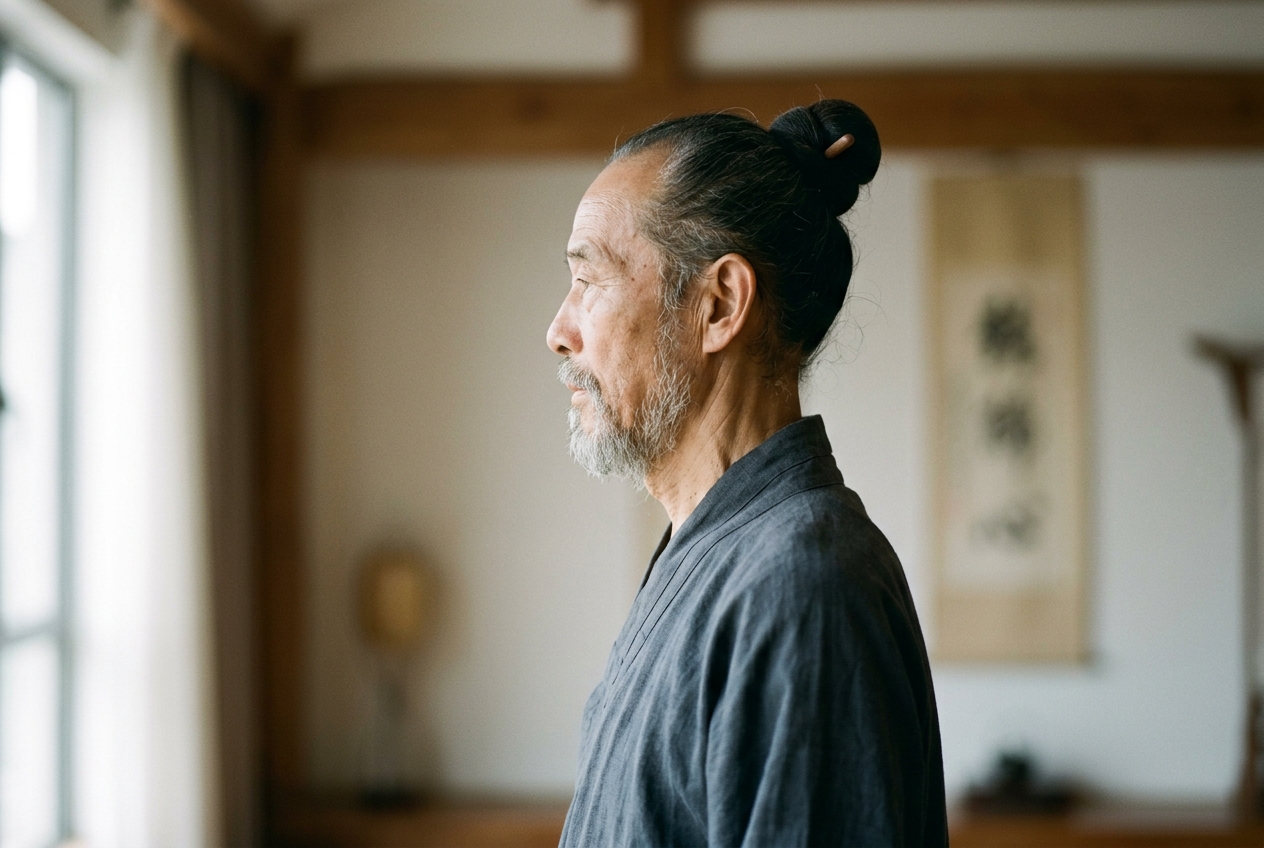
At its most fundamental physical level, this practice is the deliberate, micro-mechanical alignment of the head and neck to decompress the tight suboccipital tissues at the base of the skull. In everyday modern life, chronic screen usage, mental stress, and forward-head posture create acute compressive forces at the craniocervical junction, clamping down on blood vessels, nerves, and connective tissues. By learning how to adjust the position of the skull relative to the upper spine through a traditional Neigong principle called Xu Ling Ding Jin—which means suspending the crown with effortless, empty lightness—we relieve deep-seated tension in the back of the head. In traditional Chinese medicine, this structural opening facilitates the smooth ascension of vital energy (Qi) through the central spinal highway (Du Mai, or Governing Vessel) directly into the brain's highest perceptual centers (Niwan Gong, the "Mud Pill Palace" or Upper Dantian), while simultaneously preventing environmental and emotional stressors (traditionally classified as pathogenic "Wind") from stagnating at the gateway of the central nervous system.
Step-by-Step Practice Guide: Decompressing and Vectoring the Palace of Wind
To open the Fengfu cavity safely and unlock its neuro-fascial benefits, internal practitioners utilize a refined sequence of static posture, tactile feedback, and synchronized breathing. This protocol can be practiced either in a formal standing meditation posture (Zhan Zhuang) or seated on a firm, flat chair.
1. Foundational Postural Setup
- Feet and Pelvic Foundation: If standing, place your feet parallel and shoulder-width apart. Unlock your knees slightly without letting them collapse inward. Allow your tailbone (Changqiang, Du 1) to sink gently downward toward the earth as though you were lightly resting against a high barstool. This neutralizes excessive lumbar lordosis and creates a stable root. If seated, sit on the front third of your chair with both feet flat on the floor and your sitz bones evenly weighted.
- Shoulder and Chest Settlement: Roll your shoulders up, back, and let them drop completely. Release any bracing in your pectoral muscles so the chest feels slightly hollowed and relaxed (Han Xiong Ba Bei), which prevents compensatory tension from creeping into the upper trapezius.
2. The Micro-Calibration of Xu Ling Ding Jin (Suspended Crown)
- The Crown Vector: Locate Baihui (Du 20) at the apex of the cranium, roughly in line with the tips of your ears. Imagine a soft, upward vertical vector lifting from this point into the sky. Do not physically tense your neck muscles to push up; rather, imagine the cervical vertebrae separating effortlessly like beads on an elastic cord.
- The Horizontal Chin Slide: Avoid tucking your chin downward toward your sternum, which creates unnatural flexion and throat constriction. Instead, glide the jawline horizontally backward by two to three millimetres, as if sliding a drawer into a cabinet.
- The Suboccipital Unfurling: As the chin glides back and the crown lifts, feel the suboccipital shelf at Fengfu (Du 16) lift upward and outward, smoothing the natural cervical curve into a lengthened, relaxed column. The base of your skull should feel buoyant, spacious, and completely unhinged from the cervical vertebrae.
3. Breath Coordination (Tu Na) and Circulatory Circulation
- Phase 1: Inhalation (Dorsal Ascent): Inhale slowly, silently, and deeply through your nose, directing the air into your lower abdomen (Xia Dantian). As the breath naturally expands your lower back and kidneys (Mingmen, Du 4), visualize and feel a warm, fluid column of pressure ascending the posterior midline of the spine along the Governing Vessel Meridian. Follow this ascending wave through the thoracic spine (Lingtai, Du 10), past the cervical base (Dazhui, Du 14), and straight into the opening at Fengfu (Du 16).
- Phase 2: Micro-Pause at the Gate: At the top of the inhalation, hold the breath effortlessly for one to two seconds without closing your glottis. Focus your somatic awareness inside the hollow beneath your occiput. Feel the sensation of hydraulic fullness expanding the suboccipital tissues outward.
- Phase 3: Exhalation (Ventral Descent & Cranial Settling): Exhale smoothly through your nose with your tongue resting lightly against the hard palate behind your upper front teeth (forming the Magpie Bridge). Feel the accumulated energetic pressure filter forward from Fengfu through the center of the brain into the Niwan Palace (the upper brain ventricles), then cascade down the face and chest along the Conception Vessel (Ren Mai), returning to settle into the lower belly.
4. Somatosensory Checkpoints
As you sustain this alignment, observe the following somatic indicators: * The Sensation of Cool Air/Spaciousness: A distinctive physical sensation of temperature change or an airy "release" behind the eyes and across the occipital ridge. * Spontaneous Salivation: An activation of the submandibular and parotid glands, producing clear, sweet saliva (known in classical texts as the "Jade Fluid" or Yu Jin), signaling a shift into parasympathetic dominance. * Deepening Ocular Softness: A notable reduction in tension around the optic nerves and retro-orbital muscles, causing your peripheral visual field to widen effortlessly.
5. Common Alignment Errors and Corrections
- Error A: The "Military" Chin Tuck: Forcing the chin down into the throat. Correction: Keep your gaze level with the horizon; do not look down at the floor. The chin slides horizontally back, keeping the airway completely open and free.
- Error B: Suboccipital Compression (Looking Up): Tilting the head backward, which pinches Fengfu against the first cervical vertebra (atlas). Correction: Ensure the ears remain vertically aligned directly over the tips of the shoulders.
- Error C: Shoulder Co-contraction: Elevating the scapulae when attempting to lift the crown. Correction: Consciously release the latissimus dorsi and lower trapezius downward with every exhalation.
Why It Works — The Biomechanical Science and Fascial Dynamics
To comprehend the profound physiological impact of opening the Fengfu cavity, we must examine the intricate musculoskeletal, neurological, and fluid systems that converge at the human craniovertebral junction. Contemporary anatomical research corroborates what Daoist masters mapped centuries ago: the suboccipital zone is the primary hydraulic and neurological switchboard of the central nervous system.
1. The Suboccipital Triangle and the Myodural Bridge
Deep beneath the trapezius, splenius capitis, and semispinalis capitis muscles lies the suboccipital triangle, formed by the rectus capitis posterior major, obliquus capitis superior, and obliquus capitis inferior, alongside the smaller rectus capitis posterior minor (RCPmi). Modern fascia research—documented extensively in clinical literature available through the National Library of Medicine—has revealed the existence of the Myodural Bridge.
The myodural bridge consists of dense, parallel collagenous trabeculae that extend directly from the deep fascia of the rectus capitis posterior minor and the nuchal ligament, traversing the posterior atlanto-occipital (PAO) interspace to fuse directly with the posterior spinal and cranial dura mater. The dura mater is the tough, outermost fibrous envelope encasing the spinal cord and brain.
When an individual adopts a chronic forward-head posture—the ubiquitous postural distortion of the digital era—the suboccipital muscles contract chronically to prevent the head from falling forward. This creates sustained tension across the myodural bridge, which mechanically pulls and distorts the cranial dura mater. By executing Xu Ling Ding Jin and decompressing Fengfu (Du 16), the practitioner releases tension on these myodural bridges, slackening the mechanical pull on the dura and reducing intracranial dural stress.
2. Cerebrospinal Fluid (CSF) Hydrodynamics and Craniosacral Resonance
Directly deep to the posterior atlanto-occipital membrane and the Fengfu acupoint lies the cisterna magna (cerebellomedullary cistern), one of the largest cerebrospinal fluid reservoirs in the human cranium. CSF is rhythmically synthesized in the choroid plexuses and circulates through the cerebral ventricles, subarachnoid spaces, and spinal canal, bathing the central nervous system in nutrients, neurotransmitters, and metabolic waste clearance mechanisms.
When the suboccipital region is chronically hypertonic, the mechanical narrowing of the craniovertebral junction impedes the micro-oscillations of CSF exchange between the cranial vault and the spinal thecal sac. Decompressing Fengfu acts like opening a hydraulic valve: it normalizes pressure within the cisterna magna, enhances the pulsatile velocity of cerebrospinal fluid, and optimizes the craniosacral respiratory rhythm. This biomechanical decompression directly facilitates the metabolic drainage of neurotoxic waste through the brain's newly discovered glymphatic system during meditative states.
3. Vertebrobasilar Perfusion and the Vagal-Parasympathetic Cascade
The suboccipital triangle is traversed by the third segment (V3) of the vertebral artery, which loops complexly over the posterior arch of the atlas (C1) before entering the skull through the foramen magnum. The bilateral vertebral arteries unite at the pontomedullary junction to form the basilar artery—the primary arterial blood supply to the brainstem, cerebellum, vestibular apparatus, and visual cortex.
Sustained suboccipital compression can mechanically compromise peak systolic and end-diastolic flow velocities through the vertebral arteries, manifesting clinically as brain fog, tension headaches, visual fatigue, dizziness, and heightened sympathetic arousal. Opening the Fengfu gateway restores unobstructed arterial perfusion to the brainstem. Furthermore, the suboccipital fascial sheets possess the highest density of muscle spindles (proprioceptive mechanoreceptors) found anywhere in the human body—up to 200 spindles per gram of muscle tissue, compared to only 16 in the gluteus maximus. When these dense proprioceptors are lengthened and relaxed, they down-regulate systemic gamma-motor neuron activity and trigger a profound, systemic parasympathetic surge via vagal afferent pathways.
Classical Lineage, Textual Foundations, and Energetic Mechanisms
The historical trajectory of Fengfu (Du 16) is deeply embedded in the bedrock classics of Chinese medicine and Daoist internal cultivation. Rather than viewing the point purely as an isolated mechanical structure, classical lineages treat Fengfu as a cosmic and internal gateway through which the microcosm of the human body interacts with macrocosmic forces.
1. The Huangdi Neijing and the "Sea of Marrow"
The earliest comprehensive theoretical analysis of this region appears in the Huangdi Neijing Ling Shu (The Yellow Emperor’s Inner Classic: Spiritual Pivot), compiled over two millennia ago. In Chapter 33, titled Sui Hai Lun (Treatise on the Sea of Marrow), the classical masters outline the four great energetic reservoirs (Four Seas) of the body, designating the brain (Nao) as the ultimate vessel of refined essence:
"The brain is the Sea of Marrow (Sui Hai). Its upper point is at the crown (Baihui, Du 20), and its lower point is at Fengfu (Du 16)." — Huangdi Neijing Ling Shu, Chapter 33
The text elaborates on the pathology of this energetic sea: when the Sea of Marrow is abundant, the body possesses vigor, clarity of vision, and boundless vitality; when the Sea of Marrow is deficient or its lower gateway (Fengfu) is obstructed, the symptoms are tinnitus, dizziness, heaviness of the head, and profound cognitive exhaustion. In classical acupuncture taxonomy, Fengfu is the specific gateway through which the Du Mai (Governing Vessel)—the master reservoir of all Yang meridians—physically pierces the skull to infuse marrow, fluids, and vital Qi into the brain.
2. The Confluence with the Yang Wei Mai and the Clearing of "Wind"
In the Nan Jing (Classic of Difficulties) and the clinical compendiums of Tang Dynasty master Sun Simiao, Fengfu is designated as a major intersecting point (Jiao Hui Xue) between the Du Mai and the Yang Wei Mai (Yang Linking Vessel). The Yang Wei Mai regulates the exterior defensive networks of the body and governs the integration of all external Yang meridians.
Because of its position at the base of the skull, Fengfu is considered the prime target for exogenous Feng (pathogenic Wind). In traditional Chinese pathology, Wind is the "carrier of a hundred diseases"—a dynamic, invasive force that penetrates the superficial tissues when the immune defense (Wei Qi) is compromised. When Wind invades Fengfu, it causes acute neck rigidity, occipital headaches, aversion to cold, and facial paralysis.
Conversely, in internal martial arts, chronic emotional stress, repressed anger, and excessive mental strain cause internal Wind to generate from hyperactive Liver Yang (Gan Yang Shang Kang), surging uncontrollably upward through the neck toward the crown. Opening and regulating Fengfu acts as an energetic grounding wire: it vents pathogenic exterior heat and anchors ascending Liver Yang, transforming volatile internal energy into calm, grounded stability.
3. Alchemy of the Niwan Gong (The Mud Pill Palace)
In the esoteric Daoist lineages of Shangqing and Quanzhen Longmen (Dragon Gate), Fengfu is recognized as the structural threshold directly behind the Yuzhen Guan (Jade Pillow Pass)—the most notoriously narrow and difficult energetic bottleneck in the circulation of the Microcosmic Orbit (Xiao Zhou Tian).
During seated meditation, the practitioner cultivates foundational sexual and kidney essence (Jing) in the lower abdominal furnace (Xia Dantian). Through rhythmic diaphragmatic breathing and thermogenic internal alchemy, this raw Jing is vaporized into refined Qi, which ascends the dorsal spine. To enter the highest spiritual center—the Niwan Palace (Upper Dantian), anatomically correlated with the thalamus, pineal gland, and third ventricle—this ascending current must pass through the decompressed portal of Fengfu. If the suboccipital shelf is compressed, this ascending force stagnates at the base of the neck, producing insomnia, manic anxiety, or high blood pressure. When Fengfu is calibrated into open, neutral buoyancy through Xu Ling Ding Jin, the refined Qi glides effortlessly into the cranial core, harmonizing the spirit (Shen) and producing deep meditative stillness.
Somatosensory Calibration, Common Pitfalls, and Today's Practice Commitment
To translate these profound structural and energetic insights into enduring physical transformation, you must develop a refined internal map through consistent, mindful self-checks during daily practice. The structural framework taught by organizations like the National Qigong Association emphasizes that biomechanical precision is the direct prerequisite for authentic energetic circulation.
+-------------------------------------------------------------------------+
|                    PRACTICE CALIBRATION & SUMMARY                       |
+-------------------------------------------------------------------------+
| Key Acupoint:     | Fengfu (Du 16 / GV16) - "Palace of Wind"            |
| Topography:       | Midline depression, 1 cun below external occipital  |
|                   | protuberance, between bilateral trapezius muscles   |
| Primary Muscle:   | Rectus capitis posterior minor/major (Myodural)     |
| Core Principle:   | Xu Ling Ding Jin (Empty, suspended crown vector)    |
| Internal Circuit: | Du Mai (Governing Vessel) -> Niwan Palace (Dantian) |
| Fluid Hydrodynamics| Cisterna magna CSF expansion & Vertebrobasilar flow|
| Daily Dose:       | 5–10 minutes upon waking and prior to sleep         |
+-------------------------------------------------------------------------+
1. Daily Somatosensory Self-Audit
Whenever you engage in standing Zhan Zhuang, seated Daoyin, or simply sit at your work desk, run through this five-point sensory checklist: * The Silk Thread Check: Is the crown of your head (Baihui) maintaining an effortless upward suspension without raising your eyebrows or tensing your forehead? * The Throat Softness Check: Can you swallow saliva effortlessly without feeling tightness or compression across the front of your neck? If swallowing feels tight, your chin is over-tucked. * The Trapezius Droop Check: Are your shoulder blades melting down your ribcage like warm candle wax, maintaining maximum distance between your earlobes and the tops of your shoulders? * The Retro-Orbital Check: Are your eyeballs resting softly in their sockets, or are you straining your vision? Releasing Fengfu should cause your eye muscles to soften immediately. * The Sacral Echo Check: Do you feel the subtle postural relationship between the release of your tailbone (Changqiang) downward and the lifting of your occiput (Fengfu) upward? In classical Neigong, the coccyx and the occiput are polar opposites of a single continuous fascial continuum: sinking the tailbone automatically facilitates the opening of the Palace of Wind.
2. Today's Practice Commitment
Tomorrow morning, before reaching for your smartphone or drinking your first cup of tea or coffee, commit to five minutes of uninterrupted Fengfu decompression: 1. Sit upright on the edge of your bed or a firm chair with your spine unsupported. 2. Lightly rest one palm on your lower belly and place two fingers of your other hand directly on the Fengfu depression at the base of your skull. 3. Inhale into your lower belly for a count of four seconds, feeling the breath rise through your spine to expand the tissues beneath your upper fingers. 4. Glide your chin back two millimetres, suspend the crown, and pause for two seconds, experiencing the hydraulic stillness in the center of your skull. 5. Exhale slowly for a count of six seconds, feeling your entire nervous system downshift into serene, lucid clarity.
Repeat this cycle for thirty conscious breaths. As you rise to greet your day, notice how your mental focus sharpens, how your visual field widens, and how effortlessly your spine carries the weight of your head when the "Palace of Wind" remains open, buoyant, and free.
For further exploration of standard clinical frameworks for traditional somatic modalities, consult the guidelines established by the World Health Organization and traditional classical commentaries in the Huangdi Neijing.