Jianyu Cavity Shoulder Bone: Subacromial Fascial Decompression, Yangming Kinetic Vectoring, and Glenohumeral Joint Tensegrity in Classical Neigong
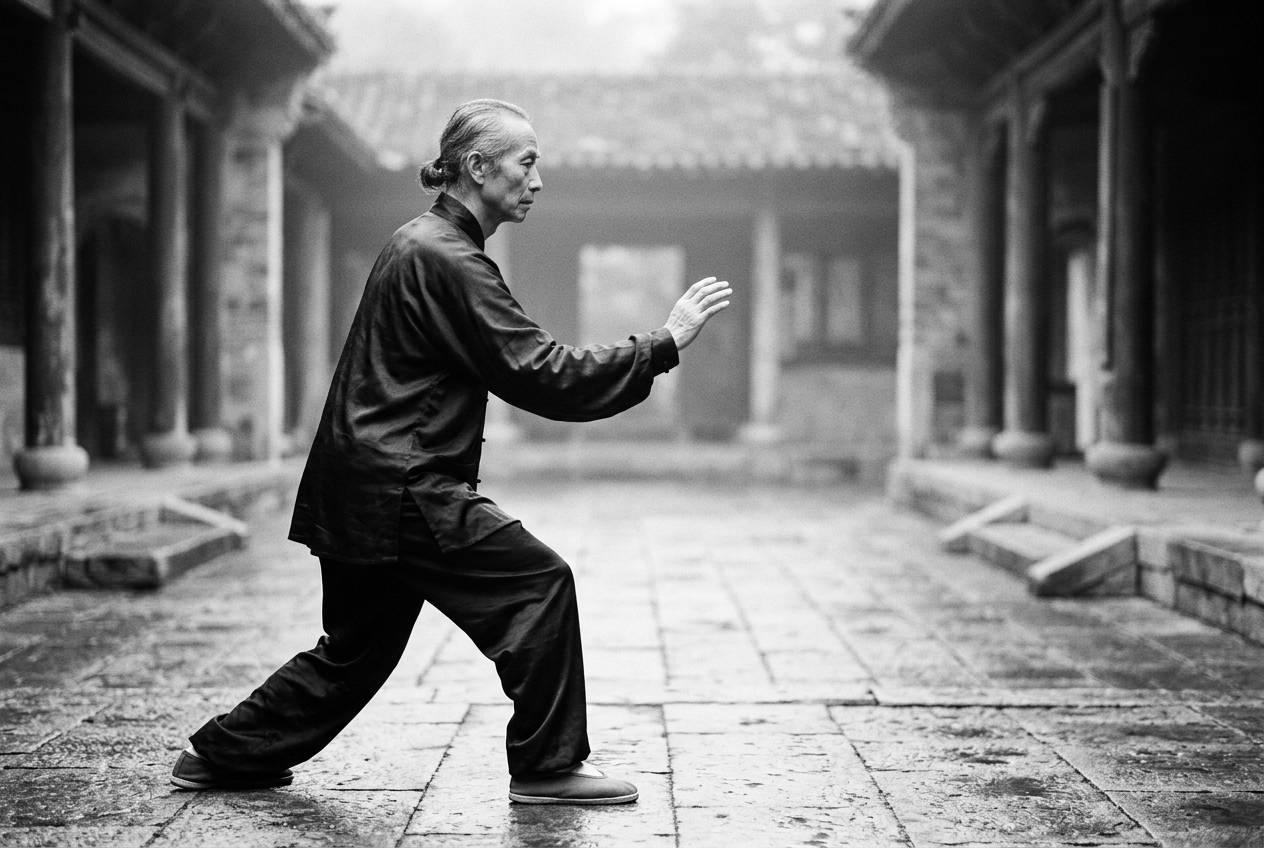
In the vocabulary of Traditional Chinese Medicine and Classical Qigong, this anatomical crossroad is known as Jianyu (Large Intestine 15, or LI 15), poeticized as the "Shoulder Bone" cavity. Located at the crucial intersection of the Hand Yangming Large Intestine meridian and the Yang Qiao Mai (the Yang Motility or Stepping Vessel), Jianyu serves as the master gateway regulating the circulation of vital Yang energy and physical force between the torso and the fingertips. When this space is pinched shut, the entire upper limb is mechanically stranded. When it is deliberately opened through internal breath-work and fascial unweighting, it actualizes the foundational internal martial arts principle of Chen Jian Zhui Zhou (沈肩墜肘)—the art of "Sinking the Shoulders and Dropping the Elbows." Through this release, the arm ceases to function as an isolated muscular lever and transforms into an expansive, buoyant conduit for whole-body elastic force, known classically as Peng Jin (掤勁).
The Anatomical Topography and Meridian Intersection of Jianyu
To master the release of this gateway, one must first cultivate an exact anatomical map of the subacromial cleft. The Jianyu acupuncture point is localized precisely in the depression situated anteroinferior to the acromion process of the scapula, resting between the anterior and lateral (middle) bellies of the deltoid muscle. When the arm is abducted to ninety degrees, two distinct indentations appear over the lateral shoulder contour; Jianyu occupies the deeper, anterior cleft, directly overlying the subacromial bursa, the tendon of the supraspinatus muscle, and the long head of the biceps brachii tendon as it traverses the bicipital groove.
From a neurological and vascular perspective, this subacromial junction directly overlies branches of the suprascapular nerve, the axillary nerve as it winds around the surgical neck of the humerus, and the anterior and posterior circumflex humeral arteries. Any chronic superior translation or anterior migration of the humeral head impinges these neurovascular structures against the rigid coracoacromial arch, yielding local inflammation, rotator cuff tendinopathy, and diminished distal microcirculation.
+----------------------------------------------------------------------------------------------------+
| CLASSICAL MERIDIAN DYNAMICS: JIANYU (LI 15)                                                        |
+----------------------------------------------------------------------------------------------------+
| Channel Affiliation : Hand Yangming Large Intestine Meridian (Shou Yangming Dachang Jing)          |
| Vessel Intersection : Crossing Point with the Yang Qiao Mai (Yang Motility / Stepping Vessel)      |
| Energetic Function  : Dispels Wind-Damp, Clears Heat, Regulates Qi & Blood, Opens Collaterals      |
| Biomechanical Role  : Subacromial Decompression, Glenohumeral Centration, Fascial Unweighting      |
+----------------------------------------------------------------------------------------------------+
In classical channel theory as preserved in canonical texts like the Zhenjiu Jiayi Jing (Systematic Classic of Acupuncture and Moxibustion), Jianyu is designated as a major convergence point where the Hand Yangming channel intersects with the Yang Qiao Mai. The Hand Yangming channel is recognized across WHO Traditional Medicine frameworks as being exceptionally rich in both Qi and Xue (Blood), making it the premier functional circuit for restoring motor function, clearing pathological stasis, and revitalizing the motor pathways of the upper extremities.
Simultaneously, the Yang Qiao Mai governs muscular tone, upright somatic posture, lateral stability, and the harmonious integration of the body's Yang kinetic chains from the lateral heel (Shenmai, BL 62) up to the cranial vertex. When Jianyu is mechanically compressed by elevated shoulders, the dynamic ascent of clear Yang along the Yang Qiao Mai is strangled, trapping stagnant tension in the cervical spine and occiput while depriving the upper limbs of rooted, ground-derived dynamic spring.
Step-by-Step Practice Guide: Internal Daoyin Calibration of Jianyu
The following structured, step-by-step Daoyin calibration method utilizes micro-torsional humeral spirals and breath-synchronized fascial unweighting to release chronic subacromial impingement without external resistance or forceful stretching. Practice this protocol standing in an unhurried, quiet environment.
1. Baseline Structural Alignment (Wuji Posture)
Stand with your feet parallel, positioned precisely hip-to-shoulder width apart. Distribute your body weight evenly across the nine points of each foot, feeling the tripod of the heel, first metatarsal head, and fifth metatarsal head anchoring firmly into the earth. Unlock the knee joints (Wei Qu), allowing the sacrum to drop gently downward as if settling onto a high stool. This neutralizes excessive lumbar lordosis and activates the pelvic floor. Suspend the vertex of your head from above (Baihui, GV 20), drawing the chin slightly inward to lengthen the suboccipital musculature, creating an open, uncompressed axial spine. Let your arms hang effortlessly at your sides.
2. Palpatory Localization and Baseline Assessment
Raise your left hand and position the pads of your index and middle fingers directly over the anterior-lateral depression of your right Jianyu (LI 15) cavity. Maintain your right arm in a relaxed, vertical hang. Take a slow, diaphragmatic inhalation into the lower abdominal basin (Dantian), and consciously register the baseline muscular density, tension, and joint space under your fingertips. If your upper trapezius is engaged, the cavity will feel shallow, dense, and rigid.
3. Micro-Torsional External Humeral Spiral (Inspiratory Loading)
Inhale through your nose over a count of four seconds, directing the breath into your lower abdomen while expanding the lateral ribcage three-dimensionally. Without moving your torso or raising your arm away from your side, initiate a slow, microscopic external rotation of the right humerus. Lead the motion from the radial edge of the wrist and the tip of the thumb, gently turning the right palm from facing your lateral thigh toward facing forward, and finally slightly outward.
As the humerus rotates externally through approximately fifteen to twenty degrees of micro-motion, feel the humeral head glide smoothly posterior-inferiorly within the glenoid fossa. Under your palpating left fingers, you will feel the Jianyu cavity widen and deepen, creating an open, supple anatomical cleft beneath the acromial shelf.
4. Expiratory Fascial Sinking (Chen Jian Zhui Zhou)
Exhale smoothly through your nose over a count of six seconds. As the air leaves your lungs, do not lose the newly created space within the Jianyu cleft. Instead, consciously relax the right upper trapezius, levator scapulae, and anterior deltoid. Allow the physical weight of your right elbow (Quchi, LI 11) to drop straight down toward the floor, as if a gentle weight were suspended from the olecranon process.
Simultaneously, direct the lateral border of your right shoulder blade (scapula) to glide downward and wrap gently forward around the ribcage, driven by the subtle engagement of the lower fibers of the serratus anterior. The Jianyu cavity remains open and hollow, while the entire arm feels suddenly heavy, elongated, and rooted into the back fascial web.
5. Breath-Synchronized Axial Unweighting and Palmar Projection
Maintain this relaxed, sunken alignment and initiate a second cycle of breathing. As you inhale, imagine drawing clear kinetic tension upward from the soles of your feet through your spine into the scapular anchor at Gaohuangshu (BL 43). As you exhale, project an uninterrupted line of elastic intention (Yi) through the decompressed Jianyu cavity, down the lateral-radial intermuscular septum of the arm, through the elbow pivot (Quchi), and directly into the center of the palm (Laogong, PC 8). Repeat this micro-calibration sequence eight to ten times per shoulder before switching sides, culminating in bilateral calibration with both arms hanging simultaneously.
+------------------------------------------------------------------------------------------------------+
| SOMATIC ERROR RECOGNITION AND CLINICAL CORRECTIONS                                                   |
+------------------------------------+--------------------------------+--------------------------------+
| Observed Biomechanical Fault       | Underlying Pathomechanics      | Targeted Somatic Correction    |
+------------------------------------+--------------------------------+--------------------------------+
| Shoulder Hiking (Elevation)        | Upper Trapezius Hyperactivity  | Actively drop elbow weight     |
| during arm elevation or rotation   | and Levator Scapulae Spasm     | (Quchi LI 11) to seat humerus  |
+------------------------------------+--------------------------------+--------------------------------+
| Anterior Humeral Glide             | Pectoralis Minor Shortening    | Broaden infraclavicular space; |
| (Humeral head popping forward)     | & Posterior Capsule Tightness  | anchor medial scapular border  |
+------------------------------------+--------------------------------+--------------------------------+
| Clavicular Breathing (Apical)      | Diaphragmatic Inhibition       | Anchor breath 2 inches below   |
| with ribcage rising vertically     | and Accessory Muscle Overuse   | navel (Lower Dantian basin)    |
+------------------------------------+--------------------------------+--------------------------------+
Somatic Sensations: Interpreting the Feedback Loop
As the subacromial space decompresses and the Yangming meridian collaterals open, practitioners will reliably experience a distinct progression of somatic sensations:
- Initial Heavy Release (Chen): The arm suddenly feels dramatically heavier, almost as if it is elongating downward under the influence of increased gravitational coupling. This indicates the successful neurological down-regulation of hyperactive postural stabilizers (upper trapezius) and the transfer of load-bearing support to the skeletal framework.
- Thermal Vascular Rush (Re): A distinct, spreading sensation of warmth migrating from the subacromial hollow down the lateral arm to the thumb and index finger. As verified in peer-reviewed research on microvascular hemodynamics, this reflects the immediate mechanical decompression of the anterior circumflex humeral artery and the radial neurovascular bundle, increasing peripheral perfusion.
- Subtle Bioelectric Tingling (Ma): Fine, effervescent tingling across the skin overlying the Large Intestine meridian, particularly concentrated around the elbow crease (Quchi) and the first dorsal interosseous space (Hegu, LI 4). In clinical somatic practice, this marks the clearing of interstitial fluid pressure and the stimulation of large-diameter sensory nerve fibers.
- Structural Buoyancy (Peng): Although the arm feels physically heavy and deeply relaxed, it simultaneously exhibits an elastic, spring-like structural integrity. If an external force pushes against the arm, the force does not jam into the shoulder joint; instead, it transfers effortlessly down the spine and legs directly into the earth.
Why It Works: The Biomechanical and Neurofascial Science
The transformative efficacy of opening Jianyu is directly grounded in modern musculoskeletal biomechanics, neuromuscular motor control, and fascial tensegrity theory.
Glenohumeral Centration and Subacromial Clearance
The human shoulder joint (glenohumeral articulation) represents an evolutionary compromise: it sacrifices bony stability in favor of unmatched multi-planar mobility. The large, spherical humeral head articulates against the shallow, pear-shaped glenoid cavity of the scapula, resembling a golf ball resting upon a miniature tee. The superior ceiling of this joint is formed by the rigid coracoacromial arch. The physiological space between the undersurface of the acromion and the top of the humeral head—the subacromial space—normally measures between nine and ten millimeters in healthy adults.
When an individual experiences psychological stress or habitual postural collapse, the upper trapezius and levator scapulae fire tonically, while the serratus anterior and lower trapezius become pathologically inhibited. This muscular imbalance produces an uncontrolled superior and anterior translation of the humeral head during any arm movement. As documented in clinical studies indexed on NCBI Bookshelf: Glenohumeral Biomechanics, this superior migration reduces the subacromial gap to less than six millimeters, mechanically crushing the supraspinatus tendon, compressing the subacromial bursa, and triggering chronic subacromial impingement syndrome.
By deliberately executing the micro-torsional spiral of Jianyu, the practitioner recruits the infraspinatus and teres minor to externally rotate and draw the humeral head downward and backward into the lower, deeper quadrant of the glenoid fossa. This inferior glide dramatically expands the subacromial volume, completely liberating the entrapped soft tissues from bony friction and restoring uninhibited joint kinematics.
Myofascial Tensegrity: Engaging the Arm Lines
From the perspective of spatial biotensegrity and whole-body fascia—pioneered in the anatomical literature and detailed in peer-reviewed studies on fascia and force transmission—the upper extremity is not an assemblage of isolated lever-arms, but a continuous, pre-stressed web of connective tissue. The trajectory of the Hand Yangming channel corresponds precisely with the Deep Back Arm Line and the Superficial Front Arm Line.
When the shoulder is elevated or rolled forward into internal collapse, this continuous fascial sheet kinks like a bent garden hose at the subacromial junction. Tensile force generated in the core or legs hits a dead end at the contracted shoulder, forcing the smaller muscles of the arm to work in isolation. Opening the Jianyu cavity smooths out this fascial kink. It establishes an unbroken line of resting tensile preload (fascial pretension) spanning from the rhomboids and serratus anterior, through the lateral intermuscular septum of the brachium, across the radial-brachioradialis fascia, and down into the palmar aponeurosis. Consequently, mechanical load is instantly dispersed across the entire bodily matrix rather than concentrating destructively in the vulnerable glenohumeral joint.
+----------------------------------------------------------------------------------------------------+
| NEUROPHYSIOLOGICAL AND AUTONOMIC MECHANISMS                                                        |
+------------------------------------+---------------------------------------------------------------+
| Physiological Mechanism            | Systemic Neuro-Somatic Outcome                                |
+------------------------------------+---------------------------------------------------------------+
| Slow Diaphragmatic Respiration     | Stimulates Pulmonary Vagal Afferents; Increases HRV           |
| Reciprocal Inhibition of Trapezius | Down-regulates Sympathetic Motor Tone across Neck & Occiput   |
| Decompression of Brachial Plexus   | Alleviates Peripheral Nerve Compression; Restores Motor Power |
| Microvascular Capillary Dilation   | Elevates Nitric Oxide Synthesis; Boosts Distal Skin Perfusion |
+------------------------------------+---------------------------------------------------------------+
Autonomic Regulation and Vagal Modulation
The physical release of Jianyu exerts a direct, measurable influence on the central nervous system. Chronic shoulder elevation is an innate component of the mammalian fight-or-flight startle reflex, mediated by sympathetic outflow from the upper thoracic spinal segments. By consciously dropping the shoulders and establishing slow, four-to-six-second abdominal breathing cycles, the practitioner activates pulmonary and diaphragmatic vagal afferents. This triggers immediate parasympathetic dominance, marked by increased Heart Rate Variability (HRV), reduced circulating salivary cortisol, and generalized down-regulation of hyperactive skeletal muscle spindles.
Kinetic Vectors of Force Transmission: The Peng Jin Continuum
In the advanced curriculum of internal martial arts and medical Daoyin, Jianyu is never trained as an isolated point; it operates as the indispensable transmission pivot within a four-station kinetic chain:
- The Scapulothoracic Anchor (Gaohuangshu, BL 43 & Jianjing, GB 21): The kinetic chain originates structurally in the upper thoracic spine and the medial border of the scapula. Gaohuangshu (located between the fourth and fifth thoracic vertebrae, lateral to the spinal column) functions as the posterior anchor that pins kinetic force from the spine into the muscular sling of the serratus anterior and rhomboids. Directly above it, Jianjing (Gallbladder 21, at the midpoint of the trapezius ridge) must remain soft and descending, acting as a downward energetic sieve that prevents tension from rising into the throat and skull.
- The Subacromial Decompression Pivot (Jianyu, LI 15): Serving as the master regulator of the joint space, Jianyu receives the broad, expansive tension from the scapulothoracic anchor and funnels it into the tubular fascial sleeves of the upper arm without allowing the humeral head to pinch or displace upward.
- The Elbow Fulcrum (Quchi, LI 11): Located at the lateral end of the transverse cubital crease when the elbow is flexed, Quchi serves as the directional fulcrum of the arm. In internal movement mechanics, the elbow must always retain a subtle downward and outward trajectory (Zhui Zhou). This downward pull creates a continuous hydraulic tensile load across the triceps and radial fascial compartments, maintaining the decompression of Jianyu even when the hand is elevated above the head.
- The Palmar Terminal (Laogong, PC 8): Situated in the center of the palm between the second and third metacarpal bones, Laogong is the terminal emitter of kinetic intent and thermal bioenergetic flow. When Jianyu is decompressed and Quchi is dropped, the palm naturally cups into a soft, responsive dome. This structural dome acts as an elastic spring that absorbs incoming shocks and discharges outgoing kinetic power effortlessly.
Clinical Diagnostics: Evaluating Shoulder Compensations
To assess whether a practitioner has truly integrated the functional opening of Jianyu or is merely mimicking the external posture through superficial muscular compensation, apply the following diagnostic evaluation matrix:
+----------------------------------------------------------------------------------------------------+
| CLINICAL SOMATIC AUDIT: GLENOHUMERAL CENTRATION & KINETIC CONTINUITY                              |
+--------------------------+------------------------------------+------------------------------------+
| Diagnostic Test Name     | Pathological Failure Indicators    | Successful Integration Signs       |
+--------------------------+------------------------------------+------------------------------------+
| Passive Scapular Load    | Shoulder hikes; tension transfers  | Force passes smoothly through      |
| (Axial Palmar Press)     | instantly to neck and upper traps  | spine and legs into the floor      |
+--------------------------+------------------------------------+------------------------------------+
| Dynamic Abduction Test   | Clavicle rises before 30 degrees;  | Scapula remains stable until 60    |
| (Lateral Arm Raise)      | subacromial hollow vanishes        | degrees; Jianyu space deepens      |
+--------------------------+------------------------------------+------------------------------------+
| Palpatory Tissue Audit   | Woody, fibrous density; sharp      | Soft, spring-like elasticity; deep |
| (Direct LI 15 Palpation) | localized pain upon palpation      | anatomical cleft without guarding  |
+--------------------------+------------------------------------+------------------------------------+
Diagnostic Test 1: The Axial Palmar Compression Test
Protocol: The practitioner stands in a standard Zhan Zhuang (standing post) posture with the arms rounded in front of the chest as if embracing a wide tree. A partner places both palms against the practitioner's forearms or palms and applies a gradual, progressive horizontal-to-axial compressive force toward the practitioner's chest.
Failure Mode: The practitioner's shoulders immediately shrug upward toward the ears, the chest caves in rigidly, the breath hitches in the upper throat, and the practitioner is pushed backward off balance. This confirms that the Jianyu gateway is collapsed, forcing the fragile rotator cuff and upper trapezius to bear the load in isolation.
Optimal Dynamic: The compressive force travels effortlessly across the decompressed Jianyu joint, wraps around the lateral ribcage via the serratus anterior, travels down the erector spinae and thoracolumbar fascia, passes through the pelvis, and roots securely into the floor beneath the heels. The practitioner remains completely stable without any increase in muscular tension across the neck or shoulders.
Diagnostic Test 2: The Sixty-Degree Abduction Cleft Test
Protocol: While palpating the Jianyu cavity with the opposite hand, the practitioner slowly abducts the arm in the scapular plane from zero to sixty degrees.
Failure Mode: Within the first thirty degrees of movement, the clavicle rotates upward, the upper trapezius visibly engages, and the Jianyu hollow completely disappears, becoming replaced by a hard, protruding humeral head.
Optimal Dynamic: The subacromial cleft remains visibly and palpably open throughout the first sixty degrees of abduction. The scapula remains anchored against the posterior ribcage, and the movement is driven entirely by the deep rotator cuff and deltoid without any parasitic activation of the upper trapezius.
Classical Lineage and Martial-Daoist Context
The anatomical and bioenergetic principles underlying the decompression of Jianyu are rooted in centuries of empirical cultivation preserved within the classical Chinese medical canon and Daoist internal martial traditions (Neijiaquan).
The foundational theoretical framework for the Yangming channel was first articulated in the Huangdi Neijing (The Yellow Emperor's Inner Canon), compiled during the Han dynasty. In the Lingshu (Spiritual Pivot, Chapter 10), the Hand Yangming meridian is characterized as the ultimate conduit governing the motor capacities of the limbs and the exterior structural defenses of the physique. The text explicitly links disruptions along this channel to motor impairment of the shoulder, inability to raise the arm, and painful constriction of the neck.
During the Jin dynasty, the eminent physician Huangfu Mi codified the exact therapeutic application and topographic boundaries of Jianyu in his seminal work, the Zhenjiu Jiayi Jing (282 CE). Huangfu Mi classified Jianyu as the critical nexus where the Hand Yangming channel meets the Yang Qiao Mai, establishing it as a primary clinical point for treating paralysis, wind-stroke hemiplegia, and chronic muscular atrophy of the upper extremities.
In parallel with medical developments, Daoist Daoyin monasteries—most notably traditions preserved at Mount Wudang and Mount Qingcheng—integrated these meridian insights into physical self-cultivation exercises. Realizing that structural stagnation within the physical body directly impedes spiritual tranquility and internal energetic circulation, Daoist adepts developed circular, spiral movement sequences designed to unweight every major joint cavity (Guan Jie). The shoulder was identified as the "Upper Heavy Gate"—a major obstacle where aspiring practitioners routinely trapped tension.
+----------------------------------------------------------------------------------------------------+
| CANONICAL MARITIAL MAXIMS OF UPPER BODY INTEGRATION                                                |
+------------------------------------+---------------------------------------------------------------+
| Classical Chinese Maxim            | Somatic and Biomechanical Interpretation                      |
+------------------------------------+---------------------------------------------------------------+
| 沈肩墜肘 (Chén Jiān Zhuì Zhǒu)      | Sink the shoulders and drop the elbows; unweight the acromion |
| 拔背含胸 (Bá Bèi Hán Xiōng)        | Pluck the back and contain the chest; engage serratus tension |
| 勁起於腳跟, 發於手指               | Power originates in the heels, is guided by the waist, and    |
| (Jìn qǐ yú jiǎogēn, fā yú shǒuzhǐ) | manifests seamlessly through the fingertips                   |
+------------------------------------+---------------------------------------------------------------+
By the late Qing dynasty, these insights culminated in the classical treatises of Taijiquan, Baguazhang, and Xingyiquan. In his classic commentary Taijiquan Lun (Treatise on Tai Chi Chuan), master Wang Zongyue emphasized that without sinking the shoulders and dropping the elbows (Chen Jian Zhui Zhou), the internal energy (Qi) cannot sink to the Dantian, the spine cannot be suspended, and the practitioner will forever remain trapped in stiff, localized muscular effort.
The legendary master Yang Chengfu later designated Chen Jian Zhui Zhou as the absolute second principle in his canonical Ten Essential Principles of Taijiquan, warning that if the shoulders elevate even slightly, the Qi rises uncontrollably, whole-body connectivity is instantly fractured, and the practitioner is easily uprooted by an opponent.
Today's Practice Commitment
To transform these didactic principles from abstract anatomical concepts into permanent somatic reality, commit to the following structured seven-minute calibration protocol every morning before your first cup of tea or coffee:
- Minutes 0:00 – 2:00: Baseline Stance and Breath Settling
Stand in Wuji alignment. Place both hands over your lower abdomen (Dantian), close your eyes, and complete twelve slow, four-second inhalations and six-second exhalations. Allow your heart rate to settle and feel your body weight sink entirely into your heels. - Minutes 2:00 – 4:30: Unilateral Jianyu Micro-Torsional Spirals
Place your left fingers on your right Jianyu cavity. Perform eight deliberate cycles of inspiratory external humeral rotation followed by expiratory elbow sinking. Feel the cavity expand, soften, and deepen under your fingers. Switch hands and perform eight identical cycles on the left shoulder. - Minutes 4:30 – 6:00: Bilateral Kinetic Projection (Peng Jin Standing)
Let both arms hang at your sides. Synchronize both shoulders simultaneously: inhale and create a micro-torsional spiral through both humeri; exhale, drop both elbows downward, broaden your upper back across Gaohuangshu, and project warm, elastic sensation through both Laogong points into the floor. Complete eight continuous bilateral breath cycles. - Minutes 6:00 – 7:00: Somatic Integration and Daily Carryover
Gently shake out your wrists, take one final deep inhalation, and resume your normal morning routine. Throughout the day, whenever you sit down at your computer, walk through a doorway, or experience psychological stress, use your right Jianyu as a physical touchpoint: drop your elbow, open the cleft, exhale into your belly, and let the tension drain into the earth.
For comprehensive information regarding classical lineage transmission and verified training standards, consult the National Qigong Association.