Gaohuangshu Cavity Vital Region Shu: Interscapular Fascial Decompression, Deep Constitutional Tonification, and Scapulothoracic Kinetic Tensegrity in Classical Neigong
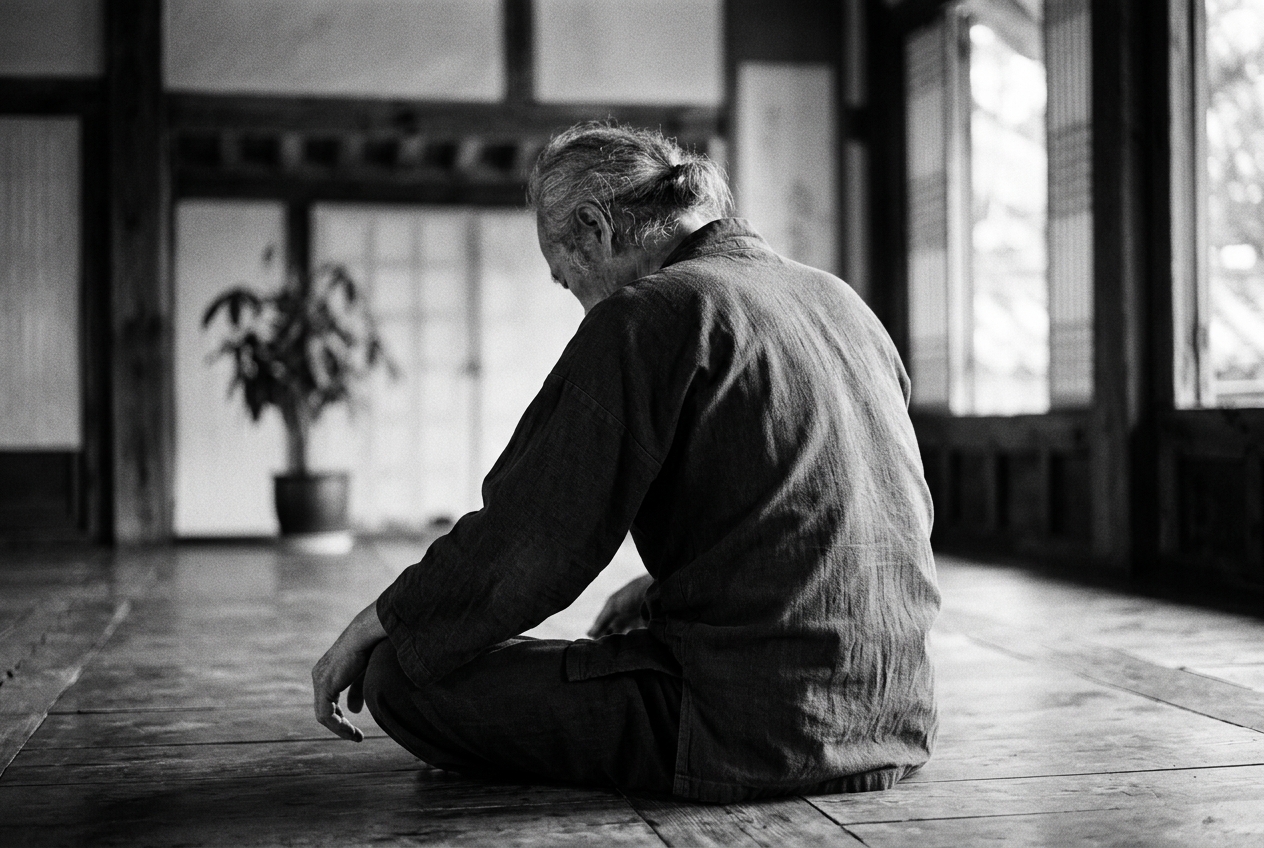
In classical Chinese somatic traditions, this anatomical nexus is known as Gaohuangshu (acupuncture point BL43, translated as the "Vital Region Shu" or "Point of the Vitals"). Situated along the Bladder Meridian, it lies precisely three cun—approximately four finger-widths—lateral to the lower border of the spinous process of the fourth thoracic vertebra (T4), buried beneath the superficial trapezius and rhomboid musculature. In the lexicon of Traditional Chinese Medicine, the term Gao historically signified the fatty tissues directly below the heart, while Huang referred to the thin membranes above the diaphragm. Together, Gaohuang represented the innermost retrocardiac sanctum of the body: a region so deep that ordinary herbs and superficial treatments could not penetrate it, making it the final redoubt of chronic exhaustion and latent illness.
Step-by-Step Somatic Practice Guide
To open this cavity, classical Neigong and Daoyin rely not on muscular force, but on kinetic alignment, helical arm rotation, and internal breath expansion. Follow this sequential protocol daily without forcing or straining.
+-----------------------------------------------------------------------------+
|               SUMMARY OF THE GAOHUANGSHU DECOMPRESSION PROTOCOL             |
+-----------------------------------+-----------------------------------------+
| Somatic Stage                     | Key Biomechanical Action                |
+-----------------------------------+-----------------------------------------+
| 1. Neutral Wuji Posture           | Suspend crown, sink sacrum, relax chest |
| 2. Han Xiong Ba Bei Expansion     | Protract scapulae laterally without shrugging |
| 3. Helical Upper-Limb Spiraling   | Medially rotate arms; spiral from thumbs|
| 4. Retro-Thoracic Breath Wave     | Inhale to Dantian; exhale into T4 zone  |
+-----------------------------------+-----------------------------------------+
1. Setup and Alignment: The Neutral Vessel (Wuji)
Begin in an upright standing stance with your feet parallel, hip-to-shoulder-width apart. Distribute your body weight evenly across the tripod of each foot—the base of the big toe, the base of the little toe, and the center of the heel. Allow your tailbone to sink downward as if resting against a tall stool, gently releasing the curve of your lower lumbar spine without tucking the pelvis aggressively. Gently elevate the crown of your head (Baihui) toward the ceiling, allowing your cervical spine to decompress while your chin rests softly inward. Rest the tip of your tongue lightly against the hard palate behind your upper teeth.
2. Sinking the Chest and Rounding the Back (Han Xiong Ba Bei)
Allow your sternum to soften, sink, and hollow inward by just a few millimeters. This classical martial principle, known as Han Xiong Ba Bei, is not a slouch or a collapsed slump; rather, it is a conscious relaxation of the pectoral muscles that allows the rib cage to settle downward. As the front of the chest empties, feel your back widen horizontally. Allow the medial borders of both shoulder blades to drift laterally away from the spine, creating a broad, curved "shield" across your upper back.
3. Helical Arm Spiraling (Chan Si)
Extend your arms forward at mid-chest height, forming a soft, rounded embrace as though holding a large tree trunk. Keep the elbows slightly lower than the wrists and shoulders: 1. Inward Wringing (Decompression Phase): On a slow, smooth nasal inhalation, slowly rotate your hands and forearms inward, turning your thumbs downward and slightly outward so the backs of your hands face one another. As the radius spirals over the ulna, consciously draw the shoulder blades further apart around the rib cage. Focus your internal awareness (Yi) directly into the interscapular trench on either side of the fourth thoracic vertebra. 2. Outward Unfurling (Nourishing Phase): On a soft, continuous exhalation, reverse the rotation. Slowly spiral your forearms outward, turning the palms upward and slightly outward, allowing the elbows to sink while maintaining the broad, expanded space between your shoulder blades. Do not let the shoulder blades pinch back together; preserve the dome-like space in the upper back.
4. Retro-Thoracic Breath Waves
Synchronize this movement with diaphragmatic respiration. When inhaling, do not lift your upper chest. Instead, expand your lower abdomen in all directions—front, sides, and the lower back (Mingmen). As the inhalation reaches capacity, feel the intra-abdominal pressure create a natural hydraulic rebound wave that rises up the posterior chain, gently swelling and stretching the fascial layers of the T4 interscapular zone from the inside out.
5. Common Kinetic Faults and Corrections
- Fault 1: Scapular Elevation (Shrugging). Practitioners often hike their shoulders toward their ears when trying to broaden the back. Correction: Consciously anchor the inferior tips of the shoulder blades downward toward your back pockets, keeping the upper trapezius completely soft.
- Fault 2: Compensatory Lumbar Lordosis. When trying to expand the upper body, the lower back frequently arches, disconnecting the torso. Correction: Keep the tailbone heavy and maintain a slight fullness in the lower back curve throughout the movement.
- Fault 3: Clavicular Over-Breathing. Breathing high into the upper chest tightens the scalenes and locks the upper ribs. Correction: Keep the sternum passive; direct the initial volume of breath exclusively into the pelvic bowl.
6. Somatosensory Markers: What to Feel
As you repeat this smooth wave for 8 to 12 cycles, monitor your internal feedback: * Initial Tightness or Dull Aching: This signals engagement with deep fascial adhesions and chronic muscular holding patterns. * Prickling, Tingling, or Electric Vibrations: Indicates neural and microvascular decompression across the dorsal scapular pathways. * A Spreading Thermal Wave: A warm, soothing sensation that floods across the upper back and radiates down the arms, marking parasympathetic vasodilation and the release of chronic stagnation.
Why It Works: The Fascial and Neurobiological Science
To understand why decompressing BL43 produces such profound constitutional renewal, we must look to the intersection of modern myofascial mechanics and autonomic neurobiology.
Beneath the superficial trapezius and rhomboids lies the serratus posterior superior, a thin, quadrilateral muscle originating at the spinous processes of C7 through T3 and inserting onto the upper borders of ribs 2 through 5. This deep stabilizer is intimately involved in costal respiration. In modern sedentary postures—characterized by rounded shoulders, forward head carriage, and chronic screen use—the serratus posterior superior and its surrounding deep fascia become desiccated, forming dense cross-linked adhesions. This creates an unyielding interscapular constriction that traps the dorsal rami of thoracic spinal nerves and compromises regional blood circulation.
Furthermore, the thoracic spine between segments T1 and T5 houses the sympathetic chain ganglia that innervate the cardiovascular and pulmonary systems. Prolonged postural rigidity and muscular holding in the T4 zone act as a constant physical trigger for the sympathetic nervous system, maintaining the body in a subtle, chronic state of fight-or-flight. Research indexed in the National Center for Biotechnology Information (NCBI) demonstrates that targeted mobilization of the thoracic spine and costovertebral joints can significantly improve heart rate variability (HRV) and downregulate sympathetic hyperactivity.
+-----------------------------------------------------------------------------+
|                  BIOMECHANICAL & PHYSIOLOGICAL MECHANISMS                   |
+--------------------------+--------------------------------------------------+
| Anatomical Layer         | Physiological Effect of Mobilization             |
+--------------------------+--------------------------------------------------+
| Serratus Posterior Sup.  | Releases costovertebral restrictions; expands ribs|
| Deep Fascial Chains      | Restores tensegrity along the Spiral & Arm Lines |
| T1–T5 Sympathetic Chain  | Downregulates stress signaling; improves HRV     |
| Dorsal Scapular Vasculat.| Restores microvascular perfusion to ischemic tissue|
+--------------------------+--------------------------------------------------+
When you execute Han Xiong Ba Bei and perform helical arm spirals, you generate a continuous lateral sliding motion between the rhomboids, the serratus posterior superior, and the erector spinae. This lateral shearing mechanically hydrates the deep fascial sheets, breaks down micro-adhesions, and decompresses the costovertebral joints. Simultaneously, engaging slow diaphragmatic breath increases intra-thoracic and intra-abdominal pressure differentials, stimulating vagal tone and prompting a systemic shift toward parasympathetic rest and repair, as recognized in contemporary studies on mind-body therapies published in PubMed Central.
From a somatic psychology perspective, this region serves as a primary site for what Wilhelm Reich termed "somatic armoring." Unprocessed emotional grief, social anxiety, and chronic psychological vigilance consistently register as a protective clamping of the interscapular and retrocardiac muscles. Opening the Gaohuang zone is therefore not merely a postural correction; it is a profound somatic unwinding of deeply ingrained survival responses.
Classical Lineage, Historical Context, and Internal Martial Arts
The historical lineage of Gaohuangshu is one of the most storied and revered chapters in classical Chinese medicine and internal cultivation.
The concept of Gaohuang first entered Chinese classical literature in the historical chronicle Zuo Zhuan (581 BCE). According to the text, Duke Jing of Jin fell gravely ill and summoned the renowned physician Huan. Before the doctor arrived, the Duke dreamt that his disease appeared as two small children. One said, "He is a skilled physician; he will destroy us. Where can we hide?" The other replied, "If we conceal ourselves above the Gao (the vitals below the heart) and below the Huang (the diaphragm), what can he do to us?" Upon examining the Duke, Physician Huan sighed and declared the condition incurable: the affliction had settled into the Gaohuang, a territory beyond the reach of acupuncture needles and medicinal decoctions alike. From this ancient tale arose the classical Chinese idiom Bing Ru Gao Huang (病入膏肓), meaning an illness that has penetrated so deeply into the core that it defies standard intervention.
More than a millennium later, during the Tang Dynasty, the legendary physician and Daoist alchemist Sun Simiao (581–682 CE) challenged this prognosis. In his medical masterpiece Beiji Qianjin Yaofang (Essential Formulas for Emergencies Worth a Thousand Gold), Sun Simiao formally codified the location and manipulation of acupoint BL43. He proclaimed that Gaohuangshu was the supreme portal for resolving all chronic "consumptive diseases" (Xu Lao), deep constitutional depletion, latent pathogens (Fu Xie), and stubborn mental depression. Sun Simiao emphasized that when the body's defensive energies (Wei Qi) fail and exhaustion settles into the deep layers, BL43 is the only point capable of revitalizing the system by replenishing Pre-Heaven Original Qi (Xian Tian Yuan Qi) and nourishing the marrow.
+-----------------------------------------------------------------------------+
|              CLASSICAL CONCEPTS VS. MODERN PHYSIOLOGY MAPPING               |
+--------------------------+--------------------------------------------------+
| Classical Concept        | Modern Physiological Correlate                   |
+--------------------------+--------------------------------------------------+
| Gao-Huang (膏肓)         | Deep retrocardiac fascia & mediastinal envelope  |
| Yuan Qi Depletion (元气亏)| Chronic autonomic exhaustion & HPA-axis burnout  |
| Fu Xie (Latent Pathogen) | Low-grade chronic inflammation & fascial ischemia|
| Han Xiong Ba Bei (含胸拔背)| Bilateral scapular protraction & fascial glide   |
| Chan Si Gong (缠丝功)     | Helical myofascial loading along arm meridians   |
+--------------------------+--------------------------------------------------+
In the internal martial arts (Neijiaquan)—including Taijiquan, Baguazhang, and Xingyiquan—opening the Gaohuang region is considered essential for cultivating dynamic whole-body power (Fajin). As documented in the training traditions preserved by the National Qigong Association and recognized within global complementary medicine frameworks by the World Health Organization, true martial power does not originate from isolated arm contraction. Instead, power must travel unimpeded from the feet, through the legs, directed by the waist (Dantian), channeled up the spine, and released through the fingers.
If the interscapular region around BL43 remains contracted and rigid, it acts as an anatomical bottleneck, interrupting kinetic transfer and causing the practitioner to rely on tense, inefficient shoulder muscles. By mastering Han Xiong Ba Bei and liberating Gaohuangshu, the shoulder blades adhere smoothly to the thoracic wall, forming a suspended, elastic bridge of fascial tensegrity that links the spine directly to the hands. In this state of dynamic relaxation (Song), internal energy and structural force flow without obstruction.
Daily Cultivation Protocol
To transform theoretical understanding into lasting somatic change, commit to this brief daily practice for the next seven days.
+-----------------------------------------------------------------------------+
|                      DAILY 7-MINUTE GAOHUANG PROTOCOL                       |
+--------+--------------------------+-----------------------------------------+
| Minute | Phase                    | Focus                                   |
+--------+--------------------------+-----------------------------------------+
| 0–2    | Wuji Postural Alignment  | Sinking sacrum, lengthening spine       |
| 2–5    | Helical Spirals & Breath | Inward wringing & outward expansion     |
| 5–7    | Static Mindful Holding   | Radiating warmth and internal release   |
+--------+--------------------------+-----------------------------------------+
Every morning before beginning your workday, or in the evening immediately upon closing your laptop:
- Minutes 0–2 (Postural Centering): Stand in the Wuji posture. Drop your awareness out of your thinking mind and down into the soles of your feet. Let your chest soften and your lower back gently widen.
- Minutes 2–5 (Movement & Spiral Breath): Perform 12 continuous cycles of the helical arm-spiraling sequence described above. Pair each inward spiral with a deep, abdominal inhalation, and let each outward spiral accompany a relaxed, full exhalation. Direct your mental focus (Yi) into the T4 interscapular gutter.
- Minutes 5–7 (Static Deep Nourishment): Rest your hands gently over your lower abdomen, close your eyes, and stand in effortless stillness. Direct your breath into your lower belly, and observe the residual warmth, tingling, and newly created space circulating across your upper back.
Notice how your breathing depth, energy levels, and mental clarity shift over the following hour. By reclaiming this once-inaccessible territory, you dissolve years of chronic postural holding, liberate your autonomic nervous system, and restore the natural wellspring of vitality at the heart of your being.