Powernews Section Archive

TCM Qigong & Energy Movement Archive

Page 5 of 11
Hegu Cavity Joining Valley: First Dorsal Interosseous Fascial Decompression, Yangming Meridian Clearance, and Distal Upper-Limb Kinetic Vectoring in Classical Neigong
TCM QIGONG & ENERGY MOVEMENT

Hegu Cavity Joining Valley: First Dorsal Interosseous Fascial Decompression, Yangming Meridian Clearance, and Distal Upper-Limb Kinetic Vectoring in Classical Neigong

At its core, the somatic cultivation of *Hegu* involves the conscious activation, mechanical decompression, and energetic conduction of the webbed junction between the first and second metacarpal bones. In Classical Neigong, this region is referred to as the *Hu Kou* (虎口), or the "Tiger’s Mouth." When practitioners speak of "opening the Tiger’s Mouth," they refer to a precise postural dynamic: maintaining a rounded, buoyant arch between the thumb and index finger rather than allowing the thumb to collapse inward or hyperextend outward.

⚡ 8,461 Tokens • $0.00 Cost

Gongsun Cavity Grandfather Grandson: Medial Plantar Fascial Decompression, Chong Mai Activation, and Axial Kinetic Rooting in Classical Neigong
TCM QIGONG & ENERGY MOVEMENT

Gongsun Cavity Grandfather Grandson: Medial Plantar Fascial Decompression, Chong Mai Activation, and Axial Kinetic Rooting in Classical Neigong

In the classical traditions of internal martial arts (*Neigong*) and therapeutic movement (*Daoyin*), the human body is understood not as a collection of isolated levers and muscles, but as a continuous, pressurized tensegrity matrix. At the foundation of this structural matrix lies *Gongsun* (公孫, SP4), an acupuncture cavity located along the medial longitudinal arch of the foot. Translated variously as "Grandfather-Grandson" or named in homage to the lineage of the mythical Yellow Emperor (*Huangdi*), this point acts as the primary master switch for structural rooting, digestive vitality, and axial spinal alignment.

⚡ 8,049 Tokens • $0.00 Cost
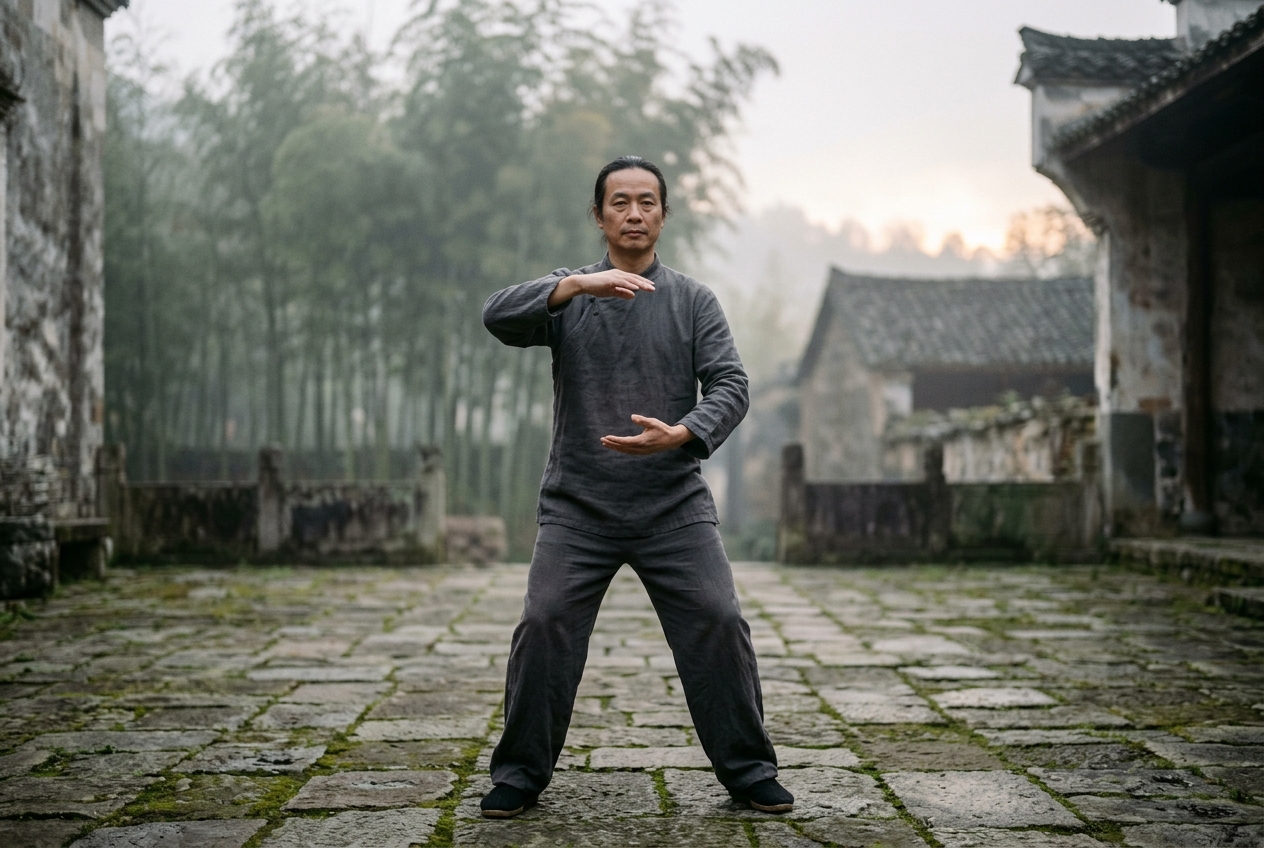
Gong Bu Bow Stance Qigong: Sagittal Pelvic Tensegrity, Iliopsoas Elongation, and Asymmetric Ground Reaction Force Vectoring in Classical Daoyin
TCM QIGONG & ENERGY MOVEMENT

Gong Bu Bow Stance Qigong: Sagittal Pelvic Tensegrity, Iliopsoas Elongation, and Asymmetric Ground Reaction Force Vectoring in Classical Daoyin

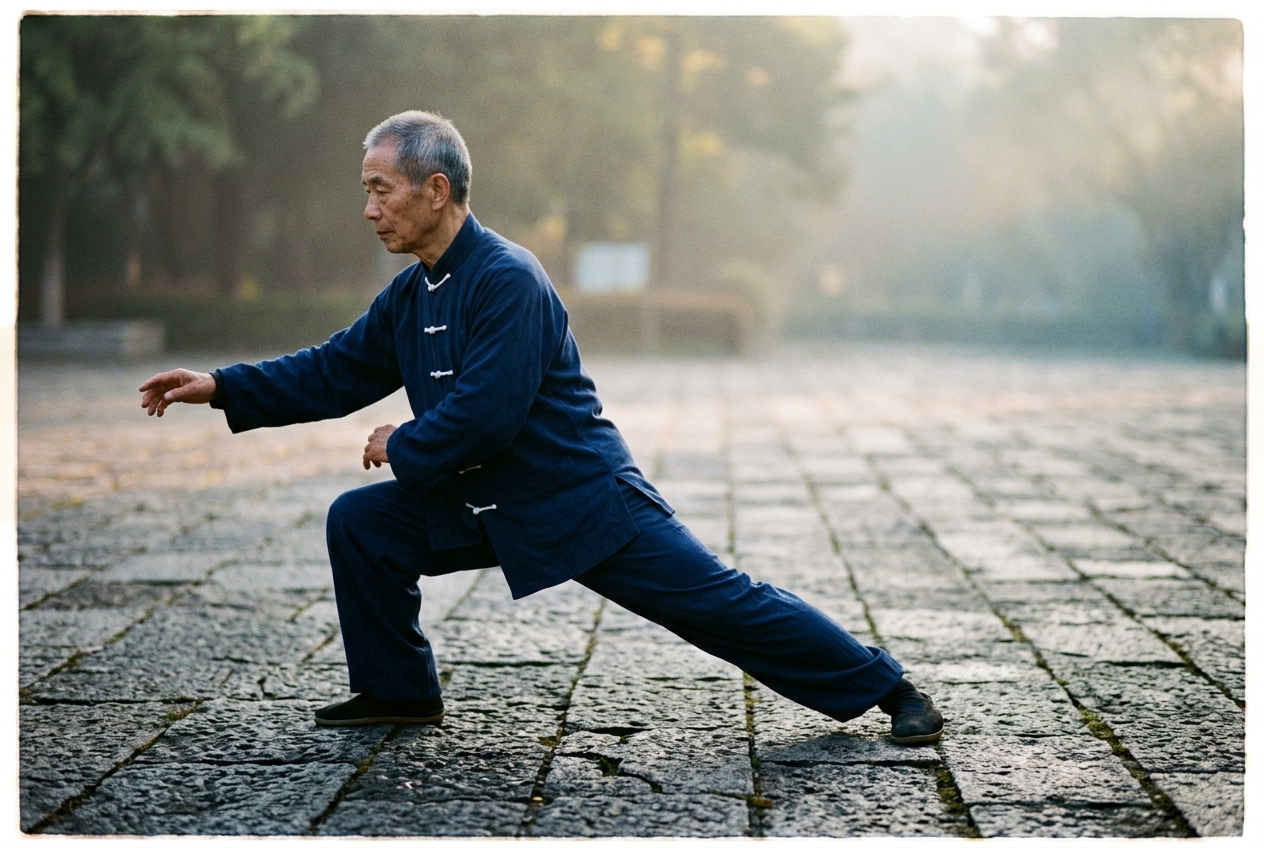
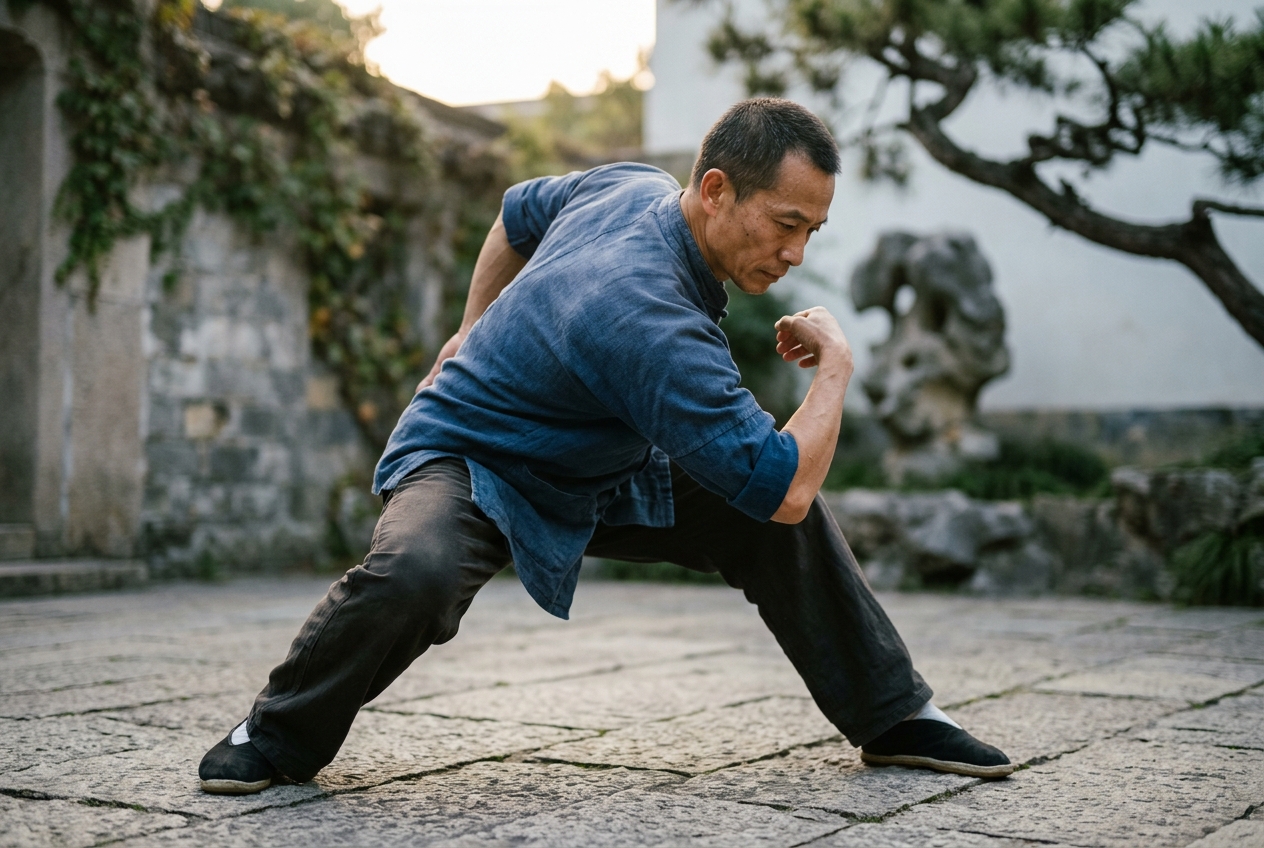
In plain terms, Gong Bu (弓步)—literally translated from Mandarin as the "Bow Stance" or "Archer’s Stance"—is an asymmetric standing posture central to the ancient Chinese health cultivation systems of [Daoyin](https://en.wikipedia.org/wiki/Daoyin) and Qigong, as well as internal martial arts such as Taijiquan and Xingyiquan. To the casual observer, it resembles a martial artist's forward lunge. Yet, within traditional practice, it functions not as a temporary transition, but as a dynamic isometric root: a living bridge between earth and sky where the front leg bends like a drawn bow ready to release tension, while the rear leg extends straight and grounded like a taut bowstring anchored into the soil.

⚡ 7,432 Tokens • $0.00 Cost
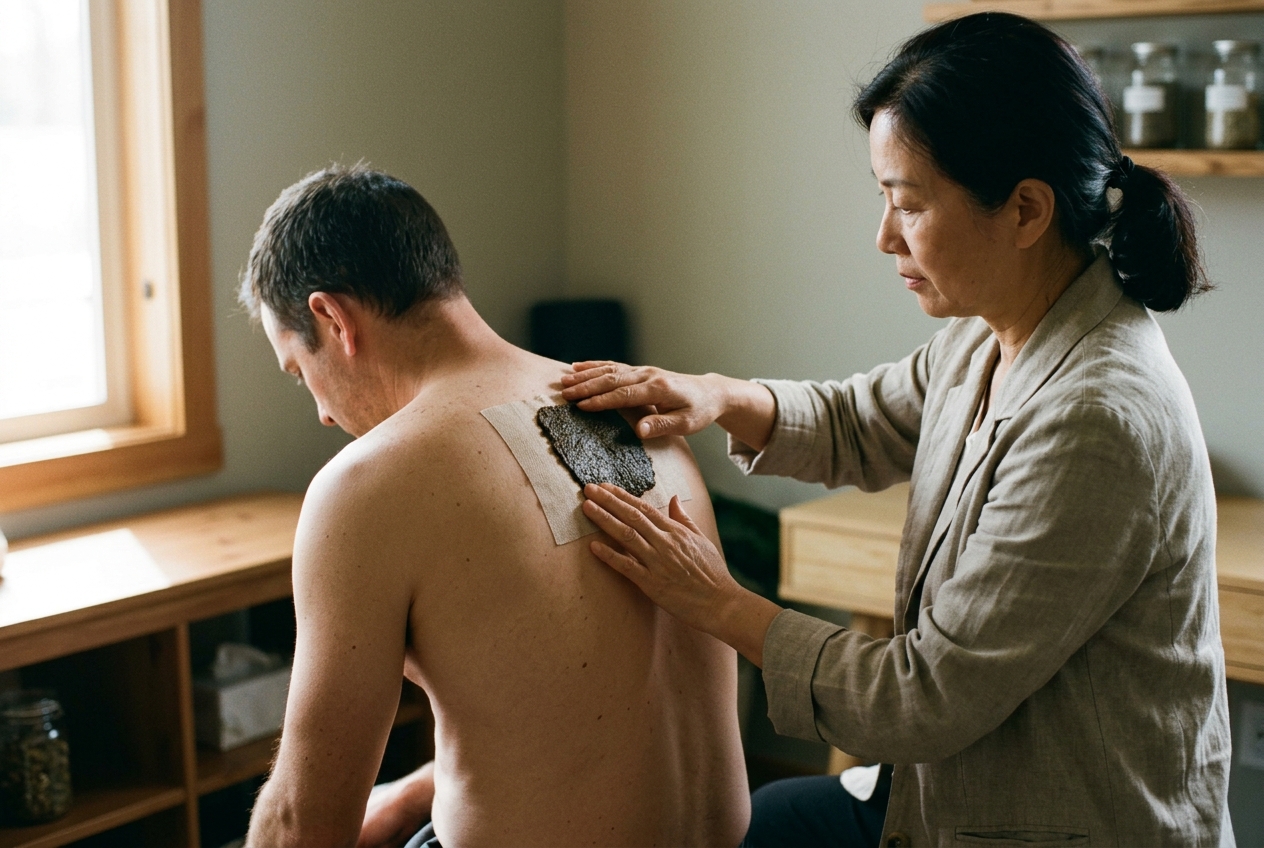
Geshu Cavity Diaphragm Shu: Infrascapular Fascial Decompression, Diaphragmatic Kinetic Mobility, and Hematological Qi Regulation in Classical Neigong
TCM QIGONG & ENERGY MOVEMENT

Geshu Cavity Diaphragm Shu: Infrascapular Fascial Decompression, Diaphragmatic Kinetic Mobility, and Hematological Qi Regulation in Classical Neigong

At its core, this discipline is an ancient, evidence-aligned method of postural recalibration, fascial unwinding, and synchronized deep breathing known within traditional Chinese somatic arts as *Neigong* (internal skill training) and *Daoyin* (the art of guiding breath and stretching the body). Rather than relying on forceful muscular exertion, this practice uses micro-adjustments in your skeleton and connective tissue to decompress the mid-back and release the posterior anchors of your diaphragm. The focal point of this work is an anatomical cavity known in Traditional Chinese Medicine as *Geshu* (cataloged in modern acupuncture as Bladder 17 or BL17), historically translated as the "Diaphragm Shu" or the pivotal meeting point of blood.

⚡ 6,739 Tokens • $0.00 Cost
Ganshu Cavity Liver Shu: Mid-Thoracic Fascial Decompression, Hepatic Qi Regulation, and Sinew Kinetic Elasticity in Classical Neigong
TCM QIGONG & ENERGY MOVEMENT

Ganshu Cavity Liver Shu: Mid-Thoracic Fascial Decompression, Hepatic Qi Regulation, and Sinew Kinetic Elasticity in Classical Neigong

At its somatic foundation, *Ganshu* mobilization is an internal recalibration protocol that combines subtle postural elongation, rotational spinal micro-movements, and diaphragmatic hydraulic breathing to liberate the ninth thoracic segment (*T9*). Rather than treating the spine as a rigid pillar, classical Neigong approaches the dorsal column as an articulated fluid conduit. By introducing precise micro-undulations into the mid-back while maintaining an open, relaxed pelvis and a suspended cranium, the practitioner mechanically mobilizes the deep intrinsic spinal musculature—the rotatores, multifidi, and longissimus thoracis—that lies directly beneath the superficial back muscles.

⚡ 5,556 Tokens • $0.00 Cost
Fengchi Cavity Wind Pool: Sub-Occipital Fascial Decompression, Vertebrobasilar Hemodynamics, and Clear Yang Elevation in Classical Neigong
TCM QIGONG & ENERGY MOVEMENT

Fengchi Cavity Wind Pool: Sub-Occipital Fascial Decompression, Vertebrobasilar Hemodynamics, and Clear Yang Elevation in Classical Neigong

At its fundamental physical level, this practice is an internal method of gently decompressing the base of your skull without relying on forceful manipulation or passive massage. Instead of using your fingers or a physical tool to dig into sore neck muscles, you use subtle postural realignments, coordinated diaphragmatic breathing, and focused mental awareness to release tension from the inside out. In the language of biomechanics, it is an active lengthening of the deep cervical spine; in the lexicon of Daoist cultivation, it is the opening of the cranial energetic gates.

⚡ 5,550 Tokens • $0.00 Cost
Feishu Cavity Pulmonary Shu: Scapulothoracic Fascial Decompression, Dorsal Pulmonary Qi Expansion, and Upper-Limb Kinetic Integration in Classical Neigong
TCM QIGONG & ENERGY MOVEMENT

Feishu Cavity Pulmonary Shu: Scapulothoracic Fascial Decompression, Dorsal Pulmonary Qi Expansion, and Upper-Limb Kinetic Integration in Classical Neigong

In the classical arts of Daoist *Neigong* (internal skill cultivation) and medical *Daoyin* (therapeutic movement and breath guidance), the upper back houses a critical gateway known as *Feishu* (BL13, 肺俞), translated as the "Pulmonary Transporting Point" or "Lung Shu." Situated along the urinary bladder meridian (*Taiyang* channel), this anatomical cavity functions as the primary dorsal aperture through which the energetic and physiological state of the respiratory system can be directly assessed, cleared, and regulated.

⚡ 6,754 Tokens • $0.00 Cost
Ding Bu T-Step Qigong: Unilateral Weight Transference, Ankle Stabilizer Recruitment, and Pelvic Tensegrity in Classical Daoyin
TCM QIGONG & ENERGY MOVEMENT

Ding Bu T-Step Qigong: Unilateral Weight Transference, Ankle Stabilizer Recruitment, and Pelvic Tensegrity in Classical Daoyin

At its essential foundation, *Ding Bu* (pronounced *deeng-boo* and written in Chinese as 丁步) is an asymmetrical standing posture and transitional stepping method utilized across classical [Daoyin](https://en.wikipedia.org/wiki/Daoyin) (ancient Chinese therapeutic gymnastics) and internal martial arts such as Taijiquan, Baguazhang, and Xingyiquan. The name derives from the fourth Chinese Heavenly Stem character, *Ding* (丁), whose orthographic shape mirrors a perpendicular intersection: a horizontal baseline intersected by a vertical descending pillar. In movement practice, this translates to a stance where one leg bears virtually all of the body’s weight, while the opposite foot forms an orthogonal or oblique “T” relationship with the supporting heel or instep, touching the earth with barely enough pressure to crush an autumn leaf.

⚡ 7,740 Tokens • $0.00 Cost
Dazhu Cavity Great Shuttle: Upper Thoracic Fascial Decompression, Bone Hui Dynamics, and Axial Skeletal Kinetic Transmission in Classical Neigong
TCM QIGONG & ENERGY MOVEMENT

Dazhu Cavity Great Shuttle: Upper Thoracic Fascial Decompression, Bone Hui Dynamics, and Axial Skeletal Kinetic Transmission in Classical Neigong

In classical Chinese somatic arts, this precise anatomical locus is known as *Dazhu* (大杼, BL11), traditionally translated as the "Great Shuttle." To the contemporary practitioner, the practice associated with Dazhu is essentially an art of spinal decompression—a method of unlocking the dense, chronically compressed bridge between the mobile neck and the rigid ribcage. Rather than forcing the body into rigid posture, this method uses gentle spatial awareness and structural calibration to suspend the skeleton from within, allowing the weight of the torso to drain effortlessly into the ground without pinching the upper back.

⚡ 6,878 Tokens • $0.00 Cost
Danshu Cavity Gallbladder Shu: Lower Thoracic Fascial Decompression, Biliary Qi Regulation, and Lateral Sinew Kinetic Tensegrity in Classical Neigong
TCM QIGONG & ENERGY MOVEMENT

Danshu Cavity Gallbladder Shu: Lower Thoracic Fascial Decompression, Biliary Qi Regulation, and Lateral Sinew Kinetic Tensegrity in Classical Neigong

At its most fundamental level, this practice is a restorative somatic method designed to open, decompress, and mobilize the mid-thoracic junction of your back so that breath and movement can flow freely between your upper and lower body. When modern life forces us into prolonged seated postures, shallow chest-breathing, and chronic mental stress, the mid-back locks into a rigid protective brace, restricting the ribcage and compressing the vital neurovascular bundles that govern digestion and systemic vitality. In classical East Asian medicine, this specific mid-thoracic locus is known as *Danshu* (胆俞, designated as [Acupuncture Point BL19](https://en.wikipedia.org/wiki/List_of_acupuncture_points)), the Gallbladder Back-Shu point located along the Urinary Bladder meridian.

⚡ 8,196 Tokens • $0.00 Cost
Dachangshu Cavity Large Intestine Shu: Lower Lumbar Fascial Decompression, Enteric Descending Dynamics, and Lumbosacral Kinetic Rooting in Classical Neigong
TCM QIGONG & ENERGY MOVEMENT

Dachangshu Cavity Large Intestine Shu: Lower Lumbar Fascial Decompression, Enteric Descending Dynamics, and Lumbosacral Kinetic Rooting in Classical Neigong

Stand up from wherever you are, plant your feet firmly at shoulder-width, and let your hands rest against the lower curve of your spine. Slide the fleshy pads of your thumbs across the muscular ridges on either side of your backbone, approximately two fingers’ breadth outward from the central furrow of your vertebrae, level with the bony ridge of your pelvis. Soften your knees by a fraction of an inch, release any tension held in your lower belly, and take three long, deliberate breaths through your nose. As you exhale, imagine your tailbone gently sinking toward the earth, as if weighted by a small plumb line. Feel that subtle spreading sensation across the base of your spine—that dense, quiet threshold where physical posture, visceral health, and neuromuscular control converge. That anatomical junction is the focus of our practice.

⚡ 10,394 Tokens • $0.00 Cost
Dabao Cavity Great Embracement: Mid-Axillary Intercostal Fascial Decompression, Great Luo-Connecting Vessel Integration, and Lateral Torso Kinetic Tensegrity in Classical Neigong
TCM QIGONG & ENERGY MOVEMENT

Dabao Cavity Great Embracement: Mid-Axillary Intercostal Fascial Decompression, Great Luo-Connecting Vessel Integration, and Lateral Torso Kinetic Tensegrity in Classical Neigong

At its simplest physical level, working with Dabao involves opening and decompressing the lateral flanks of your ribcage to liberate breathing mechanics and whole-body movement. In modern terms, it is a targeted neuro-fascial decompression of the mid-axillary thoracic wall that frees the primary and accessory breathing muscles. Within traditional East Asian medicine, as documented by authorities such as the [World Health Organization Traditional Medicine Programme](https://www.who.int/health-topics/traditional-complementary-and-integrative-medicine), this specific point is cataloged as Spleen 21 (SP21). It serves as the single "Great Luo-Connecting Vessel" (*Da Luo*, 大絡) of the body—a master regulatory hub that commands the entire interstitial fluid matrix, venous-capillary beds, and superficial fascial collaterals across the torso and limbs.

⚡ 7,996 Tokens • $0.00 Cost
Chen Jian Zhui Zhou Sinking the Shoulders and Dropping the Elbows: Glenohumeral Joint Decompression, Brachial Fascial Elongation, and Kinetic Upper-Limb Rooting in Classical Neigong
TCM QIGONG & ENERGY MOVEMENT

Chen Jian Zhui Zhou Sinking the Shoulders and Dropping the Elbows: Glenohumeral Joint Decompression, Brachial Fascial Elongation, and Kinetic Upper-Limb Rooting in Classical Neigong

At its essence, *Chen Jian Zhui Zhou* is a fundamental postural instruction found across all classical schools of [Qigong](https://en.wikipedia.org/wiki/Qigong), Daoyin, and [Taijiquan](https://en.wikipedia.org/wiki/Taijiquan). Translated literally as "sink the shoulders and drop (or weight) the elbows," this principle teaches you how to decouple your arms from the habitual tension of the neck and upper chest, transforming the upper limbs from isolated, muscular levers into spring-loaded, elastic conduits connected directly to your core and the floor.

⚡ 6,743 Tokens • $0.00 Cost
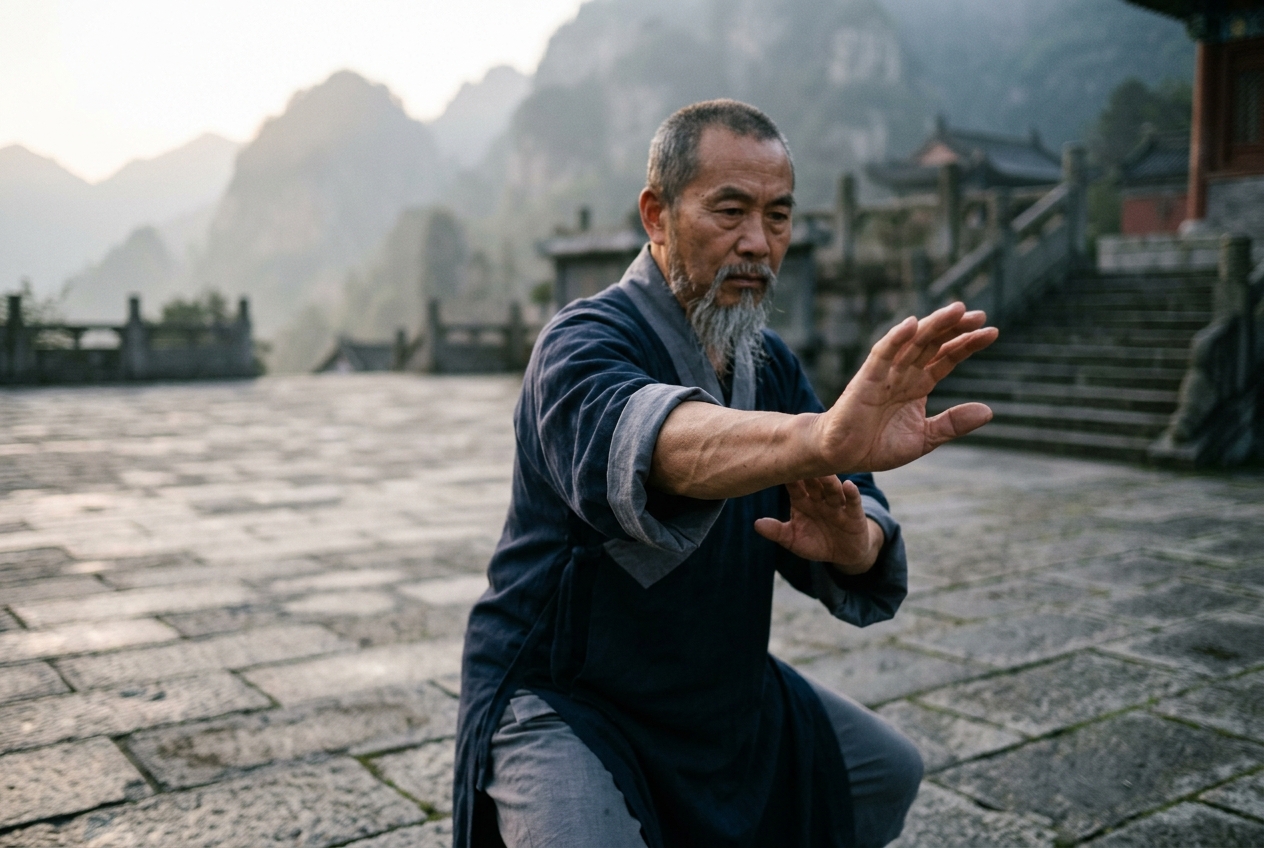
An Jin Push Force: Downward Hydrostatic Compression, Bilateral Palmar Vectoring, and Sagittal Ground Reaction Projection in Classical Neigong
TCM QIGONG & ENERGY MOVEMENT

An Jin Push Force: Downward Hydrostatic Compression, Bilateral Palmar Vectoring, and Sagittal Ground Reaction Projection in Classical Neigong

At its core, *An Jin* (often translated from Chinese as "Push Force" or "Sinking and Discharging Energy") is the art of moving another object—or projecting kinetic force—using the integrated weight of your whole body and the natural elasticity of your connective tissue, rather than the raw horsepower of your arm muscles. Instead of shoving outward with your shoulders and chest, you first settle your weight down into the earth like water sinking into sand, and then allow that rooted connection to rebound forward through an unbroken chain of fascia, bone, and relaxed tendon. In classical Daoist training, this force is not considered an isolated trick of leverage, but the fourth and concluding movement of the foundational "Four Cardinal Energies" (*Si Zheng*), balancing the buoyant upward expansion of Ward-Off (*Peng*), the fluid yielding of Roll-Back (*Lu*), and the concentrated focal strike of Press (*Ji*).

⚡ 6,610 Tokens • $0.00 Cost
Sanyinjiao Cavity Three Yin Intersection: Medial Crural Fascial Decompression, Tri-Meridian Yin Synthesis, and Pelvic Kinetic Rooting in Classical Neigong
TCM QIGONG & ENERGY MOVEMENT

Sanyinjiao Cavity Three Yin Intersection: Medial Crural Fascial Decompression, Tri-Meridian Yin Synthesis, and Pelvic Kinetic Rooting in Classical Neigong

At its core, this practice is a method of conscious posture and mindful breathing designed to unlock the lower legs, release deep structural tension, and cultivate full-body vitality through standing meditation (*Zhan Zhuang*) and gentle movement (*Daoyin*). In traditional East Asian somatic science, this focal point on the inner calf is known as *Sanyinjiao* (translated literally as the "Three Yin Intersection" or Spleen 6), a vital crossroads where three major pathways of circulation meet. By learning to release the chronic tightness along the inner calf and allowing your physical weight to sink naturally through the lower leg into the earth, you establish a direct, uninterrupted kinetic connection between the ground beneath your feet and your lower abdominal center. Rather than relying on rigid muscular holding, this training awakens a buoyant, spring-like support throughout your entire musculoskeletal and vascular system.

⚡ 8,614 Tokens • $0.00 Cost
Qimen Cavity Cycle Gate: Submammary Intercostal Fascial Decompression, Hepatic Qi Regulation, and Diaphragmatic Kinetic Expansion in Classical Neigong
TCM QIGONG & ENERGY MOVEMENT

Qimen Cavity Cycle Gate: Submammary Intercostal Fascial Decompression, Hepatic Qi Regulation, and Diaphragmatic Kinetic Expansion in Classical Neigong

At its core, this practice is a classical somatic discipline known as *Daoyin* (guided movement and stretching) and *Neigong* (internal energetic cultivation), designed to systematically decompress the lower ribcage, liberate the respiratory diaphragm, and revitalize the internal organs. In everyday terms, it is an integrated sequence of gentle multi-directional torso spirals, three-dimensional ribcage expansion, and specialized belly breathing that unlocks the rigid fascial casing around your liver and upper abdomen.

⚡ 9,622 Tokens • $0.00 Cost
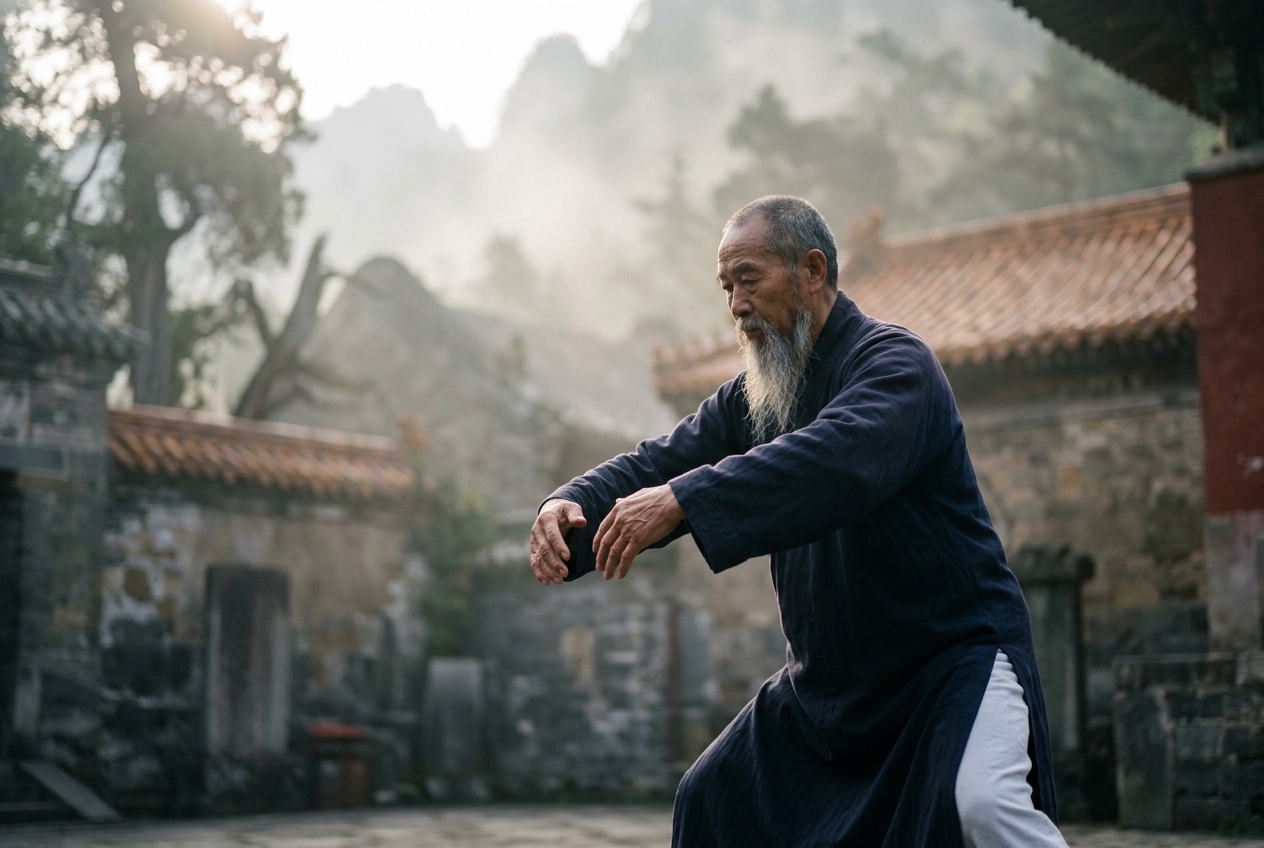
Zhou Jin Elbow Strike Force: Short-Range Kinetic Acceleration, Olecranon Fascial Vectoring, and Rotational Ground Force Transmission in Classical Neigong
TCM QIGONG & ENERGY MOVEMENT

Zhou Jin Elbow Strike Force: Short-Range Kinetic Acceleration, Olecranon Fascial Vectoring, and Rotational Ground Force Transmission in Classical Neigong

In the lexicon of classical Chinese somatic sciences and internal martial systems (*Neijiaquan*), this practice is known as *Zhou Jin* (肘勁), literally translated as "Elbow Vector Force" or "Elbow Energy." At its most fundamental level, *Zhou Jin* is the art of transforming the human body into an unbroken dynamic spring that channels kinetic energy from the earth, through a relaxed and rotating core, and delivers it through the apex of the elbow. Rather than treating the elbow as an isolated upper-body limb that swings or jabs via muscular contraction, classical internal systems view the elbow as a dense, primary conduit for total-body kinetic transmission.

⚡ 6,823 Tokens • $0.00 Cost
Shou Gong Harvesting Qi: Somatosensory Consolidation, Dantian Bioenergetic Sealing, and Autonomic Stabilization in Classical Daoyin
TCM QIGONG & ENERGY MOVEMENT

Shou Gong Harvesting Qi: Somatosensory Consolidation, Dantian Bioenergetic Sealing, and Autonomic Stabilization in Classical Daoyin

At its core, *Shou Gong* is the biological brake and metabolic vault of energy cultivation. Imagine spending twenty minutes boiling a pot of nourishing herbal broth: if you remove the lid and walk away while the flame is still roaring, the precious liquid rapidly evaporates into the surrounding air, leaving behind only scorched metal. *Shou Gong* is the act of turning down the heat, placing an airtight lid upon the vessel, and allowing the rich essence to settle into the bottom of the container.

⚡ 6,903 Tokens • $0.00 Cost
Neiguan Cavity Inner Pass: Antebrachial Fascial Decompression, Cardiopulmonary Autonomic Entrainment, and Median Nerve Pathway Integration in Classical Neigong
TCM QIGONG & ENERGY MOVEMENT

Neiguan Cavity Inner Pass: Antebrachial Fascial Decompression, Cardiopulmonary Autonomic Entrainment, and Median Nerve Pathway Integration in Classical Neigong

In plain terms, working with *Neiguan* (classified in modern acupuncture taxonomy as Pericardium 6 or PC6) is a method of decompressing the physical and neurological pathways of the inner arm to release tightness in the chest, calm an overactive nervous system, and restore smooth, diaphragmatic breathing. In everyday life, chronic mental stress, ergonomic strain from keyboard work, and emotional guarding cause the forearms, shoulders, and pectoral fascia to contract reflexively. This somatic bracing pattern restricts thoracic expansion, shortens breathing cycles, and locks the body into persistent sympathetic arousal. By learning to locate, mechanically mobilize, and mentally integrate the *Neiguan* junction during movement and stillness, you open a physiological gateway that links the hand directly to the core of the torso.

⚡ 8,615 Tokens • $0.00 Cost
← Previous Page Page 5 / 11 Next Page →