Hegu Cavity Joining Valley: First Dorsal Interosseous Fascial Decompression, Yangming Meridian Clearance, and Distal Upper-Limb Kinetic Vectoring in Classical Neigong
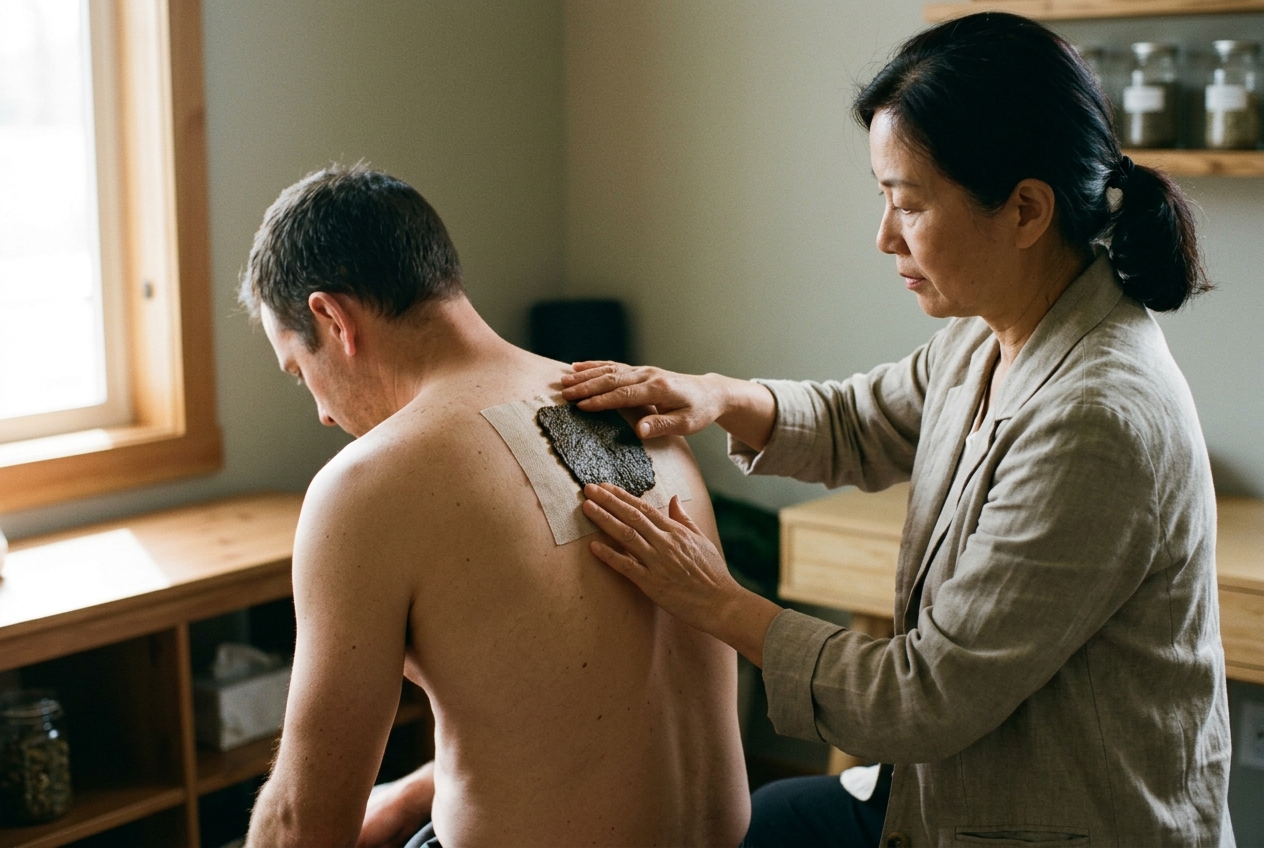
In everyday life, repetitive stress, prolonged computer use, and chronic psychological tension cause the musculature of the hand to chronically contract. The first dorsal interosseous muscle shortens, the radial neurovascular bundle is subtly compressed, and the kinetic transmission between the forearm and the palm becomes rigid or fragmented. By combining targeted Daoyin self-massage with isometric Neigong postures such as Zhan Zhuang ("Standing like a Post"), practitioners learn to release trapped fascial strain in the hand, modulate the central nervous system, and establish an unbroken kinetic chain running from the fingertips through the spine to the feet.
Traditional Chinese Medicine (TCM) categorizes Hegu as the Yuan-Source (原穴) point of the Hand Yangming Large Intestine Meridian. Yuan-Source points access the body’s deepest primordial vitality (Yuan Qi), providing direct access to the metabolic and regulatory functions of their respective organ networks. Far from being an isolated folk technique, systematic stimulation of Hegu is recognized by major health bodies worldwide, including the World Health Organization Traditional Medicine Strategy, as a foundational modality in integrative pain management and functional rehabilitation.
Classical Energetics and Yangming Meridian Dynamics
To understand why a point located on the hand exerts such profound systemic influence, one must examine the meridian taxonomy codified in ancient foundational texts such as the Huangdi Neijing (The Yellow Emperor's Inner Classic, c. 2nd century BCE) and the Zhenjiu Jiayi Jing (The Systematic Classic of Acupuncture and Moxibustion, 282 CE).
The Hand Yangming Large Intestine meridian originates at the radial tip of the index finger, traverses the Hegu space, ascends the lateral aspect of the forearm and anterior shoulder, crosses the supraclavicular fossa, climbs the neck, passes through the cheek and lower gums, and curves across the philtrum to terminate at the opposite nostril (Yingxiang, LI20). Because the Yangming channel is classically defined as being "abundant in both Qi and Blood" (Duo Qi Duo Xue), points along this pathway possess an unusually strong capacity to mobilize systemic circulation and clear metabolic heat.
The classical manual Sishi Liu Xue Ma Dan-yang Tianxing Shi'er Xue (Ma Danyang’s Twelve Heavenly Star Points) elevates Hegu to supreme clinical status for any disorder affecting the cranium, oral cavity, and facial tissues:
"Hegu is located in the Tiger's Mouth... it cures headaches, facial swelling, toothache of the lower jaw, bleeding from the nose, and sore throat with loss of voice. When the disease is in the head and face, Hegu is the master."
From an energetic standpoint, physical and emotional stress frequently causes Yang energy to unroot and ascend uncontrollably—a pathological state termed "Hyperactive Liver Yang" or "Rebel Yang Ascending." This manifesting pathology produces tension headaches, temporomandibular joint (TMJ) dysfunction, tinnitus, acute hypertension, and sensory overload. Activating Hegu functions as an energetic pressure-relief valve: it drains excess fire, opens the sensory orifices, and directs the turbulent, upward-surging Qi downward through the gastrointestinal and systemic excretory pathways.
The Synergistic "Four Gates" (Si Guan) Protocol
The regulatory authority of Hegu reaches its zenith when paired with its lower-limb counterpart, Taichong (LV3, "Great Rushing"), the Yuan-Source point of the Foot Jueyin Liver Meridian located on the dorsum of the foot between the first and second metatarsals. Together, bilateral Hegu and bilateral Taichong constitute the celebrated classical prescription known as the Four Gates (Si Guan, 四關).
| Acupoint Pair | Meridian System | Energetic Polarity | Anatomical Territory | Functional Synergy |
|---|---|---|---|---|
| Hegu (LI4) | Hand Yangming (Large Intestine) | Yang / Qi Aspect | Upper Body, Head, Face, Exterior | Moves Qi, disperses wind-heat, opens exterior channels |
| Taichong (LV3) | Foot Jueyin (Liver) | Yin / Blood Aspect | Lower Body, Pelvis, Hypochondrium, Interior | Nourishes Blood, pacifies Liver wind, sinks ascending Yang |
Within classical Neigong cosmology, the Four Gates represent the structural valves regulating the interchange between the Upper and Lower Warmers (Shang/Xia Jiao), as well as the dynamic balance between systemic Qi (the kinetic, expansive force) and Blood (the nutritive, grounding substance). While Hegu governs the movement of Qi and commands the exterior and upper somatic regions, Taichong governs the storage and smooth flow of Liver Qi and commands the interior and lower somatic regions. When stimulated concurrently through seated Daoyin breathwork or targeted acupressure, the Four Gates eliminate recalcitrant stasis throughout the Twelve Primary Meridians, quiet psycho-emotional agitation (Shen disturbance), and restore systemic homeostatic equilibrium.
Functional Neuro-Anatomy and Fascial Tensegrity
Modern anatomical dissection provides a compelling structural counterpart to classical energetic theory. Topographically, Hegu lies precisely within the belly of the first dorsal interosseous muscle (FDI), immediately adjacent to the adductor pollicis.
Neurovascularly, this small triangular zone is extraordinarily dense. It is innervated superficially by the digital cutaneous branches of the radial nerve, while its deep motor fibers receive innervation from the deep branch of the ulnar nerve. The vascular architecture is dominated by the first dorsal metacarpal artery, arising directly from the radial artery as it plunges through the interosseous space into the deep palmar arch.
Myofascial Continuity and the Radial Chain
Viewed through the lens of modern biotensegrity and Thomas Myers’ myofascial meridians, Hegu is a critical regulatory nexus along the Superficial Front Arm Line and the Deep Back Arm Line. The fascia enveloping the first dorsal interosseous does not terminate at the metacarpal margin; it continues seamlessly into the dorsal carpal retinaculum, along the lateral compartmental septum of the forearm, across the supinator and brachioradialis, over the lateral epicondyle of the humerus, through the deltoid and rotator cuff musculature, and ultimately anchors into the upper cervical vertebrae and cranial occiput.
When an untrained individual clenches their fist or collapses the web of the thumb, the first dorsal interosseous undergoes hyper-tonic contracture. This focal shortening exerts longitudinal tension through the deep antebrachial fascia, pulling the scaphoid and trapezium bones into slight malalignment, predisposing the median and radial nerves to micro-entrapment, and projecting mechanical strain upward through the triceps and deltoid into the upper trapezius and levator scapulae.
Conversely, when the Hu Kou is deliberately expanded into a buoyant, parabolic arch during Neigong postures, several critical biomechanical events occur simultaneously: 1. The mechanical compression on the terminal branches of the radial nerve and radial artery is alleviated. 2. The transverse carpal arch is widened, relieving hydrostatic pressure within the carpal tunnel. 3. The entire radial myofascial myofilament system is placed under pre-stressed, tensile equilibrium (tensegrity), allowing mechanical loads placed upon the palm to be distributed across the shoulder girdle and spinal core rather than shearing the delicate wrist joint.
Neuro-Endocrine and Analgesic Mechanisms
Over the past four decades, biomedical research published in peer-reviewed journals cataloged by the National Center for Biotechnology Information (NCBI PubMed) has illuminated the precise neurochemical cascades triggered by somatic stimulation of Hegu.
1. Diffuse Noxious Inhibitory Control (DNIC) and Endogenous Opiates
When Hegu is stimulated via manual acupressure, sustained mechanical pressure, or acupuncture needling, it excites high-threshold myelinated somatic afferents (A-beta and A-delta fibers), alongside unmyelinated C-fibers. These signals ascend the spinothalamic tracts to the midbrain, terminating in the periaqueductal gray (PAG) and the rostral ventromedial medulla (RVM).
Activation of these midbrain centers triggers the descending pain modulation system—a process known in neurophysiology as Diffuse Noxious Inhibitory Control (DNIC) or Conditioned Pain Modulation (CPM). The pituitary gland and arcuate nucleus of the hypothalamus respond by synthesizing and releasing endogenous opioid peptides, specifically beta-endorphins, enkephalins, and dynorphins. These neurotransmitters bind to mu ($\mu$) and delta ($\delta$) opioid receptors in both the central nervous system and the dorsal horns of the spinal cord, pre-synaptically inhibiting the release of Substance P and glutamate, thereby dampening pain perception systemically. Rigorous reviews curated within Evidence-Based Complementary and Alternative Medicine systematically demonstrate that Hegu stimulation significantly elevates mechanical and thermal pain thresholds throughout both cranial and distant somatic dermatomes.
2. Autonomic Down-Regulation and Vagal Tone
Beyond analgesia, sustained, rhythmic pressure applied to Hegu exerts a regulatory influence upon the autonomic nervous system. Functional magnetic resonance imaging (fMRI) studies reveal that manual stimulation of LI4 induces transient deactivation of the limbic-paralimbic-neocortical network, specifically dampening amygdalar hyper-reactivity and modulating the anterior cingulate cortex.
This limbic quietude down-regulates sympathetic adrenergic outflow while simultaneously augmenting parasympathetic efferent activity via the dorsal motor nucleus of the vagus nerve ($CN\ X$). The clinical consequence is a measurable reduction in systemic cortisol, a drop in mean peripheral vascular resistance, and an increase in Heart Rate Variability (HRV) high-frequency power—a physiological state of restorative somatic equilibrium.
Step-by-Step Somatic Activation & Neigong Integration
To experience the clinical and energetic benefits of Hegu, the practice must transition from intellectual understanding to direct somatic experience. The following protocol integrates classical seated Daoyin massage with standing Neigong post alignment.
Phase 1: Seated Daoyin Self-Massage Protocol
-
Environmental Setup and Postural Foundation: Sit comfortably on the forward edge of a firm chair or on a meditation cushion. Maintain an erect, suspended spine: visualize the crown of your head (Baihui, GV20) gently drawn toward the sky by a silk cord, while your sit-bones sink heavily into the seat. Relax your chest, hollow your axillae (armpits) slightly as if holding a small bird's egg beneath each arm, and rest your hands palms-down on your thighs.
-
Precise Anatomical Palpation: Bring your left hand up before your chest. Adduct (bring together) your left thumb and index finger. Observe the distinct muscular bulge that rises on the back of the webbed space. Place the distal interphalangeal crease of your right thumb precisely onto the edge of the webbing between your left thumb and index finger. When you bend your right thumb down, its tip rests directly over Hegu. Now relax the left hand, separating the thumb and index finger into a natural curve.
-
Application of Deqi Vectoring: Do not merely pinch the skin superficially. Direct the tip of your right thumb inward and angled slightly forward toward the radial shaft of the second metacarpal bone. Apply slow, progressive pressure. As you reach the proper fascial depth (approximately 0.5 to 0.8 inches into the muscle belly), you will evoke the classical sensation of Deqi (得氣—"the arrival of Qi"): a complex sensory blend of deep aching, localized distension, mild warmth, and faint electrical radiating along the radial line of the forearm.
-
Dynamic Breath Synchronization: * Inhale (4 counts): Breathe smoothly through your nose into the lower abdomen (the Dantian, located two inches below the navel), allowing the belly to expand three-dimensionally while maintaining steady, unyielding pressure on the point. * Hold (2 counts): Retain the breath gently without locking your glottis; feel the pressure concentrated in the center of the hand. * Exhale (6 counts): Exhale softly through the nose. As the abdomen draws inward, perform minute, clockwise kneading circles with your right thumb against the periosteum of the second metacarpal bone. * Repeat this cycle for 9 to 18 complete breaths on the left hand, then switch hands and repeat the procedure on the right.
Phase 2: Standing Neigong Integration (Zhan Zhuang)
Once the point has been somatically awakened through manual Daoyin, it is integrated into whole-body structural alignment via the classical Zhan Zhuang stance known as "Embracing the Tree" (Cheng Bao Zhuang).
- Foundation: Stand with your feet parallel and shoulder-width apart. Unlock your knees, sink your tailbone as though resting on the edge of a high stool, and level your pelvis. Root your weight through the bubbling spring point (Yongquan, KI1) on the soles of your feet.
- Arm Structure (Peng Jin): Raise your arms to chest height, forming an expansive, circular embrasure as if holding an ancient tree trunk. Your elbows must remain slightly lower than your shoulders, and your wrists must be lower than your elbows.
- The Active Tiger's Mouth (Hukou Expansion): Spread your fingers naturally. Consciously extend the thumb away from the index finger to form a rounded, open arch. Do not hyper-extend or flatten the palm. Gently inflate the Hegu region from within by projecting your intention (Yi) through the radial line.
- Somatic Kinetic Feedback: When the Hu Kou is properly rounded, you will feel a distinct structural connection linking the base of your thumb, the lateral edge of the forearm, the triceps, the serratus anterior, and the scapulae. This unifies the arms with the torso, generating the spring-like, buoyant internal force known in the internal martial arts as Peng Jin (掤勁).
Martial and Therapeutic Applications
In classical Chinese martial traditions—including Taijiquan, Xingyiquan, and Baguazhang—the maintenance of an open, pressurized Hegu cavity is a fundamental requirement for power generation and joint preservation.
1. Terminal Wrist Stability and Kinetic Transmission
During martial force projection (such as palm striking, pushing, or parrying in push-hands /Tuishou), the wrist is subjected to intense axial and shear forces. If the Hu Kou is collapsed and Hegu is flaccid, the kinetic chain breaks at the carpal articulation. Under heavy resistance, the wrist joint buckles dorsal-radially, dissipating striking power into soft-tissue strain and potentially fracturing the scaphoid or spraining the collateral ligaments.
Conversely, conscious activation and expansion of Hegu engages the first dorsal interosseous and abductor pollicis longus in synergistic co-contraction with the flexor carpi radialis and extensor carpi radialis. This creates an immutable muscular and fascial splint around the radio-carpal joint. The force generated from the ground and rotated through the dantian and spine passes straight through the carpus into the target without energetic leakage or structural collapse.
2. Clinical and Somatic Therapy Applications
Clinically, regular somatic cultivation and acupressure treatment at Hegu provides immediate therapeutic intervention for a wide spectrum of disorders:
- Tension-Type and Cervicogenic Headaches: By inducing DNIC midbrain analgesia and releasing reciprocal myofascial tension along the sternocleidomastoid, upper trapezius, and suboccipital lines, Hegu compression rapidly aborts acute cranial pain syndromes.
- Temporomandibular Joint (TMJ) Dysfunction and Odontalgia: Because the Yangming meridian crosses the mandibular and maxillary dental arches, stimulating LI4 inhibits trigeminal sensory transmission at the level of the spinal trigeminal nucleus, providing profound relief for jaw clenching, bruxism, and dental discomfort.
- Upper-Limb Nerve Entrapment and Repetitive Strain Injury: Decompressing the Hu Kou fascial envelope restores gliding dynamics to the radial and median nerve branches, reversing repetitive strain symptoms associated with modern keyboard and device usage.
Classical Lineage and Context
The historical lineage of Hegu is intertwined with the foundational codification of Chinese medicine. The earliest systematic descriptions appear in the Mawangdui Silk Texts (excavated from tombs dating to 168 BCE), where the pathway was originally named the "Tooth Vessel" (Chi Mai) due to its direct clinical efficacy for oral and facial pathology.
By the time the imperial physician Huangfu Mi authored the monumental Zhenjiu Jiayi Jing in 282 CE during the Jin Dynasty, Hegu was firmly established as the central Yuan-Source clearing point for the entire upper gastrointestinal, respiratory, and cephalic networks. Throughout the Song and Ming Dynasties, internal martial arts lineages integrated these medical understandings into movement pedagogy. Masters of the Daoist Wudang tradition realized that the physical condition of the hands directly mirrors the internal condition of the organs and the flow of internal energy (Qi).
The preservation of these techniques was sustained through unbroken monastic and lineage transmissions, such as those cataloged by the National Qigong Association and modern institutional repositories. In the classical Neigong aphorisms, it is said: "Look to the hands to see the state of the Heart; look to the Tiger's Mouth to see the vitality of the Breath." When the Tiger's Mouth is open, relaxed, and structurally sound, the entire meridian circuit remains free of obstruction.
Today's Practice Commitment
To translate this classical science into tangible neurological and energetic adaptations, incorporate this simple five-minute clinical routine into your daily regimen:
- Tomorrow Morning, Upon Waking (3 Minutes): Before checking digital devices or consuming caffeine, sit upright in bed. Perform the Phase 1 Seated Daoyin Protocol for 18 deep, rhythmic abdominal breaths on your left hand, followed by 18 breaths on your right hand. Focus your mind on feeling the dull, warm Deqi ache radiate up the forearm toward your neck.
- Midday Postural Reset (2 Minutes): Whenever you experience mental fatigue, eye strain, or tension in your temples, pause. Stand up, adopt the Phase 2 Zhan Zhuang arm posture, inflate the Hu Kou arch of both hands, and take six slow, diaphragmatic breaths, visualizing all excess heat and mental pressure descending from your crown, through your spine, and sinking into the earth beneath your feet.
Record your observations over the next seven days. Notice the subtle reduction in facial and neck tension, the increased warmth and vitality in your extremities, and the calm, grounded mental clarity that emerges when the Joining Valley is fully open.
Key Takeaways
For further foundational reading on meridian pathways and acupuncture point taxonomy, consult the comprehensive documentation available through Wikipedia's Hegu (LI4) Reference.