Powernews Section Archive

TCM Qigong & Energy Movement Archive

Page 9 of 11
Swimming Dragon Qigong: Serpentine Spinal Undulation, Renal Qi Regeneration, and Multi-Planar Fascial Mobilization in Daoist Daoyin
TCM QIGONG & ENERGY MOVEMENT

Swimming Dragon Qigong: Serpentine Spinal Undulation, Renal Qi Regeneration, and Multi-Planar Fascial Mobilization in Daoist Daoyin

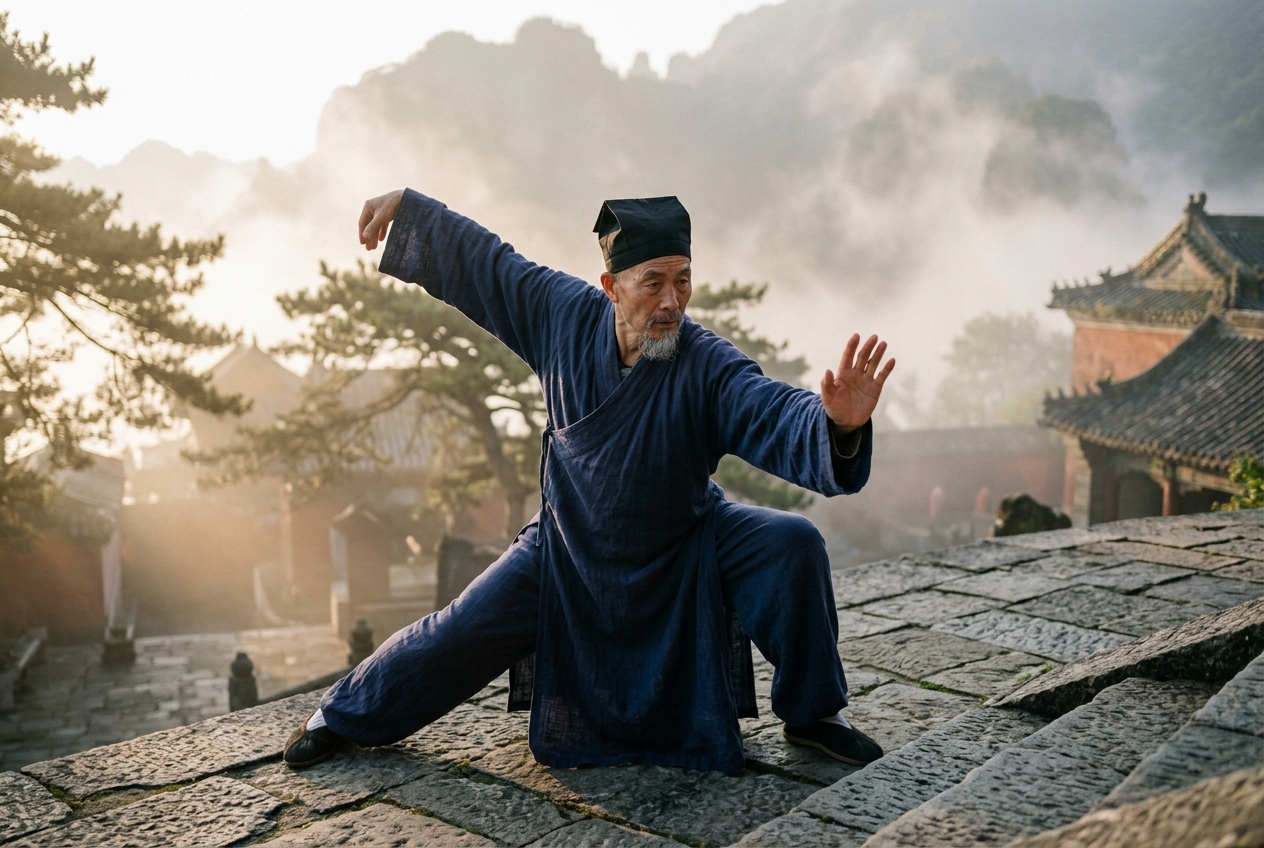
To practice Swimming Dragon without direct supervision, you must cultivate an internal sense of continuous motion (*Lian Mian Bu Duan*), where no joint locks, no movement halts, and every phase flows effortlessly into the next.

⚡ 6,581 Tokens • $0.00 Cost
Shuai Shou Gong Arm Swinging Qigong: Rhythmic Pendular Biomechanics, Peripheral Capillary Perfusion, and Autonomic Reset in Medical Daoyin
TCM QIGONG & ENERGY MOVEMENT

Shuai Shou Gong Arm Swinging Qigong: Rhythmic Pendular Biomechanics, Peripheral Capillary Perfusion, and Autonomic Reset in Medical Daoyin

At its core, **Shuai Shou Gong** (甩手功), frequently translated as *Arm Swinging Qigong* or refined in modern clinical circles as *Ping Shuai Gong* (Level Arm Swinging), is an ancient self-regulatory somatic exercise designed to restore systemic circulation, balance the autonomic nervous system, and dissolve physical tension through effortless, rhythmic pendular motion. Rather than relying on strenuous muscular exertion, heavy cardiovascular strain, or complex choreographies, the practitioner stands rooted in place while rhythmically swinging both arms forward to shoulder height and letting them fall backward under the natural force of gravity, punctuating every fifth swing with a subtle, resilient double-bounce of the knees.

⚡ 7,376 Tokens • $0.00 Cost
Wudang Taiyi Five Elements Qigong: Helical Kinetic Spirals, Visceral Organ Resonance, and Daoist Longevity Daoyin
TCM QIGONG & ENERGY MOVEMENT

Wudang Taiyi Five Elements Qigong: Helical Kinetic Spirals, Visceral Organ Resonance, and Daoist Longevity Daoyin

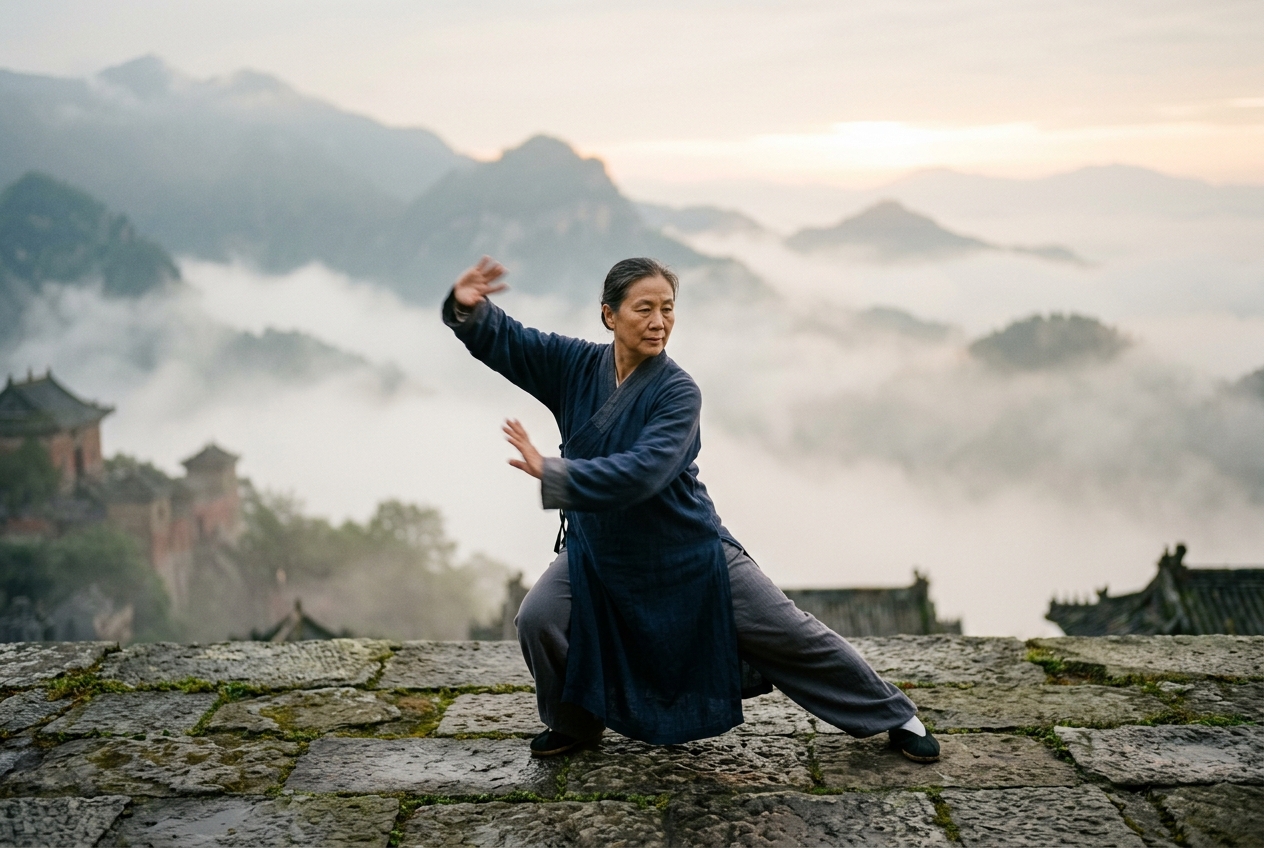
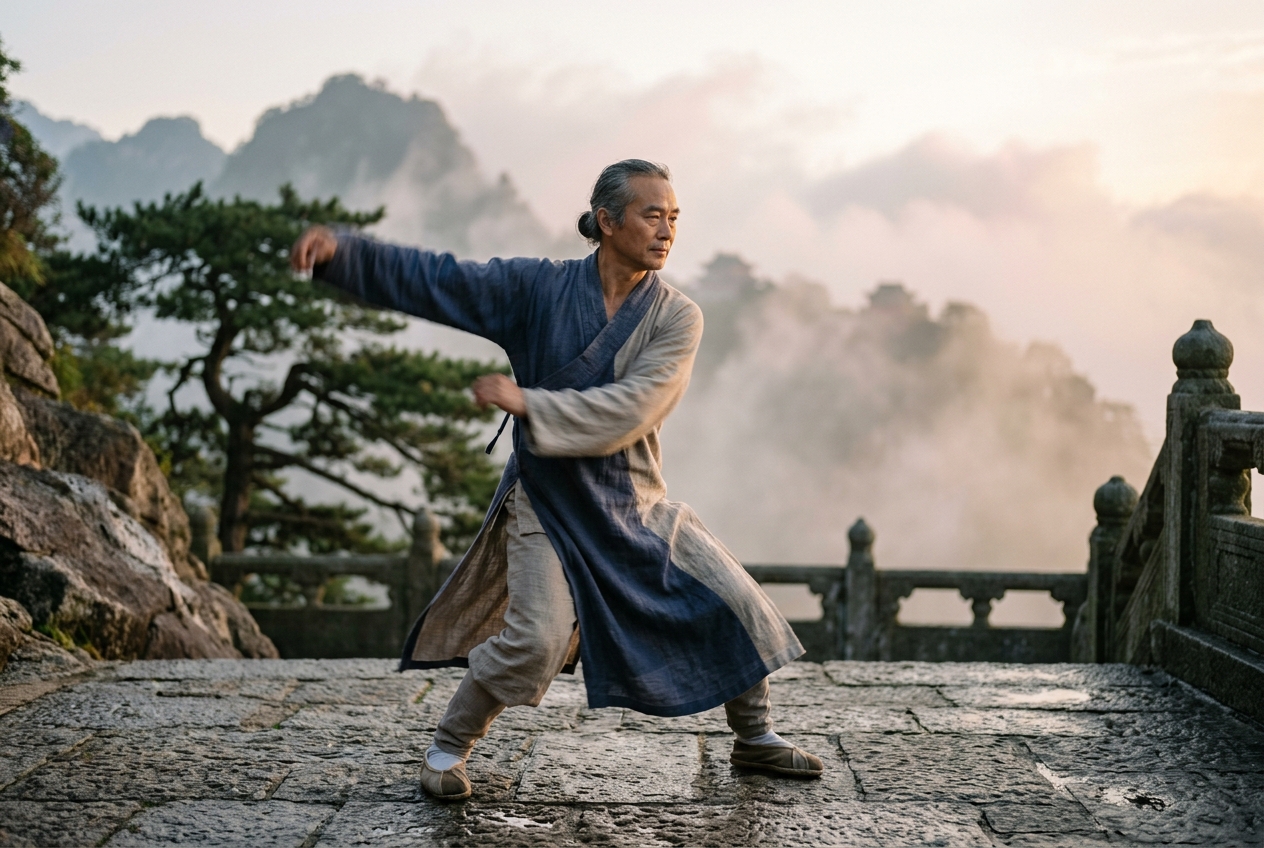
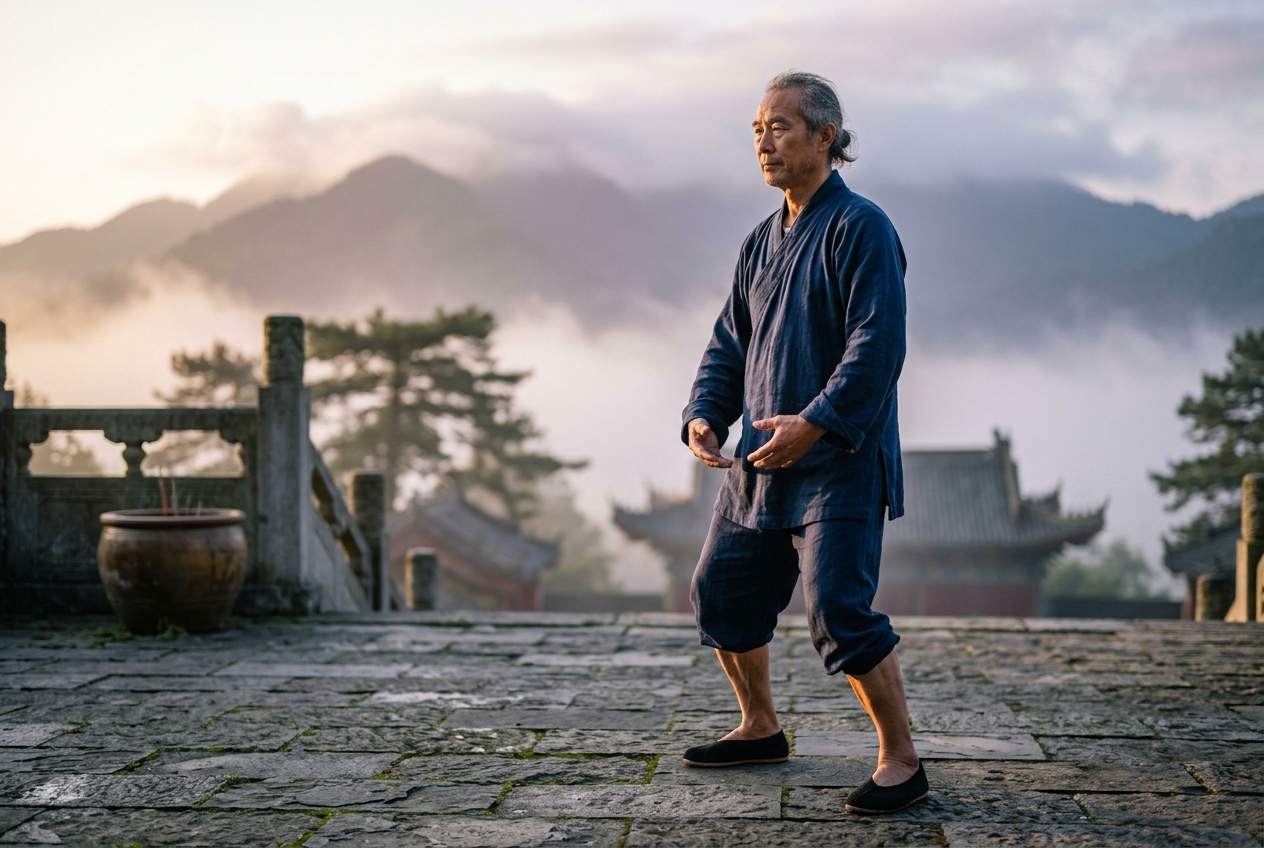
Wudang Taiyi Five Elements Qigong (*Taiyi Wuxing Gong*, 太乙五行气功) is an ancient, fluid movement system from the Daoist mountain sanctuaries of China that heals and strengthens the body through slow, circular spirals rather than rigid, linear exercises. Instead of lifting weights or holding static stretches, you move continuously like water, gently twisting your joints and shifting your weight between your left and right legs to massage your internal organs and lubricate your spine.

⚡ 6,457 Tokens • $0.00 Cost
Ma Bu Horse Stance Qigong: Isometric Quadriceps Recruitment, Pelvic Girdle Stabilization, and Ground Reaction Force Anchoring in Classical Martial Daoyin
TCM QIGONG & ENERGY MOVEMENT

Ma Bu Horse Stance Qigong: Isometric Quadriceps Recruitment, Pelvic Girdle Stabilization, and Ground Reaction Force Anchoring in Classical Martial Daoyin

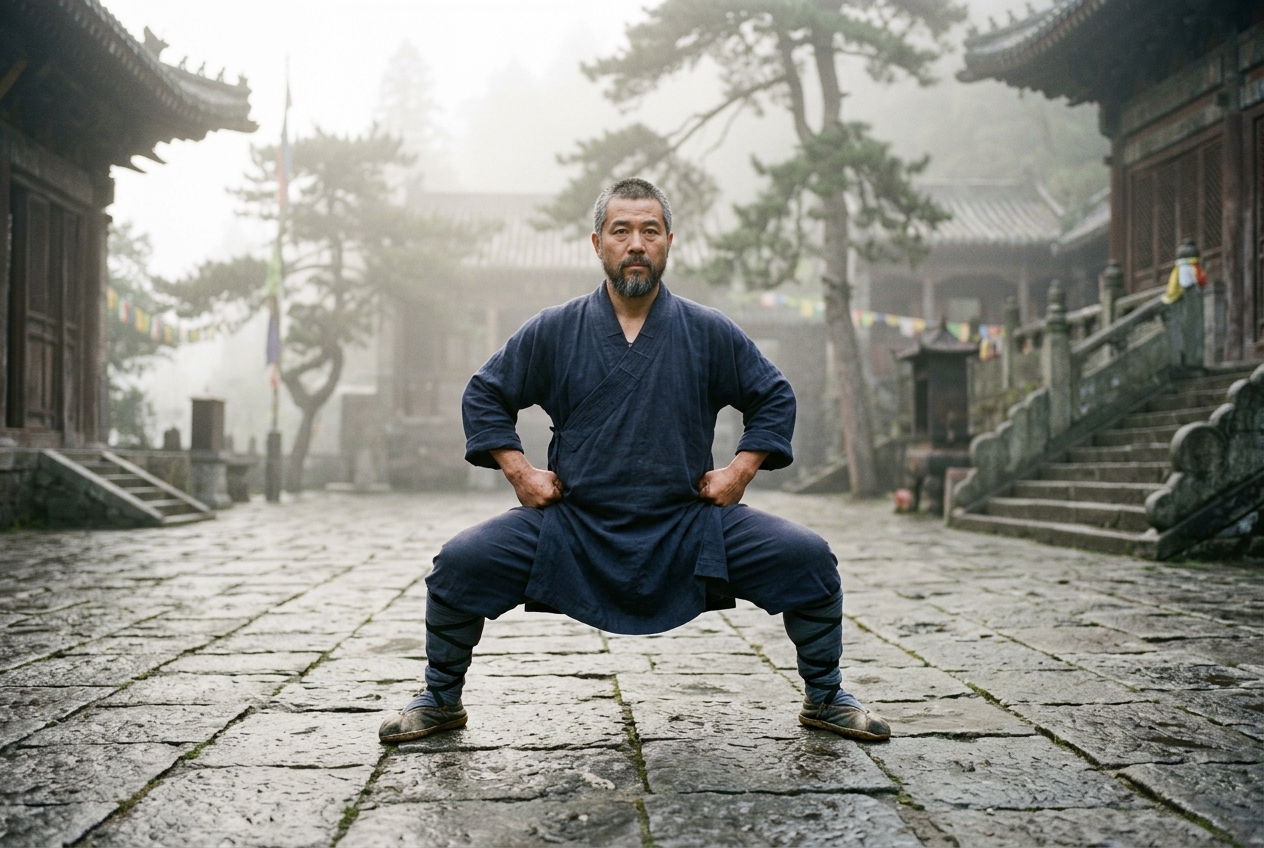
At its fundamental physical level, the Horse Stance—known historically throughout China as *Ma Bu* (馬步)—is a sustained static squat held with parallel feet and an upright torso. Rather than moving through dynamic repetitions as in conventional gym squats, the practitioner sinks into a wide, low isometric hold and remains stationary, using the opposing forces of gravity and internal muscular tension to reorganize posture, fortify connective tissue, and train the mind to remain serene under acute physical strain.

⚡ 6,280 Tokens • $0.00 Cost
Han Xiong Ba Bei Sinking the Chest and Rounding the Back: Sternal Relaxation, Scapular Tensegrity, and Dorsal Fascial Expansion in Classical Neigong
TCM QIGONG & ENERGY MOVEMENT

Han Xiong Ba Bei Sinking the Chest and Rounding the Back: Sternal Relaxation, Scapular Tensegrity, and Dorsal Fascial Expansion in Classical Neigong

In the ancient Chinese movement arts of Taijiquan and Neigong (internal energy cultivation), this micro-adjustment is known by a four-character phrase: *Han Xiong Ba Bei* (含胸拔背), universally translated as "sinking the chest and plucking up the back." In simple, everyday terms, it is the deliberate physical art of relaxing the front of your chest so your breath can drop freely, while simultaneously broadening your upper back to decompress your spine and build resilient whole-body strength. Rather than puffing the chest outward like a parade-ground soldier or slouching forward like an exhausted office worker, you create a buoyant, spring-like arch across your torso.

⚡ 5,538 Tokens • $0.00 Cost
Chen Tuan Sleeping Qigong: Lateral Recumbent Postural Alignment, Nocturnal Dantian Consolidation, and Shen Internalization in Daoist Daoyin
TCM QIGONG & ENERGY MOVEMENT

Chen Tuan Sleeping Qigong: Lateral Recumbent Postural Alignment, Nocturnal Dantian Consolidation, and Shen Internalization in Daoist Daoyin

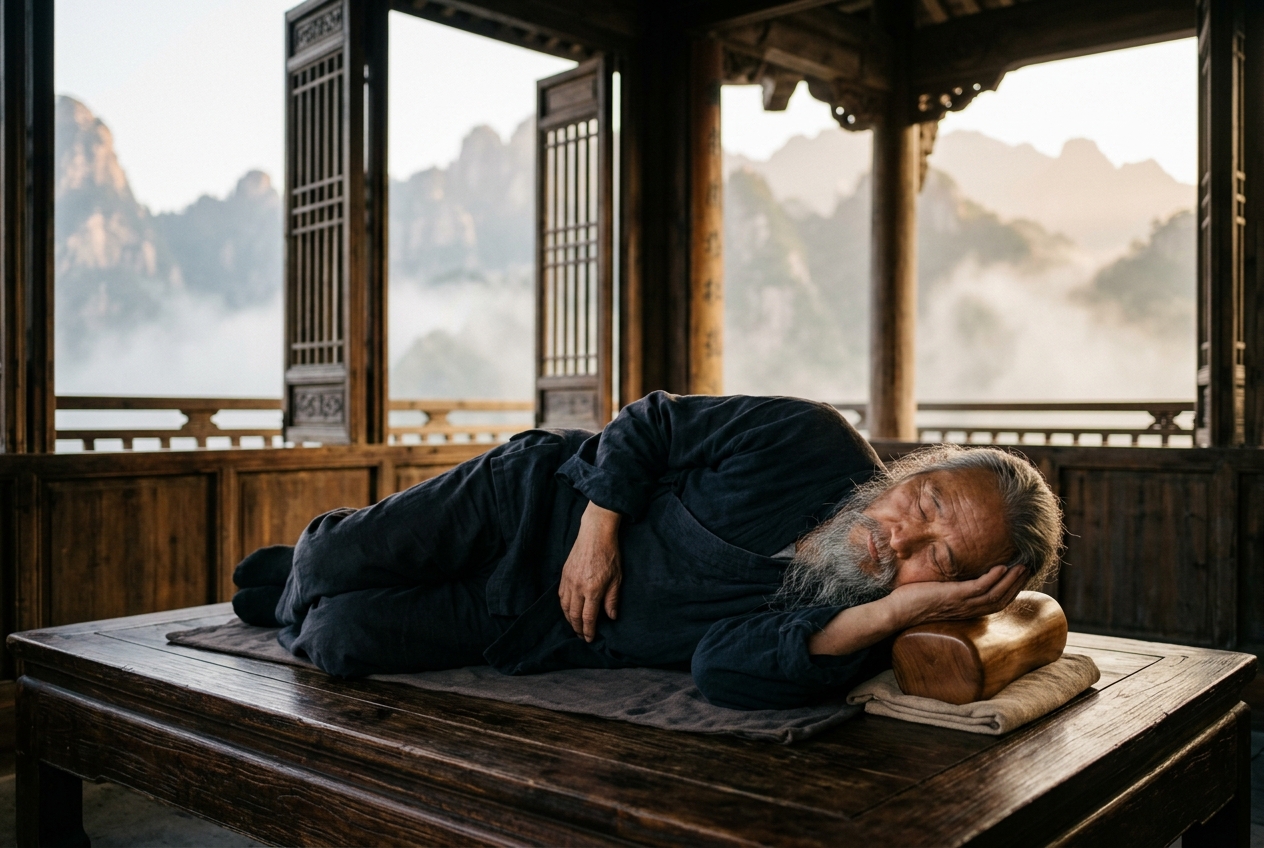
Chen Tuan Sleeping Qigong—known in classical Chinese internal arts as *Shui Gong* (睡功, literally "Sleep Skill")—is a centuries-old somatic discipline that transforms the passive unconsciousness of nightly slumber into an active practice of cellular restoration and energetic consolidation. At its core, the practice relies on a specific lateral posture known as the "Sleeping Dragon" (*Wolong*, 卧龙), paired with a refined method of diaphragmatic breathing directed into the lower belly, roughly two to three inches beneath the navel. Rather than treating sleep as an abrupt mental blackout where the body collapses under exhaustion, this Daoist discipline approaches the bed as an alchemical chamber. By orienting the physical frame into an exact biomechanical geometry, the practitioner decompresses the spinal column, releases deep fascial tension across the pelvis and thorax, and shifts the autonomic nervous system into profound parasympathetic recovery before dropping into slumber.

⚡ 6,559 Tokens • $0.00 Cost
Yin Wei Mai Linking Vessel: Interior Fascial Networks, Deep Psycho-Emotional Harmonization, and Visceral Yin Integration in Classical Neigong
TCM QIGONG & ENERGY MOVEMENT

Yin Wei Mai Linking Vessel: Interior Fascial Networks, Deep Psycho-Emotional Harmonization, and Visceral Yin Integration in Classical Neigong

In the classical lineage of Chinese internal cultivation (*Neigong*) and oriental medicine, this pathway is known as the **Yin Wei Mai** (陰維脈), traditionally translated as the **Yin Linking Vessel** or **Yin Preserving Network**. Unlike the twelve standard primary organ channels that circulate defensive and nutritive energies in continuous daily cycles, the Yin Wei Mai belongs to the eight extraordinary vessels (*Qi Jing Ba Mai*). Its dedicated anatomical and energetic function is to link, weave, and harmonize all the internal deep tissues, visceral organs (*Zang*), and blood reserves of the body into a unified functional whole.

⚡ 6,325 Tokens • $0.00 Cost
Yin Qiao Mai Heel Vessel: Plantar Arch Tensegrity, Inner Leg Fascial Vectoring, and Somatic Vitality Reservoir Dynamics in Classical Neigong
TCM QIGONG & ENERGY MOVEMENT

Yin Qiao Mai Heel Vessel: Plantar Arch Tensegrity, Inner Leg Fascial Vectoring, and Somatic Vitality Reservoir Dynamics in Classical Neigong

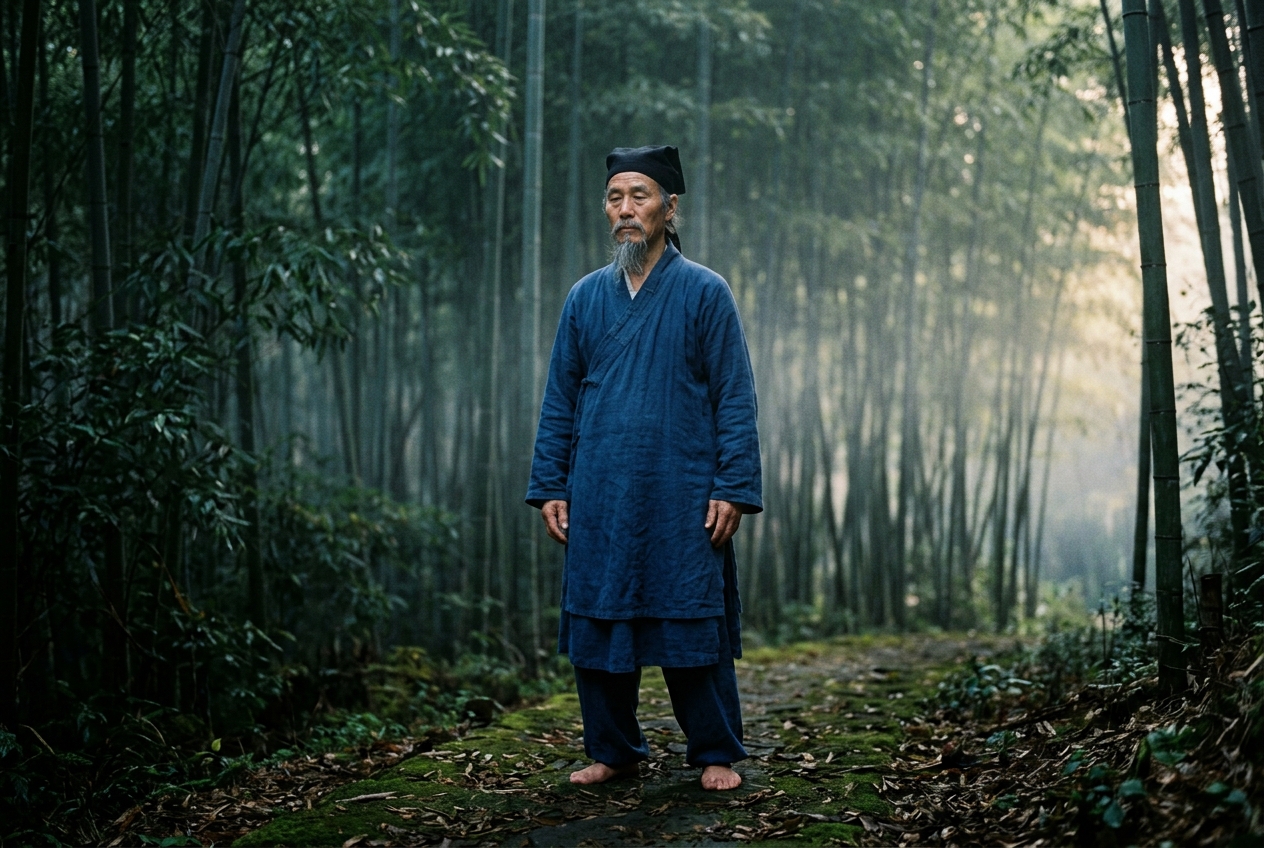
To awaken the Yin Qiao Mai, you do not need abstract visualization or esoteric gymnastics. You require only precise somatic intention, structural alignment, and the rhythmic pumping of diaphragmatic breath. Follow these sequential stages to establish the posture of quiet power known in internal martial arts as *Zhan Zhuang* (Standing Like a Stake) and regulate the Yin Heel pathway.

⚡ 5,100 Tokens • $0.00 Cost
Yang Wei Mai Linking Vessel: Exterior Fascial Chains, Wei Qi Fortification, and Dynamic Yang Network Integration in Classical Neigong
TCM QIGONG & ENERGY MOVEMENT

Yang Wei Mai Linking Vessel: Exterior Fascial Chains, Wei Qi Fortification, and Dynamic Yang Network Integration in Classical Neigong

In traditional East Asian medicine, human physiology is sustained not only by the twelve primary organ channels, but by a deeper, reservoir-like network of pathways known as the Eight Extraordinary Vessels ([Extraordinary Meridians](https://en.wikipedia.org/wiki/Extraordinary_meridians)). Among these primordial energetic rivers, the *Yang Wei Mai*—traditionally translated as the Yang Linking Vessel or the Yang Regulating Meridian—functions as the universal coordinator for all the external, outward-facing energetic circuits of the human organism. If the twelve primary channels are likened to municipal canals that nourish individual organs, the Yang Wei Mai operates as a massive oceanic levee system, dynamically networking every Yang meridian across the lateral and posterior surfaces of the body.

⚡ 8,570 Tokens • $0.00 Cost
Yang Qiao Mai Heel Vessel: Lateral Kinetic Chains, Cranio-Ocular Alignment, and Dynamic Yang Vectoring in Classical Neigong
TCM QIGONG & ENERGY MOVEMENT

Yang Qiao Mai Heel Vessel: Lateral Kinetic Chains, Cranio-Ocular Alignment, and Dynamic Yang Vectoring in Classical Neigong

To grasp the operational mechanics of the Yang Qiao Mai, one must trace its energetic and anatomical trajectory as codified in foundational classics such as the *Huangdi Neijing Lingshu* (Spiritual Pivot, Chapters 17 and 71), the *Nan Jing* (Classic of Difficult Issues, Chapters 28 and 29), and the Ming Dynasty synthesis *Zhen Jiu Da Cheng* (Great Compendium of Acupuncture and Moxibustion) by Yang Jizhou.

⚡ 7,100 Tokens • $0.00 Cost
Xuan Guan Mysterious Pass: Non-Spatial Consciousness, Pre-Heaven Yuan Qi Ingress, and Spontaneous Aperture Opening in Classical Daoist Neidan
TCM QIGONG & ENERGY MOVEMENT

Xuan Guan Mysterious Pass: Non-Spatial Consciousness, Pre-Heaven Yuan Qi Ingress, and Spontaneous Aperture Opening in Classical Daoist Neidan

The fundamental dilemma facing novice practitioners of internal energetic arts is intellectual reification: the cognitive compulsion to reduce an experiential, non-dual phase-transition into a tangible anatomical landmark. Classical masters consistently warned that assigning a fixed physical coordinate to the *Xuan Guan* reduces alchemical transformation to crude physicalism, whereas denying its somatic presence severs the practice from embodied reality.

⚡ 7,570 Tokens • $0.00 Cost
Wu Qi Chao Yuan Five Qi Converging at the Origin: Visceral Organ Essence Harmonization, Elemental Phase Synthesis, and Primordial Yuan Qi Consolidation in Classical Daoist Neidan
TCM QIGONG & ENERGY MOVEMENT

Wu Qi Chao Yuan Five Qi Converging at the Origin: Visceral Organ Essence Harmonization, Elemental Phase Synthesis, and Primordial Yuan Qi Consolidation in Classical Daoist Neidan

At its core, the practice known in classical Daoist internal alchemy as *Wu Qi Chao Yuan* (五氣朝元), translated literally as the "Five Qi Converging at the Origin," is the art of gathering the scattered emotional and biological energies of your five vital organs and reuniting them into a single, quiet stream of vitality in the center of your torso. Rather than dispersing attention, stress, and physiological resources outward into the demands of daily life, the practitioner learns to consciously turn the senses inward. Through relaxed posture, quiet breath, and deep somatic awareness, the distinct rhythms of the heart, lungs, liver, spleen, and kidneys are harmonized, allowing the body to return to a state of profound physiological and psychological equilibrium.

⚡ 6,505 Tokens • $0.00 Cost
San Hua Ju Ding Three Flowers Gathering at the Crown: Tri-Dantian Jing-Qi-Shen Transmutation, Cranial Epithalamic Coalescence, and Golden Elixir Apex in Classical Daoist Neidan
TCM QIGONG & ENERGY MOVEMENT

San Hua Ju Ding Three Flowers Gathering at the Crown: Tri-Dantian Jing-Qi-Shen Transmutation, Cranial Epithalamic Coalescence, and Golden Elixir Apex in Classical Daoist Neidan

The doctrine of *San Hua Ju Ding* occupies a central position within the classical Zhong-Lu (*Zhongli Quan* and *Lü Dongbin*) transmission of internal alchemy and received its most refined philosophical articulation in the Song-dynasty Quanzhen lineage as well as the later manual [*Taiyi Jinhua Zongzhi* (The Secret of the Golden Flower)](https://en.wikipedia.org/wiki/The_Secret_of_the_Golden_Flower). In this alchemical framework, the human organism is conceptualized not as a static anatomical vessel, but as a dynamic metallurgical furnace (*Lu*) containing three primordial substances known collectively as the [Three Treasures (*Sanbao*)](https://en.wikipedia.org/wiki/Three_Treasures_(traditional_Chinese_medicine)): *Jing* (精, generative essence/biochemical potential), *Qi* (氣, functional vitality/metabolic-respiratory breath), and *Shen* (神, transpersonal awareness/spirit).

⚡ 7,422 Tokens • $0.00 Cost
San Guan Three Back Gates: Overcoming Spinal Energetic Blockages Across Weilü, Jiaji, and Yuzhen in Classical Daoist Neigong
TCM QIGONG & ENERGY MOVEMENT

San Guan Three Back Gates: Overcoming Spinal Energetic Blockages Across Weilü, Jiaji, and Yuzhen in Classical Daoist Neigong

At its core, this practice is an ancient bio-mechanical and energetic method for opening the three major structural bottlenecks situated along the human spine. In classical Chinese physiology and the internal alchemy traditions known as [Neigong](https://en.wikipedia.org/wiki/Neigong) and *Neidan*, your vitality (*Qi*) is understood to circulate through a primary posterior channel running from the pelvic floor up the spine to the crown of the head, termed the *Du Mai* or Governing Vessel. However, this ascending energy regularly encounters three dense anatomical narrowings where physical compression, emotional guarding, and postural collapse halt its progress.

⚡ 6,971 Tokens • $0.00 Cost
Ren Mai Conception Vessel: Anterior Midline Sinking, Sea of Yin Reservoir Dynamics, and Parasympathetic Vagal Entrainment in Classical Neigong
TCM QIGONG & ENERGY MOVEMENT

Ren Mai Conception Vessel: Anterior Midline Sinking, Sea of Yin Reservoir Dynamics, and Parasympathetic Vagal Entrainment in Classical Neigong

At its core, this practice is the deliberate, mindful unwinding of the body’s front centerline to drain accumulated mental stress and physiological overstimulation downward into the lower abdomen. In the clinical taxonomy of Traditional Chinese Medicine (TCM), this anterior pathway is known as the *Ren Mai* (often translated as the [Conception Vessel](https://en.wikipedia.org/wiki/Conception_vessel) or the "Sea of Yin"), an energetic conduit that governs nourishment, fluid metabolism, and calming, parasympathetic restoration throughout the human organism. Rather than treating physical relaxation as an abstract psychological aspiration, classical internal cultivation (*Neigong*) treats it as a hydraulic and bioelectric reality: when tension in the neck, throat, chest, and stomach is consciously dissolved, biological energy and blood flow cascade downward out of a racing, overheated head into the deep reservoir of the lower belly, known somatically as the lower *Dantian* (*Xia Dantian*), situated roughly two inches below the navel and two inches inward toward the spine.

⚡ 7,788 Tokens • $0.00 Cost
Que Qiao Magpie Bridge: Lingual-Palatal Coupling, Salivary Nectar Secretion, and Ren-Du Circuit Completion in Classical Neigong
TCM QIGONG & ENERGY MOVEMENT

Que Qiao Magpie Bridge: Lingual-Palatal Coupling, Salivary Nectar Secretion, and Ren-Du Circuit Completion in Classical Neigong

In the classical traditions of internal alchemy and medical energy cultivation, the human body is understood to possess two primary energy superhighways: one ascending the spine and one descending down the front of the torso. However, under ordinary anatomical conditions, these two pathways do not form a closed continuous loop; they are interrupted by physical gaps at the upper palate and at the base of the pelvis. The *Que Qiao*—traditionally translated as the **Magpie Bridge**—is the conscious physical bridging of these anatomical breaks.

⚡ 7,014 Tokens • $0.00 Cost
Nei Guan Inner Observation: Somatosensory Interoception, Visceral Translucency, and Shen Stabilization in Classical Daoist Meditation
TCM QIGONG & ENERGY MOVEMENT

Nei Guan Inner Observation: Somatosensory Interoception, Visceral Translucency, and Shen Stabilization in Classical Daoist Meditation

In plain English, *Nei Guan* (often translated as "Inner Observation," "Inner Viewing," or "Visceral Introspection") is the deliberate practice of directing your conscious visual and spatial awareness inward to scan, perceive, and harmonize the internal landscape of the body. Rather than thinking *about* your organs, muscles, or energy pathways conceptually, you inhabit them directly, illuminating physical sensations and physiological processes with quiet, relaxed attention.

⚡ 6,069 Tokens • $0.00 Cost
Huo Hou Alchemical Fire Phasing: Regulating Martial and Civil Breath Dynamics, Energetic Thermogenesis, and Elixir Maturation in Classical Daoist Neidan
TCM QIGONG & ENERGY MOVEMENT

Huo Hou Alchemical Fire Phasing: Regulating Martial and Civil Breath Dynamics, Energetic Thermogenesis, and Elixir Maturation in Classical Daoist Neidan

To understand *Huo Hou*, imagine your body as a high-performance ceramic kiln or a cast-iron kettle resting over an adjustable hearth. If the flame is kept perpetually at a roaring blast, the water boils away, the kettle cracks, and the vessel is ruined; conversely, if the coals are merely lukewarm, the water never heats, stagnation sets in, and no medicinal extraction takes place. Internal alchemy—known historically as [Neidan](https://en.wikipedia.org/wiki/Neidan)—is the somatic art of adjusting this internal draft so that bio-energetic transformations occur smoothly, safely, and sustainably.

⚡ 5,768 Tokens • $0.00 Cost
Huang Ting Yellow Court: Central Alchemical Crucible, Visceral Spleen-Stomach Matrix, and Core Energetic Harmonization in Classical Daoist Neidan
TCM QIGONG & ENERGY MOVEMENT

Huang Ting Yellow Court: Central Alchemical Crucible, Visceral Spleen-Stomach Matrix, and Core Energetic Harmonization in Classical Daoist Neidan

Cultivating the Yellow Court does not require esoteric visualization or strenuous breath manipulation. Rather, it demands the systematic release of visceral guarding and the restoration of natural diaphragmatic excursion. Follow this progressive sequence daily in a quiet, temperate space.

⚡ 5,568 Tokens • $0.00 Cost
Du Mai Governing Vessel: Posterior Midline Axial Ascent, Spinal Cord Neuro-Energetic Vectoring, and Yang Qi Reservoir Dynamics in Classical Neigong
TCM QIGONG & ENERGY MOVEMENT

Du Mai Governing Vessel: Posterior Midline Axial Ascent, Spinal Cord Neuro-Energetic Vectoring, and Yang Qi Reservoir Dynamics in Classical Neigong

In plain terms, Governing Vessel cultivation is an ancient movement and breathwork practice designed to awaken, lengthen, and circulate biological energy along the midline of the human spine. Rather than treating the back as an inert pillar of bone, this practice approaches the vertebral column as a dynamic hydraulic pump and electrical conduit that carries vitality from the floor of the pelvis, over the crest of the skull, and into the brain.

⚡ 7,709 Tokens • $0.00 Cost
← Previous Page Page 9 / 11 Next Page →