Nei Guan Inner Observation: Somatosensory Interoception, Visceral Translucency, and Shen Stabilization in Classical Daoist Meditation
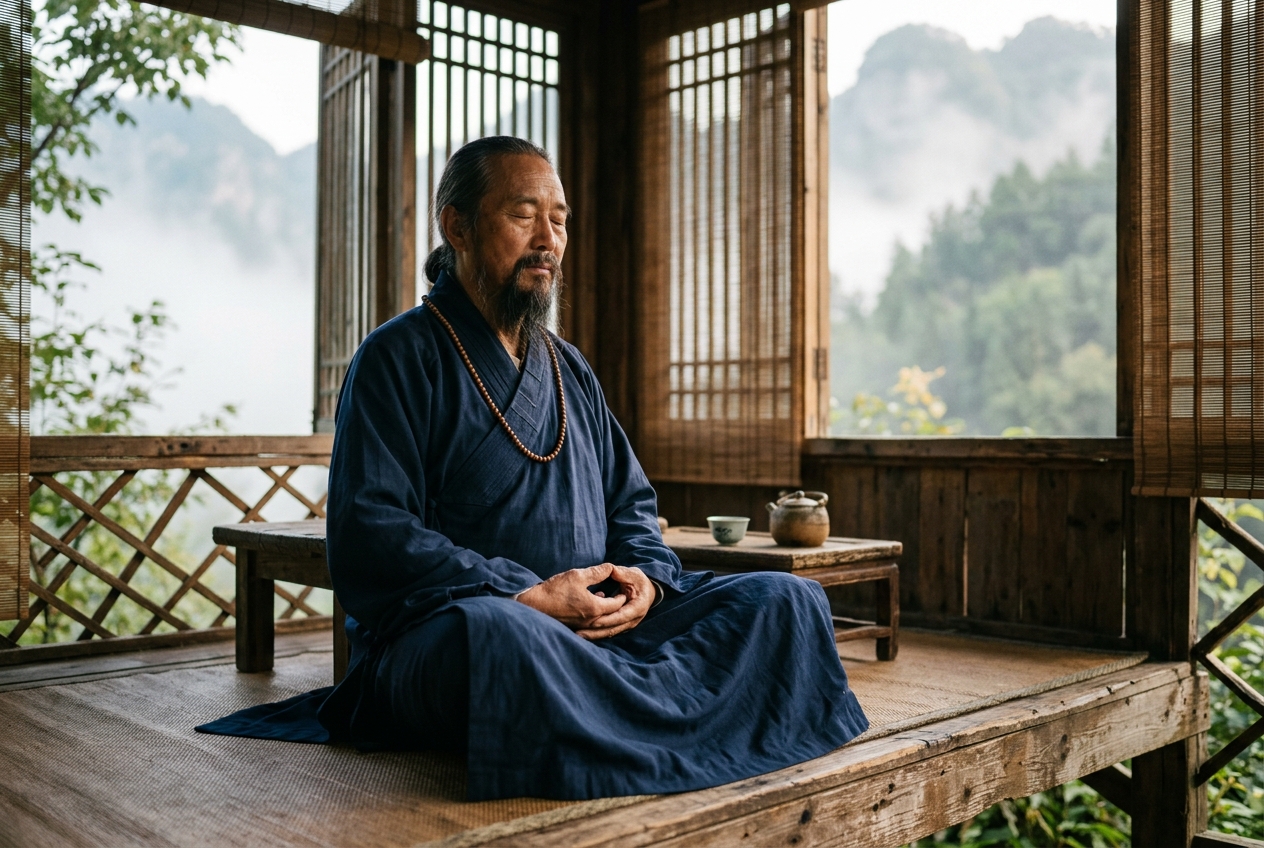
Within the framework of Traditional Chinese Medicine and Daoist contemplative science, conscious attention (Yi) leads vital bioelectric and metabolic circulation (Qi), which in turn nourishes the physical tissues (Jing) and stabilizes the subtle cognitive-affective consciousness (Shen). When you look outward at the world continuously, your sensory faculties deplete your internal reserves; when you turn that observational beam backward into the body, you initiate a state of profound physiological restoration and somatosensory coherence.
The Step-by-Step Practice Guide
The following classical protocol translates the pedagogical stages preserved in the Wikipedia: Shangqing School lineage into an accessible, reproducible sitting meditation. Practice in a quiet space free from sudden interruptions, wearing loose clothing that does not constrict the waist or diaphragm.
1. Structural Alignment and Diaphragmatic Settling
Begin by sitting on a firm cushion or a flat-bottomed chair with your spine elongated like a suspended string of pearls. Your sit bones should be grounded evenly, your perineum (Huiyin, CV-1) relaxed, and the crown of your head (Baihui, GV-20) gently lifting toward the sky. - Rest the tip of your tongue against the upper palate just behind the front teeth to close the energetic circuit between the Governing and Conception vessels. - Rest your hands loosely in your lap, palms facing upward or nested in the Taiji mudra (left hand cradling right hand, thumb tips lightly touching). - Establish natural diaphragmatic breathing: breathe exclusively through the nose, allowing the breath to descend naturally into the lower abdomen—roughly two to three inches below your navel—without forceful pushing or breath-holding.
2. Opening the Perceptual Field at the Upper Dantian (Hui Guang Fan Zhao)
Close your eyes gently, dropping the upper eyelids without squeezing. - Direct your inner vision to the space between and slightly behind the eyebrows, known as the Upper Dantian or Yintang (anatomically corresponding to the region of the third ventricle and pineal-pituitary axis). - Release any muscular tension around the temples, optic nerves, and orbital sockets. - Cultivate the internal experience of a soft, cool, spherical light at the center of the brain. - Instead of projecting this light outward into imagination, execute Hui Guang Fan Zhao—literally "turning the light around to reflect backward." Allow this luminous awareness to illuminate the interior of your cranium, softening the brain tissue and descending down the back of the throat into the central cavity of the chest.
3. Progressive Illumination of the Five Visceral Organs (Wu Zang)
Systematically guide your internal gaze through the five primary Yin organs. In Daoist somatic medicine, each organ houses a distinct psychological aspect of consciousness (Shen) and responds to a specific spectral frequency of somatic visualization:
-
The Lungs (Fei) — Somatic Resonance of Pure White Mist: - Direct your inner gaze into both lobes of the lungs within the thoracic cage. - Sense the spongy, porous texture of the pulmonary tissue expanding and contracting. - Envision a radiant, crystalline white mist bathing the bronchial trees, dissolving stagnant grief, tightness, or defensive thoracic holding patterns. Feel the somatic release of spaciousness and courage.
-
The Kidneys (Shen) — Somatic Resonance of Deep Sapphire Water: - Glide your observational awareness downward along the posterior wall of the abdomen to the bilateral kidney beds nestled below the twelfth ribs. - Feel the subtle warmth of the adrenal glands atop the kidneys. - Immerse both kidneys in a cool, deep sapphire or luminous indigo-black light. Allow this field of quiet awareness to melt chronic lumbar tension, soothing deep-seated fear and instilling a grounded sensation of stillness, endurance, and primordial trust.
-
The Liver (Gan) — Somatic Resonance of Emerald Spring: - Shift your inner viewing to the right hypochondriac region beneath the lower ribcage, enveloping the smooth mass of the liver. - Perceive the dense vascular network filtering blood. - Bathe the organ in a vibrant, soothing emerald green light, evoking the expansive, uncoiling energy of young bamboo. Feel irritability, frustration, and muscular contraction smooth out into cellular ease and benevolent kindness.
-
The Heart (Xin) — Somatic Resonance of Crimson Radiance: - Gently lift your awareness into the center of the chest, resting your inner gaze upon the muscular chambers of the pericardium and heart. - Inquire into the rhythmic physical contractions without trying to alter their tempo. - Surround the heart with a warm, gentle crimson or rose-pink radiance. Sense the pericardium softening, allowing chronic emotional guardrails to dissolve into spacious clarity, joy, and emotional equilibrium.
-
The Spleen and Stomach (Pi/Wei) — Somatic Resonance of Golden Earth: - Direct your awareness to the left upper quadrant of the abdomen, resting attention on the spleen and pancreas. - Envelop this digestive center in a warm, golden-amber light reminiscent of late summer sunlight. - Feel the abdominal fascia relax, letting go of obsessive rumination and chronic worry, replacing internal friction with centered nourishment and somatic stability.
4. Resting in Spacious Non-Dual Presence (Xuxin Shifu)
After completing the visceral cycle, release all deliberate color visualizations and conceptual focus. - Allow the five distinct organ streams to merge into a single reservoir of warm, unified vitality resting in the lower abdomen (Xia Dantian). - Rest as the detached, spacious observer who simply witnesses internal physical sensations arising, changing, and dissolving without judgment. - Remain in this state of quiet presence for 5 to 10 minutes, anchoring your awareness in the simple fact of living physiology.
Common Beginner Mistakes and Corrective Adjustments
- Mistake 1: Straining the Optic Muscles. Beginners frequently cross their physical eyes behind closed lids or squint their foreheads while attempting to "look" inside.
- Correction: Relax the muscles of the face completely. Think of inner viewing as receptive listening or tactile sensing rather than muscular optical scanning. The eyes remain loose, soft, and still.
- Mistake 2: Intellectualizing vs. Direct Interoceptive Sensing. Getting trapped in mental descriptions of anatomy rather than feeling visceral sensations directly.
- Correction: Ask yourself: "What does the tissue actually feel like right now?" Focus on temperature, pressure, pulsing, density, and spatial volume.
- Mistake 3: Energetic Stagnation at the Head (Zou Huo). Over-concentrating on the Upper Dantian or brow center can cause intracranial pressure, dizziness, or headaches due to excessive sympathetic arousal.
- Correction: Immediately drop your focus down through the soles of the feet into the earth (Yongquan points, Kidney-1). Breathe into the lower belly until the head feels clear, cool, and light.
Somatic Sensations: What to Expect and What They Mean
| Somatic Marker | Physiological / Energetic Significance | Recommended Response |
|---|---|---|
| Warmth in the Viscera | Vasodilation; increased local capillary perfusion and parasympathetic tone. | Allow the warmth to diffuse naturally without pushing it. |
| Tingling / Micro-vibrations | Neuromuscular fascial release; active bioelectric signaling along sensory pathways. | Maintain passive observation; avoid grasping or analyzing. |
| Spontaneous Yawning / Peristalsis | Vagal nerve engagement; shift from sympathetic stress to parasympathetic recovery. | Welcome the response; allow deep sighs or digestive gurgling. |
| Cool Cranial Emptiness | Down-regulation of Default Mode Network rumination; sensory retraction (Pratyahara). | Rest in the calm clarity without generating new thoughts. |
Why It Works: The Body Science of Interoception
Modern neuroscience and somatic physiology offer remarkable validation for the transformative effects of Nei Guan. When you consciously redirect attention to internal visceral sensations, you systematically engage the neural architecture of Wikipedia: Interoception—the central nervous system's moment-to-moment mapping of the body's internal physiological status.
1. Anterior Insular Cortex Activation and Neural Mapping
When visual attention is turned inward, brain imaging demonstrates increased blood oxygenation and neural firing in the Wikipedia: Insular cortex, particularly the anterior insular cortex (AIC) and the dorsal anterior cingulate cortex. The insula serves as the brain's primary interoceptive integration hub, translating signals from cardiac mechanoreceptors, pulmonary stretch receptors, and gut chemoreceptors into conscious feeling states.
Practicing Nei Guan functions as targeted neuroplastic training for the insula. Over time, this enhances somatic acuity, fine-tunes visceral self-regulation, and attenuates the hyper-reactive narrative processing of the Default Mode Network (DMN), directly mitigating anxiety, depression, and cognitive fatigue. Research cataloged by the National Center for Biotechnology Information (NCBI PubMed) affirms that focused interoceptive contemplative practices dramatically improve neurovisceral integration and emotional regulation.
2. Vagal Afferents and Parasympathetic Autonomic Recalibration
The viscera communicate bidirectionally with the central nervous system primarily via the vagus nerve (Cranial Nerve X). Crucially, roughly 80 to 85 percent of vagal fibers are afferent (sensory), sending continuous data streams from the heart, lungs, and enteric nervous system upward to the solitary tract nucleus (Nucleus Tractus Solitarii) in the brainstem.
By pairing relaxed diaphragmatic respiration with non-judgmental observation of the internal organs, Nei Guan stimulates low-threshold mechanoreceptors throughout the pleura and peritoneum. This floods the brainstem with afferent signals indicating biological safety, which immediately: * Suppresses the release of cortisol, epinephrine, and inflammatory cytokines. * Increases Heart Rate Variability (HRV), a foundational marker of autonomic flexibility and cardiovascular health. * Engages the ventral vagal complex, promoting systemic physiological homeostasis and cellular repair.
3. Fascial Mechanoreception and Neuromuscular Reorganization
The internal organs do not float loosely inside the body; they are suspended within a continuous, highly innervated matrix of connective tissue known as the visceral fascia. This fascial web is richly populated with sensory nerve endings, including Ruffini endings, Pacinian corpuscles, and unmyelinated interstitial receptors.
Chronic psychological stress, unresolved trauma, and poor biomechanical habits cause this visceral fascia to become dehydrated, stiff, and adhered, restricting organ motility and distorting posture. By focusing awareness into specific visceral compartments during Nei Guan, you increase localized interstitial hydration and activate mechanosensitive nerve endings. This triggers a localized autonomic reflex arc, prompting surrounding smooth and skeletal muscle fibers to release chronic bracing patterns. The result is a profound, whole-body sensation of lightness, structural integration, and unhindered movement.
Classical Lineage & Historical Context
The methodology of Nei Guan is neither a modern biohacking discovery nor a generic relaxation exercise; it is an unbroken, millennia-old tradition rooted in esoteric Daoist scripture and internal alchemy (Neidan).
The primary textual authority for this practice is the Neiguan Jing (Classic of Inner Observation), a seminal Tang Dynasty (618–907 CE) treatise preserved within the Dongzhen (Highest Purity) section of the Daoist Canon (Daozang). A comprehensive historical overview of this text and its doctrinal importance can be explored via the Wikipedia: Neiguan Jing repository. The scripture opens with a profound ontological axiom:
"The Dao is not far; it resides within the body. When the spirit (Shen) is dispersed into the external dust of worldly affairs, the root of life becomes dry. When the inner eye observes the inward form, the five viscera generate luminous nectar, and the spirit returns to its primordial seat."
Historically, Nei Guan evolved out of the ancient meditative practices of the Shangqing (Supreme Purity) Daoist lineage, founded in the 4th century CE by the visionary female adept Lady Wei Huacun on Mount Maoshan. Early Shangqing practitioners utilized a technique known as Cunsi ("visualizing and retaining"), wherein the adept visualized complex celestial deities and cosmic palaces residing within the chambers of their internal organs.
As Chinese contemplative medicine matured through the Tang and Song dynasties, these elaborate mythological visualizations were distilled by internal alchemists into pure, refined interoceptive awareness. Deities were re-understood as the vibrant, energetic archetypes of the five Zang organs—the physiological seats of human emotion, somatic intelligence, and virtue. The historical codification and preservation of these classical traditions continue under the educational standards set by organizations like the National Qigong Association and the global integrative frameworks curated by the World Health Organization Traditional Medicine division.
Through this historical evolution, Nei Guan became the indispensable contemplative core of all authentic Neigong, Taijiquan, and medical Qigong systems: before an adept could hope to move external energy through the physical limbs, they had to master the art of illuminating and harmonizing the internal sanctuary of their own visceral organs.
Clinical Applications and Safe Integration
When applied within modern integrative clinical settings, Nei Guan provides a powerful, self-administered therapeutic intervention for a broad spectrum of psychosomatic and autonomic imbalances: * Irritable Bowel Syndrome (IBS) and Functional Gut Disorders: Calms enteric nervous system hypersensitivity by balancing the brain-gut axis. * Hypertension and Cardiac Dysregulation: Promotes rapid vasodilation and restores baroreflex sensitivity through cardiac illumination. * Chronic Pain and Somatic Amplification: Decouples sensory nociception from emotional distress within the insular-amygdalar circuitry. * Insomnia and Hyperarousal States: Clears cranial congestion and initiates parasympathetic sleep architecture.
Preventing Energetic Deviations (Zou Huo)
In classical literature, improper meditative cultivation—characterized by forceful mental straining, hyperventilating, or obsessive cranial focus—was recognized as a risk factor for Zou Huo (literally "deviant fire" or somatic hyperarousal). To ensure safe, grounding practice: 1. Never force a visualization. If colors do not appear vividly, simply feel the physical warmth, weight, and presence of the organ. 2. Always conclude your practice session by gathering your awareness in the Lower Dantian for at least two minutes, visualizing the energy settling like warm water into the pelvic basin. 3. Finish by rubbing your palms together until warm and gently massaging your face, neck, and kidneys to re-engage physical proprioception before returning to daily activity.
Today's Practice Commitment
To experience the immediate physiological benefits of Nei Guan, commit to a brief, five-minute exploration today before your evening meal or right before going to sleep:
- Sit upright, close your eyes, and take five slow, quiet diaphragmatic breaths into your lower belly.
- Turn your inner light backward from your eyes down into your heart center for 60 seconds, feeling the soft warmth of your heartbeat.
- Descend your attention into your lower abdomen, resting your observational beam below your navel for another 60 seconds.
- Open your eyes slowly, keeping fifty percent of your attention rooted inside your physical frame as you look back out at the room.
Notice the distinct physiological shifts: the lowering of your shoulders, the settling of your resting heart rate, the lubrication of your mouth with thin saliva (a definitive sign of vagal activation), and the spacious clarity that returns when the inner observer is finally called home.