Yin Wei Mai Linking Vessel: Interior Fascial Networks, Deep Psycho-Emotional Harmonization, and Visceral Yin Integration in Classical Neigong
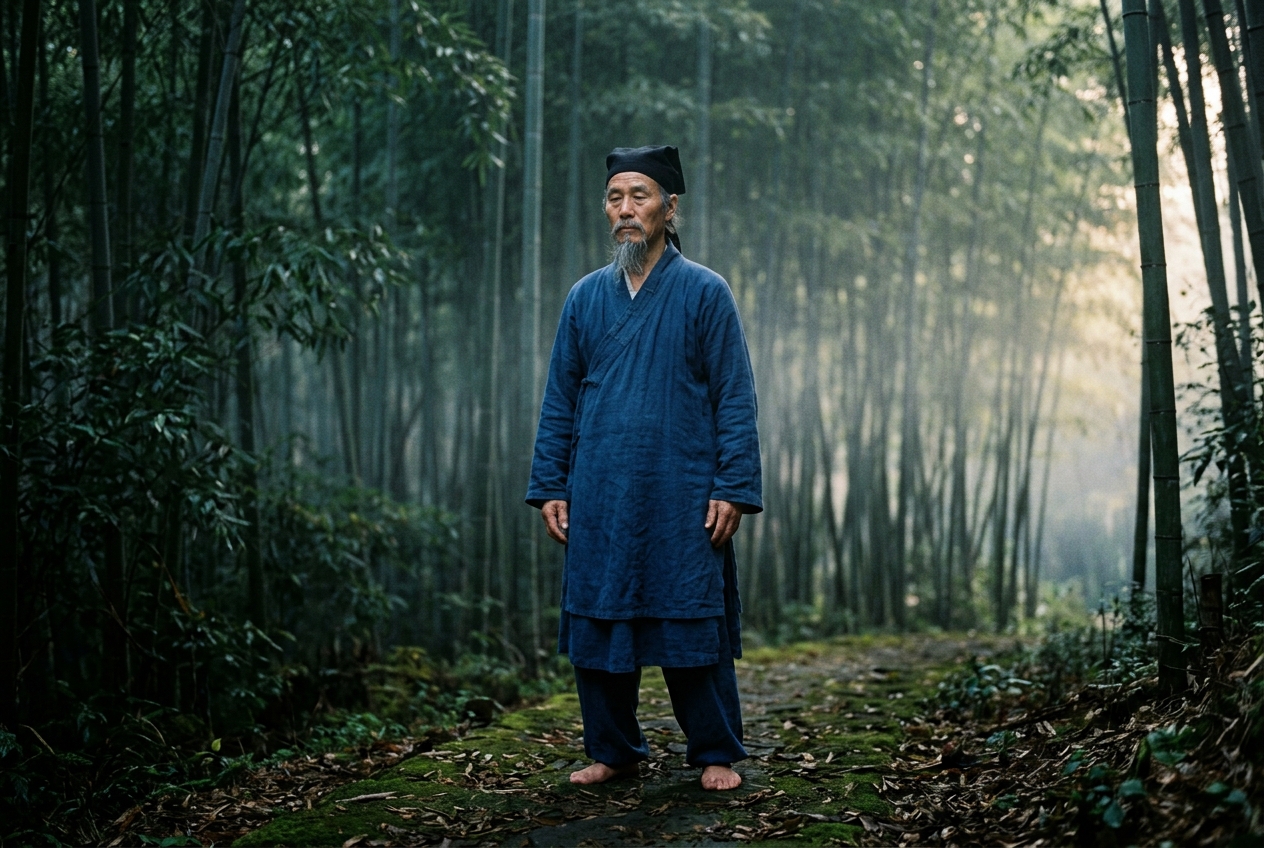
When translated into modern somatic science, cultivating the Yin Wei Mai is a method of neurovisceral regulation: an embodied movement and breathing practice that releases physical constrictions along the body’s innermost connective tissue sheath, harmonizes blood circulation around the heart and internal organs, and calms long-held psycho-emotional stress stored in the gut, chest, and throat.
The Functional Architecture of the Interior: Classical Foundations
The Chinese character Wei (維) depicts the act of weaving threads, binding structural pillars, or maintaining an intricate network. While its energetic counterpart, the Yang Wei Mai, governs the exterior defensive perimeter (Wei Qi) and coordinates the body's adaptation to environmental transitions, the Yin Wei Mai is classically designated as the master coordinator of the interior (Nei). In the foundational text of Chinese medical theory, the Nan Jing (Classic of Difficulties, Chapter 29), the master physician Qin Yueren (Bian Que) established the diagnostic axiom that has guided internal practitioners for two millennia:
"When the Yang Linking Vessel is diseased, one suffers from alternating chills and fever; when the Yin Linking Vessel is diseased, one suffers from deep heart pain, grief, and emotional melancholy."
To understand the Yin Wei Mai, one must contrast its action with the other deep yin vessels: - The Chong Mai (Thrusting Vessel) acts as the central volcanic conduit—the "Sea of Twelve Channels"—propelling ancestral essence (Jing) and vital blood vertically along the core spine. - The Yin Qiao Mai (Yin Stepping Vessel) acts as an architect of structural asymmetry, rooting the inner calcaneus to the pelvic floor and governing muscular tone, structural balance between left and right hemispheres, and the wake-sleep transitions of consciousness. - The Yin Wei Mai does not surge upward with volcanic kinetic power like the Chong Mai, nor does it merely balance left-to-right physical stepping like the Yin Qiao Mai. Instead, it weaves a cohesive, stabilizing hammock for the internal organs. It serves as the primary somatic container that supports the storage, smooth flow, and emotional quality of the Blood (Xue), acting as the guardian of internal psychological safety.
The Energetic and Anatomical Trajectory
The pathway of the Yin Wei Mai reveals its continuous somatic integrity: 1. Origin at Zhubin (KI9): The vessel emerges at Zhubin ("Guest House"), situated on the medial aspect of the lower leg, approximately five proportional inches superior to the medial malleolus, nestled in the soft muscular cleft of the gastrocnemius and soleus. 2. Medial Leg Ascent: It ascends along the medial calf and inner thigh, interfacing intimately with the convergence point of the three lower yin meridians—Spleen, Liver, and Kidney—at Sanyinjiao (SP6). 3. Abdominal Infiltration: Entering the lower pelvic brim and abdominal wall, the vessel anchors into Fushe (SP13), Daheng (SP15), and Fu'ai (SP16), integrating the digestive viscera and mesenteric fascial root. 4. Hypochondriac Gateway: It pierces the subcostal margin at Qimen (LR14) at the sixth intercostal space, tying the liver capsule and thoracic diaphragm directly into the vessel's ascending vector. 5. Thoracic and Laryngeal Termination: Sweeping upward across the anterior mediastinum and sternal tissues, it converges at Tiantu (Ren 22) in the suprasternal notch of the trachea, finally terminating at Lianquan (Ren 23) in the muscular depression above the hyoid bone at the root of the tongue.
Its clinical master point is Neiguan (PC6, "Inner Gate"), paired systematically in classical acupuncture with Gongsun (SP4) to open the functional corridor connecting the chest, epigastrium, diaphragm, and heart.
Step-by-Step Practice Guide: The Inner Weaving Protocol
This classical Neigong routine unlocks the Yin Wei Mai pathway through calibrated structural alignment, slow myofascial lengthening, and interoceptive awareness. Practice this sequence barefoot on a level, non-slip surface in quiet surroundings.
1. Foundational Posture and Stance Setup (Wuji Grounding)
- Stand with feet parallel, shoulder-width apart, knees softly unlocked (flexed by roughly 5 degrees).
- Distribute your weight across the "nine points" of the foot soles, gently pressing the ball of the big toe and the inner heel to mechanically tension the medial arch without collapsing the knee inward.
- Allow the sacrum to sink as if resting against a high barstool. Gently draw the lower abdomen inward and upward by 5%, aligning the pelvic floor with the respiratory diaphragm.
- Rest your tongue lightly against the upper palate just behind the front teeth, elongating the back of the neck as if suspended from the crown (Baihui, DU20).
2. Engaging the Lower Anchor: Zhubin Activation
- Inhale smoothly through the nose for a count of four, slightly spreading the toes.
- As you exhale for a count of six, visualize warm, golden-red root structures traveling down the inner calves, anchoring specifically into the Zhubin point (KI9) on both inner lower legs.
- Gently create a micro-torsion in your lower limbs: while the feet remain immobile on the floor, energetically spiral your inner ankles slightly backward and your inner knees softly outward. You will feel a distinct myofascial tension band engage along the inner line of your lower legs.
3. The Visceral Wave: Breath and Micro-Movement
- Inhalation (The Internal Gathering): - Draw the breath deep into the lower abdomen (two inches below the navel, into the Dantian). - Trace your internal attention upward from the Zhubin points on the calves, through the inner thighs (Sanyinjiao / SP6), into the pelvic bowl, and through the abdominal wall (Daheng / SP15). - Slowly float both palms upward in front of your body, palms facing toward your torso, fingertips pointing inward toward each other, moving from the pubic bone to the lower border of the ribcage (Qimen / LR14).
- Exhalation (The Thoracic Opening and Unwinding): - Continue floating the hands upward past the chest, turning the palms slightly outward and upward at the level of the sternum. - Gently expand the ribcage three-dimensionally—forward, sideways, and into the thoracic spine. - Allow the collarbones to broaden. Without tilting the head back, gently lengthen the front of the throat, softening the tissues around the suprasternal notch (Tiantu / Ren 22) and the hyoid bone (Lianquan / Ren 23). - Exhale with an audible, unforced soft sigh ("Haaaaa"), allowing the chest to sink naturally while keeping the spine elongated.
4. The Somatic Loop (5 to 10 Continuous Cycles)
- Repeat this rhythmic ascending wave for 10 full breath cycles.
- Ensure that the movement is driven not by shoulder muscle tension, but by the continuous, wave-like expansion of your breath through the inner leg line, abdomen, and chest.
5. Common Beginner Mistakes and Precise Corrections
| Fault Observed | Biomechanical Deficit | Somatic Correction |
|---|---|---|
| Collapsing Medial Arches | Collapsing the ankles inward deactivates the deep posterior tibial chain. | Press the base of the big toe and outer heel down; maintain open space in the inner arch. |
| Thoracic Hyper-Extension | Pushing the ribs forward pinches the back and creates false chest opening. | Keep the floating ribs settled; expand the intercostal spaces laterally and posteriorly. |
| Cervical Compression | Craning the chin upward crunches the cervical vertebrae and tenses the throat. | Keep the chin lightly tucked; telescope the crown of the head upward to lengthen the neck. |
| Breath Trapping | Breathing exclusively into the high chest provokes sympathetic alarm. | Initiate every breath cycle from the pelvic basin before allowing it to rise to the ribs. |
6. Expected Sensations and Somatic Signposts
- Warmth along the inner calves and thighs: Indicates vasodilation and myofascial release along the deep medial tract.
- Involuntary swallowing or salivation: Signifies a shift into parasympathetic autonomic dominance as the hyoid region and glossopharyngeal structures relax.
- Tingling or micro-vibrations across the sternum: Demonstrates the release of chronic contractile tension across the pericardial fascia and pectoral attachments.
- Emotional sighs or spontaneous yawning: Classical signs of neurovisceral discharge, indicating that stored affective tension in the internal organs is releasing.
Why It Works — The Modern Body Science
To understand why working with the Yin Wei Mai creates profound calming and systemic balance, we can look at the convergence of three modern physiological frameworks: myofascial tensegrity, polyvagal autonomic science, and neuro-cardiology.
1. The Deep Front Line: Anatomical Congruence
In modern fascial anatomy, as mapped by structural integration researchers, the Deep Front Line (DFL) represents the body’s primary myofascial core. Beginning in the deep posterior compartment of the lower leg (tibialis posterior, flexor digitorum longus, and soleus fascia), the DFL ascends along the medial femoral compartment (adductors), traverses the pelvic floor, envelops the psoas major and iliacus, integrates with the respiratory diaphragm, ascends through the pericardial and endothoracic fascia of the mediastinum, and anchors into the hyoid and suprahyoid musculature.
This structural pathway mirrors the traditional trajectory of the Yin Wei Mai almost point-for-point. When emotional stress or postural collapse causes chronic core bracing, the Deep Front Line shortens. By using the inner leg spiral and gentle sternal opening of Neigong, we lengthen this deep fascial chain, relieving mechanical pressure on the internal organs and restoring natural mobility to the chest and abdomen.
2. Vagal Tone and Polyvagal Integration
The thoracic and laryngeal stages of the Yin Wei Mai (Qimen to Tiantu and Lianquan) intersect directly with the sensory and motor branches of the vagus nerve (Cranial Nerve X). According to Stephen Porges’ Polyvagal Theory, the myelinated ventral vagal complex (VVC) originates in the brainstem’s nucleus ambiguus and innervates the heart's sinoatrial node, the bronchopulmonary tree, the pharynx, and the larynx.
Activating the upper pathway of the Yin Wei Mai through diaphragmatic breathing, throat softening, and upright posture stimulates afferent vagal signaling. This immediately: - Decreases sympathetic nervous system overdrive (lowering circulating cortisol and adrenaline). - Slows resting heart rate via the acetylcholine-mediated "vagal brake." - Replaces defensive fight-or-flight postures with a physiological state of safety and social engagement.
3. Heart Rate Variability (HRV) and Interoceptive Coherence
Heart Rate Variability (HRV)—the beat-to-beat variation in heart rhythm—serves as the gold standard clinical metric for cardiovascular health and emotional resilience. High HRV reflects dynamic autonomic balance, whereas low HRV correlates with chronic anxiety, depression, and systemic inflammation.
By coordinating slow respiration (approximately 5.5 to 6 breaths per minute) with the opening of the anterior myofascial chain, practitioners engage the pulmonary baroreceptors and optimize respiratory sinus arrhythmia. Furthermore, afferent visceral inputs traveling along the Yin Wei Mai project to the posterior insular cortex and the anterior cingulate cortex (ACC). These brain regions map interoception—our internal bodily sense. When this pathway clears, the brain can accurately perceive and release stored visceral tension, restoring emotional equilibrium.
Classical Lineage & Historical Context
The understanding of the Yin Wei Mai as an emotional and energetic regulator was developed across centuries of Daoist alchemical practice (Neidan) and imperial medical scholarship.
The earliest systematic structural explanations appear in the Huangdi Neijing (The Yellow Emperor’s Inner Classic) and were later refined during the Han Dynasty in the Nan Jing (Chapters 28 and 29). The classical masters recognized that while the twelve regular channels circulate Qi along the surface musculature to support daily physical activities, they empty excess energy into the Eight Extraordinary Vessels during times of abundance and draw from them during times of depletion.
In 1578 CE, during the Ming Dynasty, the renowned physician and Daoist scholar Li Shizhen published his masterwork, the Qi Jing Ba Mai Kao (An Examination of the Eight Extraordinary Vessels). Li Shizhen revolutionized internal cultivation by documenting the internal pathways used by Daoist practitioners of the Complete Realization (Quanzhen) tradition. He noted that:
"The ordinary physician treats the twelve regular channels, but the immortal practitioner cultivates the Eight Extraordinary Vessels. When the Yin Wei is cultivated, the internal furnace is stabilized, the five Yin spirits (Shen, Hun, Po, Yi, Zhi) return to their peaceful abodes, and the Heart-Blood is preserved against decay."
For these internal cultivators, the Yin Wei Mai was not merely an anatomical concept, but a conscious container for self-preservation. It allowed practitioners to step back from external sensory distractions, gather their emotional energy inward, and process unprocessed grief, fear, and sorrow in the quiet sanctuary of the internal body.
Today’s Practice Commitment
To experience the restorative power of the Yin Wei Mai firsthand, commit to this brief daily practice:
The 7-Minute Morning Reset: Tomorrow morning, before checking your phone, sitting at your desk, or drinking your first cup of tea or coffee, perform 7 minutes of the Inner Weaving Protocol: 1. Stand barefoot in the Wuji posture for 1 minute, anchoring awareness into the Zhubin point on your inner calves. 2. Perform 5 minutes of rhythmic ascending breathing waves—drawing energy up through the inner legs and abdomen to soften the sternum and throat. 3. Rest both hands over your lower belly for 1 minute, observing the warmth, settling of your pulse, and quietness of mind.
Throughout the rest of your day, notice whether your breathing remains deeper, your throat and chest stay more open, and your emotional responses to stressful events feel more grounded and centered.
Authoritative References and Further Study
To explore the clinical evidence, historical texts, and somatic science underpinning the extraordinary vessels and neurovisceral health, consult these established resources:
- Review global perspectives on acupuncture and meridian research through the World Health Organization Traditional Medicine Strategy.
- Study the evidence base for meditative movement, vagal regulation, and physiological health at the National Qigong Association (NQA) Research Archives.
- Examine contemporary peer-reviewed studies on interoception, the nervous system, and acupuncture at the National Center for Biotechnology Information (NCBI PubMed).
- Learn more about the structural pathways of traditional Chinese medicine on the Wikipedia Resource on Extraordinary Meridians.
- Explore the clinical metrics of autonomic nervous system balance through the Wikipedia Overview of Heart Rate Variability.