Du Mai Governing Vessel: Posterior Midline Axial Ascent, Spinal Cord Neuro-Energetic Vectoring, and Yang Qi Reservoir Dynamics in Classical Neigong
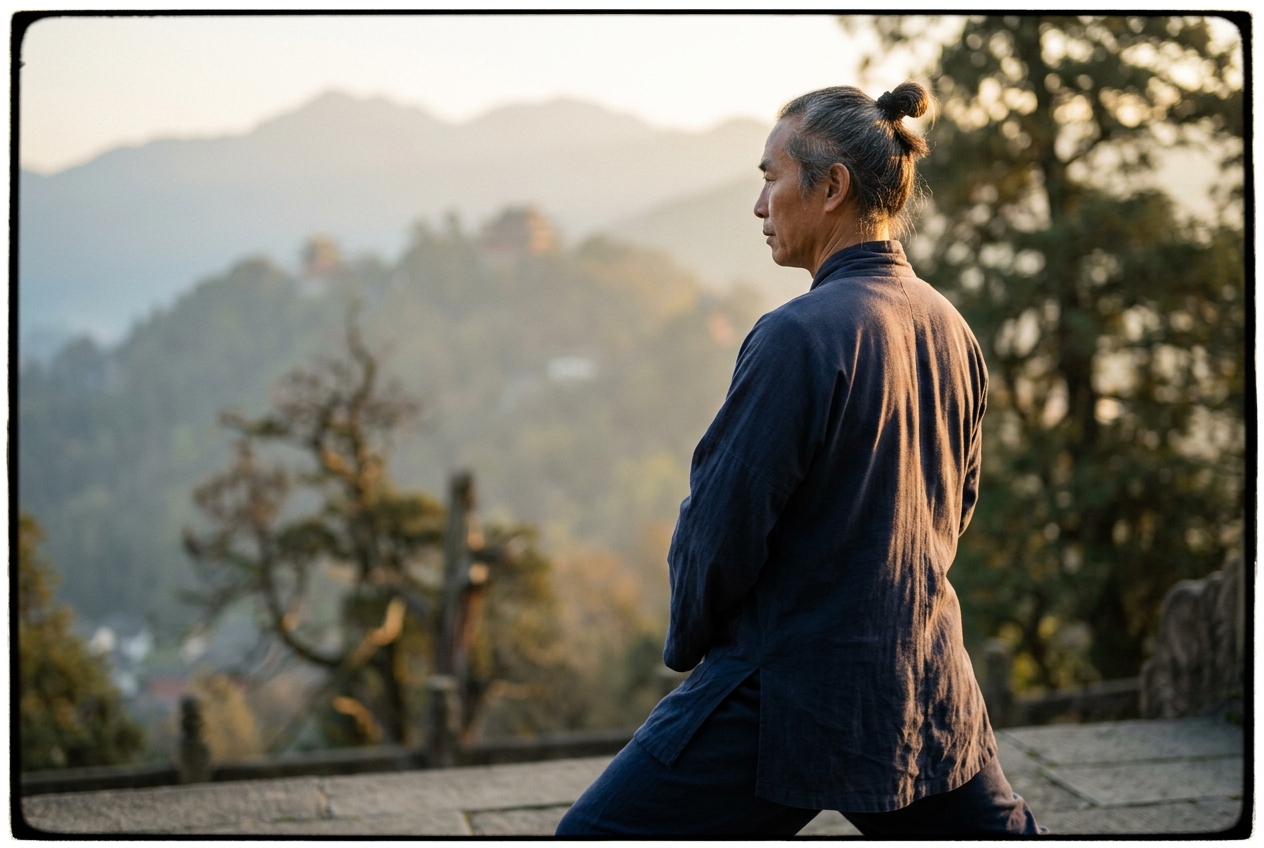
Within the classical taxonomy of East Asian medicine, this posterior conduit is known as the Du Mai (督脈), translated as the "Governing Vessel" or "Governor Channel." Ancient medical treatises crown it the Yang Mai Zhi Hai (陽脈之海)—the "Sea of the Yang Meridians." Just as an expansive ocean feeds and absorbs the fluctuating currents of tributary rivers, the Du Mai governs, integrates, and replenishes all six bilateral Yang energy channels of the body (the Urinary Bladder, Gallbladder, Stomach, Small Intestine, Large Intestine, and Sanjiao/Triple Burner channels). When the Du Mai is unobstructed, dynamic Yang vitality—manifesting as postural resilience, cognitive sharpness, robust thermogenesis, and cellular immunity—circulates unimpeded through the organism. When it is compressed or stagnant, vitality collapses into fatigue, structural degradation, mental fog, and chronic musculoskeletal pain.
       [Baihui (Crown - Du 20)] <=== The Suspended Peak
                 / \
   Upper Gate   | * |   Yuzhen (Jade Pillow / Suboccipital)
                |   |
   Middle Gate  | * |   Jiaji (Interscapular / T5-T6)
                |   |
   Lower Gate   | * |   Weilü (Coccygeal / Sacrococcygeal)
                 \ /
       [Huiyin (Perineum - Ren 1)] <=== The Pelvic Root
Step-by-Step Practice Guide: Mobilizing the Dorsal Kinetic Axis
To awaken the ascending current of the Du Mai, the practitioner must align the physical skeleton to eliminate mechanical bottlenecks before coordinating the breath and focused awareness. Follow this protocol in a quiet space free of distraction.
+-------------------------------------------------------------------------------+
|                      THE DU MAI SOMATIC ALIGNMENT TRIAD                       |
+-------------------------------------------------------------------------------+
|  1. BASE (Weilü):     Subtle pelvic tuck (Song Kua) -> Opens Lumbar Arch      |
|  2. CENTER (Jiaji):   Sternal sinking (Han Xiong Ba Bei) -> Opens Mid-Back    |
|  3. APEX (Yuzhen):    Crown suspended (Baihui) + Chin tucked -> Opens Cranium |
+-------------------------------------------------------------------------------+
1. The Tripartite Somatic Alignment
Before introducing breathwork or movement, establish the three non-negotiable postural cues that physically uncoil the dorsal kinetic chain: * The Subtle Pelvic Tuck (Song Kua / 松胯): Release muscular holding in the inguinal crease (the hips) and let the sacrum drop vertically downward as though weighted by a lead plumb line. Do not excessively clench the gluteal muscles; instead, allow the lumbar lordosis (the inward curve of the lower back) to flatten gently, unfurling the base of the spine. * Sternal Relaxation and Upper-Back Broadening (Han Xiong Ba Bei / 含胸拔背): Consciously soften the manubrium (the upper breastbone) inward and downward by two millimeters. This subtle hollow allows the shoulder blades to glide naturally outward and down, creating a broad, domed surface across the thoracic spine that decompresses the space between the fifth and sixth thoracic vertebrae. * Crown Suspension (Baihui Suspension / 百會懸頂): Gently draw the tip of the chin backward toward the throat without tilting the head down, lengthening the back of the neck. Imagine an invisible silk cord lifting the very apex of your cranium (Baihui, Du 20) toward the sky. This decompresses the suboccipital hinge where the skull meets the atlas vertebra.
2. The Awakening Sequence: Coordinated Respiration and Spinal Micro-Waves
Perform this cycle standing in the Wuji (neutral stance) for 9 to 18 uninterrupted rounds:
- Preparation and Palate Seal: Rest the tip of your tongue lightly against the hard palate just behind the upper front teeth (the Que Qiao or Magpie Bridge). This structural contact forms a bioelectric bridge connecting the terminating point of the Du Mai (at the upper gum) with the origin of the Ren Mai (Conception Vessel at the lower lip).
- Inhalation — The Ascending Hydraulic Wave: Inhale through the nose using reverse abdominal breathing (Ni Fu Xi). As you draw the breath in, subtly draw the lower abdomen inward toward the spine while simultaneously applying a gentle, upward contraction of the perineal floor (Huiyin, Ren 1).
- Spinal Micro-Undulation: As the perineum lifts, initiate a micro-wave of elongation from the base of the coccyx. Feel the wave travel upward: decompressing the lumbar vertebrae, spreading across the interscapular region, traveling up the cervical column, and cresting over the top of the skull to the vertex.
- Intention-Directed Focus (Yi Dao Qi Dao): Direct your mental intention (Yi) to trace this ascending line of subtle warmth and hydraulic tension along the posterior midline. Do not force sensation; simply observe the fluid expansion ascending through the spinal canal.
- Exhalation — Dissolution and Grounding: Exhale slowly through the nose. Release the perineal lift and allow the abdomen to expand naturally outward. Let the energetic current cascade down the front midline of the body (the Ren Mai), depositing settled vitality into the lower pelvic reservoir (Xia Dantian), while grounding excess tension down through the soles of the feet into the Earth.
3. Somatosensory Markers of Success
As neurological efficiency increases, you will experience distinct somatic phenomena (De Qi): * Vascular Warmth (Re): A spreading sensation of gentle thermal radiation ascending the dorsal midline, resulting from microvascular vasodilation. * Hydraulic Decompression (Zhang): A feeling of buoyant, pressurized fullness within the spinal column, as if the intervertebral discs are gently expanding. * Micro-Vibrational Paresthesia (Ma): A subtle, effervescent tingling across the scalp and between the shoulder blades, reflecting fascial unwinding and peripheral nerve stimulation.
4. Diagnostic Troubleshooting & Contraindication Protocol
Use this troubleshooting framework to correct structural deviations:
- Symptom: Throbbing Cranial Pressure or Vertex Headaches.
- Underlying Cause: Forcible upward mental pushing against an unreleased suboccipital bottleneck (Yuzhen gate), or failing to touch the tongue to the roof of the mouth.
- Correction: Immediately cease ascending visualization. Place the tongue firmly on the palate, bend the knees deeper, and place your focused awareness on the bubbling spring points (Yongquan, Kidney 1) on the soles of the feet to draw pressure downward.
- Symptom: Hyperlordotic Pinching in the Lumbar Spine.
- Underlying Cause: Over-arching the lower back and locking the sacrum during inhalation.
- Correction: Deepen the Song Kua alignment. Soften the hip joints, drop the tailbone toward the heels, and ensure the perineal lift is gentle rather than a severe, spasmodic contraction.
- Symptom: Heart Palpitations or Mid-Thoracic Stagnation.
- Underlying Cause: Flaring the ribcage and thrusting the chest outward, which compresses the Jiaji gate and agitates the cardiac plexus.
- Correction: Re-establish Han Xiong Ba Bei. Soften the sternum, widen the dorsal ribcage during exhalation, and ensure your breath remains quiet, rhythmic, and unhurried.
Why It Works: The Somatic Science and Neuroanatomy
To understand why thousands of years of Qigong practitioners prioritized the opening of the Du Mai, we must bridge classical terminology with modern neurobiology, myofascial kinematics, and fluid dynamics. Far from being mystical abstractions, the pathways and bottlenecks described in classical literature map onto empirical physiological structures documented by modern research indexed across NCBI PubMed and validated by institutions examining somatic biomechanics.
=================================================================================
                 BIO-MECHANICAL & ENERGETIC CORRESPONDENCE MAPPING
=================================================================================
Classical Landmark        Anatomical Correlate           Physiological Mechanism
---------------------------------------------------------------------------------
Weilü (Coccygeal Gate)    Sacrococcygeal Joint / S2      Anchors caudal dural sheath;
                          Filum Terminale                initiates sacral pump.

Jiaji (Interscapular Gate) T1-T7 Thoracic Spine &        Modulates sympathetic chain
                          Huatuo Jiaji Intercostals      ganglia; releases mid-fascia.

Yuzhen (Jade Pillow Gate) Suboccipital Triad &           Decompresses C0-C2 junction;
                          Foramen Magnum                 unimpedes fourth ventricle CSF.

Du Mai Pathway            Superficial Back Line (SBL)    Continuous tension transmission
                          & Posterior Dural Sheath       from cranium to calcaneus.
=================================================================================
1. The Superficial Back Line (SBL) and Tensional Integrity
In the structural framework of myofascial anatomy popularized by Thomas Myers in Anatomy Trains research, the body operates as a tensegrity matrix where continuous fascial bands distribute mechanical load. The physical trajectory of the Du Mai mirrors the Superficial Back Line (SBL). The SBL connects and coordinates the entire dorsal surface of the body in a single functional continuum: originating on the plantar fascia of the feet, extending through the Achilles tendon, gastrocnemius, hamstrings, sacrotuberous ligament, the thoracolumbar fascia, the erector spinae group, and ascending across the epicranial aponeurosis (galea aponeurotica) to terminate at the frontal ridge of the skull.
When a practitioner drops the sacrum (Song Kua) and suspends the crown (Baihui), they apply an active, longitudinal stretch across this entire myofascial sheet. This axial elongation releases adhesions in the thoracolumbar matrix, stimulates local mechanoreceptors (Ruffini and Pacini corpuscles), and creates a systemic piezoelectric current throughout the fascial collagen network.
2. Dural Tube Dynamics and Cerebrospinal Fluid (CSF) Propulsion
Enclosed within the spinal canal lies the dural tube—the tough outer sheath of the central nervous system meninges. The spinal dura mater has distinct osseous attachments: superiorly, it anchors firmly around the rim of the foramen magnum and the second/third cervical vertebrae (C2–C3); inferiorly, it anchors firmly at the second sacral segment (S2) and extends via the filum terminale into the coccyx.
Between these cranial and sacral anchor points, the dural sheath hangs suspended within the spinal canal. When poor posture induces chronic lumbar hyperlordosis and forward head tilt, the dural sheath undergoes abnormal mechanical tension, torque, and compression.
                                  [Cranium]
                                    |===|  Upper Anchor (Foramen Magnum / C2-C3)
                                    |   |
                  Dural Tube ===>   |   |  Cerebrospinal Fluid (CSF)
                  Tension Vector    |   |  Oscillation Pathway
                                    |   |
                                    |===|  Lower Anchor (Sacrum S2 / Coccyx)
                                  [Pelvis]
The rhythmic combination of the pelvic tuck, perineal contraction, and spinal undulation functions as a mechanical pump that harmonizes with natural cerebrospinal fluid dynamics. The sacral flexion alters intra-thecal volume, propelling CSF rostrally (headward) through the spinal subarachnoid space toward the basal cisterns and cerebral ventricles. This augmented pulsation enhances neurovascular exchange, facilitates metabolic waste removal via the brain's glymphatic system, and bathes the central neuroaxis in restorative nutrient-rich fluid.
3. Autonomic Regulation and the Sympathetic Chain
Lying immediately anterior to the costovertebral joints along the thoracic spine are the paired paravertebral sympathetic trunk ganglia—the primary command centers of the fight-or-flight stress response. In traditional acupuncture and Qigong, the mid-dorsal region contains the Huatuo Jiaji points and the back-shu transport points of the Governing Vessel and Bladder meridians.
Chronic thoracic kyphosis and muscular bracing in the interscapular zone (Jiaji gate) subject these sympathetic ganglia to sustained mechanical irritation, locking the autonomic nervous system into chronic sympathetic hyperarousal. By implementing Han Xiong Ba Bei (relaxing the chest and widening the interscapular region), the practitioner relieves mechanical pressure upon the sympathetic trunk. This induces a systemic shift toward parasympathetic dominance, marked by immediate improvements in Heart Rate Variability (HRV), reduced serum cortisol, and enhanced visceral organ perfusion.
       +----------------------------------------------------------------+
       |                  AUTONOMIC BALANCING CASCADE                   |
       +----------------------------------------------------------------+
       | Sternal Relaxation (Han Xiong Ba Bei)                          |
       |             ↓                                                  |
       | Thoracic Decompression & Myofascial Widening                   |
       |             ↓                                                  |
       | Relief of Mechanical Irritation on Sympathetic Trunk Ganglia   |
       |             ↓                                                  |
       | Parasympathetic Vagal Tone Activation & Elevated HRV Metric    |
       +----------------------------------------------------------------+
The Three Dorsal Bottlenecks: Anatomy and Decompression
Classical Daoist internal alchemy (Neidan) and martial Qigong identify three specific anatomical zones along the spine known as the San Guan (三關) or "Three Energy Gates." These are predictable sites of mechanical stagnation, fascial densification, and vascular impingement. Opening the Du Mai requires precise somatic keys to unlock each gate.
                      THE THREE DORSAL BOTTLENECKS (SAN GUAN)

       Gate Location                   Anatomical Impingement               Somatic Release Key
  ===================================================================================================
  1. WEILÜ (Lower Gate)         Sacrococcygeal Junction; hypertonic   Pelvic sinking (Song Kua);
     Coccygeal Bottleneck       pelvic floor; anterior pelvic tilt.    flattening lumbar lordosis.
  ---------------------------------------------------------------------------------------------------
  2. JIAJI (Middle Gate)        T5-T6 Thoracic Vertebrae; hypertonic   Sternal relaxation (Han Xiong);
     Interscapular Bottleneck   rhomboids; sympathetic irritation.    scapular lateral broadening.
  ---------------------------------------------------------------------------------------------------
  3. YUZHEN (Upper Gate)        C0-C1 Atlanto-Occipital Hinge;         Crown lift (Baihui suspension);
     Jade Pillow Bottleneck     hypertonic suboccipital triangle.      cervical axial elongation.
  ===================================================================================================
1. Weilü (尾閭) — The Coccygeal Gate
- Anatomical Location: The base of the sacrum, the sacrococcygeal articulation, and the surrounding myofascial attachments of the gluteus maximus, piriformis, and levator ani muscles.
- The Pathological Barrier: Sedentary lifestyle habits and chronic pelvic bracing lock the sacrum into an anterior tilt (nutation). This pinches the lower anchor of the dural sheath, restricts the pelvic diaphragm's excursion, and prevents the initial generation of the ascending hydraulic wave.
- The Somatic Release Key: The practitioner must master Song Kua (relaxing the hips) and Song Yao (relaxing the lumbar spine). Sinking the tailbone as if resting on a high stool broadens the sacroiliac joints, decompresses the L5–S1 junction, and creates an open chamber for the pelvic floor (Huiyin) to contract and release dynamically without muscular clamping.
2. Jiaji (夾脊) — The Interscapular Gate
- Anatomical Location: The thoracic spine centered between the fifth and sixth thoracic vertebrae (corresponding to acupuncture points Du 11 Shen Dao and Du 10 Ling Tai), extending horizontally across the rhomboid major, middle trapezius, and deep spinal erectors.
- The Pathological Barrier: Emotional stress and postural slumping cause muscular rigidity and fascial cross-linking across the mid-back. This creates a dense myofascial plateau that blocks the upward migration of warmth, causing energy to pool around the heart and leading to chest tightness, emotional agitation, and upper-body tension.
- The Somatic Release Key: Apply Han Xiong Ba Bei. Allow the sternum to sink inward by a matter of millimeters, dropping the front ribs toward the pelvis. This motion automatically releases the spasm between the scapulae, allowing the thoracic vertebrae to articulate freely and permitting the ascending kinetic wave to glide smoothly through the mid-dorsal spine.
3. Yuzhen (玉枕) — The Jade Pillow Gate
- Anatomical Location: The suboccipital triangle bounded by the rectus capitis posterior and obliquus capitis muscles, the atlanto-occipital articulation (C0–C1), and the external occipital protuberance (Du 16 Feng Fu and Du 17 Nao Hu).
- The Pathological Barrier: Forward-head posture (often caused by computer and smartphone use) shortens the suboccipital muscles into a state of chronic hypertonicity. This suboccipital clamp pinches the greater occipital nerve and the vertebral artery, constricting blood flow to the brain, compressing the fourth ventricle of the brain, and causing cranial pressure spikes.
- The Somatic Release Key: The practitioner engages the suboccipital lengthening reflex. By gently retracting the jaw and lifting the vertex (Baihui), the distance between the occiput and the second cervical vertebra is physically widened. This releases tension on the rectus capitis posterior minor muscle (which has direct fascial bridges connecting to the spinal dura mater), opening the gateway into the cranial vault.
Classical Lineage: The Epistemological Roots of the Sea of Yang
The pedagogical architecture of the Du Mai is not a modern synthesis; it is preserved in the foundational classics of East Asian medicine, curated within frameworks recognized by the World Health Organization Traditional Medicine compendium and traditional scholars worldwide, including the National Qigong Association.
The Huangdi Neijing Foundation
The earliest systematic expositions of the Du Mai appear in the foundational canon of East Asian medicine: the Huangdi Neijing (The Yellow Emperor's Classic of Internal Medicine, c. 2nd Century BCE). * In the Suwen (Basic Questions), Chapter 60 (Treatise on the Extraordinary Vessels), the pathway of the Du Mai is meticulously delineated: originating in the pelvic cavity, emerging at the perineum, traversing the interior of the spinal column, ascending to the crown of the head, and descending along the facial midline to the upper frenulum. * In the Lingshu (Spiritual Pivot), Chapter 10 (Meridian Channels), the text establishes the Governing Vessel as the master coordinator of somatic structure, declaring that pathological stagnation within the Du Mai manifests structurally as rigidity or collapse of the spinal column (Ji Qiang Er Fan Zhe).
The Nan Jing: The Hydraulic Reservoir Hypothesis
The Nan Jing (The Classic of Difficulties, c. 1st–2nd Century CE) provided the theoretical framework that elevated the Du Mai from a simple conduit to an overarching regulatory system. In the 27th and 28th Difficulties, the author distinguishes the Twelve Regular Channels from the Eight Extraordinary Vessels (Qi Jing Ba Mai):
"The twelve regular channels are like the main rivers and canals, while the extraordinary vessels are like deep reservoirs. When the regular channels are abundant and overflow, they discharge their excess into the extraordinary vessels." (Nan Jing, Difficulty 27)
In this framework, the Du Mai functions as a bioelectric and hydraulic capacitor. During periods of physical demand, acute stress, or environmental cold, the Du Mai discharges stored Yang energy into the superficial defensive channels (Wei Qi), fortifying the physical perimeter and sustaining internal organ homeodynamics. Conversely, during periods of seated meditation and relaxed Qigong practice, surplus energy generated through breath and focus returns to the Du Mai, replenishing the deep reserves of the central nervous system.
The Internal Alchemical Tradition (Neidan)
During the Tang (618–907 CE) and Song (960–1279 CE) Dynasties, internal alchemical practitioners (Neidan) transformed the medical model of the Du Mai into a somatic technology for psychophysiological transformation. The core of this discipline was the Microcosmic Orbit (Xiao Zhou Tian / 小周天), or "Small Heavenly Circulation." Masters such as Lu Dongbin and Zhang Boduan recognized that by harmonizing the ascending Yang current along the Du Mai with the descending Yin current along the Ren Mai, the practitioner unifies the body's functional axes:
- Ascent via Du Mai: Represents the transformative ascent of Jing (material essence) refined into Qi (vital energy) and propelled upward by the inner fire of the lower abdomen.
- Descent via Ren Mai: Represents the cooling, tranquil descent of clarified spiritual awareness (Shen) returning to rest within the pelvic matrix.
Today's Practice Commitment: The 7-Minute Spinal Awakening
Intellectual understanding without physical embodiment remains an empty exercise. To anchor the neuromuscular patterns of the Governing Vessel in your physiology, commit to this focused, seven-minute routine tomorrow morning before consuming breakfast or caffeine:
+-------------------------------------------------------------------------------+
|                    THE 7-MINUTE MORNING DU MAI SEQUENCE                       |
+-------------------------------------------------------------------------------+
|  Minute 0:00 - 2:00 : Somatic Alignment & Axial Grounding (Wuji Stance)       |
|  Minute 2:00 - 5:30 : 9 Cycles of Reverse Breath & Spinal Micro-Undulation    |
|  Minute 5:30 - 7:00 : Settling Qi into the Lower Dantian & Stillness Holding  |
+-------------------------------------------------------------------------------+
- Minutes 0:00–2:00 — Establishing the Structural Matrix: Stand barefoot with feet parallel and shoulder-width apart. Execute the three alignment cues: sink the sacrum (Song Kua), soften the breastbone (Han Xiong), and suspend the crown (Baihui). Place the tongue upon the upper palate. Breathe naturally through the nose, observing the subtle opening of the intervertebral joints.
- Minutes 2:00–5:30 — The Ascending Breath Cycles: Perform nine complete, unhurried rounds of reverse abdominal breathing coupled with the perineal lift and spinal micro-undulations. On each inhalation, feel the gentle wave of spinal decompression ascend from the coccyx, glide between the shoulder blades, and crest over the Jade Pillow gate to the crown. On each exhalation, let the breath settle smoothly into the lower abdomen.
- Minutes 5:30–7:00 — Consolidation and Quietude: Rest your hands over your lower belly (left hand over right for women, right hand over left for men). Stand in complete stillness. Notice the subtle sensations: the thermal glow across the lower back, the clear space between the shoulder blades, and the alert stillness within the mind.
Carry this elongated, decompressed spinal awareness throughout your day. When sitting at your desk or walking, periodically recall the suspended crown and the sinking sacrum. You are no longer merely holding a posture—you are sustaining the open current of the Sea of Yang.