Wu Qi Chao Yuan Five Qi Converging at the Origin: Visceral Organ Essence Harmonization, Elemental Phase Synthesis, and Primordial Yuan Qi Consolidation in Classical Daoist Neidan
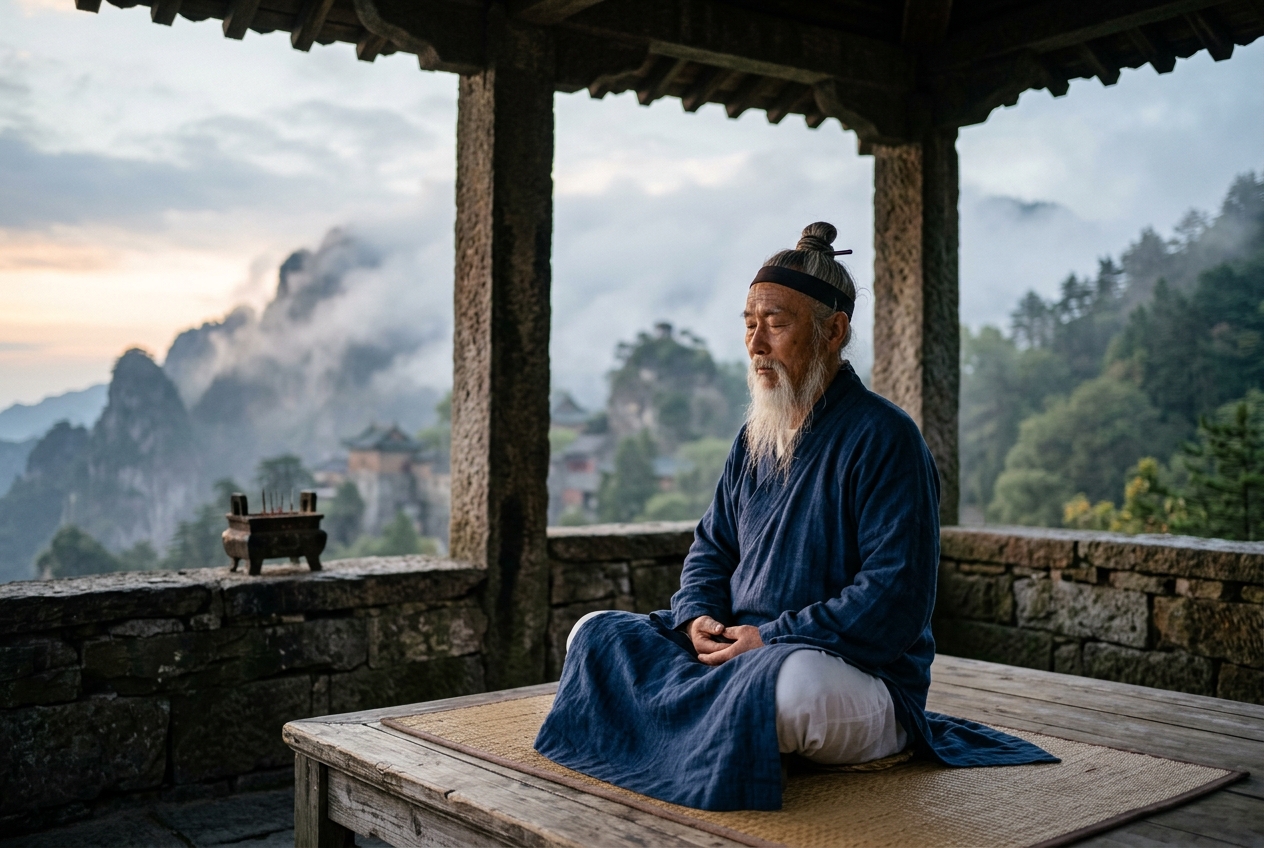
In traditional systems of Zang-fu visceral theory, each of your internal organs does not merely perform biochemical filtration, respiration, or circulation; each organ is understood as a physiological and psychological center that houses a distinct aspect of human vitality. When stress, chronic agitation, grief, or fatigue dominate our lives, these organ systems fall out of sync with one another, generating somatic friction, nervous system dysregulation, and mental turbulence. Wu Qi Chao Yuan is the methodical process of guiding these five distinct biological streams back toward their pre-birth, unfragmented state—what classical masters termed Yuan Qi (primordial vitality)—restoring an integrated sense of wholeness throughout the entire body.
Step-by-Step Practice Guide: Transmuting the Five Streams
This classical internal protocol can be practiced in quiet seated meditation or in an upright standing posture. Dedicate twenty to thirty minutes in an undisturbed space with comfortable, unrestrictive clothing.
1. Postural Foundation and Skeletal Alignment
- The Seat or Stance: Sit forward on the front third of a firm cushion with your legs crossed loosely, or sit upright on a flat chair with your feet planted hip-width apart on the floor. If standing, assume the Wuji posture with feet parallel, knees slightly unlocked, and tailbone settled downward as if resting against a high stool.
- Suspending the Crown (Baihui): Gently draw the chin back toward the throat to lengthen the cervical spine. Imagine a fine silk cord drawing the vertex of your head upward toward the sky, allowing the vertebrae of the neck and back to decompress.
- Releasing the Base (Huiyin): Relax the pelvic floor completely. Feel the weight of your torso sinking through the sitz bones or the bubbling springs (Yongquan) in the soles of the feet. Place the tip of the tongue lightly against the hard palate behind the upper front teeth, completing the micro-cosmic circuit between the front and back meridian pathways.
2. Visceral Somatosensory Mapping (Tracing the Five Seats)
Direct your internal awareness (Yi) sequentially through the anatomical locations of the five primary yin organs, cultivating non-judgmental interoceptive feeling rather than rigid mental visualization: * The Kidneys (Water Element): Bring your attention to the lower back beneath the lowest ribs on either side of the spine. Feel a cool, heavy, resting sensation deep within the renal beds. Inhale gently into the lower back, feeling the kidneys subtly expand, and exhale all subconscious fear, vigilance, and tension down into the earth. * The Liver (Wood Element): Shift your awareness to the right hypochondriac region beneath the right rib cage. Release any chronic constriction, irritability, or muscular guarding in this area. Feel the tissue soften, expanding like spring vegetation waking after winter. * The Heart (Fire Element): Move your attention upward into the center of the chest beneath the sternum. Release any rapid pulse, tight constriction, or emotional urgency. Allow the cardiac center to feel cool, spacious, and untroubled, resting in quiet stillness. * The Spleen and Stomach (Earth Element): Shift attention to the left upper abdomen and epigastric zone beneath the left ribs. Release digestive clenching, chronic rumination, and worry. Feel the central abdominal basin become warm, receptive, and grounded. * The Lungs (Metal Element): Expand your awareness into the upper thoracic cavity, feeling the spongy lightness of both lungs. Allow any latent sadness, heavy sighing patterns, or defensive shoulder elevation to dissolve into open, clear respiration.
3. Embryonic Stillness and Diaphragmatic Attunement (Tai Xi)
Once the five organ seats are mapped and softened, transition your breathing from voluntary muscular pumping to the subtle, self-regulating rhythm known as embryonic respiration (Tai Xi). * The Subtle Current: Inhale smoothly through the nose without producing audible sound. Allow the descent of the thoracic diaphragm to massage the abdominal viscera downward while the pelvic floor remains soft and responsive. * The Extended Exhalation: Exhale smoothly without pushing, letting the natural elastic recoil of the ribs and abdominal wall return the breath to stillness. * The Zero-Point Pause: At the natural conclusion of the exhalation, rest in the quiet pause before the next breath arrives spontaneously. Do not hold the breath artificially; simply observe the profound biological stillness within the void.
4. Crucible Convergence into the Yellow Court (Huang Ting)
- The Central Nexus: Locate the Huang Ting (Yellow Court), the somatic crossroad situated in the anatomical center of the torso—midway between the heart and the kidneys, behind the solar plexus and in front of the eleventh thoracic vertebra.
- The Inward Draw: With every subtle inhalation, imagine and feel the distinct energetic qualities of the five organs being drawn gently inward toward this central crucible: the cool depths of the kidneys, the lively ease of the liver, the radiant light of the heart, the settled weight of the spleen, and the refined clarity of the lungs.
- The Unified Sphere: In this central space, allow the individual identities of the five organs to dissolve into a single, cohesive sphere of radiant warmth and quiet vitality (Yuan Qi). Rest your mind inside this unified center for ten to fifteen minutes, maintaining effortless, unbroken awareness.
  +-------------------------------------------------------------------------+
  |              COMMON MISTAKES AND PRECISE CORRECTIONS                    |
  +-------------------------------------------------------------------------+
  | Mistake: Forcing the breath into the abdomen using muscular pressure.   |
  | Correction: Allow the breath to drop by releasing tension in the        |
  |             pelvic floor and throat; let the diaphragm move naturally.  |
  +-------------------------------------------------------------------------+
  | Mistake: Over-intellectualizing the colors, directions, and charts.     |
  | Correction: Rely strictly on felt physical sensations (warmth, density, |
  |             pulse, lightness) rather than rigid mental pictures.        |
  +-------------------------------------------------------------------------+
  | Mistake: Suppressing uncomfortable emotional surges that arise.         |
  | Correction: Treat emotional surges as shifting visceral energy; let     |
  |             them ripple through the tissue without clinging to them.    |
  +-------------------------------------------------------------------------+
5. Perceptive Sensory Indicators
As the five streams converge, practitioners typically experience distinct, replicable somatic indicators: * Deep Visceral Warmth: A soothing, non-burning sensation of heat radiating outward from the solar plexus through the abdomen and spine. * Micro-Vibrations and Tingling: A fine, electric sensation across the skin, fingertips, and crown, signaling parasympathetic vasodilation and enhanced microcirculation. * Respiratory Suspension: Moments where the urge to breathe almost disappears entirely because cellular oxygen demand drops during profound autonomic stillness. * Spacious Emotional Neutrality: The spontaneous emergence of equanimity, where everyday anxieties and emotional triggers feel distant, soft, and completely devoid of grip.
Why It Works: The Neuro-Visceral and Autonomic Science
While classical Daoist treatises describe this process using elemental metaphors of water, fire, metal, wood, and earth, modern physiology and neuroscience explain these phenomena through the lens of interoception, polyvagal regulation, and autonomic homeostasis.
The Interoceptive Highway and Insular Integration
The human brain is in constant, bi-directional communication with the visceral organs via the vagus nerve (cranial nerve X) and the dorsal spinothalamic tracts. Scientific research indexed on the National Center for Biotechnology Information (NCBI) PubMed demonstrates that mindful interoceptive attention—the act of consciously sensing internal physiological states like heartbeat, gut tension, and respiration—directly stimulates the insular cortex and anterior cingulate cortex. By shifting attentional focus away from high-stress cognitive loops into visceral sensory awareness, practitioners interrupt chronic cortical rumination and activate deep brainstem regulatory centers that restore somatic balance.
Polyvagal Coherence and Ventral Vagal Stabilization
According to modern polyvagal theory, chronic psychological stress locks the human nervous system into either sympathetic hyper-arousal (fight-or-flight) or dorsal vagal collapse (exhaustion and freeze). The intentional relaxation of the five visceral zones directly engages the ventral vagal complex, the specialized branch of the parasympathetic nervous system that governs social engagement, safety, and visceral repair. As recognized by the World Health Organization Traditional Medicine Strategy, mind-body practices that harmonize breath and posture downregulate systemic inflammatory markers and optimize neuro-endocrine function.
Baroreflex Resonance and Fascial Tensegrity
When embryonic respiration (Tai Xi) settles at approximately 4.5 to 6 breaths per minute, the cardiovascular system enters a state of baroreflex resonance. Heart rate variability (HRV) shifts into a coherent, sine-wave oscillation at approximately 0.1 Hz, synchronizing cardiac rhythms with respiration and blood pressure waves. Furthermore, the physical organs are suspended within continuous sheets of visceral fascia connected directly to the respiratory diaphragm and deep core myofascial lines. As documented by the National Qigong Association (NQA), relieving diaphragmatic and visceral restriction restores myofascial glide, improves lymphatic flow, and enhances visceral organ compliance.
Classical Lineage, Philosophical Foundations, and the Neidan Continuum
To truly appreciate Wu Qi Chao Yuan, one must understand its place within the historical and philosophical landscape of Daoist Internal Alchemy (Neidan). Developed during the Tang (618–907 CE) and Song (960–1279 CE) dynasties, Neidan marked a profound paradigm shift away from external laboratory alchemy (Waidan)—which sought physical immortality through ingesting mineral elixirs—toward the internal psycho-spiritual cultivation of the human body as an alchemical vessel.
+========================================================================================+
|             THE CLASSICAL ALCHEMICAL CONTINUUM (NEIDAN INNER LANDSCAPE)                |
+========================================================================================+
| Stage 1: Lian Jing Hua Qi (Refining Essence into Qi)                                   |
|   * Foundation: Consolidation of vitality in the Lower Dantian.                        |
|   * Somatic Anchor: Pelvic floor, kidneys, and reproductive essence.                   |
+----------------------------------------------------------------------------------------+
| Stage 2: Wu Qi Chao Yuan (Five Qi Converging at the Origin)                            |
|   * Foundation: Unification of visceral energies in the Central Crucible (Huang Ting). |
|   * Somatic Anchor: Transmutation of five post-heaven emotions into pre-heaven virtues. |
+----------------------------------------------------------------------------------------+
| Stage 3: San Hua Ju Ding (Three Flowers Gathering at the Crown)                        |
|   * Foundation: Elevation of unified vitality to the Upper Dantian (Niwan).            |
|   * Somatic Anchor: Complete transcendence of dualistic perception into Wuji (Emptiness). |
+========================================================================================+
Foundational Classical Treatises
Two seminal texts provide the primary canonical architecture for this practice:
- The Zhong-Lu Chuan Dao Ji (《鍾呂傳道集》 - Anthologies of the Transmission of the Dao from Zhongli Quan to Lü Dongbin): Attributed to the legendary immortals Zhongli Quan and Lü Dongbin, this foundational dialogue methodically outlines the progression from earthly health to spiritual realization. It identifies Wu Qi Chao Yuan as the pivotal bridge where the five elemental energies of the human organism cease their outward depletion and return to the central hub of life.
- The Taiyi Jinhua Zongzhi (《太乙金華宗旨》 - The Secret of the Golden Flower): Transmitted through the Quanzhen (Complete Perfection) tradition and later translated into Western discourse by Richard Wilhelm and Carl Jung, this text details the "turning around of the light" (Hui Guang). It explains that when consciousness is retracted from external sensory attachments, the light of the eyes, heart, and kidneys naturally focuses into the central space, allowing the five elemental phases to crystallize into the golden elixir (Jindan).
The Alchemical Continuum: Wu Qi Chao Yuan and San Hua Ju Ding
Within the broader map of internal cultivation, Wu Qi Chao Yuan (Five Qi Converging at the Origin) operates in tandem with San Hua Ju Ding (三花聚頂 - "Three Flowers Gathering at the Crown"):
- Wu Qi Chao Yuan (The Horizontal Convergence): This represents the horizontal harmonization of the five visceral organ energies at the Middle Crucible / Yellow Court (Huang Ting). It unifies the bodily elements across the transverse plane of human emotional and biological life.
- San Hua Ju Ding (The Vertical Ascent): Once the five visceral energies are unified into seamless Yuan Qi, the three primary treasures—Essence (Jing), Vitality (Qi), and Spirit (Shen)—represented metaphorically as three blossoming lotus flowers, ascend along the central spinal axis (Zhong Mai) to gather at the crown of the head (Niwan or Upper Dantian).
Transmuting Emotional Turbulence into Pre-Heaven Virtues (De)
A core principle of classical Neidan is that the five organs house our post-heaven (Houtian) conditioned emotions as well as our innate, pre-heaven (Xiantian) spiritual virtues (De 德). When energy is scattered, it manifests as psychological agitation; when energy is concentrated and purified, it naturally expresses its original virtuous nature:
+------------------+-----------------------+------------------------+---------------------+
| Organ & Element  | Post-Heaven Emotion   | Pre-Heaven Virtue (De) | Alchemical Role     |
+------------------+-----------------------+------------------------+---------------------+
| Liver (Wood)     | Anger, Frustration    | Benevolence (Ren 仁)   | Free flow of Qi     |
| Heart (Fire)     | Agitation, Restlessness| Propriety (Li 禮)      | Radiance of Spirit  |
| Spleen (Earth)   | Worry, Overthinking   | Integrity / Trust (Xin)| Central Crucible    |
| Lungs (Metal)    | Grief, Attachment     | Righteousness (Yi 義)  | Purity of Breath    |
| Kidneys (Water)  | Fear, Dread           | Wisdom (Zhi 智)        | Root of Essence     |
+------------------+-----------------------+------------------------+---------------------+
In the alchemical furnace of the Huang Ting, these five virtues are not forced through intellectual willpower; rather, as the physical tissues of the visceral organs relax and their somatic tension dissolves, the turbid post-heaven emotional turbulence naturally subsides, allowing the luminous pre-heaven virtues to shine forth unimpeded.
Today's Practice Commitment
Tomorrow morning, before you check your smartphone, open your email, or pour your first cup of tea or coffee, give yourself exactly ten minutes to practice this internal gathering. Sit comfortably on the edge of your bed or in a supportive chair with your spine naturally upright. Close your eyes, let your lower jaw relax, and take three slow, unforced breaths into your lower back. Spend the first two minutes feeling the weight and ease of your internal organs; spend the next four minutes letting go of tension in your chest, liver, stomach, and kidneys; and spend the final four minutes resting your attention in the quiet space behind your solar plexus. Notice how your body feels, how your breath moves, and whether a calm, clear stability stays with you as you step into the flow of your day.