Yu Long Ge: Navigating Wang Guorui's Jade Dragon Rhyming Matrices, Empirical Syndromic Prescriptions, and Precision Acupressure Protocols
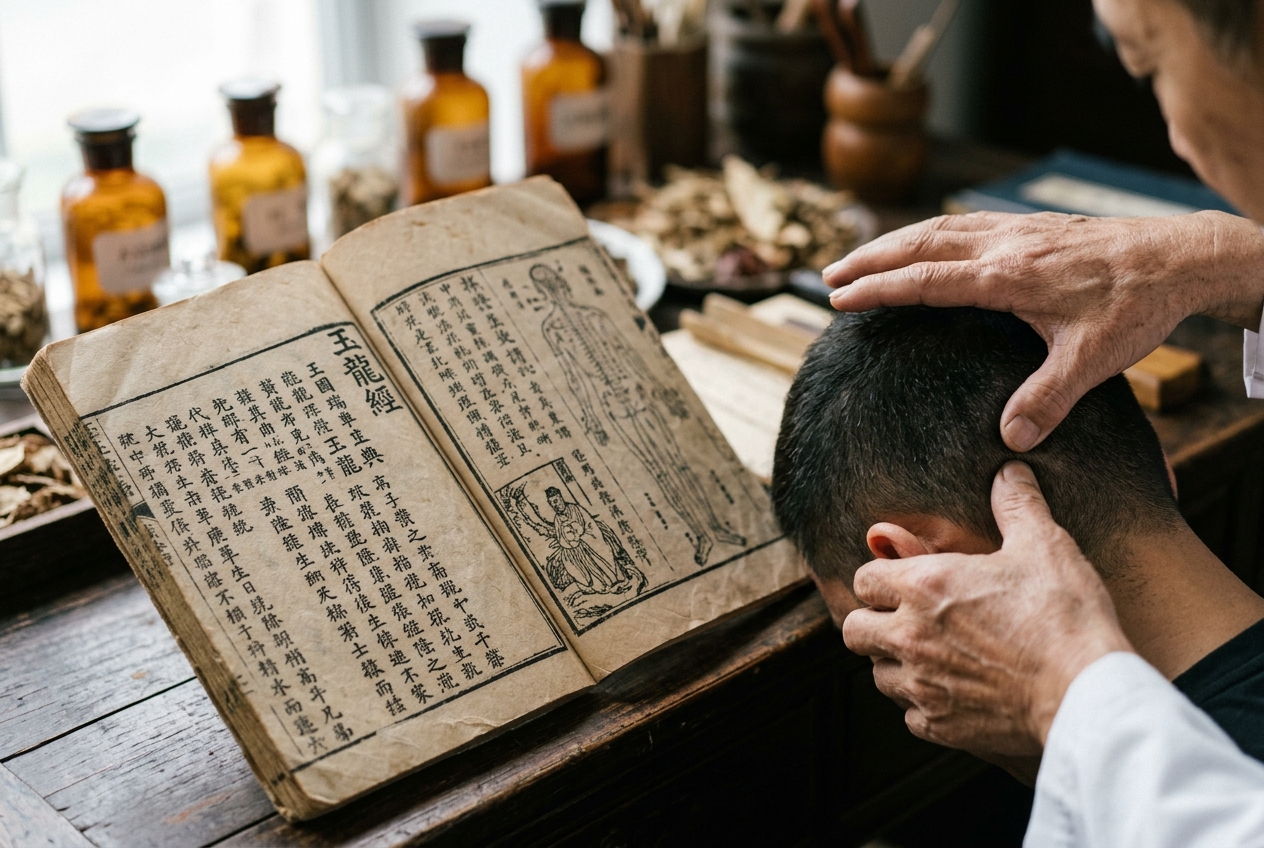
The foundational clinical treatise Bian Que Shen Ying Zhen Jiu Yu Long Jing (扁鹊神应针灸玉龙经 - The Jade Dragon Classic of Acupuncture and Moxibustion with the Miraculous Responses of Bian Que), compiled in 1329 CE by the Yuan dynasty scholar-physician Wang Guorui (王国瑞), introduced the Yu Long Ge (玉龙歌 - The Song of the Jade Dragon). Comprising eighty-five metric stanzas of clinical poetry, this seminal didactic work unified complex theoretical principles into accessible, memorizable rhyming couplets. Later anthologized and canonized by Yang Jizhou in the Ming dynasty masterpiece Yang Jizhou's Zhen Jiu Da Cheng on Wikipedia (1601 CE), the Yu Long Ge remains an enduring pinnacle of syndromic point prescription. By translating classical channel heuristics into rigorous somatic topographies and evidence-informed neurophysiological frameworks, modern clinicians and educated self-care practitioners can employ these time-tested point matrices through targeted manual acupressure.
1. Classical Lineage and Textual Significance: From Daoist Transmission to Imperial Canon
The historical milieu of the late Yuan dynasty (1271–1368 CE) represented a transformative era in the evolution of Chinese medicine. Following centuries of fragmented regional practices and divergent familial traditions, scholarly physicians sought to systematize the vast empirical literature accumulated since the Han dynasty’s Huangdi Neijing (黄帝内经 - Yellow Emperor's Inner Classic). Wang Guorui emerged within this intellectual current as a lineage holder claiming ancestral descent from the legendary physician Bian Que (秦越人 - Qin Yueren) through an unbroken chain of southern Daoist medical practitioners. In 1329 CE, Wang completed the Bian Que Shen Ying Zhen Jiu Yu Long Jing, formalizing both the esoteric oral transmissions of his father, Wang Chuan, and the clinical observations accrued over decades of active practice.
The central didactic contribution of the Yu Long Ge was its structural format: eighty-five seven-character rhyming stanzas (Qiyan Shige 七言诗歌). In imperial China, where medical knowledge was transmitted through rigorous apprenticeship and rote memorization, prose clinical manuals suffered from significant mnemonic attrition. The poetic metric of the Yu Long Ge resolved this vulnerability. By embedding syndromic differential diagnoses (Bian Zheng 辩证), meridian point selections, spatial target loci, and operational hierarchies within rhythmic verse, Wang Guorui engineered an algorithmic memory palace that allowed practitioners to rapidly retrieve complex therapeutic formulas at the bedside:
“Wind-dizziness with pain inside the brain, bilateral Fengchi (GB20) commands the cure; when accompanied by persistent stagnation, recruit Zusanli (ST36) to ground the root.”
— Yu Long Ge, Stanza 12 (Paraphrased)
When Yang Jizhou systematically organized the imperial medical curriculum during the late Ming dynasty, he recognized the exceptional clinical efficacy of Wang Guorui’s verses, incorporating the complete Yu Long Ge into Volume 5 of the Zhen Jiu Da Cheng. This inclusion marked the definitive institutionalization of Wang’s work, bridging esoteric Daoist lineage secrets, provincial clinical empirical wisdom, and the codified standards of the Imperial Academy of Medicine (Tai Yi Yuan 太医院).
2. Meridian Pathways: A Somatosensory Topography of the Kinetic Body
To appreciate the spatial architecture of Wang Guorui’s point pairings, one must trace the primary meridian pathways through the living body, moving beyond abstract line diagrams to concrete myofascial and musculoskeletal landmarks that can be directly palpated.
       [Baihui - GV20] (Vertex)
             |
             v
       [Fengchi - GB20] (Suboccipital Base)
             |
             +----------------------------+
             |                            |
      (Anterior/Ventral)           (Posterior/Dorsal)
             |                            |
     [Zhongwan - CV12]            [Shenshu - BL23]
       (Epigastrium)                (Lumbar Paraspinal)
             |                            |
      [Neiguan - PC6]              [Huantiao - GB30]
       (Volar Wrist)                (Posterolateral Gluteal)
             |                            |
      [Hegu - LI4]                 [Weizhong - BL40]
       (Hand Thenar)                (Popliteal Fossa)
             |                            |
     [Zusanli - ST36]             [Yanglingquan - GB34]
       (Anterolateral Shin)         (Fibular Head)
             |
      [Taichong - LV3]
       (Dorsum of Foot)
The Foot Shaoyang (Gallbladder) & Foot Taiyang (Bladder) Pathways: The Dorsal Defense Lines
The Foot Taiyang (Bladder) channel begins at the medial canthus of the eye, ascends over the cranium, and bifurcates at the occiput into two parallel columns running down the paraspinal musculature across the erector spinae. It descends through the sacral foramina, traverses the deep gluteal fascia, plunges straight down the center of the hamstrings, and bisects the popliteal crease at the back of the knee before coursing along the lateral Achilles tendon to terminate at the fifth digit.
Braided alongside this dorsal network is the Foot Shaoyang (Gallbladder) meridian. Originating at the lateral canthus, it weaves across the temporoparietal scalp, plunges beneath the base of the skull at the suboccipital depression, drapes over the superior trapezius ridge, zigzags down the lateral costal margin, traverses the dense gluteal and piriformis fascia at the hip joint, and travels down the lateral fascial plane of the iliotibial (IT) tract and fibular compartment to the fourth toe. Together, these two channels govern the posterior and lateral myofascial kinetic chains of the human frame.
The Foot Yangming (Stomach) & Hand Yangming (Large Intestine) Pathways: The Ventral Axis
The Foot Yangming (Stomach) channel is the primary multi-segmented highway of the anterior body. Originating infraorbitally, it circuits the mandible, descends through the anterior triangle of the neck over the sternocleidomastoid, drops vertically through the mammillary line down the rectus abdominis, passes through the inguinal canal, sweeps across the vastus lateralis and rectus femoris of the quadriceps, passes lateral to the patellar ligament, and courses precisely four finger-breadths below the knee along the tibialis anterior muscle down to the second toe.
Its upper-extremity counterpart, the Hand Yangming (Large Intestine) channel, commences at the radial corner of the index fingernail, crosses the fleshy dorsal webbing between the first and second metacarpals, travels up the lateral border of the forearm along the brachioradialis, ascends across the lateral epicondyle of the humerus, crosses the anterior deltoid to the supraclavicular fossa, and ascends across the cheek to decussate at the contralateral philtrum.
The Hand Jueyin (Pericardium) & Foot Jueyin (Liver) Pathways: The Deep Fascial Core
The Hand Jueyin (Pericardium) channel originates deep in the pericardium, traverses the diaphragm to integrate with the abdominal visceral cavity, emerges at the chest, sweeps down the medial anterior midline of the upper arm between the biceps brachii, courses across the cubital crease, and runs directly between the tendons of the flexor carpi radialis and palmaris longus along the volar forearm to exit at the tip of the middle finger.
Its lower pairing, the Foot Jueyin (Liver) channel, begins at the lateral base of the great toenail, travels across the dorsal valley between the first and second metatarsals, ascends anterior to the medial malleolus, courses up the inner thigh along the adductor longus, wraps around the external genitalia, ascends the lower abdomen, and terminates in the sixth intercostal space beneath the breast.
3. Key Syndromic Point Pairings & Formula Matrices
The core genius of Wang Guorui’s Yu Long Ge lies in its combinatorial logic. Rather than treating acupuncture points as isolated therapeutic switches, Wang conceptualized them as bidirectional functional nodes within integrated matrix formulas. Standardized anatomical coordinates below adhere strictly to the World Health Organization Standard Acupuncture Point Locations.
+---------------------------------------------------------------------------------------------------+
|                        YU LONG GE CLASSICAL POINT PRESCRIPTION MATRICES                           |
+------------------------------+-------------------------+------------------------------------------+
| Syndromic Pathology          | Primary Loci Pairing    | Classical Physiological Action           |
+------------------------------+-------------------------+------------------------------------------+
| 1. Cephalic & Sensory Wind   | Fengchi (GB20) +        | Subdues pathogenic wind, descends excess |
|    Disturbance               | Zusanli (ST36)          | Yang, grounds intracranial circulation.  |
|                              | Hegu (LI4) +            | Clears facial wind-heat, relieves eye    |
|                              | Taiyang (EX-HN5)        | pressure and temporal cephalea.          |
+------------------------------+-------------------------+------------------------------------------+
| 2. Musculoskeletal Bi        | Shenshu (BL23) +        | Fortifies Kidney Qi, releases deep lumbar|
|    Obstruction (Pain)        | Weizhong (BL40)         | spasm, clears stasis from dorsal channel.|
|                              | Huantiao (GB30) +       | Unblocks Shaoyang channel stasis, frees  |
|                              | Yanglingquan (GB34)     | sciatic nerve, restores motor mobility.  |
+------------------------------+-------------------------+------------------------------------------+
| 3. Gastrointestinal & Fu     | Zhongwan (CV12) +       | Harmonizes Middle Jiao, commands Stomach |
|    Dysregulation             | Zusanli (ST36) +        | descent, arrests rebellious Qi inversion.|
|                              | Neiguan (PC6)           |                                          |
+------------------------------+-------------------------+------------------------------------------+
| 4. Psycho-Emotional & Liver  | Taichong (LV3) +        | Extinguishes Liver Yang, clears vertex   |
|    Fire Upheaval             | Baihui (GV20) +         | heat, calms Shen, quiets affective mind. |
|                              | Shenmen (HT7)           |                                          |
+------------------------------+-------------------------+------------------------------------------+
3.1 Cephalic and Sensory Pathologies
Classical Couplet Focus: Fengchi (GB20) paired with Zusanli (ST36); Hegu (LI4) coordinated with Taiyang (EX-HN5).
                     [Fengchi - GB20] (Base of Skull)
                            |  \
                            |   \ (Descending Counter-Flow)
                            |    \
                            v     v
                     [Zusanli - ST36] (Anterolateral Shin)
Cephalic wind (Tou Feng 头风) and persistent vertigo (Xuan Yun 眩晕) represent hyper-reactive ascension of pathogenic Wind-Yang toward the sensory orifices. In the Yu Long Ge, Wang Guorui pairs the local suboccipital nexus Fengchi (GB20)—located in the depression between the upper border of the sternocleidomastoid and trapezius muscles—with the powerful distal grounding point Zusanli (ST36) on the anterolateral lower leg.
Fengchi dispels localized exterior and interior wind, opens cranial venous return, and relieves hypertonic spasm of the suboccipital triangle. However, local stimulation at the base of the skull risks mobilizing rebellious cranial Qi if applied in isolation. By simultaneously engaging Zusanli (ST36), the clinician creates a strong somatic down-regulating gradient, anchoring ascending Yang downward along the extensive Yangming conduit.
For acute facial wind-heat, supraorbital cephalea, and ocular inflammation, Wang pairs Hegu (LI4)—situated at the midpoint of the second metacarpal bone on the radial dorsum of the hand—with the extra point Taiyang (EX-HN5) in the tender depression of the temporal fossa. Hegu functions as the premier distal Gao Wu command point for the entire craniofacial region, clearing Yangming inflammation, while Taiyang locally disperses temporal vascular tension and clears ocular heat.
3.2 Musculoskeletal Bi Obstruction: Spinal and Sciatic Dynamics
Classical Couplet Focus: Shenshu (BL23) paired with Weizhong (BL40); Huantiao (GB30) coordinated with Yanglingquan (GB34).
In treating debilitating lower back pain (Yao Tong 腰痛), Wang Guorui applies the fundamental rule of coordinating root segmental spinal tonification with distal drainage: * Shenshu (BL23): Located 1.5 cun lateral to the lower border of the spinous process of the second lumbar vertebra (L2), directly adjacent to the anatomical locus of the kidneys. * Weizhong (BL40): Located at the midpoint of the transverse popliteal crease, between the tendons of the biceps femoris and semitendinosus.
In classical theory, Shenshu fortifies Kidney essence and tonifies the deep paraspinal core musculature (Shen Zhu Gu - Kidneys govern bones). Conversely, Weizhong is the He-Sea and Earth point of the Bladder channel, encapsulated in the famous classical maxim "For lumbar and dorsal disorders, seek Weizhong" (Yao Bei Weizhong Qiu 腰背委中求). Stimulating Weizhong immediately decongests stagnant Qi and blood along the entire posterior kinetic chain, relieving acute spasm across the lumbosacral junction.
For lower limb motor impairment and sciatica, Wang presents the synergistic pairing of Huantiao (GB30)—at the junction of the lateral third and medial two-thirds of the distance between the greater trochanter and the sacral hiatus—with Yanglingquan (GB34), located in the depression anterior and inferior to the head of the fibula. Huantiao deeply accesses the sciatic nerve path and releases the piriformis muscle, while Yanglingquan, celebrated as the systemic Hui-Meeting Point for Sinews (Jin Hui Yanglingquan 筋会阳陵泉), restores smooth neuromuscular conduction throughout the lateral kinetic chain.
3.3 Gastrointestinal and Central Fu Dysregulation: The Triadic Matrix
Classical Couplet Focus: Zhongwan (CV12) coupled with Zusanli (ST36) and Neiguan (PC6).
                  [Zhongwan - CV12] (Epigastrium)
                   Front-Mu of Stomach / Fu Confluence
                        /                     \
                       /                       \
                      v                         v
       [Neiguan - PC6] (Volar Forearm)    [Zusanli - ST36] (Lower Leg)
       Unbinds Chest, Arrests Inversion   He-Sea Point, Descends Food Stagnation
For acute epigastric distension, acid regurgitation, nausea, and rebellious Qi inversion, Wang Guorui constructs a triadic point matrix centered upon Zhongwan (CV12): * Zhongwan (CV12): On the anterior midline of the upper abdomen, 4 cun superior to the umbilicus (halfway between the navel and the sternocostal angle). It is the Front-Mu (Mu Xue) point of the Stomach and the influential Hui-Meeting point of all Fu (yang) organs. * Zusanli (ST36): 3 cun inferior to the lateral patellar eye (ST35), one finger-breadth lateral to the anterior crest of the tibia. * Neiguan (PC6): 2 cun proximal to the distal wrist crease, between the palmaris longus and flexor carpi radialis tendons.
This triad forms a self-reinforcing mechanical and regulatory loop. Zhongwan regulates the local visceral tone of the gastric body. Neiguan unbinds the diaphragm, descends rebellious diaphragmatic spasms, and arrests nausea via the Jueyin-Shaoyang axis. Zusanli establishes downward peristaltic propulsion through the entire gastrointestinal tract, transforming food stagnation into descending fecal transit.
3.4 Psycho-Emotional and Liver Fire Dynamics
Classical Couplet Focus: Taichong (LV3) coordinated with Baihui (GV20) and Shenmen (HT7).
Affective agitation, insomnia, hypertensive rage, and red eyes indicate the rapid upward flare of Liver Fire (Gan Huo Shang Yan 肝火上炎). Wang Guorui addresses this systemic storm by triangulating: * Taichong (LV3): On the dorsum of the foot, in the proximal depression of the first intermetatarsal space. As the Shu-Stream and Yuan-Source point of the Liver channel, it is the premier locus for pacifying liver hyper-reactivity. * Baihui (GV20): At the cranial vertex, 5 cun posterior to the anterior hairline, at the intersection of the sagittal midline and the line connecting the auricle apices. It clears the sensory orifices and anchors vertex Yang. * Shenmen (HT7): At the wrist crease, on the radial border of the flexor carpi ulnaris tendon. As the Yuan-Source and Shu-Stream point of the Heart channel, it anchors the Shen (spirit) and calms hyperactive nocturnal mentation.
4. Modern Neurofascial and Physiological Correlations
The empirical point combinations compiled by Wang Guorui in the 14th century correspond with extraordinary fidelity to contemporary models of neuroanatomy, spinal neurophysiology, and fascial mechanotransduction.
+-------------------------------------------------------------------------------------+
|                     NEUROPHYSIOLOGICAL PATHWAYS OF YU LONG GE PAIRINGS              |
+-------------------------------------------------------------------------------------+
|                                                                                     |
|   [Manual Somatic Stimulation: An Fa / Rou Fa / Xie Fa]                             |
|                           |                                                         |
|             +-------------+-------------+                                           |
|             |                           |                                           |
|             v                           v                                           |
|   [A-delta / A-beta Myelinated]   [Interstitial Fascial Tensegrity]                 |
|   Afferent Mechanoreceptors       Fibroblast Cytoskeleton Deformation               |
|             |                           |                                           |
|             v                           v                                           |
|   [Dorsal Horn Substantia]        [Extracellular ATP / Adenosine Release]           |
|   [Gelatinosa: Gating Logic]                    |                                   |
|             |                                   v                                   |
|   +---------+---------+               [Microvascular Vasodilation]                  |
|   |                   |                                                             |
|   v                   v                                                             |
| [Segmental Gating]  [Ascending Spinothalamic Tract]                                 |
| Enkephalin Release            |                                                     |
|                               v                                                     |
|                     [Periaqueductal Gray (PAG) & RVM]                               |
|                               |                                                     |
|                               v                                                     |
|                     [Descending Serotonergic & Noradrenergic Inhibition]            |
+-------------------------------------------------------------------------------------+
Segmental Spinal Gating and Convergence Projection
The simultaneous pairing of proximal and distal points—such as Shenshu (BL23) with Weizhong (BL40)—relies directly on the spinal mechanism articulated by Melzack and Wall's Gate Control Theory on Wikipedia. Mechanostimulation of the tibial nerve trunk at Weizhong (BL40) recruits large-diameter myelinated $A\beta$ and $A\delta$ afferent nerve fibers. These afferent signals enter the spinal cord at the L4–S2 dorsal root ganglia, activating inhibitory enkephalinergic interneurons within the substantia gelatinosa of the dorsal horn. This activation presynaptically suppresses the transmission of slow, unmyelinated C-fiber nociceptive inputs ascending from injured lumbar paraspinal segments (L1–L3, corresponding to Shenshu BL23), blocking the pain signal before it reaches higher cortical processing centers.
       [Injured Lumbar Tissue (L1-L3 / BL23)] ---> (Slow C-Fibers) -----\
                                                                         +--> [Dorsal Horn Gate] ---> Pain to Cortex
       [Acupressure at Weizhong (BL40)]        ---> (Fast A-beta Fibers) -/   (INHIBITED by Enkephalin)
Central Autonomic Modulation via Vagal Pathways
The gastrointestinal triad (Zhongwan CV12, Zusanli ST36, Neiguan PC6) activates well-documented viscerosomatic and somato-autonomic reflex arcs. Biomedical research accessible through Neurobiological Mechanisms of Acupuncture Analgesia at NCBI PubMed demonstrates that mechanical stimulation of the deep peroneal nerve at Zusanli (ST36) and the median nerve at Neiguan (PC6) sends ascending afferents to the nucleus tractus solitarius (NTS) and dorsal motor nucleus of the vagus (DMV) in the medulla oblongata.
This stimulation induces parasympathetic efferent outflow through the vagus nerve (Cranial Nerve X), promoting gastric accommodation, increasing bowel motility, attenuating pro-inflammatory cytokine expression (TNF-$\alpha$, IL-6) via the cholinergic anti-inflammatory pathway, and suppressing retro-peristaltic emetic circuits.
Myofascial Kinetic Chains and Mechanotransduction
Rather than existing as isolated neurological points, acupressure loci reside within continuous planes of connective tissue. As documented in research on Mechanisms of Mechanotransduction in Fascial Tissues at NCBI PubMed, the Foot Taiyang and Shaoyang meridians closely map to Thomas Myers' superficial back line and lateral myofascial trains.
[Occipital Ridge: GB20] ===(Suboccipital Fascia)===> [Erector Spinae: BL23] ===(Sacrotuberous Ligament)===>
===(Hamstring Fascia: BL40)===> [Gastrocnemius/Achilles Tendon] ===(Plantar Aponeurosis)
Sustained physical pressure on Huantiao (GB30) or Yanglingquan (GB34) deforms collagen fibers within the iliotibial band and crural fascia. This mechanical stress triggers cellular mechanotransduction within resident fibroblasts, opening stretch-activated ion channels and stimulating local extracellular adenosine release. Adenosine binds to local $A_1$ receptors, initiating sustained microvascular vasodilation and down-regulating peripheral nociceptive signaling across the entire lower extremity kinetic chain.
5. Step-by-Step Clinical Acupressure Stimulation Protocols
To safely and effectively apply Wang Guorui’s Yu Long Ge formulas without needles, practitioners utilize structured manual acupressure. These techniques deliver mechanical energy precisely along tissue vectors to elicit the Deqi (得气) sensation—a perceptible dull ache, distension, warmth, or mild tingling that confirms correct neurofascial recruitment.
+----------------------------------------------------------------------------------------------------+
|                         MANUAL ACUPRESSURE MANIPULATION TECHNIQUES                                 |
+----------------------+-----------------------------+-----------------------------------------------+
| Technique Name       | Mechanical Dynamics         | Clinical Intent / Vector                      |
+----------------------+-----------------------------+-----------------------------------------------+
| Sustained Pressure   | Perpendicular static load   | Calms acute spasm, tonifies deficient loci,   |
| (*An Fa* 按法)       | (3–5 kg sustained force)    | grounds hyperactive ascending Yang.           |
+----------------------+-----------------------------+-----------------------------------------------+
| Circular Kneading    | Clockwise/Counter-clockwise | Harmonizes visceral Qi, disperses stagnation, |
| (*Rou Fa* 揉法)      | small orbital mobilization  | promotes local fascial hydration.             |
+----------------------+-----------------------------+-----------------------------------------------+
| Dispersing Friction  | High-frequency oscillating  | Strongly drains pathogenic heat, expels wind, |
| (*Xie Fa* 泻法)      | or rapid dynamic pumping    | eliminates acute musculoskeletal stasis.      |
+----------------------+-----------------------------+-----------------------------------------------+
Comprehensive Point Location and Pressure Parameters
1. Fengchi (GB20 - Wind Pool)
- Precise Localization: Place thumbs beneath the base of the skull. Slide laterally past the thick vertical cords of the trapezius muscle until your thumbs drop into deep, tender hollows medial to the mastoid process.
- Force Vector & Angle: Direct pressure anterosuperiorly toward the opposite orbit (aiming toward the bridge of the nose).
- Technique: Apply sustained An Fa with small-amplitude Rou Fa kneading.
- Duration & Sensation: 120–180 seconds. Elicit a deep, radiating suboccipital warmth or a gentle, non-painful pressure wave across the lateral scalp.
2. Zusanli (ST36 - Leg Three Miles)
- Precise Localization: Sit with knees flexed at 90 degrees. Place four fingers across the shin, starting immediately below the inferior border of the patella. The point lies one finger-breadth lateral to the sharp anterior crest of the tibia in the belly of the tibialis anterior muscle.
- Force Vector & Angle: Perpendicular to the cutaneous plane, driving directly into the muscle mass.
- Technique: Apply firm sustained pressure (An Fa) combined with steady circular friction (Rou Fa).
- Duration & Sensation: 180 seconds per limb. Elicit a deep, heavy distending ache (Deqi) that radiates down the lateral shin toward the dorsum of the foot.
3. Hegu (LI4 - Joining Valleys)
- Precise Localization: Adduct the thumb and index finger together to form a muscular bulge on the dorsal web space. Locate the highest point of this prominence. Open the hand and place the tip of your opposing thumb at this apex, pressing obliquely toward the second metacarpal bone.
- Force Vector & Angle: Oblique angle directed toward the second metacarpal bone (never press straight into the soft webbing).
- Technique: Apply vigorous dispersing friction (Xie Fa) with small circular strokes.
- Duration & Sensation: 120 seconds. Elicit a sharp, profound soreness with tingling along the radial line of the forefinger.
4. Weizhong (BL40 - Middle of the Crease)
- Precise Localization: With the subject prone or seated with legs extended, identify the exact midpoint of the transverse popliteal crease at the back of the knee.
- Force Vector & Angle: Perpendicular, deep into the neurovascular sheath between the flanking hamstring tendons.
- Technique: Sustained rhythmic compression (An Fa), pressing firmly for 5 seconds, releasing slightly for 2 seconds, repeating across 180 seconds.
- Duration & Sensation: 180 seconds per limb. Elicit a spreading warmth and numbness radiating upward into the lower back or downward along the calf.
5. Zhongwan (CV12 - Central Venter)
- Precise Localization: Lie supine with knees gently bent. Locate the midpoint on the anterior midline between the xiphosternal junction and the center of the umbilicus (approximately four finger-breadths superior to the navel).
- Force Vector & Angle: Perpendicular, soft, deep sinking pressure.
- Technique: Gentle Rou Fa circular clockwise kneading coordinated with relaxed abdominal diaphragmatic breathing.
- Duration & Sensation: 180 seconds. Elicit abdominal relaxation, audible borborygmi (gurgling), and relief of epigastric fullness.
+------------------------------------------------------------------------------------+
|                STEP-BY-STEP DIAPHRAGMATIC RESPIRATORY COORDINATION                 |
+------------------------------------------------------------------------------------+
| 1. Inhalation (4 Seconds):                                                         |
|    - Expand the lower abdomen slowly through the nose.                             |
|    - Maintain gentle contact over the point without increasing load.               |
|                                                                                    |
| 2. Exhalation (6 Seconds):                                                         |
|    - Slowly exhale through relaxed lips.                                           |
|    - Simultaneously sink deep perpendicular force (3-5 kg) into the locus.         |
|    - Deepen engagement with the fascial barrier as tissues relax.                  |
|                                                                                    |
| 3. Retain & Repeat:                                                                |
|    - Maintain baseline contact across 12-18 full respiratory cycles (180 seconds).|
+------------------------------------------------------------------------------------+
6. A Point Combination for Common Distress: The Nocturnal Restorative Protocol
To address the common modern triad of late-night mental hyperarousal, tension cephalea, and upper abdominal stagnation resulting from late meals, follow this integrated evening protocol:
- Clinical Positioning: Lie supine in a quiet, dimly lit room with a bolster beneath the knees to relax the abdominal wall and lumbar paraspinal musculature.
- Sequence & Execution:
- Release Cranial Tension (Minutes 0–3): Reach behind the neck and apply synchronized bilateral circular kneading (Rou Fa) to Fengchi (GB20) for 180 seconds. Visualize descending tension flowing out of the head.
- Harmonize the Center (Minutes 3–6): Place the fingertips over Zhongwan (CV12) and engage in 180 seconds of synchronized breathing, sinking deeper on each exhalation.
- Settle Visceral and Mental Restlessness (Minutes 6–9): Switch to the left forearm and apply steady perpendicular pressure to Neiguan (PC6) for 90 seconds, then repeat on the right arm for 90 seconds.
- Ground the Shen and Clear Ascending Fire (Minutes 9–12): Move to the feet. Press the thumb tip into the proximal webbing of Taichong (LV3) on each foot for 90 seconds, directing the vector backward toward the ankle.
7. Safety, Sensibility & Clinical Contraindications
While non-invasive manual acupressure is exceptionally safe, strict clinical boundaries must be observed to prevent adverse events. For detailed safety standards, consult the WHO Guidelines on Basic Training and Safety in Acupuncture.
+-----------------------------------------------------------------------------------+
|                        CRITICAL CLINICAL CONTRAINDICATIONS                        |
+------------------------------------+----------------------------------------------+
| Clinical Category                  | Specific Contraindications & Precautions     |
+------------------------------------+----------------------------------------------+
| Pregnancy (Absolute Prohibition)   | Prohibited points: Hegu (LI4), Sanyinjiao    |
|                                    | (SP6), Kunlun (BL60), Jianjing (GB21), and   |
|                                    | deep pressure on the lower abdomen/sacrum.   |
|                                    | Can induce uterine contractions.             |
+------------------------------------+----------------------------------------------+
| Vascular & Hematologic Pathology   | Avoid deep pressure in patients with deep    |
|                                    | vein thrombosis (DVT), severe varicose       |
|                                    | veins, bleeding disorders, or anticoagulant  |
|                                    | therapy. Avoid the anterior carotid triangle.|
+------------------------------------+----------------------------------------------+
| Local Cutaneous & Structural Risk  | Never press directly over broken skin, burns,|
|                                    | acute infections, open ulcerations, bone     |
|                                    | fractures, or malignant tumors.              |
+------------------------------------+----------------------------------------------+
Distinguishing Benign Deqi from Tissue Trauma
Deqi presents as a dull, heavy ache, a sensation of localized fullness, mild warmth, or a diffuse, non-threatening tingling. In contrast, sharp, electric, shooting pain indicates direct impingement upon a nerve trunk. If a piercing sensation occurs, immediately shift the angle of pressure slightly off the nerve sheath. Acupressure must never cause cutaneous bruising or muscular inflammation; apply firm but graduated pressure that respects the patient’s somatic comfort threshold.
Red Flag Criteria for Biomedical Triage
Self-administered acupressure is intended for functional complaints, stress modulation, and chronic musculoskeletal discomfort. It is not an alternative to emergency medical care. The following presentations require immediate biomedical evaluation: * Sudden, unprecedented "thunderclap" headache, or cephalea accompanied by high fever, neck stiffness, confusion, or speech impairment. * Acute radiating chest pain, left arm tightness, or shortness of breath. * Sudden weakness, motor paresis, facial droop, or sensory loss on one side of the body. * Severe acute abdominal pain with abdominal wall rigidity, guarding, or high fever. * Progressive bowel or bladder incontinence accompanied by severe lower back pain and "saddle anesthesia" (indicative of Cauda Equina Syndrome).
8. Today's Takeaway: A 2-Minute Calibrating Intervention
If you are experiencing afternoon mental fatigue, tense shoulders, or creeping forehead tension while reading this article, perform this rapid two-minute intervention right at your desk:
+-----------------------------------------------------------------------------------+
|                    TWO-MINUTE AT-YOUR-DESK RECALIBRATION                          |
+-----------------------------------------------------------------------------------+
| 1. Locate Hegu (LI4):                                                             |
|    - Find the muscular peak between your left thumb and index finger.             |
|                                                                                   |
| 2. Apply Direct Oblique Pressure:                                                 |
|    - Hook the tip of your right thumb against the second metacarpal bone.         |
|    - Press firmly until you feel a clear, dull ache (*Deqi*).                     |
|                                                                                   |
| 3. Combine with Controlled Breathing:                                             |
|    - Drop your shoulders away from your ears.                                     |
|    - Perform 6 slow, deep belly breaths (60 seconds) while maintaining pressure.  |
|                                                                                   |
| 4. Switch and Repeat:                                                             |
|    - Repeat the exact protocol on the right hand for 60 seconds.                  |
+-----------------------------------------------------------------------------------+
By bridging the 14th-century clinical wisdom of Wang Guorui’s Yu Long Ge with modern neuroanatomy and manual acupressure, we reclaim a practical, sophisticated map of the human body. Whether managing chronic musculoskeletal strain, digestive distress, or sensory overload, the systematic point matrices of the Song of the Jade Dragon remain as clinically potent today as they were when inscribed upon parchment seven hundred years ago.