Xisuijing Qigong (Xi Sui Jing) Meridian Dynamics: Governing Bone Marrow Cleansing, Deep Essence Refinement, Sea of Marrow Replenishment, and Extraordinary Vessel Permeation in Traditional Chinese Medicine
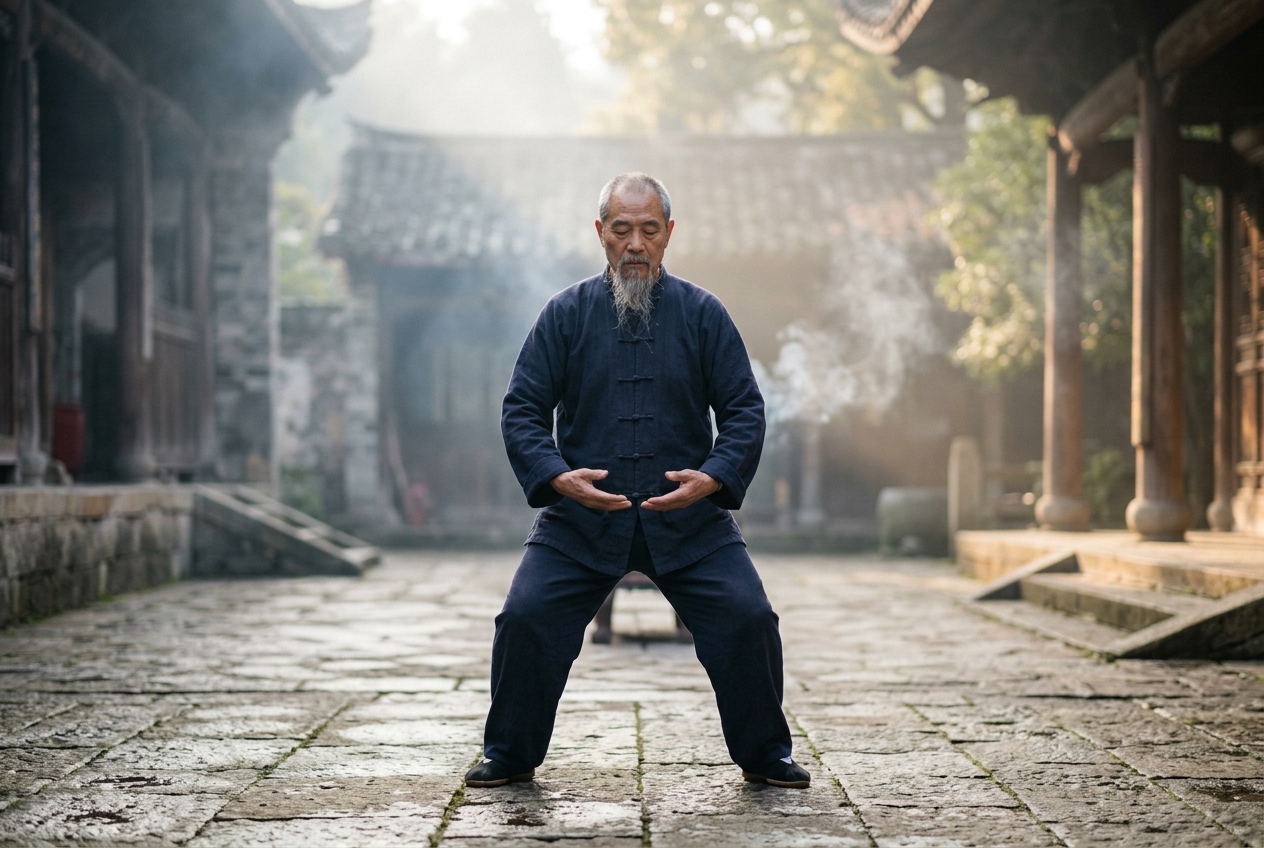
1. Opening Scene — A Moment You'll Recognise
It is late on a Thursday afternoon, and you are confronting a brand of exhaustion that coffee cannot touch. It is not the superficial drowsiness that follows a heavy meal, nor the healthy muscular fatigue earned through a brisk five-mile run. Rather, it is a structural, bone-deep deficit. Your lower back radiates a dull, hollow ache; your knees feel strangely unmoored; and beneath the crown of your skull sits a heavy, impenetrable brain fog that makes even basic analytical thought feel like wading through wet cement. You have slept eight hours, yet you feel hollowed out from the inside—as though the battery at the core of your skeletal frame has dropped into single digits.
In the conceptual lexicon of Traditional Chinese Medicine (TCM), you are not merely tired; you are experiencing an acute depletion of Jing (Essence)—the constitutional foundation stored within the Kidneys and the skeletal matrix. While modern wellness culture focuses relentlessly on superficial energy—spiking dopamine with adaptogens or forcing cardiovascular output—classical East Asian medicine recognises that true systemic resilience does not live in the muscles or bloodstream alone. It resides in the porous, crystalline depths of your bones and the cerebral pathways they nourish.
Centuries ago, contemplative Daoist and Chan Buddhist traditions developed a specialized somatic technology to address this exact state of profound structural depletion: Xisuijing (Xi Sui Jing, or the Bone Marrow Cleansing Classic). Where conventional movement practices train the perimeter of the body, Xisuijing penetrates directly to the core, transmuting the ambient energy of breath into the biological gold of marrow and cerebral vitality.
2. What This Organ System Does: The Kidney-Marrow-Brain Continuum
To understand Xisuijing, one must first dismantle the modern Western divide between the renal organs, the skeletal frame, and the central nervous system. In TCM physiology, these form an indivisible functional axis governed by the Kidney (Shen) system.
+-------------------------------------------------------------------------+
|                  THE TCM KIDNEY-MARROW-BRAIN AXIS                       |
+-------------------------------------------------------------------------+
|                                                                         |
|   Post-Heaven Qi (Hou Tian)          Pre-Heaven Essence (Xian Tian)     |
|   [Food & Respiration]               [Inherited Constitutional Jing]    |
|             \                                      /                    |
|              \                                    /                     |
|               +----------------+-----------------+                      |
|                                |                                        |
|                                v                                        |
|                       KIDNEY SYSTEM (Shen)                              |
|                   [Stores Jing & Governs Bones]                         |
|                                |                                        |
|                                v                                        |
|                       BONE MARROW (Gu Sui)                              |
|                    [Structural Core & Blood]                            |
|                                |                                        |
|                                v                                        |
|                     SEA OF MARROW (Sui Hai)                             |
|                    [Brain & Central Nervous]                            |
|                                                                         |
+-------------------------------------------------------------------------+
The Classical Architecture: From Tendon to Marrow
Classical lineage attributes the twin doctrines of internal cultivation to the semi-legendary sixth-century sage Bodhidharma at the Shaolin Temple, as documented in historical treatments of the Yijin Jing and Xisuijing lineages. While the Yijinjing (Muscle-Tendon Change Classic) addresses the external envelope—transforming fascia, sinews, and muscles (Jingjin) to generate tensile power—the Xisuijing is its esoteric, internal twin. It directs consciousness and breath inward to wash, purify, and regenerate the Bone Marrow (Gu Sui).
In Chinese medical theory, the Kidneys store Pre-Heaven Essence (Xian Tian Zhi Jing), the finite constitutional blueprint inherited at conception. Through daily digestion and respiration, the body generates Post-Heaven Qi (Hou Tian Zhi Qi). The central alchemy of Xisuijing involves using specialized breath and postural mechanics to transmute this daily Post-Heaven energy back into Pre-Heaven Essence, condensing it into the marrow cavities of the skeleton.
From these bony vaults, refined essence ascends via the spine to fill the brain, known classically as the Sea of Marrow (Sui Hai). When the marrow is plentiful, the bones are dense, immunity is impenetrable, and the mind is luminous; when marrow declines, the spine softens, cognition dulls, and vitality collapses.
The Energetic Superhighways: The Extraordinary Vessels
This internal irrigation relies on three primary Extraordinary Vessels (Qi Jing Ba Mai): * Du Mai (Governing Vessel): The "Sea of Yang Meridians," ascending along the posterior midline of the spine, conducting refined fire and marrow energy upward into the brain. * Ren Mai (Conception Vessel): The "Sea of Yin Meridians," running along the anterior centerline, governing deep physiological fluids, restorative cooling, and hormonal balance. * Chong Mai (Penetrating Vessel): The central vertical core of the body, acting as the deep conduit that connects the perineum, the lower abdomen, the heart, and the skeletal axis.
Modern Biomedical Convergence
Remarkably, this ancient paradigm finds precise mechanistic parallels in modern physiology and regenerative medicine:
- Osteocyte Mechanotransduction: Bone is not an inert scaffold, but a dynamic, piezo-electric endocrine organ. As detailed in biomedical research on osteocyte mechanotransduction, rhythmic mechanical loading, axial spinal decompression, and subtle hydrostatic pressure shifts stimulate bone remodelling, triggering fluid shear stress through the lacunar-canalicular network.
- Hematopoietic Stem Cell Niches: The marrow microenvironment serves as the primary nursery for red and white blood cells. Research into hematopoietic stem cell niches demonstrates that local oxygenation, microvascular perfusion, and sympathetic nervous tone directly dictate cellular longevity and immune cell production—mirroring the TCM view that "Kidney Essence produces Blood."
- Cerebrospinal Fluid (CSF) Pulsatile Dynamics: The upward movement from the sacral marrow to the Sui Hai maps directly onto the circulation of cerebrospinal fluid. Studies on cerebrospinal fluid dynamics confirm that deep diaphragmatic respiration coupled with subtle perineal contractions amplifies craniosacral CSF pulsation, facilitating waste clearance via the glymphatic system.
- Autonomic Nervous System Regulation: Somatic practices that combine slow breathing with axial alignment promote parasympathetic tone and downregulate chronic sympathetic stress, a mechanism recognized across global public health initiatives such as the WHO Traditional Medicine Strategy and broader clinical trials on Qigong physiology.
3. How You Can Feel It — Signs of Balance and Imbalance
Because the Kidney-Marrow axis governs the deepest biological substratum, its functional state reflects clearly in your everyday physical sensations, cognitive capacity, and structural posture.
+-------------------------------------------------------------------------+
|                    DIAGNOSTIC MATRIX: MARROW & JING                     |
+-------------------------------------------------------------------------+
|  Domain          | Depleted (Deficient Marrow) | Replenished (Full Marrow)   |
+------------------+-----------------------------+-------------------------+
|  Skeletal        | Dull lumbar ache, cold knees| Elastic, upright spine; |
|                  | joint stiffness upon waking | light, springy joints   |
+------------------+-----------------------------+-------------------------+
|  Cognitive       | Persistent brain fog, poor  | Razor-sharp focus, calm |
|                  | working memory, exhaustion  | mental clarity, insight |
+------------------+-----------------------------+-------------------------+
|  Thermoregulation| Cold feet, icy sacrum, low  | Internal radiant warmth |
|                  | afternoon "empty heat"      | centering in the pelvis |
+------------------+-----------------------------+-------------------------+
|  Auditory/Dental | Ringing ears (tinnitus),    | Resilient gums, robust  |
|                  | dental sensitivity/weakness | auditory acuity         |
+------------------+-----------------------------+-------------------------+
|  Emotional       | Subconscious anxiety,       | Deep constitutional     |
|                  | existential dread (Kong)    | courage and willpower   |
+------------------+-----------------------------+-------------------------+
The 60-Second Somatic Self-Assessment
Take a moment to step away from your screen and conduct this diagnostic check: 1. The Sacral Thermometer: Place the palms of your hands flat over your sacrum (the flat triangular bone at the base of your spine). Is the tissue beneath cool and stiff, or does it radiate a steady, subtle warmth? Coldness here indicates an insufficiency of Mingmen Fire (the Kidney Yang furnace). 2. The Knee-Lumber Weight Test: Stand on one leg with a micro-bend in the knee for 15 seconds. Do your lower back and knee joints feel brittle and dry, or is there an internal, hydraulic bounce supporting you? 3. The Mental Horizon Check: Close your eyes and observe your cognitive field. Is there a hollow, foggy pressure behind your eyes (Sui Hai deficiency), or does your awareness rest stably, clear and unobstructed?
4. Qigong & Movement Practice: The Xisuijing Somatic Protocol
The following foundational Xisuijing exercise introduces the art of Bone Marrow Breathing (Sui Xi Fa). It is designed to draw ambient Qi from the periphery, condense it into the long bones, and guide it up the spinal axis to replenish the brain.
+-------------------------------------------------------------------------+
|                  XISUIJING MARROW-BREATHING DYNAMICS                    |
+-------------------------------------------------------------------------+
|                                                                         |
|                          [Crown: Baihui GV-20]                          |
|                                    ^                                    |
|                                    | (CSF & Yang Ascension)             |
|                                    |                                    |
|                            [Spine: Du Mai]                              |
|                                    ^                                    |
|                                    |                                    |
|      [Peripheral Bones] ---> [Lower Dantian] <--- [Peripheral Bones]    |
|                                    |                                    |
|                                    v                                    |
|                        [Perineum: Huiyin CV-1]                          |
|                         (Subtle Elevation Pull)                         |
|                                                                         |
+-------------------------------------------------------------------------+
Stage 1: Setup and Axial Alignment (Song Jing)
- Position: Stand with your feet parallel, hip-width apart. Let your weight sink evenly across the "nine points" of each foot (toes, balls, outer edges, heels).
- Spinal Architecture: Tuck the tailbone marginally down and forward to unlock the sacrum (Mingmen opening). Lightly suspend the crown of your head from above via Baihui (GV-20), tucking the chin slightly to lengthen the cervical spine.
- Neuromuscular Release (Song): Relax the facial muscles, drop the shoulders away from the ears, and allow the chest to hollow slightly, opening the space between the shoulder blades. Rest the tip of your tongue gently against the upper palate behind the front teeth, bridging the Du Mai and Ren Mai vessels.
Stage 2: The Breath and Marrow Infusion Cycle
- Inhalation (Condensation into the Bones — 4 to 6 Seconds):
- Inhale slowly, silently, and deeply through the nose into the lower abdomen (Xia Dantian).
- Simultaneously, gently engage the pelvic floor muscles with a subtle upward draw at the perineum (Huiyin, CV-1)—a 15% effort, similar to gently preventing urination.
- The Visualization (Yi): Visualize the air entering not merely through the nostrils, but through every pore of your skin. Imagine this ambient energy drawing inward through the skin, through the muscles, and condensing into the marrow cavities of your arms, legs, and pelvis as a luminous, dense, golden liquid light.
- The Pause (Compression — 2 Seconds):
- Hold the breath comfortably without straining the throat.
- Feel the internal hydraulic pressure gently pack this refined essence into the core of your bones and the sacrum.
- Exhalation (Ascent and Storage — 6 Seconds):
- Exhale smoothly through the nose. Release the perineum back to baseline.
- Direct the condensed energy from the sacrum up along the inner channel of the spine (Du Mai), allowing it to wash upward through the brain stem into the Sea of Marrow (Sui Hai), before allowing the remaining calm energy to cascade down the front of the body to settle warmly in the lower belly.
Repetitions, Duration & Sensations
- Dose: Practice for 9 to 18 full breath cycles (approximately 5 to 10 minutes daily), preferably at dawn or during the late afternoon (5:00 PM – 7:00 PM, the Kidney channel hour).
- Sensations to Observe:
- Pore tingling & magnetic warmth: A sensation of heavy, vibrating warmth spreading through the shins, thighs, and forearms.
- Spinal decompression: A feeling of light, buoyant verticality throughout the vertebrae.
- Cognitive brightness: An immediate clearing of ocular pressure and a quiet, centered alertness.
5. Acupressure Points You Can Try Today
These three classical acupuncture points directly access the Kidney channel, the spinal vitality fire, and the cranial marrow reservoir.
                  =================================
                  KEY ACUPRESSURE ACCESS POINTS
                  =================================

[ Baihui GV-20 ]          ---> Crown Apex (Sea of Marrow)
              |
              |
       [ Mingmen GV-4 ]          ---> Lumbar Spine L2 (Vitality Gate)
              |
              |
       [  Taixi KI-3  ]          ---> Medial Ankle (Source of Yin/Yang)
1. Taixi (Kidney 3 / KI-3) — "The Great Ravine"
- Location: On the inner ankle. Locate the prominent tip of your inner ankle bone (medial malleolus) and the outer edge of your Achilles tendon; Taixi sits directly in the soft depression halfway between these two structures.
- How to Press: Use the tip of your thumb to apply steady, perpendicular pressure directed slightly toward the ankle bone. Maintain firm pressure while making tiny circular kneading motions for 2 to 3 minutes per side. You should feel a distinct, dull, soothing ache (De Qi).
- Clinical Utility: As the Yuan-Source point of the Kidney meridian, Taixi deeply nourishes both Kidney Yin and Kidney Yang. It relieves lower back stiffness, chronic throat dryness, nighttime fatigue, and ankle weakness.
2. Mingmen (Governing Vessel 4 / GV-4) — "The Gate of Life"
- Location: Located on the posterior midline of the lower back, in the depression below the spinous process of the second lumbar vertebra (L2). A simple landmark: it sits directly opposite your navel on your spine.
- How to Press: Form loose fists and use the flat knuckles of your thumbs or index fingers to rub this area briskly in a vertical or horizontal shearing pattern for 1 to 2 minutes until intense friction warmth is generated. Alternatively, apply steady, firm thumb pressure while taking three deep abdominal breaths.
- Clinical Utility: Ignites the constitutional warmth of the body, counteracts severe lumbar exhaustion, disperses cold in the lower body, and stimulates cerebrospinal fluid mobilization.
3. Baihui (Governing Vessel 20 / GV-20) — "Hundred Convergences"
- Location: At the apex of the skull. Fold your ears forward; trace an imaginary line from the tips of both ears straight up to the midline of the head. It sits in a slight, soft depression on the crown.
- How to Press: Place your middle or index finger directly onto the point. Apply gentle to moderate perpendicular pressure with slow, clockwise circular rotations for 1 to 2 minutes, breathing gently out through the mouth.
- Clinical Utility: Directly regulates the Sea of Marrow. Calms hyperactive mental chatter, alleviates vertex headaches, clears mental fatigue, and lifts prolapsing downward energy.
6. Food & Lifestyle — Small Changes for Today
Nourishing the skeletal core requires both energetic practice and physical raw materials. In Chinese Dietary Therapy (Shi Liao), the Kidney and Marrow systems respond directly to foods that embody the Water element: deep pigments, mineral-dense profiles, and nutrient-rich seeds.
+-------------------------------------------------------------------------+
|                  NUTRITIONAL MATRIX FOR MARROW & JING                   |
+-------------------------------------------------------------------------+
|  Therapeutic Category | Dietary Focus           | Target Mechanism      |
+-----------------------+-------------------------+-----------------------+
|  Deep-Pigment Seeds   | Black sesame, walnuts,  | Replenishes Kidney    |
|                       | black beans             | Essence & lipid matrix|
+-----------------------+-------------------------+-----------------------+
|  Collagenous Soups    | Slow-cooked bone broth, | Delivers glycine,     |
|                       | marrow broths, seaweeds | proline, and minerals |
+-----------------------+-------------------------+-----------------------+
|  Thermal Protectors   | Cinnamon, ginger,       | Maintains pelvic      |
|                       | lightly cooked greens   | microvascular flow    |
+-----------------------+-------------------------+-----------------------+
Foods to Add
- Black Sesame Seeds (Hei Zhi Ma): Celebrated in classical pharmacopoeias for strengthening bone and tendon. Lightly toast and grind two tablespoons over morning oats or soups. Rich in calcium, zinc, and healthy lipids that nourish the marrow matrix.
- Walnuts (Hu Tao Ren): Shaped unmistakably like the human brain, walnuts have a long history in Daoist dietetics for tonifying Kidney Yang and consolidating Sui Hai cerebral acuity. Three to four raw walnut halves daily provide essential alpha-linolenic acids.
- Mineral-Rich Bone & Marrow Broths: Simmering pasture-raised bones over 12 to 24 hours yields bioavailable collagen, glycosaminoglycans, and essential trace minerals that directly feed the structural osteoid framework. (For plant-based diets: combine deep-water seaweeds like kombu with shiitake mushrooms, burdock root, and black beans).
Habits to Reduce
- Excessive Raw & Icy Foods: Iced beverages and raw salads shock the Spleen-Kidney digestive fire, requiring the body to burn precious constitutional Jing simply to warm incoming food to core body temperature (37°C).
- Stimulant Cycles: Using caffeine or synthetic energy enhancers to push through afternoon exhaustion forces the adrenal-kidney axis to release deep emergency reserves, burning constitutional essence for short-term stimulation.
- Sacral Compression: Sitting uninterrupted on hard surfaces for hours collapses the Mingmen lumbar curve, pinching microvascular perfusion to the pelvic floor and restricting craniosacral flow.
7. Today's Takeaway
If you do only one thing today to replenish your body’s deepest reserves, commit to three minutes of standing Bone Marrow Alignment: stand quietly with your knees unlocked, place your hands over your lower back to warm the Mingmen gate, and take nine slow, deep breaths, imagining the breath condensing like liquid warmth into your skeletal core and gently rising up your spine to clear your mind.
Further Reading & Authoritative Sources
- Explore global integrative standards via the WHO Traditional, Complementary and Integrative Medicine Unit.
- Review clinical data on somatic movement and internal regulation in PubMed's Comprehensive Qigong Health Review.
- Examine modern bio-mechanical findings in the Journal of Bone and Mineral Research on Mechanotransduction.
- Read about central nervous system fluid clearance via PubMed Central's Glymphatic and CSF Research.
- Study cellular biology in Stem Cell Reports on Hematopoietic Microenvironments.