Five Element Qigong (Wu Xing Qi Gong) Meridian Dynamics: Governing Five Phase Visceral Resonance, Generating-Controlling Kinetic Alignment, Elemental Channel Tonification, and Systemic Zang-Fu Homeostasis in Traditional Chinese Medicine
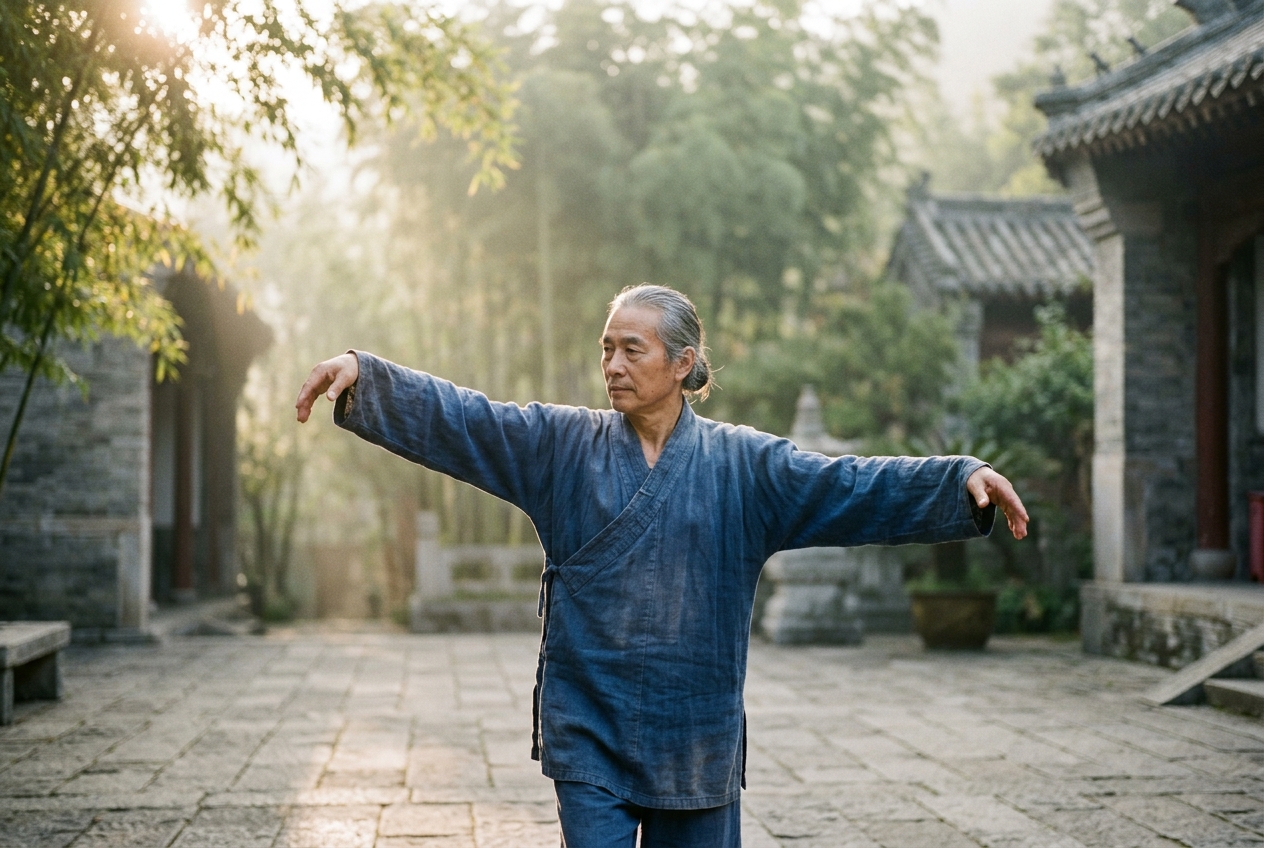
1. Opening Scene — A Moment You'll Recognise
Consider an all-too-familiar somatic trajectory of modern life: it is mid-afternoon on a demanding workday, and having hurried through a dense meal while navigating emails, a sudden lethargy descends. The abdomen feels uncomfortably distended, the cognitive faculties cloud with a thick, sluggish fog, and the shoulders creep imperceptibly toward the ears. Moments later, an unexpected operational crisis triggers an immediate clenching in the jaw, a tightening across the lateral ribcage, and a sharp, restrictive shallowness in the breath. By nightfall, despite profound physical fatigue, the mind races with hyper-vigilant rumination; the lower back aches with a dull, hollow coldness, and sleep remains fragmented.
In contemporary vernacular, this cascade is commonly dismissed as generalized stress or autonomic overload. Within the classical framework of Traditional Chinese Medicine (TCM), however, this constellation represents a precise, predictable chain reaction across the energetic and visceral networks of the human body. The postprandial cognitive heaviness reflects a compromise in the Spleen’s transformative capacity; the jaw tension and lateral costal restriction betray Liver Qi stagnation; and the nocturnal hyper-arousal paired with lumbar aching indicates a depletion of the Kidney-Heart axis.
Far from being isolated biomechanical or biochemical incidents, these sensations are the tactile, perceptible language of the internal organs (Zang-Fu). The ancient mind-body discipline of Five Element Qigong (Wu Xing Qi Gong) was formulated specifically to decode, harmonize, and regulate these neurovisceral dynamics through targeted kinetic patterns, fascial stretching, directional breathwork, and conscious somatic intent.
2. What This Organ System Does: Classical Foundations, Cosmological Framework & Visceral Dynamics
To comprehend Five Element Qigong, one must examine the foundational medical literature that codified its principles: the seminal Han Dynasty treatise Huangdi Neijing (The Yellow Emperor's Inner Classic), particularly Suwen Chapter 5 (Yinyang Yingxiang Da Lun), and the classical problem-resolving canon, the Nan Jing (Classic of Difficulties).
The cosmological doctrine of the Five Phases (Wu Xing) asserts that the macrocosmic forces of nature—Wood (Mu), Fire (Huo), Earth (Tu), Metal (Jin), and Water (Shui)—are mirrored microscopically within the human physiological architecture. These five elemental archetypes map directly onto the five Zang (solid Yin organs that manufacture and store pure vital essence) and their paired Fu (hollow Yang organs that process, transform, and convey fluids and nutrients):
- Wood (Mu) — The Liver (Gān) & Gallbladder (Dǎn): The Liver operates as the body’s supreme strategist and metabolic regulator, responsible for the smooth, unhindered dispersal of Qi (vital bioenergy) and the storage of Blood. Its physical domain is the sinews and fascia; its sensory aperture is the eye. When Liver Qi moves freely, physiological traffic flows without friction.
- Fire (Huo) — The Heart (Xīn) & Small Intestine (Xiǎocháng): The Heart is the sovereign ruler, governing the blood vessels and housing the Shen (the luminous conscious mind and emotional coherence). It commands systemic circulation and sets the autonomic baseline of emotional tranquility.
- Earth (Tu) — The Spleen (Pí) & Stomach (Wèigān): The central pivot of post-natal vitality. The Spleen governs the extraction, transformation, and transportation of dietary nutrients into usable Qi and Blood, ruling the musculature and flesh while maintaining physical containment of organs and blood vessels.
- Metal (Jin) — The Lung (Fèi) & Large Intestine (Dàcháng): The prime minister of the respiratory and protective perimeter. The Lung governs respiration, dominates the exterior skin and cutaneous pores, disperses Wei Qi (defensive immune energy), and descends fluids to the lower reservoirs.
- Water (Shui) — The Kidney (Shèn) & Urinary Bladder (Pángguāng): The constitutional foundation of life, storing Jing (prenatal essence and genetic vitality). The Kidney rules the skeletal matrix, bone marrow, brain, and fluid metabolism, anchoring the root of the autonomic and endocrine systems.
The Dynamics of Sheng (Generating) & Ke (Controlling) Cycles
The systemic equilibrium of these five viscera is regulated via two reciprocal feedback mechanisms codified in the Nan Jing (specifically the 69th and 75th Difficulties):
- The Generating Cycle (Sheng) — The Mother-Child Relationship: Each phase nourishes and tonifies its downstream successor. Wood feeds Fire; Fire creates Earth (ash); Earth produces Metal (ore); Metal condenses Water; Water nourishes Wood. In clinical Qigong therapeutics, when a Zang organ exhibits constitutional deficiency, practitioners tonify its energetic "Mother" (e.g., reinforcing the Kidney Water movement to treat Liver Wood dryness).
- The Controlling Cycle (Ke) — The Grandparent-Grandchild Restraint: To prevent runaway hyper-functioning, each phase exerts an inhibitory, stabilizing check upon another. Wood grasps Earth; Earth dams Water; Water extinguishes Fire; Fire melts Metal; Metal chops Wood.
When these pathways break down under chronic physical or emotional strain, classical pathological cascades emerge. Two prominent patterns illustrate this: * Wood Overacting on Earth (Mu Ke Tu): Prolonged psychological stress causes Liver Qi to stagnate and turn hyper-reactive. The restrained phase (Earth/Spleen) is crushed by the unrestrained Wood element, manifesting as stress-induced epigastric pain, irritable bowel distress, and systemic nutrient malabsorption. * Water Failing to Nourish Wood (Shui Bu Han Mu): Exhaustion of Kidney Yin (from chronic overwork or sleep loss) leaves Liver Wood parched and unanchored. Deprived of Water's cooling root, Liver Yang ascends uncontrollably, generating tension headaches, severe arterial hypertension, vertigo, and explosive affective instability.
Five Element Qigong utilizes precise kinematic geometry to restore homeostatic balance along both cycles according to standards recognized by the World Health Organization Traditional Medicine Strategy.
3. How You Can Feel It — Signs of Balance and Imbalance & Neurofascial Resonance
The functional state of these five visceral-meridian spheres produces distinct somatosensory, postural, and psycho-emotional markers. The matrix below allows for real-time somatic self-assessment:
| Elemental Axis | Zang-Fu Organ Pair | Somatic & Physical Signs of Imbalance | Emotional State: Depleted vs. Balanced | Postural & Tissue Manifestations |
|---|---|---|---|---|
| Wood | Liver / Gallbladder | Tension headaches, ocular dryness, PMS, ribcage constriction, tendon stiffness | Chronic irritability, frustration $\rightarrow$ Benevolence (Ren), strategic clarity | Hypertonic lateral fascial lines, jaw clenching (bruxism), rigid gait |
| Fire | Heart / Small Intestine | Palpitations, insomnia, vivid disturbing dreams, flushing, rapid disjointed speech | Anxiety, manic restlessness $\rightarrow$ Sovereign tranquility, joyous presence | Thoracic kyphosis, cervical constriction, upper chest respiratory breathing |
| Earth | Spleen / Stomach | Postprandial somnolence, bloating, loose stools, chronic fatigue, sugar cravings | Chronic worry, obsessive rumination $\rightarrow$ Grounded empathy, mental clarity | Abdominal hypotonicity, visceral ptosis, collapse of the medial longitudinal foot arches |
| Metal | Lung / Large Intestine | Spontaneous sweating, frequent infections, rhinitis, dry skin, asthma | Unresolved grief, melancholic detachment $\rightarrow$ Courage, integrity (Yi), capacity to let go | Protracted shoulders, restricted thoracic rib expansion, forward-head posture |
| Water | Kidney / Bladder | Lumbar soreness, knee weakness, tinnitus, cold extremities, premature graying | Deep-seated dread, existential fear $\rightarrow$ Sovereign resolve (Zhi), steady endurance | Pelvic anterior tilt, hyperlordosis/flat lumbar spine, weak plantar rooting |
Modern Neurophysiological, Autonomic & Hemodynamic Evidence
Contemporary medical research increasingly validates the mechanisms through which these classical practices operate. Dynamic investigations published in the PubMed Central Database on Heart Rate Variability and Mind-Body Interventions demonstrate that slow, intentional Qigong movements paired with paced diaphragmatic respiration upregulate parasympathetic vagal efferent activity. This shift induces significant increases in high-frequency heart rate variability (HF-HRV) and normalizes baroreflex sensitivity.
At the tissue level, research on myofascial continuity and classical acupuncture meridians indicates that the connective tissue matrix serves as a primary substrate for mechanical signaling. Uniaxial and torsional stretching patterns stimulate intrafascial mechanoreceptors (Ruffini endings, Pacinian corpuscles, and interstitial unmyelinated fibers). This mechanical deformation triggers cellular mechanotransduction, downregulating transforming growth factor-beta 1 (TGF-$\beta$1) to reduce fascial densification while promoting local hydration.
Furthermore, extensive clinical trials exploring mind-body practices and inflammatory biomarkers highlight marked decreases in systemic inflammatory cascades, specifically interleukin-6 (IL-6), tumor necrosis factor-alpha (TNF-$\alpha$), and high-sensitivity C-reactive protein (hs-CRP), driven by the neuroimmunomodulatory actions of the cholinergic anti-inflammatory pathway.
4. Qigong & Movement Practice: Biomechanical Kinetics & Step-by-Step Clinical Protocols
The Five Element Qigong curriculum consists of five core kinetic sequences, each targeting the fascial line, vascular bed, and meridian pathway of a specific Zang organ.
      WOOD SEQUENCE               FIRE SEQUENCE              EARTH SEQUENCE
   (Lateral Expansion)         (Spinal Elongation)        (Central Core Torsion)
          \   /                       |                            ^
           \ /                        |                           / \
            |                         |                          /   \
           / \                       / \                        /     \
  Spiral Torso Lateral     Axial Spinal Extension      Dual Opposing Extension
  Flexion & Tendon Arc      & Scapular Depression       & Diaphragmatic Sinking
Initial Preparation: Establishing the Wuji Posture
Before initiating elemental movements, ground in the Wuji (infinite potential / neutral) stance: * Foot Positioning: Feet parallel, shoulder-width apart, weight evenly distributed across the "nine points" of the soles, centering on Yongquan (KI-1). * Pelvic & Spinal Alignment: Pelvis neutrally tucked (micro-flexion of the sacrococcygeal joint) to flatten the lumbar curvature; knees unlocked (Song); spine suspended from the vertex (Baihui, GV-20) as if gently drawn upward by a silk thread. * Respiration: Abdominal diaphragmatic breathing (Dantian respiration), tongue gently resting on the hard palate behind the upper incisors to connect the Du and Ren vessels.
Movement 1: The Wood Phase — Stretching the Sinews to Free the Liver
- Target Meridians & Tissues: Liver (Jueyin) and Gallbladder (Shaoyang) Sinew Channels; lateral fascial lines, tensor fasciae latae, intercostal sheets, and thoracolumbar fascia.
- Kinetic Execution: 1. From Wuji, inhale over a count of 4, drawing the hands upward along the mid-sagittal plane to the level of the solar plexus (Dantian), turning the palms outward. 2. Exhale over a count of 4: shift the weight 70% onto the right leg, sweeping the left arm in a high overhead spiral arc while the right arm presses down toward the earth past the right hip. 3. Induce a deep, continuous lateral flexion of the entire torso to the right, opening the left hypochondriac zone and intercostal spaces. Gaze upward through the left axilla. 4. Hold the apex stretch for a 2-count suspension, visualizing stagnant, muddy green Qi releasing from the liver bed into the earth. 5. Inhale over a count of 4, uncoiling the spine back to center; alternate to the opposite side.
- Repetitions & Pacing: 6 alternating repetitions per side. Rhythm: 4:2:4 (Inhale:Hold:Exhale).
- Common Biomechanical Compensations: Collapsing the lumbar spine or allowing the hips to sway excessively out of sagittal alignment. Correction: Maintain pelvic stabilization; initiate the lateral arc strictly from the thoracolumbar junction.
- Clinical Modifications: For frail individuals or those with severe disc pathology, perform seated in an upright chair, executing the lateral stretch strictly within a 15-degree pain-free arc.
Movement 2: The Fire Phase — Drawing the Bow of Heaven to Nourish the Heart
- Target Meridians & Tissues: Heart (Shaoyin) and Pericardium (Jueyin) channels; pectoralis major/minor, subscapularis, anterior brachial fascial compartments.
- Kinetic Execution: 1. Inhale (count of 4): Step the feet into a moderate horse stance (Mabu). Bring both wrists to cross at the chest level over the sternal center (Danzhong, CV-17). 2. Exhale (count of 6): Draw the left hand laterally as if pulling a heavy bowstring, extending the index finger and thumb ("sword fingers" / Jian Jue) pointing left, while the right arm presses horizontally across to the right, opening the chest across the horizontal axis. 3. Ensure the scapulae fully retract and depress, opening the subclavicular space and expanding the thoracic cage. Focus the visual gaze (Shen) past the left index fingertip into infinity. 4. Inhale (count of 4): Soften the hands, sweeping them in an expansive horizontal circle back to the chest midline; exhale and mirror the draw to the right side.
- Repetitions & Pacing: 6 repetitions per side. Rhythm: 4:0:6:0.
- Common Biomechanical Compensations: Elevating the trapezius and shrugging shoulders toward the ears. Correction: Actively depress the inferior angle of the scapulae to decompress the brachial plexus.
Movement 3: The Earth Phase — Separating Heaven and Earth to Regulate Spleen and Stomach
- Target Meridians & Tissues: Spleen (Taiyin) and Stomach (Yangming) channels; rectus abdominis, visceral mesentery, psoas major, anterior superficial line.
- Kinetic Execution: 1. From Wuji, inhale (count of 4): bring both palms in front of the middle Dantian (solar plexus), holding an energetic sphere. 2. Exhale (count of 4): push the left palm upward toward the heavens, rotating the palm to face the sky with fingers pointing medially; simultaneously press the right palm down toward the earth, fingers pointing forward. 3. Achieve maximal axial elongation throughout the torso, applying gentle vertical tension across the visceral compartment to massage the stomach, liver, and spleen. 4. Hold for a 2-count suspension while gently drawing the navel toward the spine (Mingmen). 5. Inhale (count of 4): return the palms to cradle the energetic sphere at the solar plexus; exhale to reverse hands (right hand ascending, left descending).
- Repetitions & Pacing: 8 alternating cycles. Rhythm: 4:2:4:0.
- Common Biomechanical Compensations: Hyperextending the lumbar spine during upward pressing. Correction: Maintain soft knees and engaged lower abdominal core tone.
Movement 4: The Metal Phase — The Expansive White Crane Opens the Lungs
- Target Meridians & Tissues: Lung (Taiyin) and Large Intestine (Yangming) channels; serratus anterior, rhomboids, latissimus dorsi, deep pectoral fascia.
- Kinetic Execution: 1. Inhale (count of 6): from Wuji, gently sink the hips into the heels, then slowly rise while floating both arms upward and outward laterally, wrists leading, hands soft like the wings of a crane. 2. Expand the ribcage three-dimensionally, fully mobilizing the costovertebral joints. At the peak of inhalation, slightly arch the upper thoracic spine (cervicothoracic junction) and retract the scapulae. 3. Exhale (count of 6): reverse the movement, turning palms downward and rounding the upper back slightly into gentle thoracic flexion, sinking the breath deep into the lower abdomen.
- Repetitions & Pacing: 8 continuous cycles. Rhythm: 6:0:6:0.
- Common Biomechanical Compensations: Cervical hyperextension (tilting the head too far back). Correction: Keep the chin slightly tucked, elongating the suboccipital space.
Movement 5: The Water Phase — Descending to the Source to Consolidate Kidney Jing
- Target Meridians & Tissues: Kidney (Shaoyin) and Bladder (Taiyang) channels; erector spinae, hamstrings, gastrocnemius, plantar fascia.
- Kinetic Execution: 1. Inhale (count of 4): raise both arms overhead, elongating the spine. 2. Exhale (count of 6): hinge from the coxafemoral (hip) joints, cascading the spine downward vertebra-by-vertebra into full forward flexion. Allow the arms to sweep down the posterior aspects of the legs, tracing the Bladder meridian along the calves. 3. Allow the fingertips to cup the heels or rest beside the toes (Yongquan, KI-1). Relax the crown of the head fully toward the earth. 4. Inhale (count of 4): bend the knees slightly, tuck the tailbone under, and roll up slowly through the spinal segments, stacking each vertebra until reaching the upright Wuji stance.
- Repetitions & Pacing: 6 full cycles. Rhythm: 4:0:6:0.
- Common Biomechanical Compensations: Bending strictly from the lumbar spine without hip hinge mechanics. Correction: Maintain a micro-bend in the knees and initiate movement from the pelvic basin.
- Clinical Modifications: Contraindicated in acute disc herniation or uncontrolled ocular hypertension; substitute with standing gentle spinal waves or supported seated forward folds.
5. Acupressure Points You Can Try Today: Precision Somatosensory Modulation
Clinical application of the Five Phase system can be amplified through targeted self-administered acupressure on key transport and source points:
1. Taichong (LR-3) — "Great Rushing" (Wood Phase / Source Point)
- Precise Anatomical Location: On the dorsum of the foot, in the hollow depression distal to the junction of the first and second metatarsal bones.
- Application Technique: Apply deep, sustained perpendicular pressure using the tip of the thumb. Execute a slow, counter-clockwise dispersive circular massage for 2 to 3 minutes per foot while taking long, slow exhalations.
- Clinical Indications: Rapidly disperses stagnant Liver Qi, alleviates stress-induced temporal headaches, relieves dysmenorrhea, eliminates ocular strain, and moderates acute anger.
2. Neiguan (PC-6) — "Inner Pass" (Fire Axis / Luo-Connecting Point)
- Precise Anatomical Location: On the palmar surface of the forearm, exactly 2 proportional cun (approx. three finger-widths) proximal to the distal wrist crease, situated directly between the tendons of palmaris longus and flexor carpi radialis.
- Application Technique: Apply firm, pulsating perpendicular pressure with the thumb pad for 2 minutes while rotating the wrist gently.
- Clinical Indications: Regulates cardiac rhythm, downregulates sympathetic hyper-arousal, alleviates nausea/motion sickness, opens chest tightness, and restores emotional equanimity.
3. Zusanli (ST-36) — "Leg Three Miles" (Earth Phase / He-Sea Point)
- Precise Anatomical Location: On the anterolateral aspect of the lower leg, four finger-widths below the inferior border of the patella, one finger-breadth lateral to the anterior crest of the tibia.
- Application Technique: Apply strong, tonifying pressure with the thumb or knuckle, pressing downward and slightly inward for 3 minutes per side until a distinct radiating distension (De Qi) is felt.
- Clinical Indications: Powerful tonification of central Qi and Blood, enhancement of digestive motility, alleviation of postprandial fatigue, and broad immune upregulation as documented by the National Center for Complementary and Integrative Health.
4. Taixi (KI-3) — "Supreme Stream" (Water Phase / Yuan-Source Point)
- Precise Anatomical Location: In the medial depression located midway between the prominence of the medial malleolus (inner ankle bone) and the medial border of the Achilles tendon.
- Application Technique: Pinch gently between thumb and forefinger, applying sustained, warm circular pressure for 2 to 3 minutes.
- Clinical Indications: Nourishes Kidney Yin, grounds ascending false heat, relieves lower back weakness, clears nocturnal dryness of the throat, and alleviates deep exhaustion.
6. Food & Lifestyle — Small Changes for Today: Energetic Nutrition & Chronobiology
TCM dietary therapy (Shi Liao) operates on the principle that the energetic thermal properties and specific flavors of whole foods directly communicate with the five visceral networks.
                    THE FIVE FLAVOR CORRESPONDENCE MATRIX

  Phase:      Wood          Fire          Earth         Metal         Water
  Organ:      Liver         Heart         Spleen        Lung          Kidney
  Flavor:     Sour (酸)     Bitter (苦)   Sweet (甘)    Pungent (辛)  Salty (咸)
  Thermal:    Cool/Neutral  Warm/Cool     Warm/Neutral  Warm/Pungent  Cold/Neutral
  Action:     Astringes     Clears Heat   Tonifies Qi   Disperses Qi  Softens Masses
  Example:    Lemon/Kefir   Dandelion     Squash/Oats   Ginger/Leeks  Seaweed/Miso
Elemental Dietary Strategies for Daily Practice:
- To Pacify Liver Wood: Incorporate moderate sour flavors to astringe hyperactive Liver Yang and smooth Qi flow.
- Add: Steamed dark leafy greens (kale, dandelion, arugula), warm water with a squeeze of fresh lemon, lightly fermented foods (unpasteurized sauerkraut), and artichokes.
- Reduce: Highly processed deep-fried fats, heavy distilled alcohol, and excessive spicy stimulants that generate internal Liver fire.
- To Nourish Spleen Earth: Spleen energetics depend on warm, easily assimilated nutrition that protects digestive metabolic heat (Yang Qi).
- Add: Lightly cooked, naturally sweet root vegetables (butternut squash, carrots, sweet potatoes), warm broths, oats, congee, and culinary spices like cinnamon and cardamom.
- Reduce: Ice-cold beverages, refrigerated raw salads eaten under stress, refined table sugars, and excessive dairy, which foster internal Dampness (Shi).
- To Consolidate Kidney Water: Support deep Jing with nutrient-dense, naturally mineral-rich foods.
- Add: Black sesame seeds, walnuts, black beans, bone or rich vegetable broths, and moderate amounts of seaweed/kelp.
- Reduce: Dehydrating stimulants, excess sodium, and constant late-night grazing that disrupts the cellular regeneration phase.
Circadian Lifestyle Integration (Zi Wu Liu Zhu)
Harmonize with the biological meridian clock: ensure the primary meal occurs during peak Stomach hours (07:00–09:00), integrate a ten-minute restorative sensory pause at solar noon during Heart time (11:00–13:00), and protect physiological recovery by entering deep restorative sleep prior to 23:00, when the Gallbladder and Liver initiate systemic cellular detoxification and blood filtration.
7. Today's Takeaway: The 5-Minute Visceral Reset
If you have only five minutes today, step away from all digital interfaces, assume the parallel Wuji stance, and perform six deliberate repetitions of Separating Heaven and Earth (Movement 3). Inhale as your hands cradle the central core at the solar plexus, and exhale over a slow six-second count as one palm reaches high toward the ceiling and the other presses down into the floor. Feel the vertical fascial line across your abdomen decompress your digestive organs and release tension stored in the liver and spleen. Conclude by placing both hands over the lower abdomen, resting your tongue against the palate, and taking five slow, quiet breaths directly into the lower Dantian. This single practice immediately resets autonomic tone, downregulates stress-induced cortisol release, and restores the natural generating rhythm of your internal organs.