Tianzong Cavity Celestial Gathering: Infraspinous Fascial Decompression, Scapulothoracic Kinetic Tensegrity, and Small Intestine Meridian Conduction in Classical Neigong
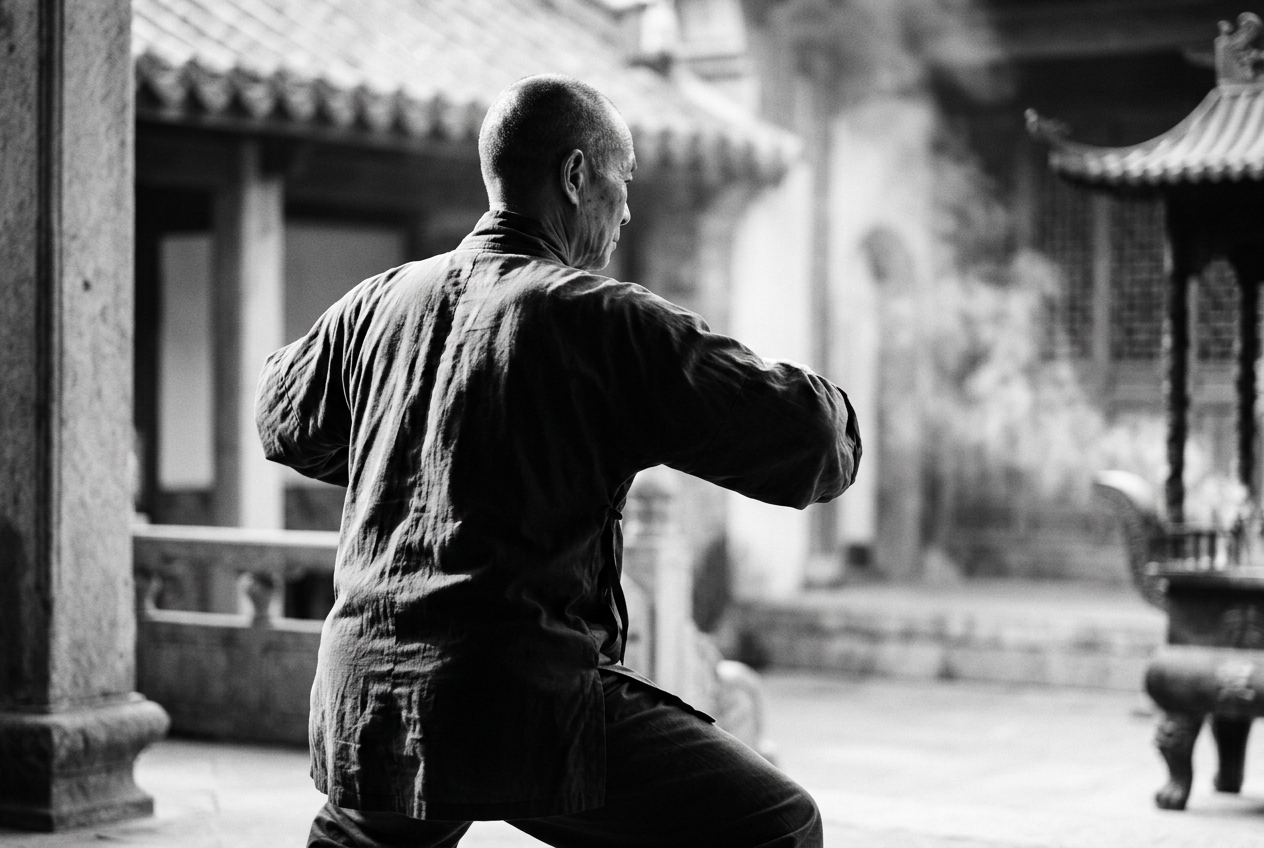
When the tissues surrounding this point are chronically constricted—as occurs during prolonged desk work, forward-head posture, or chronic mental stress—the shoulder blade becomes pinned against the posterior ribcage. This immobilization disrupts what internal arts masters term Kai Jia (开胛, "Scapular Wing Opening") and Han Xiong Ba Bei (含胸拔背, "Sinking the Chest and Plucking the Back"). By systematically releasing Tianzong through postural calibration, humeral rotation, and targeted respiratory pressure, practitioners restore the natural gliding movement of the scapulothoracic joint. The result is an immediate opening of the chest, profound relief of neck and shoulder strain, and the restoration of a seamless kinetic bridge connecting the axial spine (Du Mai) to the fingertips.
       POSTERIOR SCAPULAR TOPOGRAPHY & TIANZONG (SI11)
       ================================================
                     Superior Angle
                         / \
                        /   \
       Spine of Scapula =====[SI12: Bingfeng]===== Acromion
                            |
                     [ Infraspinous ]
                     [    Fossa     ]
                            |
                   *(SI11: TIANZONG)* <--- [Center of Infraspinous Fossa;
                            |              Suprascapular Nerve & Artery]
                            |
                     Inferior Angle
                            |
                   (Latissimus Dorsi /
                     Thoracolumbar Fascia Interface)
Step-by-Step Somatic Calibration Protocol
To release the Tianzong cavity and engage the biotensegrity of the upper back, execute the following somatic sequence. This protocol requires no specialized apparatus, relying instead on precise proprioception, biomechanical leverage, and diaphragmatic mechanics validated across centuries of Daoist Daoyin and Neigong traditions.
+-------------------------------------------------------------------------+
|                  SOMATIC CALIBRATION SUMMARY TABLE                      |
+-------------------+-----------------------------------------------------+
| Target Point      | Tianzong (SI11 / Celestial Gathering / 天宗)        |
| Anatomical Locus  | Infraspinous fossa, midpoint between scapular spine |
|                   | and inferior scapular angle                         |
| Primary Posture   | Zhan Zhuang (Wuji Stance / Standing Stake)          |
| Breath Dynamic    | Ni Fu Shi Hu Xi (Reverse Abdominal Respiration)     |
| Biomechanical Key | Kai Jia (Scapular Opening) & Han Xiong Ba Bei       |
| Primary Sensation | Deqi (Deep aching, neurofascial release, warmth)    |
+-------------------+-----------------------------------------------------+
1. Establishing the Base: The Neutral Wuji Stance
- Footwork & Grounding: Stand with your feet parallel, spaced precisely shoulder-width apart, with your body weight evenly distributed across the "nine bubbling springs" (the tripod of the foot: the heel, the first metatarsal head, and the fifth metatarsal head).
- Joint Decompression: Unlock your knees by allowing them to flex two to three degrees. Allow the sacrum and coccyx to sink vertically downward as if resting on the edge of a high stool, neutralizing excessive lumbar lordosis.
- Axial Lengthening: Suspend the crown of your head from above (Baihui, GV20), creating micro-traction through the cervical vertebrae while allowing your chin to tuck slightly toward the throat. Let your arms hang effortlessly at your sides, with the axillae (armpits) gently hollowed as though holding a fragile quail egg beneath each arm.
2. Palpation and Precise Anatomical Localization
- Locating the Infraspinous Landmark: Bring your right arm across your chest, hooking your right fingers over your left shoulder blade.
- Tracing the Fossa: Run your middle finger downward from the horizontal ridge of the scapular spine until your fingertip falls into the broad, concave depression of the infraspinous fossa.
- Finding the Epicenter: The Tianzong point forms an equilateral triangle with the junction of the lateral and medial third of the scapular spine above, and the inferior angle of the scapula below. When pressed perpendicularly toward the bone, you will identify a pronounced, dull, spreading ache (Deqi) that often radiates into the lateral arm or across the upper trapezial ridge. Maintain a gentle, resting contact here to establish tactile neurofeedback.
3. Humeral Micro-Rotation and Scapulothoracic Gliding
- Arm Positioning: Extend both arms forward at chest height, curving them into a wide circle as if lightly embracing the trunk of an ancient pine tree (Cheng Bao Zhuang). Keep the palms facing your chest, wrists relaxed and lower than the shoulders, and elbows sinking downward.
- Internal-External Humeral Articulation: On an exhalation, initiate a subtle, three-degree internal rotation of the humerus (turning the thumbs slightly downward and outward), accompanied by a gentle protraction of the shoulder blades away from the spine.
- Opening the Scapular Gate (Kai Jia): As the scapulae glide laterally around the curved ribcage, feel the central depression of Tianzong physically broaden, stretch, and flatten. Do not collapse the sternum inward; instead, allow the muscular layer across the chest to soften and hollow naturally (Han Xiong), creating an expansive dome across the upper back (Ba Bei).
4. Coordinating Reverse Abdominal Respiration (Ni Fu Shi Hu Xi)
- Inhalation Dynamics (The Internal Pressurization): Inhale slowly through the nose over a count of four to five seconds. Gently draw the lower abdominal wall (the region two inches below the navel) inward toward the spine, while drawing the perineum (Huiyin, CV1) upward. As intra-abdominal pressure rises, direct the hydraulic force of the breath upward into the posterior thoracic cage, actively inflating the fascial beds beneath the shoulder blades.
- Scapular Expansion: During this inhalation, visualize the two Tianzong points separating laterally, as if the breath itself is prying open the infraspinous fossa from the inside out.
- Exhalation Dynamics (The Neurovascular Cascade): Exhale smoothly through the nose over six to eight seconds. Release the abdominal contraction, allowing the lower belly to expand naturally. Simultaneously, sink the shoulders downward, drop the elbows, and project a sensation of heavy, relaxed elasticity (Song) down the dorsal aspect of the arms into the ulnar borders of the hands and the little fingers.
5. Common Errors and Somatic Corrections
- Error 1: Elevating the Clavicles. Beginners frequently shrug their shoulders upward when attempting to round the back. Correction: Actively engage the lower fibers of the trapezius and serratus anterior, dropping the inferior angles of the scapulae downward toward the kidneys.
- Error 2: Collapsing the Chest Cavity. Excessive hollowing of the chest often leads to slouching and thoracic kyphosis. Correction: Maintain the vertical integrity of the central axis (Zhong Ding). The chest sinks through relaxation of the pectoral fascia, not through postural slumping.
- Error 3: Breath Stalling in the Throat. Forcing pressure into the upper back can trigger a Valsalva-like strain. Correction: Keep the tongue resting lightly on the hard palate behind the upper incisors, maintain an open glottis, and ensure the breath remains silent, deep, and rhythmic.
6. Proprioceptive Sensations and Their Physiological Markers
- Deep Aching and Diffuse Tenderness (Deqi): Indicates the mechanical engagement of deep myofascial trigger points within the infraspinatus belly and the stimulation of rich mechanoreceptive fields.
- Warmth or Electric Tingling: A sign of microvascular reperfusion via the circumflex scapular arterial loop and parasympathetic vasodilation along the course of the suprascapular nerve pathway.
- Hydraulic Heaviness and Distal Pulsation: Reflects the reduction of peripheral vascular resistance, allowing unrestricted blood volume and lymphatic flow into the distal extremities, perceived as fullness in the palms and little fingers.
The Science of Biotensegrity, Fascia, and Force Transmission
To understand why decompressing Tianzong produces such profound systemic shifts throughout the human structure, one must examine the shoulder girdle not as an isolated assembly of levers, but through the contemporary lens of biotensegrity principles. In a classic tensegrity structure, rigid compression struts float within a continuous sea of balanced, omnidirectional tensile networks. The human scapula is a biological marvel of tensegrity: it possesses no direct bony articulation with the axial spine, suspended entirely by a muscular and fascial web consisting of seventeen distinct soft-tissue attachments.
       BIOTENSEGRITY FORCE PROGRESSION (PENG JIN)
       ==========================================
                 [ Crown: Baihui (GV20) ]
                            |
           [ Axial Du Mai Column / Spine ]
                            |
            +---------------+---------------+
            |                               |
    [ Left Tianzong (SI11) ]       [ Right Tianzong (SI11) ]
    (Infraspinous Decompression)   (Infraspinous Decompression)
            |                               |
    [ Serratus / Rhomboid ]        [ Serratus / Rhomboid ]
            |                               |
    [ Triceps / Arm Fascia ]       [ Triceps / Arm Fascia ]
            |                               |
    [ Hand Taiyang Channel ]       [ Hand Taiyang Channel ]
            |                               |
       [ Distal Ulnar Terminus: SI1 (Shaoze) / Fingers ]
The Deep Infraspinous Topography
Anatomically, SI11 sits squarely within the center of the infraspinous fossa, traversing the thick belly of the infraspinatus muscle before approaching the deep scapular periosteum. Directly beneath this locus lies the motor branching of the suprascapular nerve (originating from the C5–C6 nerve roots of the brachial plexus) and the anastomotic arcade of the circumflex scapular artery and vein. When the infraspinatus enters a state of chronic, ischemic hypertonicity—a near-universal pathology in modern sedentary populations—it undergoes pathological fascial densification. The hyaluronic acid lubricating the sliding interfaces between the infraspinatus, teres minor, and overlying trapezius gelates, forming rigid cross-links and active myofascial trigger points documented extensively in NCBI PubMed biomedical literature.
                 ANATOMICAL FASCIAL STRATIGRAPHY AT SI11
                 =======================================
   [ Epidermis & Subcutaneous Adipose Tissue ]
                       |
   [ Investing Fascia of the Posterior Thorax ]
                       |
   [ Trapezius Muscle (Inferior/Lateral Margins) ]
                       |
   [ Infraspinatus Fascia (Dense Fibrous Aponeurosis) ]
                       |
   [ Infraspinatus Muscle Belly (Trigger Point Nexus SI11) ]
                       |
   [ Neurovascular Bundle: Suprascapular Nerve & Circumflex Scapular Artery ]
                       |
   [ Scapular Periosteum & Infraspinous Fossa Bone Bed ]
This localized fascial contracture at Tianzong triggers a cascade of biomechanical dysfunctions: 1. Inhibition of Glenohumeral Articulation: Hypertonicity of the infraspinatus locks the humeral head in external rotation and anterior glide, severely restricting internal rotation and horizontal adduction. 2. Scapulothoracic Fixation: The shoulder blade loses its capacity to glide smoothly along the physiological scapulothoracic joint, forcing the levator scapulae and upper trapezius to overcompensate, producing intractable cervical tension and occipital headaches. 3. Thoracic and Diaphragmatic Restriction: Because the scapula is tethered to the ribcage via the serratus anterior and rhomboid muscular sling, a locked infraspinatus arrests the bucket-handle and pump-handle excursions of the ribs. This mechanically restricts the descent of the respiratory diaphragm, truncating vagal nerve stimulation and trapping the nervous system in sympathetic overdrive.
The Kinetic Bridge of Peng Jin and Myofascial Chains
In internal martial systems like Taijiquan, Baguazhang, and Xingyiquan, the practitioner seeks to cultivate Peng Jin (掤劲)—an unyielding, omnidirectional, elastic buoyancy that allows incoming physical force to be grounded effortlessly and returned with explosive efficiency (Fajin). Mechanically, Peng Jin relies entirely on unbroken fascial continuity.
In the taxonomy of modern myofascial anatomy, the Hand Taiyang Small Intestine meridian corresponds directly to the Superficial Back Arm Line (SBAL). This continuous kinetic track originates on the lateral thoracic spine, wraps across the medial border of the scapula into the infraspinatus and teres minor, travels down the dorsal edge of the triceps brachii, follows the subcutaneous ridge of the ulna, and terminates at the base of the little finger.
When Tianzong is bound by hypertonic tissue, this kinetic chain is severed at the shoulder blade. Force generated from the ground by the legs and directed by the waist cannot transmit into the arms; instead, the kinetic wave crashes into the locked infraspinatus, dissipating into local joint shear and structural weakness. Conversely, when Tianzong is decompressed through Kai Jia, the scapula acts as an elastic pulley, bridging the axial power of the spine (Du Mai) directly to the distal extremities with zero energetic dampening.
Classical Lineage, Treatises, and Historical Context
The systematic cultivation of the scapular cavities is neither a recent clinical discovery nor an isolated martial innovation. It is rooted in two millennia of classical Chinese medical literature, Daoist longevity practices (Daoyin), and internal martial arts traditions documented across historical eras and preserved in the clinical guidelines of the World Health Organization.
                 HISTORICAL TIMELINE OF TIANZONG CULTIVATION
                 ============================================
      c. 200 BCE - 100 CE           c. 282 CE                c. 1600 - 1900 CE
  [ Huangdi Neijing ]       [ Zhenjiu Jiayi Jing ]       [ Internal Martial Arts ]
  Foundational theory of    Huangfu Mi systematically    Daoist Neigong lineages
  the Hand Taiyang Small    documents SI11 topography,   integrate Kai Jia & Han
  Intestine channel.        needle depth, & indications. Xiong Ba Bei into Zhan Zhuang.
The earliest theoretical framework for the Hand Taiyang channel appears in the foundational medical canon, the Huangdi Neijing (黄帝内经, The Yellow Emperor's Inner Canon), compiled during the Han Dynasty. In the Lingshu (Spiritual Pivot, Chapter 10), the Small Intestine vessel is described as governing the "transformative separation of the pure from the turbid"—a physiological function in digestion that translates somatically into the structural capacity to distinguish functional muscular tone from pathological tension. The text emphasizes that disruptions along this pathway manifest as "pain along the scapula like an arrow piercing through, and an inability to rotate the neck or raise the arm."
The precise anatomical topography and clinical efficacy of Tianzong were formally codified during the Western Jin Dynasty by the scholar-physician Huangfu Mi (皇甫谧, 215–282 CE) in his seminal masterwork, the Zhenjiu Jiayi Jing (针灸甲乙经, The Systematic Classic of Acupuncture and Moxibustion). Huangfu Mi described Tianzong as:
"Situated in the depression below the spine of the shoulder blade, responsive to pressure... It governs swelling of the neck, heaviness of the shoulder, inability of the arm to reach the head, and acute thoracic fullness that arrests the breath."
In the esoteric Daoyin traditions developed at Daoist sanctuaries such as Wudang Mountain, the scapulae were referred to as the "Angel Wings" or the "Heavenly Fan." Ancient adepts recognized that emotional stagnation, grief, and survival-driven hypervigilance cause the shoulders to draw upward and backward in a defensive reflex, locking the scapulae against the ribs and closing the posterior heart gate (Gao Huang Shu, BL43).
To counteract this somatic lock, internal martial lineages incorporated Kai Jia into their static standing postures (Zhan Zhuang). In these schools, the master would test a disciple’s posture by placing a palm directly on the student’s Tianzong point while applying sudden forward pressure. If the disciple’s shoulder blade was retracted and tight, the student would instantly stumble backward, thrown off balance by their own rigid structure. If, however, Tianzong was open, soft, and decompressed, the incoming force would bypass the shoulder entirely, traveling effortlessly down the thoracic spine, through the pelvic basin, and dissipating directly into the earth beneath the practitioner's heels.
Daily Somatic Cultivation Protocol
To transform the theoretical mechanics of Tianzong decompression into permanent neuromuscular repatterning, commit to the following five-minute cultivation routine every morning before sitting at a desk or engaging in physical labor.
+-------------------------------------------------------------------------+
|                  FIVE-MINUTE DAILY TIANZONG RECOVERY                    |
+---------+--------------------+------------------------------------------+
| Minute  | Focus Area         | Action                                   |
+---------+--------------------+------------------------------------------+
| 01:00   | Palpatory Release  | Cross-body thumb pressure on SI11        |
| 02:00   | Scapular Gliding   | Humeral micro-rotations & Kai Jia        |
| 03:00   | Reverse Breathing  | Ni Fu Shi Hu Xi with posterior expansion |
| 04:00   | Integrated Wuji    | Zhan Zhuang static tensegrity balance    |
| 05:00   | Kinetic Discharge  | Loose swing & distal finger pulsation    |
+---------+--------------------+------------------------------------------+
Your Morning Routine
- Minute 1 (Palpatory Awaken): Stand tall. Reach your right arm across your chest, locate your left Tianzong cavity, and apply firm, circular thumb pressure for thirty seconds while taking three slow, diaphragmatic breaths. Repeat on the right shoulder blade.
- Minute 2 (Scapular Articulation): Raise your arms into the embrace-tree posture (Cheng Bao Zhuang). Inhale as you gently retract the scapulae two inches without shrugging; exhale as you perform Kai Jia, smoothly widening the shoulder blades across your back while sinking your chest. Complete six slow cycles.
- Minute 3 (Pressurization & Release): Inhale using reverse abdominal breathing, drawing the lower belly inward and driving the intra-abdominal pressure into the upper back, feeling Tianzong stretch open. Exhale slowly, releasing all tension down the ulnar edges of your arms into the little fingers.
- Minute 4 (Static Integration): Hold the expanded Wuji posture in total stillness. Maintain light, spacious awareness at both Tianzong points. Observe whether your neck feels longer, your breath descends lower, and your upper back feels broad, light, and elastic.
- Minute 5 (Kinetic Discharge): Lower your arms, gently shake out your wrists and elbows, and allow your arms to swing loosely around your torso in gentle rotation. Notice the rush of warmth, circulating blood volume, and calm, alert vitality across your upper back and down to your fingertips.
Over the coming week, pay close attention to your posture during moments of acute cognitive stress or fatigue. Whenever you notice your shoulders creeping upward or your chest tightening, mentally revisit the Tianzong cavities. Soften the infraspinous fossa, sink your chest, open your scapular wings, and allow the Celestial Gathering to return your physical structure to effortless, resilient balance.