Taiji Qigong (Tai Ji Qi Gong) Meridian Dynamics: Governing Yin-Yang Dynamic Equilibrium, Spiral Silk-Reeling Mechanics (Chan Si Jin), Dantian Rotary Torque, and Continuous Channel Flow in Traditional Chinese Medicine
1. Opening Scene — A Moment You'll Recognise
You have been seated at your desk for four consecutive hours. As you finally stand, your lower back feels compressed, your neck holds a dull ache, and your breathing is marooned in your upper chest—shallow, hurried, and disconnected. Your feet feel almost numb inside your shoes, while your mind races in an ungrounded buzz of cognitive fatigue. When you attempt to stretch, your joints feel brittle rather than fluid, as if the connective tissue of your body has set into a rigid, dried-out mold.
In clinical neurophysiology and somatic science, this familiar state represents postural de-afferentation, sympathetic hyperarousal, and interstitial fluid stasis. In Traditional Chinese Medicine (TCM), this sensation is the hallmark of depleted Zheng Qi (upright physiological energy), stagnant Xue (blood and microvascular perfusion), and an unrooted Shen (spirit/cognitive focus) floating upward because it has lost its anchor in the lower body.
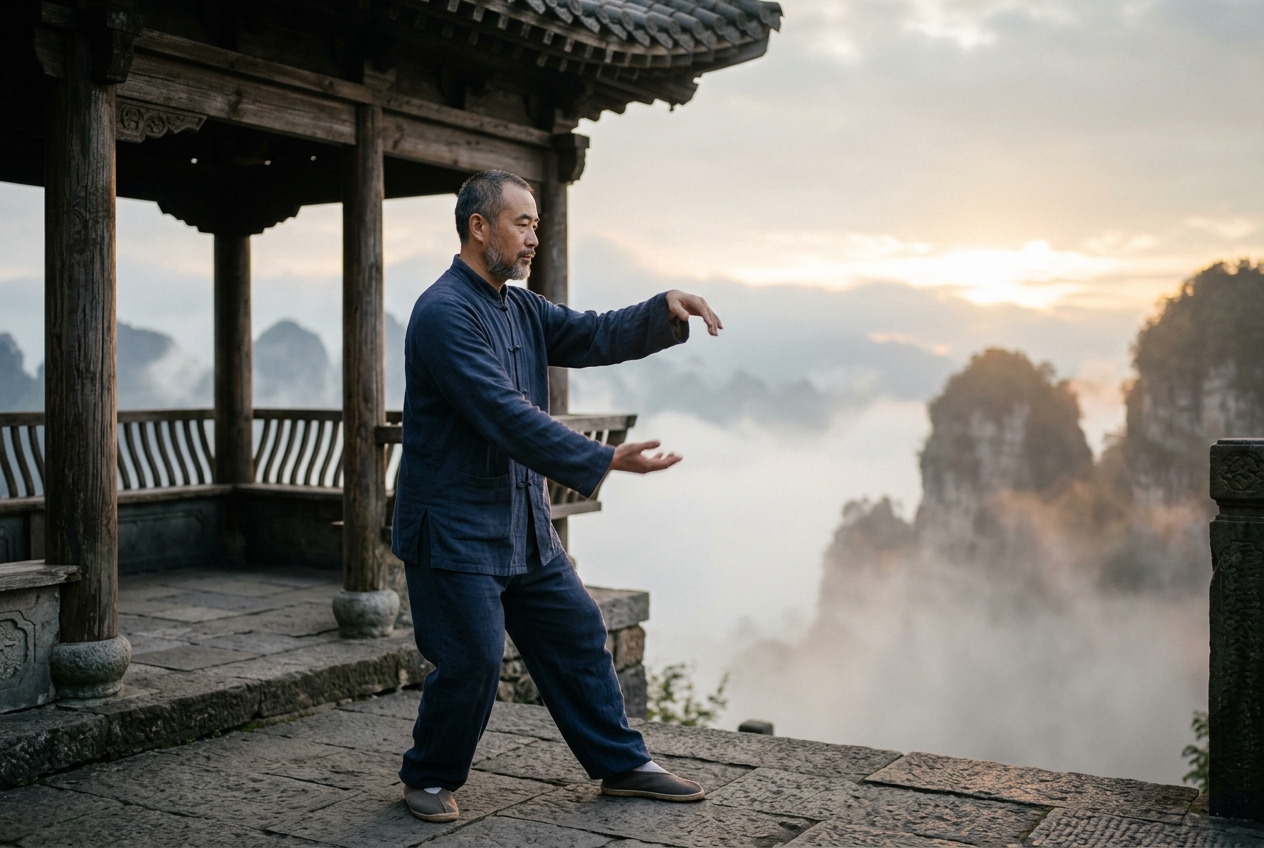
Now, imagine stepping onto a flat floor in bare feet. You soften your knees, drop your tailbone, and release the tension held in your lower abdomen. As your arms slowly float upward as if buoyed by warm water, a distinct wave of warmth floods your palms, your breath drops spontaneously into your pelvic basin, and the tension across your spinal column dissolves into a buoyant, elastic suspended ease. Within sixty seconds, the fragmented, static body transforms into an integrated hydrodynamic system. This immediate transformation is not an esoteric mystery; it is the direct activation of Taiji Qigong (Tai Ji Qi Gong) meridian dynamics—an ancient, highly sophisticated technology of neuromuscular coordination, fascial shear, and bioenergetic circulation.
2. What This Organ System Does: The Neuro-Fascial & Meridian Engine
Taiji Qigong operates at the exact intersection of traditional Zang-Fu (organ-meridian) theory and modern biomechanical mechanobiology. Rather than treating internal organs as isolated anatomical viscera, classical Chinese medical physiology conceives of them as functional networks (Zang-Xiang) coupled to specific conduits of flow known as meridians (Jing Luo) and their associated myofascial sheaths (Jing Jin or Sinew Channels).
The Historical Evolution: From Martial Daoism to Clinical Shibashi
The lineage of Taiji Qigong represents a centuries-long synthesis. Originating within internal martial arts (Neijiaquan) such as Chen-style and Yang-style Taijiquan, as well as Daoist longevity traditions (Daoyin and Neidan), these movements were initially developed to generate explosive spiral power (Fajin) while preserving internal health.
During the late 20th century, clinical researchers and master practitioners systematically distilled these complex martial choreography sets into standardized, therapeutically targeted medical systems. The most renowned of these is the 18-Form Taiji Qigong (Shibashi), formulated in 1979 by Professor Lin Houxing and Dr. He Weiqi at the Shanghai College of Traditional Chinese Medicine. Shibashi extracted the repetitive kinetic pivots of Taijiquan and calibrated them directly to clinical therapeutic endpoints: cardiac rehabilitation, autonomic stabilization, pulmonary expansion, and chronic musculoskeletal pain reduction.
Spiral Silk-Reeling Force (Chan Si Jin) and Fascial Mechanotransduction
At the core of Taiji Qigong is Chan Si Jin (缠丝劲), or spiral silk-reeling force. Unlike conventional linear calisthenics, every movement in Taiji Qigong describes three-dimensional helical spirals. As the limbs rotate internally and externally while the torso translates across space, dynamic torsional shearing is applied to the body's fascia—the ubiquitous, continuous extracellular collagen matrix that envelops every muscle fiber, nerve, and organ.
Modern myofascial research pioneered by anatomists confirms that the classical Jing Jin (Twelve Primary Sinew Channels) correspond directly to continuous myofascial kinetic lines, such as Thomas Myers' "Spiral Line" and "Deep Front Line." When a practitioner generates silk-reeling torque: 1. Helical Pre-Tensioning: The collagen fibrils within the fascia undergo elastic deformation, creating cross-sectional shearing that breaks up micro-adhesions and stimulates interstitial hydration. 2. Piezoelectric Signaling & ECM Remodeling: Mechanical stress on collagen fibers generates low-level electrical potentials (piezoelectricity), signaling resident fibroblasts to synthesize hyaluronic acid and remodel the extracellular matrix (ECM). 3. Interstitial Fluid Translocation: The twisting and untwisting of fascial sheaths acts as a biological sponge, rhythmically wringing out cellular waste and drawing fresh lymph and oxygen-rich microvascular fluids into avascular tendon insertions.
Substantial (Shi) and Insubstantial (Xu) Weight Dynamics: The Plantar Kidney-Spleen Pump
A foundational principle of Taijiquan is distinguishing between Shi (substantial, load-bearing) and Xu (insubstantial, empty/unweighted). During practice, body weight never remains statically distributed 50/50; it constantly shifts across a dynamic spectrum (e.g., 70/30 to 100/0) through the plantar surfaces of the feet.
This alternating compression and decompression of the foot activates the Kidney (Zu Shao Yin) and Spleen (Zu Tai Yin) channels: - Kidney Channel Mobilization: The primary acupuncture point on the sole, Yongquan (KD1, "Bubbling Spring"), sits directly over the plantar aponeurosis and the neurovascular bundle of the medial plantar nerve. Loading the substantial leg compresses KD1, propelling venous blood and Kidney-derived Yuan Qi (original constitutional energy) up the deep medial aspect of the leg. Unweighting the insubstantial leg allows elastic rebound and interstitial refilling. - Spleen Channel & Venous Muscle Pump: The rhythmic contraction of the gastrocnemius, soleus, and tibialis posterior muscles on the loaded limb exerts profound hydrostatic pressure on the deep veins and the Spleen sinew channel, preventing venous pooling, mobilizing sluggish interstitial fluid, and resolving what TCM terms "Internal Dampness" (metabolic stagnation and fluid retention). - Stabilization of the Dai Mai (Girdling Vessel): The constant rotational shift across the hips engages the core stabilizers (transversus abdominis, internal obliques, quadratus lumborum), which form the anatomical foundation of the Dai Mai—the only horizontal vessel in the meridian system, which binds all vertical meridians together and prevents visceral prolapse.
+------------------------------------------------------------------------------------+
|                HEMODYNAMIC & MERIDIAN ACTION OF SHI/XU SHIFTING                    |
+------------------------------------------------------------------------------------+
|  LOADED LEG (Substantial / Shi)        |  UNLOADED LEG (Insubstantial / Xu)        |
|  - KD1 (Yongquan) compressed           |  - KD1 decompresses; draws upward fluid   |
|  - Soleus / Gastroc muscle pump active |  - Joint spaces open (Decompression)      |
|  - Spleen & Kidney channels charged    |  - Free Qi trajectory; sensory readiness  |
|  - Psoas & Core stabilizers anchored   |  - Dai Mai balances rotational vector     |
+------------------------------------------------------------------------------------+
Neuro-Physiological Correlations: Autonomic Rewiring & Microvascular Perfusion
The therapeutic efficacy of Taiji Qigong is corroborated by rigorous clinical neurobiology documented in NCBI PubMed studies: - Vagal Tone Modulation & HRV Elevation: Slow, diaphragmatic breathing coupled with fluid movements increases intra-abdominal pressure fluctuations. This stimulates mechanical baroreceptors and the vagus nerve (CN X), down-regulating the sympathetic nervous system, reducing serum cortisol, and significantly enhancing Heart Rate Variability (HRV). - Corticospinal Motor Reprogramming: The slow execution speed deprives the central nervous system of ballistic momentum, forcing the motor cortex, basal ganglia, and cerebellum to engage in continuous closed-loop kinesthetic feedback, recruiting higher-order motor units and refining balance. - Endothelial Nitric Oxide (eNOS) Release: The gentle, continuous vascular shear stress generated by rhythmic spiral contractions upregulates endothelial nitric oxide synthase (eNOS), inducing robust systemic vasodilation, lowering peripheral arterial resistance, and warming distal extremities.
3. How You Can Feel It: Signs of Balance and Imbalance
When your meridian and organ networks are functioning harmoniously through proper postural rooting and Qi circulation, your physical and mental architecture exhibits distinctive characteristics. Conversely, disruptions in this dynamic equilibrium manifest in recognizable somatic, affective, and cognitive symptoms.
Somatic Self-Assessment: Evaluating Your Structural and Meridian Tone
Take 60 seconds to perform this somatic audit right now: 1. The Temperature Disparity Test: Place your palms against your cheeks, then touch your ankles with your fingers. Are your hands warm and radiant, or cold and clammy? Cold hands indicate peripheral vasoconstriction and stagnation in the Laogong (PC8) and Yongquan (KD1) vascular pathways. 2. The Substantial Root Check: Stand barefoot on both feet. Close your eyes. Do you feel your weight distributed evenly into the triangular base of your foot (heel, first metatarsal head, fifth metatarsal head), or are you gripping with your toes and leaning forward into your chest? 3. The Fascial Spiral Rotation: Stand with feet hip-width apart. Slowly rotate your torso 45 degrees to the left without moving your knees. Does your spine twist effortlessly as a single fluid column from the ankles to the neck, or do you feel a sharp catching tension in your lower back or shoulder blades? A catch indicates fascial restriction in the Dai Mai and the bladder sinew channels.
4. Qigong & Movement Practice: Signature Shibashi Forms
The following four signature movements from the classic 18-Form Taiji Qigong system are designed to systematically activate the primary meridians, decompress the spine, and stimulate the Xia Dantian (lower elixir field—the body’s center of gravity and energetic reservoir).
Form 1: Commencing Form (Qi Shi / 起势)
Focus: Harmonizing the Ren (Conception) and Du (Governing) Vessels, Activating the Kidney-Lung Axis.
- Starting Position: Stand with feet shoulder-width apart, parallel to each other. Soften the knees slightly (do not lock them). Relax the pelvis into a neutral tilt as if resting on a high stool. Align the crown of the head (Baihui, DU20) toward the ceiling while dropping the tailbone, creating gentle axial elongation of the entire spine. Rest the tongue lightly on the upper palate behind the front teeth to connect the Ren and Du vessels.
- Movement & Breath Synchronization:
- Inhale (4 seconds): Slowly float both arms forward and upward to shoulder height, keeping the elbows soft and wrists relaxed. Feel the breath fill the lower abdomen and expand into the kidneys.
- Exhale (4 seconds): Gently bend the elbows, flex the wrists downward, and press the palms down toward hip level while sinking your hips 2–3 inches into a gentle squat. Weight sinks deeply into Yongquan (KD1).
- Repetitions: 6 to 9 continuous cycles.
- Somatic Benchmark: A profound sensation of heaviness in the soles of the feet paired with an airy lightness in the upper torso and head.
Form 2: Wave Hands Like Clouds (Yun Shou / 云手)
Focus: Dantian Rotary Torque, Liver-Spleen Regulation, Pericardium Microvascular Pump.
- Starting Position: Adopt a slightly wider stance (1.5 times shoulder width). Arms form a soft circular sphere in front of the chest, as if embracing a tree.
- Movement & Breath Synchronization:
- Inhale (Torso pivots right): Shift 70% of your weight into the right leg (Shi). The right hand rises across the centerline to eye level (palm facing inward, activating Laogong PC8), while the left hand sweeps across the lower abdomen (Xia Dantian). The waist (Yao) turns the entire upper body 45 degrees to the right.
- Exhale (Torso pivots left): Shift weight smoothly into the left leg (Shi), transitioning the right leg to Xu. Simultaneously, the left hand floats up to eye level while the right hand descends to guard the lower abdomen. The waist turns smoothly 45 degrees to the left.
- Kinetic Pivot: The hands do not move independently; they are moved entirely by the rotary torque of the hips and Dantian.
- Repetitions: 12 to 18 alternating passes.
- Somatic Benchmark: A distinct tingling warmth in Laogong (PC8) at the center of the palms and a deep release of tension around the rib cage and hypochondriac zones (Liver meridian pathway).
Form 3: Parting the Wild Horse’s Mane (Ye Ma Fen Zong / 野马分鬃)
Focus: Diagonal Myofascial Slings, Opening the Chest and Dai Mai, Stimulating Spleen-Stomach Channels.
- Starting Position: Shift weight to the right leg. Form a "ball of energy" with your hands on the right side of your waist (right hand on top at chest level, left hand below at navel level).
- Movement & Breath Synchronization:
- Inhale: Step diagonally forward with the left heel (empty step, Xu). Keep the center of gravity back in the right leg.
- Exhale: Transition 70% of your weight into the front left leg, bending the left knee directly over the ankle (left leg becomes Shi). Simultaneously, diagonally expand the arms: the left forearm arcs forward and up to throat height (palm angled back toward you), while the right hand presses down past the right hip. Feel the diagonal stretch across the torso from the right hip to the left shoulder.
- Inhale: Pivot on the heels, gather the arms into a ball on the left side, and repeat on the right.
- Repetitions: 6 to 8 repetitions per side.
- Somatic Benchmark: An expansive, opening sensation across the pectoral fascia and anterior chest, relieving emotional constriction and deep thoracic tightness.
Form 4: Golden Rooster Stands on One Leg (Jin Ji Du Li / 金鸡独立)
Focus: Unilateral Axial Loading, Vestibular-Cerebellar Reprogramming, Grounding the Kidney and Liver Meridians.
- Starting Position: Neutral parallel stance, arms hanging naturally at your sides.
- Movement & Breath Synchronization:
- Inhale: Shift 100% of your weight into the left leg, sinking your root into the left Yongquan (KD1). Slowly lift the right knee to hip height (thigh parallel to the floor, foot relaxed). Simultaneously, raise the right hand up along the midline, fingers pointing upward at eye level, while the left hand presses firmly downward next to the left hip (palm flat to the earth).
- Exhale: Hold the single-leg stance for 2 complete breath cycles. Ensure the standing knee is never hyperextended; keep a micro-bend to engage the quadriceps and psoas.
- Inhale/Exhale: Slowly lower the right foot to the earth with complete control, re-distribute weight, and transition to the opposite side.
- Repetitions: 4 to 6 repetitions per side.
- Somatic Benchmark: Elimination of micro-tremors in the ankle, replaced by a sensation of being rooted like a tree taproot deep into the earth.
Clinical Indications and Safety Contraindications
[!WARNING] Contraindications & Modifications: - Severe Spinal Instability / Acute Herniation: Avoid exaggerated pelvic tucking or deep rotary torque; keep movements within a comfortable 15–20° range. - Acute Vertigo / Active Meniere's Episode: Perform all exercises seated on a sturdy, armless chair (Seated Shibashi protocol). - Late-Term Pregnancy: Avoid deep downward pressing movements or rapid shifts that compress the lower abdomen; emphasize gentle upper-body circulating forms.
5. Acupressure Points You Can Try Today
To amplify the systemic effects of your Taiji Qigong practice, integrate targeted manual acupressure into these three master points along the primary pathways of flow described in traditional Meridian Theory.
1. Yongquan (KD1 — "Bubbling Spring")
- Anatomical Landmark: Located on the sole of the foot. When you curl your toes downward, a natural depression forms in the anterior third of the sole, directly between the second and third metatarsal bones.
- Application Technique: Using the tip of your thumb or a rounded knuckle, apply firm, deep, stationary pressure perpendicular to the sole. Maintain this pressure while generating small circular friction for 2 to 3 minutes per foot. The sensation should be a dull, grounding ache.
- Clinical Utility: The most grounding point on the human body. Used to draw excess heat, hyperactive Liver Yang, and cognitive racing out of the head; highly effective for chronic insomnia, panic sensations, tension headaches, and stabilizing blood pressure.
2. Laogong (PC8 — "Palace of Weariness")
- Anatomical Landmark: Located on the palm of the hand. Make a loose fist; the point lies exactly where the tip of the middle finger rests against the central palm crease, between the second and third metacarpal bones.
- Application Technique: Press the thumb of your opposite hand into Laogong. Apply moderate-to-firm pressure with a gentle oscillating pulse for 1 to 2 minutes per hand while taking slow, unhurried diaphragmatic breaths.
- Clinical Utility: As the fire point of the Pericardium (Hand Jue Yin) channel, Laogong clears emotional agitation, calms acute anxiety, eases cardiac palpitations due to stress, and quickly restores microvascular circulation to cold fingers.
3. Zusanli (ST36 — "Leg Three Miles")
- Anatomical Landmark: Located on the anterior-lateral lower leg. Place four finger-widths (index through little finger) directly below the bottom edge of your kneecap (patella), one finger-width lateral to the sharp anterior crest of the shinbone (tibia). You will feel the fleshy belly of the tibialis anterior muscle.
- Application Technique: Apply firm, penetrating downward-and-inward pressure using your thumb or knuckles. You should evoke a strong De Qi sensation—a deep, radiating ache that may travel down toward the ankle. Hold for 2 to 3 minutes.
- Clinical Utility: Renowned as the premier systemic tonification point in Chinese medicine. Tonifies both Spleen (Pi) and Stomach (Wei) Qi, resolves postprandial fatigue, relieves gastrointestinal bloating, enhances immune vitality, and fortifies leg stamina.
6. Food & Lifestyle: Nourishing the Kidney-Spleen Axis
Meridian dynamics and fascial elasticity require biochemical nourishment. The physical structures engaged in Taiji Qigong—collagen fibrils, synovial fluid, and microvascular beds—rely on specific nutritional and behavioral substrates to maintain dynamic hydration and energetic capacity.
+------------------------------------------------------------------------------------+
|               NUTRITIONAL PROTOCOL FOR FASCIAL & MERIDIAN SUPPORT                  |
+------------------------------------------------------------------------------------+
|  PRIMARY THERAPEUTIC FOODS (ADD)       |  STAGNATING SUBSTANCES (REDUCE)           |
|  - Slow-simmered bone broths (collagen)|  - Iced drinks and cold salads (Extinguishes|
|  - Black sesame seeds, walnuts (Kidney)|    digestive Spleen fire)                 |
|  - Ginger, cinnamon, turmeric (Circ.)  |  - Refined white sugars (Glycation of     |
|  - Adzuki beans, sweet potatoes (Earth)|    collagen; rigidifies fascia)           |
|  - Dark leafy greens (Liver Xue tonics)|  - Heavy late-night meals (Overwhelms Qi) |
+------------------------------------------------------------------------------------+
Targeted Dietary Strategy
- Prioritize Warm, Hydrating, Slow-Cooked Foods: The Spleen network converts food into Qi through enzymatic heat and metabolic transformation (Yun Hua). Consuming cold, raw salads and iced beverages forces the digestive fire to expend precious metabolic energy simply warming the bolus, resulting in digestive sluggishness and fluid accumulation (Dampness). Emphasize warm soups, root vegetable stews, slow-cooked porridges (congee), and warm herbal teas.
- Kidney Energetic Tonics: In traditional dietetics, dark-pigmented and mineral-rich foods nourish the Water element (Kidneys). Incorporate black beans, black sesame seeds, walnuts, wild-caught fatty fish, and seaweed into your weekly routine. Bone broths provide glycine, proline, and bioavailable glycosaminoglycans necessary for fascial repair and joint lubrication.
- Bioactive Circulatory Enhancers: Lightly spice foods with fresh ginger (Sheng Jiang), green onions, mild cinnamon, and turmeric. These warming spices gently open the peripheral capillaries, lower blood viscosity, and assist the smooth propagation of Xue and Qi through the Twelve Sinew Channels.
- Hydration Kinetics: Water intake should be warm or at room temperature, sipped consistently throughout the day rather than chugged in large cold quantities. Hydrated fascia requires continuous osmotic equilibrium to maintain its slide-and-glide mechanics.
Lifestyle & Circadian Hygiene
- The 20-Minute Kinetic Reset: For every 60 minutes of sedentary screen work, stand up and perform 2 minutes of Commencing Form or rhythmic weight-shifting across Yongquan. This breaks the fascial creep of prolonged flexion and prevents venous pooling in the lower extremities.
- Footwear Realignment: Avoid stiff-soled shoes with elevated heels that immobilize the metatarsophalangeal joints and decouple the foot from the earth. Whenever practical and safe, spend time barefoot on natural textures (grass, wood, rugs) to stimulate the rich mechanoreceptive fields of the sole and tonify the Kidney channel.
- Circadian Sleep Entrainment: The Gallbladder and Liver channels undergo their primary physiological regeneration between 11:00 PM and 3:00 AM. Being asleep before 11:00 PM allows blood to return to the Liver (Gan Cang Xue), replenishing cellular energy reserves and rejuvenating myofascial tone for the following day.
7. Today's Takeaway
The ultimate genius of Taiji Qigong is its radical accessibility: you do not need an hour of free time, athletic gear, or specialized equipment to completely reset your nervous system and stimulate systemic meridian flow.
Today, right now, stand up from your chair, kick off your shoes, soften your knees, and perform just five minutes of Form 1: Commencing Form (Qi Shi). Coordinate each slow inhalation with the floating rise of your hands, and synchronize each unhurried exhalation with sinking your weight into the center of your feet (Yongquan KD1). In fewer than twenty breaths, you will feel your diaphragm drop, your fascial web decompress, your peripheral circulation reignite, and your mind settle into a state of grounded, calm vitality.
Authoritative References & Clinical Resources
- World Health Organization: Traditional, Complementary, and Integrative Medicine Guidelines
- National Center for Biotechnology Information (NCBI PubMed): A Comprehensive Review of Health Benefits of Qigong and Tai Chi (Jahnke et al.)
- PubMed Central (PMC): The Effect of Tai Chi on Health Outcomes in Patients with Chronic Conditions
- PubMed Central (PMC): Neurobiological Mechanisms of Tai Chi and Qigong (Wayne & Kaptchuk)
- Medical Research on Connective Tissue: Fascial Mechanobiology and Systemic Interstitial Flow
- Classical Foundations: Meridian Systems and Sinew Channels in Chinese Medicine