Shang Han Lun: Navigating Zhang Zhongjing's Six Channel Differentiation, Pathogenic Transmission Vectors, and Precision Acupressure Protocols
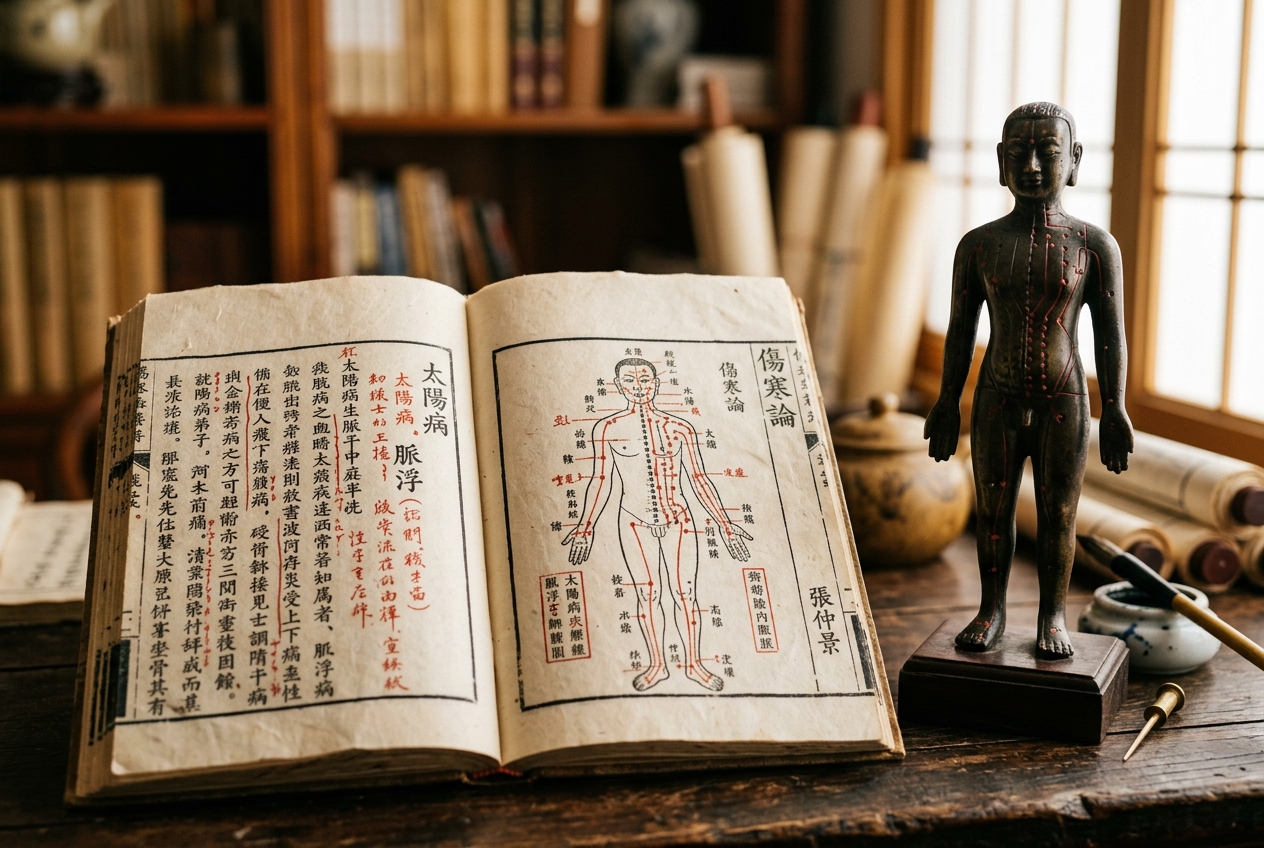
1. A Problem This Solves Today: Somatosensory Dysregulation in the Modern Milieu
If you sit at a desk under fluorescent lighting for eight hours, you are almost certainly familiar with a distinct cascade of somatic deterioration. It often begins as a subtle stiffness at the base of your skull—a tightening where the occipital ridge meets the upper cervical spine. Within hours, that dull ache creeps down the bilateral bands of the trapezius, sets into the interscapular myofascia, and is accompanied by a heavy, cold fatigue in the lower limbs. By evening, your digestive motility has stalled into uncomfortable post-prandial distention, your breathing is shallow and pinned to the upper chest, and an agitated yet exhausted mental state prevents you from entering restorative sleep.
In contemporary clinical neurology, this presentation is often categorized under the broad umbrella of autonomic nervous system dysregulation, myofascial pain syndrome, or functional gastrointestinal disorder. Yet nearly eighteen centuries ago, amidst the collapsing social and epidemiological landscape of the late Eastern Han Dynasty, a physician named Zhang Zhongjing formulated a diagnostic and therapeutic framework that mapped this exact neuro-somatic continuum with breathtaking precision.
Zhang observed that human illness is neither static nor arbitrary. Instead, physiological decline and pathogenic invasion unfold along stratified anatomical, bioenergetic, and fascial vectors known as the Six Channels (Liu Jing 六經). When you experience that creeping tension running from the occiput down the spine, followed by digestive shutdown and visceral agitation, you are not suffering from disconnected symptoms; you are witnessing the direct, step-by-step transmission of physical strain from the superficial dorsal defense barrier into the interior metabolic core.
Traditional Chinese Medicine (TCM) does not view these channels as mystical abstractions, but as tangible, responsive pathways woven through the living matrix of connective tissue, peripheral nerve trunks, and vascular bundles. By understanding the architectural logic of the Six Channels, we gain access to an empirical roadmap. Through targeted, non-invasive acupressure, we can intervene at specific somatic nodal points to halt pathogenic transmission, modulate autonomic tone, and restore visceral equilibrium.
2. Historical & Canonical Foundations: The Han Dynasty Diagnostic Revolution
To appreciate the diagnostic power of the Six Channels, one must situate their architect within the classical canon of East Asian medicine. East Asian medical epistemology is anchored by the Four Great Canons: the cosmological compendium of the Huangdi Neijing (comprising the Su Wen and Ling Shu), the foundational theoretical treatise Nan Jing (The Classic of Difficult Issues), the pharmacognostic catalog Shennong Bencao Jing, and Zhang Zhongjing’s monumental masterwork, the Shang Han Lun (Treatise on Cold Damage Diseases, c. 200–210 CE).
========================================================================================
                          THE FOUR GREAT CANONS OF TCM
========================================================================================
   Huangdi Neijing (Su Wen / Ling Shu)    -->   Cosmology, Meridian Topology, Organ Theory
   Nan Jing                               -->   Pulse Diagnosis, Eight Extra Vessels, Pathophysiology
   Shennong Bencao Jing                   -->   Materia Medica, Herbal Energetics, Toxicology
   Shang Han Lun (Zhang Zhongjing)        -->   Empirical Six-Stage Dynamics, Clinical Therapeutics
========================================================================================
While the Huangdi Neijing and Nan Jing established the macroscopic, ontological framework of channel anatomy and Yin-Yang correspondences, their perspectives were largely deductive and cosmological. They detailed how healthy channels circulate Qi and Blood in alignment with celestial rhythms, seasonal shifts, and Five-Phase transformations. However, when devastating epidemics swept through northern China at the turn of the third century—decimating over two-thirds of Zhang Zhongjing’s extended family within a single decade—theoretical cosmology proved insufficient to save lives at the bedside.
Zhang Zhongjing executed an epistemological leap: he transformed theoretical meridian topology into an empirical, time-sensitive system of disease trajectory management. Synthesizing the channel distribution maps of the Ling Shu with real-time bedside observations, Zhang classified all acute and chronic pathologies into six dynamic stages or conformations (Liu Jing).
Rather than viewing disease as an isolated entity attacking a single organ, the Shang Han Lun conceptualized illness as a continuous, dynamic struggle between the host's vital regulatory capacity (Zheng Qi 正氣) and external pathogenic stressors (Xie Qi 邪氣). Zhang’s genius was in recognizing that as an insult penetrates deeper into the organism, it expresses predictable clusters of signs and symptoms corresponding to specific anatomical and physiological depths—from the superficial dermal and myofascial layers down to the core neurovascular and metabolic organs.
3. The Six Channel (Liu Jing) Pathological Framework: Stratification of Fascial and Metabolic Depth
The Six Channel framework divides the human body into three Yang (exterior, metabolic, dynamic) and three Yin (interior, structural, visceral) conformational layers. Each conformation corresponds to a coupled pair of channels (one hand channel, one foot channel) and represents a distinct physiological territory, myofascial depth, and immunological threshold.
       EXTERIOR (Superficial Defense & High Metabolism)
       +-------------------------------------------------------------+
       | TAIYANG (Greater Yang)  - Bladder / Small Intestine        | -> Superficial Fascia / Skin
       | YANGMING (Yang Bright)  - Stomach / Large Intestine        | -> Enteric Mucosa / Splanchnic Core
       | SHAOYANG (Lesser Yang)  - Gallbladder / San Jiao           | -> Lateral Hinge / Interstitial Matrix
       +-------------------------------------------------------------+
                                  |
                                  v  [CRITICAL IMMUNOLOGICAL / ENERGETIC PIVOT]
                                  |
       +-------------------------------------------------------------+
       | TAIYIN (Greater Yin)    - Spleen / Lung                    | -> Metabolic Assimilation / Fluid Floor
       | SHAOYIN (Lesser Yin)    - Kidney / Heart                   | -> Cardiorenal Axis / Vital Thermogenesis
       | JUEYIN (Reverting Yin)  - Liver / Pericardium              | -> Autonomic Polarity / Microvascular Tone
       +-------------------------------------------------------------+
       INTERIOR (Deep Visceral Reserve & Autonomic Equilibrium)
1. Taiyang (太陽, Greater Yang): The Dorsal Shield and Exterior Defense
- Organs: Urinary Bladder (Pangguang) & Small Intestine (Xiaochang)
- Anatomical & Fascial Domain: The superficial dorsal fascial line (running from the inner eye, over the cranium, down the entire paraspinal musculature, hamstrings, and calves to the lateral foot).
- Physiological Role: Taiyang forms the outermost defensive perimeter of the body. It governs the circulation of Wei Qi (defensive protective energy) within the skin, interstitial spaces, and superficial fascia. It regulates thermoregulation through pore dilation and constriction.
- Pathological State: When attacked by external cold or physical overstrain, Taiyang manifests as occipital headache, cervical and paraspinal rigidity, generalized myalgia, aversion to wind, and a floating (Fu) pulse. It represents acute, superficial myofascial constriction and the initial innate immune activation.
2. Yangming (陽明, Yang Brightness): The High-Metabolic Interior Cauldron
- Organs: Stomach (Wei) & Large Intestine (Dachang)
- Anatomical & Fascial Domain: The anterior myofascial chain, the digestive tract, and the visceral peritoneum.
- Physiological Role: Yangming is the realm of maximum metabolic activity, robust vascular perfusion, and high caloric processing. It is rich in both Qi and Blood, responsible for breaking down food, generating body heat, and propelling waste downward.
- Pathological State: If pathogenic heat penetrates or the digestive system becomes hyper-reactive, Yangming manifests in two distinct patterns: the Channel Pattern (the "Four Bigs": high fever, profuse sweating, extreme thirst, and a surging pulse) and the Bowels Pattern (abdominal distention, constipation, dry hard stool, severe abdominal tenderness, and delirium). In modern terms, it reflects systemic inflammatory hypermetabolism or acute enteric stasis.
3. Shaoyang (少陽, Lesser Yang): The Neuro-Endocrine and Lymphatic Pivot
- Organs: Gallbladder (Dan) & San Jiao (Triple Burner)
- Anatomical & Fascial Domain: The lateral myofascial line, the temporomandibular region, the subcostal margins, and the deep interstitial/lymphatic microcirculation.
- Physiological Role: Shaoyang acts as the physiological hinge (Shu 樞) between the exterior (Taiyang) and the interior (Yangming/Yin stages). It modulates fluid distribution through the fascia, regulates neuro-endocrine stress responses, and coordinates the smooth flow of biliary and lymphatic fluids.
- Pathological State: Characterized by a state of "half-exterior, half-interior" conflict: alternating chills and fever, bitter taste in the mouth, dry throat, blurred vision, hypochondriac fullness, irritability, nausea, and a wiry (Xian) pulse. It mirrors modern autonomic lability, biliary dyskinesia, and neuro-inflammatory fluctuations.
4. Taiyin (太陰, Greater Yin): The Digestive and Fluid Floor
- Organs: Spleen (Pi) & Lung (Fei)
- Anatomical & Fascial Domain: The deep anterior myofascial line, the mesenteric lymphatic network, and the mucosal lining of the gastrointestinal and respiratory tracts.
- Physiological Role: Taiyin is the primary gateway into the interior Yin domain. It governs post-natal nutrient assimilation, enzymatic fluid transformation, and the synthesis of foundational Qi and Blood.
- Pathological State: Characterized by metabolic hypo-functioning, deficient-cold, and fluid stagnation: abdominal fullness that improves with warmth and pressure, chronic loose stools, vomiting, absence of thirst, profound fatigue, and a pale, swollen tongue with tooth marks.
5. Shaoyin (少陰, Lesser Yin): The Cardiorenal Axis and Vital Thermogenesis
- Organs: Kidney (Shen) & Heart (Xin)
- Anatomical & Fascial Domain: The deep prevertebral fascia, the retroperitoneum, the cardiovascular endothelium, and the adrenal-renal parenchyma.
- Physiological Role: Shaoyin represents the deep, constitutional core of the organism—the root of primordial Yin (adrenal-renal structural fluids, parasympathetic reserve) and primordial Yang (mitochondrial respiration, cardiac contractility, basal body temperature).
- Pathological State: Represents severe physiological exhaustion. In Shaoyin Cold Transformation, the patient experiences profound lethargy, a constant desire to sleep curled up, freezing extremities, aversion to cold, clear copious urine or watery diarrhea, and a faint, minute pulse. In Shaoyin Heat Transformation, consumption of Kidney Yin leads to cardiac agitation, intractable insomnia, dry throat, and low-grade night sweats.
6. Jueyin (厥陰, Reverting Yin): The Terminal Autonomic and Microvascular Hinge
- Organs: Liver (Gan) & Pericardium (Xinbao)
- Anatomical & Fascial Domain: The deep fascial core of the pelvis, hepatic parenchyma, diaphragm, central vascular tree, and autonomic cardiac plexuses.
- Physiological Role: Jueyin is the final, deepest hinge of physiology, where Yin reaches its absolute nadir and must transform back into Yang. It regulates smooth microvascular tone, peripheral perfusion, and emotional-autonomic homeostasis.
- Pathological State: Manifests as extreme systemic polarization—the breakdown of biological harmony characterized by "Heat Above, Cold Below" (Shang Re Xia Han). Symptoms include a sensation of energy rushing up to the chest, burning pain in the epigastrium, intense hunger with an inability to eat, vomiting of roundworms or clear fluid, freezing extremities paired with a flushed face, and severe cardiac-autonomic irritability.
4. Pathogenic Transmission Vectors: The Biomechanics of Disease Progression
In the diagnostic architecture of the Shang Han Lun, diseases do not stay confined to their point of origin; they travel along defined anatomical and systemic vectors. Understanding these pathways allows a clinician or practitioner to intercept a disease before it reaches the deep Yin reserves.
+---------------------------------------------------------------------------------------+
|                       CLASSICAL PATHOGENIC TRANSMISSION MODES                         |
+---------------------------------------------------------------------------------------+
| 1. Xun Jing Zhuan   | Sequential Cascade: Taiyang -> Shaoyang -> Yangming ->           |
|    (循經傳)         |                     Taiyin  -> Shaoyin  -> Jueyin               |
+---------------------+-----------------------------------------------------------------+
| 2. Yue Jing Zhuan   | Skip-Channel Transmission: Bypassing contiguous layers          |
|    (越經傳)         | (e.g., Taiyang directly to Yangming or Shaoyin)                 |
+---------------------+-----------------------------------------------------------------+
| 3. Biao Li Zhuan    | Interior-Exterior Coupled Transfer: Crossover between           |
|    (表裏傳)         | paired Zang-Fu channels (e.g., Bladder to Kidney)               |
+---------------------+-----------------------------------------------------------------+
| 4. Zhi Zhong        | Direct Visceral Strike: Pathogen bypasses all Yang layers,     |
|    (直中)           | striking immediately into Taiyin or Shaoyin cold-collapse       |
+---------------------------------------------------------------------------------------+
1. Xun Jing Zhuan (循經傳, Sequential Channel Transmission)
This is the classic textbook progression. The pathogenic insult enters at the superficial perimeter (Taiyang), traverses the lateral hinge (Shaoyang), ignites the metabolic core (Yangming), breaches the digestive threshold (Taiyin), destabilizes the cardiorenal axis (Shaoyin), and culminates in terminal autonomic conflict (Jueyin). This orderly progression mirrors the gradual failure of consecutive physiological defense lines.
2. Yue Jing Zhuan (越經傳, Skip-Channel Transmission)
In individuals with constitutional predispositions or when subjected to overwhelming environmental virulence, a pathogen may bypass an adjacent stage. For example, a Taiyang exterior cold condition may skip the Shaoyang hinge entirely and immediately transform into Yangming interior heat, or bypass both Shaoyang and Yangming to directly enter the Shaoyin realm if the patient’s constitutional Kidney Yang is severely compromised.
3. Biao Li Zhuan (表裏傳, Interior-Exterior Coupled Transfer)
This vector operates along anatomically and energetic paired channels (the Yin-Yang / Biao-Li relationship). A pathogenic factor residing on the exterior Fu channel transfers directly into its coupled interior Zang organ. For instance, cold trapped in the Taiyang Urinary Bladder channel can sink directly into the Shaoyin Kidney, or exterior Wind-Heat in the Lung channel can transfer into the Yangming Large Intestine, triggering acute colonic inflammation.
4. Zhi Zhong (直中, Direct Strike to the Visceral Depths)
In patients characterized by profound constitutional deficiency (Zheng Qi Xu), an external insult does not produce exterior symptoms like fever, sweating, or occipital stiffness. Instead, it strikes directly into the interior Yin organs from the very first hour. This typically manifests as a direct strike to Taiyin (acute, icy vomiting, abdominal pain, and profuse diarrhea) or Shaoyin (sudden collapse of peripheral circulation, hypothermia, somnolence, and thready pulse).
5. The Meridian Path: A Journey Through the Somatosensory Landscape
To apply non-invasive acupressure effectively, we must abandon abstract geometry and learn to navigate the body’s topography using clear, palpable landmarks. The meridians are living highways running along fascial clefts, muscular grooves, and neurovascular sheaths.
       STOMACH MERIDIAN (Yangming)               LIVER MERIDIAN (Jueyin)
       [Anterior Descending Highway]             [Medial Ascending Pathway]

( Orbit / Jaw )                             ( Hypochondrium )
                     |                                           |
             ( Throat / Clavicle )                        ( Groin / Pelvis )
                     |                                           |
             ( Chest / Abdomen )                      ( Medial Thigh / Adductors )
                     |                                           |
           ( Anterior Thigh / Rectus )                  ( Medial Knee Joint )
                     |                                           |
         [ ST36: Below Tibial Tuberosity ]             ( Medial Tibia / Calf )
                     |                                           |
           ( Lateral Shin / Tibialis )                [ LV3: Webbing 1st-2nd Metatarsal ]
                     |                                           |
              ( 2nd/3rd Toe Web )                         ( Great Toe Tip )
The Yangming Highway: The Anterior Descent
The Stomach channel represents the anterior functional line. Beginning just below the orbit of the eye, it descends across the jaw, travels down the anterior throat, courses through the mamillary line and rectus abdominis, passes through the groin, runs down the front of the thigh along the rectus femoris muscle, tracks down the lateral muscular border of the shinbone (the fleshy belly of the tibialis anterior), crosses the anterior ankle joint, and terminates at the lateral corner of the second toenail. This is the great descending highway of digestive propulsion, motor coordination, and systemic nourishment.
The Jueyin Pathway: The Medial Ascending Ascent
The Liver channel represents the deep medial axis. Starting at the lateral nail bed of the big toe, it travels across the dorsum of the foot, passes just in front of the medial ankle bone, climbs the inner edge of the shinbone (behind the Spleen channel), ascends the medial knee and inner thigh through the adductor musculature, curves around the external genitalia, penetrates the lower abdomen, wraps around the stomach, enters the liver and gallbladder, and traverses the diaphragm to connect with the ocular system and the vertex of the head. It is the deep structural tether of emotional balance, vascular smooth muscle regulation, and fascial elasticity.
6. Precision Non-Invasive Acupressure Protocols: Four Cardinal Gateways
Acupressure is not mere massage; it is the deliberate application of focused mechanical pressure to high-density neurofascial and vascular loci to elicit systemic neuro-reflexive responses. Precise point locations are standardized globally by the World Health Organization (WHO) Acupuncture Point Locations.
========================================================================================
                              FOUR CARDINAL REGULATORY NODES
========================================================================================
 Point Code & Name     Anatomical Location Landmark        Primary Clinical Indication
----------------------------------------------------------------------------------------
 ST36 (Zusanli)        Lateral shin, 4 fingers below knee  Digestive fatigue, Yangming heat
 LI4 (Hegu)            Dorsum of hand, 1st-2nd metacarpal  Exterior tension, facial pain
 LV3 (Taichong)        Dorsum of foot, 1st-2nd metatarsal  Shaoyang/Jueyin stagnation, stress
 SP6 (Sanyinjiao)      Inner calf, 4 fingers above ankle   Taiyin/Shaoyin fluid depletion
 PC6 (Neiguan)         Volar wrist, 3 fingers above crease Autonomic nausea, cardiac anxiety
========================================================================================
1. ST36 (Zusanli, 足三里) – "Leg Three Miles"
Channel: Foot Yangming (Stomach)
                       [ PATIENT KNEE & TIBIAL ANATOMY ]

( Patella / Kneecap )
                                       |
                     [ Outer Eye of Knee - Dubi ST35 ]
                                       |
                 =============================================
                 |  Distance: 3 Cun (Four Finger-Widths)     |
                 =============================================
                                       |
      ( Tibial Tuberosity ) <---- 1 Finger-Breadth ----> [ ST36: ZUSANLI ]
      [ Bony Prominence ]       (Lateral / Outward)      (Fleshy Tibialis Anterior)
- Physical Landmark: Sit with your knees bent at a 90-degree angle. Place your four fingers horizontally across your shin, starting immediately below the base of your kneecap. Your pinky finger marks the level. Now, slide your finger roughly one thumb-width outward (laterally) from the prominent central crest of your shinbone. You will land directly in the thick, muscular groove of the tibialis anterior muscle.
- The Somatosensory Sensation (De Qi): When correctly engaged, ST36 produces a distinct, heavy, dull ache that often radiates down the outer shin toward the ankle, accompanied by a localized sensation of warmth.
- Application Technique: Apply firm, sustained perpendicular pressure with your thumb or the knuckle of your index finger. Maintain continuous pressure with small, circular kneading motions for 2 to 3 minutes per side.
- Clinical Actions: Modulates Yangming interior heat, restores sluggish gastric emptying, accelerates post-prandial digestive transit, and replenishes Taiyin post-natal Qi to combat systemic physical exhaustion.
2. The Four Gates (Si Guan, 四關): LI4 (Hegu) & LV3 (Taichong)
Channels: Hand Yangming (Large Intestine) & Foot Jueyin (Liver)
          [ LI4: HEGU - DORSUM OF HAND ]             [ LV3: TAICHONG - DORSUM OF FOOT ]

( Index Finger )                              ( Big Toe )    ( 2nd Toe )
                        \                                              \        /
                         \                                              \      /
                   [ LI4: HEGU ]                                         \    /
             (Peak of Muscle Mound when                                   \  /
              Thumb & Index Pressed)                             [ LV3: TAICHONG ]
                         /                                  (V-Shaped Depression Between
                        /                                    1st & 2nd Metatarsal Bones)
                 ( Thumb )                                                |
                                                                   ( Ankle Joint )
- Physical Landmarks:
- LI4 (Hegu): On the back of the hand, in the muscular webbing between the thumb and index finger. Squeeze your thumb and index finger tightly together; a small muscular ridge will rise. LI4 lies at the highest peak of this mound. Relax the hand and press inward toward the bone of the second metacarpal.
- LV3 (Taichong): On the top of the bare foot, in the hollow between the bones of the big toe and the second toe. Slide your finger upward from the web between the toes along the groove until your finger drops into a distinct V-shaped bony junction before the ankle joint.
- The Somatosensory Sensation (De Qi): Both points are exquisitely sensitive. LI4 elicits a sharp, spreading ache across the dorsal interosseous muscle; LV3 produces a deep, electric, releasing ache that frequently travels up the inner leg.
- Application Technique: Press LI4 with the tip of your opposite thumb, angling the force toward the index finger bone for 90 seconds. Immediately follow by pressing LV3 with your thumb for 90 seconds. Work bilaterally.
- Clinical Actions: The "Four Gates" represent the ultimate classical pairing to unblock systemic stagnation. LI4 releases exterior Taiyang/Yangming tension in the neck, head, and face, while LV3 vents Shaoyang and Jueyin constrained stress, smooths hepatic blood flow, and lowers sympathetic vascular resistance.
3. SP6 (Sanyinjiao, 三陰交) – "Three Yin Intersection"
Channel: Foot Taiyin (Spleen)
                          [ SP6: SANYINJIAO ANATOMY ]

( Medial Knee )
                                        |
                             ( Medial Edge of Shinbone )
                                        |
                 =============================================
                 |  Distance: 3 Cun (Four Finger-Widths)     |
                 =============================================
                                        |
                        [ SP6: SANYINJIAO ]
                        (In the Tender Dip Right Behind the Bone)
                                        |
                        ( Medial Malleolus / Inner Ankle )
                                        |
                                   ( Sole / Heel )
- Physical Landmark: Locate the highest point of your inner ankle bone (the medial malleolus). Place your four fingers flat across your lower calf, with the bottom of your little finger resting on the ankle tip. The level of your index finger marks the height. Slide your finger right off the back edge of the shinbone into a tender, soft muscular depression.
- The Somatosensory Sensation (De Qi): A profound, tender, bruised-like sensation that spreads upward along the inner calf and downward into the medial arch of the foot.
- Application Technique: Use your thumb to apply gentle, graduated ischemic compression. Press in slowly over 10 seconds, hold firmly for 60 seconds, and release slowly. Repeat three times per leg.
- Clinical Actions: As the anatomical meeting point of the Spleen (Taiyin), Liver (Jueyin), and Kidney (Shaoyin) channels, SP6 is the sovereign point for nourishing structural Yin fluids, regulating pelvic blood circulation, easing menstrual cramping, and treating insomnia arising from Shaoyin Yin-deficiency.
4. PC6 (Neiguan, 內關) – "Inner Pass"
Channel: Hand Jueyin (Pericardium)
                          [ PC6: NEIGUAN ANATOMY ]

( Palm of the Hand )
                                       |
                           ( Transverse Wrist Crease )
                                       |
                 =============================================
                 |  Distance: 2 Cun (Three Finger-Widths)    |
                 =============================================
                                       |
             [ PC6: NEIGUAN - Located Between Two Prominent Tendons ]
               * Flexor Carpi Radialis & Palmaris Longus *
                                       |
                              ( Anterior Forearm )
- Physical Landmark: Turn your hand palm-up. Place the three middle fingers of your opposite hand across your wrist crease, starting at the line where your hand joins your arm. Just below the edge of your third finger, in the exact center of the forearm, you will find two prominent, cord-like tendons (the palmaris longus and flexor carpi radialis). PC6 lies in the central valley between these two tendons.
- The Somatosensory Sensation (De Qi): A distinctive tingling, mildly radiating sensation that courses up the forearm toward the chest or into the palm and middle finger.
- Application Technique: Apply direct, vertical pressure using the pad of your thumb. Maintain moderate, rhythmic pressure while taking slow, deep diaphragmatic breaths (4 seconds in, 6 seconds out) for 2 minutes on each wrist.
- Clinical Actions: Harmonizes the Jueyin axis, calms cardiac-autonomic irritability, relieves epigastric fullness, stops motion sickness and nausea, and alleviates psychological anxiety characterized by chest tightness.
7. A Targeted Point Combination for Daily Life: The "Autonomic Reset & Evening Decompression" Protocol
When the cumulative stress of the workday manifests as tension across the shoulders, a churning or bloated stomach, and mental agitation, execute this targeted, four-step clinical sequence before sleep.
+---------------------------------------------------------------------------------------+
|                 EVENING AUTONOMIC RESET & DIGESTIVE PROTOCOL                          |
+---------------------------------------------------------------------------------------+
| Sequence | Target Point     | Bilateral Time | Somatic / Neurological Target          |
+----------+------------------+----------------+----------------------------------------+
| Step 1   | LI4 (Hegu)       | 2 Minutes      | Release cervical-occipital constriction|
| Step 2   | PC6 (Neiguan)    | 2 Minutes      | Vent pericardial heat, slow heart rate |
| Step 3   | ST36 (Zusanli)   | 3 Minutes      | Stimulate vagal gut motility & descend |
| Step 4   | LV3 (Taichong)   | 2 Minutes      | Ground motor tone, anchor ascending Qi |
+---------------------------------------------------------------------------------------+
The Step-by-Step Evening Protocol
- Posture: Sit comfortably in a quiet room with your feet flat on the floor or recline in bed with knees slightly supported by a pillow.
- Step 1: Release the Cranial-Cervical Defense (LI4): Engage bilateral LI4 points for 60 seconds each. Breathe out slowly through the mouth, visualizing the muscular constriction at the base of your skull melting downward.
- Step 2: Regulate the Cardiorespiratory Axis (PC6): Apply rhythmic pressure to PC6 on the left wrist for 60 seconds, then switch to the right wrist. Sync your pressure with prolonged, parasympathetic-activating exhalations.
- Step 3: Descend the Metabolic Fire (ST36): Place both thumbs on your bilateral ST36 points on your shins. Apply firm, circular, kneading pressure simultaneously for 90 seconds to two minutes. Feel the warmth descending into your lower legs and abdomen.
- Step 4: Anchor the Autonomic Drive (LV3): Conclude by pressing bilateral LV3 points on the tops of your feet for 60 seconds each. This grounds remaining physiological tension, allowing systemic vasodilation.
8. Neurofascial and Modern Physiological Correlates: Validating the Canon
The clinical efficacy of the Six Channel system is increasingly corroborated by modern neurophysiology, connective tissue biology, and autonomic neuroscience. Rather than viewing meridians as conduits for an intangible fluid, contemporary medical researchers conceptualize them as bioelectric and neurofascial signaling pathways.
+---------------------------------------------------------------------------------------+
|                    MODERN PHYSIOLOGICAL BRIDGES TO LIU JING                           |
+---------------------------------------------------------------------------------------+
| Classical Han Concept       | Modern Neurobiological & Fascial Correlate              |
+-----------------------------+---------------------------------------------------------+
| Meridian Conduits (Jing Luo)| Low-resistance interstitial fluid channels & fascial    |
|                             | cleavage planes (interstitial matrix)                   |
+-----------------------------+---------------------------------------------------------+
| De Qi Sensation             | Mechanoreceptor stimulation, A-delta / C-fiber afferent  |
|                             | recruitment, and localized collagen fiber winding       |
+-----------------------------+---------------------------------------------------------+
| Six-Channel Stratification  | Multi-tiered neuro-immunological axes (innate barrier ->|
|                             | enteric axis -> HPA axis -> cardiorenal / sepsis shock) |
+-----------------------------+---------------------------------------------------------+
| Somatovisceral Reflexes     | Dorsal root ganglion afferents modulating sympathetic   |
|                             | and parasympathetic efferents at the spinal cord level  |
+-----------------------------+---------------------------------------------------------+
1. Fascial Mechanotransduction and Collagen Cleavage Planes
Pioneering research led by Dr. Helene Langevin and colleagues (NCBI PubMed) demonstrates that acupuncture points and traditional meridian vectors strongly correlate with anatomical cleavage planes within loose, subcutaneous connective tissue and intermuscular fascia.
When mechanical pressure or rotation is applied to an acupressure locus, it deforms the extracellular matrix, stretching fibroblasts and initiating mechanotransduction. This deformation stimulates the release of intracellular adenosine triphosphate (ATP), which degrades into adenosine—a potent local analgesic and vasodilator that inhibits nociceptive signaling.
   MECHANICAL ACUPRESSURE STIMULATION
                 |
                 v
   Fascial Deformation & Collagen Winding
                 |
                 v
   Fibroblast Activation & Extracellular Signaling
                 |
                 v
   Local Release of Adenosine, Calcitonin Gene-Related Peptide (CGRP) & Nitric Oxide (NO)
                 |
                 v
   MICROVASCULAR VASODILATION + ANALGESIC INTERSTITIAL SIGNALING
2. Autonomic and Somatovisceral Reflex Circuits
Acupressure does not operate solely through local tissue mechanics; it communicates directly with the central nervous system. As documented in comprehensive reviews on the Neurobiological Mechanisms of Acupuncture (NCBI PubMed), applying somatic pressure to peripheral nerves recruits myelinated A-beta, A-delta, and unmyelinated C-fibers. These afferent signals enter the dorsal horn of the spinal cord and project to key autonomic integration hubs in the brainstem, including the Nucleus Tractus Solitarii (NTS) and the Rostral Ventrolateral Medulla (RVLM).
- Stimulating ST36 activates somatic afferent projections within the deep peroneal nerve, eliciting a somato-parasympathetic reflex that travels via the vagus nerve to release acetylcholine within the enteric nervous system, thereby dampening systemic inflammation through the cholinergic anti-inflammatory pathway.
- Stimulating PC6 engages median nerve afferents that project to the central cardiac control centers, reducing excessive sympathetic drive, stabilizing heart rate variability, and exerting an anti-arrhythmic and anti-emetic effect.
9. Clinical Safety, Boundaries, and Somatosensory Rules
While non-invasive acupressure is an extraordinarily safe modality, it must be practiced with anatomical awareness, clinical discrimination, and strict adherence to physiological boundaries.
> [!WARNING]
> ### CRITICAL CONTRAINDICATION: PREGNANCY
> Certain acupressure points exert a profound descending action and stimulate uterine contractility. **LI4 (Hegu)** and **SP6 (Sanyinjiao)** are strictly **FORBIDDEN** during pregnancy, as classical literature and modern clinical trials confirm their ability to induce pelvic congestion and labor.
1. Calibrating Pressure Intensity
- Therapeutic vs. Noxious Pressure: Acupressure should be firm, intentional, and deep, but never sharp, excruciating, or traumatic. The goal is to elicit De Qi—a therapeutic dull ache, numbness, distention, or heaviness.
- Tissue Protection: Avoid applying heavy pressure over open wounds, bruises, localized infections, deep vein thrombosis sites, or severe varicose veins.
- Duration Limits: Limit point stimulation to 1 to 3 minutes per session per locus. Prolonged, aggressive friction will cause soft tissue inflammation rather than therapeutic neuro-reflexive modulation.
2. Recognizing Clinical Red Flags
Acupressure is a powerful regulatory and functional self-care practice, but it is not a substitute for emergent medical care. Seek immediate medical evaluation if experiencing: * Acute, crushing, radiating chest pain or sudden shortness of breath (suspected myocardial infarction). * Sudden, severe "thunderclap" headache or unilateral neurological deficits (suspected stroke). * High, unremitting fevers with rigid abdominal guarding (acute surgical abdomen). * Severe, unexplained hemoptysis, hematochezia, or loss of consciousness.
10. Today’s Takeaway: A 2-Minute Somatic Restoration Practice
You do not need an hour of leisure or specialized tools to change your physiological state. Right now, before closing this text, execute this simple two-minute bilateral reset to balance the Jueyin and Yangming channels:
========================================================================================
                      YOUR 2-MINUTE SOMATIC DECOMPRESSION STEP
========================================================================================
 1. Place your left thumb across the PC6 inner wrist point of your right arm.
 2. Inhale deeply through your nose for a count of 4, expanding your lower belly.
 3. Apply firm, circular, steady pressure to PC6 as you exhale through your mouth for 6.
 4. Repeat this conscious breathing and pressure cycle 5 times (approx. 1 minute).
 5. Switch hands and repeat on the opposite wrist.
========================================================================================
Notice the subtle shift: the lowering of your shoulders away from your ears, the deepening of your breath, and the warm release of tension across your chest. This is not magic; it is the living, neurological architecture of Zhang Zhongjing’s Six Channels responding to your touch.
Authoritative References & Further Reading
- Shanghan Lun (Treatise on Cold Damage) – Canonical Overview on Wikipedia
- Huangdi Neijing (Inner Canon of the Yellow Emperor) on Wikipedia
- Nan Jing (The Classic of Difficult Issues) on Wikipedia
- World Health Organization (WHO) Standard Acupuncture Point Locations in the Western Pacific Region
- Langevin HM et al. (2002) – Relationship of Acupuncture Points and Meridians to Connective Tissue Planes (NCBI PubMed)
- Zhang Z et al. (2014) – Neural Substrates and Neurobiological Mechanisms of Acupressure (NCBI PubMed)