Liuzijue Qigong (Liu Zi Jue) Meridian Dynamics: Governing Six Healing Sounds Acoustic Resonance, Visceral Phonetic Frequency Modulation, Zang-Fu Organ Purging, and Sub-Diaphragmatic Qi Flow in Traditional Chinese Medicine
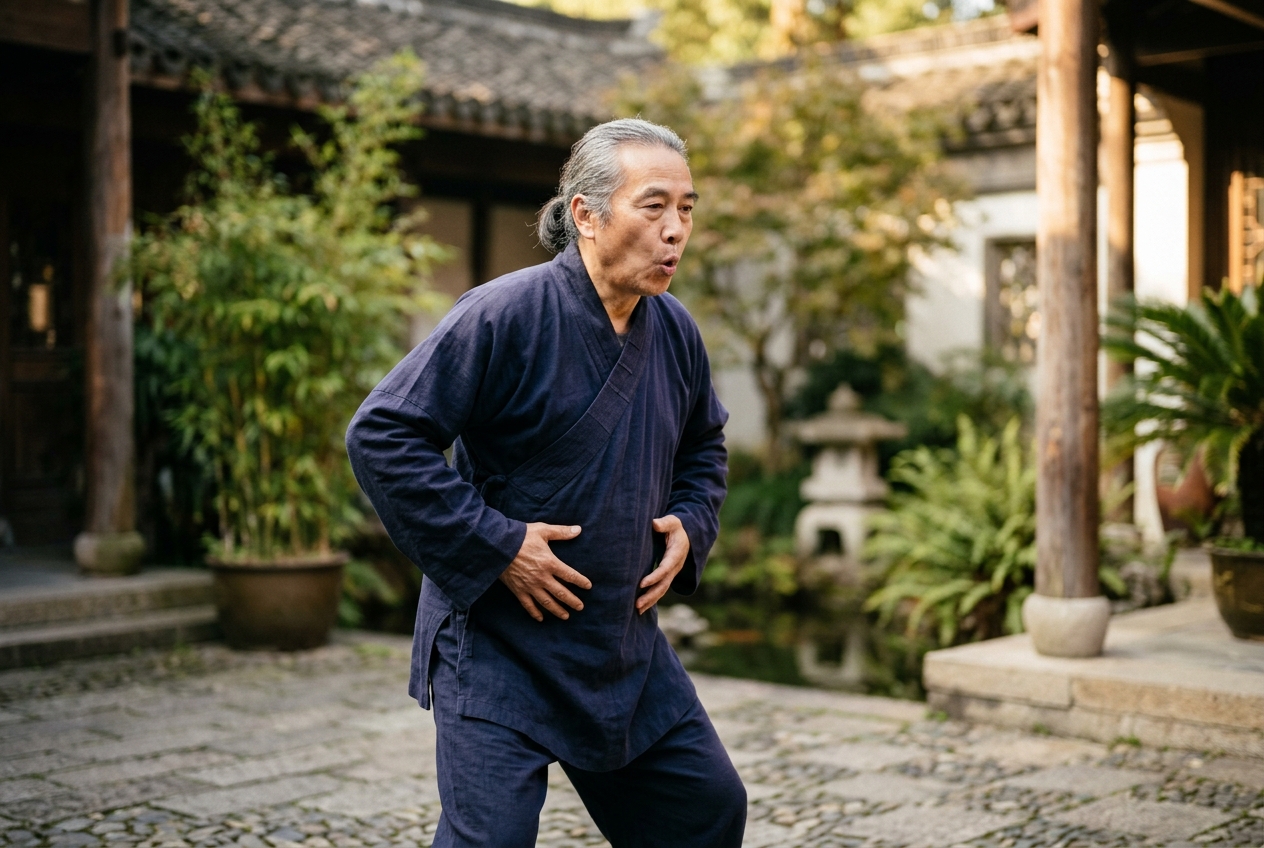
1. Opening Scene — A Moment You'll Recognise
Notice what happens in the body when an overwhelming wave of frustration, acute cognitive fatigue, or sudden sorrow takes hold. Without conscious planning, your ribcage expands, your shoulders drop, and your breath releases through parted lips in a heavy, audible sigh. Or consider the instinctual shuddering exhale when stepping into freezing water, or the sharp, hissing intake of air when experiencing acute physical pain.
These spontaneous vocalizations are not accidental byproducts of human respiration; they are instinctual, somatic release valves. For millennia, human physiology has sought acoustic mechanisms to dissipate autonomic tension, vent visceral pressure, and discharge stagnant muscular contraction.
In Traditional Chinese Medicine (TCM), these intuitive exhalations form the empirical foundation of one of humanity’s oldest psychosomatic practices: Liuzijue (六字訣), colloquially known as the Six Healing Sounds. Rather than treating breath as a passive exchange of respiratory gases, this classical discipline leverages specific oral-lingual geometries, subglottic airflow patterns, and low-frequency sonic vibrations to systematically purge pathogenic heat (Re Qi), alleviate visceral congestion (Qi Zhi), and regulate autonomic balance. Today, contemporary physiology, biomechanics, and neuroscience are beginning to explain the exact cellular and neurochemical mechanisms that make this ancient practice remarkably potent.
2. What This Organ System Does: The Zang-Fu Visceral & Acoustic Matrix
To comprehend the therapeutic mechanics of Liuzijue, one must first examine the classical concept of the Zang-Fu organ systems and their physiological correlations. In the paradigm of Chinese medicine, internal organs are not viewed merely as discrete anatomical units, but rather as dynamic, functional networks (Zang-Fu) that orchestrate physical metabolism, hemodynamic distribution, and emotional processing.
The historical lineage of Liuzijue traces back to the eminent scholar-physician Tao Hongjing (456–536 CE) of the Southern and Northern Dynasties, who first codified the six breath vocables in his seminal treatise Record of Nourishing the Spirit and Prolonging Life (Yang Xing Yan Ming Lu). Tao posited that the human body possesses one way to inhale environmental Qi (the universal bioenergetic substrate) but six distinct phonetic pathways to exhale and expel metabolic toxins and visceral pathogens:
$$\text{One Inhalation} \longrightarrow \begin{cases} \text{Chui (吹)} & \text{Dispels Cold \& Tonifies Kidneys} \ \text{Hu (呼)} & \text{Dispels Heat \& Harmonizes Spleen} \ \text{Xi (嘻)} & \text{Removes Pain \& Regulates Triple Burner} \ \text{He (呵)} & \text{Vents Stagnation \& Clears Heart Fire} \ \text{Xu (嘘)} & \text{Releases Wind \& Nourishes Liver} \ \text{Si (呬)} & \text{Alleviates Constraint \& Balances Lungs} \end{cases}$$
Centuries later, during the Tang Dynasty, the legendary Grand Master of Medicine Sun Simiao (581–682 CE) systematically mapped these six phonetic expirations directly to the Five Phase (Wu Xing) system and the twelve primary acupuncture meridians in his monumental work Prescriptions Worth a Thousand Pieces of Gold (Qian Jin Yao Fang).
========================================================================================
                      THE CLASSICAL LIUZIJUE VISCERAL MATRIX
========================================================================================
 Phoneme     Organ System      Five Elements      Fascial Meridian Pathway
----------------------------------------------------------------------------------------
 Xu (嘘)      Liver (Gān)       Wood (Mù)          Deep Anterior Line / Medial Leg
 He (呵)      Heart (Xīn)       Fire (Huǒ)         Anterior Arm Line / Pericardial Axis
 Hu (呼)      Spleen (Pí)       Earth (Tǔ)         Superficial Front Line / Spleen-Stomach
 Si (呬)      Lungs (Fèi)       Metal (Jīn)        Superficial Arm Flexor / Thenar Axis
 Chui (吹)    Kidneys (Shěn)    Water (Shuǐ)       Deep Back Line / Pelvic Diaphragm
 Xi (嘻)      San Jiao (Sānjiāo) Systemic Phase    Triple Axial Fascial Plane (Myofascial)
========================================================================================
In plain physiological terms, each Zang organ operates under specific acoustic, hemodynamic, and thermal conditions: - The Liver (Gān) maintains the free, unhindered movement of Qi and blood throughout the neuromuscular matrix. When congested, systemic circulation falters, manifesting as neuromuscular hypertonicity, emotional volatility, and vascular resistance. - The Heart (Xīn) governs blood circulation and houses the Shen (cognitive clarity, emotional coherence, and conscious awareness). When excessive internal metabolic heat accumulates, it destabilizes psychophysiological regulation, leading to restlessness and tachycardia. - The Spleen (Pí) oversees digestion, nutrient assimilation, fluid metabolism, and the maintenance of interstitial tissue integrity. When burdened, fluid dynamics degrade, producing metabolic debris, generalized heaviness, and lethargy. - The Lungs (Fèi) preside over respiratory gas exchange, mucosal immunity (Wei Qi), and the rhythmic distribution of fluid throughout the superficial fascial planes. - The Kidneys (Shěn) serve as the foundational reservoir of systemic vitality (Jing), regulating fluid balance, endocrine homeostasis, autonomic resilience, and bone metabolism. - The San Jiao (Triple Burner) is not a single anatomical organ, but the metabolic thermoregulatory network and interstitial fluid transport grid coordinating the thoracic (upper), abdominal (middle), and pelvic (lower) cavities.
3. How You Can Feel It — Signs of Balance and Imbalance
When the visceral matrix is functioning harmoniously, the physiological indicators are immediate: breathing is effortless, subdiaphragmatic, and unhurried; the musculoskeletal system maintains functional tone without chronic fascial bracing; sleep is restorative; digestion is efficient; and the emotional baseline remains adaptable and grounded.
Conversely, visceral stagnation generates distinct somatic and emotional signatures that serve as an immediate diagnostic barometer:
+---------------------------------------------------------------------------------------+
|                               VISCERAL SELF-ASSESSMENT                                |
+---------------------------------------------------------------------------------------+
| • LIVER IMBALANCE (Wood / Xu):                                                        |
|   Tension headaches, jaw clenching (bruxism), tight subcostal margins, erratic mood,   |
|   irritability, sighing, brittle nails, ocular dryness, or persistent tendon tightness.|
|                                                                                       |
| • HEART IMBALANCE (Fire / He):                                                        |
|   Palpitations, sleep-onset insomnia, vivid and agitated dreams, oral ulcerations,     |
|   facial flushing, social anxiety, and a feeling of internal cognitive overheating.    |
|                                                                                       |
| • SPLEEN IMBALANCE (Earth / Hu):                                                      |
|   Postprandial lethargy, chronic brain fog, abdominal bloating, loose stools, muscle   |
|   weakness, unyielding rumination, and persistent cravings for refined carbohydrates.  |
|                                                                                       |
| • LUNG IMBALANCE (Metal / Si):                                                        |
|   Shallow apical breathing, chronic postural rounding of the shoulders, recurrent     |
|   respiratory infections, cutaneous dryness, unexplained grief, and fatigue.          |
|                                                                                       |
| • KIDNEY IMBALANCE (Water / Chui):                                                    |
|   Lumbosacral coldness or ache, knee joint weakness, nocturnal micturition, tinnitus,  |
|   sudden surges of existential dread, chronic burnout, and dark infraorbital circles. |
|                                                                                       |
| • SAN JIAO IMBALANCE (Systemic / Xi):                                                 |
|   Simultaneous hot sensations in the head with cold feet (thermal dysregulation),      |
|   lymphatic stagnation, generalized interstitial edema, and autonomic dysautonomia.   |
+---------------------------------------------------------------------------------------+
When you assess your current physical state, you are tuning into the real-time autonomic tone and fascial tension of these visceral circuits.
4. Qigong & Movement Practice: The Didactic Biomechanics of Liuzijue
The modern standard form of Liu Zi Jue combines classical phonetics with targeted kinesiological movement, generating an integrated therapy of phonation, posture, and fascial stretching.
Physiological & Acoustic Foundations of Practice
From a contemporary biophysical perspective, the effectiveness of Liuzijue rests upon three interconnected mechanisms:
- Subglottic Pressure & Airflow Dynamics: The precise shaping of the vocal tract (oral cavity, tongue position, and lips) creates variable acoustic impedance. This modulates subglottic air pressure, prolongs the expiratory phase, increases arterial carbon dioxide tolerance, and activates the pulmonary stretch receptors.
- Autonomic Neuromodulation: Extended vocalized exhalations directly stimulate the auricular and pharyngeal branches of the Vagus nerve, driving instantaneous parasympathetic upregulation, reducing systemic cortisol, and enhancing baroreflex sensitivity.
- Endogenous Nitric Oxide Mobilization: The acoustic resonance produced during sustained phonetic vibration dramatically enhances the production and release of mucosal nitric oxide ($NO$) within the paranasal sinuses and respiratory epithelium, promoting vasodilation and optimizing alveolar oxygen transport as documented in NCBI PubMed physiological studies.
Step-by-Step Clinical Protocols for the Six Sounds
Foundational Setup & Posture (Ziran Zhuang)
- Stand with feet parallel, shoulder-width apart.
- Unlock the knees slightly; sink the sacrum to flatten the lumbar lordosis naturally.
- Suspend the vertex of the head from above (Baihui, GV-20); tuck the chin slightly to lengthen the cervical spine.
- Rest the tongue lightly against the hard palate (upper magpie bridge); breathe purely through the nose during inhalation.
- Cultivate abdominal breathing (Dan Tian breathing), expanding the lower abdomen, lateral ribs, and lower back three-dimensionally during inhalation.
1. Xu (嘘) — Pronounced "Xū" (Hissing/Subtle 'Shoo' with teeth open)
- Target System: Liver (Wood Phase) & Gallbladder.
- Oral Geometry: Mouth slightly open, corners of the lips pulled subtly backward; the blade of the tongue rests flat while the lateral edges rise slightly, leaving a narrow longitudinal aperture for a soft, unforced expulsion of air.
- Kinetic Movement: 1. Inhalation: Bring the hands up along the front midline, palms facing upward toward the ribs. 2. Exhalation: Turn the left palm upward and push it diagonally across the body while the right hand presses downward beside the hip, rotating the torso gently to open the left hypochondriac region. 3. Widen the eyes intentionally (the sensory orifice of the Liver), directing the gaze through the fingers. 4. Emit the sound Xū in a continuous, smooth, sub-audible whisper over 8–12 seconds.
- Biomechanical Mechanism: Stretches the deep anterior fascial line and the Liver meridian spanning from the great toe through the medial thigh into the subcostal margin, releasing intra-hepatic vascular tension.
2. He (呵) — Pronounced "Hē" (Deep guttural 'Her' / Open throat release)
- Target System: Heart (Fire Phase) & Small Intestine.
- Oral Geometry: Mouth open moderately wide, tongue arched downward in the back with the tip resting against the lower incisors; the airstream is generated from the larynx and posterior pharynx without vocal cord strain.
- Kinetic Movement: 1. Inhalation: Draw the hands upward in front of the chest, palms turning inward toward the Heart center (Danzhong, CV-17). 2. Exhalation: Turn palms outward and press both hands gently downward and slightly outward, sinking the chest, softening the sternum, and slightly bending the knees. 3. Emit the sound Hē, feeling thermal energy and emotional agitation venting outward from the center of the chest.
- Biomechanical Mechanism: Decompresses the pericardial fascia and anterior thoracic cage, downregulating sympathetic cardiac acceleration and promoting vagal tone.
3. Hu (呼) — Pronounced "Hū" (Rounded 'Whoo' with circular lips)
- Target System: Spleen (Earth Phase) & Stomach.
- Oral Geometry: Lips rounded into an 'O' shape, forming a forward funnel; the tongue is held suspended in the center of the oral cavity without touching the palate or teeth.
- Kinetic Movement: 1. Inhalation: Draw hands up to the solar plexus level, fingers pointing toward one another. 2. Exhalation: Push the left hand upward above the head, palm facing the sky, while the right hand pushes downward, palm facing the earth, gently stretching the epigastric region. 3. Alternate sides on subsequent repetitions. 4. Emit the sound Hū, directing an internal vortex of gentle air outward.
- Biomechanical Mechanism: Modulates intra-abdominal hydrostatic pressure, mobilizes the omentum and visceral peritoneum, and stimulates lymphatic drainage through the cisterna chyli.
4. Si (呬) — Pronounced "Sì" (Dentalized sharp 'Ssss' / Air through teeth)
- Target System: Lungs (Metal Phase) & Large Intestine.
- Oral Geometry: Lips slightly parted in a horizontal line; teeth lightly approximated but not clenched; tongue tip positioned directly behind the upper and lower incisors. Air escapes through the interdental spaces.
- Kinetic Movement: 1. Inhalation: Raise both hands up to chest level, turning palms forward. 2. Exhalation: Push hands forward at shoulder level, then open the arms out to the sides in an expansive arc, opening the subclavicular spaces (Zhongfu, LU-1). 3. Emit the crisp, steady sound Sì.
- Biomechanical Mechanism: Maximizes alveolar recruitment, stretches the pectoralis minor and superficial front arm lines, and stimulates pulmonary fascial gliding.
5. Chui (吹) — Pronounced "Chuī" (Blowing 'Chway' as if cooling soup)
- Target System: Kidneys (Water Phase) & Urinary Bladder.
- Oral Geometry: Lips puckered tightly as if blowing out a delicate flame or cooling hot liquid; the tongue is drawn backward, creating a deep resonance chamber in the posterior oral cavity.
- Kinetic Movement: 1. Inhalation: Trace the hands around the waist to the lower back, massaging over the renal angles (Shenshu, BL-23). 2. Exhalation: Bend the knees into a deeper squat, allowing the hands to trace down the posterior aspect of the legs toward the heels, gently rounding the lumbar spine. 3. Emit the sound Chuī, feeling the breath emerge deep from the lower abdomen (Dan Tian).
- Biomechanical Mechanism: Mobilizes the thoracolumbar fascia, decompresses the psoas major muscles, and activates the pelvic floor diaphragm in synchrony with respiratory excursion.
6. Xi (嘻) — Pronounced "Xī" (Open smile 'Sheee' / Soft lateral breath)
- Target System: San Jiao (Triple Burner) & Systemic Fascia.
- Oral Geometry: Lips parted in a wide, relaxed smile; teeth slightly separated; tongue flat against the floor of the mouth; air releases evenly across the entire oral aperture.
- Kinetic Movement: 1. Inhalation: Lift both arms overhead in a wide circle, palms facing upward. 2. Exhalation: Turn the palms downward and slowly guide them down the front of the body from the vertex of the head, past the chest, through the abdomen, down to the hips, visualizing thermal heat descending into the lower extremities. 3. Emit the sound Xī smoothly and continuously.
- Biomechanical Mechanism: Harmonizes the three functional cavities (thoracic, abdominal, pelvic), facilitating whole-body fascial uncoiling and systemic parasympathetic balance.
Practice Prescriptions & Pacing
5. Acupressure Points You Can Try Today
To enhance the therapeutic impact of Liuzijue, incorporate targeted acupressure on classical regulatory points along the corresponding meridians. Use deliberate, perpendicular finger pressure with small circular kneading motions.
1. Taichong (LV-3 / "Great Surge") — Liver Meridian
- Anatomical Location: On the dorsum of the foot, in the hollow depression distal to the junction of the first and second metatarsal bones (slide your finger down from the web between your big toe and second toe until it settles into the valley before the bones meet).
- Application Method: Apply firm, deep pressure using the thumb tip. Angle the pressure slightly toward the second metatarsal bone. Maintain circular kneading for 2 to 3 minutes on both feet while taking slow, unhurried breaths.
- Clinical Utility: The definitive point for clearing Liver Qi stagnation, mitigating tension headaches, reducing vascular hypertension, relieving ocular strain, and counteracting acute irritability.
2. Danzhong (CV-17 / "Chest Center") — Conception Vessel
- Anatomical Location: On the anterior midline of the sternum, directly level with the fourth intercostal space, midway between the nipples in men (or at the midpoint of the sternal body).
- Application Method: Rest the pad of your middle finger or the thumb against the center of the sternum. Apply gentle to moderate pressure—this point is frequently tender if emotional stress is present. Massage in small clockwise circles for 1.5 to 2 minutes, accompanied by gentle sighing exhalations.
- Clinical Utility: Regulates thoracic Qi, relieves subdiaphragmatic tightness, eases emotional grief, clears functional palpitations, and opens the chest.
3. Zusanli (ST-36 / "Leg Three Miles") — Stomach Meridian
- Anatomical Location: On the anterolateral aspect of the lower leg, four finger-widths below the inferior border of the patella, and one finger-width lateral to the anterior crest of the tibia (in the tibialis anterior muscle belly).
- Application Method: Apply firm, sustained pressure with your thumb or knuckles. You should elicit a dull, radiating sensation (De Qi) down the shin. Maintain for 2 to 3 minutes on each leg.
- Clinical Utility: Strengthens digestive capacity, tonifies systemic Qi, enhances postprandial metabolic clearance, and resolves chronic physical fatigue according to authoritative guidelines from the World Health Organization Traditional Medicine Programme.
6. Food & Lifestyle — Small Changes for Today
Supporting the visceral matrix requires aligning daily dietary habits and behavioral rhythms with metabolic demands. You do not require rare botanicals; whole, widely accessible foods can recalibrate the Five Element organ dynamics.
========================================================================================
                          FIVE-PHASE NUTRITIONAL & LIFESTYLE GUIDE
========================================================================================
 Organ System      Therapeutic Foods to Emphasize       Items to Minimize or Avoid
----------------------------------------------------------------------------------------
 Liver (Wood)      Dandelion greens, arugula, lemon,    Excessive alcohol, hydrogenated
                   steamed broccoli, parsley, cilantro  fats, late-night heavy meals
 Heart (Fire)      Bitter greens (radicchio, endive),   Excessive caffeine, refined sugars,
                   pomegranate, cherries, oats          prolonged evening screen exposure
 Spleen (Earth)    Roasted root vegetables, pumpkin,    Iced drinks, raw/cold salads in
                   ginger tea, warming millet, lentils  excess, ultra-processed sweets
 Lungs (Metal)     Stewed pears, daikon radish, garlic, Mucus-forming dairy, processed
                   leeks, onions, almonds, thyme        flours, dry/unhydrated environments
 Kidneys (Water)   Black beans, walnuts, seaweed, bone  Excessive table salt, chronic sleep
                   broths, sesame seeds, blueberries    deprivation, sustained overwork
========================================================================================
Lifestyle Adaptations for Visceral Equilibrium
- Hydration at Body Temperature: Drink warm water or mild herbal infusions (such as chamomile, ginger, or peppermint). Cold beverages induce micro-spasms across the gastric vasculature, impairing Spleen digestive transformation.
- The Circadian Visceral Clock: In TCM chronobiology, each organ system enjoys a two-hour period of peak energetic flow. Avoid intense cognitive or physical strain between 11:00 PM and 3:00 AM, the critical regenerative window for the Gallbladder and Liver.
- Somatic De-escalation Breaks: Intersect intense cognitive work sessions with 60 seconds of gentle diaphragmatic vocalization (using the Xu or Xi sound) to prevent the accumulation of postural and autonomic tension.
7. Today's Takeaway
If you do nothing else today, take five uninterrupted minutes to reset your autonomic nervous system with the Xi (嘻) Triple Burner Reset: stand or sit tall, inhale deeply through your nose for five seconds while lifting your hands toward the ceiling, and then, as you slowly lower your hands down past your face, chest, and belly over ten seconds, softly exhale the soothing sound "Xī" with a gentle smile, feeling the accumulated heat and tension drain effortlessly down through the soles of your feet into the earth.
Authoritative References & Academic Citations
- World Health Organization (WHO) Traditional, Complementary and Integrative Medicine Global Reports
- National Center for Biotechnology Information (NCBI) PubMed — Clinical Trials on Liu Zi Jue Qigong for Respiratory and Autonomic Rehabilitation
- Wikipedia: Liu Zi Jue (The Six Healing Sounds Tradition)
- Wikipedia: Tao Hongjing and the Early Codification of Daoist Somatic Medicine
- Wikipedia: Sun Simiao's Qian Jin Yao Fang Visceral Pharmacology and Qigong Protocols
- Wikipedia: Vagus Nerve and Autonomic Neurophysiology