Traditional Chinese Dietary Therapy (Shi Liao Fa) Dietary Dynamics: Governing Food-Herb Synergy, Five Flavor Visceral Tropism, Spleen-Stomach Transportation, and Systemic Nutritional Homeostasis in Traditional Chinese Medicine
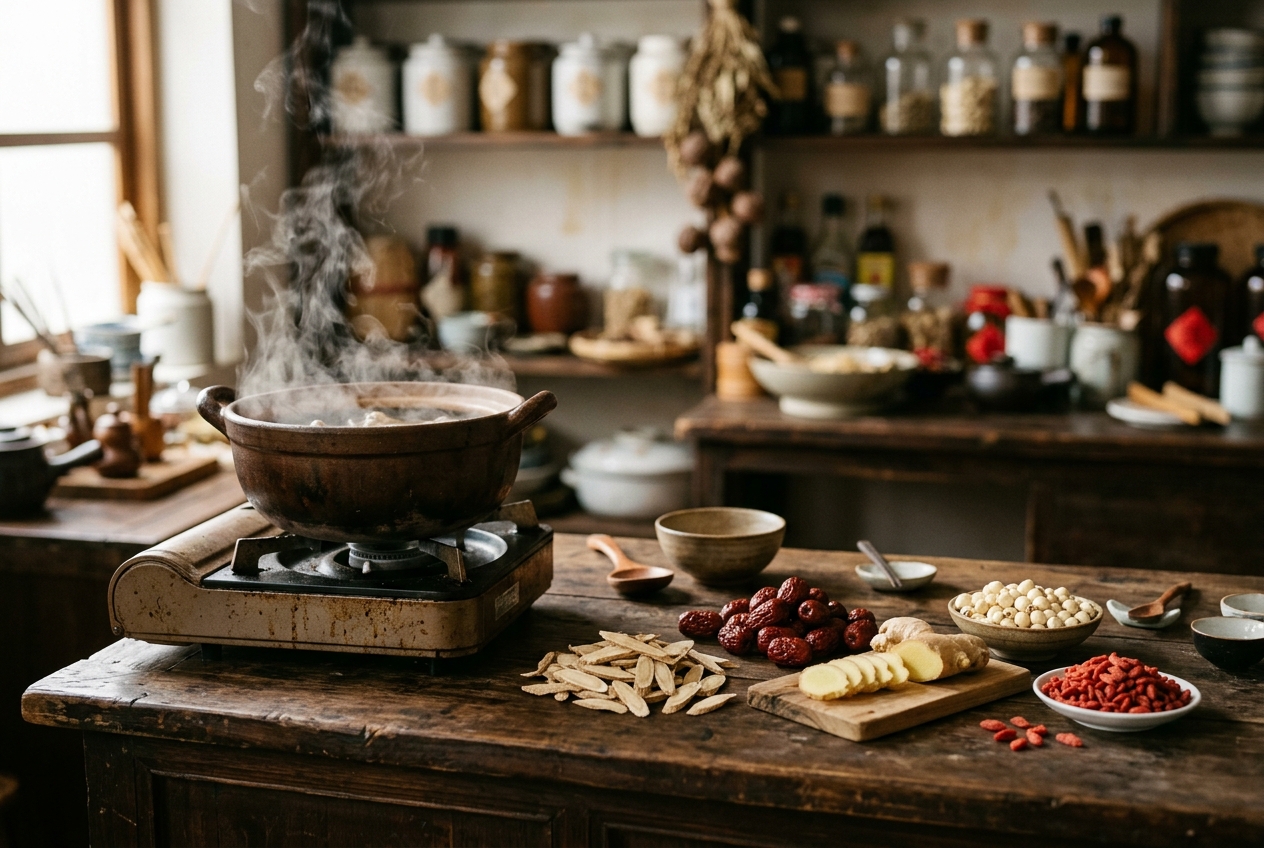
It is 2:30 in the afternoon. You have finished what seemed to be a virtuous desk-side lunch—perhaps a large bowl of raw kale, chilled quinoa, and iced sparkling water. Yet, rather than experiencing a surge of sustained productivity, your eyelids feel laden with lead. A distinct heaviness settles into your limbs, accompanied by an uncomfortable abdominal distension and a thick, fuzzy haze that clouds your cognitive faculties. You reach instinctively for a double espresso or a sugary confection, hoping to pierce the lethargy, only to find the fatigue deepening an hour later.
In modern Western vernacular, this postprandial crash is casually dismissed as an inevitable blood glucose spike or an inescapable consequence of the diurnal circadian dip. Within the sophisticated physiological framework of Traditional Chinese Medicine (TCM), however, this sensation serves as an immediate somatic distress signal. It indicates that the metabolic furnace of your Middle Burner (Zhōng Jiāo) has been abruptly smothered. Your Spleen and Stomach network—the biological and energetic axis responsible for transforming food into vitality—is struggling under an excessive burden of thermal cold and energetic stagnation. What you are experiencing is not a failure of will or a simple caloric mismatch, but a profound breakdown in the bioenergetic alchemy of digestion.
2. What This Organ System Does: The Alchemical Engine of Post-Heaven Essence
To understand the mechanics of digestion through the lens of classical East Asian medicine, one must abandon the purely mechanical concept of the stomach as a passive chemical vat. Instead, TCM conceptualises the digestive core—designated primarily as the paired Zang-Fu organ systems of the Spleen (Pí, 脾) and Stomach (Wèi, 胃)—as an active alchemical cauldron.
The seminal medical canon, the Huangdi Neijing (The Yellow Emperor's Inner Classic), states in the Suwen (Basic Questions) that the Stomach serves as the "Sea of Water and Grain" (Shuǐ Gǔ Zhī Hǎi). Its primary functional mandate is "rotting and ripening" (Fǔ Shú)—a physiological description of the enzymatic, thermal, and mechanical breakdown of ingested substrates. The Stomach represents the Yang, descending dynamic of the Middle Burner; its Qi must flow downward to propel metabolic waste toward the intestines.
Conversely, the Spleen represents the Yin, ascending dynamic. It is tasked with the governing principle of Yùn Huà (运化)—the meticulous "Transformation and Transportation" of nutrients. The Spleen extracts the subtle, refined energetic essence of food, known as Grain Qi (Gǔ Qì, 谷气), alongside essential Body Fluids (Jīn Yè, 津液).
In classical physiology, Gu Qi is not merely an abstract concept; it is the raw biological substrate synthesized from diet. Once extracted by the Spleen, Gu Qi is propelled upward (Qīng Qì Shàng Xíng) to the Chest (Dān Tián), where it converges with the clear air (Qīng Qì) inhaled by the Lungs to form Gathering Qi (Zōng Qì). This is subsequently catalyzed by Heart Fire to generate systemic Blood (Xuè) and True Qi (Zhēn Qì).
+-------------------------------------------------------------------------+
|                  THE DOCTRINE OF POST-HEAVEN ESSENCE                    |
+-------------------------------------------------------------------------+
| While Pre-Heaven Essence (Xiān Tiān Zhī Jīng) is the fixed genetic      |
| inheritance bestowed by one's parents and stored in the Kidneys,        |
| Post-Heaven Essence (Hòu Tiān Zhī Jīng) is the dynamic, renewable energy|
| manufactured continuously by the Spleen and Stomach from food and fluid.|
| Daily metabolic vitality directly preserves the finite Pre-Heaven pool. |
+-------------------------------------------------------------------------+
This fundamental dynamic forms the bedrock of the ancient medical doctrine: "Medicine and Food Share the Same Origin" (Yào Shí Tóng Yuán, 药食同源). Systematized extensively by the 7th-century Tang Dynasty physician Sun Simiao in his masterwork Beiji Qian Jin Yao Fang (Prescriptions Worth a Thousand Gold Pieces), the dedicated chapter on Dietary Treatment (Shí Zhì, 食治) firmly asserts:
"A physician must first comprehend the etiology of a disease and ascertain which physical pathways have been breached. Treatment must commence initially with dietary therapy (Shí Liáo). Only when nutritional interventions fail should one resort to medicinal decoctions."
Sun Simiao recognized that the daily modulation of Gu Qi and Jin Ye via dietary therapy (Shí Liáo Fǎ) is the most sustainable method to nurture Post-Heaven Essence, support systemic immunological defense (governed by Defensive Qi, Wèi Qì), and avert organ decay without stressing the biological matrix with potent, toxic pharmacological agents.
3. How You Can Feel It: Signs of Balance and Imbalance
The functional health of the Spleen-Stomach axis is reflected throughout the entire body. Because the Spleen governs the flesh, dominates the four limbs, and manifests in the lips and mouth, its operational state is perceptible via accessible diagnostic signs.
The Balanced State (Harmony of the Middle Burner)
When Yun Hua functions optimally, metabolic conversion is seamless and silent. You experience: - A stable, predictable appetite without sharp cravings for refined carbohydrates. - Buoyant physical energy throughout the day, completely devoid of the postprandial slump. - Muscular tone that feels resilient and light; limbs that move effortlessly. - A clean, pink tongue body with a thin, translucent white coating. - Clear mental focus and an ability to digest not just food, but complex intellectual information without obsessive rumination (Sī, 思). - Well-formed, regular bowel movements occurring once or twice daily without urgency or straining.
The Imbalanced State: Clinical Syndromes
When the Spleen-Stomach axis falters, disharmonies manifest across three primary clinical patterns:
1. Spleen Qi Deficiency (Pí Qì Xū)
The transformative capacity diminishes. Food sits in the stomach like an inert mass. You experience immediate exhaustion after eating, persistent pale complexion, shallow breathing, mild abdominal distension relieved by gentle pressure or warmth, and chronic soft or loose stools containing undigested food remnants.
2. Internal Dampness and Turbidity (Nèi Shī)
If Spleen Qi remains depleted, the transport of Jin Ye falters, causing fluids to stagnate and transform into pathological "Dampness" (Shī). Somatically, this produces an unmistakable feeling of physical encumbrance—as though your head were tightly bound with a wet, heavy towel. Joints feel stiff and swollen; the tongue appears enlarged, displaying prominent scalloped tooth marks (Chǐ Hén) along its lateral margins, coated in a thick, greasy white or yellow fur.
3. Stomach Heat and Food Stagnation (Wèi Rè / Shí Zhì)
Characterized by rebellious Stomach Qi flowing upward rather than downward. Symptoms include acid regurgitation, sour belching, halitosis, unquenchable thirst for ice-cold beverages, insatiable hunger paired with paradoxical post-meal discomfort, bleeding gums, and dry, hard stools.
4. Qigong & Movement Practice: Regulating the Middle Burner
To physically rehabilitate the Middle Burner, traditional Chinese medical practices utilize therapeutic movement systems that mechanically open the myofascial fascial planes corresponding to the Spleen and Stomach meridians. The most validated practice is the third movement of the classic Eight Pieces of Brocade (Bā Duàn Jǐn), titled "Regulating the Spleen and Stomach by Raising a Single Hand" (Tiáo Lǐ Pí Wèi Xū Dān Jǔ Shǒu).
Biomechanical Setup & Stance
- Starting Position: Stand upright with feet parallel and shoulder-width apart. Drop your tailbone slightly so the lumbar spine flattens naturally. Soften your knees. Relax your shoulders and suspend the crown of your head (Bǎi Huì) as if suspended by a silk thread from above.
- Hand Placement: Bring both hands in front of the lower abdomen (Dān Tián), palms facing upward, fingertips pointing toward one another as if lightly holding a sphere of warm energy.
Execution with Breath Synchronization
- Phase 1: Inhalation (Separating Heaven and Earth): Slowly inhale through the nose down into the lower abdomen. Turn your left palm upward and raise it smoothly along the midline of your torso, passing the chest. As it reaches eye level, rotate the wrist so the palm pushes directly upward toward the sky, fingers pointing to the right. Simultaneously, turn your right palm downward and press it firmly toward the earth beside your right hip, fingers pointing forward.
- Phase 2: The Pause (Gentle Isometric Extension): At the peak of inhalation, hold the breath for 1 to 2 seconds. Feel a distinct, gentle vertical stretch diagonally across your abdominal wall, expanding the left hypochondrium (opening the Spleen and Stomach fascial chains) while grounding through the right side. Do not lock the elbows; maintain a supple curve in both arms.
- Phase 3: Exhalation (Returning to the Center): Exhale smoothly through the nose. Allow the upper left arm to soften, descending along the midline, while the lower right hand curls upward, meeting again at the Dan Tian in the initial holding posture.
- Phase 4: Alternate: Inhale and repeat the motion symmetrically, pushing the right palm to the sky and pressing the left palm to the earth.
Dosage & Perceptual Shifts
- Duration: Perform 8 repetitions per side (16 total cycles), requiring approximately 5 to 7 minutes daily, preferably between 7:00 AM and 9:00 AM (during Stomach meridian peak hours).
- Internal Sensation: Look for a warm, pleasant radiating sensation throughout the epigastric region (Zhōng Wǎn), often accompanied by subtle stomach gurgling (borborygmi). This indicates parasympathetic autonomic engagement, the release of diaphragmatic tension, and the smooth resumption of peristaltic Yun Hua.
5. Acupressure Points You Can Try Today
Targeted stimulation of classical acupuncture points provides immediate, non-invasive regulation of Middle Burner digestive signaling and vagal tone.
1. Zusanli (足三里, ST-36) — "Leg Three Miles"
- Anatomical Location: Sit with your knees bent at a 90-degree angle. Place four fingers horizontally across your shin, starting directly below the bottom of the outer kneecap. ST-36 is located one finger-width lateral to the sharp anterior crest of the tibia bone, in the soft belly of the tibialis anterior muscle.
- Application Method: Apply firm, perpendicular, circular pressure using your thumb or the knuckle of your index finger. Maintain this for 2 to 3 minutes on each leg until a deep, dull, achy sensation (Dé Qì) radiates down the shin.
- Therapeutic Rationale: ST-36 is the He-Sea (Hé Xué) and Earth point of the Stomach Channel. Stimulating ST-36 is clinically shown to upregulate gastric motility, modulate systemic inflammation, and increase Gu Qi synthesis. Peer-reviewed research cataloged on NCBI PubMed highlights the neurovascular and vagal-modulating effects of ST-36 stimulation.
2. Zhongwan (中脘, CV-12 / RN-12) — "Middle Epigastrium"
- Anatomical Location: Lie flat on your back. Locate the midline of your abdomen halfway between the base of your breastbone (xiphoid process) and the center of your umbilicus (belly button)—approximately 4 thumb-widths above the navel.
- Application Method: Using the pads of your middle and index fingers pressed together, apply gentle, rhythmic circular kneading into this point. Never press aggressively. Maintain for 2 minutes while practicing slow, diaphragmatic breathing.
- Therapeutic Rationale: As the Front-Mu (Mù Xué) alarm point of the Stomach and the Hui-Meeting point of the Fu organs, CV-12 directly balances the Middle Burner. It rapidly alleviates acute epigastric fullness, acid regurgitation, and nervous stomach tension caused by acute stress.
3. Sanyinjiao (三阴交, SP-6) — "Three Yin Intersection"
- Anatomical Location: Place four fingers flat against the inside of your lower leg, starting with the pinky finger resting on the highest prominence of your inner ankle bone (medial malleolus). SP-6 lies directly above the four fingers, along the posterior border of the tibia bone.
- Application Method: Press with your thumb angled slightly toward the rear edge of the bone with steady, moderate pressure for 1 to 2 minutes per side.
- Therapeutic Rationale: This is the convergence point where the Spleen, Liver, and Kidney channels intersect. It resolves dampness, enriches systemic Yin, and calms emotional anxiety that disrupts digestion. (Contraindication: Do not stimulate firmly during pregnancy).
6. Food & Lifestyle: Dietary Therapy, Thermal Dynamics & Modern Biochemistry
Traditional Chinese Dietary Therapy (Shí Liáo Fǎ) is not a restrictive dietary dogma, but an individualized system of metabolic optimization. It evaluates foods according to their energetic parameters: Four Natures, Five Flavors, and Channel Tropisms.
The Matrix of Thermal Natures (Sì Qì) and Five Flavors (Wǔ Wèi)
1. The Four Natures (Sì Qì, 四气)
Foods range across a thermal spectrum: Cold (Hán), Cool (Liáng), Neutral (Píng), Warm (Wēn), and Hot (Rè). - Individuals presenting with Spleen Qi deficiency or dampness require Warm and Neutral foods to nourish the metabolic fire. - Cold and raw foods extinguish digestive enzymes (Middle Burner Agni / Spleen Yang), demanding excessive energy simply to warm the bolus to core body temperature (37°C).
2. The Five Flavors (Wǔ Wèi, 五味) and Channel Tropisms (Guī Jīng, 归经)
Each flavor exerts a directional vector and targets specific organ systems:
| Flavor | Directional Dynamic | Target Organ System (Gui Jing) | Action & Optimal Sources |
|---|---|---|---|
| Pungent (Xīn) | Ascending & Dispersing | Lung & Large Intestine | Promotes Qi circulation, clears cold (e.g., fresh ginger, scallions, black pepper). |
| Sweet (Gān) | Tonifying, Harmonizing, Centering | Spleen & Stomach | Strengthens Gu Qi, calms urgency (e.g., Chinese yam, pumpkin, sweet potatoes, whole grains). |
| Sour (Suān) | Astringent & Consolidating | Liver & Gallbladder | Prevents leakage of fluids, regulates bile (e.g., hawthorn berries, fermented vinegar, lemons). |
| Bitter (Kǔ) | Descending & Drying | Heart & Small Intestine | Clears systemic heat, dries heavy dampness (e.g., dandelion greens, bitter melon, roasted barley). |
| Salty (Xián) | Softening & Sinking | Kidney & Bladder | Softens masses, lubricates bowels, enters deep essence (e.g., kelp, seaweed, sea salt). |
+-------------------------------------------------------------------------+
|                  DIRECTIONAL VECTORS OF METABOLISM                      |
+-------------------------------------------------------------------------+
| • Ascending (Shēng) & Floating (Fú): Light, pungent, and sweet foods    |
|   move energy upward and outward, counteracting organ prolapse/fatigue. |
| • Descending (Jiàng) & Sinking (Chén): Heavy, sour, bitter, and salty  |
|   foods direct Qi downward, clearing reflux, constipation, and agitation.|
+-------------------------------------------------------------------------+
Traditional Culinary Processing Methods (Pào Zhì Applied to Cooking)
The innate thermal nature of an ingredient is not static; it can be strategically modulated through traditional culinary processing techniques:
- Slow-Simmering & Congee (Zhōu, 粥): Cooking whole grains and medicinal roots with large ratios of water over low heat for several hours breaks down complex fiber matrices, rendering nutrients instantly bioavailable without demanding metabolic energy from a depleted Spleen.
- Steaming (Zhēng, 蒸): Maintains the neutral, fluid-generating (Jīn Yè) nature of foods, moistening internal dryness without generating heavy dampness.
- Roasting with Fresh Ginger Juice (Jiāng Zhì, 姜炙): Infuses cold herbs or vegetables with warming, anti-emetic properties, effectively mitigating their potential to cause stomach cramping.
- Stir-Frying with Yellow Rice Wine (Jiǔ Chǎo, 酒炒): Imparts ascending and dispersing vectors, invigorating peripheral Blood circulation and breaking stagnation.
Classical Therapeutic Recipes and Food-Herb Formulations
Formulation 1: Shan Yao and Lian Zi Congee (Shān Yào Lián Zǐ Zhōu)
- Target Condition: Chronic Spleen Qi deficiency, loose stools, post-meal brain fog, and fatigue.
- Ingredients: 30g fresh or dried Chinese Mountain Yam (Dioscorea polystachya / Shān Yào), 20g lotus seeds (Lián Zǐ, cored), 50g organic medium-grain white rice, 2 thin slices of fresh ginger root.
- Preparation: Simmer the ingredients in 1 liter of water over low heat for 90 minutes until the grains dissolve into a creamy porridge. Consume warm for breakfast.
- Clinical Rationale: Shan Yao acts as a premier Qi and Yin tonifying food-herb entering the Spleen and Lung channels, while Lian Zi astringes chronic fluid loss and steadies cardiac anxiety.
Formulation 2: Bai He and Yin Er Soup (Bǎi Hé Yín Ěr Tāng)
- Target Condition: Stomach and Lung Yin deficiency, dry hacking cough, nocturnal dry mouth, acid regurgitation, and restless sleep.
- Ingredients: 20g dried Lily Bulb (Bǎi Hé), 15g Tremella Snow Fungus (Tremella fuciformis / Yín Ěr), 5 dried Chinese red dates (Dà Zǎo).
- Preparation: Soak the Tremella until soft; tear into small florets. Simmer with Lily bulbs and dates in 1.2 liters of water for 2 hours until the liquid transforms into a rich, natural gelatinous broth.
- Clinical Rationale: Deeply hydrates the mucosal layers of the respiratory and gastrointestinal tracts, generating Jin Ye without generating pathological dampness.
Modern Biochemical and Physiological Parallels
Far from being superstitious relics of the pre-scientific era, the empirical mechanisms of Shi Liao Fa align with discoveries in gastrointestinal physiology, nutritional biochemistry, and neurobiology.
- Microbiome Fermentation and Short-Chain Fatty Acids (SCFAs): The complex polysaccharides found in classical TCM therapeutic foods (such as the beta-glucans in Yin Er and the resistant starches in Shan Yao) serve as direct prebiotic fuel for commensal microflora (Akkermansia muciniphila, Bifidobacteria, and Faecalibacterium prausnitzii). These microbes ferment these substrates into SCFAs (butyrate, acetate, propionate), which repair mucosal tight junctions, reduce colonic inflammation, and modulate glucose homeostasis. This physiological chain precisely mirrors the classical definition of Yun Hua and the generation of Gu Qi. Scientific analyses detailed in the National Center for Biotechnology Information (NCBI) PMC archive demonstrate how traditional Chinese dietary formulas modulate the gut microbiota composition.
- Gut-Brain Axis (GBA) and Enteric Neurotransmitters: In TCM, the Spleen houses the Intellect (Yì, 意); excessive intellectual worry damages Spleen Qi, while Spleen weakness triggers mental looping. Modern neuroscience recognizes that over 90% of systemic serotonin (5-HT) is synthesized in the gut by enterochromaffin cells. When gastrointestinal motility and mucosal integrity are compromised by inflammatory foods, afferent vagal signaling to the central limbic system is disrupted, driving neuroinflammation, brain fog, and chronic anxiety.
- Thermal Processing and Bioavailability: The classical prohibition against raw, cold foods (Shēng Lěng) aligns with thermal biophysics. Cooking denatures anti-nutritive plant agglutinins, hydrolyzes fibrous cellular walls, and releases bound polyphenolic flavonoids and carotenoids, significantly lowering the enzymatic and ATP expenditure required by the human brush border for nutrient absorption.
Dietary Contraindications (Shí Jìn, 食禁) & Chronobiological Guidelines
To safeguard the Middle Burner, adherence to constitutional contraindications (Shí Jìn) is vital:
Chronobiology: The Horary Cycle (Zǐ Wǔ Liú Zhù)
The Chinese Medicine internal clock allocates maximal bioenergetic circulation to specific organ systems in 2-hour increments: - 7:00 AM – 9:00 AM (Stomach Time - Chén Shí): Hydrochloric acid secretion and digestive fire reach their diurnal peak. Consume your most calorically dense, warm, and nutrient-rich meal during this window. - 9:00 AM – 11:00 AM (Spleen Time - Sì Shí): The Spleen actively converts this meal into Gu Qi. Ideal for focused mental work; avoid snacking during this window to prevent interrupting metabolic transformation. - 7:00 PM – 9:00 PM (Pericardium Time): Digestive capacity declines sharply. Heavy, late-night meals stagnate overnight, generating pathological heat, acid reflux, and toxic internal dampness.
For broader global applications of these integrative nutritional principles, explore the World Health Organization's Traditional, Complementary and Integrative Medicine framework.
7. Today's Takeaway
The single most transformative habit you can adopt today for your digestive fire requires no exotic supplements, specialized equipment, or expensive purchases: switch tomorrow morning from an iced, raw breakfast to a warm, cooked bowl of oatmeal or rice congee, and drink a cup of warm water steeped with two thin slices of fresh ginger. Sit down fully, step away from digital screens, take three deep diaphragmatic breaths before your first bite, and chew each mouthful thoroughly. By providing your Middle Burner with bioavailable warmth, ease of assimilation, and mindful presence, you instantly optimize your Yun Hua engine, ignite your Gu Qi, and build a lasting foundation of metabolic clarity and sustained vitality.