Daily Living Health Cultivation (Qi Ju Yang Sheng Fa) Daily Holistic Dynamics: Governing Sleep-Wake Chronobiology, Rest-Activity Equilibrium, Habitat Microclimate Adaptation, and Circadian Homeostasis in Traditional Chinese Medicine
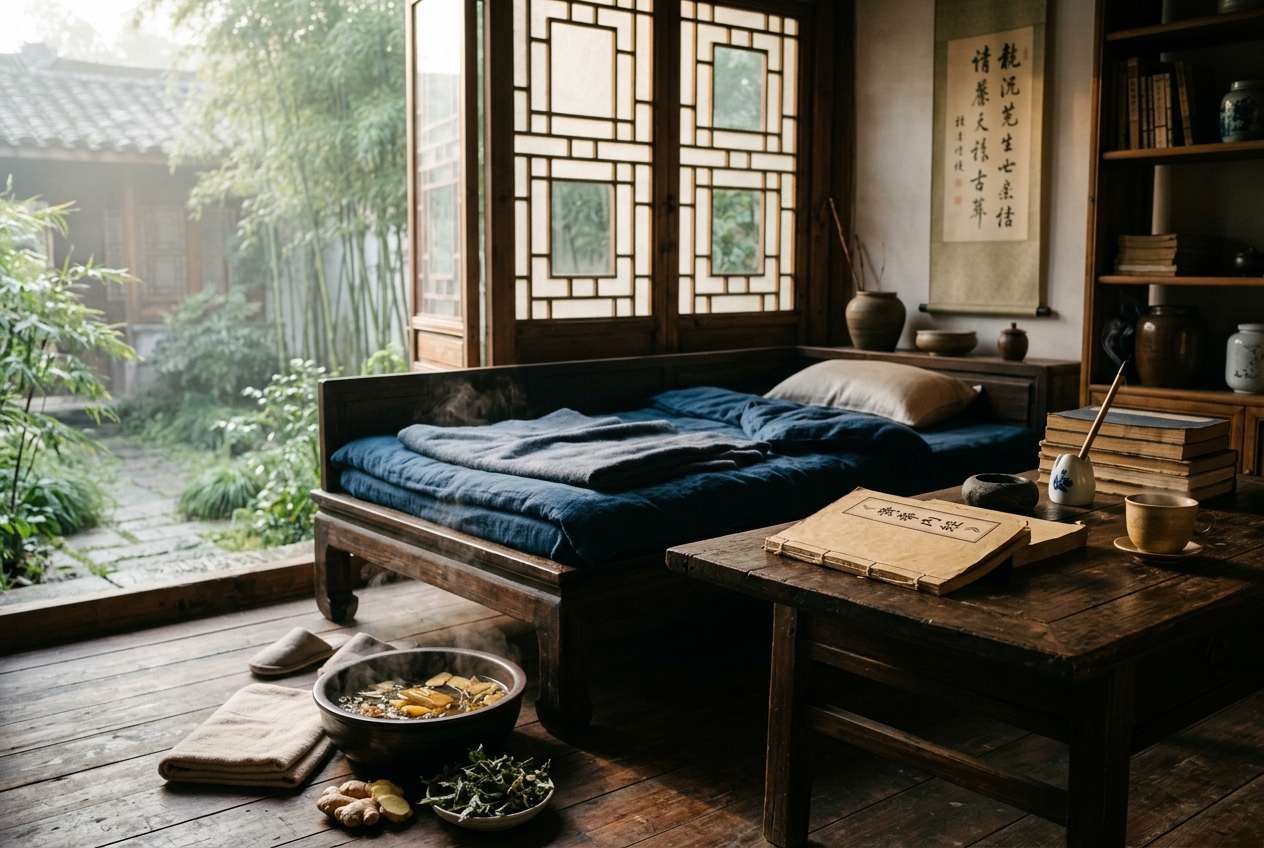
1. Opening Scene — A Moment You'll Recognise
It is 3:17 AM. You find yourself abruptly awake in the dark, your eyelids dry and heavy, yet your mind is racing with an unexpected, electrifying clarity. Your pulse beats with a faint, tense flutter in your throat. You review an unresolved email from yesterday afternoon, replay an awkward conversation, or mentally reorganize a schedule that is already overwhelmed. You are physically exhausted—your limbs feel anchored to the mattress by sheer gravity—yet sleep has evaporated completely.
When your alarm finally sounds at 7:00 AM, the alertness has vanished, replaced by a dense, unyielding brain fog, digestive sluggishness, and an overwhelming craving for dark roast coffee.
In the framework of Traditional Chinese medicine (TCM), this disorienting midnight awakening is neither an inexplicable quirk of chemistry nor a random malfunction of the nervous system. It represents a precise, predictable miscalibration in your daily chronobiological rhythm—known canonically as Qi Ju Yang Sheng Fa (起居养生法), or the Method of Nourishing Life through Daily Rising, Resting, and Habitation.
When your body jolts awake at 3:00 AM, it is broadcasting a distress signal from the Liver and Gallbladder organ networks, indicating that the internal tides of protective energy and restorative blood flow have encountered a bottleneck, leaving your mind (Shen) unanchored and adrift in the night.
2. What This Organ System Does: The Internal Clock and the Diurnal Tides of Qi
To understand why the body rises, tires, repairs, and wakes, classical Chinese medicine developed a rigorous model of physiological chronobiology. Far from viewing the human organism as an isolated biochemical engine that functions identically at any hour of the day, TCM views human physiology as an open, resonant system governed by the cosmic flux of Yin (receptive, cooling, consolidating, restorative) and Yang (active, warming, outward-moving, kinetic).
The seminal medical treatise, the Huangdi Neijing Suwen (The Yellow Emperor’s Classic of Internal Medicine), establishes this fundamental law in its opening chapter:
"The ancients who understood the Dao patterned their lives upon Yin and Yang, maintained harmony with numbers and seasons, practiced moderation in eating and drinking, and maintained regularity in rising and dwelling (qi ju you chang), avoiding reckless overexertion (bu wang zuo lao). Thus, their form and spirit were kept intact, and they lived out their natural span of a hundred years."
The Dynamic Migration of Defensive Qi (Wei Qi) and Nutritive Qi (Ying Qi)
At the heart of sleep-wake physiology lies the circulating dynamic of Defensive Qi (Wei Qi) and Nutritive Qi (Ying Qi). - Defensive Qi (Wei Qi): Think of Wei Qi as your body’s physiological defense and metabolic heat shield. It is fast-moving, dynamic, and protective. During the sixteen waking hours of daylight, Wei Qi courses exteriorly through the Yang channels (the Urinary Bladder, Small Intestine, Gallbladder, San Jiao, Stomach, and Large Intestine meridians), energizing the sensory orifices, warming the muscles, and sharpening external cognitive awareness. - Nutritive Qi (Ying Qi): At dusk, as environmental Yang declines, Wei Qi withdraws from the surface of the body. It dives inward, traveling through the Yin meridians into the internal Zang organs (Kidneys, Liver, Heart, Spleen, and Lungs) to coalesce with the deeper, nutrient-dense Ying Qi (the deep building blocks of blood and fluids).
When Wei Qi successfully enters the Yin interior, the eyes naturally close, muscle tension dissolves, core temperature drops, and the conscious spirit (Shen) settles peacefully into its somatic home within the Blood of the Heart and the Liver. If Wei Qi remains stuck on the exterior—due to late-night psychological stress, blue-spectrum light, or thermal exposure—the spirit remains agitated, resulting in insomnia, restless tossing, and shallow dream-disturbed sleep.
The Horary Clock (Zi-Wu Liu-Zhu) and Critical Nocturnal Windows
TCM maps this internal tide onto the Chinese Organ Clock (Zi-Wu Liu-Zhu), which assigns each of the twelve primary organ networks a two-hour window of peak metabolic and bioenergetic dominance:
| Double-Hour Window | Organ Network | Dominant Physiological & Metabolic Action |
|---|---|---|
| Zi Hour (23:00 – 01:00) | Gallbladder (Dan) | Peak Yin pivot; initiates the subtle return of embryonic Yang; clears biliary stasis and regulates neuro-affective decisiveness. |
| Chou Hour (01:00 – 03:00) | Liver (Gan) | Stores and filters the Blood (Gan Cang Xue); anchors the Ethereal Soul (Hun); facilitates biochemical detox and hepatic repair. |
| Yin Hour (03:00 – 05:00) | Lung (Fei) | Distributes freshly oxygenated Qi and fluids throughout the vascular tree; establishes the respiratory baseline for dawn. |
| Wu Hour (11:00 – 13:00) | Heart (Xin) | Peak Yang pivot (Wu Jiao); balances cardiovascular strain; requires mental stillness or a brief 15-minute restorative rest. |
The Zi Hour (11:00 PM to 1:00 AM) and Chou Hour (1:00 AM to 3:00 AM) represent the golden window of biological restoration. In TCM physiology, the Liver stores the Blood during rest (Gan Cang Xue). When the body lies horizontal in quiet darkness, blood recedes from the skeletal extremities back into the hepatic reservoir.
From a modern biological perspective, this classical observation aligns with the discovery of the glymphatic system, an astroglial-mediated waste clearance pathway that removes neurotoxic metabolic byproducts—such as amyloid-beta and tau proteins—from the interstitial space of the central nervous system during slow-wave, non-REM sleep.
Simultaneously, the neuroendocrine cascade orchestrated by the suprachiasmatic nucleus (SCN) downregulates diurnal cortisol production, upregulates pineal melatonin release, elevates parasympathetic vagal tone, and initiates cellular transcription governed by circadian clock genes (CLOCK, BMAL1, PER, CRY). When we remain awake past 11:00 PM, we mechanically block this hepatic pooling and glymphatic purge, generating internal friction known in TCM as Liver Fire or Deficiency Heat.
3. How You Can Feel It: Signs of Balance and Imbalance
The equilibrium of your daily living cultivation reveals itself continuously through your somatic baseline, emotional reactivity, and energy curve throughout the day.
The Five Canonical Exhaustions (Wu Lao)
In Chapter 23 of the Huangdi Neijing Suwen, the classical physicians cataloged the Five Taxations (Wu Lao), illustrating how physical imbalances in daily habits systematically injure the organ systems: 1. Prolonged Looking Damages the Blood (Jiu Shi Shang Xue): Excessive visual fixation (such as hours spent staring at backlit digital screens) exhausts the Liver Blood, causing ocular strain, dry eyes, blurred vision, floaters, and cognitive agitation. 2. Prolonged Lying Down Damages the Qi (Jiu Wo Shang Qi): Excessive, lethargic bed-rest without structured physical activity leads to stagnation of the Lung Qi and Spleen Qi, resulting in shallow breathing, physical heaviness, and paradoxical fatigue. 3. Prolonged Sitting Damages the Flesh (Jiu Zuo Shang Rou): Continuous sitting immobilizes the musculature and impairs the Spleen’s transformative function (Pi Zhu Yun Hua), causing metabolic sluggishness, postprandial brain fog, gastrointestinal bloating, and muscular atrophy. 4. Prolonged Standing Damages the Bones (Jiu Zhan Shang Gu): Prolonged, static standing taxes the structural integrity of the skeleton and depletes the Kidney Essence (Jing), manifesting as lumbar aching, knee weakness, and calcaneal pain. 5. Prolonged Walking Damages the Sinews (Jiu Xing Shang Jin): Excessive, uncalibrated physical exertion without adequate recovery strains the tendons, ligaments, and fascia, draining the Liver's capacity to moisten and nourish the connective tissue.
Diurnal Self-Assessment: Evaluating Your Circadian Vitality
Evaluate your current state of Qi Ju balance using the clinical indicators below:
| Physiological Domain | Indicators of Balanced Qi Ju (Harmonized Yin-Yang) | Indicators of Imbalance (Disrupted Clock / Lao Shang) |
|---|---|---|
| Morning Awakening (06:00–08:00) | Spontaneous awakening feeling alert; clear head; spontaneous bowel movement during Large Intestine time (05:00–07:00). | Waking groggy, heavy, or dry-mouthed; requiring multiple alarms and stimulants; sluggish morning peristalsis. |
| Midday Energy (11:00–14:00) | Stable, continuous mental focus; comfortable appetite; mild natural desire for a 10–15 min quiet pause (Wu Jiao). | Severe post-lunch crash; intense sugar/carb cravings; lightheadedness; digestive distension; cardiac palpitations. |
| Evening Transition (18:00–21:00) | Smooth somatic downregulation; progressive reduction in physical restlessness; emergence of natural drowsiness. | "Second wind" of nervous, anxious alertness; late-night appetite; compulsive screen-scrolling; emotional irritability. |
| Sleep Architecture (23:00–07:00) | Falling asleep within 15–20 minutes; uninterrupted sleep until dawn; vivid, non-threatening dreams that fade upon waking. | Waking predictably at 01:00–03:00 with mental loops; night sweats; hot feet; vivid, hyper-intense or anxious dreams. |
4. Qigong & Movement Practice: The Sunset Shen-Anchoring & Pivot Sequence
To transition the nervous system from daytime Yang sympathetic dominance to evening Yin parasympathetic restoration, classical Taoist health preservation employs somatic exercises that physically sink buoyant, hyperactive Qi (Fire) from the upper chest and head back down into the lower abdomen (Dantian) and the soles of the feet.
This sequence integrates traditional movements from the Ba Duan Jin (Eight Pieces of Brocade) with diaphragmatic downregulation protocols.
Step-by-Step Practice Guide
PRACTICE PROFILE:
• Target Window: 18:00 – 21:00 (Sunset / San Jiao & Kidney Hours)
• Posture: Standing Wuji or Seated Upright
• Duration: 8–10 Minutes
• Primary Action: Lowering Heart-Fire, Anchoring Liver-Yang
1. Setup and Alignment
- Stand with your feet parallel, hip-width apart, knees soft and unlocked. Alternatively, sit on the edge of a firm chair with your feet flat on the ground.
- Suspend the crown of your head (Baihui, GV-20) gently toward the ceiling as if suspended by a fine silk cord, allowing your chin to tuck slightly.
- Rest the tip of your tongue lightly on the upper palate just behind the front teeth, connecting the Conception (Ren) and Governing (Du) vessels.
- Rest your hands loosely over your lower abdomen (Xia Dantian), approximately two inches below your navel, right palm over left (for men) or left palm over right (for women).
2. Step-by-Step Movement Dynamics: "Sinking Fire into the Water Abyss"
- Inhalation (Gathering): Inhale slowly through your nose for a count of four. Simultaneously, float both hands outward and upward in a soft, sweeping circle until they reach chest height, turning the palms inward toward the Heart center (Tanzhong, CV-17). Feel the ribcage expand three-dimensionally without raising your shoulders.
- Exhalation (Descending): Exhale smoothly through your nose for a count of six. Rotate the palms to face downward toward the earth. Slowly press your hands downward along the midline of your torso, visualizing warm, golden light drawing tension, mental chatter, and excess heat away from your eyes and brain, guiding it down through the chest, past the solar plexus, and deep into the lower abdomen.
- The Rooting Pause: At the bottom of the exhalation, allow your hands to settle at your sides, knees bending a fraction of an inch deeper. Feel the physical weight of your body anchoring securely through the bubbling springs (Yongquan, KD-1) in the soles of your feet. Hold this gentle stillness for a two-count pause.
- Repetitions: Complete 12 continuous, uninterrupted cycles of this movement. Keep the tempo rhythmic, fluid, and unhurried.
3. Sensations to Look For
Within six to eight breath cycles, you should notice a spontaneous collection of saliva in your mouth (termed the "Golden Fluid" or Jin Jin Yu Ye, an immediate clinical biomarker of elevated parasympathetic vagal activity). Your shoulders will naturally drop, your breathing will settle into an abdominal rhythm, your hands and feet will warm up as peripheral vasodilation occurs, and internal mental chatter will decelerate.
5. Acupressure Points You Can Try Today
Targeted stimulation of classical acupressure points provides an effective, non-invasive method for recalibrating the autonomic nervous system and soothing hyperactive organ networks. Apply sustained, circular thumb pressure to these points for 90 to 120 seconds each. The pressure should be firm enough to elicit a distinct sensation of soreness, distension, or warmth (De Qi), but should never cause sharp pain.
Point 1: Yongquan (Kidney 1 / 涌泉 — "Gushing Spring")
- Anatomical Landmark: Located on the sole of the foot, in the distinct depression created when the foot is flexed, approximately one-third of the distance from the base of the second toe to the posterior heel.
- Biomechanical Action & Technique: Apply deep, steady pressure using your thumb, or rub the point vigorously with the palm of your hand until a deep sensation of heat permeates the sole. Work on both feet for 2 minutes each.
- Clinical Indications: The lowest point on the human body, Yongquan strongly pulls floating Yang and hyperactive Heart Fire downward. It is the premier point for treating midnight awakenings, racing thoughts, night sweats, hypertension, tinnitus, and unrooted anxiety.
Point 2: Shenmen (Heart 7 / 神门 — "Spirit Gate")
- Anatomical Landmark: Located on the palmar aspect of the wrist crease, on the radial side of the flexor carpi ulnaris tendon, in the depression directly inline with the little finger.
- Biomechanical Action & Technique: Support the back of your wrist with your fingers and press your thumb tip directly into the tendon groove. Apply a slow, kneading, circular motion while taking slow, deep abdominal breaths for 90 seconds per wrist.
- Clinical Indications: As the Yuan-Source point of the Heart channel, Shenmen nourishes Heart Blood and calms the Shen. It relieves acute emotional agitation, pre-sleep worry, palpitations, and sleep onset insomnia.
Point 3: Taichong (Liver 3 / 太冲 — "Great Surge")
- Anatomical Landmark: Located on the dorsum of the foot, in the hollow junction where the bones of the first and second toes meet (between the first and second metatarsals).
- Biomechanical Action & Technique: Slide your finger downward between your first two toe bones until it locks into the triangular depression. Angle your pressure slightly toward the ankle, pressing firmly for 2 minutes on each foot.
- Clinical Indications: Taichong is the primary point for smoothing stagnant Liver Qi, clearing internal heat, and relieving physical tension. It is particularly effective for those who wake up between 1:00 AM and 3:00 AM, grind their teeth at night, or experience chronic muscular stiffness in the neck and shoulders.
6. Food & Lifestyle: Small Changes for Today
Aligning your daily lifestyle with Qi Ju Yang Sheng Fa does not require extreme changes or rare herbal formulas. It relies on subtle, intentional adjustments to your domestic environment (Ju Chu), dietary choices, and evening habits.
1. Environmental Habitation (Ju Chu) & The Sleeping Lion Posture
The classical texts place immense emphasis on protecting the physical body from environmental pathogens during vulnerable sleep states:
- Draught Prevention (Feng Han): When Wei Qi retreats into the interior at night, your skin and interstitial pores (Cou Li) relax and open, leaving the superficial tissues vulnerable to invasion by exogenous Wind (Feng) and Cold (Han). Ensure that beds are positioned away from direct window draughts or direct air conditioning vents. Keep your neck (Fengchi, GB-20) and lower back (Mingmen, GV-4) lightly covered, even during warmer months.
- Optimal Sleep Posture: The Huangdi Neijing advocates the "Sleeping Lion Posture" (Wo Ru Gong / Right Lateral Decubitus). Lying on the right side with the spine gently curved and knees relaxed accomplishes three key physiological tasks: 1. It positions the heart higher in the chest cavity, reducing cardiac mechanical load. 2. It aligns with the natural curvature of the stomach, facilitating smooth downward gastric clearance through the pylorus into the duodenum (Wei Qi Xia Xing). 3. It allows blood to pool freely in the Liver without compressing the portal vein.
2. Evening Somatic Downregulation: The Herbal Foot Soak (Zu Yu)
One of the most effective daily rituals in traditional medicine is the evening warm foot bath, performed 30 to 45 minutes before sleep:
3. Chrono-Dietary Adjustments: What to Add and What to Reduce
The Suwen states plainly: "Stomach disharmony leads to restless sleep" (Wei Bu He Ze Wo Bu An). What, how, and when you eat directly determines the quality of your nocturnal rest.
What to Reduce or Avoid
- Late-Night Cold, Raw, and Greasy Meals: Salads, iced beverages, and heavy, fatty foods consumed after 19:00 tax the digestive fire of the Spleen (Pi Yang), creating food stagnation, damp-heat, and nocturnal gastric reflux that irritates the Shen.
- Excessive Pungent and Heating Spices at Dinner: Heavy doses of chili, garlic, and alcohol scatter the Qi outward, heating the Blood and preventing Wei Qi from diving inward into the Yin organs.
What to Add for Evening Nourishment
- Yin-Nourishing, Shen-Anchoring Porridges: A small, warm bowl of congee made with white rice, jujube dates (Da Zao), lotus seeds (Lian Zi), and a small handful of goji berries (Gou Qi Zi) nourishes Heart Blood and coats the digestive lining without overloading stomach capacity.
- Warm Infusions of Calming Herbs: Sip a light decoction of roasted sour jujube seeds (Suan Zao Ren), chamomile, or dried lily bulbs (Bai He) after dinner to moisten the Lungs, smooth the Liver, and promote restorative sleep.
7. Today's Takeaway
Authoritative References & Further Reading
- World Health Organization: Traditional, Complementary and Integrative Medicine — Global standards, clinical frameworks, and safety guidelines for traditional health systems.
- National Center for Biotechnology Information (NCBI) / StatPearls: Physiology, Circadian Rhythm — Detailed biomedical review of suprachiasmatic nucleus regulation, melatonin rhythms, and clock gene transcription cascades.
- Wikipedia: Huangdi Neijing (The Yellow Emperor's Classic of Medicine) — Academic overview of the foundational canonical text detailing Yin-Yang dynamics, the Five Taxations, and Qi Ju Yang Sheng Fa.
- Wikipedia: Glymphatic System — Neuroscience reference on the glial-dependent waste clearance pathway active during slow-wave sleep.
- Wikipedia: Traditional Chinese Medicine — Comprehensive encyclopedic compendium of Zang-Fu physiology, meridian theory, and chronobiological principles.