Ci Jiu Xin Fa Yao Jue: Navigating Wu Qian's Imperial Meridian Cartography, Rhymed Clinical Mnemonics, and Precision Acupressure Protocols
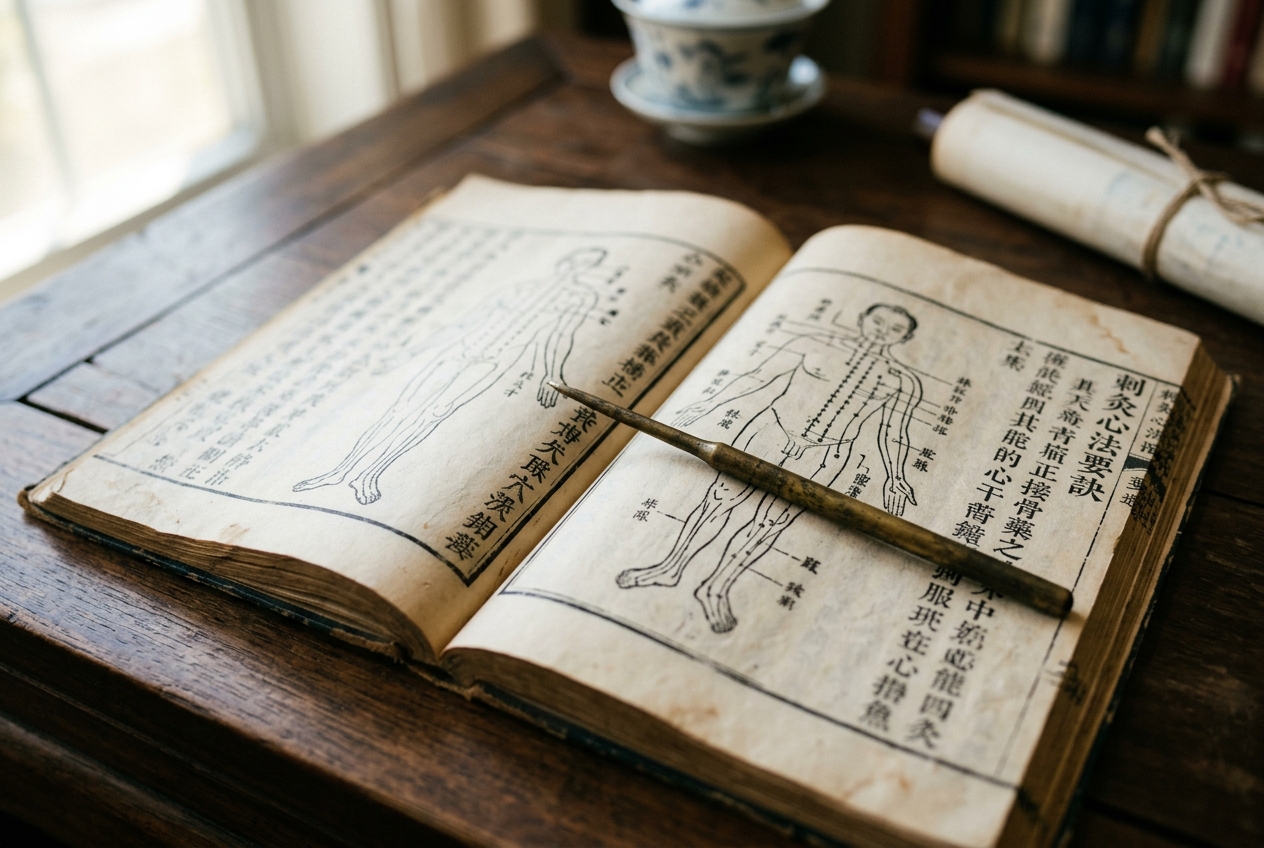
If you have ever experienced that pervasive, mid-afternoon wave of brain fog accompanied by a heavy tightness in the upper epigastrium, or noticed how a stressful email immediately tightens your jaw, constricts your breathing, and stalls your digestion, you are intimately acquainted with the physiological terrain mapped out nearly three centuries ago in Beijing. In our hyper-connected, chronically sympathetic-dominant world, these symptoms are often categorized under the broad umbrellas of functional dyspepsia, tension-type cephalalgia, or general dysautonomia. Modern individuals frequently find themselves caught in a cycle of physiological dysregulation where mental distress cascades directly into visceral discomfort. Long before the advent of functional magnetic resonance imaging or autonomic tone monitoring, the imperial physicians of the Qing Dynasty established a remarkably precise, reproducible cartography of the human body designed specifically to untangle these visceral-somatic knots.
In 1742, under the direct decree of the Qianlong Emperor, an imperial medical team led by the court physician Wu Qian compiled the monumental compendium known as the Yizong Jinjian (Golden Mirror of Medicine). Within this encyclopedic eighty-volume corpus sat its most pedagogically influential section: the Ci Jiu Xin Fa Yao Jue (Essential Rhymes and Techniques of Acupuncture and Moxibustion). This work was not merely a theoretical treatise; it was an imperial mandate for didactic clarity, designed to standardize the chaotic transmission of channel theory, eliminate anatomical ambiguities, and furnish medical students across the empire with an infallible clinical blueprint. Today, when viewed through the lenses of connective-tissue mechanotransduction, peripheral neuroanatomy, and autonomic neuromodulation, Wu Qian’s classical rhymed formulas emerge not as archaic mysticism, but as an extraordinarily sophisticated system of somatic biohacking.
+-----------------------------------------------------------------------------+
|                            HISTORICAL CONTEXT                               |
|                                                                             |
| Canon:           Ci Jiu Xin Fa Yao Jue (Essential Rhymes of Acupuncture)    |
| Lead Compiler:   Wu Qian (Imperial Medical Bureau)                          |
| Imperial Epoch:  Qing Dynasty, Qianlong Reign (Promulgated 1742)            |
| Compendium:      Yizong Jinjian (Golden Mirror of Medicine, Vol. 86–90)     |
| Core Purpose:    Standardization of Fourteen-Channel Cartography & Didactic |
|                  Mnemonic Transmission for Imperial Medical Examiners       |
+-----------------------------------------------------------------------------+
1. The Imperial Standard: Cartography and Rhymed Pedagogy
Prior to the mid-eighteenth century, the transmission of acupuncture and moxibustion across China suffered from geographic fragmentation, copyist errors, and divergent regional traditions. Recognizing that the empire required a uniform standard for clinical training and state licensing, the Qianlong Emperor ordered Wu Qian and dozens of eminent scholars to synthesize more than two millennia of clinical literature into a single canonical curriculum.
The resulting Ci Jiu Xin Fa Yao Jue accomplished three groundbreaking pedagogical feats:
- Fourteen-Channel Standardization: It resolved centuries of contradictory topographical accounts by codifying the precise anatomical pathways of the twelve primary channels alongside the Conception (Ren Mai) and Governing (Du Mai) vessels.
- Standardization of Bone-Proportional Measurements (Gu Du Cun): It fixed the relative spatial landmarks of the human frame, ensuring that a point’s location remained geometrically consistent regardless of a patient's height or somatotype.
- Mnemonic Compression Through Yao Jue (Song Rhymes): It converted vast matrices of clinical indications, needle insertion depths, contraindicated seasons, and point combinations into strict heptasyllabic (seven-character) verse.
                   THE PEDAGOGICAL TRIAD OF WU QIAN

                       [ Imperial Mandate ]
                                |
        +-----------------------+-----------------------+
        |                                               |
        v                                               v
[ Spatial Precision ]                         [ Mnemonic Encoding ]
• Bone-Proportional Cun (骨度法)              • Heptasyllabic Verses (歌诀)
• Interfascial Cleavage Planes                 • Syndromic Point Clustering
• Perivascular/Perineural Foci                • Depth & Thermal Dynamics
        |                                               |
        +-----------------------+-----------------------+
                                |
                                v
                   [ Standardized Clinical Action ]
                   Reproducible Somatic Regulation
The use of heptasyllabic poetry was not an aesthetic indulgence; it was a rigorous cognitive engineering strategy. In an era before digital reference databases, a practicing physician had to instantly retrieve complex neuro-topographical relationships at the bedside. The rhymes of the Ci Jiu Xin Fa Yao Jue rhythmically encoded the specific structural landmarks for palpation, the qualitative needle sensation to be achieved (Deqi), and the precise dynamic between tonification (Bu) and dispersion (Xie). By memorizing these verses, imperial scholars ingrained a tactile and spatial map directly into their procedural memory.
2. Fascial Planes and Neurobiology: The Modern Mechanism
To understand why these historical points exert such profound clinical effects, one must look past historical terminology to the underlying biophysical architecture. Contemporary research published in the National Center for Biotechnology Information (NCBI) confirms that classical acupuncture meridians correlate with high fidelity to planes of loose connective tissue, intermuscular septa, and neurovascular pathways.
When mechanostimulation—whether through an acupuncture needle or targeted non-invasive acupressure—is applied to an established acupuncture point locus, several concurrent physiological cascades are initiated:
                  BIOPHYSICAL MECHANISMS OF MECHANICAL STIMULATION

                     Mechanical Pressure / Deformation
                                         |
        +--------------------------------+--------------------------------+
        |                                                                 |
        v                                                                 v
[ Connective Tissue / Fascia ]                           [ Neuro-Receptive Pathways ]
• Fibroblast Cytoskeletal Remodeling                     • A-beta, A-delta & C-Fiber Activation
• Interstitial ATP & Adenosine Release                    • Somato-Visceral Spinal Reflexes
• Piezoelectric Mechanotransduction                      • Dorsal Horn Gate Control Modulation
        |                                                                 |
        +--------------------------------+--------------------------------+
                                         |
                                         v
                      [ Central Autonomic Integration ]
                      • Nucleus Tractus Solitarius (NTS)
                      • Vagal Parasympathetic Efferent Output
                      • Sympatho-Inhibition & Visceral Homeostasis
- Fascial Mechanotransduction: Research spearheaded by Dr. Helene Langevin and colleagues on connective tissue dynamics demonstrates that mechanical compression of acupoints deforms local interstitial fibroblasts. This mechanical shear stress triggers cytoskeletal remodeling, cellular purinergic signaling, and the sustained release of local adenosine, which acts as a potent endogenous antinociceptive and vasodilatory agent.
- Neural Pathway Recruitment: Acupoints are characterized by dense clusters of low-threshold mechanoreceptors (Merkel discs, Meissner's corpuscles, Ruffini endings) alongside myelinated A-beta and thinly myelinated A-delta fibers. Sustained, rhythmic pressure selectively recruits these afferent pathways, driving input into the dorsal horn of the spinal cord to inhibit nociceptive transmission via classic gate-control mechanisms.
- Autonomic Reflex Arc Stimulation: Signals ascending the spinothalamic and spinoreticular tracts interface with subcortical hubs, notably the periaqueductal gray (PAG), hypothalamus, and the Nucleus Tractus Solitarius (NTS). As demonstrated in recent trials on vagal regulation via somatosensory stimulation, activating specific peripheral loci triggers somato-autonomic reflex loops that suppress sympathetic outflow, reduce pro-inflammatory cytokines, and upregulate vagal-parasympathetic efferent output to thoracic and abdominal viscera.
3. The Meridian Pathway: A Somatic Journey Through the Body
To understand how individual loci interact, one must trace the pathways that connect them. In the didactic framework of the Ci Jiu Xin Fa Yao Jue, meridians are described as longitudinal conduits uniting the peripheral extremities, the axial skeleton, and the deep internal viscera.
Let us trace the Yangming (Stomach and Large Intestine) Axis—the primary systemic conduit for metabolic transformation, digestive transit, and somatic energy renewal.
THE YANGMING METABOLIC & SOMATIC AXIS
================================================================================
Upper Extremity (Large Intestine Conduit):
Radial Index Tip --> 1st/2nd Metacarpal Webbing (LI4) --> Radial Forearm
  --> Lateral Elbow Crease --> Anterior Deltoid --> Lateral Supraclavicular Fossa
                                |
                     [ Deep Internal Branching ]
                                |
Lower Extremity (Stomach Conduit):
Sub-Orbital Margin --> Angle of Jaw --> Supraclavicular Fossa --> Mammary Line
  --> Pararectalis Abdominal Margin --> Femoral Triangle --> Anterior Tibial Ridge (ST36)
  --> Dorsum of Foot --> Second Toe Lateral Nail Bed
================================================================================
The Upper Pathway: Radial Hand to Anterior Shoulder
Begin at the lateral tip of the index finger. The pathway runs along the edge of the bone on the index finger, crossing directly through the muscular web space between your thumb and forefinger. It continues up the outside edge of the forearm—tracing the top of the radial bone—passes across the lateral crease of the elbow when bent, ascends the outer front of the shoulder muscle, crosses the collarbone, and climbs the side of the neck to enter the lower jaw and opposite nostril.
The Lower Pathway: Sub-Orbital Margin to Dorsum of the Foot
Originating just below the pupil of the eye, this channel descends along the cheek, wraps around the jaw, and drops into the hollow above the collarbone. From here, an internal branch enters the stomach and intestines, while the superficial pathway travels down the chest line, runs parallel to the navel about two inches outward, passes through the crease of the groin, and travels down the front of the thigh. It passes over the outer edge of the kneecap and descends the muscular ridge on the outside of your shinbone—the muscle that bulges when you flex your foot upward—before crossing the top of the ankle and ending at the lateral corner of the second toe nail bed.
When you experience tension in your jaw, stiffness across the front of your shoulders, bloating after eating, or soreness down your shins after standing, you are feeling mechanical and neural stress along this continuous myofascial and neuro-functional track.
4. Five Foundational Loci from the Imperial Canon
The Ci Jiu Xin Fa Yao Jue identified specific anatomical epicenters along these channels where neural density and fascial connectivity converge. Below are five of the most potent loci codified by Wu Qian, detailed using both bone-proportional reference systems and palpable physical landmarks, complete with their modern neurobiological correlates. For authoritative coordinates, consult the World Health Organization (WHO) Standard Acupuncture Point Locations.
+-----------------------------------------------------------------------------------------+
|                                MASTER ACUPOINT MATRIX                                   |
+---------+--------------------+--------------------------------+-------------------------+
| Point   | Classical Name     | Somatic Landmark               | Primary Neuro-Mechanic  |
+---------+--------------------+--------------------------------+-------------------------+
| ST36    | Zusanli (足三里)   | Lateral tibial crest, 4-finger | Peroneal nerve; vagal-  |
|         | "Leg Three Miles"  | widths below knee hollow       | gastric reflex loop     |
| LI4     | Hegu (合谷)        | Webbing between 1st and 2nd    | Superficial radial      |
|         | "Joining Valleys"  | metacarpal bones               | nerve; trigeminal gate  |
| PC6     | Neiguan (内关)     | Palmar wrist, 3 finger-widths  | Median nerve trunk;     |
|         | "Inner Pass"       | proximal, between two tendons  | cardiopulmonary balance |
| SP6     | Sanyinjiao (三阴交)| 4 finger-widths superior to    | Tibial nerve; pelvic    |
|         | "Three Yin Jct"    | medial malleolus tip           | parasympathetic plexus  |
| LV3     | Taichong (太冲)    | Dorsal foot depression between | Deep peroneal nerve;    |
|         | "Great Surge"      | 1st and 2nd metatarsal bones   | central baroreflex tone |
+---------+--------------------+--------------------------------+-------------------------+
I. ST36 (Zusanli / 足三里) — "Leg Three Miles"
Anatomical Perspective:
       [ Patella ]
      /           \
  (Lat. Eyes of Knee)
          |
   ~3 inches (4 fingers)
          |
   [ ST36 Locus ] <--- 1 finger-width lateral to Tibial Crest
          |
   (Tibialis Anterior)
- Physical Landmark: Sit with your knees bent at a ninety-degree angle. Locate the soft, circular indentation on the outer edge of your kneecap (the lateral infrapatellar depression). Place the width of four fingers flat against your leg, starting just below that hollow. ST36 lies at that four-finger depth, precisely one thumb-width outward from the prominent ridge of your shinbone, settled within the belly of the tibialis anterior muscle.
- Tactile Sensation (Deqi): When properly engaged, you will not feel sharp cutaneous discomfort; rather, a deep, resonant ache, a spreading sensation of warmth, or a mild tingling running downward into the second and third toes.
- Vector and Biomechanics: Apply pressure with the pad of your thumb angled slightly inward toward the center of the shinbone.
- Dynamic Technique:
- Tonification (Bu): Maintain steady, deep, rhythmic circular pressure in a clockwise direction for two to three minutes. This stimulates local blood flow and increases parasympathetic motility.
- Clinical Indications: Profound physical fatigue, sluggish digestion, post-prandial distension, systemic inflammation, and lower-limb heaviness.
II. LI4 (Hegu / 合谷) — "Joining Valleys"
Dorsal Hand Perspective:
       [ Thumb ]         [ Index Finger ]
           \                 /
            \   [ LI4 ]     /
             \  (Webbing)  /
              \     |     /
               [ 1st & 2nd Metacarpals Junction ]
- Physical Landmark: Spread your thumb and index finger flat on a table. Look at the fleshy web space between them. Bring the thumb inward against the index finger; a small muscle mound will rise. Place your opposite thumb at the highest point of that muscular bulge. Relax your hand; the point sits in the deep valley just along the midpoint of the second metacarpal bone (the index finger's long bone).
- Tactile Sensation (Deqi): A distinct, spreading dull ache that often radiates proximally toward the wrist or distally along the index finger.
- Vector and Biomechanics: Direct the force not straight down into the web space, but obliquely underneath the second metacarpal bone.
- Dynamic Technique:
- Dispersion (Xie): Apply firm, oscillating pressure with rapid counter-clockwise rotations for 90 to 120 seconds to release acute muscular and neurological tension.
- Clinical Indications: Tension-type headaches, sinus congestion, dental and jaw clenching (bruxism), acute stress reactivity, and anterior neck stiffness.
III. PC6 (Neiguan / 内关) — "Inner Pass"
Palmar Wrist Perspective:
               [ Open Palm ]
                     |
       ----------------------------- (Wrist Flexor Crease)
                     |
            ~3 finger-widths
                     |
        Tendon - [ PC6 ] - Tendon
       (Flexor Carpi)     (Palmaris Longus)
- Physical Landmark: Turn your hand palm-up. Lay the three middle fingers of your opposite hand across your inner wrist, starting flush with the primary horizontal wrist crease. PC6 is located directly below the index finger of that measuring hand, precisely centered between the two prominent, rope-like tendons (the flexor carpi radialis and the palmaris longus) that pop up when you make a fist and curl your wrist inward.
- Tactile Sensation (Deqi): A localized pressure sensation that readily radiates into the palm, often accompanied by an immediate sensation of deeper, unrestricted diaphragmatic breathing.
- Vector and Biomechanics: Press straight down perpendicular to the arm, deep into the fascial groove between the tendons, avoiding scratching with the fingernail.
- Dynamic Technique: Apply uniform, pulsating pressure coordinated with deep respiration (inhale 4 seconds, exhale 6 seconds) for two continuous minutes.
- Clinical Indications: Motion sickness, post-prandial nausea, acute anxiety, subjective heart palpitations, tight chest sensations, and sleep-onset insomnia.
IV. SP6 (Sanyinjiao / 三阴交) — "Three Yin Intersection"
Medial Ankle Perspective:
             (Tibia Shaft)
                   |
            ~4 finger-widths
                   |
             [ SP6 Locus ] <--- Posterior to Medial Tibial Border
                   |
                   |
          [ Medial Malleolus ] (Inner Ankle Bone)
- Physical Landmark: Place the inner side of your ankle flat. Locate the highest tip of your prominent inner ankle bone (the medial malleolus). Lay four fingers horizontally across your leg, starting just above this bony peak. SP6 lies immediately behind the back edge of the shinbone at the level of your fourth finger.
- Tactile Sensation (Deqi): Highly tender in individuals with chronic fatigue or endocrine/pelvic congestion; generates an unmistakable, dull, aching sensation that travels up the inner calf.
- Vector and Biomechanics: Hook the thumb pad around the back border of the tibia, pressing from back-to-front against the posterior bone margin rather than pushing directly into the bone surface.
- Dynamic Technique: Employ gentle, circular tonification strokes for two minutes per limb, maintaining a moderate, non-bruising pressure depth.
- Clinical Indications: Lower abdominal cramping, menstrual discomfort, restless leg sensations, nocturnal overheating, and visceral pelvic floor tension.
V. LV3 (Taichong / 太冲) — "Great Surge"
Dorsal Foot Perspective:
     [ Big Toe ]        [ Second Toe ]
          \                  /
           \    (Valley)    /
            \       |      /
             \  [ LV3 ]   /
              \     |    /
       [ Junction of 1st & 2nd Metatarsals ]
- Physical Landmark: Run your finger backward from the web space between your big toe and second toe, sliding up along the top of your foot. Your finger will trace the narrow groove between the two long bones (the first and second metatarsals) until it drops into a distinct, sensitive depression just before the bones converge into a "V" shape.
- Tactile Sensation (Deqi): A sharp, tender, electric or deeply soothing ache that can radiate across the arch of the foot.
- Vector and Biomechanics: Angle your thumb pad slightly backward toward the ankle joint, pressing deep into the interosseous hollow.
- Dynamic Technique: Combined with LI4 to form the classical "Four Gates" (Si Guan); apply dynamic sweeping pressure backward toward the ankle for two minutes on each foot.
- Clinical Indications: Irritability, stress-induced hypertension, eye strain from visual screens, tight temporal headaches, and muscular spasms.
5. Clinical Protocol: The Evening Neuro-Somatic Reset
When mental overwork, digestive stasis, and systemic sympathetic arousal accumulate over a long working day, the Ci Jiu Xin Fa Yao Jue recommends harmonizing the central axis by synchronizing distal points. Below is a structured, five-step restorative protocol combining Wu Qian’s point matrices with contemporary respiratory neurobiology.
THE 10-MINUTE EVENING AUTONOMIC RESET PROTOCOL
================================================================================
Phase 1: Clear Cephalic Tension (2 Minutes)
  Locus: LI4 (Hegu) bilateral
  Pacing: 60 seconds per side | Dynamic dispersion | Rapid circular oscillations

Phase 2: Regulate Diaphragm & Vagal Axis (3 Minutes)
  Locus: PC6 (Neiguan) bilateral
  Pacing: 90 seconds per side | Synchronized diaphragmatic breathing (4s in, 6s out)

Phase 3: Drain Autonomic Heat & Cortisol (3 Minutes)
  Locus: LV3 (Taichong) bilateral
  Pacing: 90 seconds per side | Sustained downward vector toward ankle

Phase 4: Tonify Metabolic Clearance (2 Minutes)
  Locus: ST36 (Zusanli) bilateral
  Pacing: 60 seconds per side | Deep rhythmic clockwise circular hold

Environment: Supine or semi-reclined posture | Ambient light <50 lux | No digital screens
================================================================================
Execution Steps
- Preparation: Lie comfortably on your back with your head slightly elevated and a pillow placed under your knees to relax the abdominal wall. Ensure your jaw is unclenched and your tongue rests gently against the roof of your mouth behind your front teeth.
- Clear the Upper Sensory Poles (LI4): Spend 60 seconds firmly working LI4 on the left hand using small circular motions, then repeat on the right hand. Feel the tension in your temples and jaw begin to release.
- Calm the Cardiac and Epigastric Center (PC6): Move to PC6 on your left wrist. Apply steady, moderate compression while practicing extended exhalations (inhale smoothly through the nose for 4 seconds, exhale through the mouth for 6 seconds). Maintain for 90 seconds, then alternate to the right arm.
- Disperse Lower Extremity Tension (LV3): Reach down to your feet. Apply sustained pressure into LV3 on both feet simultaneously using your thumbs, directing the force toward your ankles for 90 seconds. This completes the celebrated "Four Gates" configuration (LI4 + LV3), which clinical trials show rapidly reduces elevated blood pressure and systemic vascular resistance.
- Harmonize and Ground (ST36): Finish by resting your hands on your shins and applying steady, warm, clockwise circular compression to ST36 on both legs for 60 seconds. Notice the sensation of warmth settling into the lower abdomen and the gradual onset of digestive gurgling (borborygmus)—a direct clinical sign of parasympathetic reactivation.
6. Safety, Biomechanical Limits, and Clinical Boundaries
While acupressure offers a non-invasive, safe therapeutic modality, it requires anatomical understanding and adherence to basic clinical safeguards.
+-----------------------------------------------------------------------------+
|                         CRITICAL SAFETY GUIDELINES                          |
|                                                                             |
| [!] ABSOLUTE PREGNANCY CONTRAINDICATIONS:                                   |
|     • LI4 (Hegu) & SP6 (Sanyinjiao) MUST BE AVOIDED during all trimesters   |
|       due to proven oxytocinergic and uterine-contractile reflex pathways.   |
|                                                                             |
| [!] PRESSURE THRESHOLDS:                                                    |
|     • Never exceed patient comfort: pressure should evoke a therapeutic,    |
|       dull ache (Deqi), NEVER sharp, stabbing, or bruising pain.           |
|                                                                             |
| [!] DERMATOLOGICAL & VASCULAR LIMITS:                                       |
|     • Do not press over open wounds, varicose veins, acute phlebitis, or    |
|       localized skin infections.                                            |
|                                                                             |
| [!] CLINICAL TRIAGE:                                                        |
|     • Acupressure is an adjunctive regulatory practice. Severe, acute, or   |
|       unexplained systemic symptoms (e.g., crushing chest pressure, sudden  |
|       neurological deficits, uncontrolled bleeding) require immediate       |
|       emergency medical evaluation.                                         |
+-----------------------------------------------------------------------------+
Gestational Precautions
The Ci Jiu Xin Fa Yao Jue explicitly designates specific points as contraindicated during pregnancy (Ren Fu Jin Zhen). Modern neuro-endocrinological studies confirm that aggressive mechanostimulation of LI4 (Hegu) and SP6 (Sanyinjiao) triggers descending neurohormonal reflexes that increase oxytocin release and stimulate uterine myometrial activity. These points must be avoided by pregnant individuals unless they are in an active clinical setting under licensed obstetrical supervision.
Pressure Modulation and Tissue Integrity
Acupressure should never leave deep cutaneous bruising or sharp, burning pain. Stabbing pain indicates direct mechanical compression of an unyielding bony periosteum or a superficial nerve trunk. The correct target is always the interfascial or intramuscular space; the feeling should be deep, full, and grounding (Deqi), which subsides naturally within minutes of releasing the hold.
When to Seek Professional Consultation
Self-administered acupressure is designed for daily functional maintenance, stress reduction, and minor somatic complaints. It is not a substitute for diagnostic medicine. If you experience crushing substernal chest pressure, sudden severe headaches unlike anything previously felt, progressive motor weakness, unexplained weight loss, or persistent acute abdominal pain, bypass self-care and seek emergency medical evaluation immediately. For complex internal or structural conditions, consult a licensed acupuncturist or integrative medical physician.
7. Today’s Takeaway: The Two-Minute Desk Reset
You do not need an entire clinic or an hour of free time to benefit from the insights of the Ci Jiu Xin Fa Yao Jue. You can perform this quick intervention right at your desk to release screen-induced strain and mental fatigue:
+-----------------------------------------------------------------------------+
|                   THE 120-SECOND SOMATIC DESK PROTOCOL                      |
|                                                                             |
| Target:          LI4 (Hegu) - Webbing of the Non-Dominant Hand              |
| Duration:        2 Minutes Continuous                                       |
| Vector:          Under the second metacarpal bone toward the index finger   |
| Mechanical Rate: 1 Hz rhythmic circular massage with opposite thumb pad     |
| Respiration:     4-second nasal inhale, 6-second unforced oral exhale       |
| Direct Result:   Trigeminal nucleus down-regulation, reduction of temporal  |
|                  trapezius tone, and immediate clearing of ocular strain    |
+-----------------------------------------------------------------------------+
- Drop your non-dominant hand into your lap. Relax the fingers completely.
- Pinch the muscle space between your thumb and index finger using the thumb and index finger of your opposite hand.
- Slide your thumb pad underneath the long bone of your index finger until you locate that distinctly tender, aching "sweet spot" (LI4).
- Apply firm, circular pressure while closing your eyes and slowing your breathing down to six deep breaths per minute.
- After sixty seconds, pause, take one deep breath, switch to the other hand for sixty seconds, and notice the clarity returning to your vision, the drop in your shoulders, and the renewed ease throughout your breath.
By engaging these precise anatomical points, you are participating in a living clinical lineage that stretches from the imperial halls of the Qianlong Emperor directly into modern integrative medicine—translating ancient didactic rhymes into actionable, science-aligned somatic health.
Authoritative References & Further Reading
- Golden Mirror of Medicine (Yizong Jinjian) Historical Overview — Wikipedia
- WHO Standard Acupuncture Point Locations in the Western Pacific Region — World Health Organization
- Neurobiological Mechanisms of Acupuncture and Mechanotransduction — NCBI PubMed
- Fascia and Connective Tissue Dynamics in Somatosensory Stimulation — NCBI PMC
- Vagal Regulation and Autonomic Neuromodulation via Somatosensory Loci — PubMed
- Classical Meridian Points and Biophysical Mapping — Wikipedia