Acupoint Catgut Embedding Techniques (Xue Wei Mai Xian Fa) Meridian Dynamics: Governing Subcutaneous Biodegradable Filament Implantation, Prolonged Acupoint Stimulation, Neuro-Immune Cascade Modulation, and Chronic Metabolic Homeostasis in Traditional Chinese Medicine
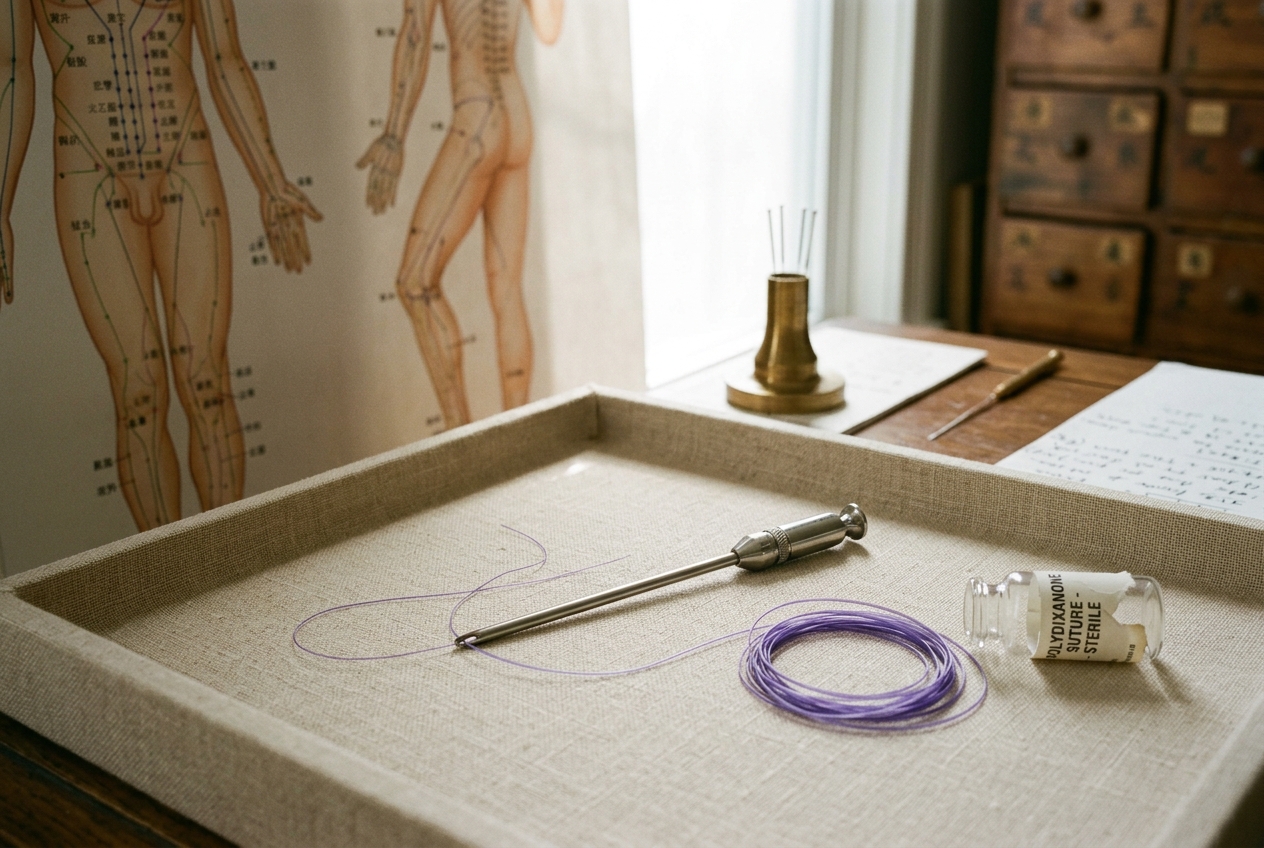
You sit at your desk at two in the afternoon, overwhelmed by a heavy, immovable exhaustion. Your limbs feel leaden, your midsection is distended with uncomfortable postprandial bloating, and your mental clarity has evaporated into a thick, cognitive fog. Despite normal routine blood tests, your metabolic vitality feels chronically depressed, and standard dietary adjustments provide only fleeting relief. In the diagnostic framework of Traditional Chinese Medicine (TCM), this constellation of lethargy, digestive stagnation, and central heaviness represents a systemic decompensation of the Spleen (Pi) and Stomach (Wei) networks—the functional architects of nutrient transformation, fluid transport, and metabolic distribution.
+-----------------------------------------------------------------------------------+
| CLINICAL PARADIGM: FROM TRANSIENT TO PROLONGED THERAPEUTIC STIMULATION            |
|                                                                                   |
| Standard Filiform Needling:                                                       |
| [ Needle Insertion ] -> [ Transient Deqi (20-30 min) ] -> [ Rapid Signal Decay ]  |
|                                                                                   |
| Acupoint Catgut / Biopolymer Embedding (Xue Wei Mai Xian Fa):                    |
| [ Biodegradable Thread ] -> [ Continuous Aseptic Stimulus ] -> [ Sustained Wave ] |
| (Tissue Remodelling, Macrophage Shift, Autonomic Reset over 14-28 Days)           |
+-----------------------------------------------------------------------------------+
For centuries, practitioners corrected these deep-seated visceral imbalances using traditional acupuncture. Yet, standard clinical needling faces an inherent physiological constraint: the physical needle must be withdrawn after twenty to thirty minutes, causing the generated therapeutic signal to decay over subsequent days. To bridge this therapeutic gap, modern integrative medicine has refined Xue Wei Mai Xian Fa (Acupoint Catgut Embedding Therapy)—a micro-invasive intervention where sterile, absorbable biopolymer filaments are implanted into targeted acupoints. This technique converts the transient deqi (the characteristic dull, radiating sensation of needle activation) into a continuous, self-sustaining biological and immunological dialogue that endures for up to a month.
2. What This System Does: The Physiological & Theoretical Architecture
In classical Chinese medical physiology, the visceral organ systems operate not as isolated anatomical structures, but as interdependent energetic and metabolic circuits known as the Zang-Fu. The Spleen (Pi) governs the extraction of Gu Qi (food essence) and the dynamic transformation and transportation (Yun Hua) of fluids. When functioning optimally, it ascends clear metabolic energy to nourish the brain and musculature while directing waste downward through the Stomach (Wei) and Intestines. When this axis falters, metabolic breakdown products stagnate, transforming into pathological "Dampness" (Shi) and "Phlegm" (Tan)—manifesting clinically as central adiposity, insulin resistance, chronic gastrointestinal dysfunction, and systemic malaise.
+-----------------------------------------------------------------------------------+
| TRI-PHASIC BIOLOGICAL CASCADE OF ACUPOINT EMBEDDING                               |
|                                                                                   |
| Phase 1: Mechanical Inception (Days 1–3)                                          |
| -> Trocar penetration triggers focal micro-trauma and mast cell degranulation.    |
| -> Sustained somatosensory discharge via A-delta and C afferent fibres.           |
|                                                                                   |
| Phase 2: Immunological Amplification (Days 4–14)                                  |
| -> Controlled aseptic foreign-body response and macrophage infiltration.          |
| -> Phenotypic transition from pro-inflammatory M1 to reparative M2 macrophages.  |
| -> VEGF secretion and focal microvascular angiogenesis.                           |
|                                                                                   |
| Phase 3: Hydrolytic Absorption & Remodelling (Days 15–28)                         |
| -> Biopolymer ester bond cleavage via non-enzymatic cellular hydrolysis.          |
| -> Sustained neuro-endocrine modulation of HPA axis and autonomic homeostasis.   |
+-----------------------------------------------------------------------------------+
Acupoint Catgut Embedding represents an evolutionary leap in acupuncture therapeutics. Developed in China during the 1960s and refined through contemporary biomaterial science, the therapy utilizes a specialized trocar needle to insert a 1–2 cm strand of absorbable suture material directly into specific depths of the acupoint complex. The implanted biopolymer serves as an enduring mechanical and biochemical focus, providing continuous stimulation throughout its hydrolytic degradation cycle.
Modern biomedical research indexed in the National Center for Biotechnology Information (NCBI PubMed) demonstrates that this sustained stimulation operates via distinct, synergistic pathways:
-
Controlled Aseptic Inflammation and Macrophage Polarization:
The implanted thread initiates a mild, controlled, non-infectious cellular immune response. Resident macrophages and dendritic cells engulf the biomaterial surface, releasing chemotactic factors that stimulate local tissue remodeling. Crucially, the microenvironment transitions from a transient pro-inflammatory M1 macrophage phenotype to an anti-inflammatory, regenerative M2 phenotype, clearing local metabolic stagnation and down-regulating systemic inflammatory cytokines (such as TNF-$\alpha$, IL-1$\beta$, and IL-6). -
Microvascular Angiogenesis and Local Perfusion:
The persistent presence of the suture upregulates Vascular Endothelial Growth Factor (VEGF) and basic Fibroblast Growth Factor (bFGF). This induces localized neo-capillarization within the dense connective tissue sheets and neurovascular bundles of the acupoint, sustaining increased regional oxygenation, nutrient supply, and cellular waste clearance. -
Prolonged Somatosensory Afferent Signaling:
While standard needles elicit transient mechanoreceptor activation, an embedded biopolymer maintains mechanical tension on surrounding myofascial collagen networks. This generates prolonged, low-frequency somatosensory afferent volleys along myelinated A-$\delta$ and unmyelinated C nerve fibers. -
Central Neuro-Endocrine and HPA Axis Modulation:
These persistent afferent signals project to the spinal dorsal horn, ascending via the spinothalamic tract to the solitary tract nucleus, parabrachial nucleus, and hypothalamus. This modulates the Hypothalamic-Pituitary-Adrenal (HPA) axis and resets autonomic tone—suppressing overactive sympathetic outflows while enhancing vagal, parasympathetic efferent activity to restore visceral motility and metabolic equilibrium.
3. How You Can Feel It: Signs of Balance and Imbalance
The state of your visceral networks, particularly the digestive Spleen-Stomach axis and the metabolic Liver-Kidney matrix, reflects directly in your daily physical and cognitive vitality. When these systems are harmonized, energy production is efficient, tissue hydration is balanced, and mental clarity remains stable throughout waking hours.
+-----------------------------------------------------------------------------------+
| CLINICAL ASSESSMENT MATRIX: VISCERAL PATTERNS OF THE CENTRAL AXIS                |
+--------------------------+----------------------------+---------------------------+
| Diagnostic Domain        | Harmonized / Balanced State| Pathological Imbalance   |
+--------------------------+----------------------------+---------------------------+
| Postprandial Digestion   | Light, efficient transit;  | Epigastric fullness, gas, |
|                          | sustained energy.          | severe sleepiness, reflux.|
+--------------------------+----------------------------+---------------------------+
| Tissue Hydration & Fluid | Firm muscle tone; no       | Puffy periorbital tissue, |
| Dynamics                 | dependent swelling.        | pedal edema, heavy limbs. |
+--------------------------+----------------------------+---------------------------+
| Cognitive & Emotional    | Sharp focus; stable mood;  | Rumination, brain fog,    |
| Equilibrium              | adaptive stress response.  | irritability, lethargy.   |
+--------------------------+----------------------------+---------------------------+
| Tongue Presentation      | Pale red body; thin, moist | Swollen scalloped edges;  |
|                          | white coating.             | thick, greasy yellow/white|
+--------------------------+----------------------------+---------------------------+
| Bowel Elimination        | Formed, effortless,        | Loose, irregular stools;  |
|                          | consistent daily rhythm.   | incomplete evacuation.    |
+--------------------------+----------------------------+---------------------------+
Self-Assessment: Evaluating Your Metabolic Channel Health
Perform this brief self-assessment to identify potential indications of visceral dampness and channel stagnation:
- The Sclera and Facial Tone: Are your eyes clear and bright, or do they appear dull with puffy, fluid-retaining lower eyelids (indicative of Spleen deficiency failing to transform fluids)?
- The Epigastric Palpation: Gently press the midline of your abdomen four finger-widths above your navel (Zhongwan CV12). Does it feel soft, warm, and yielding, or is it rigid, tender, and distended?
- The Postprandial Response: Do meals supply an immediate feeling of clean vitality, or do they trigger an irresistible urge to sleep accompanied by a heavy sensation in your calves and ankles?
- The Tongue Body Architecture: Inspect your tongue in natural morning light. Look for lateral tooth indentations (scalloping) along the margins, which signal chronic tissue water retention and deficient upward Qi transport.
4. Qigong & Movement Practice: Regulating the Visceral Matrix
To actively mobilize the channels treated by catgut embedding, practice Tiao Li Pi Wei Xu Dan Ju ("Regulating the Spleen and Stomach by Raising Single Arms"), a foundational exercise from the classical Ba Duan Jin (Eight Section Brocade) qigong system. This exercise utilizes alternating reciprocal vertical fascial tension to stretch and massage the internal organs, stimulating the Conception Vessel (Ren Mai), Stomach (Zu Yangming), and Spleen (Zu Taiyin) channels.
+-----------------------------------------------------------------------------------+
| MOVEMENT ARCHITECTURE: REGULATING THE SPLEEN AND STOMACH (BA DUAN JIN)             |
|                                                                                   |
|  (Heaven Palm: Presses Upward)   ^ [ Upward Force / Expands Stomach Channel ]     |
|                                 | |                                               |
|                             [ Core / Dantian ]                                    |
|                                 | |                                               |
|  (Earth Palm: Presses Downward)  v [ Downward Root / Anchors Spleen Channel ]     |
+-----------------------------------------------------------------------------------+
Step-by-Step Exercise Protocol
1. Starting Position & Alignment
Stand with your feet shoulder-width apart, knees softly unlocked, and pelvis neutral. Suspend the crown of your head (Baihui GV20) gently upward as if drawn by a silk thread, dropping your tailbone toward the floor. Rest your hands at the level of the lower abdomen (Dantian), palms facing upward, fingertips loosely pointing toward each other, forming a gentle cradle.
2. The Reciprocal Ascent (Inhalation)
- Duration: 4–5 seconds.
- Inhale smoothly through your nose into the lower abdomen.
- Turn your left palm facing upward and raise it along the central axis of your torso. Once it reaches chest height, rotate the palm outward and press it smoothly above your head until the arm is extended (elbow softly rounded, never hyperextended). The palm points toward the ceiling ("pressing Heaven"), with fingers pointing to the right.
- Simultaneously, rotate your right palm downward and press it down beside your right hip, fingers pointing forward ("rooting Earth").
- Somatic Focus: Feel the vertical fascial stretch through your left ribcage, epigastrium, and down the anterior left thigh.
3. The Visceral Pause (Hold)
- Duration: 2 seconds.
- Maintain the position at the top of the inhalation without muscular strain. Direct your awareness to the gentle opposing tension between the ascending hand and the descending hand, expanding the subcostal space.
4. The Descent & Harmonization (Exhalation)
- Duration: 4–5 seconds.
- Exhale slowly through your nose. Soften the left elbow and wrist, rotating the left hand back down the midline.
- Concurrently, float the right hand upward to meet the descending left hand at the lower abdomen, returning both palms to the starting cradle posture.
5. Opposite Side Repetition
- Repeat the sequence smoothly on the opposite side: right hand ascending to press Heaven, left hand descending to root Earth.
- Prescription: Complete 8 to 12 alternating repetitions (4–6 per side) once or twice daily, ideally before meals.
+-----------------------------------------------------------------------------------+
| PRACTICE SENSATIONS & PHYSIOLOGICAL SIGNIFICANCE                                  |
|                                                                                   |
| Warmth in the Epigastrium:     Indicates microvascular dilation and reactivation  |
|                                of the celiac plexus / digestive sympathetic tone. |
| Borborygmi (Stomach Gurgling): Signifies induction of gastrointestinal peristalsis|
|                                via parasympathetic (vagal) activation.            |
| Lightness in Lower Extremities:Indicates mobilization of venous/lymphatic return  |
|                                through the anterior fascial planes.               |
+-----------------------------------------------------------------------------------+
5. Acupoint Protocols & Somatic Stimulation: Landmark Dynamics & Needling Depth
The clinical success of Acupoint Catgut Embedding depends on precise anatomical localization, instrument selection, and tissue-layer modulation. Below is the detailed clinical protocol for the primary visceral metabolic quartet.
+-----------------------------------------------------------------------------------+
| STRUCTURAL MODULATION ACROSS TISSUE LAYERS                                        |
|                                                                                   |
| Skin Surface (Epidermis/Dermis)                                                   |
| -----------------------------------------------------------------                 |
| Subcutaneous Adipose Layer   --> [ Shallow Depot for Lipolysis / Local Cytokines] |
| -----------------------------------------------------------------                 |
| Myofascial Sheath & Epimysium --> [ Deep Structural Depot for A-delta & C Fibres]  |
| -----------------------------------------------------------------                 |
| Deep Striated Muscle Matrix  --> [ Sustained Mechanoreceptor / Proprioceptor Fire]|
+-----------------------------------------------------------------------------------+
+--------------------------------------------------------------------------------------------------------------------------+
| COMPREHENSIVE CLINICAL SPECIFICATION TABLE FOR ACUPOINT EMBEDDING PROTOCOLS                                              |
+----------------------+--------------------------+-------------------+--------------------+-------------------------------+
| Landmark Acupoint    | Anatomical Location      | Trocar Gauge      | Insertion Angle &  | Target Histological Layer     |
| & Channel Matrix     | & Surface Markers        | & Thread Material | Target Depth       | & Neuro-Immune Mechanism      |
+----------------------+--------------------------+-------------------+--------------------+-------------------------------+
| Zusanli (ST36)       | 3 cun inferior to Dubi   | 21G–23G disposable| Perpendicular      | Tibialis anterior myofascial  |
| Foot Yangming        | (ST35), one finger-width | 2-0 / 3-0 PDO     | 1.0–1.5 cun        | sheath; stimulates deep       |
| Stomach Channel      | lateral to tibial crest. | (1.5 cm strand)   | (25–38 mm)         | fibular nerve; vagal pathway. |
+----------------------+--------------------------+-------------------+--------------------+-------------------------------+
| Tianshu (ST25)       | 2 cun bilateral to the   | 20G–22G disposable| Perpendicular /    | Rectus abdominis anterior     |
| Foot Yangming /      | umbilical center at the  | 2-0 PDO or PLLA   | Slight Medial      | sheath; modulates local       |
| Large Intestine Mu   | level of the navel.      | (2.0 cm strand)   | 0.8–1.5 cun        | adipokines & myenteric plexus.|
+----------------------+--------------------------+-------------------+--------------------+-------------------------------+
| Zhongwan (CV12)      | 4 cun superior to the    | 22G–23G disposable| Perpendicular      | Linea alba / subfascial       |
| Conception Vessel /  | navel on the anterior    | 3-0 PGA or PDO    | 0.8–1.0 cun        | pre-peritoneal margin;        |
| Stomach Mu Point     | median midline.          | (1.5 cm strand)   | (Strict safe depth)| celiac plexus vagal afferents.|
+----------------------+--------------------------+-------------------+--------------------+-------------------------------+
| Shenshu (BL23)       | 1.5 cun lateral to the   | 21G disposable    | Oblique-Medial     | Thoracolumbar fascia & erector|
| Foot Taiyang /       | lower border of the L2   | 2-0 PDO           | (toward spine)     | spinae; modulates renal       |
| Kidney Shu Point     | spinous process.         | (2.0 cm strand)   | 1.0–1.2 cun        | sympathetic & adrenal output. |
+----------------------+--------------------------+-------------------+--------------------+-------------------------------+
Biomaterial Evolution: Synthetic Biopolymers vs. Traditional Catgut
A key advancement in modern embedding therapy is the transition from biological sutures to high-purity synthetic biopolymers:
- Traditional Chromic/Plain Gut (Bovine/Ovine Submucosa): Derived from biological collagen, traditional catgut induces pronounced, sometimes unpredictable foreign-body antigenic reactions. It is characterized by variable enzymatic breakdown rates (7–14 days), higher rates of post-procedural aseptic liquefaction, and an increased risk of hypersensitivity reactions.
- Modern Synthetic Absorbable Polymers:
- Polydioxanone (PDO): A synthetic monofilament that degrades via predictable, uniform ester-bond hydrolysis over 180–210 days, maintaining stable mechanical stimulation during its initial 3–4 week active mechanical phase with minimal tissue antigenicity.
- Polyglycolic Acid (PGA) & Poly-L-Lactic Acid (PLLA): High-tensile braided or monofilament polymers that provide consistent radial pressure, inducing regulated M2 macrophage recruitment, collagen neogenesis, and targeted sustained stimulation lasting 14 to 28 days before complete resorption into water and carbon dioxide.
+-------------------------------------------------------------------------------------------------------------------+
| COMPARATIVE THERAPEUTIC DYNAMICS MATRIX                                                                           |
+-----------------------+--------------------------+----------------------------+-----------------------------------+
| Modality              | Duration of Stimulation  | Histological Impact        | Primary Clinical Indication       |
+-----------------------+--------------------------+----------------------------+-----------------------------------+
| Filiform Acupuncture  | 20–30 Minutes per        | Transient mechanoreceptor  | Acute pain, transient functional  |
| Needling              | clinical session.        | stretch; rapid recovery.   | resets, immediate symptom relief. |
+-----------------------+--------------------------+----------------------------+-----------------------------------+
| Intradermal Press     | 2–3 Days continuous      | Superficial dermal sensory | Mild chronic anxiety, smoking     |
| Needles               | (limited depth).         | habituation.               | cessation, localized hyperalgesia.|
+-----------------------+--------------------------+----------------------------+-----------------------------------+
| Acupoint Biopolymer   | 14–28 Days continuous    | Deep fascial remodeling;   | Metabolic syndrome, obesity,      |
| Embedding (Mai Xian)  | biological stimulation.  | microvascular angiogenesis;| IBS, chronic inflammatory Bi      |
|                       |                          | sustained macrophage shift.| syndromes, visceral weakness.     |
+-----------------------+--------------------------+----------------------------+-----------------------------------+
+-----------------------------------------------------------------------------------+
| TARGETED CLINICAL APPLICATIONS & MECHANISMS OF ACTION                             |
|                                                                                   |
| 1. Chronic Metabolic Syndrome & Obesity                                           |
|    -> Downregulates serum leptin resistance and suppresses elevated Ghrelin.      |
|    -> Upregulates Peroxisome Proliferator-Activated Receptor gamma (PPAR-gamma)   |
|       and enhances peripheral insulin receptor sensitivity.                       |
|                                                                                   |
| 2. Functional Gastrointestinal Disorders (IBS & Functional Dyspepsia)             |
|    -> Restores Interstitial Cells of Cajal (ICC) pacemaker network density.       |
|    -> Normalizes 5-HT (serotonin) expression across the brain-gut-enteric axis.   |
|                                                                                   |
| 3. Persistent Musculoskeletal Bi (Stagnation) Syndromes                           |
|    -> Relieves chronic focal myofascial trigger points via sustained ischemia     |
|       breakdown and localized microvascular reperfusion.                          |
|    -> Inhibits Substance P and Calcitonin Gene-Related Peptide (CGRP) in dorsal  |
|       horn sensory neurons.                                                       |
+-----------------------------------------------------------------------------------+
6. Food, Metabolic Modulation & Clinical Safety Governance
Therapeutic interventions in Chinese medicine are supported by aligned lifestyle and dietary practices. To maximize the therapeutic benefits of acupoint catgut embedding, dietary choices should focus on clearing pathological Dampness while warming the digestive center.
+-----------------------------------------------------------------------------------+
| NUTRITIONAL STRATEGY: DAMP-CLEARING & SPLEEN-FORTIFYING MATRIX                     |
+------------------------------------------+----------------------------------------+
| Therapeutic Additions (Warm & Transform) | Pro-Pathogenic Reductions (Avoid)      |
+------------------------------------------+----------------------------------------+
| Coix Seed / Job's Tears (Yi Yi Ren)      | Cold, raw iced beverages and salads    |
| -> Leaches dampness, clears water ret.   | -> Extinguishes the digestive fire     |
|                                          |    (Spleen Yang).                      |
| Aduki Beans (Chi Xiao Dou)               | Refined sucrose, high-fructose corn    |
| -> Drains pelvic and lower abdominal damp| syrup, and processed confections.      |
|                                                                                   |
| Lightly cooked squash, pumpkin, carrots  | Excessive unpasteurized dairy, cheese, |
| -> Tonifies Spleen Qi via mild sweetness | and rich, greasy deep-fried lipids.    |
|                                                                                   |
| Fresh ginger root decoction, black pepper| Ultra-processed emulsified foods that  |
| -> Activates gastric perfusion & motilin | disrupt mucosal integrity.             |
+------------------------------------------+----------------------------------------+
+-----------------------------------------------------------------------------------+
| CLINICAL SAFETY, ASEPTIC PROTOCOLS & COMPLICATION MANAGEMENT                      |
|                                                                                   |
| 1. Strict Aseptic Environment                                                     |
|    -> Three-stage surgical chlorhexidine/alcohol skin preparation.                |
|    -> Single-use pre-sterilized trocars; sterile fenestrated surgical drapes.     |
|    -> Pressure sealing of the puncture tract with sterile gauze for 3 minutes to  |
|       prevent subcutaneous hematoma.                                              |
|                                                                                   |
| 2. Depth Governance & Anatomical Safety Boundaries                                |
|    -> Abdominal Zone (ST25, CV12): Palpate wall thickness; maintain needle angle  |
|       within the rectus sheath. Never breach the posterior fascia or peritoneum.  |
|    -> Dorsal Zone (BL23): Direct trocar obliquely 15–30 degrees toward the spine; |
|       avoid perpendicular deep insertion to protect the renal parenchyma.         |
|                                                                                   |
| 3. Post-Procedural Phenomenon vs. Complication Management                         |
|    -> Normal Local Induration (Jie Jie): A firm, pea-sized sterile nodule around  |
|       the suture is a typical sign of localized macrophage remodeling. It         |
|       typically resolves spontaneously within 14–21 days; do not squeeze.         |
|    -> Low-Grade Aseptic Thermal Response: Transient sub-febrile temperature       |
|       (<38.0 C) during the first 24–48 hours represents systemic immune           |
|       activation. Manage with hydration and rest.                                 |
|                                                                                   |
| 4. Absolute Contraindications                                                     |
|    -> Pregnancy (contraindicated on the lower abdomen, lumbosacral region, and    |
|       strong regulatory points such as SP6, LI4).                                 |
|    -> Severe coagulopathies or concurrent active anticoagulant therapy.            |
|    -> Uncontrolled diabetes mellitus (elevated risk of secondary infection).      |
|    -> Active localized skin infections, dermatitis, or open skin lesions.        |
+-----------------------------------------------------------------------------------+
Guidance from the National Center for Complementary and Integrative Health (NCCIH) emphasizes that micro-invasive acupuncture variants must be administered by licensed clinical practitioners operating under strict aseptic conditions. When performed properly, this approach provides a safe, highly reproducible therapeutic framework for chronic, refractory conditions.
7. Today's Takeaway
To support your central metabolic channels today without any specialized equipment, spend five minutes performing a warm palms-friction massage (Mo Fu) over your abdomen. Rub your hands together vigorously until your palms generate noticeable heat, then place them directly over your navel (Shenque CV8). Perform 36 slow, clockwise concentric circles expanding outward to include Tianshu (ST25) and Zhongwan (CV12), followed by 36 counter-clockwise circles condensing back toward the center. This simple practice calms sympathetic tone, stimulates the enteric nervous system, and revitalizes the transformative fire of your digestive network.
Authoritative References & Scientific Foundations
- World Health Organization: Traditional, Complementary and Integrative Medicine Guidelines
- National Center for Biotechnology Information (NCBI PubMed): Neuro-Immune Mechanisms of Acupoint Embedding
- National Center for Complementary and Integrative Health (NCCIH): Clinical Acupuncture Overview
- ScienceDirect Integrative Medicine: Catgut Embedding Biomaterials and Clinical Outcomes
- Wikipedia: Traditional Chinese Medicine & Acupuncture Theory