Abscess and Sore-Resolving Formulas (Yong Yang Ji) Prescription Dynamics: Governing Toxic Heat Dispersion, Suppuration Acceleration, Sore Ulceration and Pus Drainage, and Epithelial Regeneration in Traditional Chinese Medicine
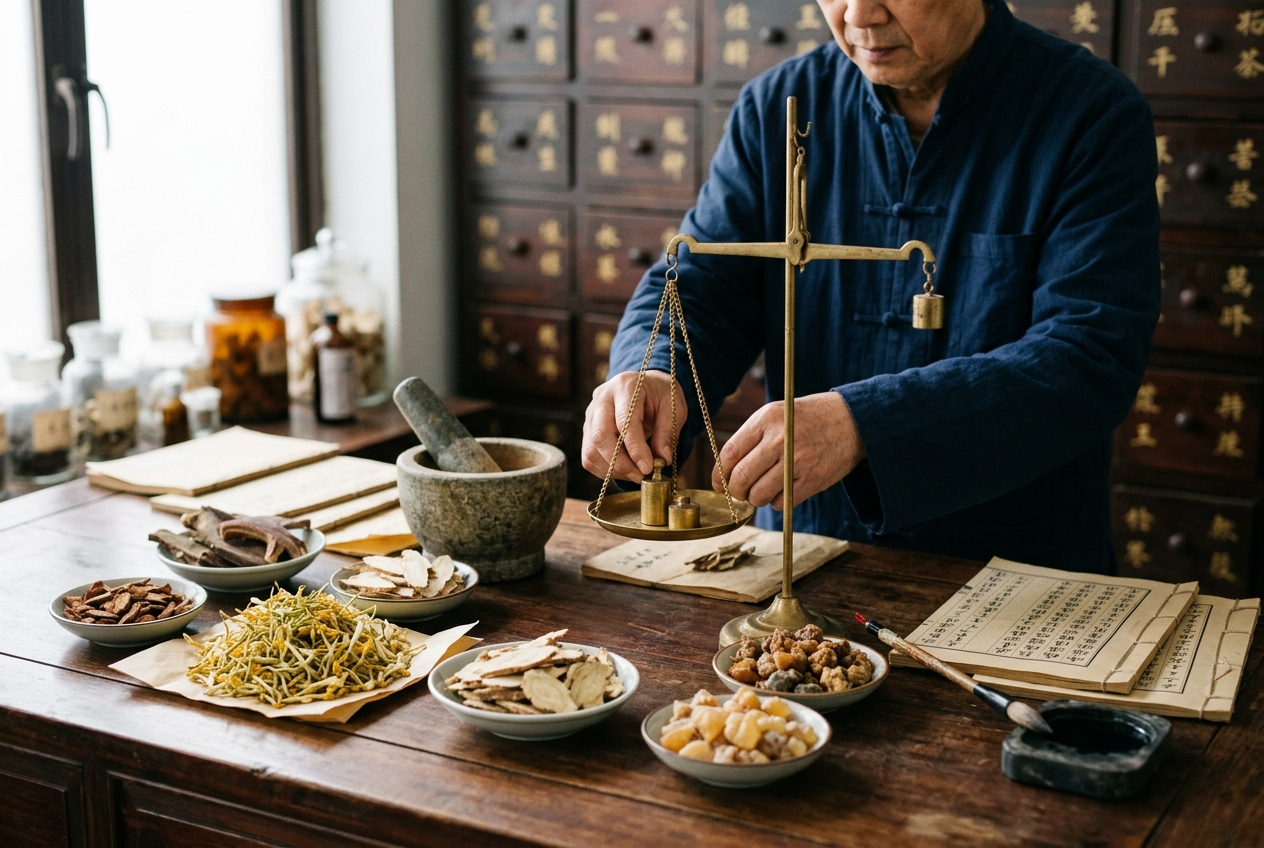
Rather than treating external suppuration as an isolated cutaneous event, classical theory views abscess formation as the localized crystallization of systemic disharmonies—principally the confluence of fire-toxin, phlegm-damp stagnation, Qi and blood exhaustion, and microvascular stasis. Modern biomedical research documented by the National Center for Biotechnology Information (NCBI) PubMed increasingly demonstrates that these classical principles correspond directly to distinct phases of the acute inflammatory cascade: microvascular thrombosis, leukocyte extravasation, purulent enzymatic liquefaction, and fibroblast-mediated tissue regeneration.
1. Theoretical Framework & Tri-Phasic Pathology of Yong Yang
Classical Etiological Foundations
The foundational doctrine of external suppuration originates in the Huangdi Neijing (Miraculous Pivot / Ling Shu, Chapter 81), which states:
$$\text{"When the nutritive (Ying) and defensive (Wei) Qi fail to circulate smoothly, they stagnate within the flesh and interstitial textures, producing abscesses and carbuncles."}$$
External sores are taxonomically divided based on their energetic polarity, depth, and inflammatory kinetics: 1. Yang-Type Sores (Yong, 痈): Characterized by acute onset, superficial localization within the skin and superficial fascia, vibrant erythema, burning heat, elevated swelling, and rapid progression toward suppuration and resolution. They stem primarily from exogenous heat-toxin, damp-heat accumulation, or emotional fire stagnating the nutritive-blood (Ying-Xue) level. 2. Yin-Type Carbuncles (Ju, 疽): Characterized by insidious onset, deep localization within tendons, muscles, or periosteum, pale or skin-colored swelling, flat or crateriform morphology, absence of localized burning heat, and severe systemic cold-deficiency. They arise from cold-phlegm congelation, Spleen-Kidney Yang deficiency, and profound blood stagnation.
The Tri-Phasic Pathological Progression
The clinical trajectory of external abscesses unfolds through three sequential pathological stages, each dictating a distinct therapeutic imperative:
2. The Three Cardinal Principles of Sore Resolution (San Da Zhi Fa)
The treatment of external suppurative disease is governed by the classical maxim: "When unformed, disperse it; when formed, expel it; when ruptured, tonify it" (Wei Cheng Yi Xiao, Yi Cheng Yi Tuo, Kui Hou Yi Bu, 未成宜消,已成宜托,溃后宜补).
I. Dispersal (Xiao Fa, 消法)
Xiao Fa is applied exclusively during the initial, pre-suppurative phase. The therapeutic mandate is to extinguish toxic heat, extinguish pathogenic fire, break blood stasis, and dissolve phlegmatic accumulation before liquefactive necrosis ensues. * Herbal Vector: Bitter-cold heat-clearing and toxin-resolving medicinals (Qing Re Jie Du Yao) coupled with acrid, dispersing blood-invigorators (Huo Xue San Jie Yao). * Clinical End-Point: Complete resolution of erythema, heat, and swelling without cutaneous breach or scar tissue formation.
II. Expulsion & Penetration (Tuo Fa, 托法)
When the accumulation of toxic fire is too intense to be aborted via Xiao Fa, pus formation becomes inevitable. Tuo Fa is deployed to support the upright Qi (Zheng Qi), reinforce the barrier function of the interstitial tissue, and drive the internal pathogen outward to prevent inward collapse (Nei Xian, 内陷—analogous to bacteremia and systemic septic shock). * Sub-categories: 1. Tou Tuo (Piercing Expulsion / 透托): Applied in excess Yang patterns with robust host vitality. Pungent, ascending, and penetrating medicinals are utilized to perforate the fibrous inflammatory capsule and expedite outward venting. 2. Tuo Li (Internal Supportive Expulsion / 托里): Applied when host Qi and Blood are deficient, rendering the body incapable of concentrating inflammatory force to liquefy and push out the purulent core, leading to flat, non-pointing, indolent lesions.
III. Tonification & Flesh Regeneration (Bu Fa / Sheng Ji Fa, 补法 / 生肌法)
Following spontaneous rupture or surgical incision, the body enters the reparative phase. In healthy hosts, upright Qi drives rapid granulation. However, in patients with constitutional debility, chronicity, or elderly status, the loss of pus and blood exhausts nutritive Qi and Blood, leaving an indolent, unhealing ulcer (Kui Yang Bu Lian). * Therapeutic Mandate: Tonify Spleen and Lung Qi to fuel anabolic remodeling, enrich Liver and Heart blood to supply nutritional substrate to capillary buds, and warm Kidney Yang (Mingmen Fire) to energize cellular repair. * Herbal Vector: Sweet, warm tonics (Huang Qi, Dang Gui, Shu Di Huang) combined with astringent and tissue-regenerating agents (Bai Ji, Xue Jie, Lu Jiao Jiao).
3. Core Formula Archetypes & Architectural Synergies (Jun-Chen-Zuo-Shi)
To navigate the pathological nuances of Yong Yang, classical masters constructed architectural formula archetypes characterized by sophisticated synergistic interactions.
I. Xian Fang Huo Ming Yin (Immortal Recipe for Living Life, 仙方活命饮)
Hailed as the "Sovereign Formula for External Medicine" (Waike Zhi Kui Shou, 外科之魁首), this formula was codified in Fu Ren Da Quan Liang Fang (Complete Good Prescriptions for Women) and popularized in Waike Zhengzong. It is the undisputed archetype for the early-stage dispersal of acute Yang-pattern sores.
Composition & Structural Hierarchy:
- Jun (Sovereign): Jin Yin Hua (Flos Lonicerae Japonicae, 30g). Administered in massive dosage to penetrate the interior and exterior, clearing fire-toxin from the blood level and arresting localized microvascular necrosis.
- Chen (Minister):
- Dang Gui Wei (Radix Angelicae Sinensis - tails) & Chi Shao (Radix Paeoniae Rubra): Invigorate and cool the blood, resolving intravascular stasis without inducing pathological hemorrhage.
- Bai Zhi (Radix Angelicae Dahuricae) & Fang Feng (Radix Saposhnikoviae): Pungent, warm surface-venting herbs that traverse the defensive exterior, opening interstitial textures (Cou Li), draining swelling, and guiding the formula to the skin.
- Zuo (Assistant):
- Ru Xiang (Gummi Olibanum) & Mo Yao (Myrrha): Pungent, bitter resins that penetrate the collaterals to disperse blood stasis, mitigate severe ischemic pain, and eliminate tissue swelling.
- Zao Jiao Ci (Spina Gleditsiae): Possesses acute, piercing mechanical morphology and acrid chemistry to bore through purulent barriers and focus the dispersing dynamic outward.
- Tian Hua Fen (Radix Trichosanthis) & Zhe Bei Mu (Bulbus Fritillariae Thunbergii): Clear phlegm-heat, drain fire, and hydrate tissues to dissolve stubborn phlegm nodules.
- Chen Pi (Pericarpium Citri Reticulatae): Promotes the movement of Qi; ensures that heavy blood-moving and cold-clearing herbs do not stagnate the middle jiao.
- Shi (Envoy): Sheng Gan Cao (Radix Glycyrrhizae) harmonizes the toxic and harsh properties of the resins while purging heat-toxin; Jiu (Yellow Wine) is traditionally used as the decocting medium to invigorate circulation and accelerate systemic biodistribution.
Dynamics of Action:
Xian Fang Huo Ming Yin orchestrates a multi-target assault on early inflammation. It halts inflammatory cytokine storms through bitter-cold detoxicants while simultaneously counteracting the capillary hypoperfusion and thrombotic occlusion characteristic of acute phlegmon via resin-based blood movers.
II. Yang He Tang (Balmy Yang Decoction, 阳和汤)
Designed by the Qing Dynasty master Wang Weide (Waike Zhengzhi Quanji), Yang He Tang is the supreme archetype for deep, indolent Yin-pattern carbuncles (Yin Ju), cold abscesses, tuberculous lymphadenitis (Liu Li), chronic osteomyelitis, and deep-tissue sinus tracts (Yin Gang).
Composition & Structural Hierarchy:
- Jun (Sovereign):
- Shu Di Huang (Radix Rehmanniae Praeparata, 30g): Heavily enriches Kidney Yin and replenishes depleted blood and marrow, providing the material substrate for tissue regeneration.
- Lu Jiao Jiao (Colla Cornu Cervi, 9g): Sweet, salty, and warm; enriches essence and blood while stoking Kidney Yang, generating physiological warmth from within the skeletal depth.
- Chen (Minister):
- Pao Jiang (Rhizoma Zingiberis Praeparatum - Blast-fried Ginger): Warm and bitter; enters the blood division of the channels to dispel deep-seated cold and unblock the collaterals.
- Rou Gui (Cortex Cinnamomi): Pungent, sweet, and pure fire; warms the Kidney Yang, eliminates deep Yin-cold, and invigorates blood circulation.
- Zuo (Assistant):
- Ma Huang (Herba Ephedrae, 1.5–3g): Utilized in low dosage not for diaphoretic lung release, but for its unblocking dynamic. It opens the cutaneous pores (Cou Li), unbinds the defensive-Qi level, and vents deep pathogenic cold out through the exterior.
- Bai Jie Zi (Semen Sinapis Albae): Pungent and warm; specializes in penetrating the deep interstitial networks to dissolve "phlegm without form" and cold-damp nodules.
- Shi (Envoy): Sheng Gan Cao (Radix Glycyrrhizae) harmonizes the cold and hot components, moderates the fierce warmth of cinnamon and ginger, and resolves lingering toxicity.
The Revolutionary "Yang He" Dynamic:
Wang Weide established that deep Yin sores fail to heal not because of excess heat, but because "Cold congeals the blood, and blood stasis traps the phlegm" (Han Ning Ze Xue Zhi, Xue Zhi Ze Tan Ning). Yang He Tang pairs dense, cloying Yin-blood tonics (Shu Di, Lu Jiao Jiao) with fierce, mobile Yang warmers (Pao Jiang, Rou Gui, Ma Huang). The Yin tonics ensure that the Yang warmers do not scorch the bodily fluids, while the Yang warmers ensure that the heavy Yin tonics do not generate cold-damp stagnation. The addition of Ma Huang serves as the functional "crane," hoisting deep, dormant cold-phlegm out of the deep fascial beds into the superficial circulation for metabolic clearance.
III. Tuo Li Tou Nong San (Expel Inward and Pierce Pus Powder, 托里透脓散)
Codified in the Yizong Jinjian (Golden Mirror of the Medical Tradition), this formula is the archetype of the Internal Expulsion Method (Tuo Li Fa). It is deployed when an abscess has formed (Cheng Nong), but host constitutional deficiency (Qi and Blood vacuity) results in insufficient internal bio-pressure, preventing the abscess from pointing, perforating the skin, and evacuating.
Composition & Structural Mechanics:
- Huang Qi (Radix Astragali, 15–30g) + Dang Gui (Radix Angelicae Sinensis, 15g): Form the core tonic engine. Huang Qi tonifies the Spleen and Lungs, augmenting defensive Qi to build mechanical tissue pressure that forces pus outward; Dang Gui enriches and mobilizes the blood, transforming necrotic tissue into viable purulence.
- Zao Jiao Ci (Spina Gleditsiae) + Chuan Shan Jia (Squama Manitis, historically; substituted modernly with Wang Bu Liu Xing or Shan Ci Gu): Act as the mechanical "drill." These acrid, intensely penetrating medicinals unblock channels, bore through dense fibrous inflammatory capsules, and lead the mobilized pus toward the surface.
- Bai Zhi (Radix Angelicae Dahuricae) + Chuan Xiong (Rhizoma Chuanxiong): Open the cutaneous pores, guide the formula to the skin surface, and relieve localized ischemic throbbing.
- Jin Yin Hua (Flos Lonicerae) + Gan Cao (Radix Glycyrrhizae): Provide antimicrobial coverage, ensuring that as the abscess is pierced, residual fire-toxin is neutralized, preventing systemic septicemia.
IV. Si Miao Yong An Tang (Four Valiant Decoction for Peace, 四妙勇安汤)
Originating in Shen Shi Yao Han and recorded in Huatuo Shenfang, this formulation is a high-potency emergency prescription engineered for severe toxic-heat gangrene, acute necrotizing vasculitis, and Thromboangiitis Obliterans (Tuo Gu Ju, 脱骨疽—"Dropped Bone Carbuncle," where digits necrose and slough off).
Structural Keystone & Dosing Dynamics:
The formula operates through a four-herb architecture deployed in massive, atypical dosages: 1. Jin Yin Hua (90g): Sovereign fire-toxin neutralizer. Prevents the spread of microvascular gangrene. 2. Xuan Shen (90g): Clears heat from the nutritive and blood levels, nourishes Yin fluids scorched by toxic heat, and acts as a biological anticoagulant by softening hard accumulations. 3. Dang Gui (60g): Restores microvascular perfusion, nourishes depleted blood volume, and resolves intravascular coagulation, relieving the excruciating ischemic pain of peripheral gangrene. 4. Sheng Gan Cao (15–30g): Clears fire-toxin, prevents microvascular spasm, and buffers the gastrointestinal tract against the massive doses of cold and heavy medicinals.
4. Modern Pharmacodynamics & Molecular Mechanisms
Contemporary biomedical and pharmacological investigations indexed in NCBI PubMed and endorsed in frameworks by the World Health Organization (WHO) Traditional Medicine have elucidated the molecular mechanisms underpinning these classical surgical formulations.
I. Anti-Inflammatory Signaling and Cytokine Storm Abatement
The primary bioactive components of Xian Fang Huo Ming Yin and Si Miao Yong An Tang—notably chlorogenic acid, luteolin, baicalin, and glycyrrhizic acid—exert profound inhibitory actions on the NF-κB (Nuclear Factor Kappa B) and MAPK (Mitogen-Activated Protein Kinase) intracellular signaling cascades: * Cytokine Suppression: Direct downregulation of transcription factors responsible for the release of pro-inflammatory cytokines, specifically TNF-α, IL-1β, IL-6, and IL-8, arresting systemic inflammatory cascades. * Enzymatic Inhibition: Downregulation of inducible nitric oxide synthase (iNOS) and cyclooxygenase-2 (COX-2), leading to a marked reduction in localized prostaglandin E2 ($PGE_2$) and nitric oxide-mediated hyperemic vascular engorgement.
II. Biofilm Eradication and Broad-Spectrum Antimicrobial Mechanics
Suppurative lesions are frequently sustained by complex bacterial aggregates. Bioactive constituents in Yong Yang Ji formulations breach microbial defense mechanisms: * Membrane Disruption: Saponins from Zao Jiao Ci and phenylethanoid glycosides from Xuan Shen alter bacterial cell membrane permeability, facilitating the osmotic lysis of methicillin-resistant Staphylococcus aureus (MRSA) and Pseudomonas aeruginosa. * Quorum Sensing Inhibition: Chlorogenic acid and volatile terpenoids disrupt microbial quorum-sensing signaling molecules, destabilizing the extracellular polymeric substance (EPS) matrix of bacterial biofilms and restoring susceptibility to endogenous host antimicrobial peptides and neutrophils.
III. Microcirculatory Hemorheology and Endothelial Recanalization
The hallmark of classical Ju (gangrene and cold abscesses) is microvascular thrombosis and tissue ischemia. Formulas like Yang He Tang and Si Miao Yong An Tang reverse this pathology via targeted active compounds: * Platelet Aggregation Inhibition: Ferulic acid and ligustilide (from Dang Gui) inhibit thromboxane $A_2$ ($TXA_2$) synthetase and elevate prostacyclin ($PGI_2$), preventing microvascular thrombus propagation within terminal capillary loops. * Endothelial Protection: Paeoniflorin (from Chi Shao) downregulates endothelial cell adhesion molecules (ICAM-1, VCAM-1), preventing excessive leukocyte plugging within capillary lumens and re-establishing functional microvascular tissue perfusion.
IV. Angiogenesis, Fibroblast Proliferation, and Extracellular Matrix (ECM) Synthesis
The regeneration phase (Sheng Ji) targeted by Tuo Li Tou Nong San and Yang He Tang aligns with modern cellular wound-healing pathways: * Pro-Angiogenic Growth Factors: Astragaloside IV and calycosin (from Huang Qi) upregulate the expression of Vascular Endothelial Growth Factor (VEGF), basic Fibroblast Growth Factor (bFGF), and Transforming Growth Factor-beta 1 (TGF-β1). This stimulates $CD31^+$ capillary endothelial sprouting, supplying oxygenated blood to ischemic wound beds. * Collagen Matrix Remodeling: Polypeptides and amino acids from Lu Jiao Jiao combined with astragalosides enhance fibroblast migration and normalize the balance between Type I and Type III collagen synthesis, while modulating Matrix Metalloproteinases (MMP-2 and MMP-9) to prevent keloid scarring while accelerating epithelial wound closure.
5. Diagnostic Differentiation & Clinical Safety Protocols
Safe and efficacious application of Yong Yang Ji demands rigorous differentiation between Yang and Yin patterns, as well as strict observance of stage-specific contraindications.
Critical Clinical Contraindications & Safety Caveats
1. The Danger of Premature Tonification (Gu Men Liu Kou, 锢门留寇)
Administering Qi-tonifying, sweet-warm formulas (such as Huang Qi-heavy prescriptions or Tuo Li Tou Nong San) during the initial pre-suppurative phase of a Yang-pattern sore is a critical clinical error. * Pathomechanism: Known classical as "closing the door and trapping the thief within." Premature tonification traps pathogenic fire-toxin in the interior, exacerbating localized capillary necrosis, accelerating tissue destruction, and drastically increasing the risk of inward toxic collapse (Nei Xian / septic shock).
2. The Danger of Prolonged Bitter-Cold Purgation
Over-reliance on high-dose bitter and cold medicinals (Jin Yin Hua, Huang Lian, Huang Qin) beyond the acute suppurative window impairs Spleen and Stomach Yang Qi. * Pathomechanism: Injuring the middle jiao compromises the host's ability to generate fresh blood and defensive Qi, turning an acute Yang abscess into an unhealing, indolent Yin ulcer.
3. Cautions Regarding Toxic and Piercing Medicinals
- Piercing Agents (Zao Jiao Ci, Chuan Shan Jia substitutes): Strictly contraindicated during pregnancy due to potent uterine and pelvic downward-draining kinetics.
- Resins (Ru Xiang, Mo Yao): Potent gastric irritants; must be formulated with middle-jiao harmonizing agents (Chen Pi, Gan Cao) and used with caution in patients with active peptic ulceration.
4. Recognition of Surgical Emergencies
While Yong Yang Ji formulas offer profound microvascular and immunomodulatory support, modern practitioners must recognize conditions requiring immediate surgical debridement or broad-spectrum parenteral antibiotics, including: * Necrotizing Fasciitis * Ludwig’s Angina (submandibular space infection threatening the airway) * Systemic Sepsis / Septic Shock (indicated by systemic hypotension, tachycardia, and altered mental status)
6. Comparative Overview of Prescriptions
+-----------------------------------------------------------------------------------------------------------------------------------------+
| Formula Name            | Primary Ingredients               | TCM Actions                       | Primary Modern Indications            |
+-----------------------------------------------------------------------------------------------------------------------------------------+
| Xian Fang Huo Ming Yin  | Jin Yin Hua, Bai Zhi, Fang Feng,  | Clears heat, resolves toxicity,   | Acute localized skin abscesses,       |
| (仙方活命饮)            | Ru Xiang, Mo Yao, Zao Jiao Ci,    | disperses swelling, invigorates   | furuncles, carbuncles, mastitis,      |
|                         | Dang Gui Wei, Chi Shao, Chen Pi   | blood, relieves pain.             | acute suppurative lymphadenitis.      |
+-----------------------------------------------------------------------------------------------------------------------------------------+
| Yang He Tang            | Shu Di Huang, Lu Jiao Jiao,       | Warms Yang, dispels cold,         | Tuberculous lymphadenitis, chronic    |
| (阳和汤)                | Pao Jiang, Rou Gui, Ma Huang,     | enriches blood, resolves phlegm,  | osteomyelitis, deep cold abscesses,   |
|                         | Bai Jie Zi, Sheng Gan Cao         | unblocks collaterals.             | avascular necrosis, Raynaud's disease.|
+-----------------------------------------------------------------------------------------------------------------------------------------+
| Tuo Li Tou Nong San     | Huang Qi, Dang Gui, Chuan Xiong,  | Tonifies Qi, nourishes blood,     | Chronic or subacute abscesses with    |
| (托里透脓散)            | Bai Zhi, Zao Jiao Ci, Shan Jia,   | expels pus outward, pierces       | deficient host resistance, failure    |
|                         | Jin Yin Hua, Gan Cao              | fibrous purulent capsules.        | to suppurate, delayed perforation.    |
+-----------------------------------------------------------------------------------------------------------------------------------------+
| Si Miao Yong An Tang    | Jin Yin Hua, Xuan Shen,           | Clears virulent toxic heat,       | Thromboangiitis Obliterans (TAO),     |
| (四妙勇安汤)            | Dang Gui, Sheng Gan Cao           | enriches Yin, unblocks blood,     | diabetic foot gangrene, acute         |
|                         |                                   | alleviates severe ischemic pain.  | necrotizing vasculitis, severe ulcers.|
+-----------------------------------------------------------------------------------------------------------------------------------------+
7. Synoptic Clinical Summary
The architectural deployment of Abscess and Sore-Resolving Formulas (Yong Yang Ji) reflects a complete clinical paradigm in Traditional Chinese External Medicine. By mapping dynamic herbal synergies (Jun-Chen-Zuo-Shi) directly to the patient’s constitutional balance and the tri-phasic life cycle of suppurative tissue—Dispersal (Xiao Fa) in the pre-suppurative inflammatory dawn, Expulsion (Tuo Fa) during peak purulent encapsulation, and Flesh Regeneration (Bu Fa / Sheng Ji Fa) throughout the reparative aftermath—the practitioner successfully prevents chronic tissue destruction and systemic collapse.
When reinforced by contemporary molecular insights regarding cytokine inhibition, biofilm penetration, endothelial recanalization, and VEGF-driven collagen synthesis, Yong Yang Ji formulations bridge ancient experiential surgery and modern translational wound healing, offering effective strategies for acute infectious and chronic indolent pathologies alike.
Authoritative References & Further Reading
- World Health Organization (WHO) Traditional Medicine Strategy & Nomenclature
- National Center for Biotechnology Information (NCBI) PubMed — Research Database
- NCBI PMC: Molecular & Pharmacological Actions of Traditional Chinese Herbal Medicine in Wound Healing and Microcirculation
- Wikipedia: Traditional Chinese Medicine & External Surgery History
- Wikipedia: Thromboangiitis Obliterans (Buerger's Disease) Pathology
- NCBI PubMed: Anti-Inflammatory & Angiogenic Mechanisms of Si Miao Yong An Tang and Xian Fang Huo Ming Yin