Xu Bu Empty Stance Qigong: Unilateral Posterior Weight Vectoring, Spiral Fascial Coiling, and Plantar Proprioceptive Rooting in Classical Daoyin
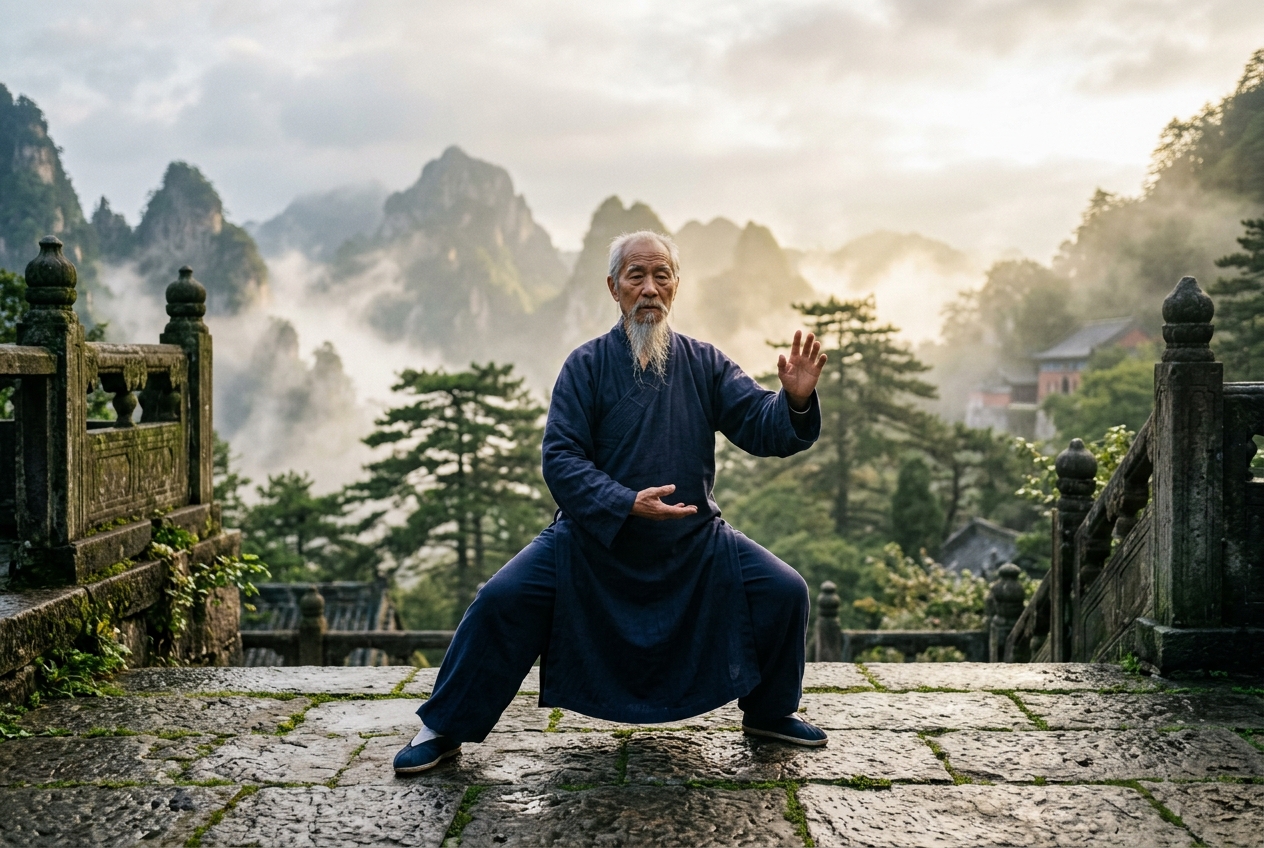
Xu Bu resolves this ambiguity by imposing an uncompromising differentiation between two complementary forces: the substantial (Shi, 实) and the insubstantial (Xu, 虚). The posterior leg becomes the substantial root—an immovable, spring-loaded pillar absorbing ground reaction forces. The anterior leg becomes the insubstantial antenna—a completely weightless limb resting lightly on either the metatarsal ball or the calcaneus (heel), mobilized not for mechanical load-bearing, but for spatial perception and cutaneous feedback.
Once experienced in the physical body, this physical contrast translates directly into Traditional Chinese Medicine (TCM) energetics. The substantial rear leg embodies the principle of Yin (earth-bound, structural, consolidating, and dense), while the insubstantial front leg embodies Yang (mobile, expressive, elevated, and light). By polarizing these two vectors within a single structural frame, the practitioner awakens dormant neuro-fascial pathways and establishes a physiological baseline for profound somatic stability.
Step-by-Step Anatomical Protocol: Entering, Sustaining, and Transitioning
Mastering the Empty Stance requires an exact sequence of joint articulations to prevent joint impingement and ensure optimal kinetic transfer. Below is the classical, step-by-step protocol for practicing Xu Bu safely and effectively.
1. The Setup and Biomechanical Entry
- Initial Stance: Begin standing in Wuji posture—feet parallel, shoulder-width apart, knees unlocked, and the crown of the head gently suspended as if drawn upward by a silk thread from the ceiling (Baihui / GV-20).
- Vector Alignment: Turn the right foot outward at an angle of 45 degrees, ensuring the right knee tracks precisely over the line of the second toe. The left foot remains pointed straight forward.
- Weight Transition: Exhale deeply and sink your center of gravity vertically down into the right hip joint. Do not lean your torso back; rather, fold at the inguinal crease—a mechanism known in internal arts as Song Kua (松胯), or the structural release of the hip socket.
- The Empty Touch: Slide the left foot forward along the sagittal plane, roughly one to one-and-a-half foot-lengths ahead. Touch down with either the ball of the foot (classical high Xu Bu) or the heel (low transitioning Xu Bu). Maintain a slight, 15-degree bend in the front knee; never lock the joint.
2. Structural Calibration and Breath Integration
- Load Distribution: Verify that approximately 85% to 90% of your mass resides securely over the rear heel and midfoot. Test this: if you can lift your front toes off the floor without shifting your pelvis or upper body, your alignment is correct.
- Pelvic and Spinal Neutrality: Consciously tuck the coccyx slightly downward while maintaining the natural lordotic curve of the lumbar spine, gently expanding the region of the lower back known as Mingmen (GV-4, the "Gate of Vitality"). Avoid both excessive anterior pelvic tilt (lumbar hyperlordosis) and excessive posterior tucking (slumping).
- Diaphragmatic Synchronization: Inhale through the nose for a count of four, directing the breath into the Lower Dantian (the lower abdominal core, two inches below the navel). Feel the perineum (Huiyin / CV-1) subtly lift on inhalation and soften on exhalation, matching the isometric burn of the posterior leg with internal calmness.
- Duration: Maintain the posture for 60 to 90 seconds per side, gradually building toward 3 minutes of continuous, relaxed endurance.
3. The Transition Phase
- Gathering the Root: To transition, inhale and press down firmly through the rear heel. Engage the gluteus maximus to drive the pelvis forward into a neutral, centered stance.
- Shifting the Insubstantial: Draw the forward foot back to the center line with a smooth, cat-like glide, demonstrating that no momentum or weight was trapped in the front limb.
- Switching Sides: Re-establish Wuji for two grounding breath cycles before repeating the exact sequence on the opposite side to balance unilateral neuromuscular adaptations.
Biomechanical Error Analysis: Diagnosis and Correction
Because Xu Bu places demanding unilateral loads upon the lower kinetic chain, structural errors can easily compromise joint safety if left uncorrected.
| Biomechanical Error | Anatomical Mechanism | Long-Term Risk | Clinical Correction |
|---|---|---|---|
| Medial Knee Collapse (Knee Valgus) | Weakness in the posterior gluteus medius and deep hip rotators causing the rear knee to fall inward across the mid-line. | Medial meniscus tearing, patellofemoral tracking dysfunction, and strain on the anterior cruciate ligament. | Actively abduct and externally rotate the femur; ensure the patella tracks strictly over the second and third metatarsals. |
| Weight Bleeding (Over-Loading Front Foot) | Inability to sustain hip flexion in the rear leg, causing 30–40% of body mass to spill into the anterior limb. | Loss of the insubstantial kinetic vector; patellar tendonitis in the forward knee; disruption of balance reflexes. | "The Water Droplet Test": Periodically tap or hover the forward toes. If your torso shifts backward during the lift, reset your rear hip depth. |
| Lumbar Shearing & Anterior Pelvic Tilt | Tight psoas major and ill-conditioned abdominal core pulling the pelvis into an exaggerated anterior tilt during hip flexion. | Lumbosacral compression, facet joint irritation, and structural stagnation at the Mingmen meridian gateway. | Lengthen the tailbone toward the ground; gently engage the transversus abdominis to stabilize the lumbopelvic cylinder. |
| Plantar Eversion / Collapsed Rear Arch | Loss of intrinsic foot muscle activation causing the medial longitudinal arch of the back foot to flatten against the floor. | Plantar fasciitis, posterior tibial tendon strain, and disconnection from the Yongquan grounding point. | Grip the earth gently with the toes (Zhua Di), elevating the inner arch while rooting the calcaneus, first metatarsal head, and fifth metatarsal head. |
Somatosensory Markers: What You Feel and What It Means
During sustained holds of Xu Bu, the nervous system and vascular bed undergo distinct phases of adaptation. Recognizing these internal somatic signals enables practitioners to distinguish healthy physiological transformation from injurious strain:
- The Posterior Thermogenic Bloom (Warmth): After 45 seconds, a deep, pervasive heat typically emerges across the gluteal muscles and quadriceps of the supporting leg. In physiological terms, this reflects rapid microvascular vasodilation and capillary recruitment in response to sustained isometric contraction. Energetically, this marks the ignition of Mingmen fire and the mobilization of defensive Wei Qi.
- Plantar Pulsing at Yongquan (KI-1): A rhythmic, throbbing, or magnetic sensation beneath the sole of the rear foot—specifically in the depression created when the toes curl—indicates that ground reaction forces are being channeled through the deep fascial lines without mechanical resistance.
- Floating Lightness in the Anterior Limb (Insubstantiality): The forward leg should feel remarkably hollow, buoyant, or effervescent, almost as though resting upon a pool of warm water. This confirms that the nervous system has successfully decoupled the front limb from load-bearing duties, dedicating its mechanoreceptors entirely to spatial scanning.
- Fascial Vibration and Tremor (Neurogenic Release): A fine, rhythmic trembling in the rear quadriceps and adductor magnus often indicates the resetting of muscle spindle thresholds and the discharge of deep myofascial tension patterns stored within the pelvic girdle.
Why It Works: The Neuro-Fascial and Biomechanical Science
The extraordinary therapeutic and functional benefits of Xu Bu are grounded in contemporary neuromuscular physiology, biomechanics, and connective tissue research.
Unilateral Loading and Closed-Kinetic-Chain Neuromuscular Dynamics
By shifting nearly 90% of total mass onto a single, flexed lower extremity, Xu Bu forces the posterior kinetic chain into a closed-chain isometric contraction. The gluteus maximus, gluteus medius, and vastus lateralis must coordinate continuously to maintain femoral alignment and counter lateral pelvic tilt (the Trendelenburg vector).
Unlike dynamic gym movements such as the barbell lunge—which rely heavily on concentric momentum—the stationary hold of the Empty Stance demands sustained tonic recruitment of slow-twitch (Type I) postural fibers. This deep activation recruits the deep stabilizer musculature of the acetabulofemoral (hip) joint, including the obturator internus, quadratus femoris, and piriformis, building resilient joint integrity without the shearing forces associated with high-impact exercise. Rigorous investigations cataloged on NCBI PubMed have repeatedly confirmed that traditional unilateral martial stances dramatically improve dynamic balance and lower-extremity neuromuscular control across diverse patient populations.
Plantar Mechanoreceptor Mobilization: The Sensory Antenna
The human foot contains thousands of specialized sensory nerve endings, including Meissner corpuscles, Pacinian corpuscles, and Merkel nerve endings, which transmit essential proprioceptive data to the primary somatosensory cortex and cerebellum. In bilateral weight-bearing, these cutaneous receptors are heavily compressed by gravitational mass.
In Xu Bu, the anterior foot is liberated from mechanical loading while maintaining light tactile contact with the ground. This uncoupling allows its cutaneous mechanoreceptors to function with exquisite sensitivity, operating as an active perceptual antenna. The central nervous system must continuously balance two radically divergent streams of afferent information: high-threshold mechanical pressure from the rear pillar, and ultra-fine, low-threshold tactile feedback from the front foot. This dual processing drives rapid neuroplastic reorganization in the vestibular and sensorimotor systems, directly underpinning the exceptional efficacy of mind-body practices in fall prevention protocols endorsed by the World Health Organization Traditional Medicine initiatives. Clinical literature, such as studies on PubMed Central regarding Tai Chi balance and gait, highlights this distinct sensory-motor re-education as a primary mechanism for reducing falls among older adults.
Fascial Tensegrity: The Deep Front Line and Superficial Back Line
From the perspective of Thomas Myers’ Anatomy Trains fascial continuum, Xu Bu is a masterpiece of myofascial integration. Rather than treating muscles as isolated levers, the posture organizes the body into a continuous network of tension and compression, known as tensegrity.
The posterior pillar engages the Superficial Back Line (SBL), creating an unbroken chain of structural tension extending from the plantar fascia at the base of the foot, through the Achilles tendon, gastrocnemius, hamstrings, and sacrotuberous ligament, up through the erector spinae and cranial aponeurosis. Simultaneously, the sinking of the inguinal crease (Song Kua) and the elevation of the crown (Baihui) stretch and activate the Deep Front Line (DFL)—the body's core myofascial scaffolding. This deep continuum links the intrinsic muscles of the foot (tibialis posterior) upward through the adductor group, the pelvic floor (Huiyin), the psoas major, the respiratory diaphragm, the pericardium, and the deep cervical fascia.
Hemodynamic Pumping and Autonomic Nervous System Regulation
Maintaining an isometric half-squat against gravity generates significant intramuscular pressure within the lower extremities. As the practitioner sustains rhythmic, diaphragmatic respiration into the lower abdomen, the alternating descent and ascent of the thoracic diaphragm acts as a visceral suction pump.
This interplay between peripheral muscular resistance and rhythmic intra-abdominal pressure compresses the deep venous plexus and lymphatic vessels of the lower limbs, propelling deoxygenated blood back toward the heart without spiking cardiac afterload. Concurrently, the prolonged, calm exhalations stimulate the vagus nerve, down-regulating sympathetic arousal and up-regulating parasympathetic tone. The body learns to remain completely relaxed (Song, 松) while undergoing intense, localized physical exertion—a fundamental goal emphasized by institutions like the National Qigong Association.
Traditional Chinese Medicine: Yin-Yang Differentiation and Kidney Essence
In classical internal medical theory, the physical architecture of Xu Bu is viewed as a dynamic crucible for internal energetic cultivation.
The Dynamic Polarity of Shi and Xu
The opening chapter of the Huangdi Neijing (The Yellow Emperor’s Inner Classic) establishes that health is maintained through the harmonious interaction of Yin and Yang. In the human body, physical heaviness and grounding correspond to Yin, while agility, lightness, and responsiveness correspond to Yang.
When a practitioner holds Xu Bu, they physically embody this cosmological polarity. The posterior leg gathers and condenses Yin energy from the earth through Yongquan (Kidney-1, "Bubbling Spring"), rooting the physical vessel. Meanwhile, the unweighted anterior leg embodies pure Yang potential—ready to step, pivot, or evade instantaneously without preliminary weight transfer. This clear energetic divide prevents internal stagnation, clears mental cloudiness, and restores balance to the meridian network.
Awakening the Mingmen Fire and Conserving Jing
Located on the posterior midline between the second and third lumbar vertebrae, Mingmen (GV-4, the "Gate of Vitality") is revered in TCM as the root of original Qi (Yuan Qi) and the seat of Kidney Fire. In daily life, poor posture and chronic stress cause the lumbar spine to collapse into exaggerated lordosis or rigid stiffness, effectively closing the energetic gateway of Mingmen and depleting prenatal essence (Jing).
In a correctly aligned Xu Bu, the deliberate sinking of the pelvis, combined with the gentle lengthening of the coccyx, flattens the lumbar curve and opens the Mingmen aperture. This physical decompression generates a warming energetic circuit between the Water element of the Kidneys and the Fire of Mingmen. The continuous circulation of Kidney Water upward to nourish the Heart and the downward descent of Heart Fire to warm the Kidneys (the classical Kan-Li alchemy) revitalizes the deep vitality reservoirs of the physical body.
Classical Lineage: The Historical Evolution of the Empty Stance
The lineage of Xu Bu stretches across two millennia of Chinese somatic and martial history, originating not as an exercise, but as an empirical tool for health, meditation, and physical survival.
From Silk Scrolls to Daoist Monasteries
The earliest pictorial evidence of asymmetric, empty-stepping postures appears in the famous Daoyin Tu (Guiding and Pulling Chart), a painted silk scroll excavated from the Mawangdui Han Dynasty tomb (dated to 168 BCE). Among its forty-four therapeutic illustrations are figures depicted in deep, single-leg loaded postures mimicking the light-footed movements of cranes, storks, and apes. These ancient shamans and early medical practitioners recognized that imitating the asymmetric balance of birds stimulated the body’s innate healing capacities and strengthened the joints of the lower extremities.
By the Song (960–1279 CE) and Ming (1368–1644 CE) dynasties, Daoist ascetics in the Wudang Mountains had systematized these animal Daoyin patterns into sophisticated internal alchemy (Neidan) regimens. Postures resembling Xu Bu were practiced alongside moving breath cultivation to build the internal power necessary for prolonged seated meditation, ensuring that the monk’s lower body retained optimal circulation and bone mineral density despite hours of daily stillness.
The Internal Martial Synthesis
During the late Qing dynasty, the Empty Stance became an indispensable tactical pillar within the internal martial arts (Neijiaquan), most notably Taijiquan, Xingyiquan, and Baguazhang. Master theorists such as Wang Zongyue and later Sun Lutang codified the mechanics of Xu Bu in classical treatises, noting that a martial artist caught "double-weighted" was instantly vulnerable to an opponent’s sweep or unbalancing strike.
Conversely, an adept rooted entirely in Xu Bu presented no tangible mass for an adversary to control; the rooted rear leg provided an immovable anchor, while the empty front leg could instantly launch a strike, evade a trap, or transform into a deep lunge without telegraphing movement. The stance thus married the pinnacle of martial readiness with the preservation of internal vitality.
Clinical and Somatic Benefits: From Fall Prevention to Longevity
Modern sports medicine, physical therapy, and somatic movement disciplines are increasingly rediscovering the profound therapeutic utility of the Empty Stance. Incorporating this asymmetric posture into daily movement routines provides significant clinical benefits:
- Superior Postural Balance and Fall Prevention: By challenging the vestibular system, cerebellar coordination, and lateral hip stabilizers, Xu Bu builds dynamic equilibrium. For older adults, this translates directly to reduced fall risk and enhanced confidence during daily ambulation.
- Functional Joint Decompression: Unlike heavy bilateral squats, which impose severe axial loads upon the lumbar spine, Xu Bu strengthens the leg muscles while decompressing the lumbosacral junction through the structural release of the Kua.
- Microcirculatory and Lymphatic Drainage: The rhythmic contraction and relaxation of the soleus and gastrocnemius muscles—frequently termed the "peripheral heart"—promotes venous return and lymphatic clearance from the lower extremities.
- Proprioceptive Sharpness and Neuroplasticity: The intentional division of attention between a heavily loaded rear leg and a sensory-receptive front foot stimulates the sensorimotor cortex, preserving neural agility and fine motor coordination well into advanced age.
Today’s Practice Commitment: The Five-Minute Morning Protocol
To integrate the profound physiological and energetic benefits of Xu Bu into your daily routine, commit to the following five-minute protocol tomorrow morning, before your first cup of coffee or tea:
- Minute 0:00 – 1:00: Stand in neutral Wuji, taking six deep, slow breaths into your lower belly. Soften your jaw, release your shoulders, and establish your mental focus.
- Minute 1:00 – 2:30: Transition into Xu Bu with the right leg as your substantial root (85% weight) and your left foot touching lightly on the ball. Hold for 90 seconds. Focus on relaxing the inguinal crease (Song Kua), opening the lower back (Mingmen), and feeling the thermogenic warmth build in your right gluteal complex while your left foot floats unburdened.
- Minute 2:30 – 3:00: Transition smoothly back to center Wuji. Breathe slowly, observing the contrast in circulation, warmth, and vitality between your two sides.
- Minute 3:00 – 4:30: Mirror the posture on the opposite side, sinking 85% of your weight into the left leg while your right foot rests lightly ahead. Maintain structural alignment and deep, steady nasal breathing.
- Minute 4:30 – 5:00: Return to Wuji, place both palms over your lower abdomen, and take three slow, harmonizing breaths, consolidating the newly mobilized Qi within the Lower Dantian.
Notice how your body feels over the subsequent hour: your stance more grounded, your lower back open and free of compression, and your mental state clear, centered, and alert. By committing just five minutes each morning to the art of the Empty Stance, you tap into an ancient somatic technology designed to harmonize the structural, neurological, and energetic dimensions of human movement.