Food Stagnation-Relieving Herbs (Xiao Shi Yao) Pharmacodynamics: Governing Epigastric Distension, Enzymatic Breakdown, Spleen-Stomach Transportation, and Intestinal Motility in Traditional Chinese Medicine
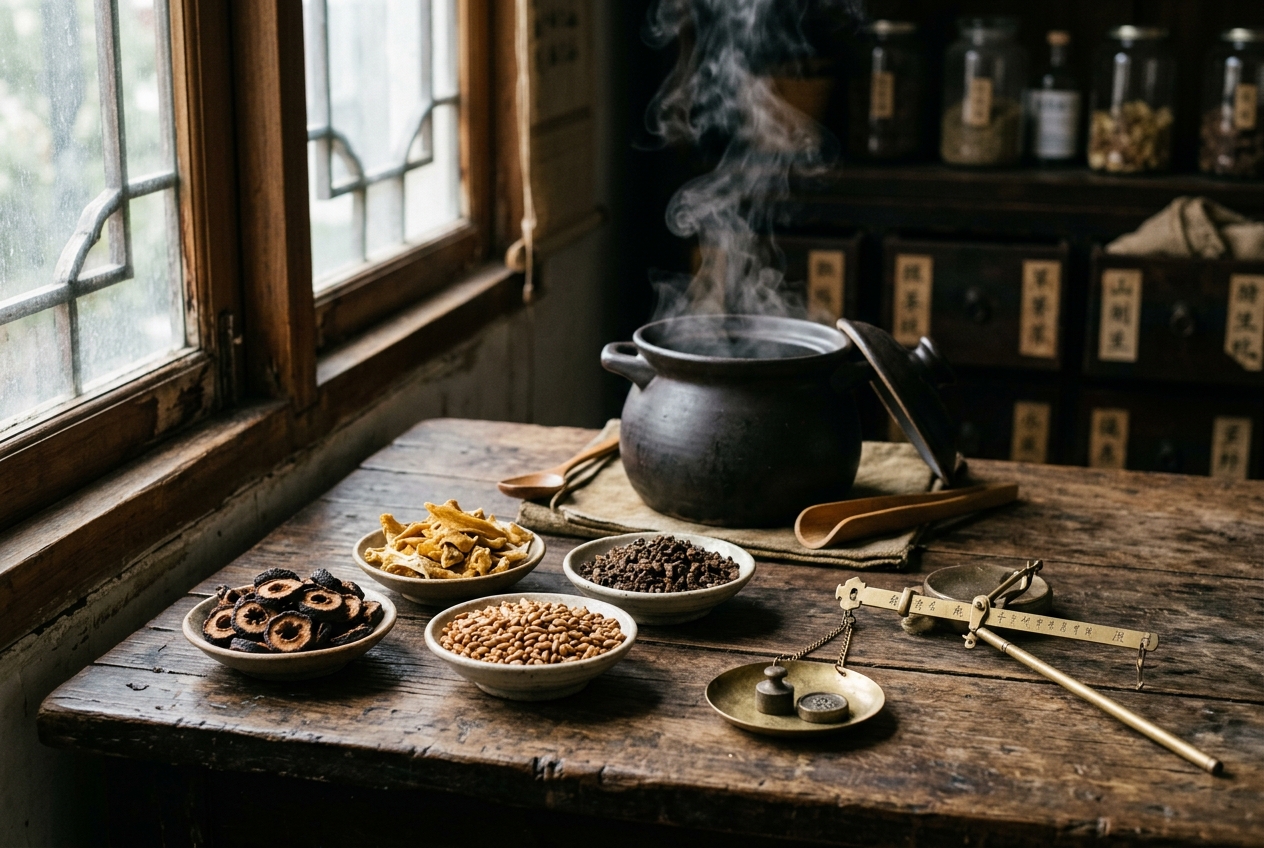
You have just pushed your chair back from an indulgent feast—rich with roasted meats, buttery sauces, aged cheeses, and multiple celebratory toasts. Within forty-five minutes, the celebratory warmth gives way to an uncomfortable heaviness. Your upper abdomen feels taut, resembling an inflated drum. An unyielding weight settles beneath your ribcage, accompanied by sour, sulfurous eructations and a creeping mental torpor that blankets your cognitive clarity in dense fog.
In biomedicine, this presentation is often catalogued under postprandial dyspepsia, delayed gastric emptying, or acute gastrointestinal distension. However, within the classical framework of Traditional Chinese Medicine (TCM), you are experiencing Shi Zhi (食滯)—acute Food Stagnation.
+----------------------------------------------------------------------------------------------------+
|                                    THE MIDDLE BURNER THERMODYNAMICS                                |
|                                                                                                    |
|    [ Ingested Food & Drink ] ---> [ STOMACH (Wei) ] --(Rotting & Ripening)--> Downward Descent    |
|                                         |                                     (Pure -> Intestines) |
|                                  [ SPLEEN (Pi) ]   --(Transformation)-------> Upward Ascent        |
|                                         |             & Transportation        (Clear Qi -> Lungs)  |
|                                         v                                                          |
|                        [ Impairment / Stagnation (Shi Zhi) ]                                       |
|                                         |                                                          |
|       +---------------------------------+---------------------------------+                        |
|       |                                                                   |                        |
|   Epigastric Distension, Foul Belching,                              Turbid Dampness,              |
|   Acid Regurgitation, Rebellious Qi (Nausea)                         Lethargy, Heat Generation     |
+----------------------------------------------------------------------------------------------------+
Far from viewing the gastrointestinal tract as a simple chemical basin governed exclusively by pH gradients and passive osmosis, classical East Asian physiology conceptualizes the digestive apparatus as a dynamic thermodynamic crucible located in the Middle Burner (Zhong Jiao). When the volume or physical density of ingested substrates outstrips the processing capacity of this central metabolic engine, the mechanical and energetic vectors of digestion stall. The resolution of this metabolic traffic jam requires a sophisticated class of herbal agents known as Xiao Shi Yao (消食藥)—Food Stagnation-Relieving Herbs—which act as targeted enzymatic and physiological catalysts to restore physiological equilibrium.
2. What This Organ System Does: The Mechanics of Transformation and Transportation
To comprehend how food accumulation destabilizes human physiology, one must understand the paired organ relationship that anchors the Middle Burner: the Spleen (Pi) and the Stomach (Wei).
In East Asian medicine, the Stomach is designated as the "Sea of Food and Drink" (Shui Gu Zhi Hai). Its primary physiological directive is Fu Shu (腐熟)—the ripening and rotting of ingested materials. Energetically and mechanically, the Stomach Qi must maintain a downward vector (Jiang), propelling the churned, partially digested chyme downward into the Small and Large Intestines for sequential nutrient extraction and waste excretion.
Operating in tandem with the Stomach is the Spleen. In Chinese medical physiology, the Spleen represents not merely the lymphoid organ identified in modern anatomy, but the entire physiological apparatus responsible for enzymatic breakdown, substrate extraction, and fluid mobilization. Its dual responsibilities are defined as Hua (化, Transformation—the metabolic deconstruction of food into micronutrients and subtle energetic substrates) and Yun (運, Transportation—the distribution of these refined essences upward to the Heart and Lungs to generate Qi and Blood). Crucially, the functional vector of the Spleen is directed upward (Sheng).
                                  [ Clear Qi Ascends ] (Spleen / Pi)
                                          ^
                                          |
                      +-------------------+-------------------+
                      |      THE MIDDLE BURNER PIVOT          |
                      |   (Zhong Jiao / Digestive Engine)     |
                      +-------------------+-------------------+
                                          |
                                          v
                                [ Turbid Descends ] (Stomach / Wei)
Health is maintained when this central pivot operates unimpeded: clear essences ascend to nourish the sensory orifices and brain, while turbid metabolic byproducts descend for elimination.
The Pathophysiology of Food Stagnation (Shi Zhi)
Food Stagnation (Shi Zhi) occurs when this functional polarity collapses. The etiology typically bifurcates into two distinct pathways:
- Primary Excess (Dietary Overload): Rapid ingestion, overeating (Bao Yin Bao Shi), or consuming excessive quantities of greasy, heavily spiced, ultra-processed, or thermally cold and raw foods overwhelms a healthy Stomach and Spleen. The physical volume of the bolus arrests the Stomach's descending action.
- Secondary Deficiency (Spleen-Stomach Vacuity): Chronic mental fatigue, systemic stress, erratic eating schedules, or constitutional weakness impairs the Spleen's transformative capacity (Pi Wei Xu Ruo). Even modest, normal dietary portions cannot be processed efficiently, precipitating a state of "Deficiency with Secondary Excess" (Xu Zhong Jia Shi).
When food stagnates in the epigastrium, the central Qi Ji (Qi mechanism) is obstructed. The Stomach Qi, unable to descend, rebels upward (Wei Qi Shang Ni), manifesting as sour regurgitation (Tu Suan), nausea, hiccuping, and foul-smelling eructations (Ai Fu) that smell of decomposing food.
Concurrently, the stagnant, unmoving mass fermentates within the digestive tract, generating endogenous heat (Yu Re) and dense, obstructive dampness (Shi Zhuo), leading to systemic lethargy, intestinal dysbiosis, and pain that worsens upon palpation.
3. How You Can Feel It: Signs of Balance and Imbalance
The operational integrity of your Middle Burner can be assessed through daily physiological patterns.
+--------------------------+------------------------------------+------------------------------------+
| PARAMETER                | HARMONIOUS MIDDLE BURNER           | FOOD STAGNATION (SHI ZHI)          |
+--------------------------+------------------------------------+------------------------------------+
| Postprandial Sensation   | Light, energized, clean satiety   | Distension, heaviness, focal pain  |
| Epigastric Palpation     | Soft, supple, tolerant to pressure | Tense, rigid, tender (Ju An)       |
| Eructation & Reflux      | Rare, odorless                     | Foul, sulfurous, sour regurgitation|
| Tongue Architecture      | Light red body, thin white coat    | Thick, greasy coat (Hou Ni Tai)    |
| Pulse Qualities          | Moderate, harmonious (Huan Mai)    | Slippery, forceful (Hua Shi Mai)   |
| Cognitive State          | Crisp, clear, alert                | Foggy, heavy-headed, lethargic     |
| Stool Quality            | Formed, effortless, regular        | Malodorous, erratic, undigested    |
+--------------------------+------------------------------------+------------------------------------+
Self-Assessment: Evaluating Your Digestive Equilibrium
To determine whether your digestive system is in balance, examine the following clinical markers:
- The Epigastric Pressure Test: Gently palpate the zone four finger-widths above your umbilicus. A balanced digestive system feels resilient, soft, and comfortable. If you experience sharp discomfort, hardness, or resistance that rejects pressure (Ju An), excess food stagnation is present. If pressing gently brings relief, an underlying Spleen Qi deficiency predominates.
- The Tongue Inspection: In natural light, observe your tongue body and coating. A balanced middle burner presents a pale red tongue with a thin, transparent white coating. A thick, turbid, yellow or white coating that looks like curdled grease (Hou Ni Tai) indicates an accumulation of stagnant food fermenting into pathological dampness and heat.
- The Morning Eructation Check: Foul morning breath, dry sourness at the back of the throat, or belches that taste of the previous night’s dinner indicate delayed gastric clearance and impaired Stomach descending Qi.
4. Substrate-Specific Pharmacodynamics & Modern Biochemical Correlations
Unlike generic laxatives or broad-spectrum anti-emetics, classical Chinese pharmacognosy classifies Xiao Shi Yao according to substrate specificity. Different culinary compounds—such as mammalian fats, dense seed starches, or complex proteins—require distinct enzymatic environments and herbal vectors for breakdown.
+----------------------------------------------------------------------------------------------------+
|                               SUBSTRATE-SPECIFIC TARGETING OF XIAO SHI YAO                         |
|                                                                                                    |
|  [ Meat / Lipids / Greasy Foods ] --------> SHAN ZHA (Crataegus pinnatifida)                       |
|                                             * Lipase activation, organic acids, bile flow          |
|                                                                                                    |
|  [ Starches / Grains / Carbs ] -----------> MAI YA (Hordeum vulgare) & GU YA                       |
|                                             * Diastase, alpha/beta-amylase, starch hydrolysis      |
|                                                                                                    |
|  [ Mixed Grains / Fermented / Alcohol ] --> SHEN QU (Massa Medicata Fermentata)                    |
|                                             * Multi-enzyme solid-state fermentation complex        |
|                                                                                                    |
|  [ Severe Intractable Masses / Calculi ] -> JI NEI JIN (Endothelium Corneum Gigeriae Galli)       |
|                                             * Ventriculin, proteolytic surge, pepsin stimulation   |
|                                                                                                    |
|  [ Stagnation + Phlegm + Rebellious Qi ] -> LAI FU ZI (Raphanus sativus)                           |
|                                             * Sinigrin, gastroprokinesis, descending Lung/Stomach Qi|
+----------------------------------------------------------------------------------------------------+
1. Shan Zha (Crataegus pinnatifida / Hawthorn Fruit)
- Target Substrate: Meat, saturated lipids, and rich, greasy foods (Rou Shi Zhi Ji).
- Properties & Channels: Sour, sweet, slightly warm. Spleen, Stomach, Liver.
- Biochemical Mechanisms: Rich in triterpenoid organic acids (citric, malic, ursolic, oleanolic, and crataegic acids) and flavonoid glycosides (hyperoside, vitexin, and oligomeric proanthocyanidins). Research indexed in ScienceDirect Pharmacological Studies on Crataegus Pinnatifida reveals that Shan Zha upregulates endogenous pepsin and gastric acid secretion, markedly accelerates gastrointestinal transit times, and stimulates hepatic bile acid secretion to emulsify dietary fats. Furthermore, it modulates lipid metabolism by upregulating low-density lipoprotein (LDL) receptor expression in hepatocytes and promoting peripheral lipolysis.
- Secondary Action: Uniquely activates Blood circulation and disperses stasis (Huo Xue Hua Yu), making it an important therapeutic agent for postprandial cardiovascular heaviness, hyperlipidemia, and dysmenorrhea from blood stasis.
2. Mai Ya (Hordeum vulgare / Sprouted Barley) & Gu Ya (Sprouted Rice/Millet)
- Target Substrate: Complex carbohydrates, starches, tubers, grains, and infant milk stagnation (Mi Mian Mu Shi Zhi Ji).
- Properties & Channels: Sweet, neutral. Spleen, Stomach, Liver.
- Biochemical Mechanisms: During germination, barley activates endogenous hydrolytic enzymes, creating high concentrations of alpha-amylase, beta-amylase, dextrinase, invertase, and proteases. As documented in PMC Research on Hordeum Vulgare Diastase, these diastatic enzymes rapidly cleave alpha-1,4-glucosidic bonds in complex amylose and amylopectin, converting indigestible starch matrices into absorbable maltose, maltotriose, and glucose.
- Special Dynamics: Mai Ya gently courses Liver Qi (Shu Gan), resolving digestive distress provoked by emotional constraint and stress. Gu Ya (Fructus Setariae Germinatus) is milder in enzymatic intensity, making it ideal for delicate Spleen deficiency in pediatric or convalescent patients.
3. Shen Qu (Massa Medicata Fermentata)
- Target Substrate: Heavy grain accumulations, complex mixed dietary masses, and fermented, alcoholic stagnation (Jiu Shi Zhi Ji).
- Properties & Channels: Sweet, acrid, warm. Spleen, Stomach.
- Preparation & Composition: A historic solid-state fermented preparation combining wheat flour and wheat bran with the pulverized fresh juices of Artemisia annua, Xanthium sibiricum, Polygonum hydropiper, Phaseolus calcaratus, and crushed Prunus armeniaca kernel. As detailed in the Wikipedia Entry on Traditional Chinese Medicine Pharmacognosy, this matrix undergoes microbial solid-state incubation.
- Biochemical Mechanisms: Loaded with fungal and bacterial enzymes (proteases, cellulases, amylases), B-complex vitamins, and natural probiotics. It acts as an exogenous digestive catalyst that warms the Middle Burner, harmonizes the stomach lining, and disperses cold-damp accumulations caused by the overconsumption of beer, alcohol, and fermented foods.
4. Ji Nei Jin (Endothelium Corneum Gigeriae Galli / Gizzard Membrane of Gallus gallus domesticus)
- Target Substrate: Severe, chronic, intractable food accumulations, childhood nutritional stagnation (Gan Ji), and calcified urinary or biliary stones (Dan Shi, Lin Zheng).
- Properties & Channels: Sweet, neutral. Spleen, Stomach, Small Intestine, Bladder.
- Biochemical Mechanisms: Composed of ventriculin, keratin, and a broad spectrum of proteolytic amino acids. Ji Nei Jin exerts strong prokinetic and secretagogue actions; oral administration induces a sustained surge in free hydrochloric acid and gastric pepsin output. Its high enzymatic potency enables it to dissolve dense proteinaceous masses and aid in the disintegration and expulsion of urinary and biliary stones.
5. Lai Fu Zi (Raphanus sativus / Radish Seed)
- Target Substrate: Severe food stagnation accompanied by dense phlegm accumulation, abdominal distension, thoracic fullness, and rebellious Qi (Shi Zhi Tan Yong, Qi Ni).
- Properties & Channels: Acrid, sweet, neutral. Spleen, Stomach, Lung.
- Biochemical Mechanisms: Rich in glucosinolates (specifically sinigrin and raphanin), volatile essential oils, and erucic acid. Modern investigations indexed in Frontiers in Pharmacology on Gastrointestinal Motility demonstrate that Lai Fu Zi modulates cholinergic receptors and tachykinergic pathways, accelerating colonic transit and enhancing gastric fundus accommodation.
- Dual-Axis Pharmacology: Uniquely bridges the gastrointestinal and respiratory systems. It descends Stomach Qi to clear constipation and foul belching while simultaneously descending Lung Qi (Jiang Qi Hua Tan) to treat coughing and wheezing triggered by digestive congestion (the "Gastro-Pulmonary Axis").
Processing Dynamics (Pao Zhi): Raw versus Scorched and the "Jiao San Xian" Synergy
The therapeutic orientation of Food Stagnation herbs is altered by traditional processing (Pao Zhi), specifically dry-frying (Chao) and scorching (Jiao).
+-------------------+-----------------------------------+------------------------------------+
| HERBAL AGENT      | RAW STATE (SHENG)                 | SCORCHED STATE (JIAO)              |
+-------------------+-----------------------------------+------------------------------------+
| Shan Zha          | Higher free acidity; moves Blood, | Moderates acidity; protects gastric|
|                   | disperses vascular stasis         | mucosa; focuses on digesting meat  |
+-------------------+-----------------------------------+------------------------------------+
| Mai Ya            | Courses Liver Qi, mobilizes bile, | Preserves thermostable amylase;    |
|                   | promotes lactation (low dose)     | warms Spleen; arrests diarrhea     |
+-------------------+-----------------------------------+------------------------------------+
| Shen Qu           | Strong acrid dispersal; dispels   | Enhances digestive warming;        |
|                   | superficial pathogenic factors    | stops nausea and damp diarrhea     |
+-------------------+-----------------------------------+------------------------------------+
       [ Jiao Shan Zha ]            [ Jiao Mai Ya ]            [ Jiao Shen Qu ]
       (Scorched Hawthorn)         (Scorched Barley)         (Scorched Ferment)
       Meat & Lipid Focus         Starch & Carb Focus       Mixed Grain & Alcohol
               \                          |                          /
                \                         |                         /
                 v                        v                        v
            +-------------------------------------------------------------+
            |               JIAO SAN XIAN (THREE WONDERS)                 |
            |   Broad-spectrum enzymatic breakdown; minimizes gastric    |
            |   irritation; porous carbon matrix adsorbs intestinal gas.  |
            +-------------------------------------------------------------+
When Shan Zha, Mai Ya, and Shen Qu are roasted until their exteriors turn dark brown with a charred aroma, they are termed Jiao San Xian (焦三仙)—The Three Scorched Wonders. This triad creates a balanced, broad-spectrum therapeutic effect: 1. Enzymatic Retention & Thermal Buffering: Scorching tempers the cooling or excessively acidic nature of raw plants, preventing damage to the Stomach Yin while preserving heat-stable amylases and digestive organic acids. 2. Adsorptive Carbon Matrix: The superficial pyrolysis creates microscopic charcoal-like structures capable of binding and adsorbing excessive intestinal gas, bacterial endotoxins, and volatile sulfur compounds. 3. Broad-Spectrum Hydrolysis: When prescribed in equal ratios (typically 9–15g each), the formula breaks down fats, carbohydrates, and fermented starches simultaneously, making it a reliable clinical baseline for acute, non-differentiated food stagnation.
5. Classical Formula Syntheses & Prescribing Logic
In authentic clinical practice, Xiao Shi Yao are rarely deployed as isolated agents. They are integrated into formula architectures that address concurrent pathological mechanisms: Qi stagnation, phlegm-damp accumulation, and underlying Spleen vacuity.
                                [ BAO HE WAN ARCHITECTURE ]
                                (Harmonize the Stomach Pill)

+---------------------------------------+
                          |   RULER (Jun): Shan Zha (Grease/Meat) |
                          +---------------------------------------+
                                              |
                          +---------------------------------------+
                          |   MINISTERS (Chen):                   |
                          |   * Shen Qu (Fermented Starches)      |
                          |   * Lai Fu Zi (Descends Qi/Phlegm)    |
                          +---------------------------------------+
                                              |
                          +---------------------------------------+
                          |   ASSISTANTS (Zuo):                   |
                          |   * Chen Pi & Ban Xia (Dry Dampness)  |
                          |   * Fu Ling (Leaches Dampness via Spleen)|
                          |   * Lian Qiao (Clears Trapped Heat)   |
                          +---------------------------------------+
Formula 1: Bao He Wan (Harmonize the Stomach Pill)
Source: Dan Xi Xin Fa (Teachings of Dan-xi, 1481 CE)
- Indications: Acute, primary excess Food Stagnation (Shi Shi). Epigastric and abdominal fullness, distension, pain worse with pressure, foul belching, acid regurgitation, aversion to food, thick greasy tongue coating, and a slippery (Hua) pulse.
- Architectural Blueprint:
- Jun (Ruler): Shan Zha (9–15g) — Resolves greasy accumulations and meats.
- Chen (Minister): Shen Qu (9–12g) and Lai Fu Zi (6–9g) — Dissolve grain masses, eliminate stagnant dampness, and descend rebellious Stomach Qi.
- Zuo (Assistant): Chen Pi (Pericarpium Citri Reticulatae) and Ban Xia (Rhizoma Pinelliae) — Regulate the Middle Burner Qi vector, harmonize the stomach, transform phlegm, and stop nausea.
- Zuo (Assistant): Fu Ling (Poria) — Strengthens the Spleen and drains accumulated fluid-dampness through the urinary pathway.
- Zuo (Assistant): Lian Qiao (Fructus Forsythiae) — Disperses the secondary constrained heat (Yu Re) generated by trapped, fermenting food.
- Prescribing Logic: "Reduction without Tonification" (Xiao Er Bu Bu). It contains no tonifying herbs, focusing entirely on clearing the acute obstruction.
                                [ JIAN PI WAN ARCHITECTURE ]
                                (Strengthen the Spleen Pill)

+-----------------------------------------------------------------+
             |                       JIAN PI WAN BALANCE                       |
             +--------------------------------+--------------------------------+
             |   TONIFY SPLEEN (Bu / 60%)     |   REDUCE STAGNATION (Xiao / 40%)|
             +--------------------------------+--------------------------------+
             | * Bai Zhu (Atractylodes)       | * Shan Zha (Hawthorn)          |
             | * Ren Shen / Dang Shen         | * Shen Qu (Fermented Mass)     |
             | * Fu Ling (Poria)              | * Mai Ya (Sprouted Barley)     |
             | * Shan Yao (Dioscorea)         | * Chen Pi & Sha Ren (Aromatic) |
             |                                | * Huang Lian (Clears Heat)     |
             +--------------------------------+--------------------------------+
             |   OUTCOME: Simultaneously tonifies the underlying Spleen        |
             |   deficiency while clearing secondary food accumulations.       |
             +-----------------------------------------------------------------+
Formula 2: Jian Pi Wan (Strengthen the Spleen Pill)
Source: Ben Cao Gang Mu (Compendium of Materia Medica, 1596 CE)
- Indications: Chronic Spleen-Stomach Deficiency with Secondary Food Stagnation (Xu Zhong Jia Shi). Reduced appetite, postprandial distension relieved by gentle touch, loose or unformed stools containing undigested food particles (Wan Gu Bu Hua), fatigue, pale tongue with a patchy greasy coating, and a weak, slippery pulse (Ruo Hua Mai).
- Architectural Blueprint:
- Tonification Axis (Jian Pi): Bai Zhu, Dang Shen, Fu Ling, Shan Yao — Restores the Spleen's transformative and transportive (Yun Hua) capacity.
- Reduction Axis (Xiao Shi): Jiao Shan Zha, Jiao Shen Qu, Jiao Mai Ya — Gently breaks down trapped dietary substrates without depleting Spleen Qi.
- Qi-Regulating Axis (Li Qi): Chen Pi, Mu Xiang, Sha Ren — Restores the upward and downward Qi mechanism (Qi Ji), warms the Middle Burner, and disperses abdominal fullness.
- Heat-Clearing Axis (Qing Re): Huang Lian — Clears low-grade depressive heat from prolonged gastrointestinal stasis.
- Prescribing Logic: "Simultaneous Tonification and Reduction" (Xiao Bu Jian Shi). Tonification dominates (approx. 60%), supported by mild reduction (approx. 40%), preventing the common error of exhausting a deficient patient with harsh reducing agents.
Acupressure Points You Can Try Today
To enhance digestive motility and relieve acute epigastric distension without pharmacotherapy, apply firm pressure to these three clinically validated acupoints:
        (A) ZUSANLI (ST36)           (B) ZHONGWAN (CV12)           (C) GONGSUN (SP4)
       [ Below Lateral Knee ]        [ Midline Epigastrium ]       [ Medial Foot Arch ]
      * Regulates peristalsis       * Front-Mu Point of Stomach   * Luo-Connecting Point
      * Tonifies Middle Burner      * Relieves acute distension   * Relieves nausea & spasm
1. Zusanli (ST36 — Foot Three Miles)
- Location: Locate the lower border of your kneecap (patella). Move four finger-widths down the outer side of your shinbone (tibia). The point lies in the soft muscular groove approximately one finger-width lateral to the sharp anterior crest of the tibia.
- Application Technique: Apply firm, deep pressure using your thumb or knuckle, pressing downward toward the bone. Maintain for 2 to 3 minutes while taking slow, deep diaphragmatic breaths. You should feel a distinct dull, spreading ache (De Qi sensation).
- Indications: Nausea, profound bloating, postprandial fatigue, delayed gastric emptying, and general digestive weakness. Research synthesized via the World Health Organization Traditional Medicine Guidelines highlights ST36 as a master point for modulating gastric myoelectric activity and balancing the autonomic nervous system.
2. Zhongwan (CV12 — Middle Epigastrium)
- Location: Lie flat on your back. Locate the bottom of your sternum (the xiphoid process) and your navel. Point CV12 lies on the anterior midline, exactly halfway between the base of your breastbone and the center of your belly button (four cun superior to the umbilicus).
- Application Technique: Place the pads of your index, middle, and ring fingers over the point. Apply gentle to moderate pressure in clockwise circular motions for 2 to 3 minutes. Avoid sudden, forceful prodding, especially after heavy meals.
- Indications: As the Front-Mu alarm point of the Stomach and the confluence point for the Middle Burner, CV12 relieves acute epigastric distension, acid regurgitation, hiccuping, and foul eructations.
3. Gongsun (SP4 — Grandfather Grandson)
- Location: On the inner edge of your foot, slide your finger back from the joint of your big toe along the medial arch. In the depression located just distal and inferior to the base of the first metatarsal bone, you will find SP4.
- Application Technique: Grasp your foot with your opposite hand and press your thumb tip firmly into the medial depression, directing the vector upward toward the center of the arch. Hold for 90 to 120 seconds per foot.
- Indications: As the Luo-Connecting point of the Spleen meridian and the opening point of the Chong Mai (Penetrating Vessel), SP4 stops abdominal cramping, relieves acute gastric spasms, harmonizes the gut-brain axis, and settles stress-induced indigestion.
6. Food, Movement & Lifestyle Therapeutics
====================================================================================================
                              PRACTICAL MIDDLE BURNER INTEGRATION
====================================================================================================
  MOVEMENT THERAPY      -->  Holding Up Single Hand (Ba Duan Jin Qigong)
                             * Dynamic visceral stretch, improves splanchnic blood flow.

  DIETARY MODIFICATIONS -->  Incorporate roasted barley tea (Mugicha), hawthorn slices, radish broths.
                             Eliminate ice-cold fluids, dairy during meals, late-night dinners.

  CLINICAL CAUTIONS     -->  Contraindicated in pure Spleen deficiency without accumulation.
                             * Shan Zha stimulates uterine tone (avoid high doses in pregnancy).
                             * Mai Ya: Low dose (10-15g) aids lactation; High dose (30-60g) suppresses it.
====================================================================================================
Qigong & Movement Practice: "Holding Up a Single Hand to Regulate Spleen and Stomach"
(Tiao Li Pi Wei Xu Dan Ju — from the Eight Section Brocade / Ba Duan Jin)
This classical medical Qigong exercise applies a gentle, dynamic fascial stretch across the anterior torso, creating negative intra-abdominal pressure that optimizes splanchnic circulation, relaxes the lower esophageal sphincter, and restores the digestive pivot.
       [ INHALE & EXPAND ]                             [ EXHALE & RELEASE ]
       Right Palm Presses Up (Heaven)                  Both Hands Return to Center
       Left Palm Presses Down (Earth)                  (Dan Tian / Navel Level)
       (Dynamic visceral stretch)                      (Relaxation & integration)
               \                                               /
                +-----------------------> <-------------------+
Step-by-Step Execution:
- Starting Position: Stand upright with your feet shoulder-width apart, parallel to one another. Soften your knees slightly, drop your tailbone, and relax your shoulders. Place both hands in front of your lower abdomen (Dan Tian), palms facing upward, fingers loosely pointing toward each other as if holding a bowl.
- The Inhalation and Separation Phase: Inhale slowly and deeply into your lower abdomen through your nose. Turn your right palm upward and raise it along the midline of your chest, continuing upward above your head until the palm presses flat toward the sky (fingers pointing to the left). Simultaneously, turn your left palm downward and press it firmly toward the floor beside your left hip (fingers pointing forward).
- The Extension: At the peak of your inhalation, gently extend both arms, feeling a gentle stretch through the lateral ribcage, solar plexus, and anterior abdominal wall. Do not hold your breath; pause in this extension for one second.
- The Exhalation and Return Phase: Exhale smoothly through your nose, relaxing both arms and returning them along the midline back to the starting "holding bowl" posture in front of your navel.
- Alternation and Repetitions: Repeat the sequence by pressing the left palm up to Heaven and the right palm down to Earth. Complete 8 to 12 alternating cycles.
- Sensation to Look For: You should feel an expansive warmth across your epigastrium, followed by deep abdominal rumbles (borborygmi) and a spontaneous downward release of trapped thoracic tension, indicating that the Middle Burner Qi pivot has resumed its natural movement.
Dietary Modifications: Strategic Additions and Subtractions
+----------------------------------------------------------------------------------------------------+
| DIETARY GUIDELINES FOR RESOLVING FOOD STAGNATION                                                   |
+--------------------------------------------------+-------------------------------------------------+
| STRATEGIC ADDITIONS (ENHANCE MOTILITY)           | CRITICAL SUBTRACTIONS (REDUCE OBSTRUCTION)      |
+--------------------------------------------------+-------------------------------------------------+
| * Roasted Barley Tea (Mugicha / Chao Mai Ya)     | * Iced drinks & chilled smoothies during meals  |
| * Simmered Daikon Radish with warming ginger     | * High-fat, deep-fried foods & refined pastries |
| * Dried Hawthorn Fruit Infusions (1-2 slices)    | * Dense dairy products, cheeses & heavy creams  |
| * Steamed, warming, well-cooked vegetable congees| * Late-night dining within 3 hours of sleep     |
+--------------------------------------------------+-------------------------------------------------+
- Incorporate Roasted Grain Teas: Drinking warm roasted barley tea (Mugicha) or sprouted rice infusions after heavy meals supplies small amounts of thermostable amylases that ease the digestion of dense starches.
- Emphasize Cooked Daikon Radish: Daikon radish (Lai Fu) acts as a gentle culinary food-relieving agent. Simmered in clear, ginger-infused broths, it descends Stomach Qi, breaks down rich proteins, and resolves postprandial bloating.
- Eliminate Cold and Raw Foods During Acute Stagnation: Cold drinks, iced water, and raw salads introduce a thermal chill that constricts the microvasculature of the stomach lining, immobilizing the Middle Burner engine. Opt instead for warm, cooked meals and room-temperature or hot fluids.
Clinical Contraindications and Pharmacological Warnings
While Xiao Shi Yao are widely used and versatile, their specific pharmacological actions require clear clinical precautions:
! WARNING: CLINICAL CONTRAINDICATIONS !
1. PURE SPLEEN DEFICIENCY: Prolonged use of Xiao Shi Yao (especially Lai Fu Zi and raw Shan Zha)
   without tonifying herbs depletes Genuine Qi (Zheng Qi).
2. PREGNANCY: High doses of Shan Zha stimulate uterine smooth muscle contractions (oxytocic action).
3. LACTATION MODULATION: Mai Ya's effect on breast milk is strictly dosage-dependent:
   - LOW DOSE (10-15g): Gently tonifies Spleen, relieves Liver constraint, SUPPORTS lactation.
   - HIGH DOSE (30-60g): Suppresses prolactin secretion, INHIBITS lactation (used for weaning).
- Pure Spleen Qi Vacuity: Indiscriminate or long-term administration of strong reducing agents (such as Lai Fu Zi or Ji Nei Jin) in patients without true food stagnation will exhaust Genuine Qi (Zheng Qi). When the digestive system is simply weak rather than obstructed, use tonics such as Si Jun Zi Tang (Four Gentlemen Decoction) rather than reducing agents.
- Pregnancy Precautions: Large doses of Shan Zha must be avoided during pregnancy. Biochemical analyses indicate that concentrated hawthorn extracts can stimulate uterine smooth muscle contractility and exhibit mild oxytocic actions. Furthermore, strongly descending herbs like Lai Fu Zi must be prescribed with caution in cases of threatened miscarriage.
- Dosage-Dependent Lactation Modulation of Mai Ya: Sprouted barley (Mai Ya) exhibits a biphasic, dosage-dependent effect on prolactin secretion and lactation:
- Low to Moderate Doses (10–15g): Gently tonify Spleen Qi and soothe Liver Qi, subtly promoting milk letdown in nursing mothers suffering from stress-induced lactation blockages.
- High Doses (30–60g raw or dry-fried decoction): Directly suppress anterior pituitary prolactin output, effectively terminating lactation (Hui Ru). High-dose Mai Ya is used clinically to assist with weaning or manage hyperprolactinemia, making it strictly contraindicated for women wishing to continue breastfeeding.
7. Today's Takeaway
The most effective, accessible action you can take today for your Spleen and Stomach requires no specialized tools and takes under five minutes: after your next substantial meal, avoid immediately sitting at your desk or lying down on the sofa.
Instead, practice five minutes of gentle, unhurried walking while applying slow, clockwise circular massage around the midpoint of your upper abdomen (Zhongwan / CV12), coordinating your movement with calm, nasal diaphragmatic breaths.
This simple practice mechanically relaxes the solar plexus, encourages the downward descent of Stomach Qi, and supports your Middle Burner in transforming and transporting your meals into sustained, vibrant vitality.
Authoritative Medical & Pharmacognosy References
- World Health Organization Traditional Medicine Strategy & Nomenclature
- National Center for Biotechnology Information (NCBI) PubMed Central Database
- ScienceDirect Pharmacological Studies on Crataegus Pinnatifida Organic Acids & Lipase
- PMC National Library of Medicine Research on Hordeum Vulgare Diastase & Alpha-Amylase
- Wikipedia Encyclopedia on Traditional Chinese Medicine Herbal Pharmacopeia
- Frontiers in Pharmacology Research on Gastrointestinal Motility and TCM Formulations