Xi Hong Fu: Navigating Lineage Point Combinations, Empirical Channel Dynamics, and Precision Acupressure Protocols
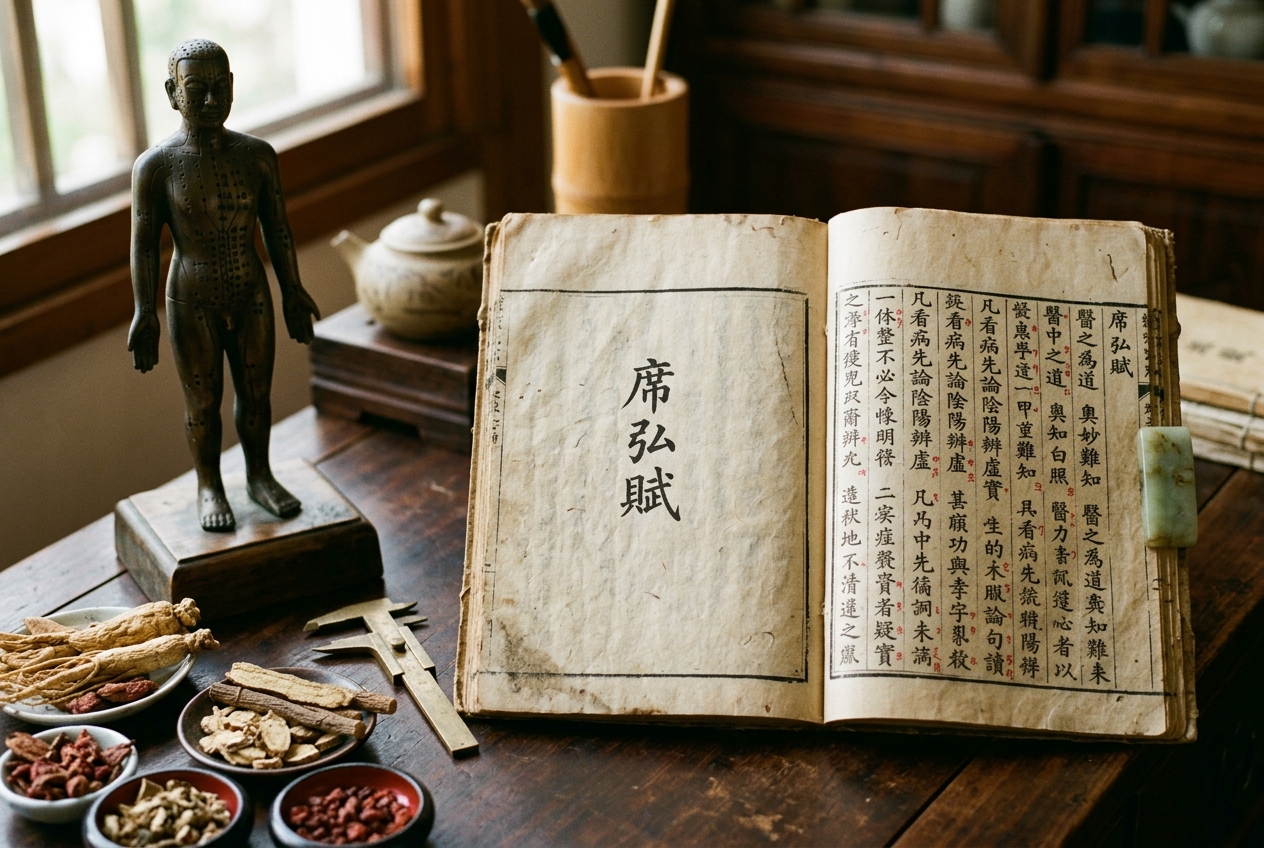
Central to this clinical heritage is the Xi Hong Fu (席弘赋, Ode of Xi Hong), a seminal Song-Yuan dynasty verse that revolutionised point selection by abandoning rigid single-meridian isolationism in favour of dynamic, cross-channel point couplets. Preserved in the sixteenth-century encyclopaedic compendium Zhenjiu Dacheng (Compendium of Acupuncture and Moxibustion) compiled by Yang Jizhou, the Xi Hong Fu presents a distilled repository of high-potency clinical pairings.
This chapter examines the historical and lineage transmission of the Xi family tradition, elucidates the bioelectric and inter-channel synergy of its core formula matrices, translates these classical heuristics into contemporary neurophysiology and myofascial biomechanics, and provides an exacting, non-invasive acupressure manual for immediate clinical translation.
1. Historical & Theoretical Provenance: The Xi Lineage and Empirical Point Synergy
The Song (960–1279 CE) and Yuan (1271–1368 CE) dynasties represented an era of profound intellectual maturation and clinical empiricism in Chinese medicine. Prior to this period, scholastic works frequently catalogued acupoints in linear anatomical succession along individual meridian routes, as systematised in standard channel texts. While academically rigorous, this single-channel doctrine often failed to capture the emergent clinical properties observed when distant points from disparate channels were stimulated synchronously.
Master Xi Hong, hailing from an esteemed multi-generational lineage of acupuncture masters, addressed this divergence by encoding his family's hard-won clinical observations into a Fu (赋)—a metered, rhyming pedagogical verse designed for oral transmission and mnemonic retention. The Xi Hong Fu distinguishes itself from dry point lists by functioning as a diagnostic and therapeutic algorithm. In the Xi lineage methodology, diseases are not viewed as isolated organ pathologies, but as dynamic disturbances in systemic bioelectric tension, fluid circulation, and axial somatic equilibrium.
Xi Hong's pedagogical structure hinges on three core clinical tenets:
- Hierarchy of Empirical Potency: The text privileges empirically validated, rapid-acting point combinations over theoretical point allocations that look harmonious on paper but yield indifferent clinical results.
- Dynamic Polarity and Vector Equilibrium: Rather than concentrating intervention solely at the site of symptom manifestation (Ashi or local focus), the ode systematically pairs distal regulatory levers (Ben, root) with intermediate or upper somatic targets (Biao, manifestation) to initiate directional vector shifts in somatic tension.
- Cross-Channel Communication (Jiao Hui): The lineage pioneered the strategic utilization of crossing points, Luo-connecting vessels, and Eight Confluent Points (Ba Mai Jiao Hui Xue) to influence multiple somatic and visceral domains simultaneously through minimal peripheral input.
By preserving this masterwork within Chapter 4 of the Zhen Jiu Da Cheng, Yang Jizhou codified what remains one of the most practically devastating and clinically reproducible frameworks in classical acupuncture literature.
2. Classical Formula Matrices & Channel Synergy
The operational core of the Xi Hong Fu lies in its specific point couplets. These formulas leverage the energetic mechanics of Biao-Li (Interior-Exterior channel pairing), Tong-Ming (Same-Name six-conformation axis resonance), and Extraordinary Vessel confluence.
Couplet A: Lieque (LU7) and Zhaohai (KI6) — The Craniocervical and Autonomic Fluid Axis
In the Xi Hong Fu, the pairing of Lieque (LU7, the Luo-Connecting point of the Lung channel and master point of the Conception Vessel, Ren Mai) with Zhaohai (KI6, the opening point of the Yin Motility Vessel, Yin Qiao Mai) is celebrated for resolving stubborn pharyngeal constriction, thoracic fullness, chronic cough, and unilateral or occipital cephalalgia.
- Energetic Resonance: LU7 governs the descending of upper-body Qi and disperses exterior pathogenic factors, while KI6 anchors the lower physiological Fire, enriches mucosal fluids (Yin), and stabilises ascending renal-adrenal energy.
- Synergistic Dynamic: Together, they form an upper-lower, metal-water circuit. LU7 acts on the upper respiratory and cervical fascial envelope, while KI6 grounds the somatic circuit in the medial calcaneal basin, establishing balance between the anterior functional axis (Ren Mai) and nocturnal somatic recovery (Yin Qiao Mai).
Couplet B: Hegu (LI4) and Quchi (LI11) — The Yangming Inflammatory and Febrile Clearing Matrix
Xi Hong emphasizes the union of Hegu (LI4, Yuan-Source point on the hand) and Quchi (LI11, He-Sea point on the elbow) as the definitive distal-proximal matrix for dispelling wind-heat, clearing cephalic congestion, abating cutaneous inflammation, and modulating intestinal motility.
- Energetic Resonance: Both points reside on the Hand Yangming (Large Intestine) channel, a meridian classically understood to be exceptionally abundant in both Qi and Blood (Duo Qi Duo Xue).
- Synergistic Dynamic: LI4 acts as an expansive peripheral driver that mobilises cephalic and facial circulation, while LI11 operates as a systemic drain that cools systemic heat and downregulates immunological hyper-reactivity. Their synchronized stimulation produces a potent anti-inflammatory cascade that purges pathogenic stagnation throughout the upper extremity, cranium, and digestive tube.
Couplet C: Zusanli (ST36) and Neiguan (PC6) — The Gastric-Cardiac Homeostatic Axis
Perhaps the most celebrated visceral pairing in the treatise is the tandem use of Zusanli (ST36, the He-Sea and Earth point of the Foot Yangming channel) and Neiguan (PC6, the Luo-Connecting point of the Hand Jueyin channel and master of the Yin Wei Mai).
- Energetic Resonance: ST36 anchors metabolic generation in the Middle Jiao (spleen/stomach matrix) and descends gastrointestinal turbidity. PC6 regulates the thoracic cavity, unbinds coronary and diaphragmatic tension, and calms the affective mental state (Shen).
- Synergistic Dynamic: This couplet bridges the Jueyin (Pericardium/Liver) and Yangming (Stomach/Large Intestine) axes. By simultaneously unlocking diaphragmatic spasm and coordinating gastric peristalsis, ST36 and PC6 resolve autonomic dysregulation presenting as palpitations paired with epigastric distension, nausea, or hyper-sympathetic gastrointestinal stalling.
3. Neurophysiological & Fascial Translation
Modern biomedical science increasingly confirms the anatomical and physiological architecture underlying the empirical couplets of the Xi Hong Fu. What classical masters termed "channel Qi" and "propagated sensation" can now be mapped directly to interstitial connective tissue architecture, mechanotransduction, peripheral nerve reflex arcs, and somatosensory gating networks.
Fascial Planes and Mechanotransduction
Research pioneered by Helene Langevin and colleagues demonstrates that acupuncture points correlate significantly with anatomical cleavage planes between intermuscular and intramuscular connective tissue septa. When mechanical pressure is applied—whether via needle rotation or sustained, perpendicular acupressure—the mechanical deformation of the extracellular matrix (ECM) engages cell-surface integrins.
This cellular strain triggers downstream signal cascades within fibroblasts, initiating actin cytoskeleton remodelling, local vasodilation via calcitonin gene-related peptide (CGRP) and substance P, and the sustained release of extracellular adenosine. Adenosine acts on local A1 receptors to exert profound antinociceptive and anti-inflammatory effects, explaining the lingering, soothing sensation of De Qi that radiates along fascial continuities (such as Myers' Superficial Front Line and Deep Front Line).
Somatosensory Gating and Neurovascular Networks
The analgesic and spasmolytic mechanisms of the Xi Hong Fu couplets operate under Ronald Melzack and Patrick Wall's classic gate control theory of pain, expanded by modern functional neuroimaging:
- Lieque (LU7) + Zhaohai (KI6): LU7 stimulates the superficial branch of the radial nerve and the lateral antebrachial cutaneous nerve, projecting afferent inputs into the C5–C6 spinal cord segments. This cross-modulates craniocervical pain signals routed via the trigeminocervical complex. Concurrently, KI6 engages the tibial nerve directly inferior to the medial malleolus (L4–S2 roots), stimulating ascending somatosensory pathways that modulate central autonomic networks in the periaqueductal gray (PAG) and solitary tract nucleus (Nucleus Tractus Solitarii, NTS), alleviating dry mucosal inflammation and subduing sympathetic stress responses.
- Hegu (LI4) + Quchi (LI11): LI4 accesses the deep branch of the radial nerve and first dorsal interosseous muscle afferents; LI11 stimulates the radial nerve trunk near the lateral epicondyle. Combined high-density mechanical stimulation of these convergent segmental territories (C5–T1) generates robust inhibitory post-synaptic potentials in the dorsal horn, blunting spinothalamic nociceptive transmission. Centrally, functional MRI studies show that manual stimulation of LI4 and LI11 downregulates hyperactive limbic circuits while dampening sympathetic outflow from the rostral ventrolateral medulla (RVLM), mediating systemic arterial tone and reducing peripheral vascular resistance.
- Zusanli (ST36) + Neiguan (PC6): ST36 lies along the course of the deep peroneal nerve (L4–S1), and PC6 directly overlies the median nerve (C6–T1). Both nerves possess high densities of large-myelinated A-beta and moderately-myelinated A-delta somatic afferent fibres. Stimulation of the median nerve at PC6 excites central vagal motor nuclei, elevating cardiac parasympathetic tone, reducing heart rate variability volatility, and normalizing lower esophageal sphincter peristalsis. Meanwhile, mechanosensory input at ST36 activates the sciatic-splenic neural axis and promotes cholinergic anti-inflammatory pathway signaling through alpha-7 nicotinic acetylcholine receptors ($\alpha7\text{nAChR}$) on splenic macrophages, suppressing systemic levels of TNF-$\alpha$, IL-1$\beta$, and IL-6.
4. Systematic Topography of the Meridians
To execute these classical pairings effectively, one must understand the tactile landmarks of the five primary meridians featured in the Xi Hong Fu formulas. Rather than navigating abstract lines, we observe functional somatic tracks mapped along palpable muscular and bony margins:
- The Lung Meridian (Hand Taiyin): Commences over the upper anterolateral thoracic wall, descends along the lateral, radial aspect of the biceps brachii, crosses the cubital fossa lateral to the biceps tendon, tracks along the radial border of the anterior forearm over the pronator quadratus and radial artery, and terminates at the lateral corner of the thumb nail bed.
- The Large Intestine Meridian (Hand Yangming): Begins at the radial angle of the index fingernail, traverses the first interosseous space over the dorsal hand, passes between the extensor pollicis longus and brevis tendons (the anatomical snuffbox), tracks the lateral border of the radius up to the lateral elbow crease, continues along the lateral deltoid insertion, and ascends across the lateral cervical region to cross under the nose.
- The Stomach Meridian (Foot Yangming): Descends from the infraorbital margin, sweeps around the angle of the jaw, descends the anterior neck over the sternocleidomastoid, tracks along the mid-clavicular and mamillary line down the abdomen (2 cun lateral to the midline), passes down the anterior thigh (rectus femoris), runs along the palpable muscular belly of the tibialis anterior lateral to the shinbone crest, crosses the dorsal ankle joint, and terminates at the lateral second toe nail.
- The Pericardium Meridian (Hand Jueyin): Arises lateral to the nipple, courses down the anterior midline of the inner arm between the biceps brachii heads, traverses the center of the cubital crease medial to the biceps tendon, plunges down the exact midline of the volar forearm nestled between two prominent cords—the flexor carpi radialis and palmaris longus tendons—crosses the wrist crease, and finishes at the tip of the middle finger.
- The Kidney Meridian (Foot Shaoyin): Originates on the plantar surface of the foot (in the depression formed during plantarflexion), curves up and around the posterior and inferior margin of the medial ankle bone (malleolus), ascends the medial aspect of the lower leg posterior to the tibia border, courses up the deep medial-posterior thigh, passes through the perineum, and climbs the lower abdomen (0.5 cun lateral to the anterior midline) up to the clavicular junction.
5. Precision Non-Invasive Acupressure Protocols
The following clinical matrix provides explicit parameters for administering high-precision, non-invasive acupressure according to the standards outlined in the WHO Benchmarks for Acupuncture Practice and standard anatomical references.
Comprehensive Acupressure Clinical Table
| Acupoint Name (Code / Hanzi) | Bone-Proportional Cun & Precise Anatomical Landmarks | Accessible Somatosensory Reference Landmark | Pressure Vector & Angle | Mechanical Modulation & Duration | Proprioceptive De Qi Sensory Target | Primary Neuro-Somatic Clinical Indications |
|---|---|---|---|---|---|---|
| Lieque (LU7 / 列缺) |
1.5 cun proximal to the transverse crease of the wrist, in the notch superior to the styloid process of the radius. | Interlock the thumbs and index fingers of both hands along the web spaces; the tip of your index finger rests directly in the bony groove on the side of the wrist. | Oblique proximal vector toward the elbow ($45^\circ$). | Sustained rhythmic compression with slow circular micro-oscillations; 90–120 seconds. | Deep, spreading dull distension radiating along the thumb tendon sheath and up the forearm. | Occipital cephalalgia, stiff neck, tension headaches, acute cough, pharyngeal dryness, facial nerve paralysis. |
| Zhaohai (KI6 / 照海) |
1.0 cun directly inferior to the prominence of the medial malleolus, in the groove between the tendons. | Find the lowest point of your inner ankle bone; slide your finger one finger-width straight down into the soft, hollow notch that aches when pressed. | Perpendicular ($90^\circ$) to slightly superior angle toward the inner ankle joint. | Steady, deep perpendicular thumb pressure maintained with even breath cycles; 90–120 seconds. | Mild electrical tingling or warm heavy ache spreading through the heel and ascending the inner lower leg. | Insomnia, nocturnal anxiety, sore scratchy throat, urinary retention, pelvic floor hypertonicity, dry eyes. |
| Hegu (LI4 / 合谷) |
On the dorsum of the hand, between the 1st and 2nd metacarpal bones, at the midpoint of the 2nd metacarpal on its radial border. | Bring your thumb and index finger tightly together; press directly into the highest point of the muscle bulge, angling the pressure slightly against the bone. | Oblique-transverse vector directed toward the palm and the index finger metacarpal bone. | Firm, progressive sustained ischemic pressure with 2-second on/off pulsing waves; 120 seconds. | Pronounced dull ache, heavy pressure, and regional numbing sensation radiating into the index finger and web space. | Frontal and temporal headaches, sinus pressure, dental pain, facial muscle spasm, systemic febrile conditions, constipation. |
| Quchi (LI11 / 曲池) |
At the lateral end of the transverse cubital crease, midway between Chize (LU5) and the lateral epicondyle of the humerus when the elbow is flexed at $90^\circ$. | Bend your elbow fully to a right angle; locate the outer crease line on the side of the arm; the point sits right at the outer end of the crease in a tender hollow. | Perpendicular ($90^\circ$) into the muscular depression between the extensor muscles. | Moderate-to-firm kneading pressure rotating in a clockwise cadence; 90–120 seconds per side. | Intense deep ache, sensation of fullness, occasionally radiating down the lateral forearm to the wrist. | Hypertension, systemic inflammation, cutaneous pruritus, epicondylitis (tennis elbow), fever, upper-extremity fatigue. |
| Zusanli (ST36 / 足三里) |
3.0 cun inferior to Dubi (ST35), one finger-breadth lateral to the anterior crest of the tibia, within the tibialis anterior muscle. | Place four fingers horizontally below your kneecap along the outer side of your shinbone; the point lies one thumb-width outward from the prominent shin crest in the muscle groove. | Perpendicular ($90^\circ$) straight into the fleshy belly of the tibialis anterior. | Deep, sustained thumb or knuckle pressure with gradual pressure augmentation; 120–180 seconds. | Profound downward-radiating dull ache, heaviness in the foot, or a warm sensation traversing the ankle joint. | Dyspepsia, gastric bloating, physical exhaustion, depressive fatigue, immune deficiency, knee joint instability. |
| Neiguan (PC6 / 內關) |
2.0 cun proximal to the anterior transverse crease of the wrist, between the tendons of palmaris longus and flexor carpi radialis. | Place three fingers across the inside of your wrist, starting at the crease; the point is directly below the third finger, right in the center groove between the two firm tendons. | Perpendicular ($90^\circ$) straight down into the space between the tendons. | Moderate, stable perpendicular pressure paired with slow, deep diaphragmatic exhalations; 90–120 seconds. | Spreading aching distension along the anterior midline of the forearm into the palm or chest. | Palpitations, cardiac neurosis, nausea, motion sickness, epigastric reflux, acute anxiety attacks, chest constriction. |
6. Applied Clinical Sequence: "The Evening Neuro-Visceral Reset"
Modern sedentary and digital environments impose a characteristic dysfunctional posture: anterior head carriage, thoracic kyphosis, shallow apical breathing, and sympathetic visceral inhibition. The following step-by-step protocol operationalizes Xi Hong's classic pairings into an integrated 10-minute nightly sequence to resolve cervicothoracic tension, downregulate hyper-sympathetic arousal, and restore enteric-cardiac equilibrium before sleep.
Step 1: Craniocervical & Respiratory Reset (LU7 + KI6 Couplet)
- Posture: Seated comfortably upright on a firm chair with bare feet flat on the floor.
- Execution: 1. Grasp your left wrist with your right hand, positioning your right index finger over Lieque (LU7). 2. Simultaneously reach down with your left hand to place your left thumb on the right inner ankle at Zhaohai (KI6). 3. Apply firm, sustained pressure to both points simultaneously for 90 seconds. 4. Coordinate this with conscious breathing: a 4-second nasal inhalation followed by a smooth, 6-second unforced exhalation. 5. Switch sides (Left KI6 + Right LU7) and repeat for 90 seconds.
- Clinical Effect: Decompresses tension in the suboccipital and sternocleidomastoid fascial tracts while triggering mucosal hydration and central parasympathetic transition.
Step 2: Systemic Tension & Inflammatory Drain (LI4 + LI11 Couplet)
- Posture: Relaxed seated position with forearms resting comfortably on a desk or thighs.
- Execution: 1. Position your right thumb on your left Hegu (LI4) (angled against the second metacarpal bone) and your right index finger or thumb tip into the outer elbow hollow at Quchi (LI11). 2. Apply synchronized, deep ischemic pressure to both points for 90 seconds. Modulate the pressure with gentle, rhythmic micro-rotations every 15 seconds. 3. Maintain steady awareness of the spreading dull ache in the hand and forearm. 4. Release gradually, swap hands, and apply to the right LI4 and LI11 for 90 seconds.
- Clinical Effect: Relieves ocular strain, frontal cranial pressure, and downregulates high-frequency sympathetic vascular tone throughout the cephalic bed.
Step 3: Enteric-Cardiac Vagal Induction (PC6 + ST36 Couplet)
- Posture: Reclining semi-supine or seated with knees comfortably bent at $90^\circ$.
- Execution: 1. Place your thumbs over Neiguan (PC6) on both wrists simultaneously (using crossing thumbs or pressing against a table edge), holding continuous, gentle perpendicular pressure for 120 seconds while inhaling into the lower abdomen. 2. Next, place both thumbs or the proximal interphalangeal knuckles of your index fingers into Zusanli (ST36) on both outer shins simultaneously. 3. Lean your torso slightly forward to enlist body weight, applying sustained, deep pressure into the tibialis anterior muscle for 120 seconds.
- Clinical Effect: Directly stimulates vagal efferent outflow to the sinoatrial node and gastrointestinal plexus, resolving postprandial stagnation, abating resting tachycardia, and inducing restorative delta-wave sleep readiness.
7. Safety Parameters, Biomechanical Thresholds, and Clinical Demarcations
While manual acupressure is an exceptionally safe non-invasive modality, applying it with academic and clinical precision demands strict adherence to physiological boundaries, contraindications, and tissue mechanics.
1. Pregnancy Contraindications
Certain acupoints possess strong downward-bearing (Jiang Qi) and uterotonic actions that can stimulate myometrial contractions. * Strictly Contraindicated Points: Hegu (LI4) must never be stimulated with deep, sustained, or ischemic pressure during any trimester of pregnancy, as it stimulates oxytocin pathways and uterine motor response. Other points outside this text with similar contraindications include Sanyinjiao (SP6), Jianjing (GB21), and Kunlun (BL60). * Safe Adaptations: Points such as Neiguan (PC6) are extensively validated for pregnancy-induced morning sickness, but must be stimulated with moderate, non-painful pressure without concurrent distal descending triggers.
2. Distinguishing Therapeutic De Qi from Mechanical Injury
A common clinical error in self-administered acupressure is confusing destructive nociceptive trauma with genuine therapeutic neurovascular stimulation: * The De Qi Sensation: Characterised by a deep, dull, spreading ache (Suan), heaviness (Zhong), mild warmth, or a diffuse sense of distension (Zhang). This reflects mechanical engagement of fascial collagen and low-threshold A-beta/A-delta mechanoreceptors. * Tissue Over-Pressure (Nociceptive Trauma): If the sensation is sharp, lancinating, electric, hot, or causes immediate involuntary muscle guarding, the pressure vector is either striking a superficial nerve trunk or bruising local periosteum. Pressure must be eased immediately and the vector adjusted slightly into the softer muscular cleft.
3. Clear Triage Criteria for Professional Medical Referral
Acupressure is a functional regulatory modality; it is not a substitute for emergency biomedical intervention. Readers and practitioners must refer out immediately if symptoms indicate severe underlying structural or ischemic pathology: * Neurological: Sudden-onset "thunderclap" headache, visual field deficits, unilateral facial drooping, slurred speech, or progressive motor weakness require immediate emergency medical evaluation for acute cerebrovascular events. * Cardiovascular: Severe retrosternal chest tightness, pain crushing into the jaw or left arm, dyspnea, or syncope require urgent cardiology intervention, not distal acupressure. * Gastrointestinal: Acute, rigid, board-like abdominal pain with rebound tenderness, high fever, or hematochezia necessitates emergency surgical triage for conditions such as appendicitis, bowel obstruction, or perforation.
8. Today's Clinical Takeaway: The 2-Minute Autonomic Reset
If you have only two minutes right now before closing this page, you can immediately downregulate acute sympathetic overdrive and diaphragmatic tension through a focused unilateral application of the Neiguan (PC6) – Zusanli (ST36) axis.
- Locate PC6: Measure three finger-widths up from your inner wrist crease on your left arm; place your right thumb firmly in the center ditch between the two rope-like tendons.
- Locate ST36: Place your left hand four fingers below the outer base of your left kneecap; locate the soft muscle groove one thumb-width to the outside of your sharp shinbone crest.
- Engage: Apply sustained, firm, perpendicular pressure to both points simultaneously. Lean your weight gently into the lower leg point while keeping your wrist supported.
- Breathe: Inhale smoothly through your nose for 4 counts, allowing your belly to expand; exhale effortlessly for 6 counts.
- Duration: Maintain this sustained pressure for exactly 60 seconds. Feel the dull, calming heaviness spread through your forearm and shin. Swap to the right limb and repeat for 60 seconds.
By engaging the clinical wisdom of the Xi Hong Fu and translating its classical couplets through modern neurofascial science, you turn an ancient lineage verse into an immediate, biologically grounded practice for whole-body restoration.