Worsley Five-Element Acupuncture: Navigating Causative Factor Diagnostics, Psycho-Spiritual Meridian Resonance, and Precision Acupressure Protocols
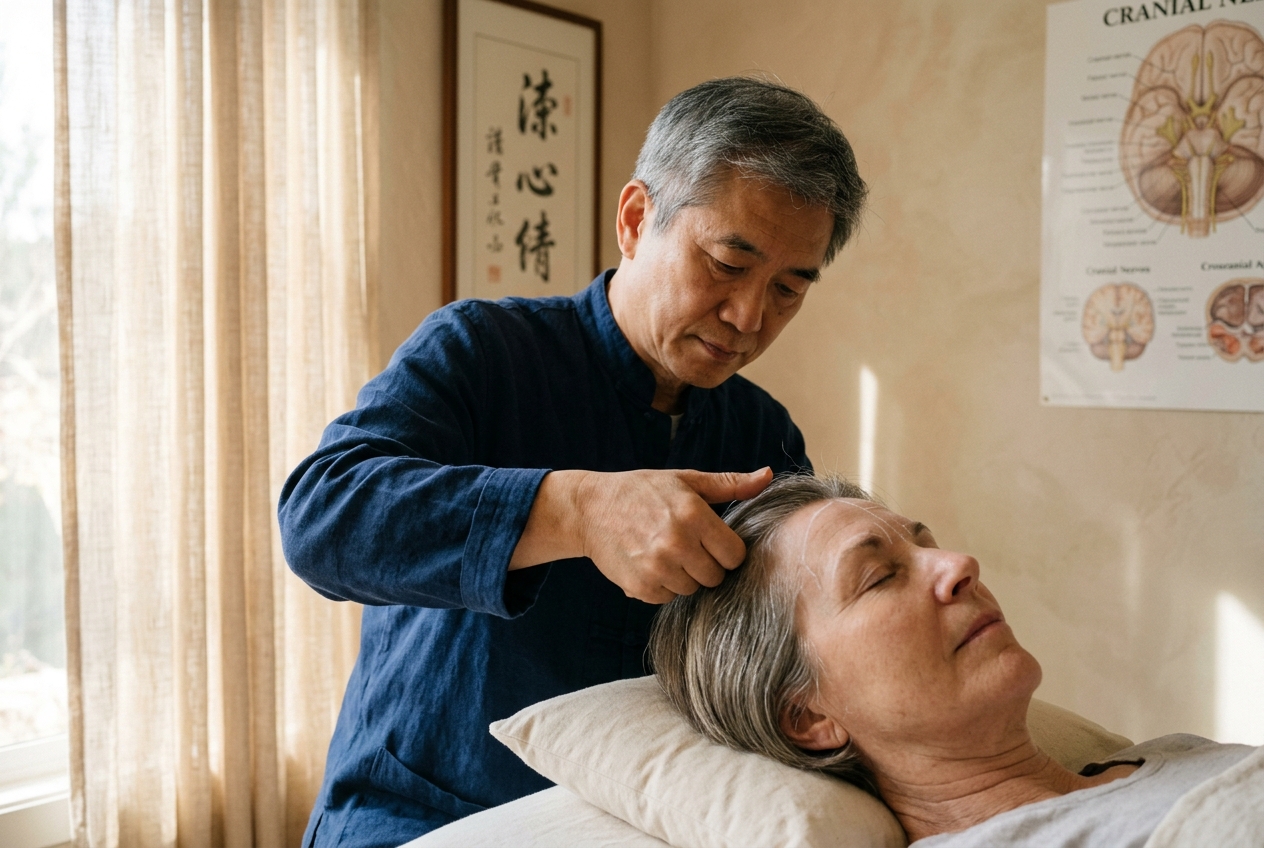
1. Opening — The Anatomy of Modern Somatic Fragmentation
Consider a scenario familiar to the modern clinician and patient alike: a mid-career professional presents with a constellation of refractory complaints—persistent epigastric tightening after meals, an immutable mid-afternoon cognitive fatigue, shallow apical breathing, and a pervasive, low-grade existential apprehension that resists cognitive behavioral restructuring. Standard laboratory assays return unremarkable; structural imaging reveals no gross lesion. In the conventional biomedical paradigm, such symptomatology is often categorized under the nebulous umbrella of "functional somatic syndromes" or stress-induced autonomic dysregulation. The patient is prescribed a selective serotonin reuptake inhibitor or a proton-pump inhibitor, yet the underlying sense of constitutional disquiet remains unresolved.
To understand why such interventions frequently fall short is to recognize that modern medicine often treats the somatic symptom as an isolated mechanical failure rather than a disruption in the dynamic, psycho-spiritual ecology of the organism. When you experience chronic muscular tension across the trapezius, an unexplained visceral fluttering behind the sternum, or a recurring hollow fatigue that settles in the lumbar region at dusk, you are inhabiting the precise territory mapped millennia ago by traditional psychosomatic traditions.
Classical Five-Element Acupuncture—particularly as codified in the mid-twentieth century—offers an extraordinarily sophisticated, non-reductionist diagnostic and therapeutic architecture for this malaise. Rather than merely suppressing localized pathology, it provides an exquisite cartography of human vulnerability, diagnosing how an individual's primary constitutional predisposition shapes their emotional worldview, physiological resilience, and somatic coping strategies.
2. The Meridian Path & Classical Architecture: A Journey Through Living Tissue
To comprehend this system, one must trace its classical lineage back to the Han Dynasty treatise, the Nan Jing (Classic of Difficulties), compiled around the first century CE. While the Huangdi Neijing (Inner Canon of the Yellow Emperor) established the broad cosmological and anatomical foundations of East Asian medicine, the Nan Jing introduced crucial diagnostic subtleties, specifically elaborating the five-phase (Wu Xing) relationships, the Mother-Child tonification-sedation laws, and the complex hemodynamics of radial pulse diagnosis across eighteen distinct physiological positions.
In the mid-twentieth century, the British osteopath and acupuncturist J.R. Worsley synthesized these classical Chinese and Japanese master lineages into what is now known as Constitutional Five-Element Acupuncture. Worsley observed that contemporary Western acupuncture had become overly focused on symptomatic, formulaic point prescriptions—an approach that mirrors pharmaceutical symptom suppression. In contrast, Worsley emphasized the primacy of treating the human being at the "spirit level," positing that every physical disease is the terminal downstream manifestation of an unaddressed disharmony within the patient's deepest constitutional core.
In this model, meridians (Jing Luo) are understood not merely as abstract metaphysical lines, but as dynamic, biophysical channels running through continuous fascial planes, neurovascular bundles, and interstitial fluid matrices. The pathways of the twelve primary meridians trace a continuous, unbroken circuit of bioenergetic flow:
- The Thoraco-Brachial Circuit: Commencing deep within the solar plexus, traversing the chest to the inner aspect of the arm and fingertips (governed by the Lung, Large Intestine, Stomach, and Spleen channels).
- The Cephalo-Pedal Circuit: Cascading from the orbital ridge and inner canthus down the posterior spine and dorsal aspects of the lower limbs to the toes (governing the Heart, Small Intestine, Bladder, and Kidney channels).
- The Splanchnic-Peripheral Circuit: Rising from the plantar surface of the foot, ascending the medial thighs, sweeping through the pelvic viscera, lateral ribs, and terminating at the chest and temples (governed by the Pericardium, San Jiao, Gallbladder, and Liver channels).
Rather than navigating these channels solely through ancient nomenclature, modern somatosensory science allows us to locate their palpable realities. When you trace the pathway of the Spleen meridian, for example, you are following the medial intermuscular septum of the lower leg—the precise fascial groove that feels exquisitely tender when postural collapse or metabolic exhaustion sets in. When you follow the Bladder channel along the paraspinal muscles of the back, you are palpating the exact bilateral lines where the dorsal rami of the spinal nerves emerge, anchoring postural tone and sympathetic ganglia output.
3. The Diagnostic Matrix: The Causative Factor (CF), CSOE, and the Twelve Officials
The Causative Factor (CF)
At the epicentre of Worsley’s system lies the doctrine of the Causative Factor (CF). The theory posits that every human being possesses a primary constitutional vulnerability within one of the Five Elements: Wood, Fire, Earth, Metal, or Water. This vulnerability is established in early life—a combined product of genetic inheritance, perinatal conditions, and early psychosocial conditioning.
The CF represents an individual's Achilles' heel: the specific energetic phase where balance is first compromised under stress, and conversely, the primary portal through which the entire organism can be restored to systemic equilibrium. An Earth CF, when subjected to relational trauma or overwork, will manifest digestive failure and pervasive anxiety; a Metal CF will manifest respiratory weakness and unresolved grief; a Water CF will experience adrenal exhaustion and paralyzing fear.
The Sensory Phenomenon of CSOE
Crucially, the CF cannot be deduced through intellectual questionnaires or patient narratives alone, as the cognitive mind constructs elaborate defenses. Instead, the practitioner utilizes the sensory diagnostic framework known as CSOE: Color, Sound, Odor, and Emotion.
- Color: The practitioner observes the subtle, non-pigmentary chromatic sheen in the lateral orbital zones (the "temple valleys") and the malar facial eminences under balanced natural light.
- Green (Wood): A faint olive or celadon hue reflecting hepatic congestion and autonomic tension.
- Red or Pale Ashen (Fire): A vivid florid flush or an unnerving chalky blanching over the zygomatic arch, reflecting vasomotor instability.
- Yellow (Earth): A warm, sallow, ochre undertone surrounding the mouth and eyes, signaling lymphatic sluggishness and digestive deficiency.
- White (Metal): A translucent, alabaster, or porcelain pallor indicating loss of vital pulmonary oxygenation and constitutional mourning.
-
Blue/Black (Water): A deep charcoal, leaden, or bruised indigo shadow situated directly beneath the infraorbital margin, demonstrating renal-adrenal taxation.
-
Sound: Diagnostic acoustics evaluate the involuntary cadence, timbre, and tonal inflection of the patient's voice, independent of linguistic content.
- Shouting (Wood): A clipped, staccato, driving vocal cadence characterized by excessive volume and authoritative projection.
- Laughing (Fire): A rapid, bubbly, giggling lilt, or conversely, a flat, monotonous speech devoid of all vocal warmth.
- Singing (Earth): A melodic, rhythmic, rising-and-falling singsong tone that subconsciously solicits comfort or reassurance.
- Weeping (Metal): A voice tinged with an involuntary catch, a falling inflection at the conclusion of phrases, sounding perpetually on the verge of tears.
-
Groaning (Water): A deep, flat, resonant guttural vibration emanating from the base of the throat, as though speaking against an overwhelming gravity.
-
Odor: Refined through rigorous olfactory training, the practitioner perceives the patient's metabolic emanation:
- Rancid (Wood): The sharp, sour tang akin to oxidized cooking oil or crushed dandelion stems.
- Scorched (Fire): The dry, acrid scent of burnt toast, ironed linen, or an electrical arc.
- Fragrant/Sweet (Earth): The cloying, heavy aroma of overripe fruit, molasses, or damp wheat.
- Rotten (Metal): The crisp, pungent, mineral-decay odor reminiscent of compost heaps or damp autumn leaves.
-
Putrid (Water): The deep, ammoniacal, stagnant scent characteristic of tidal marshes, salt flats, or deep well water.
-
Emotion: The primary affective response is assessed not as an episodic reaction to life events, but as a rigid baseline filter. The Wood CF exhibits inappropriate anger, irritation, or an inability to access healthy assertion; the Fire CF swings between manic exuberance and flat anhedonia; the Earth CF demonstrates obsessive sympathetic rumination and a desperate need to nurture or be nurtured; the Metal CF carries an immutable sense of loss, unworthiness, and longing for purity; the Water CF operates from pervasive existential dread, hypervigilance, or a reckless absence of self-preservation.
The Twelve Officials (Zang-Fu) as Ministers of Consciousness
In classical Five-Element theory, the internal organs are elevated far beyond their physiological actions; they are designated as the Twelve Officials (Zang-Fu)—an internal imperial court governing both the somatic and psycho-spiritual realms:
- The Heart (Xin): The Supreme Controller or Sovereign. Houses the Shen (Cosmic Spirit), radiating clarity, benevolence, and effortless existential authority.
- The Small Intestine (Xiao Chang): The Official Who Separates the Pure from the Impure. Discerns wholesome from toxic inputs on both nutritional and mental planes.
- The Bladder (Pang Guang): The Official in Charge of the Reservoirs. Manages the distribution of fluid reserves and governs the somatic endurance required for long-term endeavor.
- The Kidney (Shen): The Official of Vital Substance and Will (Zhi). The foundational vault of Jing (Pre-Natal Essence), generating primal drive, courage, and constitutional longevity.
- The Pericardium (Xin Bao): The Heart Protector or Sovereign's Shield. Acts as the emotional bodyguard, regulating relational intimacy, healthy boundaries, and joy.
- The San Jiao (Triple Energizer): The Official of Irrigation and Transformation. Harmonizes the three metabolic cavities (thoracic, abdominal, pelvic) and maintains physiological homeostasis across internal temperature gradients.
- The Liver (Gan): The General of the Armed Forces. Conceives the life strategy, generates vision, regulates the smooth flow of Qi, and manages directional purpose.
- The Gallbladder (Dan): The Official of Decision-Making and Judgment. Translates the Liver's strategic vision into clear, decisive action and impeccable moral discernment.
- The Spleen (Pi): The Official of Transportation and Transformation. Oversees digestive assimilation, transforms food into Gu Qi (Nutritional Essence), and governs mental stability.
- The Stomach (Wei): The Official of Rotting and Ripening. Acts as the public granary, receiving ideas and nutrients, breaking them down into digestible material.
- The Lung (Fei): The Prime Minister / Receiver of Heavenly Qi. Inhales celestial breath, establishes the boundary between self and cosmos, and anchors the felt sense of self-worth.
- The Large Intestine (Da Chang): The Official of Elimination. Purges metabolic dregs, toxic emotional attachments, and outmoded mental constructs, enabling regeneration.
4. Clearing the Pathway: Classical Energetic Blockages and Point Protocols
A fundamental axiom of classical Five-Element medicine dictates that a practitioner must never tonify a blocked system. Attempting to fortify a CF while systemic energetic blockages remain active is akin to pouring fresh water into a stagnant, silted basin: it exacerbates pathology by feeding pathogenic factors. Classical protocols demand the rigorous assessment and clearance of three primary energetic blockages before constitutional treatment commences: Aggressive Energy (AE), Entry-Exit Blocks, and the Husband-Wife Imbalance.
1. Aggressive Energy (AE) Drainage
Aggressive Energy is a virulent, pathogenic quality of Qi that accumulates within the yin organs (Zang) as a consequence of profound emotional shock, chemical toxicity, chronic repressed rage, or severe constitutional depletion. Left uncleared, AE relentlessly corrodes the physical and psycho-spiritual fabric of the patient.
- Diagnostic Verification: Palpated as a tight, wiry, discordant quality on the deep pulse positions and confirmed via shallow test-needling along the dorsal paraspinal lines.
- Drainage Protocol: The classical protocol utilizes the dorsal Bladder Meridian Back-Shu points:
- BL13 (Feishu / Lung Shu): 1.5 cun lateral to the lower border of the spinous process of the 3rd thoracic vertebra (T3).
- BL14 (Jueyinshu / Pericardium Shu): 1.5 cun lateral to T4.
- BL15 (Xinshu / Heart Shu): 1.5 cun lateral to T5.
- BL18 (Ganshu / Liver Shu): 1.5 cun lateral to T9.
- BL20 (Pishu / Spleen Shu): 1.5 cun lateral to T11.
- BL23 (Shenshu / Kidney Shu): 1.5 cun lateral to the 2nd lumbar vertebra (L2).
- Technique: In classical practice, shallow perpendicular insertion of un-stimulated needles into these bilateral points (accompanied by bilateral test needles placed 0.5 cun lateral to the Shu points) allows the erythema (red flare) to dissipate, signaling the evacuation of toxic heat and somatic aggression.
2. Entry-Exit (E/E) Blocks
The twelve primary meridians form a continuous, closed hydrological loop. Occasionally, the energetic transition between the termination ("Exit" point) of one meridian and the origin ("Entry" point) of its sequential partner becomes occluded. This results in a severe pressure gradient: profound hyperactivity and pain in the upstream meridian, accompanied by ischemic collapse and functional failure in the downstream channel.
- Primary Example (Large Intestine to Stomach):
- Exit Point: LI20 (Yingxiang / Welcome Fragrance) — Situated in the nasolabial groove, at the level of the midpoint of the lateral border of the ala nasi.
- Entry Point: ST1 (Chengqi / Container of Tears) — Located directly below the pupil, between the eyeball and the infraorbital margin.
- Clinical Signs: Frontal sinus congestion, acute dental neuralgia, concurrent with severe epigastric numbness, anorexia, or severe apathy.
-
Protocol: Sedate LI20 with dispersive pressure/needling, followed immediately by gentle tonification of ST1, thereby dissolving the barrier and restoring smooth flow across the cranial-facial threshold.
-
Other Critical E/E Pairs: Small Intestine 19 (Tinggong) to Bladder 1 (Jingming); Pericardium 8/9 (Laogong/Zhongchong) to San Jiao 1 (Guanchong); Gallbladder 41 (Zulinqi) to Liver 1 (Dadun).
3. Husband-Wife Imbalance
The Husband-Wife imbalance is arguably the most critical systemic emergency in Five-Element diagnosis. Assessed via bilateral radial pulse examination, it reflects a state wherein the "Husband" (the entire right radial pulse complex: Metal and Earth, Lung/Large Intestine, Stomach/Spleen) is excessively dominant, hard, and aggressive, while the "Wife" (the left radial pulse complex: Wood and Fire, Heart/Small Intestine, Liver/Gallbladder, Kidney/Bladder) is threadbare, deeply submerged, and rapidly failing.
- Pathophysiological Meaning: The mechanical, structural, and intellectual aspects of the organism (Right/Husband) are aggressively draining and suffocating the vital, creative, spiritual, and emotional reservoirs (Left/Wife).
- Clinical Presentation: The patient feels utterly spent, depressed, operating entirely on adrenaline and sheer willpower, teetering on the verge of physiological collapse.
- Resolution: The blockage is systematically cleared using a specific sequence: tonifying the deep Yuan-Source and Back-Shu points of the depleted Left-hand officials (especially BL15 [Heart Shu], BL23 [Kidney Shu], KI3 [Taixi], LR3 [Taichong]) while sedating the over-dominant Right-hand channels, followed by the activation of specific spirit-restorative points to rebalance autonomic polarity.
5. Spirit-Level & Command Point Acupressure Protocols
When classical principles are translated into non-invasive clinical somatic therapy, targeted manual stimulation of high-density neuro-fascial loci can induce profound neurochemical, autonomic, and psychological shifts. The following spirit-level and command points serve as master switches for systemic re-regulation.
Point Directory & Precise Anatomical Cun Landmarks
-
CV17 (Shanzhong / Chest Center — Seat of the Sea of Qi) * Exact Anatomical Location: Located on the anterior midline of the sternum, in the fourth intercostal space, directly level with the male nipples (or midway between the bilateral fourth sternocostal articulations). * Psycho-Spiritual Action: The primary gathering center of Zong Qi (Pectoral/Ancestral Qi) and the herald point of the Pericardium (Xin Bao). Clears suffocating grief, unlocks diaphragmatic constriction, and releases deep-seated psycho-emotional trauma locked within the ribcage. * Somatosensory Sensation: A pronounced, spreading tenderness, often accompanied by an immediate involuntary deep sigh or warmth unfurling across the anterior chest wall.
-
PC6 (Neiguan / Inner Frontier Gate) * Exact Anatomical Location: On the palmar aspect of the forearm, exactly 2 cun (three finger-widths) proximal to the distal transverse crease of the wrist, nestled directly between the tendons of musculus flexor carpi radialis and musculus palmaris longus. * Psycho-Spiritual Action: The Luo-Connecting point of the Pericardium and the master opening point of the Yin Linking Vessel (Yin Wei Mai). Regulates cardiac rhythm, resolves epigastric nausea, lowers elevated sympathetic tone, and provides emotional composure during acute psychic agitation. * Somatosensory Sensation: A radiating, magnetic tingling sensation traveling distally into the middle fingers and proximally toward the antecubital fossa.
-
SP4 (Gongsun / Grandfather-Grandson) * Exact Anatomical Location: On the medial aspect of the foot, in the distinct depression located directly anteroinferior to the base of the first metatarsal bone, precisely at the junction where the red-and-white skin margins meet. * Psycho-Spiritual Action: The Luo-Connecting point of the Spleen and master point of the Penetrating Vessel (Chong Mai). Deeply stabilizes the Earth element, grounds runaway mental rumination, restores metabolic absorption, and centers a fragmented sense of self. * Somatosensory Sensation: A deep, satisfying, dull arching ache that resonates throughout the plantar fascia and inner ankle.
-
The Spirit Kidney Line: KI24–KI27 (Lingxu to Shufu) * Exact Anatomical Locations: A vertical bilateral chain positioned exactly 2 cun lateral to the anterior midline (conception vessel) spanning the intercostal spaces of the upper chest:
- KI24 (Lingxu / Spirit Burial Ground): 3rd intercostal space, 2 cun lateral to CV.
- KI25 (Shencang / Spirit Storehouse): 2nd intercostal space, 2 cun lateral to CV.
- KI26 (Yuzhong / Comfortable Chest): 1st intercostal space, 2 cun lateral to CV.
- KI27 (Shufu / Storehouse Conveyance): In the depression on the lower border of the clavicle, 2 cun lateral to the midline.
- Psycho-Spiritual Action: Classical Five-Element treasures used when the patient’s spirit has become "buried" under cumulative trauma, chronic illness, or existential hopelessness. Stimulating this ascending pathway revives the fundamental will to live (Zhi) and re-establishes contact between ancestral essence and heavenly inspiration.
- Somatosensory Sensation: Exquisite localized muscular sensitivity that transforms into a sensation of expanding intra-thoracic space.
6. Tactile Dynamics, Neurobiology, and Step-by-Step Clinical Protocols
The Mechanics of Manual Pressure: From Fascia to Vagus
Applying non-invasive acupressure to these loci does not involve aggressive physical force; it is an act of neurological dialogue. Modern neuroimaging and biomechanical studies (such as those indexed on PubMed / NCBI) reveal that sustained, perpendicular compression of acupoints engages high-density Ruffini endings and Pacinian corpuscles embedded within the collagenous fascial matrix.
This mechanotransduction triggers piezoelectric currents throughout the liquid crystal ground substance, transmitting afferent sensory signals via A-delta and unmyelinated C-fibers into the dorsal horn of the spinal cord. This input modulates the spinothalamic tract, downregulates the hyperactive amygdala, and excites the nucleus tractus solitarius (NTS), eliciting an immediate surge in parasympathetic efferent outflow via the vagus nerve. The consequence is decreased systemic vascular resistance, reduced heart-rate variability distress, and an instantaneous down-regulation of the hypothalamic-pituitary-adrenal (HPA) axis.
Tactile Application Rules
- Perpendicular Vector: The compressive vector must enter the tissue at a clean 90-degree angle to the skin surface, engaging the fascial plane without sliding across cutaneous layers.
- Pressure Modulation (The De Qi Sensation): Modulate pressure progressively through four distinct stages: contact, engagement, depth, and resonance. Stop advancing the moment the patient experiences De Qi—characterized by a pleasant, heavy, spreading ache, localized warmth, or gentle tingling. Never cross into sharp, searing, or defensive pain.
- Temporal Dynamics: Maintain steady, stationary, non-oscillating pressure for 90 to 180 seconds per point, synchronizing the compression with the patient's respiratory cycle (deepening pressure during exhalation, holding steady during inhalation).
7. Step-by-Step Evening Somato-Autonomic Restoration Protocol
This clinical sequence combines master command, spirit-level, and ancestral channel points to systematically downregulate sympathetic overdrive, clear chest stagnation, and restore digestive and emotional equilibrium after acute cognitive strain.
Protocol Execution Guide:
- Preparation & Posture: Assume a semi-reclined or supine position in a quiet room with the knees slightly bent over a supportive bolster. Ensure the ambient lighting is subdued. Take three complete, unhurried diaphragmatic breaths, exhaling fully through an open mouth.
- Step 1: Grounding the Earth (SP4 — Gongsun): * Locate the medial notch at the base of the first metatarsal bone on the left foot. * Apply sustained, firm, inward-and-upward pressure with the tip of your thumb for 2 minutes. * Intention: Sinking the excessive cognitive energy from the cerebral cortex downward into the somatic root. Repeat on the right foot.
- Step 2: Securing the Inner Gate (PC6 — Neiguan): * Locate the point two thumb-widths above the left wrist crease between the two central tendons. * Apply steady, perpendicular pressure directed slightly toward the elbow. * Maintain for 2 minutes while practicing 4-second inhalations and 6-second exhalations. * Repeat on the right forearm.
- Step 3: Opening the Seat of the Soul (CV17 — Shanzhong): * Place the cushioned pad of your middle or index finger directly onto the center of the sternum at the fourth intercostal space. * Apply gentle, stationary, circular pressure with a depth that matches the bone's contour without causing bruising. * Close your eyes and breathe directly into the sensation under your finger for 3 minutes, permitting any emerging sighs, yawns, or emotional discharges to express freely.
- Step 4: Rekindling the Spirit Storehouse (KI27 — Shufu): * Place both thumbs simultaneously into the bilateral hollows directly beneath the clavicle, two thumb-widths lateral to the central sternal notch. * Press upward and outward into the subclavicular shelf with moderate, firm pressure for 2 minutes. * Feel the apex of the lungs expand effortlessly, completing the circuit of inner governance.
8. Clinical Safety, Somatosensory Nuance, and Western Neurobiology
While non-invasive acupressure represents an exceptionally safe therapeutic modality, it requires anatomical exactitude and clinical prudence.
Understanding Pressure Feedback
- Beneficial De Qi: Characterized by an expanding, heavy, dull, warm, or slightly achy sensation that feels "relieving" or "correct" to the nervous system.
- Tissue Defense / Neurogenic Pain: A sharp, electric, stabbing, or burning sensation indicates that the practitioner is compressing a superficial cutaneous nerve branch or exerting excessive force on the periosteum. If the patient flinches, tenses their facial musculature, or reflexively holds their breath, pressure must be reduced immediately by 50%.
When to Consult a Certified Professional
Self-administered acupressure serves as a powerful adjunctive hygiene for daily nervous system down-regulation. However, when an individual presents with severe clinical depression, unremitting panic disorders, chronic unremitting pain syndromes, or deep constitutional blocks (such as active Aggressive Energy or Husband-Wife imbalances), self-treatment is insufficient. In such cases, the patient must be evaluated by a licensed, fully trained classical Five-Element acupuncturist who can execute precise needle-based clearing, pulse diagnosis, and moxibustion protocols.
9. Today's Takeaway: The Two-Minute Reset
You can verify the immediate neuro-somatic efficacy of this ancient lineage right now before closing this article.
As the fascial mechanoreceptors along the sternum signal the dorsal vagal complex, notice the involuntary physical marker of release: a dropped shoulder girdle, a deeper spontaneous breath, a release of mandibular tension, and an immediate clearing of the mental landscape. This is not a placebo effect; it is the ancient, precision-engineered architecture of human governance restoring order to the living organism.
Further Reading & Authoritative References
- World Health Organization: WHO Standard Acupuncture Point Locations in the Western Pacific Region
- Classical Textual Tradition: The Nan Jing (Classic of Difficulties) Historical Context
- Lineage & Theory: J.R. Worsley and Constitutional Five-Element Acupuncture
- National Center for Biotechnology Information (NCBI/PubMed): Neuroimaging and the Neurobiological Foundations of Acupuncture Mechanisms
- Organ Systems & Philosophy: Classical Concepts of the Zang-Fu Visceral Systems
- Biomechanical Mechanisms: Acupressure and Mechanotransduction in Clinical Practice