Ti Cha Fa: Navigating Lifting-Thrusting Axial Velocity, Depth-Stratified De Qi Dynamics, and Precision Acupressure Protocols
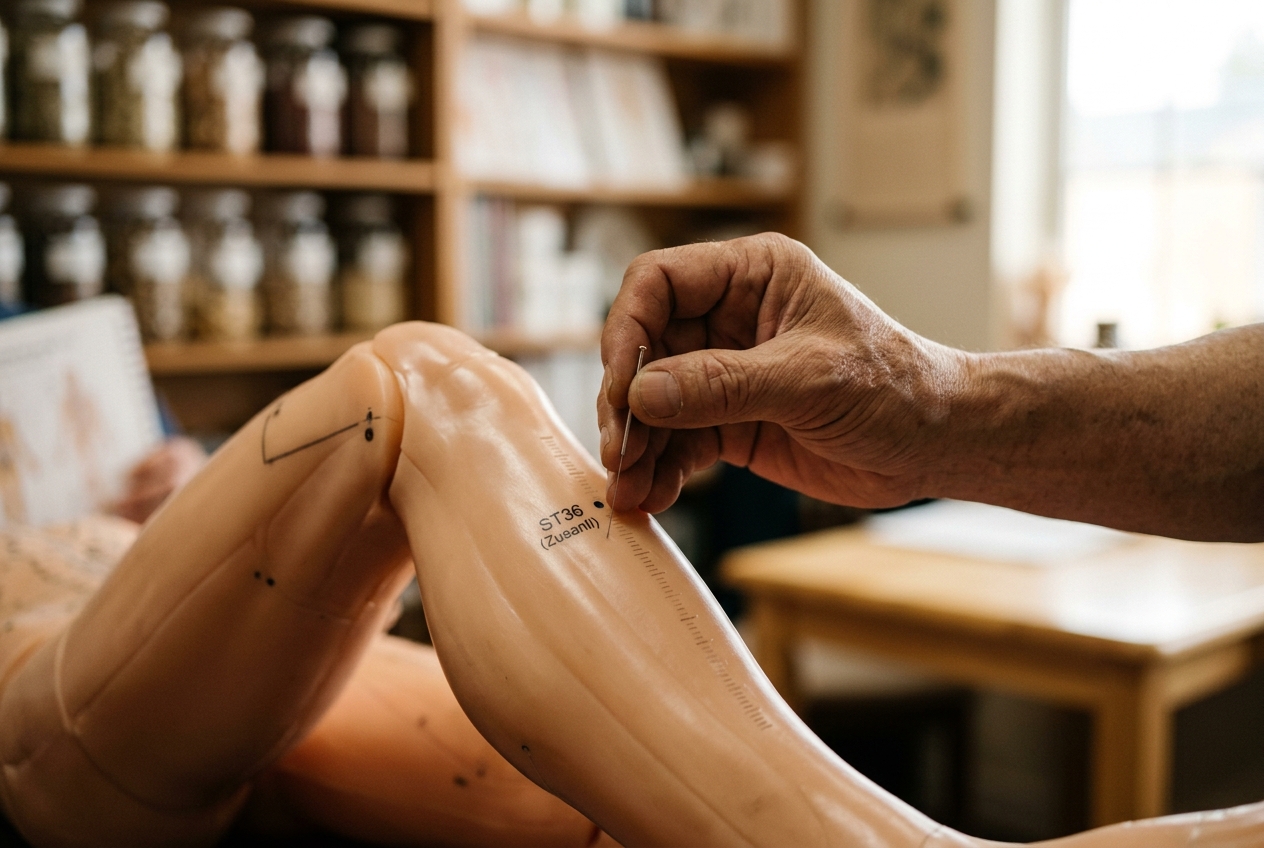
If you spend your afternoons battling a leaden heaviness in your stomach after lunch, feeling a persistent constriction across your temples as screen time mounts, or noticing that shallow, upper-chest breathing has become your default physiological state, your body is registering a breakdown in visceral rhythm. In contemporary biomedical terminology, these symptoms reflect functional dysmotility, sympathetic hyperarousal, and localized myofascial micro-ischemia. In the diagnostic framework of East Asian medicine, however, they represent a stagnation of Qi (vital metabolic energy) along the primary axial meridians—most notably the Stomach, Spleen, Liver, and Pericardium pathways.
For centuries, classical practitioners resolved these disruptions through precise needle and manual manipulations known as Ti Cha Fa (提插法, Lifting-and-Thrusting Manipulation). Far from being a static application of pressure, Ti Cha Fa is an intricate discipline of dynamic, vertical axial displacement that interfaces directly with the viscoelastic architecture of human connective tissue. When translated into clinical acupressure, this technique offers a non-invasive, quantifiable method for modulating autonomic tone, relieving somatic pain, and restoring metabolic equilibrium.
1. Classical Theoretical Foundations: Vertical Displacement and the Tripartite Order
The historical framework of Ti Cha Fa is rooted in the seminal canon of Chinese medicine, the Huangdi Neijing (The Yellow Emperor’s Inner Classic, c. 1st–2nd century BCE). In the Ling Shu (Spiritual Pivot), Chapter 9 ("Beginning and Ending") and Chapter 10 ("Meridian Vessels"), the practitioner's hands are conceptualized not merely as mechanical instruments, but as dynamic regulators of systemic polarities. The text posits that health is governed by the continuous, harmonious circulation of Ying (nutritive qi) and Wei (defensive qi) within the interstitial and vascular channels. Pathological states emerge when this dynamic flow encounters resistance, culminating in localized repletion (Shi, excess) or systemic vacuity (Xu, deficiency).
================================================================================
                         THE THREE DEPTHS (SANCAI / 三才)
================================================================================
  Depth Level       Classical Sphere     Target Tissue Layer          Primary Clinical Dynamic
--------------------------------------------------------------------------------
  Superficial       Tian (Heaven / 天)   Epidermis & Dermis           Wei Qi Mobilization; Dispersal
  Intermediate      Ren (Human / 人)    Fascial Cleavage & Vessels   Nutritive Ying Qi Harmonization
  Deep              Di (Earth / 地)      Epimysium & Periosteum       Zang-Fu Tonification; Anchoring
================================================================================
During the Ming Dynasty, Yang Jizhou codified these principles in his encyclopedic work, Zhen Jiu Da Cheng (The Great Compendium of Acupuncture and Moxibustion, 1601). Yang established that vertical displacement alters the energetic gradient of a channel through the classical tripartite stratigraphy known as Sancai (三才, The Three Talents): - Heaven (Tian, 天): The superficial stratum encompassing the epidermis, superficial fascia, and cutaneous nerve plexuses. - Human (Ren, 人): The intermediate stratum containing dense regular connective tissue sheets, intramuscular fascial planes, and primary neurovascular bundles. - Earth (Di, 地): The deep stratum terminating at the epimysium, periosteal margin, or deep muscle bellies.
In classical thought, the downward thrust (Cha, 插) drives energy inward and downward toward the Zang-Fu viscera, cultivating Yang and consolidating systemic vitality. Conversely, the upward lift (Ti, 提) draws stagnant pathogenic factors outward toward the periphery, venting heat, resolving stagnation, and restoring Yin fluid dynamics. Manipulating the velocity, acceleration, and depth transitions between these three strata constitutes the core therapeutic mechanism of classical physical intervention.
2. Biomechanical Kinematics: The Physics of Lifting and Thrusting
From a contemporary biomechanical perspective, Ti Cha Fa represents a controlled periodic mechanical oscillation applied perpendicularly to a biological viscoelastic substrate. Whether executed via a filiform needle or a calibrated fingertip contact, the manipulation is defined by three interrelated kinematic parameters: axial excursion amplitude, cycling frequency, and velocity differentials.
================================================================================
                  KINEMATIC POLARITY: TONIFICATION VS. SEDATION
================================================================================
  Kinematic Metric          Tonification (Bu Fa / 补法)         Sedation (Xie Fa / 泻法)
--------------------------------------------------------------------------------
  Axial Amplitude (Needle)  0.3 – 0.5 cm                      0.5 – 0.8 cm
  Tissue Strain (Manual)    3.0 – 5.0 mm                      5.0 – 8.0 mm
  Oscillation Frequency     60 – 80 cycles/min (1.0–1.3 Hz)   90 – 120 cycles/min (1.5–2.0 Hz)
  Thrust Phase (Cha)        High velocity, forceful acceleration Low velocity, gentle deceleration
  Lift Phase (Ti)           Low velocity, slow retraction     High velocity, sharp rapid lift
  Stratigraphic Direction   Superficial -> Deep (Tian -> Di)  Deep -> Superficial (Di -> Tian)
  Respiratory Timing        Thrust on Exhalation              Lift on Inhalation
================================================================================
Tonification (Bu Fa, 补法): Constructive Axial Summation
The tonifying modality is engineered to build energetic reserves and restore structural tone in depleted tissues. The practitioner initializes contact at the superficial Tian stratum and executes a forceful, rapid downward thrust into the deep Di layer. This downward phase is characterized by a steep acceleration curve and a terminal load ranging from 25 to 35 Newtons in manual acupressure.
Once the deep boundary is engaged, the upward lift is executed with intentional slowness and gentle deceleration, ensuring minimal mechanical traction on the newly compressed tissue beds. The layered sequence advances deliberately from superficial to deep, progressively gathering and condensing interstitial fluid and cellular tension. This phase is synchronized with patient exhalation, aligning tissue compression with systemic parasympathetic discharge.
Sedation (Xie Fa, 泻法): Dispersive Viscoelastic Shear
The sedating modality aims to dissipate tension, eliminate toxic accumulation, and reduce autonomic hypertonia. The kinesthetics are reversed: the practitioner enters swiftly to the deep Di layer, establishes firm engagement, and then performs a sharp, rapid, high-velocity upward lift toward the Tian level.
The subsequent return thrust is deliberately slow, light, and soft. By maximizing the upward extraction velocity while minimizing downward impact force, this manipulation creates outward shear stresses that de-densify bound fascial planes and break hypertonic myofascial holding patterns. Sedation is classically timed to patient inhalation, counteracting inward respiratory drawdown and pulling pathological excess toward the cutaneous boundary for elimination.
3. Neurofascial Correlates: From Mechanotransduction to Dorsal Horn Gating
Modern scientific inquiry has validated the somatic realities described in classical acupuncture treatises. When the mechanical waveforms of Ti Cha Fa are applied to living tissue, they trigger a cascade of neurochemical, electrophysiological, and morphological responses across multiple anatomical systems.
Mechanosensitive Ion Channel Excitation (PIEZO1 & PIEZO2)
At the molecular interface, dynamic tissue deformation stimulates specialized mechanosensitive ion channels, particularly PIEZO1 and PIEZO2. PIEZO channels are trimeric, propeller-shaped transmembrane proteins expressed abundantly in cutaneous mechanoreceptors, endothelial cells, and fibroblasts.
The vertical compression-decompression cycling of Ti Cha Fa exerts lateral membrane tension, opening the central pore of PIEZO proteins and driving an immediate influx of extracellular calcium ($Ca^{2+}$) and sodium ($Na^+$) ions. This intracellular calcium wave induces fibroblast cytoskeletal remodeling, stimulates local ATP secretion into the extracellular matrix, and triggers downstream purinergic receptor signaling, initiating local vasodilation and accelerated metabolic clearance.
Interstitial Collagen Tensioning and Shear Dynamics
Research in connective tissue biology confirms that acupuncture and manual acupressure manipulations generate significant strain fields within fascial planes. As documented in studies on mechanotransduction in fascial tissues, vertical displacement propagates shear stress waves through the glycosaminoglycan-rich ground substance. This hydraulic pulsing: - Decreases local tissue thixotropy (reducing stiffness). - Stimulates matrix metalloproteinase release to remodel chronic micro-scarring. - Mobilizes bound interstitial fluids, accelerating lymphatic drainage.
Somatosensory Gating in the Spinal Dorsal Horn
The sensory experience elicited during effective manipulation—characterized by a constellation of dull soreness, numbness, heaviness, and distension—is termed Deqi (得气, the arrival of Qi). Neurophysiologically, this phenomenon corresponds to the co-activation of low-threshold, heavily myelinated $A\beta$ mechanoreceptive fibers alongside thinly myelinated $A\delta$ group III afferents.
Under Melzack and Wall’s Gate Control Theory of pain modulation, high-frequency, non-painful mechanical stimulation transmitted via rapid $A\beta$ afferents activates inhibitory GABAergic and glycinergic interneurons located within the substantia gelatinosa (Lamina II of the spinal dorsal horn). This active interneuronal firing exerts potent presynaptic inhibition over unmyelinated, slow-conducting nociceptive $C$-fibers, effectively closing the neural "gate" to ascending nociceptive pathways entering the spinothalamic tract.
4. The Meridian Path: A Somatic Cartography Through the Body
To practice these axial dynamics effectively, one must understand the tangible, anatomical pathways through which primary meridian lines traverse the human form. East Asian medical cartography maps these channels along functional intermuscular septa and fascial cleavage planes.
================================================================================
                       PRIMARY CHANNEL TOPOGRAPHY & MAPPING
================================================================================
  Channel Name                Primary Anatomical Landmarks & Course
--------------------------------------------------------------------------------
  Stomach (Foot Yangming)     Originates infraorbitally, descends across the jaw,
                              down the sternocleidomastoid, traverses the mammillary
                              line, descends the rectus abdominis, drops down the
                              anterior lateral thigh, runs along the lateral border
                              of the shinbone (tibialis anterior), and terminates
                              at the lateral second digit of the foot.

  Large Intestine (Hand Yangming) Begins at the radial index fingertip, crosses the first
                              dorsal interosseous muscle web, traces the lateral
                              radial border of the forearm, ascends the lateral arm
                              to the shoulder acromion, and terminates beside the
                              contralateral nasal alar base.

  Liver (Foot Jueyin)         Commences at the dorsal big toe nail bed, ascends the
                              dorsum of the foot between the first two metatarsals,
                              passes anterior to the medial malleolus, traces the
                              medial shin behind the tibia, and ascends the inner
                              thigh to the costal margin.

  Spleen (Foot Taiyin)        Begins at the medial big toe nail bed, traverses the
                              medial plantar arch, ascends directly behind the
                              medial border of the tibia, crosses the inner knee,
                              and ascends the anterolateral abdominal wall.

  Pericardium (Hand Jueyin)   Originates within the thoracic cavity, emerges lateral
                              to the nipple, descends down the midline of the anterior
                              arm, passes precisely between the two prominent tendons
                              of the volar wrist, and terminates at the middle fingertip.
================================================================================
5. Key Acupoint Protocols: Translating Ti Cha to Clinical Practice
Applying Ti Cha Fa through manual acupressure requires precise structural localization, depth stratification, and tactile force calibration. Standardized anatomical definitions are established in accordance with the WHO Standard Acupuncture Nomenclature.
================================================================================
                   CLINICAL ACUPOINT SELECTION & DOSAGE GUIDE
================================================================================
  Acupoint     Location & Landmark            Tissue Sensation   Calibration & Vector
--------------------------------------------------------------------------------
  ST36         Four finger-widths below patella, Deep spreading  Tonification (Bu):
  (Zusanli)    one finger-breadth lateral to    ache; warm distension 25–35 N; perpendicular;
               the sharp anterior tibial crest. down lateral calf 60–80 bpm; 2–3 min.

  LV3          Dorsum of foot, in the hollow    Sharp, radiating  Sedation (Xie):
  (Taichong)   between 1st and 2nd metatarsal   tingle; systemic  15–20 N; angled 15°
               junctions.                       unwinding tension proximal; 90–120 bpm; 2 min.

  LI4          Highest mound of the web space   Intense, dull,    Sedation (Xie):
  (Hegu)       between thumb and index finger   expanding ache;   20–30 N; directed toward
               when pressed together.           orofacial warmth  3rd metacarpal; 2 min.

  SP6          Four finger-widths above the tip Distinct heavy    Even Harmonizing:
  (Sanyinjiao) of inner ankle bone, directly    tenderness;       15–25 N; perpendicular to
               behind the posterior tibia edge. pelvic relaxation tibial border; 2 min.

  PC6          Two thumb-widths above the wrist Spreading warmth; Sedation / Harmonizing:
  (Neiguan)    flexion crease, dead center      vagal softening;  15–20 N; perpendicular;
               between the two forearm tendons. diaphragm release 60–90 bpm; 2–3 min.
================================================================================
ST36 (Zusanli, 足三里) — "Leg Three Miles"
- Anatomical Localization: Sit with knees flexed at 90 degrees. Locate the soft hollows immediately below your kneecap on either side of the patellar tendon. Place four fingers horizontally across your shinbone, starting just beneath the lateral hollow. ST36 lies one finger-breadth outward (lateral) from the sharp, prominent shinbone crest, embedded within the belly of the tibialis anterior muscle.
- Somatic Deqi Manifestation: A deep, spreading ache that creates a sensation of warm muscular fullness, often projecting sensations downward along the anterolateral ankle toward the second toe.
- Biomechanical Ti Cha Execution: Utilize the reinforced tip of the thumb or an olecranon elbow contact. Engage the Tian layer with light contact, then execute a firm, deliberate, high-load downward thrust (25–35 N) into the Di layer of the muscular belly. Hold for 0.8 seconds at maximum depth, then slowly, gently lift back to the Tian boundary. Cycle at a slow, grounding frequency of 60 to 75 pulses per minute for 2 to 3 minutes per limb during exhalation.
- Clinical Indications: Profound systemic fatigue, functional postprandial dyspepsia, chronic gastrointestinal hypomotility, and general physical convalescence.
LV3 (Taichong, 太冲) — "Great Surge"
- Anatomical Localization: Trace your finger upward along the top of your foot from the web space between your great toe and second toe. Slide proximally between the two long metatarsal bones until your fingertip drops into a distinct, tender V-shaped depression immediately before the junction where the bones meet.
- Somatic Deqi Manifestation: A sharp, electric, or radiating tingling sensation that immediately softens ocular tension and triggers a reflexive deep sigh.
- Biomechanical Ti Cha Execution: Position the thumb tip perpendicularly into the notch. Apply a Sedative (Xie) vector: plunge swiftly to the deep Di layer, then execute a sharp, rapid, high-velocity upward retraction (15–20 N peak downward force, rapid lift phase) at a rhythm of 90 to 110 cycles per minute. Perform this dispersive pulse for 90 to 120 seconds while maintaining long, relaxed respirations.
- Clinical Indications: Acute psychogenic irritability, temporal tension headaches, premenstrual mood dysregulation, somatic muscle clenching, and sleep-onset insomnia.
LI4 (Hegu, 合谷) — "Joining Valley"
- Anatomical Localization: Adduct your thumb tightly against your index finger. A prominent muscular ridge will rise in the webbing on the back of your hand. LI4 is located at the highest point of this muscular bulge. Alternatively, place the transverse crease of the interphalangeal joint of your opposite thumb into the webbing edge of the target hand; the point lies directly beneath where your thumb tip comes to rest.
- Somatic Deqi Manifestation: An intense, deeply satisfying ache that feels as if a pressurized bubble is slowly expanding within the deep fascial tissue of the hand, followed by a sensation of clearing warmth in the throat and face.
- Biomechanical Ti Cha Execution: Support the palm of the target hand with your index and middle fingers, pressing your active thumb tip into LI4 with an angled vector directed slightly toward the base of the third metacarpal bone. Apply alternating Sancai pulses: drive deep (20–30 N) over 0.5 seconds, hold momentarily, and release rapidly. Maintain for 2 minutes on each hand.
- Clinical Indications: Tension headaches, temporomandibular joint (TMJ) clenching, sinus congestion, acute cervical rigidity, and emotional distress.
6. Clinical Integration: The Evening Autonomic Reset & Somatic Unwinding Protocol
When modern life imposes sustained sympathetic activation—characterized by screen fatigue, postprandial stagnation, and cognitive hyperarousal—isolated acupressure points are most effective when sequenced into a synergistic clinical protocol. The following three-stage protocol leverages the directional kinetics of Ti Cha Fa to transition the central nervous system from adrenergic dominance to restorative vagal homeostasis.
================================================================================
            THE EVENING SOMATIC UNWINDING PROTOCOL (12-MINUTE SEQUENCE)
================================================================================
  Stage & Sequence               Point Pair & Technique          Duration & Posture
--------------------------------------------------------------------------------
  Stage 1: Cephalic & Hepatic   LI4 (Hegu) + LV3 (Taichong)      4 minutes (2 min/side)
  De-escalation ("Four Gates")  Sedative Xie Fa (rapid lift)     Seated or supine; relaxed jaw

  Stage 2: Splanchnic           PC6 (Neiguan) + ST36 (Zusanli)   5 minutes (2.5 min/side)
  Re-equilibration & Vagal Tone Tonifying Bu Fa (deep thrust)    Semi-reclined; diaphragmatic breath

  Stage 3: Somatosensory        SP6 (Sanyinjiao)                 3 minutes (1.5 min/side)
  Centering & Soporific Entry   Harmonizing Sancai Rhythm        Supine; legs extended comfortably
================================================================================
Stage 1: Dispersing Cephalic and Hepatic Tension (The Four Gates / Si Guan)
Begin in a comfortable seated position with feet flat on the floor. Access the classic four-point combination known as Si Guan (The Four Gates), consisting of bilateral LI4 and LV3.
- Apply 2 minutes of vigorous, high-frequency Sedative (Xie) Ti Cha Fa to bilateral LI4 to release cranial tension, unclench the masseter muscles, and clear sensory overload.
- Immediately transition to bilateral LV3, executing 2 minutes of rapid upward-lifting strokes to vent pent-up emotional frustration and lower systemic peripheral vascular resistance.
Stage 2: Splanchnic Re-equilibration and Vagal Activation
Recline slightly into a supported posture. Shift focus to visceral regulation by pairing PC6 on the inner forearm with ST36 on the lower leg.
- Engage PC6 on the non-dominant arm using a slow, harmonizing vertical pulse (15–20 N, 60 cycles/min) for 2.5 minutes, timing each downward compression to a full 6-second exhalation. This activates the dorsal motor nucleus of the vagus nerve, reducing resting heart rate and opening the thoracic diaphragm.
- Move directly to ST36 on the ipsilateral leg, administering firm Tonifying (Bu) Ti Cha Fa (25–35 N) for 2.5 minutes. This directs arterial circulation back to the mesenteric bed, eliminating post-dinner bloating and anchoring scattered mental focus.
Stage 3: Somatosensory Centering and Soporific Transition
Conclude the sequence lying fully supine.
- Engage SP6 on the inner lower leg, situated four finger-widths above the medial malleolus directly behind the posterior tibial margin.
- Apply an Even Harmonizing manipulation—equal velocity and force on both the thrust and lift phases across the three Sancai tiers (20 N, 70 cycles/min) for 90 seconds per side.
- This harmonizes the intersection of the Spleen, Liver, and Kidney meridians, promoting pelvic circulation, calming the spirit (Shen), and preparing the brain for slow-wave restorative sleep.
7. Safety, Somatosensory Boundaries, and Clinical Sense
While non-invasive acupressure carries an exceptional safety profile, rigorous clinical guidelines must govern its application.
+-----------------------------------------------------------------------------+
|                     CRITICAL CLINICAL SAFETY GUIDELINES                     |
+-----------------------------------------------------------------------------+
|  1. OBSTETRIC CONTRAINDICATIONS:                                            |
|     - Absolute prohibition of LI4 (Hegu) and SP6 (Sanyinjiao) during all    |
|       stages of pregnancy due to strong oxytocic descending Qi dynamics     |
|       that stimulate uterine contractility.                                 |
|                                                                             |
|  2. TISSUE THRESHOLD CALIBRATION:                                           |
|     - Therapeutic sensation (Deqi): Warm, dull, radiating ache or heaviness.|
|     - Excessive trauma: Sharp, lancinating, burning, or electric shocks.     |
|     - Avoid bruising or local defensive muscle guarding; high load must be  |
|       applied smoothly without sudden ballistic impacts.                    |
|                                                                             |
|  3. LOCAL TISSUE CONTRAINDICATIONS:                                         |
|     - Never perform deep axial pulsing directly over areas of active skin   |
|       infection, open lesions, acute hematomas, or deep vein thrombosis.    |
|                                                                             |
|  4. TRIAGE & RED FLAGS:                                                     |
|     - Persistent, radiating neurological deficits, sudden severe intractable |
|       headaches ("thunderclap"), unexplained visceral pain, or signs of     |
|       acute cardiac ischemia demand immediate biomedical emergency care.   |
+-----------------------------------------------------------------------------+
Defining the Somatosensory Boundary
A common pitfall in self-administered acupressure is the conflation of mechanical force with clinical efficacy. Therapeutic Deqi should feel like a deep, satisfying ache that invites the nervous system to soften. If you experience sharp, localized, or burning pain, you are exceeding the physiological threshold of the local mechanoreceptors and activating high-threshold nociceptive $C$-fibers, inducing defensive muscular splinting. Calibrate your pressure: firm, intentional, and grounded, but never agonizing.
8. Today's Takeaway: The Two-Minute Vagal Reset
If you have only two minutes right now, you can immediately downregulate sympathetic arousal and ease diaphragmatic constriction through this focused application of Ti Cha Fa on PC6 (Neiguan):
================================================================================
                      THE TWO-MINUTE PC6 VAGAL RESET
================================================================================
  Step 1: Locate    Place three fingers of your right hand across the inner wrist
                    crease of your left arm. PC6 is located directly beneath the
                    edge of the third finger, centered between the two thick,
                    cord-like tendons in the middle of your forearm.

  Step 2: Position  Rest your left forearm comfortably on your lap, palm facing upward.
                    Place your right thumb perpendicularly over the point.

  Step 3: Pulse     Begin a smooth, vertical lifting-and-thrusting rhythm:
                    - Thrust downward firmly into the tendon valley (20 N) as you exhale over 4 seconds.
                    - Gently release the pressure halfway upward as you inhale over 4 seconds.
                    - Maintain this rhythmic axial oscillation (approx. 60 bpm) for 60 seconds.

  Step 4: Switch    Repeat the identical 60-second protocol on your opposite arm.
================================================================================
By introducing this simple, biomechanically precise manual pulse into your daily routine, you bridge classical meridian theory with modern neurophysiology—transforming a moment of tension into an opportunity for systemic somatic restoration.