Taichong Cavity Supreme Surge: Intermetatarsal Fascial Decompression, Hepatic Qi Regulation, and Distal Lower-Limb Kinetic Grounding in Classical Neigong
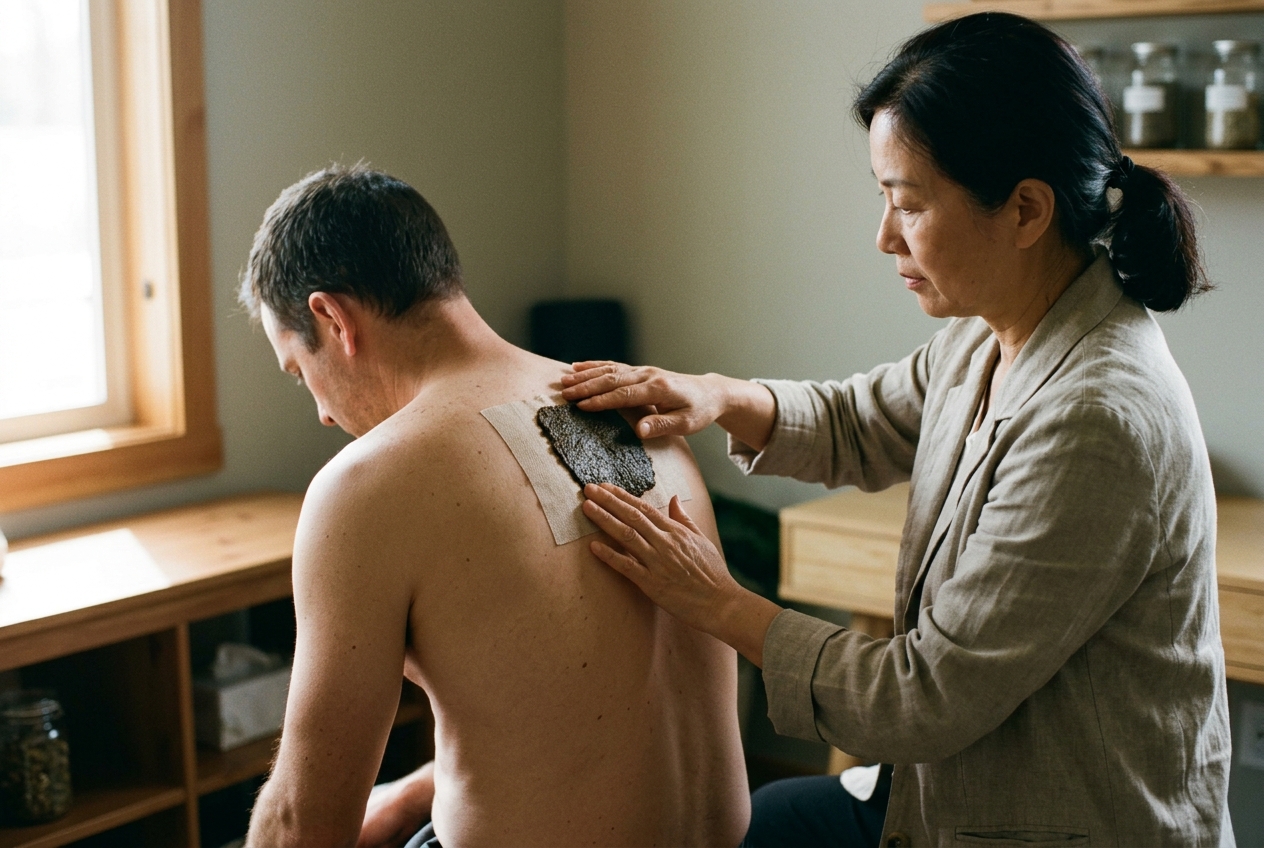
When you learn to open and mechanically decompress this point through intentional standing postures (Zhan Zhuang), synchronized diaphragmatic breathing, and precise tactile stimulation, you tap directly into the body's autonomic control center. The practice calms an overstimulated nervous system, lowers internal vascular pressure, and unties deep myofascial knots that travel all the way from the arches of your feet through the pelvic floor and into the respiratory diaphragm. In classical traditions documented by organizations such as the National Qigong Association, activating this area is celebrated as the premier natural intervention for soothing pent-up emotional frustration, mitigating chronic stress, and rooting the physical body into an unshakeable state of structural equilibrium.
Step-by-Step Practice Guide: Unlocking the Supreme Surge
Engaging Taichong does not require specialized clinical apparatus; it requires anatomical precision, patient somatic inquiry, and steady breath coordination. Below is the classical foundational protocol combining manual acupressure, standing Daoyin (movement and breath cultivation), and isometric fascial vectoring.
       MEDIAL DORSUM OF THE FOOT (Dorsal View)

              [ Hallux (Big Toe) ]     [ 2nd Toe ]
                      \                   /
                       \                 /
                        \   Web Space   /
                         \             /
      1st Metatarsal Bone \           / 2nd Metatarsal Bone
                           \         /
                            \       /
                             ( LV3 )  <-- TAICHONG CAVITY
                            /       \     (Bony Valley Depression)
                           /         \
                 [ Junction of Metatarsal Bases ]
1. Anatomical Localization and Tactile Setup
- Sit in a comfortable, upright chair with your left ankle resting over your right knee, exposing the dorsum (top surface) of your left foot.
- Place the pad of your right thumb in the soft webbing between your big toe and second toe (the first interdigital cleft).
- Slide your thumb proximally (backward toward your ankle) along the groove between the first and second metatarsal bones for approximately 1.5 to 2 inches (two finger-breadths).
- Your thumb will naturally drop into a distinct, triangular depression immediately distal to the junction where the bases of these two long bones meet.
- Apply gentle, probing pressure until you locate a deep, dull, spreading ache or mild neuro-sensory tenderness—this confirms the accurate engagement of the Taichong locus.
2. The Dual-Action Manual Decompression Protocol
- The Inhalation (Accumulation): Inhale slowly through your nose for a count of four seconds. Direct the breath down into the lower abdomen (Dantian), feeling the lateral expansion of your lower ribs. Maintain light, passive contact on Taichong without pressing deeply.
- The Exhalation (Dispersion): Exhale smoothly through your nose for a count of six seconds. As the breath empties, press your thumb perpendicularly and slightly toward the second metatarsal bone, sinking through the skin, subcutaneous fascia, and into the first dorsal interosseous muscle.
- Spiral Vectoring: While sustaining this sustained pressure, perform micro-rotations with your thumb in a counter-clockwise direction (to clear stagnation or excess tension) for nine full breath cycles.
- Repeat the exact sequence on the right foot, noting any bilateral asymmetry in tissue density or subjective tenderness.
3. Postural Grounding and Kinetic Vectoring (Zhan Zhuang Integration)
- Transition to standing with bare feet planted parallel, exactly hip-to-shoulder width apart.
- Distribute your weight across a stable tripod: the base of the big toe, the base of the little toe, and the center of the heel.
- Micro-flex your knees and gently open the pelvic inguinal creases (Kua), letting your tailbone hang as if anchored by a light plumb line.
- Consciously suction the central bubbling spring (Yongquan, Kidney 1) upward while actively flattening and widening the space between the first and second metatarsal shafts where Taichong resides.
- Inhale: visualize drawing cool ground reaction energy up through Taichong, ascending the medial line of the tibia, traveling through the adductors, and pooling in the lower abdomen.
- Exhale: project mental focus (Yi) back down through the legs, flushing out visceral heat, somatic rigidity, and mental agitation through Taichong deep into the earth. Practice this standing visualization for 5 to 10 minutes daily.
4. Common Technical Errors and Remediation Strategies
- Error 1: Excessive Superficial Pinching: Beginners frequently pinch the skin or push directly onto the hard bone of the first metatarsal.
- Correction: Keep your thumb perpendicular; search for the soft tissue sinkhole between the bones rather than pressing against the periosteum.
- Error 2: Collapsing the Medial Longitudinal Arch: Allowing the foot to pronate excessively rolls weight inward, mechanically crushing Taichong and pinching the neurovascular bundle.
- Correction: Maintain gentle upward lift through the navicular arch and ensure the knee tracks over the second toe.
- Error 3: Breath Freezing During Tenderness: When encountering the sharp, dull ache of Taichong, practitioners often hold their breath, triggering a sympathetic fight-or-flight recoil.
- Correction: Soften the jaw, relax the suboccipital muscles at the base of the skull, and deliberately extend the duration of the exhalation to signal safety to the central nervous system.
5. Somatosensory Milestones
- Distal Warming: A distinct sensation of vasodilation, characterized by warmth spreading across the toes and dorsal venous arch.
- De-escalation of Ocular and Cranial Pressure: A perceptible softening of muscular tension behind the eyes, the temporal regions, and the temporomandibular joint (TMJ).
- Peristaltic Borborygmus: Spontaneous gurgling sounds within the gastrointestinal tract, indicating a rapid shift into parasympathetic digestive dominance.
- Fascial Unwinding: A creeping, tingling release that travels up the inner calf and thigh into the pelvic floor.
Why It Works — The Neurobiology, Fascial Tensegrity, and Hemodynamics
To understand the transformative efficacy of Taichong, one must bridge the empirical frameworks of Eastern energetic anatomy with contemporary clinical physiology and biomechanics, as extensively documented in modern research indexed on the National Library of Medicine PubMed Database.
1. Topographical Anatomy and Neurovascular Architecture
Anatomically, Taichong is situated in the dorsal proximal intermetatarsal space between the first and second rays of the foot. The superficial stratum consists of skin and subcutaneous connective tissue containing the cutaneous arborizations of the medial branch of the deep peroneal (fibular) nerve. As the vector of pressure penetrates deeper into the intermetatarsal space, it engages the tendon of the extensor hallucis brevis and the fleshy belly of the first dorsal interosseous muscle.
Immediately adjacent and deep to this site lies the crucial vascular junction of the dorsalis pedis artery as it passes downward into the sole of the foot to form the deep plantar arterial arch. Consequently, precise mechanical stimulation of Taichong exerts direct piezoelectric and hydrodynamic effects on the microvascular bed of the pedal extremity.
2. Myofascial Tensegrity: The Deep Front Line and the Jing Jin Continuum
In Thomas Myers' anatomical model of myofascial meridians, the Deep Front Line (DFL) represents the structural core of human tensegrity. This continuous fascial superhighway originates at the plantar surface of the foot, ascends through the posterior tibialis and flexor digitorum muscles, courses through the popliteal space of the knee, tracks up the adductor compartment of the thigh, envelops the pelvic floor, integrates with the psoas and the respiratory diaphragm, and terminates in the deep cervical fascia and suboccipital structures beneath the cranium.
In Classical Chinese Medicine, this exact morphological pathway is categorized as the Foot Jueyin Liver Sinew Channel (Jing Jin). Chronic psycho-emotional stress, prolonged sitting, or structural dysfunction inevitably causes shortening, hypertonicity, and fascial adhesions along this central kinetic column. Because Taichong acts as the primary distal mechanical regulator of this entire chain, releasing fascial tethering at the first intermetatarsal space creates a rapid ascending decompression. When the distal anchor of the DFL is liberated, the adductor group relaxes, the pelvic floor descends to its natural resting tone, the crus of the diaphragm releases its restrictive grip on the thoracolumbar spine, and tension at the base of the skull dissolves.
3. Autonomic Neuromodulation, Baroreflex Sensitivity, and Vagal Tone
Stimulation of the deep peroneal nerve branch at Taichong recruits high-threshold mechanoreceptors and A-delta sensory afferent fibers. These peripheral signals ascend the spinothalamic tracts to synapse within the solitary tract nucleus (Nucleus Tractus Solitarii, or NTS) in the medulla oblongata. The NTS acts as the primary central processing hub for autonomic cardiovascular and stress regulation.
Activation of this pathway attenuates the baseline firing rate of the rostral ventrolateral medulla (RVLM), the brainstem engine responsible for sympathetic adrenergic tone. The downstream physiological consequences are profound: * Reduction of Peripheral Vascular Resistance: Decreases systemic arterial vasoconstriction, lowering elevated diastolic blood pressure. * Baroreflex Resetting: Enhances arterial baroreflex sensitivity (BRS), enabling the cardiovascular system to buffer acute stress spikes with superior dynamic resilience. * Parasympathetic Vagal Activation: Restores high-frequency Heart Rate Variability (HRV), shifting the organism from sympathetic hyperarousal into a restorative, parasympathetic-dominant state.
+-----------------------------------------------------------------------------------------+
|                  CLINICAL BIOMARKERS REGULATED BY TAICHONG (LV3)                        |
+------------------------------------+----------------------------------------------------+
| Physiological Parameter            | Observed Neuro-Somatic Response                     |
+------------------------------------+----------------------------------------------------+
| Autonomic Balance (HRV LF/HF Ratio)| Significant reduction toward vagal dominance       |
| Mean Arterial Pressure (MAP)       | Downregulation via medullary sympathetic reduction |
| Cortisol & Salivary Alpha-Amylase  | Progressive systemic attenuation post-stimulation  |
| Distal Limb Perfusion (Doppler)    | Measurable increase in pedal microvascular flow    |
| Surface Electromyography (sEMG)    | De-escalation of hypertonicity in Masseter & Traps  |
+------------------------------------+----------------------------------------------------+
These objective mechanisms explain why the World Health Organization Traditional Medicine Strategy highlights acupuncture and acupressure points like LV3 for integrative hypertension management, somatic pain reduction, and neuro-autonomic regulation.
Classical Lineage, Alchemical Synergy, and the Four Gates
The historical lineage of Taichong spans more than two millennia of documented medical literature and Daoist internal cultivation (Neigong). To practice with this cavity is to engage with an empirical tradition refined through centuries of continuous somatic observation.
1. Epistemological Roots in the Classical Canons
The earliest canonical taxonomy of Taichong appears in the foundational Han Dynasty medical treatise, the Huangdi Neijing (Inner Canon of the Yellow Emperor, c. 1st–2nd century BCE). In the Lingshu (Spiritual Pivot), chapter 1 explicitly states:
"The Liver possesses three hundred and sixty-five joints, and its vital Qi issues forth from the Shu-Stream point, Taichong."
The character Tai (太) conveys primordial supremacy, vastness, and depth; Chong (沖) denotes a torrential surge, a thoroughfare, or an essential conduit. Later, in the 3rd century CE, the seminal physician Huangfu Mi codified the exact needle depth and clinical indications of the point in his monumental Zhenjiu Jiayi Jing (The Systematic Classic of Acupuncture and Moxibustion). By the Jin-Yuan medical reformation, the legendary master Ma Danyang included Taichong in his elite catalogue of the "Twelve Heavenly Star Points" (Ma Danyang Shi'er Xue), designating it as the indispensable clinical linchpin for resolving vertigo, cranial spasms, intercostal constriction, and deep-seated stagnation.
2. The Functional Matrix: Yuan-Source and Shu-Stream Dynamics
In the systemic five-phase framework of acupuncture topography, Taichong holds a dual functional designation: 1. The Shu-Stream Point (Earth on a Wood Meridian): The Nan Jing (Classic of Difficulties) notes that Shu-Stream points govern "heaviness in the body and pain in the joints." Because the Liver channel belongs to the Wood element, its Earth point (Taichong) provides the exact stabilizing, grounding ballast required to restrain excessive Wood growth—metaphorically pruning an overgrown, rigid branch so that it may bend without breaking. 2. The Yuan-Source Point: As the Yuan point, Taichong communicates directly with the original, primordial vitality (Yuan Qi) stored within the kidneys and processed by the liver. When the liver organ suffers from deficiency, Taichong nourishes its deep blood-storing capacity; when it suffers from inflammatory fullness or rising heat (Liver Yang Ascending), Taichong acts as an emergency pressure release valve, drawing turbulent heat down from the head, eyes, and brain.
For readers seeking further structural classification of these traditional channels, the comprehensive Wikipedia Overview of Acupuncture Channels provides detailed mapping of the twelve primary meridians.
3. The Four Gates (Si Guan): The Taichong–Hegu Bipolar Dynamic
In both martial Neigong and clinical therapeutics, Taichong is rarely utilized in complete isolation. Its ultimate alchemical power emerges when combined with Large Intestine 4 (Hegu), situated in the first dorsal interosseous space of the hand. Together, the bilateral pairing of both Hegu and both Taichong points constitutes the legendary Four Gates (Si Guan), first systematically articulated by Master Dou Hanqing in his Jin Dynasty classic, the Biao You Fu (Ode to Elucidate Mysteries).
The Four Gates establish a dynamic bio-electric and myofascial dipoled circuit across the human body: * Hegu (Hand Yangming) governs the upper torso, cranium, external sensory orifices, and the descending mobilization of energetic vitality (Qi). * Taichong (Foot Jueyin) governs the lower torso, pelvic viscera, the smooth circulation of blood, and the upward anchoring of physical grounding.
When these four points are stimulated concurrently—through synchronized breathwork, martial rooting, or bilateral acupressure—they break through visceral stasis across all twelve primary channels. Somatically, practitioners experience this as a profound "clearing of the skies," wherein mental fog dissipates, the chest unbinds, visceral spasm ceases, and movement throughout the peripheral extremities becomes fluid, light, and frictionless.
Integrating Mind and Matter: Yi Dao Qi Dao in Classical Daoyin
In advanced Neigong practice, physical touch is merely the preliminary phase; the ultimate mastery of the Taichong gateway occurs through the direct orchestration of intentional awareness and physical mechanics, summarized in the classical maxim: "Yi Dao Qi Dao" (意到氣到)—Where the Intention goes, the Vital Force follows.
When a practitioner cultivates conscious somatic proprioception over the first intermetatarsal space, they transform a static foot into a dynamic shock-absorbing and force-transmitting base. During the stepping sequences of internal arts such as Taijiquan and Baguazhang, the deliberate opening of the Taichong cavity permits the ground reaction force generated by the earth to travel unimpeded through the medial kinetic chain into the spine without getting trapped as pathologic tension in the knee or lumbar vertebrae.
As the mind focuses gently on Taichong, the local capillary networks dilate through micro-neuromuscular relaxation. The foot sinks, spreads, and adheres to the terrain like the roots of a cedar tree. This stability is not born of brute muscular contraction, but rather of open, uninhibited fascial tensegrity. In this state of integrated somatic alignment, physical fatigue decreases dramatically because the skeletal framework is sustained by continuous fascial elasticity rather than chronic, energy-depleting muscular effort.
For those interested in exploring modern research into these mind-body interfaces, clinical trial overviews are made accessible by institutions like the National Center for Complementary and Integrative Health.
Today's Practice Commitment
Transforming somatic theory into lived physiological resilience requires simple, unyielding consistency. You do not need hours of secluded meditation to awaken the benefits of the Supreme Surge; you need only five focused minutes of disciplined practice integrated into your daily routine.
Tomorrow morning, immediately after waking and before your first cup of tea or coffee: 1. Sit comfortably and dedicate two minutes per foot to the Dual-Action Manual Decompression Protocol described in the practice guide above. Breathe slowly, sink your thumb into the Taichong valley, and exhale all residual overnight tension out through the bottom of your feet. 2. Stand up, kick off your slippers, and assume the Zhan Zhuang posture for sixty seconds. Soften your knees, broaden the top of your feet, lift the crown of your head, and feel the ground beneath you. 3. Observe how your body responds over the following hour. Notice the clarity in your eyes, the ease in your breathing, the relaxed posture of your shoulders, and the calm, centered state of your mind as you step forward into your day.
Your feet are the foundation upon which your entire life is built. By opening Taichong, you unlock the core kinetic chain of your body, clear the internal pathways of stress, and reconnect with the deep, effortless rhythm of your physical being.