Song Yao Relaxing the Waist: Lumbosacral Lordosis Flattening, Thoracolumbar Fascial Tensegrity, and Core Kinetic Transmission in Classical Neigong
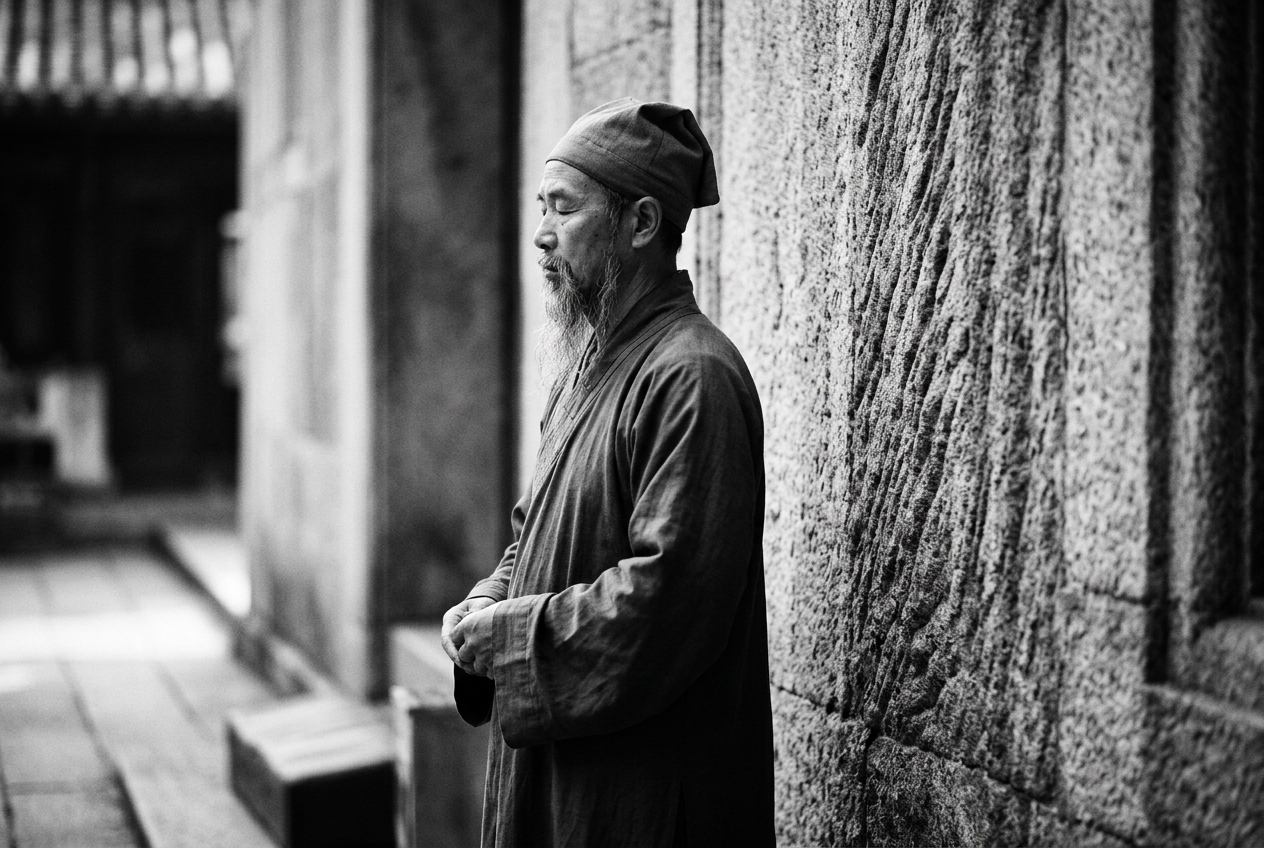
In the lexicon of Traditional Chinese Medicine and internal martial arts (Neijiaquan), the "waist" (Yao, 腰) encompasses far more than the superficial waistband of modern anatomy. It denotes the entire circumferential somatic cylinder bounded by the twelfth ribs, the lumbar spine, the iliac crests, and the pelvic floor. Within classical Daoist Neigong (internal skill), the waist is revered as the primary structural gateway governing the circulation of vital energy (Qi) and mechanical force throughout the human frame. When this region is chronically tightened, the body becomes structurally fragmented; when it is systematically released (Song, 松), it unlocks an integrated neuro-fascial web capable of transmitting effortless power and fostering profound physiological restoration.
                  [ SUSPENDED CROWN: Baihui (GV20) ]
                                 |
                          ( Cervical Axis )
                                 |
                         ( Thoracic Curve )
                                 |
              [ EXPANDED MINGMEN (GV4) / FLATTENED LUMBAR ]
             /                   |                        \
  [ RELEASED PSOAS ]     ( ELASTIC TLF SPRING )    [ SINKING SACRUM ]
             \                   |                        /
               -----> [ SETTLED KUA / PELVIS ] <-----
                                 |
                         ( Dynamic Knees )
                                 |
                  [ GROUND ROOT: Yongquan (K1) ]
Step-by-Step Practice Guide: Calibrating the Settled Waist
Calibrating Song Yao requires transitioning from muscular holding to fascial tensegrity. Follow this progressive sequence to systematically neutralize lumbar compression, lengthen the pelvic musculature, and activate the elastic spring of the spine.
1. Establishing the Base Architecture (Wuji Alignment)
- Stance Setup: Stand with your feet parallel, precisely shoulder-width apart, pointing straight ahead. Distribute your weight across the functional "tripod" of each foot: the base of the first metatarsal (ball of the foot), the base of the fifth metatarsal (outer edge), and the calcaneus (heel center), allowing the arch to dome naturally above the bubbling spring point (Yongquan, K1).
- Micro-Bending the Hinges: Soften the knees by releasing tension in the popliteal fossa behind each knee joint. Ensure the patellae track directly over the second toes without collapsing inward.
- Suspending the Apex: Gently tuck your chin to lengthen the suboccipital musculature at the base of the skull. Envision the crown point (Baihui, GV20) drawn upward by an invisible celestial thread, gently decompressing the cervical vertebrae.
2. The Three-Phase Pelvic-Lumbar Neutralization
- Phase A: Sinking the Sacrum (Chui Wei Lu): Without thrusting your hips forward or squeezing your gluteal muscles, allow the coccyx and sacrum to sink vertically, as though you were resting your sit bones on the edge of a high barstool.
- Phase B: Folding the Inguinal Creases (Song Kua): Soften the front inguinal creases where your thighs meet your pelvis. Imagine the hip joints settling into their acetabular sockets like heavy bronze balls into oiled cups, releasing the deep grip of the psoas major muscle.
- Phase C: Opening the Gate of Life (Kai Mingmen): As the sacrum sinks and the crown lifts, gently allow the second and third lumbar vertebrae (L2–L3) to expand backward and outward. The natural inward lordotic curve of your lower back should gently soften into a broad, buoyant vertical plane, decompressing the intervertebral discs.
3. Respiratory Integration & Dynamic Intra-Abdominal Pressure
- Nasal Diaphragmatic Breath: Inhale smoothly through your nose for a count of four seconds. Direct the downward descent of the respiratory diaphragm not merely into the anterior abdomen, but circumferentially into the flanks, the lateral ribs, and directly into the lumbar spine at the Mingmen point.
- Perineal Coordination: Upon exhalation (six seconds), maintain the lengthened state of the lumbar spine while allowing the pelvic floor (Huiyin, CV1) to naturally and subtly rebound upward, establishing baseline intra-abdominal pressure (IAP) without muscular rigidity.
- Breath Retention and Release: Practice ten to fifteen uninterrupted breath cycles in this neutral alignment, feeling the back of your waist expand like a bellows with every inhalation and settle deeper with every exhalation.
4. Diagnostic Self-Checks: Authentic Song vs. Flaccid Xie
A critical distinction in internal arts lies between authentic relaxation (Song) and structural collapse (Xie, 懈). Use these physical markers to verify your alignment:
| Diagnostic Dimension | Authentic Settling (Song) | Flaccid Collapse (Xie) | Pathological Tension (Jing) |
|---|---|---|---|
| Lumbar Curve | Lengthened, buoyant, gently flattened through fascial pre-tension | Kyphotic, slumped, spinal column slouched backward | Exaggerated hyper-lordosis, lumbar erectors locked in chronic spasm |
| Gluteal Muscle Tone | Supple, unclenched, fully adaptable to weight shift | Completely deadened, sacrotuberous ligaments slackened | Clenched tight, compressing sciatic nerve pathways |
| Abdominal Wall | Elastic, multidirectionally pressurized (IAP) | Protruding forward passively without hydraulic tone | Sucked inward rigidly, restricting diaphragmatic descent |
| Kinetic Grounding | Ground reaction force felt transferring into feet | Weight trapped in knees; joints unweighted and unstable | Weight trapped in upper thoracic and cervical regions |
5. Common Compensatory Faults and Corrections
- The Anterior Hip Thrust: Many beginners misinterpret "tucking the tailbone" as an aggressive posterior pelvic tilt driven by squeezing the gluteus maximus and pushing the pubic bone forward. This creates hip impingement and crushes the anterior hip capsules. Correction: Never push the pelvis forward; let the sacrum sink straight down under the pull of gravity while keeping the inguinal creases hollow and soft.
- Knee Valgus Collapse: Sinking the waist without maintaining lateral hip stability causes the knees to track inward, transferring dangerous rotational torque into the medial collateral ligaments. Correction: Maintain gentle external rotational tone in the deep hip rotators (gemelli, obturators, piriformis), keeping the knees tracking precisely over the middle toes.
- Thoracic Slump: Over-flattening the lower back often leads to a sympathetic collapse of the chest and rounding of the shoulders (kyphosis). Correction: Preserve the upward suspension of the crown (Baihui) and broaden the clavicles, maintaining broad thoracic tensegrity.
6. Somatosensory Milestones
As you sustain this calibrated alignment, specific physiological sensations will emerge: * Heaviness (Chen): A sensation that the lower body is filling with dense liquid or mercury, rooting your center of mass closer to the earth. * Thermal Expansion (Re): A gentle, radiant warmth spreading across the lumbar fascia and into the lower abdomen, signaling peripheral microvascular vasodilation. * Microvascular Tingling (Ma): A light, tingling sensation traveling down the posterior kinetic chain into the soles of the feet, indicating the decompression of lumbosacral nerve roots. * Buoyant Elasticity (Peng): A spring-like structural integrity throughout the torso, where external pressure applied to the shoulders or chest is channeled directly into the ground without spinal collapse.
Why It Works: Biomechanics, Fascial Hydraulics, and Neurophysiology
Modern biomechanics and somatic medicine provide extraordinary validation for the classical Daoist insistence on settling the waist. The transformation observed during Song Yao is underpinned by well-documented physiological mechanisms documented across orthopedic and fascial research indexed on PubMed.
[ Plantar Contact (Yongquan) ] ---> [ Tibial / Femoral Alignment ]
                                               |
                                    [ Softened Kua Hinges ]
                                               |
[ Mingmen Expansion ] <====== [ Settled Lumbar / Sacral Axis ] ======> [ Thoracolumbar Fascia ]
                                               |
                                    [ Kinetic Core Vector ]
                                               |
[ Scapulothoracic Slide ] <======== [ Axial Spine ] ========> [ Upper Limb Projection ]
1. Deactivating Erector Hypertonicity and Restoring the Iliopsoas
Sedentary modern postures and chronic psychological stress produce a ubiquitous neuromuscular pattern: the lower crossed syndrome. In this state, the lumbar erector spinae (longissimus thoracis, iliocostalis lumborum) and the iliopsoas complex become chronically shortened and hypertonic, locking the pelvis in an exaggerated anterior tilt and compressing the facet joints of the L4–L5 and L5–S1 junctions.
When you settle the waist (Song Yao), the hip joint is gently flexed within its neutral zone, permitting the psoas major to lengthen along its anatomical pathway from the transverse processes of the lumbar spine down across the pelvic brim to the lesser trochanter. This length restoration removes the forward-shearing forces acting upon the lumbar vertebrae. Simultaneously, reciprocal neuromuscular inhibition allows the hyper-contracted lumbar erector muscles to release their tonic grip, transforming the posterior torso from a rigid, ischemic band of muscle into a supple, perfused sheet of functional tissue.
2. The Thoracolumbar Fascia (TLF) as a Hydraulic Spring
The thoracolumbar fascia is a complex, multi-layered retinacular structure that envelops the deep back muscles and serves as a major load-bearing crossroad between the latissimus dorsi, the gluteus maximus, and the deep abdominal wall. It consists of three distinct layers: * Posterior Layer: Attaches to the lumbar spinous ligaments and cross-links with the contralateral latissimus dorsi and gluteus maximus. * Middle Layer: Anchors to the tips of the lumbar transverse processes and the intertransverse ligaments. * Anterior Layer: Envelopes the quadratus lumborum and merges with the fascia of the psoas major.
       [ Anterior Abdominal Wall (Transversus Abdominis) ]
                          /          \
  [ Internal Oblique ]                     [ External Oblique ]
            \                              /
   [ Lateral Raphe of the Thoracolumbar Fascia (TLF) ]
          /                 |                 \
 [ Anterior Layer ]  [ Middle Layer ]  [ Posterior Layer ]
  (Quad. Lumborum)   (Transverse Proc)  (Spinous Proc / Erector)
          \                 |                 /
              [ DECOMPRESSED LUMBAR VERTEBRA ]
When the lumbar spine is in hyper-lordosis, the posterior layer of the TLF is slackened while its internal deep tissues are compressed, eliminating its capacity to act as an elastic spring. By flattening the lumbar curve and broadening the Mingmen region, the lumbar spinous processes gently separate, pulling the posterior and middle layers of the TLF taut across their longitudinal and diagonal vectors.
Simultaneously, the diaphragmatic descent and co-contraction of the transversus abdominis increase hydraulic pressure within the fascial envelope. This phenomenon—known in biomechanics as the hydraulic amplifier effect—converts intra-abdominal pressure into a tensegrity-driven extensor moment, unloading up to 40% of the compressive axial weight from the intervertebral discs without requiring high-energy muscular exertion from the erector spinae.
3. Ground Reaction Force (GRF) Transmission: "The Waist as Commander"
The classical martial arts treatise attributed to Wang Zongyue famously declares: "The waist is the primary commander" (Yao Wei Di Yi Zhu Zai, 腰为第一主宰). In unrefined movement patterns, kinetic forces generated by the lower limbs run into a biomechanical bottleneck at the arched lumbar spine. Hyper-lordotic curvature creates a shear vector at the lumbosacral junction, causing ground reaction forces (GRF) to dissipate into the lower back as destructive mechanical wear rather than transferring cleanly into the upper body.
When the waist is settled and the inguinal creases (Kua) are opened, the skeletal linkages between the calcaneus, tibia, femur, pelvis, and vertebral column align into an unbroken kinetic chain. Ground reaction forces absorbed at the feet (Yongquan) pass through the shock-absorbing hinges of the knees and hips, travel through the hydraulic core of the stabilized lumbar-fascial cylinder, and are directed with millimeter precision through the spine into the scapulothoracic articulation and the arms. The relaxed waist acts as a low-friction universal joint and kinetic steering axle, eliminating energy leakage and allowing massive elastic force (Jin, 劲) to be expressed effortlessly.
4. Neurovascular Decompression and Autonomic Regulation
The physiological ramifications of Song Yao extend deep into the endocrine, vascular, and autonomic systems, aligning directly with modern clinical models of somatic regulation recognized by the World Health Organization Traditional Medicine Strategy.
- Renal and Adrenal Hemodynamics: The kidneys and adrenal glands reside retroperitoneally at the level of T12–L3, surrounded by the renal fascia and fat capsules in direct anatomical contact with the psoas major and quadratus lumborum. Chronic lumbar tension and excessive lordosis exert constant mechanical pressure on the renal arteries and veins, restricting microvascular perfusion and upregulating renin-angiotensin-aldosterone signaling. Settling the waist decompresses this retroperitoneal space, optimizing renal blood flow and modulating adrenal catecholamine output.
- Vagal and Sympathetic Modulation: Hyper-lordosis mechanically tensions the sympathetic trunk running along the anterior aspect of the lumbar vertebrae. By releasing this structural tension and cultivating deep, slow diaphragmatic respiration (less than six breaths per minute), Song Yao stimulates the afferent pathways of the vagus nerve. This induces a state shift in the autonomic nervous system, downregulating sympathetic fight-or-flight activity, increasing Heart Rate Variability (HRV), and promoting neuro-visceral homeostasis.
- Energetic Conduit of the Mingmen: In Daoist physiology, the space between the kidneys (Shen Jian Dong Qi) houses the body's ancestral endowment of prenatal vitality (Yuan Qi, 元气). When the lumbar spine is locked in tension, the "Gate of Life" (Mingmen, GV4) remains closed, trapping energetic heat in the upper thoracic cavity and leaving the lower extremities cold and depleted. Relaxing and opening the lumbar spine physically and energetically unseals the Mingmen pump, allowing Yuan Qi to anchor firmly into the lower energetic reservoir (Xia Dantian, 下丹田).
+-------------------------------------------------------------------------+
|                  CLINICAL SOMATIC IMPACT SUMMARY                        |
+-------------------------------------------------------------------------+
| 1. Biomechanical: Unloads axial intervertebral compression by ~40%      |
| 2. Myofascial: Engages Thoracolumbar Fascia via hydraulic amplification |
| 3. Hemodynamic: Decompresses retroperitoneal renal/adrenal vessels      |
| 4. Neurological: Elevates HRV via vagal afferent baroreceptor pathways  |
| 5. Energetic: Anchors Yuan Qi into Lower Dantian via Mingmen opening    |
+-------------------------------------------------------------------------+
Classical Lineage & Context: The Heritage of the Settled Waist
The systematic cultivation of Song Yao is not an arbitrary posture invented by modern fitness instructors; it represents the distilled legacy of over a millennium of Daoist alchemical exploration, medical inquiry, and martial mastery.
[ Warring States / Han: Huangdi Neijing ]
  (Foundational energetic anatomy: Waist as residence of the Kidneys)
                    |
[ Tang & Song Dynasties: Shangqing & Wudang Lineages ]
  (Daoist Internal Alchemy / Neidan: Zhang Sanfeng's dynamic stillness)
                    |
[ Ming & Qing Eras: Classical Internal Martial Systems ]
  (Wang Zongyue's Taijiquan Treatise: "Yao Wei Di Yi Zhu Zai")
                    |
[ Modern Global Transmission: Mind-Body Somatic Science ]
  (Clinical Neigong, Fascial Biomechanics, Autonomic Physiology)
The philosophical foundation of waist settling traces back to the foundational medical corpus of antiquity, the Huangdi Neijing (The Yellow Emperor’s Inner Canon, compiled circa 300 BCE–100 CE). In the Suwen section, Chapter 17 explicitly notes:
"The waist is the mansion of the Kidneys; if the waist cannot turn and rotate with ease, the Kidneys are exhausted and the vitality is about to collapse."
In early Chinese cosmology and medical theory, the lumbar region was identified not simply as an architectural hinge, but as the constitutional root of longevity and physical resilience.
During the Tang and Song dynasties (7th–13th centuries), Daoist hermits inhabiting the sacred peaks of Mount Wudang and Mount Hua synthesized these medical insights with meditative internal alchemy (Neidan, 内丹). Master practitioners such as the legendary Zhang Sanfeng recognized that seated meditation alone frequently led to stagnant Qi accumulation if the lumbar curve collapsed into slouching or strained into rigid lordosis. They developed standing postures (Zhan Zhuang) and dynamic movement systems that calibrated the body's internal axes around a released, buoyant waist. By opening the Mingmen while maintaining an upright spine, these practitioners discovered they could circulate the fiery energy of the Heart downward to meet the cool, watery essence of the Kidneys—a classic energetic union known as Kan and Li reconciliation.
By the late Ming and Qing dynasties (17th–19th centuries), this esoteric knowledge was integrated into the major internal martial arts lineages: Chen, Yang, Wu, and Sun styles of Taijiquan, as well as Baguazhang and Xingyiquan. In his seminal work, the Taijiquan Lun (Treatise on Tai Chi Chuan), the scholar-warrior Wang Zongyue codified the biomechanical supremacy of the waist in immortal verse:
"The root is in the feet, issued through the legs, commanded by the waist, and manifested in the fingers. From feet to legs to waist must be integrated into one continuous Qi... If there is a failure to attain correct timing and position, the body becomes scattered and disordered; the defect must necessarily be sought in the waist and legs."
Master Yang Chengfu (1883–1936), in his foundational work Ten Essential Principles of Taijiquan, positioned Song Yao as the second most vital rule of the entire art, asserting:
"The waist is the commander of the whole body. Only when you can relax the waist will the two legs have power and the lower body be stable and rooted. The transitions between empty and solid all derive from the turning of the waist... If you lack strength, you must seek the defect in the waist."
Over centuries of empirical refinement across monasteries, imperial academies, and family lineages, the consensus remained absolute: without Song Yao, all movement remains superficial, muscular, and structurally disconnected. With it, the human body becomes an integrated, self-healing tensegrity system, as championed today by somatic institutions such as the National Qigong Association and documented in mind-body clinical literature from the National Institutes of Health.
Today's Practice Commitment: The 7-Minute Morning Alignment
To translate these profound structural and physiological principles into lasting neuromuscular change, commit to this focused, seven-minute practice tomorrow morning before consuming breakfast or caffeine:
[ Minute 0:00 - 1:00 ] ---> Calibrate Wuji Base & Tripod Foot Weight
[ Minute 1:00 - 3:00 ] ---> Sinking the Sacrum & Inguinal Crease Fold (Song Kua)
[ Minute 3:00 - 6:00 ] ---> Resonant Breath Expansion into Posterior Mingmen
[ Minute 6:00 - 7:00 ] ---> Somatosensory Integration: Grounding & Buoyancy Check
- Minutes 0:00–1:00: Stance Calibration: Kick off your shoes. Stand with feet parallel, shoulder-width apart, knees unlocked, and crown gently suspended. Take three conscious breaths, releasing any tension in your eyes, jaw, and throat.
- Minutes 1:00–3:00: Sinking and Settling: Place the backs of your hands against your lower back. Exhale and slowly let your sacrum sink downward, softening the front hip creases (Kua) until your lumbar spine broadens against your hands. Confirm that your gluteal muscles remain soft and unclenched.
- Minutes 3:00–6:00: Mingmen Resonant Breathing: Inhale slowly through your nose for four seconds, feeling the breath push outward against the back of your waist, widening your lower back like an opening fan. Exhale for six seconds, feeling your feet sink deeper into the earth while your head floats effortlessly toward the ceiling. Complete 18 full, deliberate breath cycles.
- Minutes 6:00–7:00: Somatic Integration: Rest your arms by your sides. Close your eyes and observe the sensations in your body: note the downward flow of warmth, the rooted heaviness in your soles, and the open lightness in your spine. Step forward gently into your day, carrying this buoyant, settled kinetic center into every step you take.