Shonishin Therapy: Navigating Non-Invasive Cutaneous Tactile Stimulation, Pediatric Meridian Dynamics, and Precision Acupressure Protocols
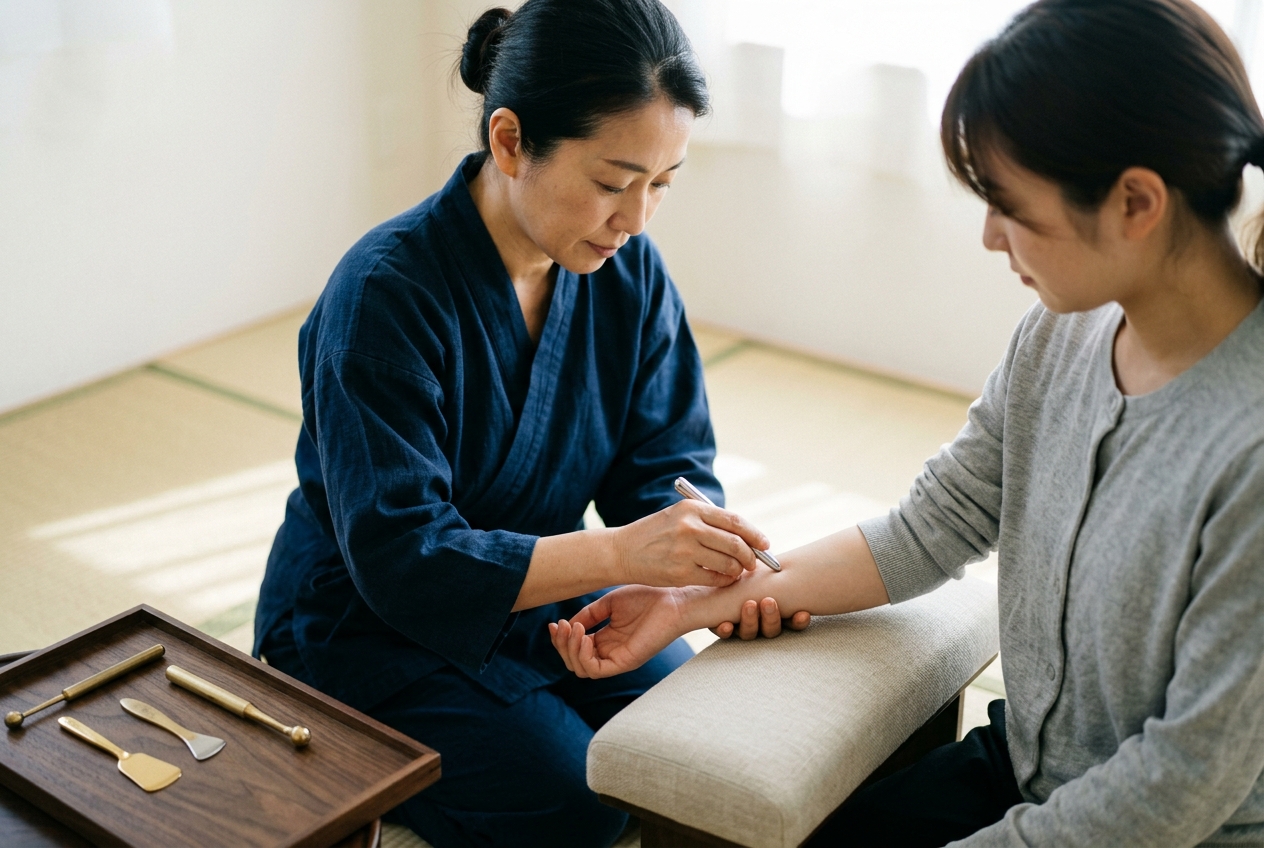
If you have ever observed an infant writhing with intractable evening colic, watched a toddler awaken in the throes of a nocturnal terror, or felt your own nervous system lock into a state of hyper-vigilant digestive paralysis after an exhausting week under fluorescent office lights, you have encountered a crisis of autonomic regulation. In these moments, the body is not suffering from a chemical deficit that can simply be medicated away; it is trapped in an afferent sensory loop of sympathetic overdrive. For centuries, Western clinical paradigms have approached such regulatory distress through pharmaceutical intervention or behavioral modification. Yet, in traditional Japanese meridian medicine, an entirely different modality emerged over three hundred years ago in the merchant districts of Osaka: a non-insertive, tactile therapeutic art known as Shonishin (小児鍼, literally "children’s needle").
Rooted in classical East Asian medical philosophy and refined through centuries of Japanese clinical observation, Shonishin uses no needle punctures. Instead, it relies on polished metal implements brushed, tapped, and pressed lightly across the skin's surface. Today, modern neurobiology is validating what master practitioners have long observed: the epidermal boundary is not an inert physical wrapper, but an active, richly innervated neurochemical organ. By targeting low-threshold mechanoreceptors, unmyelinated C-tactile (CT) nerve fibers, and bioelectric meridian trajectories, this non-invasive therapy offers a template for soothing hyper-reactive nervous systems, balancing digestive Qi, and establishing autonomic equilibrium in both children and adults.
The Historical Lineage: From Classical Chinese Needles to Osaka’s Gentle Art
The conceptual lineage of Shonishin traces back to the foundational text of East Asian medicine, the Huangdi Neijing Ling Shu (Divine Pivot), compiled around the first century BCE. Chapter One of the Ling Shu details the Jiu Zhen (九針)—the "Nine Classical Needles"—several of which were explicitly designed never to pierce the skin. Among these were the Chanzhen (shear needle with an arrow-shaped head for superficial stroking), the Yuanzhen (round-headed needle for rubbing musculature without injury), and the Dizhen (spoon needle for pressing along channel pathways).
During the mid-to-late Edo period (1603–1867), Japanese acupuncturists recognized that the delicate constitutional energy (Zheng Qi) of infants and young children could easily be scattered or overwhelmed by standard filiform needle penetration. In the Kansai region, particularly within Osaka, practitioners such as Dr. Kudo Shinan and later innovators like Dr. Kenya Yoneyama and the Daishi Hari tradition systematically developed specialized tools to translate classical meridian theory into non-puncturing pediatric therapies.
These pediatric instruments—fabricated from brass, silver, gold, and surgical steel—include: * Enshin (圓鍼): A rounded, bullet-tipped metallic rod used for rapid, unidirectional stroking along the meridian lines (sesshinki). * Teishin (鍉鍼): A blunt-ended contact needle held lightly against specific acupoints to transmit mechanical pressure and localized bioelectric microcurrents without breaching the stratum corneum. * Choki and Bachi (撥): Broad, triangular, or fan-shaped plectrum tools engineered with rounded edges for rhythmic brushing, scraping, and low-frequency tapping (choshin) over larger muscle groups and somatic zones. * Yoneyama Tools: Modernized ergonomic stainless-steel implements featuring combination heads that integrate a blunt probe on one end with a serrated or rolling disk on the other, allowing rapid shifts between linear stroking and localized percussion.
This specialized toolkit allowed practitioners to treat infantile conditions categorized historically as Kan no mushi (疳の虫)—a broad diagnostic cluster encompassing irritability, sensory overwhelm, night terrors, colic, and poor weight gain—without inflicting pain, fear, or emotional distress.
Neurobiological Mechanisms: The Neurobiology of Gentle Touch
Modern somatosensory neuroscience provides a robust physiological foundation for the empirical efficacy of Shonishin. When a polished metal tool is brushed across the epidermis at slow, steady velocities (between 1 and 10 centimeters per second) with a downward force of less than 0.5 Newtons, it selectively excites a specialized population of unmyelinated afferents known as C-tactile (CT) fibers.
As detailed in research indexed on NCBI PubMed on C-tactile afferent physiology, CT fibers are low-threshold mechanoreceptors present exclusively in hairy human skin. Unlike myelinated A-beta fibers, which rapidly encode discriminatory tactile parameters such as location, texture, and vibration speed, CT afferents project directly through Lamina I and II of the spinal dorsal horn into the posterior insular cortex. This region serves as the central processing hub for interoception and affective somatosensation.
This mechanical input initiates three primary neurobiological cascades:
1. Dorsal Horn Gating and Pain Modulation
By engaging low-threshold mechanoreceptive A-beta fibers and CT afferents, superficial tactile stimulation activates inhibitory interneurons within the substantia gelatinosa of Rolando. Grounded in the classical Gate Control Theory of Melzack and Wall, this synaptic mechanism closes the spinal gate to incoming visceral and somatic nociceptive inputs, relieving infantile abdominal cramping and musculoskeletal tension.
2. Central Oxytocinergic Neuroendocrine Cascade
Superficial cutaneous stroking stimulates the paraventricular and supraoptic nuclei of the hypothalamus, triggering a measurable systemic surge of oxytocin. As highlighted in neuroendocrine studies on tactile stimulation, oxytocin release down-regulates the hypothalamic-pituitary-adrenal (HPA) axis, attenuates plasma cortisol concentrations, reduces amygdalar hyper-reactivity, and supports social engagement and emotional bonding.
3. Autonomic Parasympathetic Reset
Rhythmic, unhurried cutaneous brushing prompts an immediate autonomic shift, shifting tone from sympathetic dominance to parasympathetic (vagal) activation. Heart rate variability (HRV) metrics show elevated high-frequency (HF) power, reflecting enhanced vagal efferent outflow to the sinoatrial node, improved splanchnic circulation, and coordinated gastrointestinal motility.
Diagnostic Palpation: Reading the Somatic Terrain
In Japanese pediatric acupuncture, diagnostic inquiry relies primarily on tactile observation rather than linguistic self-reporting. Because infants possess an immature energetic and physiological matrix—classically described as an inherent deficiency of Spleen Qi (digestive capacity) and Lung Qi (immune and epidermal integrity)—systemic imbalances manifest as distinct micro-structural variations across the abdomen and back.
Abdominal Diagnosis (Fukushin, 腹診)
Fukushin is conducted with warm, relaxed hands placed flat upon the child’s abdominal wall. The clinician assesses five primary diagnostic regions: 1. Subcostal Zones (Kyokyo Kuman, 胸脇苦満): Palpable resistance, fullness, or tenderness beneath the rib cage indicates Liver Qi stagnation, autonomic tension, and emotional irritability. 2. Epigastric Angle (Chukan, CV12): A rigid, tight epigastrium reflects stomach disharmony, digestive distress, and food retention. 3. Umbilical Base (Daikei): A soft, doughy, or sunken periumbilical zone indicates Spleen Qi deficiency and chronic malabsorption. 4. Hypogastrium (Kafukubu): A hollow, cold lower abdomen points to Kidney/constitutional vacuity and compromised vitality.
Dorsal and Cutaneous Palpation
The practitioner gently passes a warm palm along the paraspinal musculature (the Bladder Channel line) from the cervicothoracic junction down to the sacrum. Key indicators include: * The Chirike Sign at GV12 (Shenzhu, 身柱): An elevated thermal patch, erythema, or rough dermal texture over the third and fourth thoracic vertebrae (T3–T4) indicates autonomic hyper-arousal, agitation, and susceptibility to respiratory illness. * Interscapular Tightness: Rope-like tension or taut cutaneous bands between the medial scapular borders and the spine signal chronic stress, respiratory restriction, and emotional distress. * Venous Manifestations: Pronounced superficial venules across the nasal bridge (the Shan Gen vein) or at the thenar eminence indicate constitutional delicacy and gastrointestinal coldness.
The Primary Meridian Pathways: A Somatosensory Journey
In Shonishin, the body is approached as a continuous bioelectric and somatic landscape. Rather than focusing solely on isolated points, the practitioner works along broad channel trajectories that guide systemic energy through clear physical landmarks.
1. The Upper Limb Pathway: Lung and Large Intestine Channels
- The Physical Path: Begins at the anterior aspect of the chest below the collarbone, runs down the inner, fleshy surface of the upper arm, crosses the outer crease of the elbow, passes along the radial margin of the forearm, and exits at the tip of the index finger.
- Functional Role: This pathway regulates respiratory function, clears heat from the head and chest, and settles hyper-reactive nervous responses.
2. The Lower Limb Pathway: Stomach and Spleen Channels
- The Physical Path: Begins just below the kneecap in the muscular depression along the outside of the shinbone, tracks down the lateral front of the leg, crosses the front of the ankle, runs along the top of the foot to the second toe, and connects with the inner leg line traveling up the medial arch behind the shinbone to the groin.
- Functional Role: The central pillar for digestive resilience, nutrient assimilation, fluid regulation, and grounding restless physical energy.
3. The Dorsal and Central Axis: Governing Vessel (Du Mai) and Bladder Channel
- The Physical Path: Ascends the midline of the spine from the tailbone to the base of the skull, flanked on either side by two parallel lines along the paraspinal muscles from the upper neck down across the sacrum.
- Functional Role: The primary switchboard for the central and autonomic nervous systems. Stimulating this axis stabilizes circadian rhythms, calms night waking, and softens neuromuscular guarding.
Clinical Tools and Technical Protocols
Safe, effective Shonishin application relies on strict adherence to instrument dynamics, stroking cadence, pressure thresholds, and session limits to avoid over-stimulating the patient's nervous system.
+-------------------------------------------------------------------------------+
|                      SHONISHIN CLINICAL DOSIMETRY PROTOCOL                    |
+-------------------+--------------------+------------------+-------------------+
| Age Category      | Stroke Velocity    | Downward Force   | Total Duration    |
+-------------------+--------------------+------------------+-------------------+
| Infants (0–12 mo) | 2–4 cm / second    | < 0.1–0.2 N      | 1.5 – 3 minutes   |
| Toddlers (1–3 yr) | 3–6 cm / second    | 0.2–0.4 N        | 3 – 5 minutes     |
| Children (4–8 yr) | 5–8 cm / second    | 0.3–0.6 N        | 5 – 8 minutes     |
| Adolescents/Adults| 5–10 cm / second   | 0.5–1.0 N        | 10 – 15 minutes   |
+-------------------+--------------------+------------------+-------------------+
Step-by-Step Channel Treatment Sequence
- Preparation and Grounding: Warm all metallic tools in warm water or against your palm. The child remains comfortably seated on their parent’s lap or lying supine.
- Upper Extremity Brushing (Lung/Large Intestine):
- Instrument: Enshin or rounded edge of a Yoneyama tool.
- Vector: Unidirectional strokes from the shoulder down to the fingertips.
- Cadence: 15–20 light, rhythmic strokes per limb.
- Abdominal Contact (Hara Harmonization):
- Instrument: Broad face of the Choki or flat base of the Enshin.
- Vector: Gentle, clockwise circular friction over the periumbilical region, followed by light radiating strokes outward from the navel.
- Cadence: 30–45 seconds of continuous, rhythmic contact.
- Lower Extremity Stroking (Stomach/Spleen):
- Instrument: Enshin or Yoneyama roller.
- Vector: Smooth downward strokes along the anterior shin (Stomach channel), followed by gentle upward brushing along the medial lower leg (Spleen channel).
- Cadence: 15–20 strokes per leg.
- Dorsal Regulation and Chirike Tapping:
- Instrument: Bachi or Teishin probe.
- Vector: Downward, sweeping linear strokes along the paraspinal Bladder channel from the upper neck to the sacrum.
- Focal Percussion: Gentle, rhythmic tapping (choshin, 2–3 taps per second for 5–10 seconds) centered directly over the spinous process of T3 (GV12 Shenzhu).
Five Key Acupoints for Non-Invasive Somatic Regulation
These classical loci can be treated using a polished Teishin probe, a smooth wooden or jade stylus, or gentle index-finger contact, following standards outlined in the World Health Organization Guidelines on Traditional and Complementary Medicine.
1. ST36 (Zusanli, 足三里) — "Leg Three Miles"
- Anatomical Landmark: On the outer front of the lower leg, approximately three finger-widths below the lower border of the kneecap, seated in the small muscular trough just outside the prominent shinbone ridge.
- Palpable Sensation: A subtle, deep, spread-out ache or tender softness when pressed gently.
- Technique: Apply steady, non-puncturing pressure with a Teishin or thumb pad directed slightly toward the tibia. Hold for 60 to 90 seconds per side with mild, comfortable firmness.
- Primary Clinical Indications: Chronic digestive weakness, functional abdominal pain, infantile diarrhea, fatigue, and general physical depletion.
2. LI4 (Hegu, 合谷) — "Joining Valleys"
- Anatomical Landmark: In the soft, fleshy mound between the thumb and index finger, located at the highest point of the muscle when the thumb is brought close to the index finger.
- Palpable Sensation: A distinct, localized sensitivity, dull ache, or light electrical tingling radiating toward the wrist.
- Technique: Compress the webbing between your thumb and index finger, directing gentle pressure toward the bone of the second metacarpal. Maintain for 1 to 2 minutes using slow, circular micro-rotations.
- Primary Clinical Indications: Restlessness, headaches, acute nasal congestion, toothaches, and upper body tension. (Contraindicated during pregnancy; see safety guidelines).
3. SP6 (Sanyinjiao, 三陰交) — "Three Yin Intersection"
- Anatomical Landmark: On the inside of the lower leg, roughly three finger-widths above the tip of the medial ankle bone, resting just behind the posterior border of the shinbone.
- Palpable Sensation: A tender, softening ache or mild thermal awareness.
- Technique: Place a rounded contact tool or the soft pad of the middle finger against the rear edge of the bone. Apply gentle, angled pressure for 60 seconds with light, rhythmic breathing.
- Primary Clinical Indications: Restless legs, abdominal bloating, sleep disruptions, and emotional distress. (Contraindicated during pregnancy; see safety guidelines).
4. PC6 (Neiguan, 內關) — "Inner Gate"
- Anatomical Landmark: On the palm-side of the forearm, two finger-widths above the distal wrist crease, centered precisely between the two prominent cords (flexor tendons) that stand out when making a fist.
- Palpable Sensation: A sharp, sweet tenderness or slight warm tingling passing into the middle palm.
- Technique: Press directly down into the inter-tendinous channel with a flat fingertip or rounded blunt probe. Hold for 1 to 3 minutes while maintaining steady, relaxed breathing.
- Primary Clinical Indications: Nausea, gastroesophageal reflux, motion sickness, chest tightness, palpitations, and situational anxiety.
5. GV12 (Shenzhu, 身柱) — "Body Pillar"
- Anatomical Landmark: Directly along the midline of the upper back, in the small dip beneath the spinous process of the third thoracic vertebra (T3), roughly level with the upper curve of the shoulder blades.
- Palpable Sensation: A localized, warm release or subtle postural relaxation across the chest and shoulders.
- Technique: Use light percussion (tapping with a Bachi or fingertip, 2 taps/sec) or smooth circular brushing for 30 to 60 seconds until mild pink flushing appears.
- Primary Clinical Indications: Night terrors, chronic coughing, sensory overwhelm, behavioral irritability (Kan no mushi), and autonomic hyper-reactivity.
A Step-by-Step Evening Protocol for Restlessness and Digestive Spasm
This structured sequence supports infants, children, or adults experiencing autonomic dysregulation, evening restlessness, or digestive colic.
The Protocol:
- Patient Positioning: The individual should lie comfortably supine in a warm, quiet, dimly lit room.
- Step 1: Open the Chest and Settle the Stomach (PC6): Apply bilateral, gentle contact to PC6 (Neiguan) for 60 seconds. This relaxes the diaphragm, suppresses gastric upsurge, and down-regulates sympathetic activation.
- Step 2: Harmonize the Middle Jiao (Clockwise Hara Circles): Using a warm palm or the smooth, broad curve of a spoon/Choki, trace 20 slow, clockwise circles around the navel over 45 seconds. Keep pressure extremely light—just enough to displace the fine hairs of the skin without compressing underlying abdominal organs.
- Step 3: Stimulate Splanchnic Digestion (ST36): Transition to the lower legs. Apply steady, non-painful pressure to ST36 (Zusanli) for 60 seconds on each side, encouraging downward peristalsis and relieving visceral tension.
- Step 4: Settle the Nervous System Axis (Dorsal Bladder Line & GV12): Have the recipient turn onto their stomach (or rest their head on a pillow/caregiver’s shoulder). Stroke downward along the paraspinal muscles from the base of the neck to the sacrum 15 times using a smooth, broad tool or warm palms. Conclude by lightly tapping over GV12 (Shenzhu) for 30 seconds to support restorative sleep.
Safety and Clinical Boundaries
While Shonishin is non-invasive and non-penetrating, proper somatic care requires clear boundaries and safety protocols.
Today’s Takeaway: A Two-Minute Somatic Reset
If you are feeling overwhelmed, mentally scattered, or noticing an uncomfortable knot in the pit of your stomach right now, you can apply these principles immediately.
+-------------------------------------------------------------------------+
|                  THE 2-MINUTE AUTONOMIC GROUNDING RESET                 |
+-------------------------------------------------------------------------+
|  1. Find ST36 (Zusanli): Place 4 fingers below your knee on the outer   |
|     shin, dropping into the tender muscular dip outside the bone.       |
|                                                                         |
|  2. Apply Firm, Steady Pressure: Use your thumb pads to apply gentle,   |
|     grounding pressure directed slightly toward the shinbone.           |
|                                                                         |
|  3. Deep Parasympathetic Respiration: Take 6 slow breaths               |
|     (4-second inhale through the nose, 6-second exhale through relaxed  |
|     lips) for 2 continuous minutes.                                     |
|                                                                         |
|  Outcome: Activates C-tactile networks, restores vagal tone, and        |
|  clears tension across the digestive and nervous systems.               |
+-------------------------------------------------------------------------+
By approaching the skin not as a barrier to be breached, but as a rich neural canvas to be gently tuned, Shonishin reminds us that the most profound physiological transformations often arise not from force, but from precise, restorative touch.
Authoritative References and Scholarly Reading
- World Health Organization: Benchmarks for the Practice of Acupuncture
- NCBI PubMed: C-tactile Afferents and the Neurobiology of Affective Touch
- NCBI PubMed: Melzack & Wall's Gate Control Mechanism of Pain Processing
- NCBI PMC: Oxytocin, Touch, and the Autonomic Nervous System
- Wikipedia: Huangdi Neijing Ling Shu and Classical Needle Lineages
- Wikipedia: Shonishin Japanese Pediatric Touch Therapy