Shenshu Cavity Kidney Shu: Thoracolumbar Fascial Decompression, Renal Essence Consolidation, and Posterior Kinetic Axis Integration in Classical Neigong
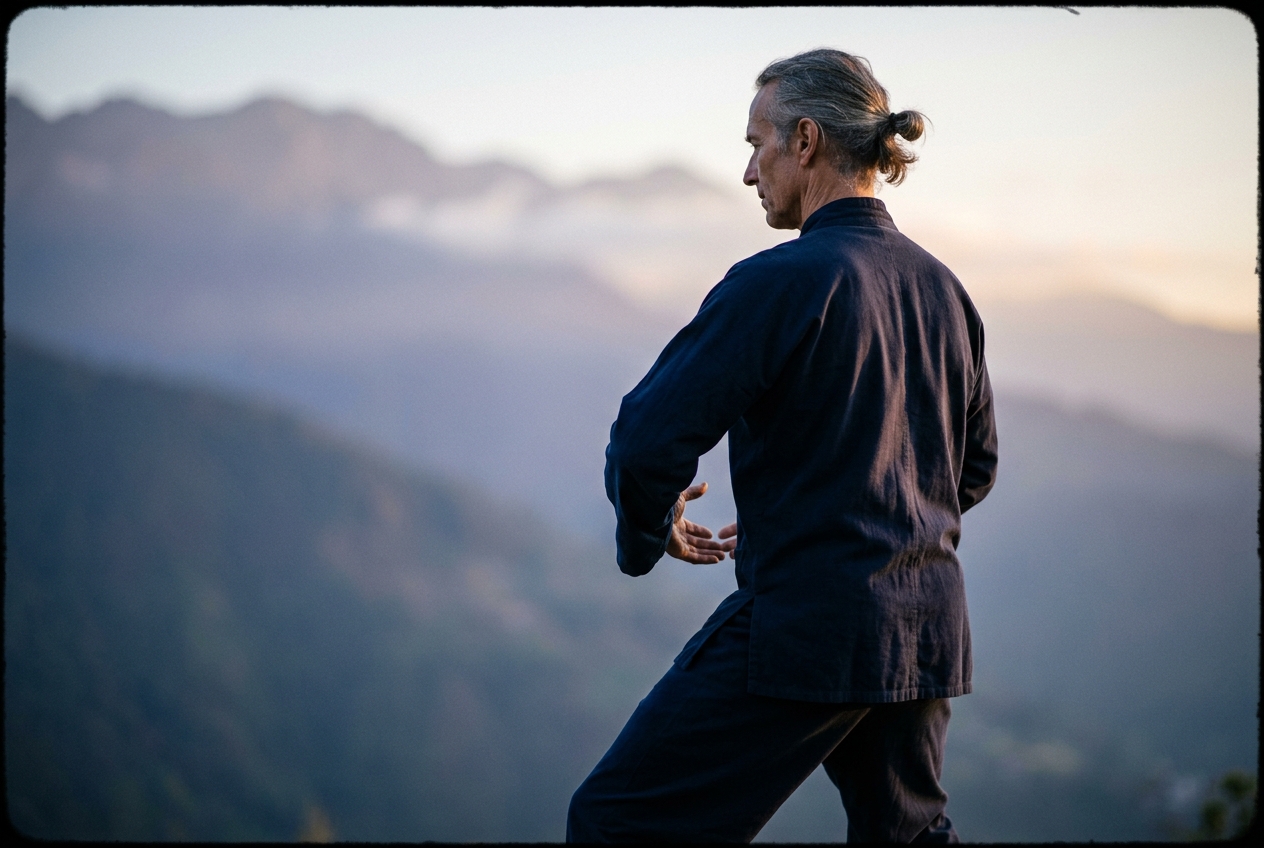
When Traditional Chinese Medicine refers to "nourishing the Kidneys" through Shenshu, it describes the restoration of circulatory warmth, metabolic vitality, and fascial elasticity to this congested retroperitoneal zone. In classical physiology, the Kidneys are said to house Pre-Heaven Jing (先天之精)—the finite, constitutional blueprint inherited at conception—and govern the deployment of Yuan Qi (元氣, Original Primordial Qi). Shenshu serves as the specialized thermodynamic conduit where this foundational energetic substrate is drawn from deep constitutional storage and infused into the primary circulatory highways of the body. When paired dynamically with Mingmen (命門, DU4, the "Gate of Life" situated directly between the two Shenshu points along the midline of the second lumbar vertebra) and the anterior Lower Dantian (下丹田, the abdominal energetic center two inches below the navel), Shenshu forms the posterior half of a physiological crucible that regulates core thermal dynamics, fluid balance, and endocrine vitality.
Classical Neigong Protocol: Step-by-Step Somatosensory Calibration
The following four-part protocol integrates classical Daoyin (guiding and stretching) methods with internal standing meditation (Zhan Zhuang). Practiced daily, it systematically opens the bilateral Shenshu cavities, unloads the lumbar spine, and enlivens the posterior kinetic chain.
       ===================================================================
       SOMATIC CALIBRATION SUMMARY: THE FOUR-STAGE SHENSHU NEIGONG
       ===================================================================
       Phase 1: Postural Alignment (Song Yao & Grounding)
                • Yongquan (KI1) rooted, pelvis suspended, lumbar flattened.
       Phase 2: Retro-Diaphragmatic Pressurization
                • 4-second nasal inhale filling the bilateral BL23 chambers.
       Phase 3: Renal Friction Daoyin (Thermal Induction)
                • 81 bidirectional palm rubs across BL23-DU4-BL23 axis.
       Phase 4: Zhan Zhuang Tensegrity Holding
                • Micro-traction of spine, popliteal release (BL40).
       ===================================================================
Stage 1: Stance Architecture and the Unlocking of Song Yao
- Rooting the Base: Stand with your feet parallel, separated precisely by the outer width of your shoulders. Distribute 60% of your body weight across the tripod of each foot: the ball beneath the big toe, the base of the fifth metatarsal, and the calcaneus, allowing the arches to dome upward over Yongquan (湧泉, Kidney 1).
- Pelvic Suspension: Soften the knee joints so they do not collapse inward or hyperextend backward. Allow the tailbone (Changqiang, DU1) to sink straight down as if weighted by a lead plumb line, while the crown of the head (Baihui, DU20) gently suspends upward.
- The Dissolution of Lordosis (Song Yao, 松腰): As the sacrum sinks, draw the lower abdomen slightly inward and upward without gripping. The lumbar spine will naturally flatten its hyper-lordotic arch, opening the space between the L2 and L3 vertebrae. Imagine the bilateral Shenshu cavities sliding outward and backward like double sliding doors parting in the lower back.
Stage 2: Directional Retro-Diaphragmatic Breath Pressurization
- Nasal Inflow: Inhale smoothly through the nose over a count of four seconds. Keep the upper chest and shoulders completely motionless.
- Retroperitoneal Expansion: As the respiratory diaphragm descends, deliberately resist pushing the belly forward into a slack distention. Instead, focus your interoceptive attention on the bilateral Shenshu cavities 1.5 inches to the left and right of your spine. Feel the breath create a hydraulic outward pressure that fills the retroperitoneal space beneath your lower ribs.
- Hydraulic Suspension and Exhale: Retain the breath for one effortless second without closing your glottis. Exhale slowly through the nose over a count of six seconds, maintaining the expanded structural volume in your lower back even as the breath empties.
Stage 3: Renal Friction Daoyin (Thermal Induction)
- Generating Micro-Thermal Friction: Vigorously rub the palms of both hands together until the Laogong (PC8) points in the center of your palms generate intense, radiating friction heat.
- Cavity Coupling: Immediately press the heated palms over the bilateral Shenshu cavities (L2 level).
- Circular Friction: Massage the lower back in brisk, firm, circular strokes—moving outward, downward, inward, and upward—for 81 continuous cycles. Let the cutaneous heat penetrate deeply through the skin, fat layers, and fascial sheets into the renal parenchyma.
Stage 4: Dynamic Standing Immersion (Zhan Zhuang)
- Rest the hands in front of the lower abdomen, curved as though embracing a sphere of warm wood.
- Maintain the micro-traction of the spine: crown floating, chin tucked, sacrum sinking, Shenshu pressurized and wide.
- Remain in this posture for 10 to 20 minutes, observing the internal circulation without muscular strain.
Common Beginner Errors and Corrective Adjustments
- Error 1: Anterior Pelvic Tipping (Hyper-Lordosis)
Symptom: Sticking the buttocks out backward, creating a sharp crease and pinching pain at the L2–L4 junction.
Correction: Drop the coccyx down toward your heels and soften the groin folds (Kua). The lower back should feel expansive, flat, and spacious, not creased. - Error 2: Paradoxical Clavicular Breathing
Symptom: Elevating the ribcage and shoulders on inhalation, which pulls the diaphragm upward and compresses the renal vascular beds.
Correction: Place a belt or resistance band loosely around the lower ribcage (floating ribs). Practice breathing so that only the lower band expands circumferentially 360 degrees. - Error 3: Rigid Muscular Locking
Symptom: Squeezing the gluteal muscles and erector spinae in an attempt to force the back to flatten.
Correction: Song (鬆) is not muscular contraction; it is release and fascial release under structural alignment. Release tension from the gluteal group, allowing bone alignment and fascial elasticity to hold the posture.
Interoceptive Signposts: Sensations and Somatic Meaning
When directional breath pressurization and postural alignment are achieved, the practitioner will encounter specific somatic benchmarks. A profound, glowing warmth indicates microvascular dilation and the release of chronic sympathetic vasoconstriction in the renal arteries. A subtle tingling or vibrational buzzing signals the activation of dense Ruffini and Pacini mechanoreceptors throughout the thoracolumbar sheath. A feeling of hydraulic fullness confirms that intra-abdominal pressure is effectively stabilizing the lumbar vertebrae from within, relieving the discs of compressive shearing forces. Finally, a sensation of deep pelvic heaviness and grounding reveals that ground reaction forces are flowing smoothly through the leg meridians without breaking at the lumbar spine.
The Biomechanical and Neurovascular Science of Shenshu
The anatomical landscape underlying the Shenshu cavity reveals why classical masters prioritized this point for longevity and structural martial integrity. Localized precisely 1.5 cun lateral to the inferior border of the spinous process of the second lumbar vertebra (L2), the cavity occupies an extraordinary junction of osteological, myofascial, and neurovascular systems.
Topographical Anatomy and Fascial Architecture
Directly beneath the skin and subcutaneous adipose tissue at BL23 lies the posterior lamella of the thoracolumbar fascia (TLF). The TLF is not a passive wrapping; it is a dynamic, multi-layered retinaculum that envelopes the erector spinae (specifically the longissimus thoracis and iliocostalis lumborum) and bridges laterally into the quadratus lumborum and the aponeurosis of the transversus abdominis.
Deep to the muscular tier sits the retroperitoneal space, housing the renal neurovascular bundle: the renal artery, renal vein, and the dense renal plexus of autonomic vasomotor nerves. The second lumbar level (L2) also corresponds topographically with the termination of the spinal cord proper (conus medullaris) and the emergence of the cauda equina, as well as the anatomical anchors (crura) of the respiratory diaphragm.
       ===================================================================
       KEY PHYSIOLOGICAL MECHANISMS OF THE SHENSHU DECOMPRESSION
       ===================================================================
       1. Thoracolumbar Hydraulic Tensioning: Transversus abdominis and
          diaphragm contraction tension the TLF, converting intra-abdominal
          pressure into axial spinal unloading.
       2. Renal Sympathetic Down-Regulation: Rhythmic retroperitoneal
          pressurization unloads the celiac and renal autonomic plexuses,
          shifting systemic balance from fight-or-flight to recovery.
       3. Posterior Kinetic Chain Continuity: Axial lengthening bridges the
          plantar fascia at Yongquan (KI1), through the popliteal crease at
          Weizhong (BL40), across Shenshu (BL23), to the suboccipital ridge.
       ===================================================================
Fascial Tensegrity, Hydraulic Amplification, and the Kinetic Chain
When a practitioner performs Song Yao (relaxing and widening the lumbar curve), they alter the tensegrity architecture of the human spine. In a lordotic, compressed stance, the lumbar vertebrae bear compressive load on their posterior facets and intervertebral discs. By deliberately flattening this arch, the posterior lamella of the thoracolumbar fascia is stretched taut across the L2–L4 vertebrae.
During diaphragmatic inhalation, the descent of the diaphragm increases intra-abdominal pressure (IAP). As demonstrated in contemporary biomechanical literature cataloged by the National Center for Biotechnology Information, elevated IAP acts as a hydraulic cylinder anterior to the spine, while the taut thoracolumbar fascia functions as a posterior tension band. This creates a mechanical "hydraulic amplifier" effect: the compressive spinal load is converted into lateral and axial tensile hoop stress, effectively decompressing the L2–L3 disc spaces and relieving neural impingement.
This decompression does not occur in isolation. Shenshu (BL23) operates as the primary structural bridge in the uninterrupted posterior kinetic chain. According to both the acupuncture mapping of the Taiyang Bladder meridian (documented by the World Health Organization) and modern fascial anatomy (specifically the Superficial Back Line): - The chain initiates at the sole of the foot at Yongquan (Kidney 1) and the plantar aponeurosis. - It ascends the posterior lower extremity through the Achilles tendon and the gastrocnemius to Weizhong (委中, Bladder 40) in the center of the popliteal fossa. - From Weizhong, it traverses the hamstrings and sacrotuberous ligament to merge with the thoracolumbar fascia and the erector spinae at Shenshu (BL23). - It continues upward across the rhomboids and splenius muscles to Dazhui (DU14) and anchors into the galea aponeurotica of the cranium.
When the knees unlock and the popliteal fossa at Weizhong releases, ground reaction forces can travel unobstructed from the earth (Yongquan), through the knee (Weizhong), and load the spring-like fascial system of the lumbar spine (Shenshu). If the lumbar region is tight or hyper-lordotic, this kinetic energy breaks at L2, causing spinal wear and energetic dissipation. When Shenshu is open and decompressed, the entire dorsal body operates as a unified biomechanical whip.
Autonomic and Endocrine Regulation
The neurovascular implications of Shenshu stimulation are equally profound. The retroperitoneal renal plexus, which controls renal blood flow, glomerular filtration, and the secretion of renin (a key regulator of blood pressure), is heavily innervated by postganglionic sympathetic fibers from the T10–L2 spinal segments.
Chronic psychological stress locks the human organism into a sympathetic-dominant state, causing continuous vasoconstriction of the renal microvasculature and hypertonicity in the quadratus lumborum and psoas muscles. Rhythmic retro-diaphragmatic breathing directly massages the renal parenchymal bed and stimulates the local mechanoreceptors of the thoracolumbar fascia. This sensory input feeds back through the dorsal horn of the spinal cord to inhibit excessive sympathetic outflow, promoting systemic parasympathetic vagal tone, lowering resting arterial blood pressure, and increasing heart rate variability (HRV).
Lineage and Lore: From the Huangdi Neijing to Neidan Alchemy
The conceptual lineage of Shenshu spans more than two millennia of documented medical and esoteric Daoist practice, serving as a primary intersection between therapeutic medicine and internal martial cultivation, as chronicled by the National Qigong Association.
The foundational theoretical framework for the Back-Shu points was first systematized in the foundational canon of Chinese medicine, the Huangdi Neijing (黃帝內經, The Yellow Emperor's Inner Classic, circa 1st–2nd century BCE). In the Suwen (Plain Questions), the text outlines the functional network of the Shu points—cavities along the paraspinal Bladder meridian where the constitutional Qi of the internal Zang-Fu organs is "transported" (Shu) directly to the surface of the body. Shenshu was designated as the direct command post for the Kidneys, which the Neijing revered as the "Ministers of Labor" (Zuogiang zhi Guan, 作強之官), responsible for physical stamina, skeletal integrity, and ingenuity.
During the Song (960–1279 CE) and Yuan (1271–1368 CE) dynasties, the understanding of Shenshu expanded dramatically with the flourishment of Daoist Neidan (Internal Alchemy, 內丹) and the codification of the Nan Jing (Classic of Difficult Issues). Internal alchemists recognized that while the physical kidneys reside bilaterally, the subtle energetic pivot between them is Mingmen (命門, the Gate of Life). In the Neidan text Xingming Guizhi (Principles of Balanced Nature and Vital Destiny), the bilateral Shenshu cavities are depicted as the "Two Dragons Guarding the Pearl"—the complementary water vessels that flank and temper the primal fire of Mingmen.
   "The waist is the commander of the entire physical frame. If the waist
    cannot release (*Song Yao*), the internal Qi will not sink, the root
    will not be established, and the power of the spine will remain fractured.
    Open the Gate of Life and expand the Shu of the Kidneys; then the
    breath will penetrate the marrow and the spirit will be unified."
    — Classical Taijiquan Treatise Attributed to Wang Zongyue
In the internal martial lineages of Taijiquan, Xingyiquan, and Baguazhang, this anatomical-energetic principle was distilled into the essential foundational maxim: "The waist is the commander" (Yao wei di yi zhu zai, 腰為第一主宰). In classical training manuals, masters warned disciples that without the opening of Shenshu and the mastery of Song Yao, all movements remain superficial muscular exertion (Zhuoli). True martial power (Fajin) requires an unbroken line of tensile fascial connection rooted in the heels, expanded through the lumbar hinge of Shenshu, and expressed through the fingertips.
The Daily Protocol: Today's Practice Commitment
Theory without somatic integration remains mere intellectual abstraction. The physical benefits of opening the Shenshu cavity accrue through consistent, daily micro-doses of deliberate practice.
       ===================================================================
       DAILY 7-MINUTE MORNING RECOVERY PROTOCOL
       ===================================================================
       • Minute 0:00 – 1:30: Stance Setup & Pelvic Suspension
         Establish tripod root on Yongquan (KI1); soften knees; sink sacrum.
       • Minute 1:30 – 3:30: Directed Retro-Diaphragmatic Pressurization
         12 deep breaths directly expanding the bilateral BL23 chambers.
       • Minute 3:30 – 5:00: Thermal Daoyin Friction
         81 circular friction rubs over Shenshu/Mingmen with heated palms.
       • Minute 5:00 – 7:00: Zhan Zhuang Stillness & Kinetic Integration
         Stand in relaxed embrace; feel the posterior chain hum with warmth.
       ===================================================================
Tomorrow morning, prior to drinking your first cup of coffee or opening your digital devices, dedicate exactly seven minutes to this protocol. Step out of bed, assume the stance with feet shoulder-width apart, sink your tailbone to decompress your lumbar spine, and practice twelve conscious retro-diaphragmatic breaths that press outward into your bilateral Shenshu points. Conclude with 81 circular friction rubs across the lower back until a deep, soothing warmth radiates inward through your tissues.
As you progress through your day, observe the subtle physiological indicators: a notable reduction in habitual lower back fatigue, an expanded breathing capacity, grounded emotional equilibrium, and a sustained foundation of physical energy anchored in the decompressed architecture of your spine. Explore complementary somatic principles through the broader framework of classical Qigong to further enrich your movement practice.