Shenmen Cavity Spirit Gate: Ulnar Carpal Fascial Decompression, Cardiopulmonary Shen Tranquilization, and Autonomic Vagal Entrainment in Classical Neigong
What Is This Practice? (Plain English First)
At its foundation, this practice is a specialized method of upper-body fascial decompression designed to calm an overstimulated nervous system and settle the mind. In classical Chinese medicine and Daoist internal cultivation (Neigong), this exact anatomical gateway is called Shenmen (神門, translated as the "Spirit Gate" and cataloged in modern acupuncture as HT7). It serves as the primary regulatory point on the Heart Meridian (Shou Shaoyin), functioning as the direct energetic threshold where emotional agitation is discharged and deep physiological stillness is restored.
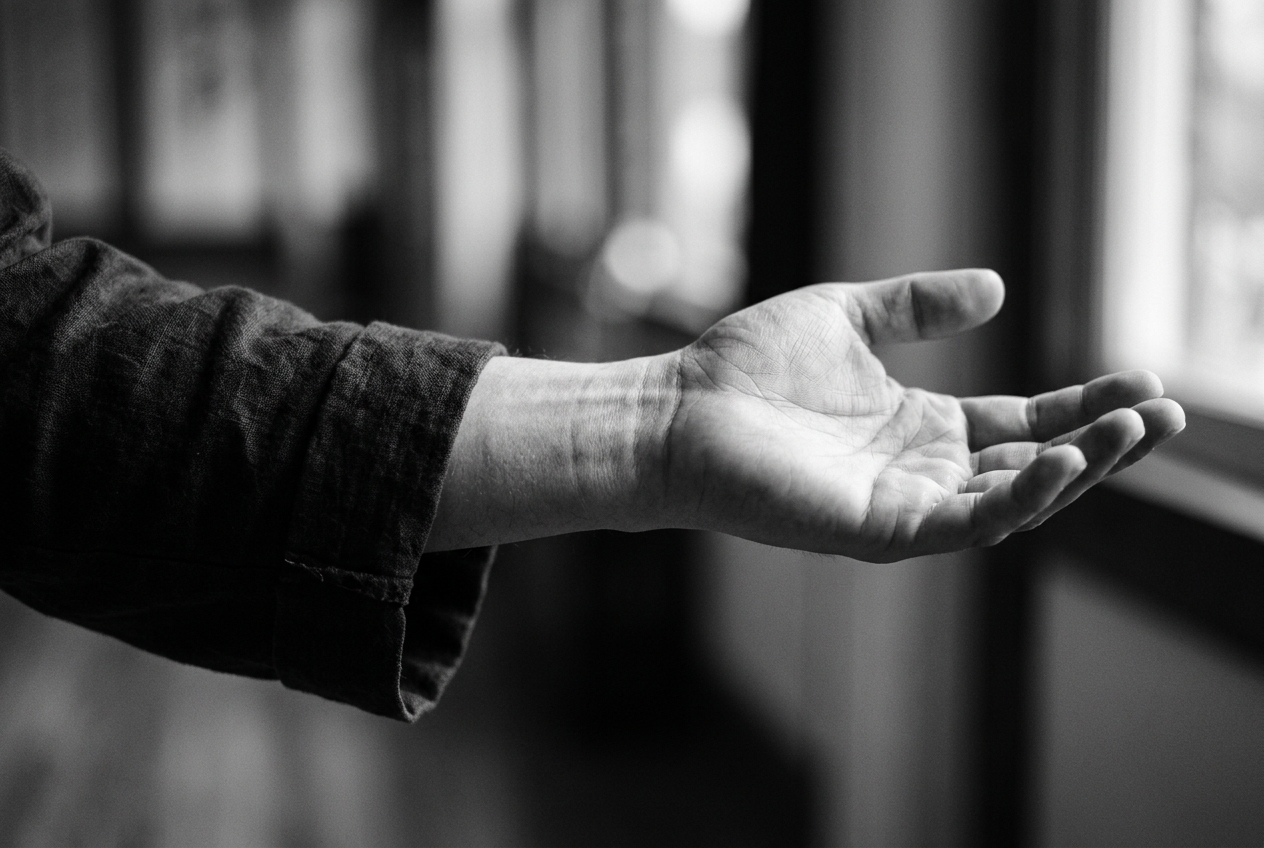
When you practice releasing the wrist—a discipline known in internal arts as Song Wan (松腕, or "Wrist Sinking")—you eliminate chronic muscular tension in the forearm, open the space around the ulnar nerve and blood vessels, and allow the fingers to lengthen naturally without force. In traditional terms, opening this gateway anchors the Shen (神, the psycho-emotional spirit and conscious awareness) into the physical body, cooling internal agitation and harmonizing the circulation of blood and vitality. In contemporary terms, this somatic technique stimulates specialized nerve endings in the connective tissue of the wrist, sending immediate calming signals along the vagus nerve to slow the heart rate, increase heart rate variability, and shift the autonomic nervous system into a state of restorative parasympathetic coherence.
Anatomical Topography and Fascial Architecture
To understand why such a localized point exerts profound systemic effects, one must first appreciate its precise structural anatomy. Shenmen (HT7) is situated at the ulnar aspect of the anterior wrist, precisely located at the transverse crease of the wrist joint. Anatomically, it lies in the soft depression immediately radial to the tendon of the flexor carpi ulnaris muscle (FCU) and directly proximal to the pisiform bone (os pisiforme).
                        PALMAR VIEW (LEFT HAND)
                  ===================================
                               /|  ||  |\
                              / |  ||  | \
                             /  |  ||  |  \
                            /   |  ||  |   \
                           (    DIGITS      )
                            \              /
                             \   PALM     /
                              \ (Laogong)/
                 RADIAL SIDE   \        /   ULNAR SIDE
                 (Thumb Edge)   |      |    (Pinky Edge)
                                |      |
       Radial Artery Pulse ---> ( )    [#] <--- SHENMEN (HT7)
                                |  __  |        - Radial to FCU Tendon
          Flexor Crease ------> ~~~~~~~~        - Proximal to Pisiform Bone
                                | || | |
                                | || | | <----- Flexor Carpi Ulnaris (FCU)
                                | || | | <----- Ulnar Neurovascular Bundle
                                |      |
                                FOREARM
                  ===================================
Directly beneath the skin and subcutaneous tissue at HT7 lies the deep antebrachial fascia, a dense, continuous sleeve of fibrous connective tissue that invests the flexor muscles of the forearm. The flexor carpi ulnaris tendon acts as a prominent mechanical anchor, inserting into the pisiform before continuing via the pisohamate and pisometacarpal ligaments into the carpal and metacarpal framework. Immediately adjacent to this tendon, traversing the anatomical corridor known as Guyon’s canal (the ulnar tunnel), runs the ulnar neurovascular bundle, comprising the ulnar nerve, the ulnar artery, and their accompanying venae comitantes.
+----------------------------------------------------------------------------------------------------+
|                                    ANATOMICAL LANDMARKS OF HT7                                     |
+------------------------------------+---------------------------------------------------------------+
| Structural Landmark                | Functional & Biomechanical Significance                       |
+------------------------------------+---------------------------------------------------------------+
| Pisiform Bone (*Os Pisiforme*)     | Sesamoid bone providing a mechanical pulley for the FCU;      |
|                                    | serves as the distal boundary of the HT7 hollow.              |
| Flexor Carpi Ulnaris (FCU) Tendon  | Medial muscular anchor; hypertonicity creates compression     |
|                                    | of the ulnar nerve and limits forearm supination.             |
| Deep Antebrachial Fascia           | Dense collagenous sheath transmitting mechanical tension      |
|                                    | longitudinally from the wrist to the medial intermuscular     |
|                                    | septum and axilla.                                            |
| Palmar Carpal Ligament             | Fibrous band stabilizing the ulnar neurovascular bundle;      |
|                                    | susceptible to fascial contracture during sustained wrist     |
|                                    | flexion.                                                      |
| Ulnar Neurovascular Bundle         | Conduit for the ulnar nerve (C8–T1 motor/sensory fibers)     |
|                                    | and ulnar artery, supplying blood to the superficial palmar   |
|                                    | arterial arch.                                                |
+------------------------------------+---------------------------------------------------------------+
When an individual experiences psychological stress, postural collapse, or repetitive strain from keyboard use, the flexor carpi ulnaris and palmar carpal ligament undergo sustained isometric contraction. This creates a state of distal tension entrapment: the deep antebrachial fascia thickens and tightens, exerting mechanical pressure on the ulnar nerve and restricting microvascular flow through the ulnar artery. Because fascial sheets are continuous—connecting the hand through the medial intermuscular septum of the upper arm, across the pectoralis minor, and into the pericardial and thoracic fascia—chronic gripping or rigidity at the wrist mechanically restricts chest mobility and shallow breathing.
By applying the classical principle of Song Wan (sinking the wrist) and gently lengthening the medial digits (the little and ring fingers), the FCU tendon is unloaded, Guyon’s canal is decompressed, and the dense fascial network of the forearm is liberated from chronic neuromuscular holding patterns.
Step-by-Step Practice Guide: Decompressing the Gateway
The following sequential protocol integrates manual myofascial release, dynamic movement (Daoyin), and postural standing (Zhan Zhuang) to systematically open the Shenmen cavity. Practice in a quiet space wearing loose, non-restrictive clothing.
======================================================================================================
                               PROGRESSIVE SHENMEN RELEASE PROTOCOL
======================================================================================================
 Phase 1: Palpatory Localization & Sustained Isometric Decompression (3 Minutes)
 Phase 2: Micro-Spiral Dynamic Wrist Articulation (*Luo Xuan Wan*) (4 Minutes)
 Phase 3: Standing Postural Integration in *Zhan Zhuang* (8 Minutes)
======================================================================================================
Phase 1: Palpatory Localization and Isometric Release
- Seated Posture Setup: Sit upright on the edge of a firm chair or cushion. Align the crown of your head with your perineum, drop your tailbone slightly, and rest your feet flat on the floor, hip-width apart. Rest your left forearm comfortably across your lap with the palm facing upward.
- Contact and Anchoring: Using the thumb pad of your right hand, locate the pisiform bone at the ulnar base of your left palm. Slip your thumb approximately 2 to 3 millimeters proximally (toward your elbow) into the soft indentation on the radial side of the FCU tendon.
- Gentle Sub-Threshold Compression: Apply a mild, steady downward pressure into the cavity (a subjective intensity of 3 out of 10). Do not dig aggressively; the goal is to communicate with the deep fascia and mechanoreceptors, not to bruise the tissue.
- Isometric Micro-Activation: While maintaining this light contact, attempt to gently flex your left wrist upward against the resistance of your right thumb with only 5% of your maximum strength for 5 seconds. Inhale slowly.
- Fascial Unwinding: Exhale fully through the mouth with a soft "Haaaw" sound, releasing all muscular effort. As you exhale, imagine the soft tissue beneath your thumb melting like warm wax. Maintain light thumb contact as the tissue deepens and softens. Repeat this cycle three times.
Phase 2: Micro-Spiral Wrist Rotations (Luo Xuan Wan)
- Arm Elevation: Extend both arms out at chest level, elbows relaxed and pointing downward at approximately a 45-degree angle, maintaining a rounded, hollow armpit space ("holding an egg in the armpit").
- Finger Elongation (Shu Zhi): Soften the palms into the classical "Plum Blossom Hand" (Meihua Zhang). Rather than spreading the fingers stiffly or letting them curl into a limp claw, gently extend the little finger and ring finger along an imaginary diagonal line, feeling a subtle tug along the inner forearm.
- The Micro-Spiral Motion: - Inhalation: Slowly supinate the wrists by rotating the thumbs outward and the pinkies inward toward your midline, allowing the wrists to rise slightly (no more than one inch). Feel the inner wrist crease open. - Exhalation: Slowly pronate the wrists, rotating the ulnar edge (pinky side) outward and downward, allowing the wrists to sink downward while the fingertips remain buoyant and lengthened.
- Coordination: Complete 12 slow, continuous, wave-like micro-spirals. Ensure the movement originates from the rotator cuff and elbow, transmitting through the forearm to roll smoothly across the Shenmen cavity without snapping or jerky articulation.
Phase 3: Postural Integration in Standing Stake (Zhan Zhuang)
               ZHAN ZHUANG POSTURAL GEOMETRY & VECTORING

                         ( Crown Suspended / Baihui Up )
                                      |
                                  [ Head ]
                                 /   |    \
           ( Relax Shoulders ) <-    |    -> ( Relax Shoulders )
                               /     |     \
     ( Sink Elbows / Chen Zhou ) [ Torso ] ( Sink Elbows / Chen Zhou )
           /                         |                         \
 [ Wrist Soft / Song Wan ]       ( Dantian )       [ Wrist Soft / Song Wan ]
 [ Shenmen Opened & Sunk ]           |             [ Shenmen Opened & Sunk ]
           \                         |                         /
      ( Elongated Fingers )      [ Pelvis ]       ( Elongated Fingers )
                                /    |    \
                               /     |     \
                             [Legs]  |    [Legs]
                            (Knees Soft / Kua Folded)
                              |      |      |
                             [Feet Flat & Grounded]
- Stance Setup: Stand with feet parallel, shoulder-width apart. Unlock your knees, fold gently at the inguinal crease (Kua), and allow your sacrum to hang vertically as if sitting on a high stool.
- Embracing the Tree (Cheng Bao Zhuang): Float both arms upward to form an open, rounded circle in front of your chest, as though holding a large sphere of cedar wood. The palms face inward toward the heart; the thumbs point gently upward, and the little fingers sink downward.
- Releasing the Gateway (Song Wan): Consciously drop your elbows (Chen Zhou) and allow the ulnar border of your wrists to sink. This subtle drop decompresses HT7, preventing the wrist joint from collapsing inward or hyper-extending backward.
- Mind Vectoring (Yi): - Inhale into the lower abdomen (the Lower Dantian), expanding the belly, flanks, and lower back in 360 degrees. - Exhale slowly, guiding your mental intention (Yi) from the core of your chest down the inner seam of both arms (the Shaoyin pathway), venting excess psycho-emotional heat out through the open Shenmen gates at both wrists into the open space. - Maintain this posture for 5 to 10 minutes, breathing at an effortless rate of 5 to 6 breaths per minute.
+----------------------------------------------------------------------------------------------------+
|                                    COMMON PRACTICE PITFALLS                                        |
+------------------------------------+------------------------------------+--------------------------+
| Fault / Error                      | Biomechanical Consequence          | Corrective Adjustment    |
+------------------------------------+------------------------------------+--------------------------+
| Broken Wrist Line (*Zhe Wan*)      | Compresses the median and ulnar    | Maintain a smooth, open  |
| Over-flexing or over-extending     | nerves against the flexor          | curvature; let the wrist |
| the wrist joint.                   | retinaculum; arrests energy flow.  | feel suspended in water. |
| Rigid Digital Extension            | Engages flexor/extensor digitorum  | Soften the metacarpal    |
| Stiffening the fingers outward     | tendons, freezing antebrachial     | joints; lengthen without |
| like wooden boards.                | fascial sliding.                   | isometric clamping.      |
| Elevated Shoulders / Flared Elbows | Trapezius tension radiates down    | Drop the scapulae into   |
| Lifting the arm frame from the     | the brachial plexus, locking the   | the back; let elbows     |
| neck and upper chest.              | distal arm lines.                  | point toward the earth.  |
| Excessive Mental Straining         | Stimulates sympathetic fight-or-   | Direct awareness as a    |
| Forcing sensations or hyper-       | flight arousal; agitates the Heart | gentle, panoramic warmth |
| concentrating on the wrist.        | Fire.                              | rather than a laser.     |
+------------------------------------+------------------------------------+--------------------------+
Somatosensory Markers: Decoding Your Internal Feedback
As the deep fascia around the flexor carpi ulnaris releases and the microcirculation through Guyon’s canal normalizes, distinct somatosensory phenomena emerge. These markers should be recognized not as mystical anomalies, but as the direct perceptual feedback of neurovascular and fascial realignment:
- Thermal Expansion (Warmth in the Palm): A noticeable flush of warmth spreading from the ulnar border into the center of the palm (Laogong, PC8) and out to the fingertips indicates vasodilation of the superficial palmar arterial arch, mediated by sympathetic withdrawal.
- Vibratory Tingling or Micro-Pulsation: A fine, rhythmic tingling along the little and ring fingers reflects the decompression of the sensory branches of the ulnar nerve and the restoration of normal interstitial fluid dynamics.
- Descending Heaviness (Chen): The sensation that the forearms and wrists have become weighted like plumb bobs demonstrates the structural sinking of myofascial tone, confirming that the upper body has transferred its mechanical load to the skeletal structure.
- Deep Involuntary Sighing or Swallowing: A spontaneous deepening of the breath, accompanied by salivation and an involuntary sigh, serves as the somatic signature of vagal activation and central autonomic down-regulation.
Why It Works: The Body Science of Neurocardiology and Fascia
The profound systemic tranquility induced by opening Shenmen is fully corroborated by contemporary neurocardiology, autonomic neurophysiology, and fascial mechanobiology. Rather than operating in isolation, the wrist acts as a strategic somatic lever for the regulation of the entire cardiopulmonary and nervous systems.
The Fascial Mechanoreceptor Network and Piezoelectricity
The deep antebrachial fascia and palmar carpal ligament surrounding HT7 are densely populated with low-threshold mechanoreceptors, including Ruffini corpuscles, Pacinian corpuscles, and unmyelinated free nerve endings. Research cataloged by the NCBI PubMed database demonstrates that slow, sustained manual pressure and micro-rotational shearing of dense fascial planes stimulate Ruffini endings and interstitial receptors.
When stimulated, these receptors send afferent impulses to the central nervous system, triggering an immediate reflex inhibition of sympathetic vasomotor tone. Furthermore, living collagen matrices exhibit piezoelectric and liquid-crystalline properties: when fascial sheets are decompressed through gentle elongation rather than rigid stretching, they generate micro-electrical currents that facilitate cellular hydration, reduce local inflammation, and enhance neuromuscular responsiveness.
Neurocardiology and the Heart-Brain Dialogue
Modern neurocardiology has established that the human heart contains its own intricate neural network—an intrinsic cardiac nervous system comprising over 40,000 sensory neurites, often termed the "little brain on the heart." Through this system, the heart continuously communicates with the central nervous system via ascending neurological pathways.
Over 85% of the fibers within the vagus nerve (Cranial Nerve X) are afferent (sensory), transmitting interoceptive information from the heart and viscera upward to the nucleus of the solitary tract (Nucleus Tractus Solitarii, or NTS) in the brainstem. The NTS, in turn, modulates key structures responsible for emotional regulation, including the amygdala, thalamus, and prefrontal cortex.
+----------------------------------------------------------------------------------------------------+
|                                NEUROLOGICAL MECHANISMS OF HT7 RELEASE                              |
+------------------------------------+---------------------------------------------------------------+
| Physiological Mechanism            | Systemic Clinical Outcome                                     |
+------------------------------------+---------------------------------------------------------------+
| Vagal Afferent Stimulation         | Down-regulates amygdalar hyperactivity; decreases systemic    |
|                                    | cortisol and adrenaline secretion.                            |
| Respiratory Sinus Arrhythmia (RSA) | Synchronizes heart rate oscillations with diaphragmatic       |
|                                    | breathing cycles, maximizing oxygen exchange efficiency.      |
| Baroreflex Resonant Tuning         | Restores homeostatic blood pressure control through the       |
| (0.1 Hz Coherence)                 | rhythmic activation of carotid and aortic stretch receptors.  |
| Ulnar Nerve Decompression          | Eliminates peripheral entrapment symptoms and restores fine   |
|                                    | motor control in the intrinsic muscles of the hand.           |
+------------------------------------+---------------------------------------------------------------+
When hypertonicity around the ulnar tunnel and medial brachial fascia is resolved through Song Wan, peripheral resistance across the vascular bed decreases. Combined with slow, 6-breaths-per-minute diaphragmatic respiration, this somatic release stimulates the baroreceptor reflex, shifting cardiac rhythms into 0.1 Hz coherence. This state of Heart Rate Variability (HRV) coherence reflects balanced autonomic flexibility, reducing anxiety, sharpening cognitive acuity, and providing a physiological foundation for what the ancient masters called "anchoring the spirit."
Classical Lineage, Meridian Dynamics, and Daoist Alchemy
To appreciate the depth of Shenmen, one must examine its foundational role within classical Chinese medicine and Daoist internal cultivation (Neidan). The historical taxonomy and energetic mechanics of this cavity were systematically codified in the seminal texts of antiquity, notably the Huangdi Neijing (The Yellow Emperor’s Inner Classic), compiled between the Warring States period and the Han Dynasty.
+----------------------------------------------------------------------------------------------------+
|                                CLASSICAL MERIDIAN ATTRIBUTES OF HT7                                |
+------------------------------------+---------------------------------------------------------------+
| Attribute                          | Classical Description & Clinical Action                       |
+------------------------------------+---------------------------------------------------------------+
| Point Name                         | **Shenmen** (神門) — "The Gateway of the Spirit."             |
| Meridian                           | **Hand Lesser Yin Heart Meridian** (*Shou Shaoyin Xin Jing*). |
| Five-Phase Category                | **Shu-Stream Point** (*Shu Xue*) & **Earth Point** (*Tu*);    |
|                                    | serves as the "Child" sedating point of the Fire Meridian.    |
| Source Category                    | **Yuan-Source Point** (*Yuan Xue*); direct portal to the      |
|                                    | primordial, innate Qi of the Heart organ.                     |
| Primary Actions                    | Calms the *Shen*, nourishes Heart Blood (*Xin Xue*),          |
|                                    | clears pathogenic heat (*Qing Re*), regulates Heart rhythm.   |
+------------------------------------+---------------------------------------------------------------+
According to Chapter 8 of the Huangdi Neijing Suwen, the Heart is designated as the Jun Zhu Zhi Guan (君主之官)—the Sovereign Monarch of the internal organs—which houses the Shen (spiritual consciousness, mental clarity, and emotional coherence). Chapter 1 of the Lingshu (The Miraculous Pivot) explains that when the Monarch is stable and serene, the remaining eleven physiological organs function in harmonious equilibrium; when the Monarch is agitated or depleted by excessive desires, emotional turbulence, or chronic stress, the Shen becomes unmoored, scattering outward and resulting in insomnia, anxiety, memory impairment, and physical disease.
Within the Five-Phase (Wu Xing) paradigm, Shenmen holds a unique dual classification: 1. As the Yuan-Source Point (Yuan Xue): It provides a direct energetic interface with the primordial Yuan Qi that sustains the physical heart, making it invaluable for tonifying Heart Blood and Yin when the system is depleted by overwork or emotional exhaustion. 2. As the Shu-Stream / Earth Point (Shu Tu Xue): It acts as the "sedation" or balancing point of the Heart Fire channel (Earth being the natural offspring of Fire). When mental overactivity, manic agitation, or chronic anxiety creates pathogenic Fire, decompressing HT7 drains this hyperactive, ascending heat downward into stabilizing Earth, anchoring the Shen back into its somatic vessel.
In the esoteric lineages of Daoist meditation (Neidan), particularly within the Shangqing (Supreme Purity) and Quanzhen (Complete Reality) traditions, the wrist cavities are viewed as celestial sluice gates. Internal alchemists recognized that physical tension in the hands and wrists reflects an unconscious grasping of the mundane world. By cultivating Song Wan during sitting meditation (Jingzuo), the practitioner consciously surrenders mental grasping, allowing the inner fire of the Heart (Li Trigram ☲) to sink and unite with the primordial water of the Kidneys (Kan Trigram ☵)—the classical alchemical formulation of Kan-Li (Water and Fire Balancing).
The global significance of these traditional frameworks in modern integrative healthcare is further recognized by the World Health Organization Traditional Medicine strategy, which highlights the clinical utility and scientific integration of classical acupuncture points like Shenmen in contemporary mind-body medicine. For further exploration of accredited training and lineage preservation, practitioners frequently consult the National Qigong Association.
Integrating Shenmen into Movement: Taijiquan and Internal Martial Arts
The functional mastery of Shenmen is not confined to seated meditation; it forms the biomechanical core of internal martial arts such as Taijiquan, Baguazhang, and Xingyiquan. In these disciplines, power generation (Fa Jin) and energetic neutralization (Hua Jin) depend entirely on the unobstructed continuity of the fascia from the ground through the fingertips.
+----------------------------------------------------------------------------------------------------+
|                               SHENMEN DYNAMICS IN INTERNAL MARTIAL ARTS                            |
+------------------------------------+---------------------------------------------------------------+
| Martial Concept                    | Mechanical & Energetic Function                               |
+------------------------------------+---------------------------------------------------------------+
| Sinking the Wrist (*Song Wan*)     | Prevents structural jamming; allows ground reaction force to  |
|                                    | transfer smoothly through the wrist without joint shear.      |
| Plum Blossom Palm (*Meihua Zhang*) | Centers the palm, expands the *Laogong* hollow, and unlocks   |
|                                    | the *Shaoyin* (Heart) and *Taiyin* (Lung) meridian pathways.  |
| Ward-Off Energy (*Peng Jin*)       | Creates an elastic, pressurized fascial cylinder throughout   |
|                                    | the arm, making the limb structurally resilient yet supple.   |
| Anchoring the Spirit (*An Shen*)   | Keeps the martial artist's central nervous system calm during |
|                                    | high-intensity engagements, preventing tunnel vision.         |
+------------------------------------+---------------------------------------------------------------+
When an untrained fighter clenches their fists or extends their hands with rigid muscular force, the flexor carpi ulnaris and extensor retinacula lock tightly across the wrist joint. This creates a structural bottleneck that prevents the smooth transmission of force and traps tension in the upper neck and shoulders. Conversely, the internal martial artist keeps the Shenmen gateway open and hollow. The wrist remains resiliently supple, functioning like a fluid universal joint that can redirect incoming momentum effortlessly while maintaining unbroken cardiovascular calm.
Today’s Practice Commitment: The 5-Minute Morning Reset
To experience the restorative benefits of Shenmen decompression, integrate the following structured 5-minute protocol into your daily routine. Practice every morning before your first cup of tea or coffee, or in the evening as a transitional wind-down before sleep.
======================================================================================================
                                5-MINUTE DAILY GATEWAY ROUTINE
======================================================================================================
  Minute 1:00 — Quiet Seated Alignment & Diaphragmatic Breath Awareness
  Minute 2:00 — Left Wrist Shenmen Acupressure & Isometric Release
  Minute 3:00 — Right Wrist Shenmen Acupressure & Isometric Release
  Minute 4:00 — Bilateral Micro-Spiral Wrist Articulations (*Luo Xuan Wan*)
  Minute 5:00 — Standing *Zhan Zhuang* Postural Integration & Shen Grounding
======================================================================================================
+----------------------------------------------------------------------------------------------------+
|                                    DAILY PRACTICE OBSERVATION LOG                                  |
+------------------------------------+---------------------------------------------------------------+
| What to Observe Before Practice    | Baseline heart rate; tension in shoulders and jaw; mental     |
|                                    | chatter or feelings of rushed anxiety.                        |
| What to Observe During Practice    | Softening of the FCU tendon; sensation of warmth or pulse     |
|                                    | beneath the thumb; deepening of the involuntary breath.       |
| What to Observe After Practice     | A grounded sense of mental spaciousness; reduced ocular strain;|
|                                    | smooth, effortless posture throughout the upper spine.        |
+------------------------------------+---------------------------------------------------------------+
Direct Somatic Takeaway: The state of your mind is physically reflected in the tension of your wrists. When you release the flexor carpi ulnaris and open the Spirit Gate at Shenmen, you are not merely performing a mechanical stretch—you are engaging an ancient, scientifically validated gateway that down-regulates autonomic arousal, restores cardiopulmonary coherence, and anchors your conscious awareness into a state of profound, centered equilibrium.