Parasite-Expelling Herbs (Qu Chong Yao) Pharmacodynamics: Governing Helminthic Eradication, Intestinal Parasite Expulsion, Abdominal Pain Alleviation, and Spleen-Stomach Decontamination in Traditional Chinese Medicine
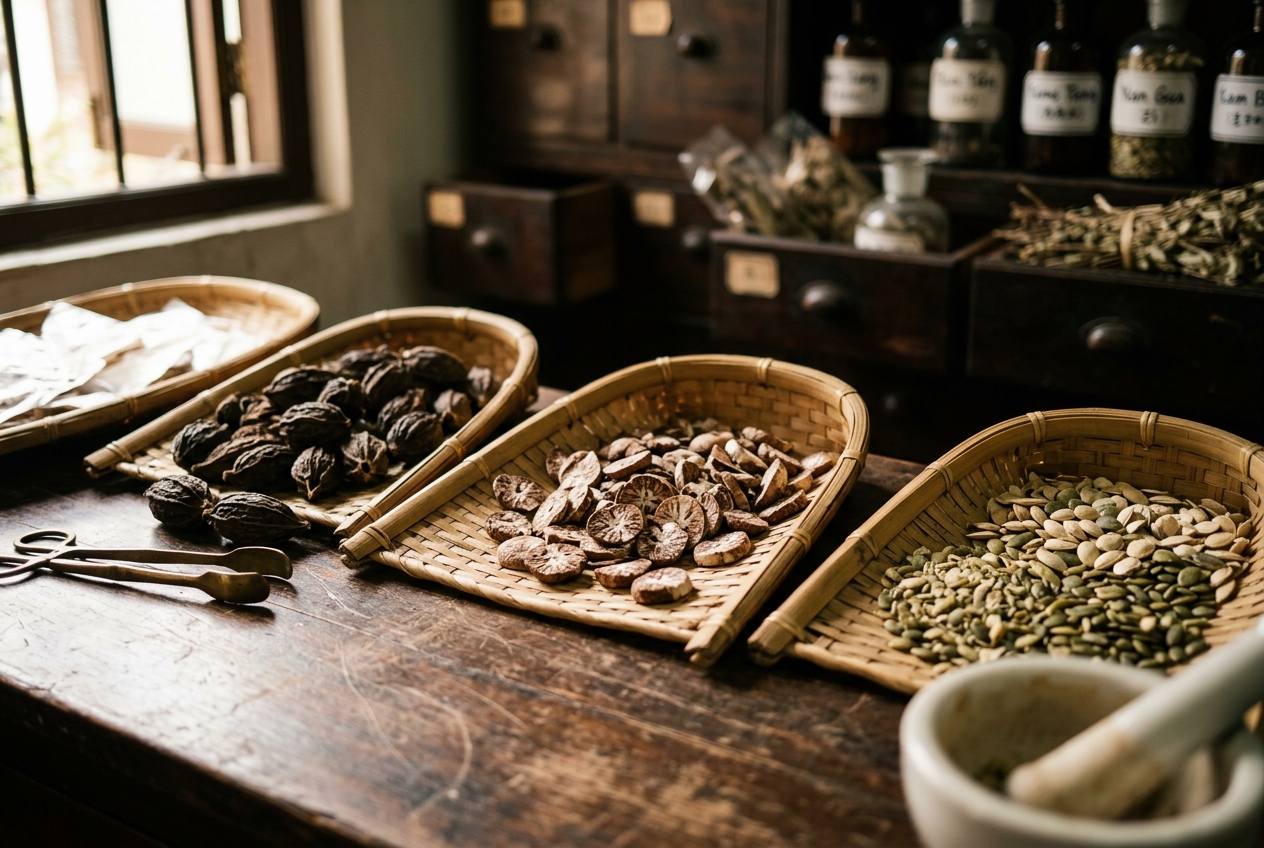
You wake in the pre-dawn darkness to a distinct, gnawing sensation beneath the navel—not quite sharp enough to be an acute spasm, yet far too persistent to ignore. Over recent weeks, your digestion has become erratic: sudden, ravenous cravings for refined carbohydrates alternate with postprandial nausea, deep abdominal bloating, and a profound mental lethargy that coffee cannot lift. At night, your partner notes the rhythmic, abrasive sound of you grinding your teeth (bruxism), while an unbearable perianal itch disrupts your sleep architecture. In Western biomedicine, these symptoms prompt stool ova and parasite (O&P) panels to rule out enteropathogenic organisms. In the diagnostic framework of Traditional Chinese Medicine (TCM), this somatic pattern indicates a fundamental breakdown in the gastrointestinal defense barrier: an insidious colonization of the intestinal lumen known as Chong Zheng (虫证, Parasitic Diseases) and Gu Du (蛊毒, Chronic Toxin-Accumulating Helminthic Envenomation).
The human digestive tract is not merely a passive conduit for enzymatic absorption; it is an active ecological ecosystem governed by what Chinese classical medicine terms the Middle Jiao (中焦, the central digestive furnace). When the harmonious balance of this axis collapses, the gut ceases to be an unhospitable barrier against pathogens and instead transforms into an incubator for opportunistic parasites. Understanding how traditional pharmacotherapy addresses these intestinal invaders requires bridging centuries of clinical observation with modern biochemical and neuromuscular pharmacology.
2. What This Organ System Does — The Spleen-Stomach Axis & Intestinal Ecology
In Traditional Chinese Medicine, gastrointestinal physiology centers on the coupled functional network of the Spleen (Pi, 脾) and the Stomach (Wei, 胃), supported downstream by the Small Intestine (Xiao Chang, 小肠) and Large Intestine (Da Chang, 大肠). Classical texts describe the Spleen-Stomach axis as the "Root of Post-Heaven Essence" (Hou Tian Zhi Ben), responsible for transforming dietary inputs into vital energy (Qi) and nutrient-rich fluids (Xue).
The Stomach is the "Sea of Food and Drink," performing initial maceration and ripening through its physiological requirement for downward descent (Jiang). Conversely, the Spleen governs Yun Hua (运化)—the sophisticated biological work of transformation and transportation—which demands that pure fluids and metabolic essence ascend (Sheng) to the Heart and Lungs.
When the Spleen’s operational capacity is compromised by dietary excess, raw or contaminated food, environmental pathogens, or constitutional weakness, this functional polarity fails. The clear Yang cannot ascend, and the turbid Yin stagnates within the lower abdominal cavity. This persistent stagnation generates Internal Dampness (Shi, 湿) and Pathogenic Heat (Re, 热)—creating an anaerobic, warm, nutrient-dense ecological niche inside the intestinal lumen. Parasitic helminths thrive precisely in this compromised, damp-congested terrain. The presence of parasites further depletes Spleen Qi by siphoning systemic micronutrients, creating a vicious cycle of metabolic exhaustion and structural tissue vulnerability.
3. How You Can Feel It — Signs of Balance and Imbalance
Distinguishing between helminthic species and assessing the severity of gastrointestinal invasion relies upon recognizing distinct symptom clusters, mucosal presentations, and energetic markers. Classical literature demarcates mild-to-moderate helminthic accumulation (Chong Zheng) from deep, pernicious, immune-exhausting infestations (Gu Du).
+-----------------------------------+-----------------------------------+
| Clinical Feature                  | Diagnostic Significance           |
+-----------------------------------+-----------------------------------+
| Periumbilical colic (waxing/waning)| Ascaris migration / aggregation   |
| Nocturnal perianal pruritus       | Enterobius female oviposition     |
| Voracious appetite with cachexia  | Taenia nutrient theft             |
| Sallow skin, pica, severe fatigue | Ancylostoma chronic blood loss    |
| White facial patches (Chong Ban)  | Spleen-Qi parasite malabsorption  |
+-----------------------------------+-----------------------------------+
Classical & Physiological Differentiation of Helminthic Pathologies
1. Roundworms (Hui Chong / Ascaris lumbricoides)
- Somatic Presentation: Intermittent, colicky periumbilical pain that arises suddenly and subsides spontaneously; sudden bouts of nausea, vomiting of clear water or bile, and occasional regurgitation of worms; nocturnal bruxism and restless sleep.
- Physical Biomarkers: Classical diagnostic markers include Chong Ban (虫斑)—white, patchy discolorations on the facial skin—and small, dark red or purple petechiae on the mucosal lining of the inner lip or the sclera of the eyes.
- Pathomechanism: Ascaris inhabits the jejunum and ileum, sustained by chyme. In response to gastrointestinal heat or chemical irritation, they aggregate or migrate into the bile ducts (causing biliary ascariasis, clinically mirroring the TCM syndrome Hui Jue).
2. Tapeworms (Cun Bai Chong / Taenia saginata & Taenia solium)
- Somatic Presentation: Profound, unabating hunger with continuous food consumption, accompanied by paradoxical emaciation, muscle wasting, and progressive physical exhaustion. Patients report a heavy, dragging distension in the lower abdomen and observe rectangular, white, motile segments (proglottids) in their fecal matter.
- Pathomechanism: Taenia attach to the mucosa of the upper small intestine via their scolex (armed with suckers and rostellar hooks). By absorbing pre-digested nutrients across their tegument, they starve the Spleen of Post-Heaven Essence, precipitating severe Qi and Blood deficiency.
3. Pinworms (Rao Chong / Enterobius vermicularis)
- Somatic Presentation: Intractable, crawling pruritus concentrated at the anal sphincter and perineum, worsening dramatically at night; secondary emotional volatility, restless limb movements, insomnia, and in pediatric patients, nocturnal enuresis.
- Pathomechanism: Adult pinworms reside in the cecum and appendix. Gravid females migrate out of the rectum onto the perianal skin to deposit eggs, triggering intense localized histamine release and Damp-Heat skin irritation.
4. Hookworms (Gou Chong / Ancylostoma duodenale)
- Somatic Presentation: Severe nutritional exhaustion, dizziness, exertional dyspnea, and Huang Pang (黄胖, "Yellow Floating Edema"—a sallow, puffy facial complexion accompanied by ankle edema). A pathognomonic symptom is pica (geophagy), where patients crave abnormal substances like raw starch, soil, or charcoal.
- Pathomechanism: Hookworms anchor to the intestinal villi with cutting plates or teeth, secreting anticoagulants to feed continuously on host blood. This induces chronic microcytic anemia, hypoalbuminemia, and systemic collapse of Spleen-Generated Blood.
4. Pharmacodynamics, Botanical Actions & Neuromuscular Vermicidal Mechanisms
The therapeutic category of Parasite-Expelling Herbs (Qu Chong Yao, 驱虫药) operates through precise biochemical pathways, exerting direct toxicity, spastic or flaccid neuromuscular paralysis, or enzymatic degradation on parasitic tissues, all while sparing host intestinal architecture when dosed correctly.
Systemic Analysis of Key Pharmacological Agents
+------------------+-----------------------------+------------------------------------+
| Botanical Entity | Key Chemical Constituents  | Molecular Action on Parasite       |
+------------------+-----------------------------+------------------------------------+
| Bing Lang        | Arecoline, Arecaidine       | Muscarinic agonist; scolex spastic |
| (Arecae Semen)   |                             | paralysis and hyperperistalsis     |
+------------------+-----------------------------+------------------------------------+
| Nan Gua Zi       | Cucurbitine                 | Flaccid paralysis of middle and    |
| (Cucurbitae Semen|                             | posterior cestode proglottids      |
+------------------+-----------------------------+------------------------------------+
| Shi Jun Zi       | Potassium Quisqualate       | AMPA/kainate glutamate agonist;    |
| (Quisqualis Fr.) |                             | spastic paralysis of Ascaris       |
+------------------+-----------------------------+------------------------------------+
| Ku Lian Pi       | Toosendanin                 | Presynaptic neuromuscular blocker; |
| (Meliae Cortex)  | (Tetranortriterpenoid)      | mitochondrial decoupling           |
+------------------+-----------------------------+------------------------------------+
| Lei Wan          | Omphalin                    | Thermolabile neutral protease;     |
| (Omphalia)       | (Sulfhydryl protease)       | digests helminth cuticle           |
+------------------+-----------------------------+------------------------------------+
| Guan Zhong       | Dryocrassin, Filicin,       | Disrupts parasite carbohydrate     |
| (Cyrtomii Rhiz.) | Phloroglucinol derivatives  | metabolism and motility            |
+------------------+-----------------------------+------------------------------------+
1. Bing Lang (Arecae Semen)
- Phytochemical Profile: Contains pyridine-derived alkaloids, predominantly arecoline (up to 0.5%), accompanied by arecaidine, guvacine, and guvacoline.
- Pharmacodynamics: Arecoline functions as a potent agonist of muscarinic acetylcholine receptors ($M_1, M_2, M_3$) within the neuromuscular junctions of helminths. It induces continuous cholinergic depolarization, leading to rapid spastic paralysis. It exhibits marked selectivity for the holdfast apparatus (scolex) of cestodes (Taenia), causing the parasite to lose its mechanical grip on the intestinal mucosa. Simultaneously, arecoline stimulates host enteric muscarinic receptors, accelerating intestinal transit to propel the paralyzed worm downward.
2. Nan Gua Zi (Cucurbitae Semen)
- Phytochemical Profile: Contains the unique non-protein amino acid cucurbitine (-3-amino-3-carboxypyrrolidine), along with fatty acids, phytosterols, and cucurbitacin.
- Pharmacodynamics: Cucurbitine selectively targets the somatic musculature of tapeworms (Taenia saginata/solium). It induces a state of flaccid paralysis and morphological thinning of the middle and posterior segments (proglottids). However, cucurbitine alone exhibits weaker inhibitory action on the anterior scolex.
3. The Gold-Standard Synergistic Pairing: Bing Lang + Nan Gua Zi
The co-administration of Nan Gua Zi and Bing Lang represents a classical pairing (Dui Yao) engineered to achieve complete bipartite neuromuscular blockade:
$$\text{Nan Gua Zi (Cucurbitine)} \xrightarrow{\text{Paralyzes Body}} \text{Proglottids Flaccid} + \text{Bing Lang (Arecoline)} \xrightarrow{\text{Paralyzes Scolex}} \text{Holdfast Detached} = \text{Total Expulsion}$$
- Phase 1: The patient consumes a concentrated decoction or cold-pressed powder of Nan Gua Zi (60–120g). Cucurbitine perfuses the intestinal lumen, inducing flaccid paralysis throughout the extensive chain of proglottids.
- Phase 2: Two hours later, a concentrated decoction of Bing Lang (60–90g) is administered. Arecoline induces spastic paralysis of the scolex, dislodging the suckers and hooks from the mucosa.
- Phase 3: The combined stimulation of host peristalsis by arecoline—often reinforced with an osmotic saline purgative like Mang Xiao (Natrii Sulfas)—results in the expulsion of the tapeworm intact, preventing scolex retention and subsequent regeneration.
4. Shi Jun Zi (Quisqualis Fructus)
- Phytochemical Profile: Rich in potassium quisqualate, an organic acid derivative structurally analogous to L-glutamic acid.
- Pharmacodynamics: Quisqualate acts as a potent agonist at quisqualate-type (AMPA/kainate) excitatory amino acid receptors within the somatic neuromuscular junctions of Ascaris lumbricoides. This generates continuous motor neuron depolarization, leading to uncontrolled muscular contractions, metabolic exhaustion, and complete spastic paralysis. Depleted of glycogen reserves, the roundworms detach from the mucosal folds and are evacuated with normal fecal transit.
5. Ku Lian Pi (Meliae Cortex)
- Phytochemical Profile: Contains limonoid-type triterpenes, most notably toosendanin (chuanliansu).
- Pharmacodynamics: Toosendanin is a potent vermicide that interferes with neuromuscular transmission by inhibiting acetylcholine release at presynaptic nerve terminals in roundworms, hookworms, and pinworms. Additionally, it disrupts the integrity of the parasite's mitochondrial membranes, uncoupling oxidative phosphorylation and depriving the parasite of cellular ATP.
6. Lei Wan (Omphalia / Omphalia lapidescens)
- Phytochemical Profile: Contains omphalin, a stable proteolytic enzyme complex (sulfhydryl protease) comprising approximately 3% of the sclerotium by dry weight.
- Pharmacodynamics: Unlike neurotoxic agents that paralyze the worm, omphalin exerts direct proteolytic cuticular dissolution. It enzymatically hydrolyzes the protective keratinous and collagenous tegument of cestodes and nematodes. Exposed to the host's own endogenous peptic and pancreatic enzymes, the parasite is digested alive within the intestinal lumen.
7. Guan Zhong (Cyrtomii Rhizoma)
- Phytochemical Profile: Contains phloroglucinol derivatives, including dryocrassin, filicin, and cyrtomatin.
- Pharmacodynamics: Dryocrassin disrupts the cellular membrane potential of flatworms and hookworms, impairing glycogen utilization and paralyzing their muscular architecture. It also demonstrates broad-spectrum antiviral and antibacterial properties, helping clear secondary damp-heat infections in the lower intestines.
Qigong & Movement Practice: "Regulating the Spleen-Stomach and Descending the Turbid"
To support the pharmacodynamic expulsion of paralyzed helminths, classical regimens integrate targeted somatic exercises that stimulate mechanical peristalsis and balance the autonomic nervous system.
Step-by-Step Instructions
- Starting Position: Stand with feet shoulder-width apart, knees softly unlocked, pelvis neutral, and shoulders relaxed. Rest your palms naturally over the lower abdomen (Dan Tian).
- Ascent & Descent Dynamics: Inhale slowly through the nose for a count of four, drawing the hands upward along the midline to the level of the solar plexus (Zhongwan, CV-12). As you exhale for a count of six, press the left palm upward toward the sky (fingers pointing inward toward the midline) while pressing the right palm firmly downward toward the earth (fingers pointing forward).
- Spinal Stretch & Torsion: At the end of the exhalation, gently turn your gaze slightly upward toward the elevated left hand, allowing a gentle diagonal stretch across the hypochondrium and epigastrium. Hold this posture for two seconds without straining.
- Reciprocal Transition: Inhale smoothly for four counts, returning both hands to the solar plexus. Exhale for six counts, reversing the posture: the right palm presses upward to support the heavens (Clear Yang), while the left palm presses downward to anchor the earth (Turbid Yin).
- Dosage & Sensation: Perform 12 complete cycles (6 per side) twice daily, preferably in the morning on an empty stomach. You should feel a gentle, warming sensation spreading across the epigastrium and lower abdomen, often accompanied by audible borborygmi (intestinal rumbling), signaling the reactivation of downward intestinal peristalsis.
5. Acupressure Points You Can Try Today
Targeted stimulation of specific acupoints modulates enteric nervous system signaling, accelerates the clearance of damp accumulation, and fortifies the Spleen-Stomach barrier against reinfection.
                      (1) ST-36 (Zusanli)
                          Location: 4 finger-widths below patella,
                                    1 finger-width lateral to tibia crest.
                          Action: Fortifies Spleen Qi; enhances peristalsis.

(2) SP-10 / Baichongwo (Hundred Insect Nest)
                          Location: 3 finger-widths superior to patella,
                                    in vastus medialis tender depression.
                          Action: Clears intestinal heat; stops parasite pruritus.

(3) CV-12 (Zhongwan)
                          Location: Midline, exactly 4 cun above navel.
                          Action: Regulates Stomach Qi; stops colic and spasm.
1. Zusanli (足三里, ST-36) — "Leg Three Miles"
- Anatomical Landmark: Locate the point four finger-widths below the inferior border of the patella, and one thumb-width lateral to the anterior crest of the tibia (in the belly of the tibialis anterior muscle).
- Application Technique: Apply firm, deep pressure using the thumb or a blunt massage tool. Direct the pressure slightly inward toward the bone. Maintain continuous pressure with small circular kneading for 2–3 minutes per side until a distinct, dull distending sensation (De Qi) radiates down the lateral aspect of the shin.
- Clinical Utility: A premier point for tonifying Spleen-Stomach Qi. It promotes gastric motility, stimulates endogenous immunoglobulins in the gut-associated lymphoid tissue (GALT), and facilitates the downward expulsion of metabolic debris.
2. Baichongwo (百虫窝, EX-LE3) — "Hundred Insect Nest"
- Anatomical Landmark: With the knee flexed, find the point on the medial aspect of the thigh, 3 thumb-widths (cun) superior to the superior-medial angle of the patella, located 1 cun superior to Xuehai (SP-10) in the soft depression of the vastus medialis muscle.
- Application Technique: Apply firm, direct perpendicular pressure with your thumb tip for 2 minutes. The point is frequently tender in patients with active parasitosis or allergic damp-heat dermatoses.
- Clinical Utility: Historically utilized as a primary empirical point for eliminating intestinal parasites, soothing severe nocturnal perianal and skin pruritus, and clearing damp-heat toxins from the Blood.
3. Zhongwan (中脘, CV-12) — "Middle Cavity"
- Anatomical Landmark: Located on the anterior median line of the abdomen, exactly 4 thumb-widths (cun) superior to the center of the umbilicus (halfway between the navel and the sternocostal angle).
- Application Technique: Using the pads of your index and middle fingers, apply soft, steady, rhythmic pressure while coordinating with slow diaphragmatic breaths. Circle clockwise around the point for 3 minutes.
- Clinical Utility: The Front-Mu point of the Stomach and the influential meeting point of the Fu (yang) organs. It harmonizes the Middle Jiao, relieves acute periumbilical spasms, stops nausea, and restores regular downward gastrointestinal motility.
6. Food, Purgation, Administration Protocols & Toxicity Thresholds
Successfully eradicating intestinal parasites while safeguarding host physiology requires adherence to strict administration protocols, dietary modifications, and toxicological boundaries.
Critical Clinical Administration Protocols
+------------------+-------------------+--------------------+--------------------------------+
| Herb Name        | Standard Dosage   | Processing / Admin | Safety Thresholds & Toxicity   |
+------------------+-------------------+--------------------+--------------------------------+
| Bing Lang        | 30 - 60g (up to   | Decoction; add late| Overdose causes salivation,    |
| (Arecae Semen)   | 120g for Taenia)  | for volatile oils  | vomiting, bradycardia, cramps  |
+------------------+-------------------+--------------------+--------------------------------+
| Nan Gua Zi       | 60 - 120g         | Freshly ground raw | Non-toxic; avoid heavy oils    |
| (Cucurbitae Sem.)|                   | powder with water  | that induce loose stool early  |
+------------------+-------------------+--------------------+--------------------------------+
| Shi Jun Zi       | 9 - 12g (adults)  | Parched kernels;   | Taking with hot tea causes     |
| (Quisqualis Fr.) | 1 kernel/yr of age| chew thoroughly    | hiccups; overdose induces colic|
+------------------+-------------------+--------------------+--------------------------------+
| Ku Lian Pi       | 4.5 - 9g          | Water decoction;   | Toxic to liver/heart; monitor  |
| (Meliae Cortex)  |                   | do not exceed dose | liver enzymes; avoid long use  |
+------------------+-------------------+--------------------+--------------------------------+
| Lei Wan          | 15 - 21g/day      | Raw milled powder; | Thermolabile (>60°C denatures  |
| (Omphalia)       | (divided in 3)    | cold suspension    | protease); never boil/decoct   |
+------------------+-------------------+--------------------+--------------------------------+
| Guan Zhong       | 4.5 - 9g          | Decoction or       | High doses irritate mucosa;    |
| (Cyrtomii Rhiz.) |                   | concentrated fluid | contraindicated in pregnancy   |
+------------------+-------------------+--------------------+--------------------------------+
- Fasting Prerequisites: Anthelmintic herbs must always be administered in the early morning on an empty stomach (following a 12-hour overnight fast). This ensures that the parasite, deprived of luminal nutrition, directly ingests and absorbs the active botanical constituents without dilution from food mass.
- Mandatory Downward-Draining Purgatives: Paralyzed parasites are not necessarily dead; if the herb's active metabolites are cleared by the host before the worm is evacuated, the parasite can recover neuromuscular function and re-anchor. Therefore, a brisk downward-draining purgative—such as Da Huang (Rhei Radix et Rhizoma, 6–9g) or Mang Xiao (Natrii Sulfas, 10g)—must be administered 1.5 to 2 hours following the vermifuge.
- Preservation of Enzymatic Activity: As noted with Lei Wan, proteases degrade under heat. Clinicians must educate patients never to boil enzyme-based antiparasitic botanicals, prescribing them instead as encapsulations or suspensions in room-temperature water.
- Toxicity Mitigation & Spleen Protection: Potent vermicides (e.g., Ku Lian Pi, Guan Zhong) are inherently harsh, bitter, and cold, readily damaging Spleen Yang. They must be avoided during pregnancy, in cases of severe general debility, and in patients with active peptic ulceration. Following parasite clearance, the treatment strategy must immediately transition to tonifying the Spleen and Stomach with formulas like Liu Jun Zi Tang (Six Gentlemen Decoction) to rebuild mucosal integrity and prevent reinfection.
Dietary Therapeutics: Cultivating an Uninhabitable Microbiome
- Foods to Eliminate Immediately: Remove all refined sugars, high-fructose corn syrups, and alcohol, which serve as rapid substrates for fermentative and parasitic proliferation. Eliminate greasy, deep-fried foods, excess dairy, and cold, raw produce that impair the Spleen's transformative capacity and generate internal Dampness.
- Therapeutic Additions:
- Raw Pumpkin Seeds (Nan Gua Zi): Consume 30g of fresh, unroasted, shelled pumpkin seeds upon waking to maintain gentle, continuous paralytic pressure on luminal tapeworms and roundworms.
- Fresh Crushed Garlic (Da Suan / Allium sativum): Rich in allicin and diallyl sulfides, fresh crushed garlic exhibits direct bactericidal, antiprotozoal, and anthelmintic actions against pinworms and amoebae. Consume 1–2 freshly crushed cloves mixed in warm water or broth.
- Aromatic & Bitter Digestive Herbs: Incorporate culinary spices that warm the Middle Jiao and circulate Qi—such as fresh ginger (Sheng Jiang), cloves (Ding Xiang, containing eugenol which disrupts helminth cuticles), cardamom (Sha Ren), and thyme.
7. Today's Takeaway
The presence of intestinal parasites reflects not merely external exposure to an organism, but an underlying vulnerability within the host's gastrointestinal ecology. To begin restoring digestive vitality today, spend five minutes this morning on an empty stomach practicing the "Ascending the Clear, Descending the Turbid" Qigong movement for 12 cycles, followed by two minutes of firm acupressure on Zusanli (ST-36). Pair this practice with 30 grams of raw, finely chewed pumpkin seeds and a cup of warm ginger water. This routine activates enteric motility, clears stagnant fluid pools, and lays the foundation for a resilient Spleen-Stomach axis.
Authoritative References & Scientific Resources
- World Health Organization (WHO) Traditional, Complementary and Integrative Medicine Guidelines
- National Center for Biotechnology Information (NCBI) PMC Pharmacological Archives
- National Library of Medicine PubMed Database
- Ascaris lumbricoides Biology and Pathogenesis
- Taenia saginata Morphology and Cestode Dynamics
- Areca catechu & Arecoline Alkaloid Profiles