Qi-Regulating Formulas (Li Qi Ji) Prescription Dynamics: Governing Liver Qi Soothing, Middle Burner Unblocking, Rebellious Qi Descent, and Visceral Motility in Traditional Chinese Medicine
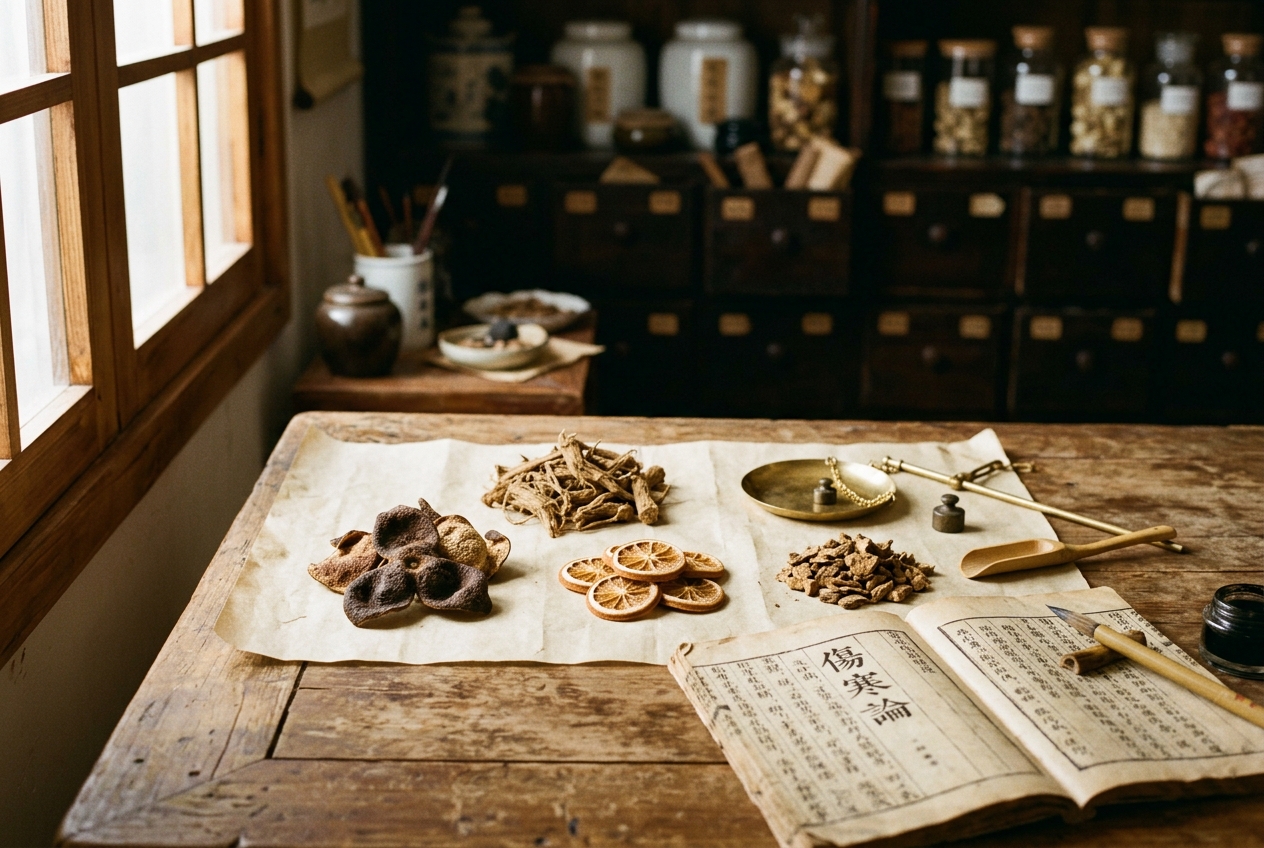
AT A GLANCE: CORE CLINICAL DYNAMICS
- The Qi Mechanism (Qi Ji 气机) operates through four multidirectional energetic vectors—ascending (sheng 升), descending (jiang 降), exiting (chu 出), and entering (ru 入)—maintaining functional equilibrium across the Zang-Fu systems.
- Bifurcated Pathology: Pathological disruptions diverge into Qi Stagnation (Qi Zhi 气滞) (predominantly mediated by the Liver and Spleen-Stomach axis) and Rebellious Qi (Qi Ni 气逆) (predominantly manifesting as perverse upward surges in the Lung and Stomach).
- Prescription Categories: Classified into Qi-Promoting/Soothing Formulas (Xing Qi Ji 行气剂) (e.g., Yue Ju Wan, Chai Hu Shu Gan San, Ban Xia Hou Po Tang, Tian Tai Wu Yao San) and Qi-Descending Formulas (Jiang Qi Ji 降气剂) (e.g., Su Zi Jiang Qi Tang, Ding Chuan Tang, Xuan Fu Dai Zhe Tang, Ju Pi Zhu Ru Tang).
- Biomedical Correlates: Volatile monoterpenes, saikosaponins, and polyphenolic neolignans modulate 5-HT receptor pathways, restore enteric cholinergic neuromuscular transmission, downregulate the Hypothalamic-Pituitary-Adrenal (HPA) stress axis, and induce smooth muscle spasmolysis.
1. Opening Scene — A Moment You'll Recognise
You are seated in a high-stakes clinical or corporate conference, conscious of an imperceptible yet unyielding constriction tightening around your epigastrium. Your breath, rather than descending smoothly into the lower abdomen, catches abruptly in the mid-thoracic cavity. You instinctively draw a protracted, involuntary sigh—a subconscious physiological attempt by your body to release an invisible vise gripping the ribcage. Beneath the sternum, an elusive sensation arises: a tangible, non-obstructive fullness akin to a plum pit lodged within the laryngopharynx that can neither be swallowed nor expectorated. Concurrently, a subtle, rhythmic dysmotility ripples through the digestive tract—distension, silent belching, or sudden esophageal reflux.
In contemporary biomedical neurology, this syndrome represents a state of autonomic dysregulation: hyperactivation of the sympathetic nervous system triggering visceral hypersensitivity, esophageal hypervigilance, and enteric dysmotility. In the classical framework of Traditional Chinese Medicine (TCM), however, you are experiencing an acute crisis of the Qi Mechanism (Qi Ji 气机). The multidirectional, fluid currents of functional energy that should animate, warm, and clear the internal organ systems have ground to a static impasse. When internal movement stalls, pressure builds, giving rise to somatic pain, affective distress, and functional turbulence across organ networks.
2. The Functional Architecture of the Qi Mechanism (Qi Ji)
To comprehend how therapeutic intervention restores systemic equilibrium, one must first analyze the fundamental energetic blueprint governing human physiology: the Qi Mechanism (Qi Ji). Within classical internal medicine, life is sustained through the perpetual, coordinated movement of Qi across four discrete topological vectors:
- Ascending (Sheng 升): The upward propulsion of clear Yang, fluids, and refined nutrients.
- Descending (Jiang 降): The downward conduction of turbid waste, ingested substances, and celestial Qi.
- Exiting (Chu 出): The centrifugal discharge of metabolic byproducts, defensive Qi (Wei Qi), and expired air.
- Entering (Ru 入): The centripetal absorption of cosmic air, nutritive essences (Gu Qi), and sensory impressions.
The Spleen-Stomach Central Pivot (Zhong Jiao)
The digestive core—comprising the Spleen (Pi) and Stomach (Wei)—constitutes the anatomical and functional fulcrum of the entire human body. The Spleen governs the ascending of the clear (Qing Yang), lifting pure nutritive essences upward to the Heart and Lung for systemic distribution. Conversely, the Stomach governs the descending of the turbid (Zhuo Yin), directing dietary boluses and metabolic residues downward into the intestines. Should this middle burner pivot seize, clear Yang cannot rise (manifesting as dizziness, postprandial somnolence, and diarrhea), while turbid Yin cannot descend (manifesting as epigastric fullness, acid regurgitation, nausea, and emesis).
The Liver-Lung Lateral Axis
Spatially, the Liver (Gan) occupies the left physiological flank, governing the free coursing (Shu Xie) and upward/outward unfolding of Qi, preventing systemic stagnation. The Lung (Fei) occupies the right physiological flank in classical dynamics, governing diffusion (Xuan Fa) and downward cleansing (Su Jiang). Harmonious physiology demands that Liver wood ascends without hyperactive flare, while Lung metal descends without depressive obstruction.
Pathological Divergence: Stagnation versus Rebellion
When systemic dynamics fail, pathology crystallizes along two cardinal axes: * Qi Stagnation (Qi Zhi 气滞): A hypodynamic state characterized by impairment of the free-flowing, exiting, or ascending vectors. Its primary etiopathological drivers reside in the Liver (due to emotional constraint, chronic stress, or cold constraint) and the Middle Burner Spleen-Stomach (due to dietary irregularities, damp accumulation, or sedentary habits). Somatic markers include distending pain (Zhang Tong), emotional lability, hypochondriac tension, and organomegaly or palpable masses over time. * Rebellious Qi (Qi Ni 气逆): A hyperdynamic, vector-inverted state characterized by the pathological upward surge of Qi that is fundamentally mandated to descend. This manifests primarily in the Lung (yielding paroxysmal cough, wheezing, tachypnea, and sensation of chest oppression) and the Stomach (yielding intractable belching, hiccough, nausea, gastroesophageal reflux, and projective vomiting).
3. Classical Formula Architecture & Clinical Differentiation
To rectify these dynamic distortions, the classical formulary developed Qi-Regulating Formulas (Li Qi Ji 理气剂), systematically bifurcated into Qi-Promoting/Soothing Formulas (Xing Qi Ji 行气剂) for stagnation, and Qi-Descending Formulas (Jiang Qi Ji 降气剂) for rebellion.
3.1 Qi-Promoting/Soothing Formulas (Xing Qi Ji)
A. Yue Ju Wan (Escape Restraint Pill)
Source: Dan-Xi Xin Fa (Teachings of Zhu Dan-Xi, 1347 CE)
Yue Ju Wan stands as the supreme architectural archetype for treating the Six Depressions (Liu Yu 六郁): Qi, Blood, Dampness, Phlegm, Fire, and Food stagnation. Zhu Dan-Xi posited that once Qi becomes constrained, fluids stagnate into dampness, dampness congeals into phlegm, stasis impairs blood circulation, prolonged constraint generates depressive fire, and the stalled digestive pivot induces food retention.
| Herb Hierarchy | Botanical Name | Classical Designation | Target Depression | Mechanistic Function in Formula |
|---|---|---|---|---|
| Jun (Monarch) | Cyperi Rhizoma (Xiang Fu) | Acrid, slightly bitter, neutral | Qi Depression (Qi Yu) | Disperses constrained Liver Qi, regulates menses, harmonizes middle burner. |
| Chen (Minister) | Chuanxiong Rhizoma (Chuan Xiong) | Acrid, warm | Blood Depression (Xue Yu) | Invigorates blood, activates microcirculation, moves Qi within the blood. |
| Zuo (Assistant) | Atractylodis Rhizoma (Cang Zhu) | Acrid, bitter, warm | Dampness Depression (Shi Yu) | Dries dampness, strengthens Spleen transport, transforms fluid accumulation. |
| Zuo (Assistant) | Gardeniae Fructus (Zhi Zi) | Bitter, cold | Fire Depression (Huo Yu) | Drains heat from all three burners, clears constraint-induced inflammatory fire. |
| Shi (Envoy) | Massa Medicata Fermentata (Shen Qu) | Sweet, acrid, warm | Food Depression (Shi Yu) | Dissolves stagnant food masses, harmonizes Stomach, assists transformation of Phlegm. |
Clinical Differentiation: Epigastric and hypochondriac fullness, focal oppression in the chest, belching, acid regurgitation, indigestion, tongue with a greasy white or slight yellow coating, and a wiry (Xuan) or tight, slippery (Hua) pulse.
B. Chai Hu Shu Gan San (Bupleurum Powder to Spread the Liver)
Source: Jing Yue Quan Shu (Collected Works of Zhang Jing-Yue, 1624 CE)
Chai Hu Shu Gan San refines the ancient Si Ni San structure to specifically liberate constrained Liver Qi somatizing as lateral costal tension, affective dysthymia, and secondary gastrointestinal spasm. * Jun: Bupleuri Radix (Chai Hu) dredges the Liver, elevating constrained Yang Qi and restoring the Liver’s spreading capacity. * Chen: Xiang Fu and Citri Reticulatae Pericarpium Viride (Qing Pi) amplify the dredging dynamic; Qing Pi specifically breaks recalcitrant Qi stasis in the hypochondrium. * Zuo: Chuanxiong Rhizoma moves blood to prevent stagnation from congealing into fixed vascular stasis; Aurantii Fructus (Zhi Ke) descends chest Qi and expands the diaphragm; Paeoniae Radix Alba (Bai Shao) astringes Yin, nourishes Liver blood, and softens hepatic tension to prevent acrid dispersion from exhausting hepatic Yin. * Shi: Glycyrrhizae Radix (Gan Cao) harmonizes the formula and coordinates with Bai Shao (Shao Yao Gan Cao Tang paradigm) to relieve smooth muscle spasm (Rou Gan Zhi Tong).
Clinical Indications: Wandering flank pain, deep sighing, premenstrual breast distension, irritability, dysmenorrhea, wiry pulse (Xuan Mai).
C. Ban Xia Hou Po Tang (Pinellia and Magnolia Bark Decoction)
Source: Jin Gui Yao Lue (Essential Prescriptions of the Golden Cabinet, c. 220 CE)
Targeting the classical entity Plum-Pit Syndrome (Mei He Qi 梅核气)—clinically synonymous with modern globus pharyngis—this formulation addresses the physical entanglement of emotional Qi constraint with stagnant, non-material Phlegm (Qi Phlegm Entanglement). * Jun: Pinelliae Rhizoma Praeparatum (Ban Xia) transforms turbid phlegm, dissipates nodules, and harmonizes Stomach descending. * Chen: Magnoliae Officinalis Cortex (Hou Po) is an intensely aromatic, bitter-acrid agent that breaks chest fullness, down-regulates rebellious Qi, and relieves diaphragmatic spasms. * Zuo: Poria (Fu Ling) leaches out dampness, tonifies Spleen transformation, and tranquilizes the Shen; Zingiberis Rhizoma Recens (Sheng Jiang) assists Ban Xia in arresting rebellious nausea while dispersing cold-phlegm; Perillae Folium (Zi Su Ye) promotes superficial Lung Qi diffusion, opens the chest, and harmonizes with Hou Po to mobilize the thoracic Qi dynamic.
Clinical Indications: Subjective sensation of a foreign body in the throat, subjective suffocating sensation across the chest, white greasy tongue coat, wiry-slippery pulse.
D. Tian Tai Wu Yao San (Top-Tier Lindera Powder)
Source: Yi Xue Fa Ming (Inventions of Medicine, 1186 CE)
This formula warms the Liver channel, disperses pathogenic interior cold, and mobilizes stagnant Qi to manage cold-induced hernial disorders (Shan Qi 疝气) and lower abdominal spasmodic pain. * Architecture: Linderae Radix (Wu Yao), Radix Aucklandiae (Mu Xiang), and Foeniculi Fructus (Xiao Hui Xiang) act as warm, acrid sovereigns penetrating the lower burner and dispersing cold; Citri Reticulatae Semen (Ju He) targets testicular and inguinal stasis; Alpiniae Officinarum Rhizoma (Gao Liang Jiang) expels deep interior cold; Crotonis Fructus (Ba Dou) processed with Gardeniae Fructus (Zhi Zi) clears latent cold-accumulation while moderating extreme heating qualities through bitter-cold guidance.
3.2 Qi-Descending Formulas (Jiang Qi Ji)
A. Su Zi Jiang Qi Tang versus Ding Chuan Tang
Upper Excess (Phlegm-Cold)  <=== Su Zi Jiang Qi Tang ===> Lower Deficiency (Ren-Shen Axis)
Bronchospasm + Ext. Cold    <======= Ding Chuan Tang ======> Interior Phlegm-Heat Accumulation
- Su Zi Jiang Qi Tang (Perilla Seed Qi-Descending Decoction):
- Pathophysiological Target: Upper Excess with Lower Deficiency (Shang Shi Xia Xu). Cold-phlegm occludes the pulmonary tree above (cough, dyspnea, copious sputum), while Kidney Yang and original Qi fail below (inability to grasp Qi, lumbar soreness, lower extremity edema).
- Composition Dynamics: Perillae Fructus (Zi Su Zi), Ban Xia, Hou Po, and Peucedani Radix (Qian Hu) eliminate phlegm and forcefully descend rebellious Lung Qi; Cinnamomi Cortex (Rou Gui) warms the Kidneys, assists Yang to grasp Qi, and anchors the lower root; Angelicae Sinensis Radix (Dang Gui) nourishes blood, lubricates dryness, and prevents acrid damage.
- Ding Chuan Tang (Arrest Wheezing Decoction):
- Pathophysiological Target: Interior Phlegm-Heat coupled with Exterior Wind-Cold. Acute bronchial hyperreactivity characterized by severe dyspnea, wheezing, thick yellow viscous sputum, and systemic chills.
- Composition Dynamics: Ginkgo Semen (Bai Guo) astringes the Lung, arrests wheezing, and stabilizes alveolar membranes; paired with Ephedrae Herba (Ma Huang) to open exterior pores and vent pulmonary Qi; Scutellariae Radix (Huang Qin) and Mori Cortex (Sang Bai Pi) purge pulmonary heat; Ban Xia and Su Zi eliminate the accumulated internal phlegm.
B. Xuan Fu Dai Zhe Tang versus Ju Pi Zhu Ru Tang
Stomach Cold-Deficiency + Phlegm  <=== Xuan Fu Dai Zhe Tang ===>  Eructation, Belching, Fullness
Stomach Yin/Qi Deficiency + Heat  <===== Ju Pi Zhu Ru Tang =====>  Hiccough, Nausea, Dry Withered
- Xuan Fu Dai Zhe Tang (Inula and Hematite Decoction):
- Pathophysiological Target: Middle burner cold-deficiency with internal phlegm turbidity manifesting as intractable belching (Yi Qi), regurgitation, hiccough, and epigastric focal hardness (Pi Ying).
- Composition Dynamics: Inulae Flos (Xuan Fu Hua) resolves phlegm and descends rebellious Qi; Haematitum (Dai Zhe Shi) acts as a dense, mineral anchor driving unyielding gastric surges downward; Ban Xia and Sheng Jiang harmonize the Stomach; Ginseng Radix (Ren Shen), Ziziphi Fructus (Da Zao), and Zhi Gan Cao replenish Middle Burner Qi to reconstruct gastric tone.
- Ju Pi Zhu Ru Tang (Tangerine Peel and Bamboo Shavings Decoction):
- Pathophysiological Target: Stomach Qi deficiency combined with latent Stomach heat, precipitating intractable hiccough (E Ni), dry retching, and post-febrile nausea.
- Composition Dynamics: Citri Reticulatae Pericarpium (Chen Pi) mobilizes Stomach Qi; Bambusae Caulis in Taeniam (Zhu Ru) clears stomach heat, down-regulates esophageal hyperreactivity, and arrests vomiting; Ren Shen repairs damaged gastric Qi; Sheng Jiang harmonizes the stomach lining; Gan Cao cushions the mucosal barrier.
4. Biomedical Pharmacology & Mechanistic Correlates
Contemporary biomedical research validates the multidimensional efficacy of Li Qi Ji, mapping botanical constituents to established neurochemical, endocrine, and gastroenterological pathways according to NCBI PubMed studies on Chinese Herbal Medicine.
4.1 Phytochemical Pharmacodynamics
Volatile Terpenes and Flavonoids in Citrus reticulata (Chen Pi)
Chen Pi delivers high concentrations of d-limonene and polymethoxyflavones such as hesperidin and nobiletin. As demonstrated in pharmacological analyses indexed on NCBI, d-limonene exerts pronounced prokinetic actions through the activation of enteric 5-HT4 receptors and muscarinic M3 receptors, enhancing gastric emptying and coordinating gastroduodenal motility without the extrapyramidal side effects common to synthetic dopamine antagonists.
Saikosaponins in Bupleurum chinense (Chai Hu)
The triterpenoid saponins Saikosaponin-a and Saikosaponin-d exhibit significant central neuroregulatory actions. They modulate the Hypothalamic-Pituitary-Adrenal (HPA) axis by downregulating corticotropin-releasing hormone (CRH) expression in the paraventricular nucleus of the hypothalamus. This actions normalizes elevated corticosterone levels, attenuates chronic stress-induced neuroinflammation, and mitigates somatic manifestations of visceral hyperalgesia.
Polyphenolic Neolignans in Magnolia officinalis (Hou Po)
Honokiol and Magnolol function as potent, centrally active GABA_A receptor allosteric modulators, exerting profound anxiolytic effects without inducing motor ataxia. Peripheral pharmacological reviews in NCBI PMC research literature show these neolignans inhibit voltage-dependent L-type Ca2+ channels in gastrointestinal smooth muscle cells and activate nitric oxide (NO) synthase, resulting in rapid, non-adrenergic, non-cholinergic spasmolysis across the lower esophageal sphincter, stomach, and colon.
4.2 Systems Biology: Enteric, Autonomic, and Central Harmonization
The clinical actions of Li Qi Ji operate through integrated systems biology: 1. Gastrointestinal Motility Modulation: Rectifying dysmotility through dual actions—stimulating hypokinetic segments via 5-HT4/cholinergic activation while relaxing hypertonic, spasmodic segments via muscarinic antagonism and calcium-channel blockade, as documented in TCM Gastroenterology Reviews. 2. Autonomic Nervous System Stabilization: Rebalancing the sympathetic-vagal ratio, increasing heart rate variability (HRV), and elevating vagal efferent outflow to the mesenteric plexus. 3. Visceral Hypersensitivity Attenuation: Downregulating peripheral substance P and calcitonin gene-related peptide (CGRP) within spinal dorsal horn pathways, terminating hyperactive visceral-somatic reflex arcs.
5. Acupressure Points You Can Try Today
Targeted manual stimulation of specific channel nodes modulates the somatic and visceral Qi dynamics governed by these herbal strategies. In accordance with guidelines from the World Health Organization (WHO) Traditional Medicine Programme, precise mechanical stimulation of neurovascular acupoint complexes triggers therapeutic spinal-visceral reflexes, corroborated by neuroimaging research on acupuncture neuromodulation mechanisms.
1. Pericardium 6 (Neiguan 内关) — The Gateway to the Thorax
- Anatomical Location: On the palmar aspect of the forearm, exactly two proportional finger-breadths (cun) proximal to the distal wrist crease, situated in the groove between the tendons of flexor carpi radialis and palmaris longus.
- Application Technique: Apply perpendicular, deep thumb pressure directly into the intertendinous space. Maintain firm, pulsating pressure for 2 to 3 minutes while executing deep abdominal breathing. A localized aching sensation (De Qi) radiating up the forearm indicates correct neurovascular targeting.
- Clinical Indications: Nausea, gastroesophageal reflux, motion sickness, chest tightness, palpitations, and anxiety-induced diaphragmatic tension.
2. Liver 3 (Taichong 太冲) — The Great Rushing Fulcrum
- Anatomical Location: On the dorsum of the foot, in the hollow depression immediately proximal to the junction of the first and second metatarsal bones.
- Application Technique: Using the tip of your thumb, direct firm pressure obliquely into the bony valley toward the ankle. Hold for 2 to 3 minutes per foot. The point is frequently exquisitely tender in patients with active Liver Qi constraint.
- Clinical Indications: Emotional frustration, chronic stress somatization, temporal tension headaches, premenstrual mood changes, and lateral costal pain.
3. Conception Vessel 17 (Danzhong 膻中) — The Sea of Qi
- Anatomical Location: On the anterior midline of the sternum, at the level of the fourth intercostal space, directly between the nipples in males or level with the sternal angle junction.
- Application Technique: Rest the fleshy pads of your index and middle fingers flat against the bone. Apply gentle circular friction or gentle pressing for 1 to 2 minutes. Never apply sharp, jarring force to this delicate sternal center.
- Clinical Indications: Persistent globus sensation, continuous sighing, unrefreshing respiration, intercostal neuralgia, and emotional grief trapped in the chest.
6. Qigong & Somatosensory Mind-Body Practice
To clinically activate the internal Qi Mechanism without pharmacological agents, the classical medical Qigong exercise "Harmonizing Heaven and Earth to Regulate the Spleen and Liver" (Tiao Li Pi Wei Xu Dan Ju 调理脾胃须单举) provides an evidence-based somatic intervention.
       Phase 1: Neutral Stance & Dan Tian Breath
       Phase 2: Inhale — One Palm Presses Heaven (Ascending Yang),
                         One Palm Presses Earth (Descending Yin)
       Phase 3: Breath Retention (2-3s) — Thoracolumbar Fascial Stretch
       Phase 4: Exhale — Fluid Return to Dan Tian Center
Protocol Execution
-
Starting Posture & Biomechanical Setup: * Stand with feet parallel, shoulder-width apart. * Unlock the knees slightly; tuck the pelvis gently to flatten the lumbar lordosis and open the Ming Men gate. * Rest the tongue lightly against the hard palate behind the upper incisors, completing the Ren-Du energetic circuit. * Hold hands loosely in front of the lower abdomen (Dan Tian), palms facing upward as if cradling a sphere.
-
Movement & Breath Synchronization: * Inhalation (4 seconds): Inhale slowly through the nose into the lower abdomen. Raise both hands to the chest (Middle Dan Tian). Turn the right palm toward the sky and the left palm toward the earth. * The Stretch (Holding for 2–3 seconds): Extend the right palm smoothly overhead, pressing the heel of the hand upward as if supporting the heavens, fingers pointing left. Simultaneously, press the left palm downward beside the hip, heel of the hand pressing into the earth, fingers pointing forward. Feel a long, continuous diagonal fascial stretch running through the hypochondrium, intercostal spaces, and abdominal wall. * Exhalation (6 seconds): Exhale smoothly through the nose as you rotate both wrists and return the hands to the starting position at the chest, then descend to the lower abdomen. * Contralateral Repetition: Inhale again, this time pressing the left hand to the sky and the right hand to the earth, stretching the opposite flank.
-
Dosage and Duration: * Execute 8 complete bilateral cycles (approximately 4 to 5 minutes total practice time), practiced ideally upon waking or during mid-afternoon energy slumps.
-
Somatic Shifts & Physiological Correlates: * What to observe: An involuntary deep inhalation, involuntary borborygmi (stomach gurgling indicating parasympathetic reactivation), a gentle sensation of heat spreading across the solar plexus, and immediate relief of thoracic and epigastric fullness.
7. Food, Pharmacology & Prescribing Precautions
7.1 Prescribing Precautions: Safeguarding Yin and Primordial Qi
While Li Qi Ji formulas offer decisive, rapid clinical intervention for acute stagnation, their energetic properties require strict diagnostic discrimination:
[!WARNING]
THE CLINICAL RISKS OF ACRID DISPERSION
- Acrid, Aromatic, Warm, and Drying (Xin Xiang Wen Zao 辛香温燥): The overwhelming majority of qi-regulating agents possess pungent, aromatic, and desiccant profiles. Overprescription or prolonged unmonitored use can injure True Yin (Zhen Yin), consume body fluids (Jin Ye), and dissipate Primordial Qi (Yuan Qi).
- Pure Excess versus Deficiency-Stagnation: In cases of pure excess (e.g., acute emotional shock, sudden food stagnation), vigorous qi-moving herbs are applied unhindered. However, when stagnation stems from underlying Spleen Qi Deficiency (where weak digestion fails to move fluids) or Liver Yin Deficiency (where blood emptiness leads to hepatic hyperarousal), prescribing potent dispersing agents alone will aggravate the underlying exhaustion. Clinicians must pair moving agents with robust tonics (e.g., adding Ren Shen, Bai Zhu, or Sheng Di Huang).
- Pregnancy & Hemorrhagic Risks: Strongly descending agents (Dai Zhe Shi) and vigorously breaking botanicals (Qing Pi, Zhi Shi) are contraindicated or require extreme caution during pregnancy to avoid destabilizing the uterine field.
7.2 Practical Dietary Therapy for Everyday Qi Regulation
To sustain fluid motility through daily nutrition, prioritize common culinary ingredients that gently mobilize the Middle Burner without depleting fluids:
| Food/Herb | Culinary Preparation | Energetic Properties | Daily Target Mechanism |
|---|---|---|---|
| Aged Tangerine Peel (Chen Pi) | Steeped as a tea (3–5g) with hot water | Aromatic, warm, bitter-acrid | Harmonizes stomach, disperses gas, reduces phlegm turbidity. |
| Fennel Seeds (Xiao Hui Xiang) | Lightly toasted; chewed post-meal or brewed | Sweet, acrid, warm | Relaxes intestinal smooth muscle, dispels cold from lower burner. |
| Radish / Daikon (Lai Fu Zi class) | Grated fresh or simmered in clear broths | Acrid, sweet, cool | Breaks food accumulation, descends lung and stomach Qi. |
| Peppermint Leaf (Bo He) | Fresh infusion steeped for under 5 minutes | Pungent, cooling, aromatic | Vents constrained Liver heat, relieves emotional tension in chest. |
| Cardamom Pods (Sha Ren class) | Lightly crushed and added to whole grains | Highly aromatic, warm | Awakes the Spleen, dries intestinal dampness, stops nausea. |
- Dietary Items to Eliminate during Active Stagnation: Highly processed sugars (which generate sticky middle-burner dampness), excessive raw cold salads (which stun the Spleen's digestive fire and freeze the Qi mechanism), and heavy deep-fried lipids (which paralyze the downward transit of Stomach Qi).
8. Today's Clinical Takeaway
If you do only one thing today to restore your body’s internal flow, take a 5-Minute Pivot Reset: step away from your desk, stand in the neutral Qigong posture, and perform eight repetitions of the Harmonizing Heaven and Earth stretch while taking deliberate, unhurried belly breaths; conclude by applying firm, circular thumb pressure to Pericardium 6 (Neiguan) on both wrists for 60 seconds each. This immediate, no-cost intervention disrupts sympathetic dominance, stretches the visceral fascia of the middle burner, and re-engages the body's natural descending and ascending vectors—transforming stagnant tension into clear, dynamic vitality.