Plum Blossom Needle Techniques (Mei Hua Zhen Fa) Meridian Dynamics: Governing Cutaneous Collateral Percussion, Dermal Micro-Trauma Stimulation, Superficial Qi-Blood Activation, and Neurodermatological Homeostasis in Traditional Chinese Medicine
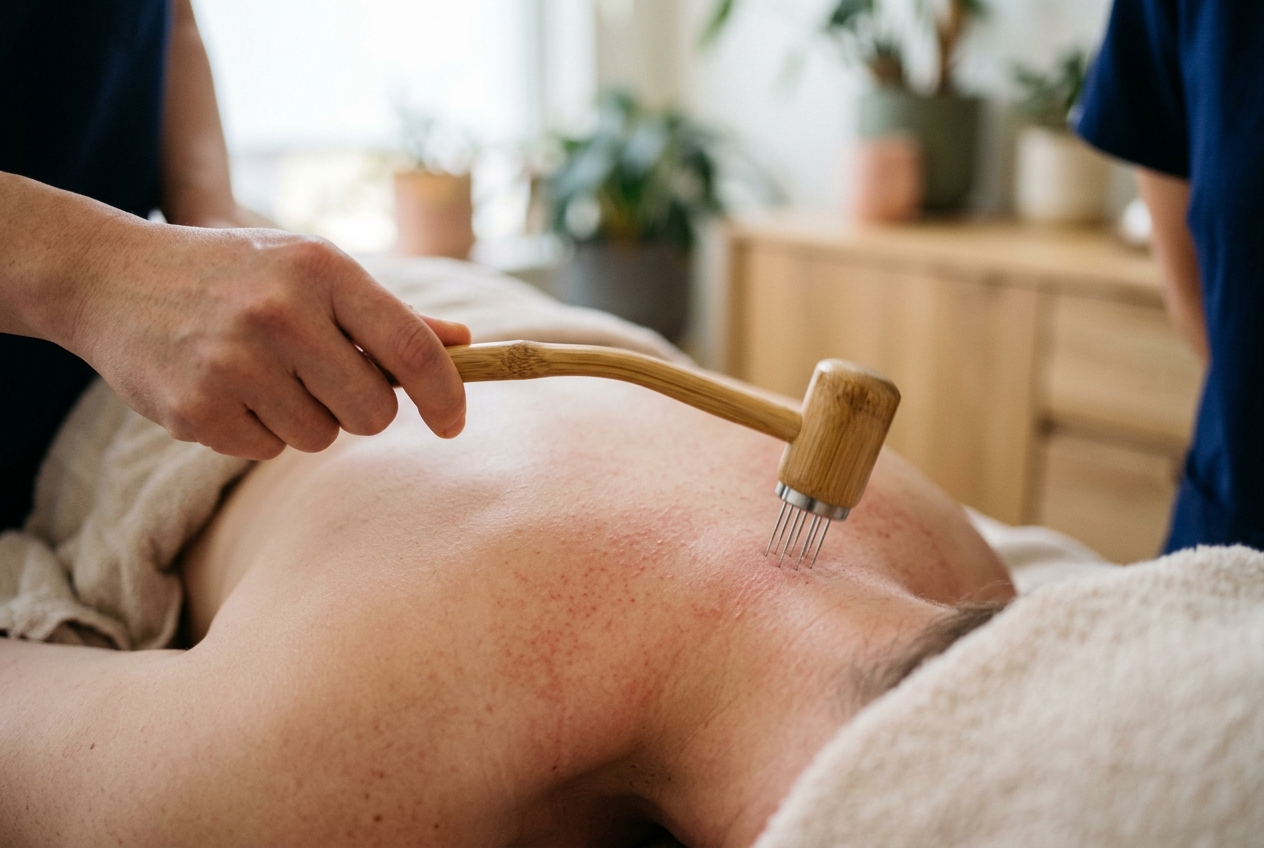
Consider the physical reality of chronic neuro-dermatological suffering: a patient presents with an intractable patch of lichenified skin along the posterior cervical spine, or the excruciating, burning allodynia of post-herpetic neuralgia wrapping around the T5 dermatome. The tissue feels distinctly altered beneath an examining digit—dense, unyielding, cool to the touch yet hypersensitive to the lightest brush of fabric. In the framework of Traditional Chinese Medicine (TCM), this localized phenomenon represents a profound entrapment of peripheral circulation: a structural and energetic gridlock where Qi stagnation and Blood stasis (Xue Yu) have coalesced within the most superficial layers of the body. Rather than reflecting an isolated epidermal defect, this cutaneous distress manifests a systemic failure of microvascular perfusion and somatosensory signaling across the superficial collaterals (Sun Luo) and the Twelve Cutaneous Regions (Pi Bu).
+----------------------------------------------------------------------------------------------------+
|                                    DIDACTIC CLINICAL INSIGHT                                       |
| Dermal percussion via Mei Hua Zhen acts not merely as a superficial stimulus, but as a biological  |
| transducer that converts rhythmic mechanical force into neurovascular, immunological, and axonal   |
| cascade events, clearing stasis across both somatic and visceral planes.                           |
+----------------------------------------------------------------------------------------------------+
The clinical application of the Plum Blossom Needle (Mei Hua Zhen, 梅花針)—also designated across clinical traditions as the Seven-Star Needle (Qi Xing Zhen, 七星針) or Dermal Needle (Pi Fu Zhen, 皮膚針)—serves as one of classical medicine’s most elegant interventions. By delivering high-frequency, elastic percussion across specialized dermal zones, the practitioner initiates an immediate neuro-humoral and microvascular recalibration. The patient experiences an acute shift from ischemic, congested numbness to a vibrant, warm hyperaemia—a tangible awakening of tissue viability that bridges ancient channel mechanics with modern neuro-fascial science.
2. Classical Foundations & Ontological Evolution: From the Huangdi Neijing to Modern Cutaneous Therapy
The historical and philosophical lineage of dermal percussion is rooted within the foundational corpus of Chinese medicine, specifically the Huangdi Neijing Ling Shu (黄帝内经·灵枢, The Spiritual Pivot, c. 1st Century BCE). In Chapter 7, "Guan Zhen" (官针, On the Official Needling Methods), the text establishes nine classical needling strategies designed to address distinct tissue strata, ranging from deep periosteum to the external dermal envelope.
                    CLASSICAL DERMAL NEEDLING EVOLUTION

   Ling Shu: Guan Zhen (9 Needles)
   +------------------------------------------------------------------+
   |  * Ban Ci (半刺 / Half Needling)      -> Superficial epidermal    |
   |  * Bao Wen Ci (豹文刺 / Leopard Spot) -> Multi-point micro-bleed  |
   |  * Mao Ci (毛刺 / Hair Needling)      -> Cutaneous paresthesia   |
   +------------------------------------------------------------------+
                                  |
                                  v
   Pre-Modern Multi-Needle Cluster Devices
   +------------------------------------------------------------------+
   |  * Bound needle clusters set in horn, bamboo, or vulcanite       |
   |  * Standardization of the 5-needle (Plum) & 7-needle (Star) array|
   +------------------------------------------------------------------+
                                  |
                                  v
   Contemporary Clinical Instrumentation
   +------------------------------------------------------------------+
   |  * Ergonomic, flexible resin/polymer mallets                     |
   |  * Gamma-irradiated, single-use surgical stainless steel heads   |
   |  * Calibrated spring-loaded micro-percussors                     |
   +------------------------------------------------------------------+
Three specific classical techniques directly prefigure modern Plum Blossom therapeutics: 1. Half-Needling (Ban Ci, 半刺): Characterized by shallow, rapid insertion and withdrawal without injuring the muscular layer, mirroring the breath and targeting the cutaneous zone governed by the Lungs (Fei). 2. Leopard Spot Puncture (Bao Wen Ci, 豹文刺): A rhythmic, multi-point tapping methodology designed to puncture superficial micro-vessels around a central locus, evacuating congested blood to relieve systemic and local heat. 3. Hair Needling (Mao Ci, 毛刺): Superficial tapping applied over expansive surface areas to eliminate sensory bi-syndromes and cutaneous numbness.
Over centuries of clinical refinement, these distinct protocols merged. Practitioners initially bound clusters of five or seven fine steel needles together with thread and affixed them to flexible bamboo handles. The five-needle configuration resembled the five petals of the Prunus mume flower, giving rise to the name Plum Blossom Needle (Mei Hua Zhen), whereas the seven-needle array arranged in a hexagonal geometry with a central pin became known as the Seven-Star Needle (Qi Xing Zhen).
In modern integrative hospital settings, as cataloged in authoritative resources such as the WHO Traditional Medicine Guidelines, the instrument has evolved into a sterile, single-use device featuring surgical-grade stainless steel needles set into a flexible, polymer shaft that optimizes percussion elasticity and eliminates cross-contamination risks.
3. Biophysical & Neurophysiological Mechanotransduction Dynamics
The clinical efficacy of cutaneous percussion lies at the confluence of energetic channel dynamics and contemporary neurobiology. The human dermis is not an inert boundary, but a highly sensitive, neuro-immuno-endocrine organ densely populated with specialized mechanoreceptors, unmyelinated nociceptive fibers, and a rich microvascular bed.
+----------------------------------------------------------------------------------------------------+
|                         DERMAL MECHANOTRANSDUCTION & AXONAL REFLEX                                 |
|                                                                                                    |
|   Elastic Percussive Impact  --->  Interstitial Strain  --->  Piezo1/2 & Integrin Opening          |
|                 |                                                                                  |
|                 +--------------->  Antidromic Action Potential along C-Fibers                      |
|                                                     |                                              |
|                                                     v                                              |
|                                    Substance P & CGRP Exocytosis                                   |
|                                                     |                                              |
|                                                     v                                              |
|                                    Endothelial Nitric Oxide Release                                |
|                                                     |                                              |
|                                                     v                                              |
|                                    Microvascular Hyperaemia & Neo-Vascularization                  |
+----------------------------------------------------------------------------------------------------+
A. Superficial Mechanotransduction Across the Twelve Cutaneous Regions (Pi Bu)
According to the Ling Shu (Chapter 56, Pi Bu Lun), the Twelve Cutaneous Regions represent the external diagnostic and therapeutic reflections of the Twelve Primary Channels. When the Plum Blossom Needle strikes the epidermal surface, mechanical energy propagates through the extracellular matrix (ECM). As demonstrated in research on Mechanotransduction in Acupuncture, mechanical shear forces deform dermal fibroblasts, triggering conformational changes in transmembrane integrins and stretch-activated ion channels (such as Piezo1 and Piezo2). This mechanical deformation initiates downstream enzymatic cascades, leading to cytoskeletal remodeling, extracellular ATP release, and local cytokine modulation that restructures stagnant, fibrotic tissue.
B. Localized Axon-Reflex Vasodilation & Endothelial Recruitment
High-velocity percussion delivers a controlled, micro-mechanical stimulus that depolarizes primary unmyelinated afferent C-fibers and thinly myelinated A-delta ($\text{A}\delta$) fibers. As detailed in clinical studies on the Neurogenic Inflammation and Axon Reflex, this generates an orthodromic sensory signal traveling toward the dorsal horn of the spinal cord alongside an antidromic signal propagating retrogradely down adjacent peripheral collateral branches.
This antidromic signal induces terminal exocytosis of potent vasodilatory neuropeptides, principally Calcitonin Gene-Related Peptide (CGRP) and Substance P (SP). CGRP acts directly upon vascular smooth muscle receptors to induce profound arteriolar dilation, while Substance P binds to neurokinin-1 ($\text{NK}_1$) receptors on post-capillary venule endothelial cells, increasing microvascular permeability. This local axon-reflex hyperaemia dramatically accelerates regional hematological exchange, flushing metabolic by-products, promoting macrophage infiltration, and stimulating local tissue regeneration.
$$\text{Mechanical Percussion} \longrightarrow \text{Antidromic C-Fiber Discharge} \longrightarrow \begin{pmatrix} \text{CGRP} \uparrow \ \text{Substance P} \uparrow \end{pmatrix} \longrightarrow \begin{pmatrix} \text{Arteriolar Vasodilation} \ \text{Endothelial Permeability} \end{pmatrix} \longrightarrow \text{Resolution of Ischemic Stasis}$$
C. Somatosensory Gate Control & Pain Modulation
Plum Blossom percussion operates as an efficient modulator of intractable chronic pain via the classic Gate Control Theory first postulated by Melzack and Wall, as archived in the NCBI Bookshelf - Gate Control Theory. High-frequency, rhythmic tapping activates low-threshold, rapidly conducting, myelinated $\text{A}\beta$ (A-beta) mechanoreceptors located in the Meissner’s corpuscles and Merkel disks of the papillary dermis.
       SOMATOSENSORY GATE CONTROL ARCHITECTURE IN DERMAL PERCUSSION

       [ Plum Blossom Percussion ]
                   |
         +---------+---------+
         |                   |
    (A-beta Fibers)     (C-Fibers)
    Fast, Myelinated   Slow, Unmyelinated
         |                   |
         v                   v
   [Substantia Gelatinosa (SG) Interneurons]
         |
   (Inhibitory Gate Closed: Enkephalin Release)
         |
         x  <-- Blockade of Nociceptive Transmission to T-Cells
         |
   [Spinothalamic Tract Transmission Suppressed]
The high-density afferent volley transmitted along $\text{A}\beta$ fibers rapidly enters the spinal dorsal horn, exciting inhibitory GABAergic and enkephalinergic interneurons within the substantia gelatinosa (Laminae II and III). These interneurons exert presynaptic inhibition over slow, unmyelinated C-fiber nociceptive inputs, effectively closing the neural "gate" to ascending spinothalamic tracts and terminating the cycle of central and peripheral sensitization.
4. Clinical Percussion Stratification: The Three Tiers of Impact Dynamics
Mastery of Plum Blossom therapeutics requires precise calibration of percussive force. The practitioner must manipulate wrist elasticity, tapping cadence, and velocity to deliver three distinct clinical intensities tailored to specific constitutional states and pathologies.
+-------------------------------------------------------------------------------------------------------+
|                                    PERCUSSION INTENSITY STRATIFICATION                                |
+---------------+-----------------------------+----------------------------+----------------------------+
| Parameter     | Light (Feather-Tapping)     | Moderate (Erythemic)       | Heavy (Micro-Petechial)    |
+---------------+-----------------------------+----------------------------+----------------------------+
| Depth/Force   | Minimal; elastic tap        | Medium; distinct impulse   | High velocity; firm wrist  |
| Visual Metric | Transient flush; no mark    | Distinct, uniform erythema | Micro-petechiae / exudate  |
| Sensation     | Mild tingling; soothing     | Sharp prickle; warm flush  | Distinct sting; heat flush |
| Pathology     | Deficiency (Xu), Pediatrics | Subacute disharmonies      | Intractable stasis/excess  |
| Tissue Target | Epidermal/Papillary dermis  | Reticular dermis           | Dermal micro-capillaries   |
+---------------+-----------------------------+----------------------------+----------------------------+
     PERCUSSION WRIST MECHANICS & STRIKE VECTOR

            [ Forearm Stabilized ]
                      |
                 (Flexible Wrist Axis)
                      |
                      v  [ 90-Degree Perpendicular Strike ]
     =============[ Elastic Handle ]=============
                                          \
                                           [ Seven-Star Head ]
                                                  |||||||
     ~~~~~~~~~~~~~~~~~~~~~~~~~~~~~~~~~~~~~~~~~~~~~ vvvvvvv ~~~~~ (Skin Surface)
     ----------------------------------------------------------- (Epidermis)
     ........................................................... (Dermis)
     =========================================================== (Subcutis)
1. Light Feather-Tapping (Qing Da, 轻打)
- Execution Mechanics: The wrist remains loose, acting like a flexible spring. The needle cluster impacts the surface with minimal force, relying purely on the rebound elasticity of the handle. Tapping is executed at a rapid cadence (100–120 taps per minute) perpendicular to the skin plane without dragging or scraping.
- Visual & Sensory Endpoints: Production of a faint, transient pink flush without punctate bleeding, accompanied by a pleasant tingling sensation.
- Clinical Indications: Constitutional vacuity, Qi and Blood deficiency (Qi Xue Liang Xu), pediatric enuresis, geriatric insomnia, facial zones, and extreme cutaneous hyperesthesia.
2. Moderate Erythemic Tapping (Zhong Da, 中打)
- Execution Mechanics: The practitioner applies moderate downward acceleration from the wrist, generating a clear acoustic "snap" upon impact. Cadence is steady (80–100 taps per minute).
- Visual & Sensory Endpoints: Development of a robust, well-demarcated, confluent erythema (hyperaemia) across the target region. The patient experiences a distinct prickling sensation followed by a deep, radiant warmth. No overt extravasation of red blood cells occurs.
- Clinical Indications: Subacute musculoskeletal disharmonies, early-stage peripheral neuropathies, gastrointestinal dysmotility along the Bladder Meridian (Zu Tai Yang Pang Guang Jing) Back-Shu points, and general channel regulation.
3. Heavy Micro-Petechial Percussion (Zhong Da / Ci Luo, 重打/刺絡)
- Execution Mechanics: High-velocity, resolute wrist strikes delivering concentrated kinetic force directly into the capillary loops of the papillary and reticular dermis.
- Visual & Sensory Endpoints: Manifestation of uniform micro-petechiae and pinpoint capillary bleeding (Zhu Dian Chu Xue). Tiny beads of dark, stagnant blood express from the percussed sites.
- Clinical Indications: Chronic, recalcitrant Blood stasis (Xue Yu), stubborn dermatoses (lichen simplex, psoriasis plaques), dense scar tissue, localized fibrotic induration, and stubborn intercostal stasis.
5. Rigorous Disease-Specific Clinical Protocols & Pathway Mapping
+----------------------------------------------------------------------------------------------------+
|                               MASTER CLINICAL PROTOCOL MATRIX                                      |
+--------------------------+------------------------------+--------------------+---------------------+
| Condition                | Primary Pathway / Points     | Percussion Tier    | Adjunctive Modality |
+--------------------------+------------------------------+--------------------+---------------------+
| Alopecia Areata          | Du Mai, GV20, Scalp Ah Shi   | Moderate-Heavy     | Hong Hua Tincture   |
| Post-Herpetic Neuralgia  | Spinal Jiaji, Dermatome      | Light-to-Moderate  | Flash-Cupping       |
| Neurodermatitis          | Plaque Margin -> Center      | Heavy (Petechial)  | Dang Gui Extract    |
| Facial Palsy Sequelae    | ST/LI Pathways, Facial Zones | Light (Feather)    | Warm Moxibustion    |
| Intercostal Neuralgia    | T4–T9 Intercostal spaces     | Moderate           | Linear Guasha       |
+--------------------------+------------------------------+--------------------+---------------------+
                  ALARM & PATHWAY TOPOGRAPHY: POST-HERPETIC NEURALGIA

                  [ Posterior Spinal Column ]
                               |
                  [ Huatuo Jiaji Points (T5–T8) ]  <-- Moderate Percussion
                               |
                               +-------------------------------+
                                                               |
    (T5–T8 Intercostal Nerve Path) <---------------------------+
                 |
                 v  [ Moderate Percussive Sweep along Rib Margin ]
    (Mid-Axillary Line / Hypochondriac Region)
                 |
                 v  [ Terminus: Lateral Sternum / Ah Shi Focus ]
    (Cutaneous Allodynia Zone / Flash-Cupping Site)
1. Alopecia Areata (Ban Tu, 斑秃 — Ghost Alopecia)
- Etiology & Channel Dynamics: Sudden focal hair loss represents localized Blood deficiency failing to nourish the hair follicle (Fa Wei Xue Zhi Yu), compounded by wind-stasis obstructing the superficial vessels of the Du Mai (Governor Vessel) and Taiyang bladder channels.
- Anatomical Mapping:
- Central Alopecia Zone (Ah Shi points)
- Perimeter margins of healthy scalp follicles (5 mm border)
- Du Mai corridor: Baihui (GV20), Fengfu (GV16)
- Taiyang corridor: Tianzhu (BL10), Shenshu (BL23)
- Percussion Protocol: Apply Moderate-to-Heavy percussion starting from the periphery of the bald patch and spiraling inward concentrically toward the center. Maintain strikes strictly perpendicular at 90° to avoid avulsing adjacent healthy follicles. Tap until pinpoint micro-petechiae emerge uniformly across the denuded scalp.
- Frequency & Course: Administer 3 sessions per week for 12 weeks.
2. Post-Herpetic Neuralgia (She Chuan Chuang Hou Yi Tong, 蛇串疮后遗痛)
- Etiology & Channel Dynamics: Latent damp-heat toxin injuring the collateral channels, leaving severe, chronic Blood stasis and localized neurogenic entrapment across segmental thoracic dermatomes.
- Anatomical Mapping:
- Corresponding ipsilateral Huatuo Jiaji Points (Ex-B2) at the spinal root origin (e.g., T4–T8)
- The anatomical trajectory of the affected intercostal nerve from the paravertebral line to the anterior midline
- The precise cutaneous allodynia zone
- Percussion Protocol: Begin at the spinal root with Moderate percussion over the Jiaji points to recalibrate the primary dorsal ramus. Transition to Light Feather-Tapping directly over the hyperalgesic dermatome, moving from proximal to distal. Avoid aggressive puncturing over fragile, atrophic scars.
- Frequency & Course: Every other day until the Visual Analog Scale (VAS) pain score drops by >50%, then twice weekly.
3. Neurodermatitis / Lichen Simplex Chronicus (Niu Pi Xuan, 牛皮癣)
- Etiology & Channel Dynamics: Chronic wind, dampness, and heat transforming into deep blood dryness and stasis, manifesting as thickened, leathery, intractable pruritic plaques.
- Anatomical Mapping:
- Entire surface area of the lichenified plaque
- Margin of normal skin surrounding the lesion (3–5 mm active border)
- Distal systemic clearing points: Quchi (LI11), Xuehai (SP10), Sanyinjiao (SP6)
- Percussion Protocol: Apply Heavy Micro-Petechial Percussion. Systematically tap in dense, parallel rows across the plaque until uniform capillary extravasation is achieved. The evacuation of dark, viscous micro-droplets relieves localized interstitial pressure and breaks the chronic itch-scratch cycle.
- Frequency & Course: 2 times weekly until epidermal normalization and plaque flattening occur.
       NEURODERMATITIS / LICHENIFIED PLAQUE PERCUSSION SCHEMATIC

       [ Outer Normal Epidermis ]
       +--------------------------------------------------------+
       |   (3-5mm Border: Moderate Erythemic Percussion)        |
       |  +--------------------------------------------------+  |
       |  |  [ Thickened, Lichenified Plaque Core ]          |  |
       |  |                                                  |  |
       |  |  * Dense, Heavy Micro-Petechial Strikes (90 deg) |  |
       |  |  * Punctate micro-bleeding induced across matrix |  |
       |  |  * Rapid decompression of dermal congestion      |  |
       |  |                                                  |  |
       |  +--------------------------------------------------+  |
       +--------------------------------------------------------+
4. Peripheral Facial Palsy Sequelae (Kou Yan Wai Xie, 口眼歪斜)
- Etiology & Channel Dynamics: Wind-cold invading the Yangming (Stomach/Large Intestine) and Shaoyang (Gallbladder/San Jiao) facial channels, causing channel flaccidity, Qi exhaustion, and incomplete motor recovery.
- Anatomical Mapping:
- Yangming Facial Territory: Dicang (ST4), Jiache (ST6), Xiaguan (ST7), Sibai (ST2)
- Shaoyang / Taiyang Trajectory: Yangbai (GB14), Taiyang (EX-HN5), Yifeng (TB17)
- Percussion Protocol: Utilize exclusively Light Feather-Tapping. Percuss along the anatomical trajectories of the facial nerve branches (temporal, zygomatic, buccal, marginal mandibular) from the center of the face outward toward the tragus (Tinggong, SI19). Induce mild pink erythema without ever causing bruising or bleeding.
- Frequency & Course: 3 sessions weekly for 6–8 weeks.
5. Intercostal Neuralgia (Xie Tong, 胁痛)
- Etiology & Channel Dynamics: Liver Qi constraint transforming into collateral stasis (Gan Qi Yu Jie, Luo Mai Xue Yu) along the hypochondriac region.
- Anatomical Mapping:
- Intercostal spaces corresponding to the T6–T10 distribution
- Ganshu (BL18), Danshu (BL19), Qimen (LR14), Zhangmen (LR13)
- Percussion Protocol: Apply Moderate Tapping with distinct erythema directly along the intercostal groove, tracing the superior border of the rib to stimulate the intercostal neurovascular bundle.
- Frequency & Course: 2–3 sessions per week.
6. Integrative Synergies: Flash-Cupping, Topical Pharmacognosy, Asepsis, and Safety
+----------------------------------------------------------------------------------------------------+
|                         INTEGRATED CUTANEOUS RESURFACING PROTOCOL                                  |
|                                                                                                    |
|    Phase 1: Aseptic Preparation  --->  75% Isopropyl Alcohol / Chlorhexidine Antisepsis            |
|                   |                                                                                |
|    Phase 2: Dermal Percussion    --->  Calibrated Tier (Light / Moderate / Heavy)                  |
|                   |                                                                                |
|    Phase 3: Flash-Cupping        --->  Negative Pressure Vacuum Extraction (3-5 Rapid Cycles)      |
|                   |                                                                                |
|    Phase 4: Topical Tincture     --->  Hydroethanolic Botanical Permeation (Hong Hua / Dang Gui)   |
+----------------------------------------------------------------------------------------------------+
A. Flash-Cupping Synergy (Shan Guan Fa, 闪罐法)
Following moderate-to-heavy percussion, applying dynamic flash-cupping enhances microvascular decompression. The practitioner creates negative atmospheric pressure within a glass cup using a flame and swiftly applies it over the percussed zone, immediately releasing it with an audible pop. Repeating this 10–20 times across the area: - Exerts a pulling force on the papillary dermis, drawing stagnant micro-petechial blood out of compressed interstitial beds. - Rapidly clears inflammatory mediators from the tissue bed. - Triggers endothelial shear stress, stimulating regional neo-angiogenesis.
B. Topical Pharmacognosy & Botanical Tinctures
The mechanical disruption of the stratum corneum creates transient micro-channels that increase transdermal drug delivery. Applying hydroethanolic botanical tinctures immediately post-percussion delivers concentrated active compounds straight to the microcirculatory bed: * Flos Carthami (Hong Hua, 红花): Rich in hydroxysafflor yellow A (HSYA), a potent antagonist of platelet-activating factor receptor that reduces microvascular thrombosis and enhances collateral flow. * Radix Angelicae Sinensis (Dang Gui, 当归): Contains ligustilide and ferulic acid, which exert neuroprotective, smooth-muscle relaxing, and erythropoietic actions. * Radix Salviae Miltiorrhizae (Dan Shen, 丹参): Delivers tanshinone IIA and salvianolic acid B, which inhibit endothelial adhesion molecules, suppress fibrosis, and clear micro-stasis. * Borneolum (Bing Pian, 冰片): A bicyclic monoterpene that acts as a natural transdermal permeation enhancer by transiently loosening intercellular lipid lamellae.
                      TOPICAL BOTANICAL SYNERGY DYNAMICS

              [ Hydroethanolic Botanical Tincture ]
                                |
        +-----------------------+-----------------------+
        |                       |                       |
   (Hong Hua / HSYA)    (Dang Gui / Ferulic)    (Dan Shen / Tanshinones)
        |                       |                       |
  Inhibits Platelet        Promotes Dermal          Suppresses Fibrosis,
     Aggregation             Angiogenesis            Clears Micro-Stasis
        |                       |                       |
        +-----------------------+-----------------------+
                                |
                                v
               [ Open Micro-Porous Dermal Matrix ]
                                |
                                v
             [ Deep Collateral Resurfacing & Healing ]
C. Rigorous Infection Control & Aseptic Regimen
Because Plum Blossom therapy involves micro-puncturing the skin, practitioners must adhere to strict clinical asepsis as delineated by modern biomedical standards: 1. Single-Use Disposable Instruments: Never reuse needle heads across treatment sessions or patients. Use only gamma-irradiated, pre-packaged single-use heads. 2. Cutaneous Antisepsis: Cleanse the treatment field using a 70–75% isopropyl alcohol solution or a 2% chlorhexidine gluconate solution in concentric circles from center to periphery. Allow the skin to dry completely for at least 30 seconds before tapping. 3. Personal Protective Equipment (PPE): The practitioner must wear sterile nitrile gloves and protective eyewear during heavy percussion to protect against micro-aerosolized blood splatter. 4. Post-Treatment Hemostasis & Care: Wipe away expressed micro-droplets with sterile dry gauze. Apply pressure until complete hemostasis is verified. Instruct the patient to keep the treated field clean and dry, avoiding bathing or immersion in water for 24 hours post-procedure.
+----------------------------------------------------------------------------------------------------+
|                                    CONTRAINDICATION REGISTRY                                       |
+------------------------------------+---------------------------------------------------------------+
| Category                           | Clinical Manifestations & Precautionary Mandates              |
+------------------------------------+---------------------------------------------------------------+
| Absolute Local Contraindications   | Active skin ulcerations, erysipelas, furuncles, open burns,    |
|                                    | malignant melanomas, unverified cutaneous neoplasms.          |
| Absolute Systemic Contraindications| Severe thrombocytopenia (Platelets <50,000/uL), hemophilia,  |
|                                    | acute uncontrolled sepsis, decompensated liver failure.       |
| High-Risk Relative Cautions        | Concurrent therapeutic anticoagulation (Warfarin, DOACs),     |
|                                    | keloid-forming diathesis, severe peripheral vascular disease.  |
| Obstetric Exclusions               | Lumbosacral and lower abdominal cutaneous zones during all     |
|                                    | trimesters of pregnancy.                                       |
+------------------------------------+---------------------------------------------------------------+
7. Somatic Cultivation, Self-Care Diagnostics, & Clinical Synthesis
+----------------------------------------------------------------------------------------------------+
|                                 PATIENT HOME-CARE ACTION PLAN                                      |
|                                                                                                    |
|    Somatic Assessment  --->  Perform Skin Rolling / Blanching Test over T5-T8 Intercostal Space    |
|               |                                                                                    |
|    Somatic Movement    --->  "Parting the Clouds to Disperse Stasis" (10 Breath Cycles, 5 Min)     |
|               |                                                                                    |
|    Acupressure Focus   --->  SP10 (Xuehai) & LI11 (Quchi) Firm Circular Pressure (2 Min Each)      |
|               |                                                                                    |
|    Dietary Adjunct     --->  Warm Rosebud (Mei Gui Hua) & Hawthorn Berry (Shan Zha) Infusion       |
+----------------------------------------------------------------------------------------------------+
A. Dermal Self-Assessment for Stasis
Patients can evaluate localized cutaneous stasis at home through simple physical diagnostics: * The Blanching & Refill Test: Press a thumb firmly against the skin for 5 seconds and release. A delay in capillary refill time beyond 2 seconds, or persistent localized pallor followed by a dusky purplish hue, indicates microvascular insufficiency and Blood stasis. * Skin Rolling (Pinch-Grip Test): Gently pinch a fold of skin between the thumb and index finger, rolling it along the channel path (such as the upper trapezius or the paravertebral line). Healthy tissue rolls smoothly; dense, bound, tender, or "orange-peel" textured resistance reveals stuck collaterals (Luo Mai Yu Zhu).
               DERMAL BLANCHING & ELASTIC RECOIL TIMELINE

   [ Normal Tissue ]
   Strike/Press ---> [ 0.5s: Instant Blanch ] ---> [ 1.5s: Rosy Capillary Refill ] -> (Homeostasis)

   [ Stagnant Tissue (*Xue Yu*) ]
   Strike/Press ---> [ 0.5s: Dusky Blanch ]  ---> [ >3.0s: Sluggish Refill / Purple Stasis Flush ]
B. Somatic Qigong Movement: "Parting the Clouds to Disperse Collateral Stasis"
This gentle somatic movement mobilizes cutaneous circulation across the chest, upper back, and intercostal regions without requiring any equipment:
               SOMATIC QIGONG STANCE & MOVEMENT PHASES

   Phase 1: Inhale / Expansion           Phase 2: Exhale / Dermal Release

          \  (Open Arms)  /                     [ Lower to Dantian ]
           \    [GV20]   /                               |
            \     ||    /                                v
             o---(  )---o                      (Wrists Relax Inward)
                 /  \                                   / \
                /    \                                 /   \
          [ Feet Shoulder-Width ]                [ Gentle Knee Flex ]
- Starting Position: Stand upright with feet shoulder-width apart, knees slightly softened, and spine suspended naturally from the crown (Baihui, GV20). Rest your hands loosely at your sides.
- Inhalation & Opening Phase (4 Seconds): Inhale smoothly through the nose, drawing the breath deep into the lower abdomen (Dantian). Simultaneously raise both arms out to the sides in a wide, sweeping arc, rotating the palms upward toward the sky. Feel the skin across the ribcage, axillae, and chest gently stretch.
- Exhalation & Release Phase (6 Seconds): Exhale slowly through the mouth, turning the palms downward and guiding the hands smoothly down the centerline of the chest to the lower abdomen. As your hands descend, visualize stuck heat, tension, and stasis releasing down through the legs and into the earth.
- Repetitions & Sensations: Perform 10 full breath cycles (approximately 5 minutes). Look for a distinct sensation of warmth and gentle tingling in the fingertips and chest wall, signaling the activation of superficial microcirculation.
C. Acupressure Points for Collateral Regulation
To reinforce clinical treatments between sessions, patients can apply firm, circular thumb pressure to key distal regulatory points for 2–3 minutes each:
+----------------------------------------------------------------------------------------------------+
|                                 KEY HOME ACUPRESSURE TARGETS                                       |
+-------------------+------------------------------------+-------------------------------------------+
| Point Name        | Anatomical Landmark                | Primary Action                            |
+-------------------+------------------------------------+-------------------------------------------+
| Xuehai (SP10)     | 2 finger-widths superior to the    | Invigorates blood circulation, cools heat,|
| "Sea of Blood"    | medial superior border of patella  | relieves acute itching and urticaria.     |
| Quchi (LI11)      | Lateral end of the transverse      | Clears systemic heat, regulates the       |
| "Pool at the Bend"| cubital crease when elbow is bent  | exterior, harmonizes cutaneous immune tone|
| Sanyinjiao (SP6)  | 3 finger-widths superior to the    | Harmonizes Spleen, Liver, and Kidneys,    |
| "3 Yin Crossing"  | prominence of inner ankle bone     | nourishes blood and calms cutaneous pain. |
+-------------------+------------------------------------+-------------------------------------------+
- Sea of Blood (Xuehai, SP10): Located on the inner thigh, two finger-widths above the upper medial corner of the kneecap, in the tender belly of the vastus medialis muscle. Apply firm, circular pressure for 2 minutes on each leg to invigorate stagnant blood and alleviate chronic skin itching.
- Pool at the Bend (Quchi, LI11): Located at the outer edge of the elbow crease when the arm is bent at a right angle. Press firmly with the thumb toward the bone for 2 minutes to clear systemic heat and support healthy skin immunity.
- Three Yin Intersection (Sanyinjiao, SP6): Located four finger-widths above the high point of the inner ankle bone, just behind the posterior border of the tibia. Apply steady, moderate pressure to nourish the blood, soften chronic tissue dryness, and soothe deep nerve hypersensitivity.
       HOMELAND ACUPRESSURE RECEPTOR TOPOGRAPHY

       [ SP10: Xuehai ]              [ LI11: Quchi ]             [ SP6: Sanyinjiao ]
         (Inner Thigh)                 (Outer Elbow)               (Lower Inner Leg)
              |                             |                             |
              v                             v                             v
       +-------------+               +-------------+               +-------------+
       | Vastus Med. |               | Flexor Edge |               | Tibial Post.|
       | 2 cm above  |               | At crease   |               | 4 fingers   |
       | patella     |               | end         |               | above ankle |
       +-------------+               +-------------+               +-------------+
              |                             |                             |
       (Invigorates Blood)           (Clears Heat)                 (Nourishes Blood)
D. Practical Dietary & Lifestyle Guidance
- Foods to Emphasize: Include foods that gently promote microvascular flow and resolve dryness, such as black soybeans, wood ear mushrooms (Auricularia auricula-judae), lightly steamed leafy greens, walnuts, and tea brewed from rosebuds (Mei Gui Hua) and hawthorn berries (Shan Zha).
- Foods to Limit: Minimize foods that contribute to damp-heat and inflammation, such as greasy or deep-fried meals, highly processed sugars, excess alcohol, and excessively spicy dishes that over-stimulate cutaneous nerves.
- Daily Hydrotherapy: Finish warm showers with a 30-second cool rinse over areas prone to stagnation (such as the upper back or outer thighs). This gentle vascular pump strengthens vasomotor tone and supports healthy microcirculatory elasticity.
Today's Takeaway
If you have five minutes today, try this simple self-care sequence: spend two minutes gently rolling the skin along the top of your shoulders, practice five deep breaths with the "Parting the Clouds" movement, and press Xuehai (SP10) on each leg for one minute. This simple routine engages your cutaneous nervous system, encourages microvascular blood flow, and helps release daily physical and emotional tension from the surface of your body.
References & Authoritative Reading
- World Health Organization. (2020). WHO Benchmarks for the Training of Acupuncture. WHO Publications.
- Melzack, R., & Wall, P. D. (1965). Pain mechanisms: A new theory. Science, 150(3699), 971-979. NCBI Bookshelf Reference.
- Langevin, H. M., et al. (2014). Mechanotransduction and the extracellular matrix in acupuncture therapy. FASEB Journal. PubMed Central Article.
- Brain, S. D., & Grant, A. D. (2004). Vascular actions of Calcitonin Gene-Related Peptide and Substance P in neurogenic inflammation. Physiological Reviews. NCBI PubMed Summary.
- Holzer, P. (1998). Neurogenic vasodilatation and sensory neuropeptide release. Regulatory Peptides, 73(1), 17-31. NCBI PubMed Study.