Plum Blossom Needle Therapy: Navigating Cutaneous Percussion Topography, Superficial Collateral Micro-Trauma, and Precision Acupressure Protocols
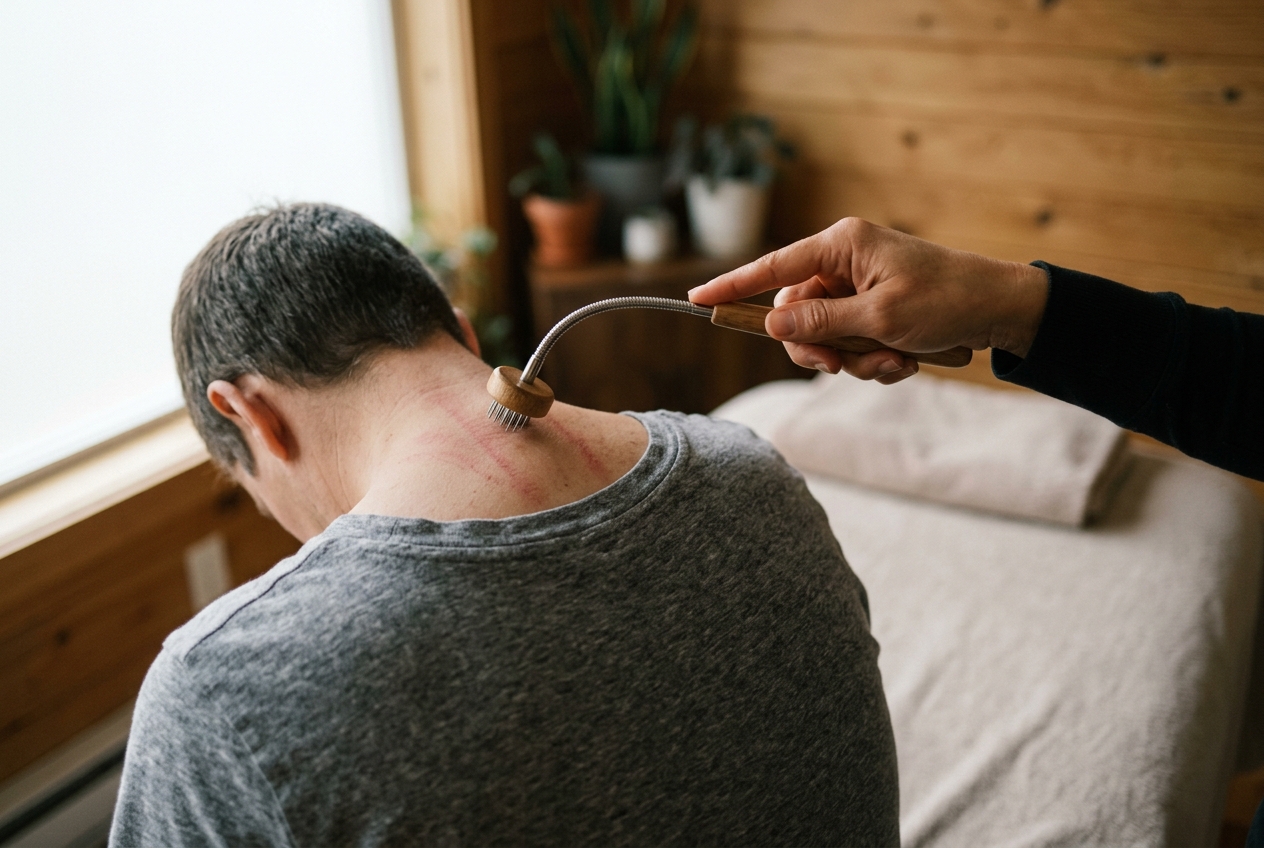
1. Opening — A Problem This Solves Today: The Autonomic Bottleneck
If you move through your working week carrying a persistent, low-grade muscular rigidity across the base of your skull, find your digestion stalling under psychological pressure, or experience the systemic lethargy of chronic sympathetic overdrive, you are witnessing a breakdown in somato-autonomic communication. In our screen-bound, sedentary modernity, the human nervous system frequently becomes locked in a functional stalemate. The central nervous system remains hyper-vigilant, yet the physical periphery—the vast sensory blanket of the skin and its underlying micro-fascial bed—is deprived of dynamic tactile and mechanical input.
This somatic disconnect manifests not merely as local postural ache, but as altered visceral microcirculation, sub-inflammatory tissue congestion, neurogenic hair thinning, and recalcitrant sleep disruption. Traditional Chinese Medicine (TCM) identified this interface millennia ago not as an inert barrier, but as the body's primary dynamic matrix of visceral-somatic dialogue: the cutaneous zones (Pi Bu) and superficial micro-collaterals (Sun Luo).
+---------------------------------------------------------------------------------------+
|                                 THE SOMATOSENSORY ARCH                                 |
|                                                                                       |
|  [Cutaneous Percussion] ---> [A-delta / C Mechanoreceptors] ---> [Dorsal Horn Gating] |
|            |                                                              |           |
|            v                                                              v           |
|  [Axon Reflex / NO / CGRP] <--------------------------------- [Somato-Visceral Reflex]|
|            |                                                              |           |
|            v                                                              v           |
|  [Microvascular Perfusion] <--------------------------------- [Autonomic Reset]       |
+---------------------------------------------------------------------------------------+
When therapeutic cutaneous tapping—known clinically as Plum Blossom Needling (Mei Hua Zhen, 梅花針) or the Seven-Star Needle (Qi Xing Zhen, 七星針)—is applied systematically across specific dermatomal corridors, it delivers a potent, rhythmic mechanosensory stimulus. By engaging the unmyelinated and thinly myelinated sensory fibers of the skin, this modality discharges the static neurovascular tone of the paravertebral column and triggers an immediate cascade of neurochemical signaling that recalibrates visceral organ perfusion and autonomic balance.
2. Classical Lineage & Biophysical Foundations: From Ling Shu to Modern Neuro-Fascial Science
The therapeutic exploitation of the cutaneous envelope possesses an impeccably documented lineage within classical Chinese medical literature. Chapter 7 of the Huangdi Neijing Ling Shu (Yellow Emperor’s Classic of Internal Medicine: Spiritual Pivot) outlines the twelve classical needling methods (Guan Zhen), highlighting two superficial modalities that serve as the direct ancestors of modern plum blossom percussion:
- Hair Needling (Mao Ci, 毛刺): A technique characterized by exceptionally shallow, non-retaining puncturing targeting the superficial cutaneous zones (Pi Bu) to dispel pathogenic influences residing in the skin and hair follicles.
- Half Needling (Ban Ci, 半刺): A rapid, feather-light puncturing technique wherein the needle enters and withdraws without penetrating the deeper myofascial layers, specifically designed to stimulate lung-governed cutaneous defense without injuring skeletal muscle tissue.
                  ===========================================
                  CLASSICAL DERMATOLOGY VS. MODERN BIOPHYSICS
                  ===========================================

Classical Concept (Ling Shu)        Modern Neurovascular Equivalent
       -----------------------------      ---------------------------------
       Pi Bu (Cutaneous Regions)     <->  Cutaneous Dermatomes & Fascia
       Sun Luo (Minute Collaterals)  <->  Subdermal Microvascular Plexus
       Wei Qi (Defensive Energy)     <->  Neuro-Immune Cutaneous Barrier
       Mao Ci / Ban Ci Needling      <->  High-Density Mechanotransduction
In classical physiology, the Ling Shu asserts that the twelve cutaneous regions (Pi Bu) represent the externalized functional territories of the twelve primary channels (Jing Mai). Pathogenic stagnation traverses inward from the superficial micro-collaterals (Sun Luo) to the visceral cores (Zang-Fu); conversely, visceral disharmony reflects outward onto the cutaneous landscape via hyperesthesia, discoloration, localized flaccidity, or telangiectasia.
Mechanotransduction and Neurochemical Cascades
Modern biophysics and neurophysiology provide rigorous empirical explanations for the clinical potency of superficial tapping, as detailed in extensive research indexed by the World Health Organization (WHO) Guidelines on Basic Training and Safety in Acupuncture and peer-reviewed syntheses in NCBI PubMed - Neurobiological Mechanisms of Acupuncture.
When the flexible bundle of seven stainless-steel micro-needles strikes the epidermal surface rhythmically, it exerts localized mechanical deformation upon the extracellular matrix (ECM). This deformation activates specialized cutaneous sensory receptors:
- Low-threshold A-beta mechanoreceptors (Merkel disks, Meissner corpuscles, Ruffini endings), which encode high-frequency vibrotactile and pressure dynamics.
- High-threshold thinly myelinated A-delta ($\text{A}\delta$) fibers and unmyelinated C-fibers, which govern nociceptive signaling, polymodal mechanoreception, and neurogenic inflammatory mediation.
This rapid mechanical deformation initiates cutaneous mechanotransduction. Mechanical tension stretches integrin receptors on cell membranes, opening stretch-activated ion channels and triggering local calcium influx. Concurrently, antidromic electrical impulses travel along cutaneous sensory axons, culminating in the classical axon reflex:
$$\text{Mechanical Percussion} \longrightarrow \text{Antidromic Axon Flare} \longrightarrow \text{Release of Substance P \& CGRP} \longrightarrow \text{Endothelial Nitric Oxide Release} \longrightarrow \text{Arteriolar Vasodilation}$$
This process, detailed in studies on NCBI PubMed - Neurogenic Inflammation and Axon Reflex Mechanisms, results in instantaneous microcirculatory expansion. Nitric oxide (NO) synthesized by vascular endothelial cells induces relaxation of precapillary sphincters, flooding ischemic cutaneous tissue with oxygenated red blood cells, accelerating lymphatic drainage, and clearing algogenic metabolites (e.g., bradykinin, lactate, prostaglandins).
Somato-Visceral Spinal Gating and Autonomic Modulation
Beyond localized microcirculatory improvements, plum blossom percussion exploits fundamental spinal cord architecture. Cutaneous primary afferent fibers converge within the dorsal horn of the spinal cord (Rexed laminae I–V), interacting with second-order projection neurons that receive visceral sensory input from identical embryonic dermatomal-myotomal segments.
According to the Gate Control Theory and contemporary somatovisceral reflex science—comprehensively surveyed in NCBI PubMed - Somatosensory Modulation of Autonomic Functions—intense, non-damaging mechanical stimulation of cutaneous A-delta afferents selectively activates inhibitory enkephalinergic interneurons in the substantia gelatinosa (Lamina II). This suppresses aberrant nociceptive transmission arriving from irritated visceral structures or deep paraspinal muscle spindles.
Simultaneously, somato-sympathetic and somato-parasympathetic reflex arcs operating through the intermediolateral cell column (IML) and the vagal motor nuclei modulate target organ tone. Cutaneous percussion over the cervico-thoracic junction suppresses sympathetic outflow to the cardiac plexus and cranial vasculature, whereas stimulation over the lumbosacral plexus optimizes pelvic and mesenteric microcirculation.
3. The Percussion Topography: Mapping the Spinal Axis, Cranial Zones, and Paravertebral Tracks
Executing plum blossom needle therapy with clinical precision requires mapping anatomical landmarks to classical energetic conduits and modern segmental neuro-anatomy. The human dorsum represents the highest concentration of somato-visceral interface zones in the body, organized into three primary vertical axes:
                            THE PARASPINAL PERCUSSION AXIS

                                   C1 - Atlas (GV16)
                                         |
                                         |  <-- Governing Vessel (Du Mai): Midline
    Bladder Channel Outer Line           |      [Spinous Processes & Supraspinous Ligament]
    [3.0 cun lateral to midline]         |
             |                           |  <-- Bladder Channel Inner Line (Back-Shu)
             |      Hua Tuo Jiaji        |      [1.5 cun lateral: Sympathetic Ganglionic Chain]
             |   [0.5 cun lateral]       |
             |           |               |
             |       .---|---.       .---|---.
             v       v   |   v       v   |   v
            [BL42] [T3]  |  [T3]   [BL13]|  [GV12] (T3 Spinous Process)
            [BL43] [T4]  |  [T4]   [BL14]|  [GV11] (T5 Spinous Process)
            [BL44] [T5]  |  [T5]   [BL15]|  [GV10] (T6 Spinous Process)
            [BL47] [T9]  |  [T9]   [BL18]|  [GV8]  (T9 Spinous Process)
            [BL52] [L2]  |  [L2]   [BL23]|  [GV4]  (L2 Spinous Process)
                         |               |
                         v               v
The Governing Vessel (Du Mai) — The Posterior Neuro-Axis
- Topography: The median longitudinal furrow of the spine, tracking the supraspinous ligament directly over the spinous processes from the coccyx (Changqiang, GV1) upward across the cervical spine, terminating over the cranial sagittal suture at the vertex (Baihui, GV20) and facial midline.
- Neuro-Anatomical Correlation: Overlies the dorsal midline vascular anastomoses, supraspinous and interspinous ligaments, and projects mechanically directly toward the posterior epidural space and spinal cord meninges.
- Clinical Significance: Tapping the Du Mai stimulates the posterior primary rami of the entire spinal nerve network. It regulates central nervous system arousal, alleviates axial postural fatigue, and enhances neurovascular flow along the vertebral basilar system.
The Bladder Channel (Taiyang) Back-Shu Pathways
- Inner Bladder Line (1.5 cun lateral to the posterior midline):
- Topography: Located in the groove between the spinal erector muscles (longissimus thoracis) and the spinous processes.
- Neurological Substrate: Directly correlates with the paravertebral sympathetic trunk (truncus sympathicus) and the dorsal rami of spinal nerves. Percussion over specific segmental levels directly modulates corresponding visceral organs via the classical Back-Shu (Bei-Shu) loci:
- T3 (Feishu, BL13): Broncho-pulmonary mechanics and cutaneous immunity.
- T5 (Xinshu, BL15): Coronary perfusion, cardiac rhythm, and emotional anxiety.
- T9 (Ganshu, BL18): Hepato-biliary metabolism, ocular perfusion, and emotional frustration.
- T12 (Weishu, BL21): Gastric motility and upper digestive tone.
- L2 (Shenshu, BL23): Renal microcirculation, adrenal function, and lumbar structural integrity.
- Outer Bladder Line (3.0 cun lateral to the posterior midline):
- Topography: Positioned along the lateral border of the iliocostalis cervicis and thoracis musculature.
- Clinical Significance: Targets psycho-emotional holding patterns (Ben Shen points, such as Pohu BL42 and Gaohuangshu BL43) and releases deep chronic myofascial tethering across the rhomboids, latissimus dorsi, and thoracolumbar fascia.
The Hua Tuo Jiaji System (0.5 cun lateral to the posterior midline)
- Topography: A bilateral chain of 34 points situated in the intertransverse spaces, halfway between the spinous process and the inner Bladder channel line, extending from C1 through L5.
- Neuro-Anatomical Substrate: Percussion at this exact lateral distance stimulates the medial and lateral branches of the posterior primary rami of spinal nerves as they exit the intervertebral foramina, as well as the adjacent deep intrinsic rotatores and multifidi muscles.
- Clinical Efficacy: Superior intervention for radiculopathies, intercostal neuralgias, segmental motor dysfunction, and visceral reflex imbalances.
+---------------------------------------------------------------------------------------+
|                              CRANIAL-FACIAL PERCUSSION ZONES                          |
|                                                                                       |
|  [Frontal Zone]        ---> Frontalis muscle, Supratrochlear/Supraorbital nerves     |
|                             (Alleviates frontal cephalea, ocular strain, mental haze) |
|                                                                                       |
|  [Temporal-Parietal]   ---> Temporalis fascia, Auriculotemporal nerve (GB/SJ channels)|
|                             (Releases bruxism, temporal migraines, vestibular tension)|
|                                                                                       |
|  [Vertex (Vertex Grid)]---> Galea Aponeurotica, Epicranial Aponeurosis (GV20/Sishencong)|
|                             (Promotes systemic parasympathetic rebound & sleep onset) |
|                                                                                       |
|  [Occipital Ridge]     ---> Suboccipital triangle, Greater/Lesser Occipital nerves    |
|                             (Clears cervicogenic headache, increases cerebral perfusion)|
+---------------------------------------------------------------------------------------+
4. Mechanical Biomechanics: The Three Tapping Intensities and Wrist-Drop Ergonomics
The clinical efficacy and therapeutic tolerance of plum blossom needling depend on the biomechanics of application. The instrument is held between the thumb, index, and middle fingers, utilizing the flexible elasticity of the plastic or buffalo horn handle.
Dragging, sliding, or striking at an oblique angle shears the epidermal stratum corneum, inflicting avoidable cutaneous pain, mechanical abrasions, or tissue tears. The practitioner must calibrate the application across three standardized clinical intensities:
+------------------------------------------------------------------------------------------------------+
|                                   PERCUSSION INTENSITY TAXONOMY                                      |
+-----------+-----------------------+-----------------------------+------------------------------------+
| Intensity | Visual Tissue State   | Neuro-Mechanical Target     | Primary Clinical Indications       |
+-----------+-----------------------+-----------------------------+------------------------------------+
| MILD      | Faint local erythema; | Low-threshold A-beta        | Pediatric cases, geriatric         |
| (Light)   | zero bleeding or      | mechanoreceptors;           | debility, profound constitutional  |
|           | petechiae.            | superficial facial dermis.  | deficiency, facial cosmetic zones. |
+-----------+-----------------------+-----------------------------+------------------------------------+
| MODERATE  | Pronounced hyperemic  | A-delta mechanoreceptors;   | Chronic muscular tension,          |
| (Medium)  | flushing; papular     | dermal axon reflex;         | neuro-visceral disharmonies,       |
|           | wheal formation.      | somatosensory spinal gate.  | stress-induced insomnia, fatigue.  |
+-----------+-----------------------+-----------------------------+------------------------------------+
| STRONG    | Visible capillary     | High-threshold C-fibers;    | Alopecia areata, localized         |
| (Heavy)   | micro-hemorrhage;     | intense neurogenic release; | neurodermatitis, recalcitrant      |
|           | pinpoint petechiae.   | deep micro-collateral stasis.| keloid scars, severe neuralgia.   |
+-----------+-----------------------+-----------------------------+------------------------------------+
The Three Clinical Intensities in Detail
- Mild (Light Tapping):
- Biomechanics: Gentle, rhythmic wrist flicks delivering rapid, feather-weight cutaneous contact (approx. 70–100 taps/minute).
- Physiological Manifestation: Mild transient pink erythema; absolute absence of bleeding, epidermal weeping, or petechial spotting.
- Application: Applied to children, frail or highly sensitive individuals, facial regions, or cases of severe constitutional Qi deficiency.
- Moderate (Medium Tapping):
- Biomechanics: Firm, elastic wrist strikes generating a distinct tapping sound, concentrating greater momentum into the subdermal junction.
- Physiological Manifestation: Marked hyperemic flushing, local dermal warmth, and slight edema/papular wheal formation without cutaneous bleeding.
- Application: Standard therapeutic baseline for musculoskeletal tension, functional visceral disorders, chronic fatigue, and primary central nervous regulation along the spinal axis.
- Strong (Heavy Tapping):
- Biomechanics: High-velocity, resolute wrist-drop technique delivering focused kinetic force over localized, recalcitrant lesions.
- Physiological Manifestation: Minute, pinpoint petechial oozing (micro-hemorrhages) and bead-like capillary exudate (Chu Xue).
- Application: Refractory dermatological conditions (e.g., alopecia areata plaques, plaque psoriasis, localized neurodermatitis), dense cutaneous numbness, thick scar tissue, and chronic, recalcitrant neuropathies.
5. Distal Neuromodulation: Precision Non-Invasive Acupressure Loci
While paraspinal and local percussion addresses segmental somatic-visceral reflexes, combining this modality with non-invasive acupressure at critical distal loci amplifies autonomic stabilization and restores homeostatic equilibrium. Further anatomical and functional details on these loci can be explored via Wikipedia - Cutaneous Innervation and Somatotopy and NCBI PubMed - Mechanotransduction via Cutaneous and Fascial Receptors.
                    DISTAL INTEGRATION POINTS & THEIR NEURAL CORRIDORS

     [LI4 - Hegu]                                             [ST36 - Zusanli]
     Radial Nerve Branch                                      Deep Peroneal Nerve
     Head, Face & Sympathetic Dampening                       Vagal-Immune Systemic Loop
            \                                                       /
             \                     HUMAN AXIS                      /
              \                   [ HOMEOSTASIS ]                 /
             /                                                     \
            /                                                       \
     [PC6 - Neiguan]                   [LV3 - Taichong]        [SP6 - Sanyinjiao]
     Median Nerve                      Deep Fibular Nerve      Tibial Nerve
     Vagus-Cardiac Axis & Antiemetic   Hepatic Neurovascular   Pelvic Parasympathetic Network
1. Zusanli (ST36) — "Leg Three Miles"
- Topographic Location: Located on the anterior-lateral lower leg, four finger-widths directly below the bottom edge of the kneecap (lateral patellar eye), and one finger-breadth lateral to the anterior crest of the shinbone (tibialis anterior muscle belly).
- Proprioceptive Sensation (De Qi): A profound, dull, radiating ache that frequently travels downward along the anterior ankle joint or upward into the knee capsule.
- Application & Mechanics: Apply deep, sustained, circular thumb pressure directed slightly inward toward the tibia for 2 to 3 minutes continuously.
- Physiological Utility: Activates the cholinergic anti-inflammatory pathway via the vagus nerve, enhances gastric motility, alleviates physical exhaustion, and accelerates systemic hemodynamic recovery.
2. Hegu (LI4) — "Joining Valley"
- Topographic Location: In the fleshy webbing on the back of the hand between the first (thumb) and second (index) metacarpal bones, level with the midpoint of the second metacarpal bone.
- Proprioceptive Sensation: Sharp, electric, spreading distention radiating toward the wrist or index finger.
- Application & Mechanics: Grip the webbing between your opposite thumb and index finger; exert firm, angled pressure directed toward the second metacarpal bone for 90 to 120 seconds.
- Physiological Utility: Relieves frontal headaches, cervical rigidity, and facial pain; downregulates acute sympathetic hyper-arousal; alleviates visceral constipation.
3. Taichong (LV3) — "Great Surge"
- Topographic Location: On the top of the foot, in the hollow valley between the junctions of the first and second metatarsal bones, approximately two finger-widths proximal to the web margin.
- Proprioceptive Sensation: Highly sensitive, pinpoint, bruised sensation or sharp tingling.
- Application & Mechanics: Press firmly with the tip of the thumb angled back toward the ankle joint, maintaining stable, sustained, non-oscillating pressure for 2 minutes while practicing slow diaphragmatic respiration.
- Physiological Utility: Alleviates emotional frustration, dampens vascular smooth muscle spasm (systemic hypertension), resolves temporal cephalea, and counteracts neuro-muscular hypertonicity.
4. Sanyinjiao (SP6) — "Three Yin Intersection"
- Topographic Location: On the inside of the lower leg, four finger-widths directly above the highest prominence of the inner ankle bone (medial malleolus), tucked tightly behind the posterior border of the shinbone.
- Proprioceptive Sensation: Deep, heavy, aching soreness that may radiate along the medial calf.
- Application & Mechanics: Apply steady, firm, compressive pressure with the thumb pad, hooking slightly beneath the medial tibial edge for 2 minutes bilaterally.
- Physiological Utility: Harmonizes the intersection of the Spleen, Liver, and Kidney channels; regulates pelvic autonomic plexuses; eases menstrual discomfort; resolves fluid retention; induces profound evening sedation.
5. Neiguan (PC6) — "Inner Gate"
- Topographic Location: On the inner forearm, three finger-widths proximal to the primary wrist flexion crease, situated directly between the two prominent tendons (palmaris longus and flexor carpi radialis).
- Proprioceptive Sensation: Tingling, distending ache radiating along the median nerve path into the palm or middle finger.
- Application & Mechanics: Apply direct, perpendicular, sustained thumb-tip compression for 1 to 2 minutes per side while gently rotating the wrist.
- Physiological Utility: Stabilizes cardiac rhythm, suppresses nauseous gastroesophageal reflux, alleviates acute emotional constriction of the diaphragm, and promotes rapid parasympathetic vagal dominance.
6. Systematic Clinical Protocols for Complex Pathologies
+------------------------------------------------------------------------------------------------------+
|                              INTEGRATED PROTOCOL MATRIX & SEQUENCING                                 |
+--------------------------+------------------------------+--------------------+-----------------------+
| Clinical Condition       | Percussion Trajectory        | Tapping Intensity  | Synergistic Distal    |
|                          |                              |                    | Acupoints             |
+--------------------------+------------------------------+--------------------+-----------------------+
| Alopecia Areata /        | Centripetal spiral over      | STRONG             | LV3 (Taichong) +      |
| Focal Telogen Effluvium  | plaque; surrounding margin;  | (Petechial oozing) | ST36 (Zusanli)        |
|                          | GV20 to C7 axis.             |                    |                       |
+--------------------------+------------------------------+--------------------+-----------------------+
| Intercostal Neuralgia &  | Affected thoracic Jiaji;     | MODERATE           | PC6 (Neiguan) +       |
| Post-Herpetic Pain       | corresponding Back-Shu;      | (Flushing/wheal)   | LV3 (Taichong)        |
|                          | intercostal nerve path.      |                    |                       |
+--------------------------+------------------------------+--------------------+-----------------------+
| Chronic Fatigue &        | Full Du Mai column; Inner    | MODERATE           | ST36 (Zusanli) +      |
| Sympathetic Burnout      | Bladder line (T1-L5);        | (Deep hyperemia)   | SP6 (Sanyinjiao)      |
|                          | Vertex grid (Baihui).        |                    |                       |
+--------------------------+------------------------------+--------------------+-----------------------+
| Neurodermatitis &        | Localized circumscribed area;| STRONG (local);    | LI4 (Hegu) +          |
| Chronic Eczematous Focus | Cervical / Lumbar Jiaji      | MILD (spinal axis) | SP6 (Sanyinjiao)      |
|                          | segmental roots.             |                    |                       |
+--------------------------+------------------------------+--------------------+-----------------------+
Protocol A: Alopecia Areata & Neurogenic Hair Loss
Scientific validation and modern clinical outcomes for this approach are documented in NCBI PubMed - Clinical Efficacy of Seven-Star Needling in Alopecia Areata.
- Preparation: Sterilize the alopecia plaque thoroughly using a 75% isopropyl alcohol swab; allow the skin to air-dry completely.
- Percussion Sequence:
- Phase 1 (Peripheral Margin): Begin tapping along the healthy, hair-bearing border surrounding the bare patch using Moderate Intensity to stimulate adjacent capillary collaterals.
- Phase 2 (Centripetal Spiral): Tap systematically from the perimeter inward in a tight concentric spiral pattern, transitioning to Strong Intensity directly over the atrophic, bare follicular zone. Continue until minute, pinpoint petechial droplets appear uniformly across the plaque.
- Phase 3 (Spinal Axis Stimulation): Tap along the Governing Vessel from Baihui (GV20) down to Dazhui (GV14) with Moderate Intensity (3 passes) to stimulate systemic sympathetic down-regulation.
- Distal Acupressure Synergy: Finish with 2 minutes of firm pressure on LV3 (Taichong) to relieve localized microvascular spasm, followed by 2 minutes on ST36 (Zusanli) to support systemic capillary nutrition.
- Frequency: Perform once every 3 to 4 days until robust vellus hair conversion is visually apparent.
Protocol B: Intercostal Neuralgia & Neuropathic Chest Wall Pain
- Patient Positioning: Sidelying with the affected lateral chest wall exposed and upper arm elevated, or comfortably seated leaning forward over a supportive cushion.
- Percussion Sequence:
- Step 1 (Paravertebral Roots): Tap the Hua Tuo Jiaji points corresponding to the precise thoracic vertebral levels (e.g., T4–T8) on the affected side using Moderate Intensity for 3 to 5 minutes until deep erythema emerges.
- Step 2 (Intercostal Tract): Trace the course of the affected rib spaces from the paraspinal border around to the anterior sternal margin using Mild to Moderate Intensity, carefully maintaining an elastic wrist rebound to avoid periosteal bruising over the ribs.
- Distal Acupressure Synergy:
- Apply firm compression to PC6 (Neiguan) for 2 minutes to open chest qi and ease neurogenic tightness.
- Apply bilateral thumb pressure to LV3 (Taichong) for 2 minutes to induce generalized intercostal myofascial release.
- Frequency: Administer daily during acute flare-ups; reduce to twice weekly as neuropathic pain subsides.
Protocol C: Autonomic Dysregulation, Insomnia & Chronic Fatigue Syndrome
- Patient Positioning: Prone, with a low forehead support to keep the cervical spine neutral and relaxed.
- Percussion Sequence:
- Step 1 (Cranial Vertex): Tap the Sishencong (four points surrounding GV20) and sagittal line using Mild Intensity for 3 minutes to downregulate cortical arousal.
- Step 2 (The Central Column): Deliver rhythmic Moderate Intensity percussion along the entire Governing Vessel (Du Mai) from C7 (Dazhui) down to S2 (Sacral Hiatus), completing 5 slow, continuous vertical passes.
- Step 3 (The Bladder Lines): Tap the inner Bladder channel line bilaterally from Feishu (BL13) to Shenshu (BL23), applying extra attention over Xinshu (BL15) and Ganshu (BL18) until the entire paraspinal corridor exhibits a uniform, warm, hyperemic glow.
- Distal Acupressure Synergy: Transition the patient to supine; apply sustained, synchronized thumb pressure to ST36 (Zusanli) and SP6 (Sanyinjiao) for 2 minutes per point.
- Frequency: Apply 2 to 3 times per week, ideally during late afternoon or evening hours to promote restorative slow-wave sleep.
7. Safety, Biophysical Sense, and Clinical Contraindications
While plum blossom needling is an exceptionally safe cutaneous modality when applied correctly, its capacity to induce localized micro-trauma and systemic autonomic reflexes demands strict adherence to professional safety protocols.
+---------------------------------------------------------------------------------------+
|                               CONTRAINDICATION MATRIX                                 |
+---------------------------------------------------------------------------------------+
| ABSOLUTE CONTRAINDICATIONS:                                                           |
|  * Active local cutaneous infections, erysipelas, cellulitis, or open ulcerations.    |
|  * Areas of severe mechanical trauma, fresh bone fractures, or unhealed surgical scars.|
|  * Uncontrolled bleeding disorders, severe thrombocytopenia, or advanced hemophilia.  |
|  * Direct percussion over malignant dermal neoplasms or melanomas.                    |
+---------------------------------------------------------------------------------------+
| RELATIVE CONTRAINDICATIONS & CLINICAL CAUTIONS:                                       |
|  * Patients on therapeutic anticoagulation therapy (warfarin, NOACs, clopidogrel):   |
|    STRICTLY restrict tapping to MILD or MODERATE intensities (Zero petechiae).        |
|  * Pregnancy: AVOID tapping the lumbosacral region, lower abdomen, and contraindicated|
|    points (LI4, SP6, BL60, BL67, GB21).                                              |
|  * Severe constitutional exhaustion or fasting hypoglycemia: Light tapping only to     |
|    prevent vasovagal syncope (needle sickness / *Yun Zhen*).                          |
+---------------------------------------------------------------------------------------+
Managing "Too Much Pressure" and Adverse Events
If a patient experiences dizziness, pallor, cold diaphoresis, nausea, or lightheadedness (vasovagal syncope), immediately halt the procedure:
- Place the patient supine with their lower extremities elevated $15–30^\circ$.
- Offer warm water or an oral glucose beverage.
- Apply firm, non-invasive acupressure to Renzhong (GV26) and PC6 (Neiguan) to restore central sympathetic vascular tone.
8. Today's Takeaway: A 2-Minute Somatosensory Reset Practice
You do not need specialized clinical instruments to leverage the neuro-fascial principles of cutaneous therapy today. When midday cognitive fatigue or screen-induced neck tension sets in, execute this rapid, highly effective somatosensory reset protocol right at your desk:
+---------------------------------------------------------------------------------------+
|                          2-MINUTE DESKSIDE SOMATOSENSORY PROTOCOL                     |
|                                                                                       |
|  [0:00 - 0:45] ---> FINGERTIP PERCUSSION (Galea Aponeurotica / Suboccipital Ridge)     |
|                     Curl both hands into relaxed arches; rapidly tap your fingertips  |
|                     firmly against your scalp from the hairline, over the vertex,     |
|                     down to the base of the skull (Moderate light-drumming rhythm).    |
|                                                                                       |
|  [0:45 - 1:30] ---> HEGU (LI4) ISCHEMIC COMPRESSION                                   |
|                     Grip the web space between your left thumb and index finger with  |
|                     your right hand. Apply firm, angled pressure toward the bone      |
|                     for 45 seconds while taking three slow, deep nasal breaths.        |
|                     Switch hands and repeat on the right side.                        |
|                                                                                       |
|  [1:30 - 2:00] ---> PARASPINAL FRICTION WARMING                                       |
|                     Rub the palms of your hands vigorously together until hot. Place  |
|                     them directly over your lower back (L2 / Shenshu region) and rub  |
|                     up and down briskly 30 times to stimulate paraspinal afferents.   |
+---------------------------------------------------------------------------------------+
This simple sequence delivers a fast mechanical reset to the cranial and spinal sensory nerves. It breaks the cycle of sympathetic strain, restores microcirculatory flow, and brings clear, grounded focus back to your day.
Authoritative Scientific and Clinical References
- World Health Organization (WHO) Guidelines on Basic Training and Safety in Acupuncture — Official international benchmarks for cutaneous needling standards, anatomical point depth, and sterile practice protocols.
- NCBI PubMed: Neurobiological Mechanisms of Acupuncture and Cutaneous Stimulation — Comprehensive biomedical review analyzing mechanotransduction, somatosensory afferent pathways, and central neurochemical modulation.
- NCBI PubMed: Cutaneous Axon Reflex, Substance P, and Microcirculation — Detailed laboratory study exploring antidromic peripheral nerve stimulation, CGRP release, and endothelial nitric oxide vasodilation.
- NCBI PubMed: Somatosensory Modulation of Autonomic Nervous System Functions — Neuro-physiological investigation mapping the spinal and supra-spinal reflex loops that regulate visceral organs via cutaneous dermatome stimulation.
- NCBI PubMed: Mechanotransduction via Cutaneous and Fascial Receptors — Biophysical analysis of mechanical force transmission across the extracellular matrix and cellular signaling cascades.
- NCBI PubMed: Clinical Efficacy of Seven-Star Needling in Alopecia Areata — Randomized controlled trial documenting the follicular microcirculatory enhancement and therapeutic outcomes of superficial cutaneous percussion.
- Wikipedia: Cutaneous Innervation and Somatotopy — Anatomical reference for spinal dermatomes, peripheral sensory nerve distributions, and cranial nerve topographies.