Moxibustion Techniques (Jiu Fa) Meridian Dynamics: Governing Thermal Conduction, Yang Qi Restoration, Infrared Photobiomodulation, and Channel Vasomotor Activation in Traditional Chinese Medicine
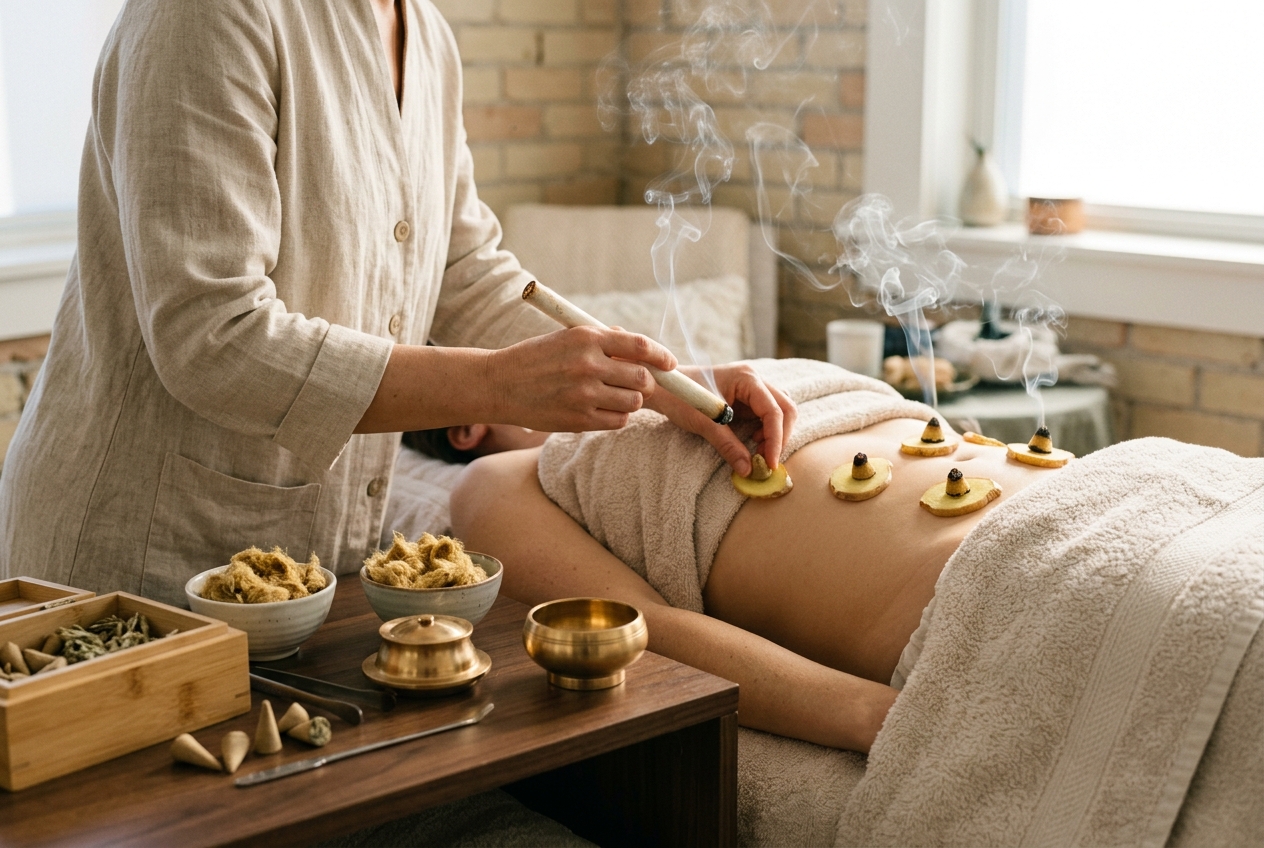
Step into a treatment room where the air is thick with the resinous, herbaceous aroma of smouldering botanical foliage, and you are witnessing one of the oldest thermal therapies in recorded medicine. Imagine an unrelenting, deep-seated chill settled deep within the lumbar spine or the lower abdomen—a sluggish, cold fatigue that thick wool sweaters and central heating fail to reach. The practitioner places a small, hand-rolled cone of dried, aged mugwort leaf directly above a precise anatomical locus and touches an incense stick to its apex.
Within moments, a golden ember descends. The sensation that follows is not a superficial scald, but an expanding, radiant wave of biothermal energy that seems to sink directly through the dermal barrier, penetrating several centimetres into the subcutaneous fascia, muscular beds, and microcirculatory networks.
+-----------------------------------------------------------------------------------+
| CLINICAL PHENOMENOLOGY: THE DUAL SENSATION OF THERMAL RADIANCE                   |
+-----------------------------------------------------------------------------------+
|  1. Local Cutaneous Gating: Immediate soothing of nociceptive afferents via      |
|     mild hyperaemia and selective TRPV1 ion-channel desensitisation.              |
|  2. Propagating Sensation along Channels (Jing Luo): A distinct 'travelling warmth'|
|     that tracks longitudinal fascial planes towards visceral targets.             |
+-----------------------------------------------------------------------------------+
In Traditional Chinese Medicine (TCM), this profound therapeutic modality is known as Jiu Fa (灸法), or moxibustion. Far from being a crude application of heat, moxibustion represents a sophisticated biophysical intervention. It harnesses the precise combustion thermodynamics of Artemisia argyi, emitting broad-spectrum infrared radiation that couples with cellular water molecules and neurovascular pathways to restore physiological homeostasis, dispel pathognomonic cold, and invigorate the circulation of Qi (vital functional energy) and Blood across the twelve primary meridians.
2. What the Energetic and Biothermal System Does
In classical physiological theory, moxibustion is the ultimate method for supplementing Yang—the metabolic, warming, and motivating dynamic of the living organism. When physiological Yang falters, fluid metabolism stagnates, microcirculation constricts, and the body becomes vulnerable to pathogenic Cold and Dampness (Han Shi). Moxibustion operates as an external, combustible catalyst that directly infuses warming thermal Qi into the meridian system (Jing Luo), melting vascular stasis and driving systemic metabolic propulsion.
The Pharmacological and Thermodynamic Essence of Aged Mugwort (Ai Ye)
The exclusive botanical substrate utilized in authentic moxibustion is the processed leaves of Artemisia argyi (Ai Ye), a perennial herbaceous plant belonging to the Asteraceae family. Traditional pharmacopoeias emphasize that fresh mugwort must never be applied directly to clinical practice; it must be aged for three to five years (Chen Ai).
Aging fundamentally alters the leaf's volatile oil composition and combustion kinetics: * Volatile Oil Moderation: Fresh Artemisia contains highly volatile, combustible terpenes, including thujone, camphor, and pinene, which ignite violently, combust at unpredictable temperatures, and release acrid, irritating smoke. * Controlled Combustion Profile: Extended curing allows harsher, volatile fractions to dissipate through slow oxidation, leaving behind stable sesquiterpenoids, flavonoids, borneol, and 1,8-cineole (eucalyptol). * Stable Thermal Output: The resulting aged moxa wool (Ai Rong) produces an unctuous, slow-burning ember that maintains a sustained core combustion temperature of 500°C to 600°C, yielding a smooth, deeply penetrating thermal wave devoid of explosive flare-ups.
Infrared Emission Spectroscopy and Deep Tissue Transmittance
The biophysical efficacy of moxibustion is governed by its distinct electromagnetic emission spectrum during smouldering combustion. Photometric research catalogued by NCBI PubMed Central demonstrates that burning Artemisia argyi functions as a sophisticated radiant blackbody radiator, generating a multi-wavelength infrared emission profile spanning: 1. Near-Infrared (NIR) Band (0.8 μm to 1.5 μm): Matches the optical transmission window of human biological tissue. These short wavelengths penetrate through the stratum corneum, epidermis, and dermis, directly reaching deep fascial planes, periosteum, and muscular microvasculature up to 10 to 15 millimetres beneath the skin surface. This NIR radiation directly stimulates mitochondrial cytochrome c oxidase, enhancing cellular adenosine triphosphate (ATP) synthesis. 2. Far-Infrared (FIR) Band (3.0 μm to 5.6 μm): Corresponds to the resonance absorption frequencies of cutaneous water clusters and dermal structural proteins. This induces localized hyperthermia, fluidising the lipid matrix of the stratum corneum and creating a thermal gating phenomenon that facilitates the transdermal delivery of vaporized lipophilic terpenoids and essential oils directly into the cutaneous capillary beds.
3. How You Can Feel It — Signs of Balance and Imbalance
The balance of thermal and meridian dynamics manifests throughout the physical body, cognitive stamina, and visceral functions. When your internal Yang Qi is robust, your extremities remain naturally warm without artificial heating, digestion proceeds swiftly without postprandial somnolence, and mental clarity remains sharp throughout the circadian cycle.
+-----------------------------------------------------------------------------------+
|                    DIAGNOSTIC PATTERN DIFFERENTIATION MATRIX                      |
+--------------------------+--------------------------------------------------------+
| CLINICAL DOMAIN          | YANG DEFICIENCY & COLD STASIS (Moxa Indicated)        |
+--------------------------+--------------------------------------------------------+
| Thermoregulation         | Frigid extremities (cold hands/feet), aversion to cold,|
|                          | preference for hot beverages and direct thermal contact.|
| Gastrointestinal         | Sluggish digestion, epigastric distension, loose stools|
|                          | or early morning diarrhea (Wu Geng Xie), undigested food.|
| Musculoskeletal          | Deep aching in the lumbar spine and knees, joint pain  |
|                          | aggravated by damp weather, relieved by heat.          |
| Psycho-Emotional State   | Lassitude, depressive withdrawal, lack of initiative,   |
|                          | chronic mental exhaustion, low libido.                 |
| Cutaneous / Fluid Signs  | Pallor, clear copious urination, fluid retention,      |
|                          | pale swollen tongue with teeth-marks and white coat.  |
+--------------------------+--------------------------------------------------------+
Self-Assessment: Evaluating Systemic Cold and Functional Stagnation
To determine whether your physiology is displaying signs of cold-induced stagnation or Yang depletion, consider the following somatic markers: 1. Thermal Vulnerability: Do your lower extremities or abdomen feel noticeably cooler to the touch than your chest, even in warm ambient environments? 2. Postprandial Vitality: Following a standard meal, do you experience acute abdominal bloating, lethargy, or immediate borborygmus (rumbling) accompanied by an instinct to apply manual warmth over the epigastrium? 3. Chronobiological Rhythms: Do you wake between 3:00 AM and 5:00 AM with a dull ache in your lower back or an urgent necessity to evacuate loose stools—a hallmark of Kidney Yang failing to warm the Spleen?
If two or more of these parameters are consistently present, your system exhibits classical Yang deficiency with channel cold, which can benefit from the clinical application of moxibustion.
4. Taxonomy of Moxibustion Modalities (Jiu Fa)
Over two millennia of empirical development, Traditional Chinese Medicine has evolved a taxonomy of moxibustion techniques. These are systematically categorised according to how thermal energy is transferred to the body: directly, across an herb-mediated partition, via suspended combustion rods, or along transcutaneous needle shafts.
I. Direct Moxibustion (Zhi Jie Jiu)
Direct moxibustion involves placing handcrafted moxa cones (Ai Zhi) directly upon the bare skin. It is subdivided based on the intentionality of cutaneous tissue response:
- Scarring Moxibustion (Hua Hen Jiu / Pustulating Moxa): Highly concentrated cones of fine moxa wool, sized from grain-of-rice (Mi Li Jiu) to wheat-grain (Mai Li Jiu) dimensions, are ignited on specific tonification points (such as Zusanli ST36 or Shenshu BL23) and allowed to burn down completely to the epidermal boundary. This produces localized aseptic tissue coagulation and deliberate blistering, provoking an intense systemic immune response characterised by sustained leukocytosis, macrophage mobilization, and long-term immunomodulation. It is reserved for severe, recalcitrant pathologies like chronic intractable asthma, generalized debility, and profound immune exhaustion.
- Non-Scarring Direct Moxibustion (Wu Hua Hen Jiu): Medium-sized moxa cones are positioned on the acupoint and lit. As soon as the thermal wave reaches approximately 60–70% of the cone volume—and the patient reports a sharp, localized heat sensation (approximately 43–45°C)—the practitioner removes the ember using clinical forceps, leaving no permanent burn or blister while infusing therapeutic heat into the channel.
II. Indirect Partitioned Moxibustion (Jian Jie Jiu / Ge Wu Jiu)
By interposing a pharmacologically active botanical or mineral medium between the burning moxa cone and the cutaneous stratum, partitioned moxibustion marries the infrared radiation of Artemisia argyi with the transdermal extraction of medicinal phytocompounds:
+-----------------------------------------------------------------------------------+
|               INDIRECT PARTITIONED MOXIBUSTION (GE WU JIU) TAXONOMY               |
+-------------------+-------------------+--------------------+----------------------+
| MODALITY          | SUBSTRATE MEDIUM  | PRIMARY INDICATIONS| PHARMACODYNAMICS     |
+-------------------+-------------------+--------------------+----------------------+
| Ginger-Partitioned| Fresh sliced root | Spleen-Stomach Cold| Zingiberene releases;|
| (Ge Jiang Jiu)    | of Zingiber       | Vomiting, Diarrhea,| warms middle Jiao,   |
|                   | officinale (2-3mm)| Arthralgic Bi-Pain | dispels interior cold|
+-------------------+-------------------+--------------------+----------------------+
| Garlic-Partitioned| Pounded bulb slice| Scrofula, Early-   | Allicin mobilization;|
| (Ge Suan Jiu)     | of Allium sativum | stage Carbuncles,  | antibacterial, detox,|
|                   | with perforations | Lymphadenopathy    | resolves hard nodules|
+-------------------+-------------------+--------------------+----------------------+
| Salt-Partitioned  | Pure, dry refined | Devastated Yang    | Hyper-osmotic base   |
| (Ge Yan Jiu)      | Sea Salt packed   | Collapse, Choleraic| stabilizes CV8; halts|
|                   | flush into CV8    | Enteritis, Hernia  | fluid/Yang exhaustion|
+-------------------+-------------------+--------------------+----------------------+
| Monkshood Cake    | Prepared Aconite  | Exhausted Mingmen  | Aconitine derivatives|
| (Ge Fu Zi Jiu)    | (Fu Zi) powder    | Fire, Non-healing  | penetrate marrow;    |
|                   | paste cake        | Yin Ulcers, Dropsy | revives Kidney Yang  |
+-------------------+-------------------+--------------------+----------------------+
- Ginger-Partitioned Moxibustion (Ge Jiang Jiu): A 2–3 mm slice of fresh ginger rhizome, perforated with multiple needle holes to allow volatile vapors to pass, serves as the base for a burning moxa cone. Indicated for Middle Jiao deficiency-cold syndromes, epigastric pain, nausea, and cold rheumatic joint pain (Bi Zheng).
- Garlic-Partitioned Moxibustion (Ge Suan Jiu): Uses a perforated slice of fresh garlic bulb (Allium sativum). Its potent allicin content exerts natural antimicrobial and resolving actions. Indicated for deep-rooted boils, non-ulcerated carbuncles, scrofulous lymph node enlargement, and localized toxic swellings.
- Salt-Partitioned Moxibustion (Ge Yan Jiu): The patient lies supine while their umbilicus (Shenque CV8) is filled flush with dry, refined sea salt, frequently topped with a thin slice of ginger upon which massive moxa cones are burned. Salt provides a stable thermal capacitor that retains heat without scorching. This protocol is traditionally employed to rescue devastated Yang (Hui Yang Jiu Ni), halt choleraic diarrhea, treat acute collapse, and stabilize profound hypotension.
- Monkshood-Partitioned Moxibustion (Ge Fu Zi Jiu): Prepared aconite root (Radix Aconiti Lateralis Praeparata) is pulverized, blended with rice wine into a dense cake, perforated, and dried. Positioned beneath burning moxa cones, this method targets deep Kidney Yang deficiency, sexual exhaustion, systemic fluid dropsy, and chronic, non-healing "yin-type" dermal ulcerations that lack warmth and vitality.
III. Suspended Moxa Stick Techniques (Ai Tiao Jiu)
Moxa wool rolled tightly into cylindrical paper wrappers forms the standard moxa stick (Ai Tiao). Suspended above the skin without direct contact, it allows three distinct dynamic applications:
- Mild-Warm Moxibustion (Wen He Jiu): The lit tip is held statically at a distance of 2 to 3 centimetres directly perpendicular to the target acupoint for 10 to 20 minutes, generating a steady, non-scalding hyperaemic warmth.
- Sparrow-Pecking Moxibustion (Que Zhuo Jiu): The practitioner rhythmically lowers and raises the burning tip over the acupoint in rapid vertical oscillations, mimicking a small bird pecking at seeds. This dynamic variation prevents thermal habituation, activating localized vascular pulsations and waking dormant channel Qi.
- Circling Moxibustion (Hui Xuan Jiu): The lit ember is swept continuously in widening circular patterns above the affected area, dispersing diffuse cold-damp pathogens across broad arthritic joints, expansive muscular regions, or areas of cutaneous numbness.
IV. Specialized Variations
- Warm Needle Acupuncture (Wen Zhen Jiu): After achieving the De Qi needle sensation via manual manipulation, a 1.5–2.0 cm section of moxa stick is mounted onto the metal handle of a stainless steel filiform needle and ignited. The metallic shaft conducts heat directly down to the deep fascial, muscular, and periosteal strata, combining mechanical channel stimulation with thermal infrared penetration.
- Thunder-Fire Moxa (Lei Huo Shen Zhen): A dense, oversized herbal moxa stick enriched with warming botanicals and minerals (including realgar, myrrh, frankincense, and Radix Aucklandiae). It burns with higher thermal intensity, designed to treat deep-seated structural disorders, pelvic stasis, and severe degenerative osteoarthritis.
- Modern Thermal Applicators: Smokeless carbonized moxa devices and infrared electronic moxibustion units calibrated precisely to emit the 0.8–5.6 μm infrared profile without combustion by-products, providing a clinical alternative for smoke-sensitive institutional settings.
5. Modern Biomedical and Neurovascular Mechanisms
Contemporary medical research, such as work highlighted by the World Health Organization Traditional Medicine Strategy, has uncovered the physiological, cellular, and neurobiological cascades triggered by moxibustion's combination of thermal radiation and transdermal chemistry.
1. TRPV1 Channel Transduction and Axon Reflex Vasodilation
When moxibustion elevates the cutaneous and subcutaneous tissue temperature past 43°C, it directly activates the TRPV1 (Transient Receptor Potential Vanilloid-1) cation channels located on unmyelinated C-fibre and thinly myelinated A-delta primary afferent nerve endings.
This thermal gating induces a rapid influx of extracellular calcium ($Ca^{2+}$), triggering the localized release of potent vasodilatory neuropeptides, principally Calcitonin Gene-Related Peptide (CGRP) and Substance P. These neuropeptides trigger the classic axon reflex, producing profound microvascular vasodilation, increasing local capillary bed permeability, and accelerating microcirculatory flow, which flushes out pain-generating algesic metabolites (such as bradykinin and lactic acid).
2. Heat Shock Protein Expression and Cellular Cytoprotection
Sub-lethal thermal stimulation from moxa activates intracellular thermal protection pathways, upregulating Heat shock protein 70 (HSP70) and HSP27 in dermal fibroblasts, vascular endothelial cells, and adjacent macrophages.
These molecular chaperones repair misfolded intracellular proteins, stabilize cell membranes against oxidative injury, and inhibit the nuclear factor kappa B ($NF\text{-}\kappa B$) inflammatory pathway. This downregulates systemic pro-inflammatory cytokines—including Tumour Necrosis Factor-alpha ($TNF\text{-}\alpha$), Interleukin-1 beta ($IL\text{-}1\beta$), and Interleukin-6 ($IL\text{-}6$)—providing a biochemical explanation for moxibustion's systemic anti-inflammatory actions.
3. Hemorheology and Systemic Immunomodulation
The application of moxibustion directly alters hemorheological dynamics: * Microvascular Perfusion: Erythrocyte aggregation decreases while erythrocyte deformability improves, reducing whole-blood viscosity and clearing microcirculatory stasis. * Macrophage Phagocytic Activation: Moxibustion enhances systemic macrophage phagocytosis, upregulates Natural Killer (NK) cell cytotoxicity, and helps normalize the ratio of helper-to-suppressor T-cells ($CD4^+ / CD8^+$), strengthening the body's host defenses.
4. Somatosensory-Autonomic Reflex and Vagal Stabilization
Neuroimaging and electrophysiological studies indicate that thermal stimulation applied at specific somatotopic spinal segments (e.g., Zusanli ST36 or Guanyuan CV4) triggers somatosensory-autonomic reflex arcs.
These afferent signals ascend via the spinothalamic tracts to the solitary nucleus and the dorsal motor nucleus of the vagus nerve. The resulting increase in parasympathetic vagal efferent activity promotes visceral motility, reduces heart rate variability stress patterns, downregulates hypothalamic-pituitary-adrenal (HPA) axis overdrive, and lowers serum corticosterone levels.
6. Clinical Protocols, Reinforcing-Reducing (Bu Xie), and Safety Standards
The therapeutic outcome of moxibustion depends on the clinical precision of its application. In the paradigm of Traditional Chinese Medicine, thermal therapy is not applied randomly; it follows strict rules of directional energetic tonification or sedation (Bu Xie Fa), structural sequencing, and safety precautions.
+-----------------------------------------------------------------------------------+
|                     REINFORCING (BU) VS. REDUCING (XIE) METHODS                   |
+-------------------+-----------------------------------+---------------------------+
| CLINICAL VARIABLE | REINFORCING / TONIFYING (BU FA)   | REDUCING / DRAINING (XIE) |
+-------------------+-----------------------------------+---------------------------+
| Combustion Speed  | Slow, natural, unforced combustion| Rapid, forced combustion  |
| Aeration Vector   | Do not blow on the ember          | Blow on the ember to      |
|                   |                                   | accelerate burn rate      |
| Point Closure     | Immediately press point upon ash  | Leave point open; do not  |
|                   | removal to retain thermal essence | press; vent excess heat   |
| Therapeutic Goal  | Conserve Yang; nourish deficiency | Dispel acute stagnation;  |
|                   |                                   | vent toxic heat pathogens |
+-------------------+-----------------------------------+---------------------------+
Channel Sequencing Protocols
When applying multi-point moxibustion, the clinical order of treatment must respect the physiological ascension and declination of Qi: 1. Dorsal before Ventral: Apply moxibustion to the Yang regions of the body first (the back, governing vessel, and outer bladder channels) before addressing the Yin regions (the chest, abdomen, and inner yin channels). 2. Superior before Inferior: Treat the upper body, head, and thoracic zones before moving downwards to the lumbosacral region, thighs, and feet. 3. Clinical Rationale: This sequencing prevents thermal Qi from getting trapped in the upper orifices (Shang Jiao), which can manifest as headaches, dry throat, vertigo, or conjunctival congestion.
Absolute Contraindications and Precautions
- Excess Heat and Yin Deficiency Fire: Contraindicated in syndromes marked by high fever, acute delirium, flushed cheeks, night sweats, crimson tongue without coating, or rapid, wiry, thin pulses (Yin Xu Hua Wang). Adding external Yang fire to these states risks aggravating systemic heat patterns.
- Prohibited Anatomical Locations: Direct, scarring moxibustion is strictly prohibited on the face, sensory orifices, aesthetic zones, and directly over superficial major blood vessels (e.g., over the carotid artery at Renying ST9 or the radial artery at Taiyuan LU9).
- Obstetric Prohibitions: During pregnancy, moxibustion is strictly forbidden across the lower abdomen (Xia Fu), the lumbosacral region, and on potent downward-draining points such as Sanyinjiao (SP6), Hegu (LI4), Jianjing (GB21), and Zhiyin (BL67)—unless being used by a trained practitioner specifically for cephalic version of breech presentation under controlled protocols.
Clinical Blister Management (Pao Fa)
+-----------------------------------------------------------------------------------+
|                        CLINICAL BLISTER MANAGEMENT PROTOCOL                       |
+-----------------------------------------------------------------------------------+
|  1. Micro-Vesicles (< 1 cm diameter):                                             |
|     • Do NOT puncture or de-roof.                                                 |
|     • Apply sterile dry gauze; allow endogenous reabsorption.                     |
|                                                                                   |
|  2. Large Bullae (≥ 1 cm diameter):                                               |
|     • Swab surface with povidone-iodine or chlorhexidine.                         |
|     • Puncture base with a sterile 25G hypodermic needle.                         |
|     • Aspirate or express serous fluid using sterile cotton applicator.           |
|     • Preserve intact epidermal roof as a biological dressing.                    |
|     • Apply topical Ching Wan Hung or silver sulfadiazine; dress with non-stick   |
|       sterile pad.                                                                |
+-----------------------------------------------------------------------------------+
7. Qigong & Mind-Body Movement Practice: Cultivating the Lower Dantian Fire
To consolidate the internal warming effects of moxibustion, use this mind-body Qigong practice designed to guide Yang Qi deep into the Lower Dantian (the primary energetic reservoir in the lower abdomen).
Step-by-Step Exercise Instructions
- Starting Posture & Alignment: Stand with feet shoulder-width apart, parallel to one another. Release your knees into a slight, spring-like flexion. Gently tuck the tailbone downward to flatten the lumbar curve, opening the Mingmen (GV4) gate. Rest the tip of your tongue against the upper hard palate behind your front teeth, completing the circuit between the Conception (Ren) and Governing (Du) vessels.
- Breath Mechanics & Kinetic Flow: * Inhalation (4-second count): Breathe deeply through your nose into the pelvic floor. Allow the lower abdomen to naturally expand in all directions. Simultaneously, bring your hands forward, palms facing inward towards your navel, as if cradling a sphere of warm light. * Exhalation (6-second count): Exhale smoothly through your nose. Slowly draw the navel back toward the spine, pressing your palms gently inward toward Guanyuan (CV4) without touching the skin. Visualize the radiant thermal energy compressing into a dense, golden ember nestled midway between the navel and the lumbar spine.
- Repetition and Duration: Perform this cyclic sequence for 36 complete respiratory cycles, lasting approximately 8 to 10 minutes.
- Target Somatic Sensations: Look for a comfortable, radiant warmth blossoming across the lower abdomen, accompanied by mild salivation (Jin Ye), a softening of the solar plexus, and warm tingling in the fingers and toes.
8. Acupressure Points You Can Try Today
For daily self-care when clinical moxibustion is inaccessible, direct acupressure stimulation at key Yang-tonifying loci can activate related neurovascular pathways.
+-----------------------------------------------------------------------------------+
|                     CLINICAL ACUPRESSURE REFERENCE TABLE                          |
+-------------------+-----------------------+-------------------+-------------------+
| POINT NAME        | ANATOMICAL LOCATION   | PALPATION METHOD  | THERAPEUTIC USE   |
+-------------------+-----------------------+-------------------+-------------------+
| Zusanli           | 4 finger-widths below | Firm perpendicular| Relieves fatigue, |
| (ST36 - "Leg      | outer patellar eye;   | circular pressure | boosts digestive  |
| Three Miles")     | 1 finger-width lateral| for 2–3 minutes   | fire, elevates    |
|                   | to tibial crest       | until sore disten-| systemic immune   |
|                   |                       | sion is felt      | defense           |
+-------------------+-----------------------+-------------------+-------------------+
| Guanyuan          | Exactly 3 finger-     | Sustained steady  | Dispels pelvic    |
| (CV4 - "Gate of   | widths inferior to    | inward & downward | cold, treats      |
| Origin")          | the center of the     | palm/thumb press  | exhaustion, halts |
|                   | navel on midline      | for 3 minutes     | loose stools      |
+-------------------+-----------------------+-------------------+-------------------+
| Mingmen           | On posterior midline, | Firm knuckle-     | Warms Kidney Yang,|
| (GV4 - "Gate of   | in depression below   | friction rubbing  | strengthens weak  |
| Life")            | spinous process of 2nd| horizontally for  | lumbar spine,     |
|                   | lumbar vertebra (L2)  | 2 minutes         | dispels chill     |
+-------------------+-----------------------+-------------------+-------------------+
Detailed Point Descriptions
- Zusanli (ST36 — "Leg Three Miles"):
- Location: Located on the anterolateral aspect of the lower leg, four finger-widths inferior to the lower border of the patella, and one finger-breadth lateral to the anterior crest of the tibia (in the tibialis anterior muscle belly).
- Technique: Apply firm, perpendicular thumb pressure while executing small circular kneading motions. Maintain for 2 to 3 minutes per limb until a distinct ache (De Qi) radiates down the lateral foot.
-
Usage: Tonifies Spleen and Stomach Qi, strengthens systemic endurance, accelerates recovery from physical exhaustion, and stimulates immune function.
-
Guanyuan (CV4 — "Gate of Origin"):
- Location: Situated along the anterior abdominal midline, exactly three cun (four finger-widths) inferior to the center of the umbilicus.
- Technique: Place the fleshy pad of your thumb or palm over the point. Apply gentle, progressive pressure directed inward and slightly downward toward the pelvic cavity. Maintain this steady pressure for 3 minutes while practicing rhythmic abdominal breathing.
-
Usage: Primary point for tonifying foundational Kidney Yang, addressing nocturnal frequency of urination, chronic pelvic chill, and systemic fatigue.
-
Mingmen (GV4 — "Gate of Life"):
- Location: Located on the posterior midline of the lumbar spine, directly in the interspinous depression beneath the spinous process of the second lumbar vertebra (L2), directly opposite the navel.
- Technique: Form loose fists and use the flat surface of your proximal knuckles to rub briskly back and forth horizontally across the point for 2 minutes until an intense, soothing heat spreads across your lower back.
- Usage: Dispels lower back pain aggravated by cold, warms the lumbar spine, and strengthens the root of vitality.
9. Food & Lifestyle — Thermal Thermodynamics for Daily Life
In Traditional Chinese Medicine, internal and external thermal therapies work synergistically. Applying moxibustion while consuming cold, damp-generating foods creates conflicting physiological signals that reduce treatment efficacy.
10. Today's Takeaway
The single most effective action you can take today to protect your physiological Yang requires no specialized equipment and takes less than five minutes: The Morning Thermal Ignition.
Upon waking, bypass iced water or refrigerated liquids, and drink 250–300 ml of hot, freshly boiled water infused with two thinly crushed slices of fresh ginger rhizome. As you drink, place both warm palms flat against your lower abdomen over Guanyuan (CV4) and breathe deeply into the pelvic basin for two minutes. This simple ritual jump-starts your digestive fire, dilates the visceral microvasculature, and circulates thermal energy outward to your extremities to sustain you through the day.
Authoritative Medical & Scientific References
- Comprehensive review of classical thermal modalities: Moxibustion — Wikipedia Encyclopedia
- Botanical taxonomy and chemistry: Artemisia argyi — Botanical Classification and Properties
- Cellular receptor mechanisms: TRPV1 Ion Channel — Structural Biology and Thermal Gating
- Heat shock protein cytoprotection: Heat Shock Protein 70 (HSP70) — Molecular Functions
- Integration of evidence-based modalities: World Health Organization Traditional Medicine Strategy
- Biomedical mechanisms in thermal medicine: NCBI PubMed Central — Biomedical Literature Database