Manaka X-Signal System: Navigating Topological Meridian Circuits, Octator Bio-Polarity, and Precision Acupressure Protocols
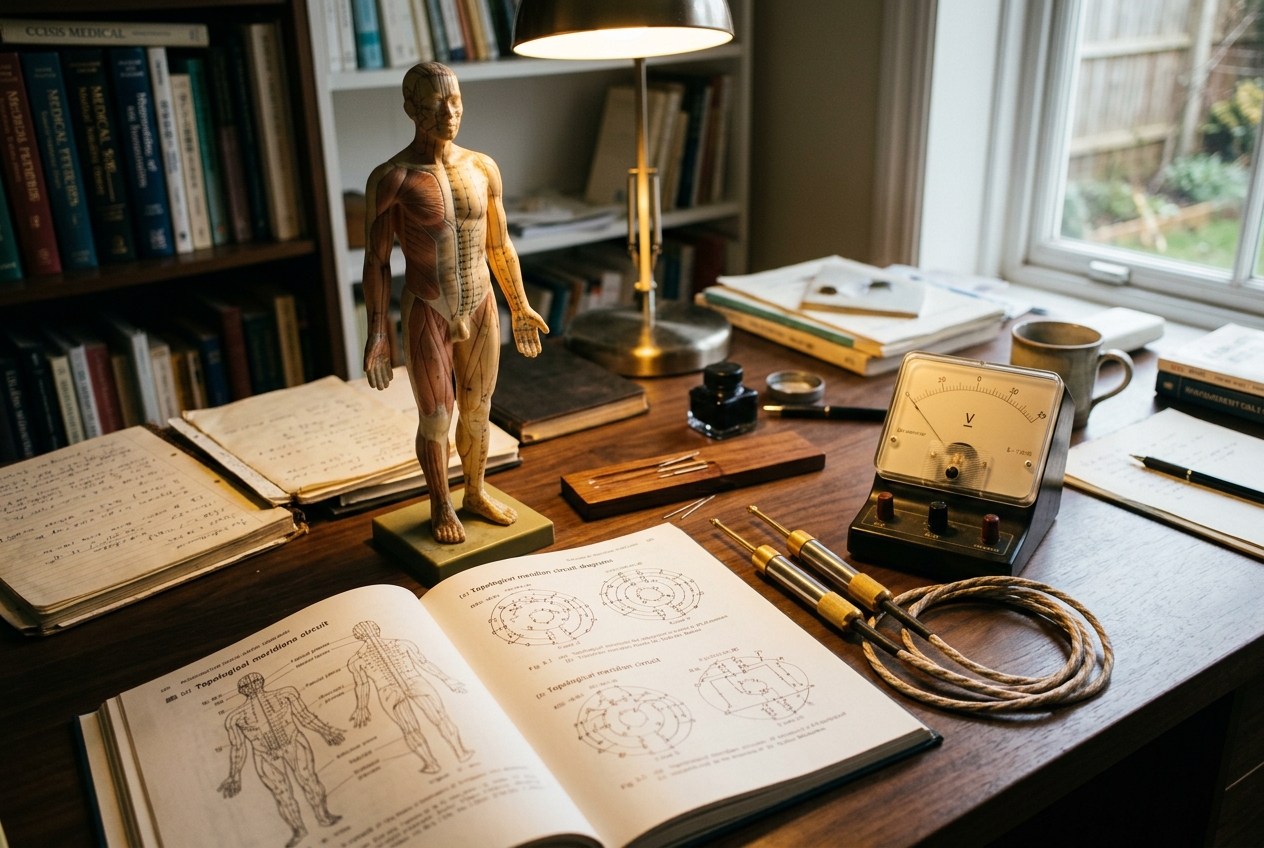
1. Opening — A Problem This Solves Today
Consider a state of physical being intimately familiar to modern life: you have spent eight consecutive hours seated before a high-resolution display, your shoulders curled imperceptibly forward, your breath restricted to the shallow upper third of your ribcage. By mid-afternoon, a dull, intractable tension has anchored itself beneath the base of your skull. Your epigastrium feels knotted and sluggish, resistant to digestion, accompanied by a diffuse, low-grade cognitive irritability that no amount of caffeine can resolve. When you palpate the tissue between your collarbone and sternum, or press gently beneath your rib margin, you encounter sharp, tender resistances—somatic knots that seem entirely disproportionate to your lack of overt physical exertion.
In contemporary clinical neurology, this state is frequently catalogued under the broad, nebulous umbrella of autonomic dysregulation or postural fatigue. Yet to dismiss these distributed somatic complaints as mere muscular tightening is to misunderstand the fundamental communication architecture of the human organism. Long before our central nervous system evolved its myelinated, high-speed axons, primitive multicellular organisms coordinated complex morphogenetic, metabolic, and defensive actions across expansive cellular fields.
When your stomach knots, your neck stiffens, and your peripheral circulation cools after hours of static stress, you are not merely experiencing localized musculoskeletal strain; you are witnessing a systemic impedance block across a primitive, pre-neural communication grid. East Asian medicine has mapped these pathways for millennia as the meridian network. In the mid-twentieth century, a pioneering Japanese physician and surgeon, Dr. Yoshio Manaka (1911–1989), systematically demystified this ancient topography through the lens of modern biophysics, information theory, and bio-cybernetics. His discovery—the X-Signal System—reveals how subtle mechanical and electrical polarities applied to the body’s fascial matrix can instantly recalibrate global homeostatic equilibrium.
2. The Evolutionary Grid — Dr. Yoshio Manaka and the X-Signal System
To understand the meridian network through the lens of modern biophysics, one must examine the work of Dr. Yoshio Manaka. A classically trained surgeon who directed the Department of Surgery at Odawara National Hospital during and after World War II, Manaka found himself confronted with horrific burn wounds, intractable post-traumatic pain, and profound autonomic shock that conventional pharmacological interventions frequently failed to stabilize. Drawing upon his profound knowledge of classical Chinese medical texts and rigorous Western experimental methodologies, Manaka embarked on a four-decade research program to determine whether the classical meridian channels possessed a verifiable physical and informational substrate.
The cornerstone of Manaka’s life work was his formulation of the X-Signal System. Manaka posited that biological evolution produced two distinct, parallel communication networks within living organisms:
- The Classical Nervous System (The High-Speed Macro-System): A phylogenetically younger, highly specialized network utilizing myelinated and unmyelinated axons, synaptic neurotransmitters, and action potentials designed for rapid, targeted, millisecond-scale neuromuscular action and sensory processing.
- The X-Signal System (The Primordial Bio-Information Grid): A pre-neural, non-synaptic, slow-conducting regulatory system conserved from primitive multicellular life. This network operates directly through the body's continuous, interconnected sheets of connective tissue—the Extracellular Matrix (ECM) and the subcutaneous fascial continuum.
Modern biomedical research has increasingly corroborated Manaka’s foundational postulates. Research led by Dr. Helene Langevin and colleagues at Harvard Medical School has confirmed that acupuncture meridians coincide with subcutaneous connective tissue planes with remarkable anatomical fidelity (Langevin et al., The Anatomical Record, 2002). Connective tissue is primarily composed of type-I collagen fibrils embedded in a highly hydrated ground substance rich in glycosaminoglycans and proteoglycans. Because collagen molecules possess a triple-helix structure arranged in parallel, ordered crystalline arrays, fascia behaves as a liquid crystal with distinct piezoelectric and pyroelectric properties.
When mechanical force, thermal variance, or micro-voltage electrical charges are introduced to this liquid-crystal matrix, the physical deformation of the collagen fibrils generates endogenous electrical potentials known as streaming potentials and piezoelectric currents. The structured interstitial water molecules lining the collagen fibrils act as proton-conducting conduits (utilizing the Grotthuss proton-hopping mechanism), facilitating high-speed, low-energy bio-information transfer across distant somatic regions without requiring the depolarization of a single nerve axon.
Manaka demonstrated that the meridian network is essentially the functional, macroscopic expression of this fascial liquid-crystal conductivity. It is an evolutionary bio-cybernetic communication lattice dedicated to maintaining morphological integrity, wound healing, and metabolic baseline—a framework deeply aligned with contemporary models of endogenous bioelectricity formulated by researchers such as Dr. Robert O. Becker and Dr. Michael Levin.
3. The Meridian Path — A Journey Through the Living Matrix
Rather than conceiving of a meridian as an isolated, invisible tube traversing empty space, Manaka urged clinicians to visualize it as an uninterrupted hydraulic and electrical highway woven directly into the muscular sheaths, neurovascular bundles, and interstitial fluid channels of the body.
Consider the primary energetic axis that governs modern postural and digestive exhaustion: the longitudinal axis connecting the anterior chest and arm to the lower abdomen and foot.
To trace this pathway on your own body, begin at the soft inner crease of your wrist. If you slide your fingers three finger-widths up the centerline of your forearm—between the two prominent, rope-like tendons that stand out when you make a fist—you are standing directly over the pathway of the Pericardium meridian. This deep fascial channel travels up the medial arm, passes directly through the axillary sheath beneath the armpit, pierces the anterior chest wall, and weaves intimately through the fibrous pericardium enclosing the heart and the central tendon of the respiratory diaphragm.
Continuing downward, this energetic current links directly with the Conception Vessel (Ren Mai) and the Spleen meridian. The pathway moves straight down the central midline of the breastbone, plunges beneath the solar plexus into the lining of the stomach and small intestine, and traverses the soft, vulnerable terrain of the lower abdomen. From the deep pelvic basin, the pathway divides and descends along the innermost aspect of the thigh, skimming the posterior margin of the inner knee bone, coursing down the inside of the calf muscle, and arriving finally at the arch of the foot, just behind the base of the big toe joint.
When you sit collapsed over a desk, you physically kink this fascial superhighway at the inner wrist, the anterior shoulder, the diaphragm, the inguinal hip crease, and the medial ankle. The resulting symptoms—tight chest, shallow breathing, gastric bloating, cold feet—are the direct macroscopic consequence of localized micro-charge accumulation and hydraulic fascial stagnation along this continuous morphological plane.
4. Yin-Yang Octators and the Biophysics of Polarity Differential
Central to Dr. Manaka's bio-cybernetic synthesis is his mathematical and physiological formalization of the Yin-Yang Octator Model. In classical East Asian medicine, twelve primary meridians are paired with Eight Extraordinary Vessels (Ba Mai), which serve as deep systemic reservoirs that absorb, store, and redistribute bio-energy when the primary channels experience acute overload or chronic depletion.
Manaka recognized that the Eight Extraordinary Vessels function precisely as an integrated, eight-node cybernetic network—an Octator—governed by strict laws of electrical capacitance, bio-potential gradients, and negative feedback loops. Drawing on Norbert Wiener's cybernetics and electrical circuit theory, Manaka proved that biological meridians behave according to classic electrical circuit principles:
$$\Delta V = V_{\text{anode}} - V_{\text{cathode}} = I \cdot Z_{\text{channel}}$$
Where: * $\Delta V$ represents the trans-fascial bio-potential gradient between two coupled nodal points. * $I$ represents the endogenous micro-charge ionic flux traversing the interstitial fluid. * $Z_{\text{channel}}$ represents the complex biological impedance (tissue resistance and capacitive reactance) of the fascial continuum.
Manaka discovered through thousands of clinical measurements using sensitive micro-voltmeters that pathology is invariably heralded by a localized breakdown in polarity differential. Healthy living tissue maintains a strict electrical gradient: superficial layers are generally electronegative relative to deeper fascial structures, and distal extremities maintain dynamic potential gradients relative to the axial core. When tissue is injured, chronically inflamed, or biomechanically strained, local cell membranes leak potassium ions, the extracellular fluid becomes disorganized, and a persistent electrical "short circuit" occurs. This manifests clinically as an area of high impedance, charge stagnation, and muscular hypertonicity—a state classical medicine terms Jitsu (Fullness/Excess). Conversely, the bio-electrically depleted tissue downstream becomes flaccid, hyporeactive, and deficient—a state termed Kyo (Emptiness/Deficiency).
To correct these pathologically altered bio-potential gradients, Manaka invented non-invasive Ion Pumping Cords—specialized insulated copper wires fitted with germanium diodes that permit the unidirectional flow of electrons while preventing back-propagation. By connecting an area of positive bio-potential accumulation (the anode) to an area of negative bio-potential deficit (the cathode) across specific Master-Couple Extraordinary Vessel points, Manaka demonstrated that one could instantly discharge systemic tension patterns, normalize channel impedance, and restore autonomic homeostatic balance without utilizing pharmacological agents or invasive procedures.
5. Diagnostic Verification — Fukushin (Abdominal Reflex Palpation)
A foundational tenet of Manaka’s methodology is that any genuine therapeutic intervention must produce an instantaneous, measurable somatic response. To establish this objective feedback loop, Manaka refined the traditional Japanese art of Fukushin (abdominal palpation) into an exact clinical diagnostic instrument.
In Manaka’s bio-cybernetic framework, the anterior abdominal wall acts as a living, dynamic oscillograph of the entire body’s fascial and visceral tone. Because the fascia of all twelve primary meridians and the eight extraordinary vessels either originate in, terminate in, or traverse the pelvic and abdominal cavities, systemic charge imbalances immediately manifest as distinct patterns of tissue resistance, cutaneous temperature variation, and hyper-reflexive tenderness across specific diagnostic zones on the belly.
The clinician or self-care practitioner evaluates several primary reflex sectors:
- The Sub-Xiphoid / Epigastric Zone (Ren Mai / Heart Reflex): Located directly below the tip of the breastbone. Hyper-reactivity, rigidity, or sharp discomfort here indicates sympathetic nervous system dominance, diaphragmatic spasm, and mental-emotional stress.
- The Right Subcostal Margin (Lung / Liver Zone): Palpated gently beneath the lower right ribcage. Resistance or a sensation of a taut shelf indicates respiratory restriction, gastrointestinal tension, and autonomic stagnation.
- The Left Subcostal Margin (Oketsu / Blood Stagnation Reflex): Palpated beneath the lower left ribcage. Sharp, focal tenderness here is the classic diagnostic signature of micro-circulatory stagnation and venous congestion in the portal system.
- The Peri-Umbilical Region (Spleen / Stomach Ground Reflex): Palpated in a circular radius two finger-widths around the navel. A doughy, flaccid quality denotes metabolic and digestive depletion (Kyo), whereas a hard, throbbing pulse indicates vascular and fascial constriction (Jitsu).
- The Sub-Umbilical / Hypogastric Base (Dan Tian / Kidney Reflex): Located between the navel and the pubic bone. This region should ideally feel resilient, warm, and elastic—like a semi-inflated rubber ball. A hollow, toneless depression indicates deep systemic exhaustion, adrenal fatigue, and autonomic depletion.
When an appropriate master-couple acupressure pairing is applied to the extremities, the bio-electric circuit closes immediately. Within thirty to ninety seconds of maintaining sustained, polarized pressure, a practitioner palpating the abdomen will observe a dramatic, objective softening of previously rock-hard abdominal reflex knots, an audible return of healthy gastrointestinal borborygmi (peristaltic sounds), and a spontaneous deepening of the patient’s diaphragmatic excursion.
6. Two Key Points and Master-Couple Pairings You Can Press Right Now
To operationalize Dr. Manaka’s bio-cybernetic principles, one does not require specialized clinical hardware. The human fingers, when applied with mindful awareness of polarity, vectors, and sustained pressure, function as exquisitely sensitive bio-electric conductors.
Below are two of the most potent Master-Couple Extraordinary Vessel pairings, defined according to international anatomical standards verified by the World Health Organization Acupuncture Point Locations and classical Japanese lineages.
================================================================================
PAIRING 1: THE CARDIAC-EPIGASTRIC AXIS (Chong Mai & Yin Wei Mai)
Master Point:  PC6 (Neiguan / Inner Pass)
Coupled Point: SP4 (Gongsun / Grandfather-Grandson)
================================================================================
Point 1: PC6 (Neiguan) — Master of the Yin Wei Mai (Linking Vessel)
- Anatomical Landmark: Turn your left hand palm up. Place the index, middle, and ring fingers of your right hand across your inner wrist, aligning the edge of your ring finger with the distal wrist crease. Your index finger now marks the level of PC6. Slide your thumb directly between the two prominent tendons that run down the middle of your forearm (palmaris longus and flexor carpi radialis).
- Tactile Verification & Somatic Sensation: When sinking your thumb deeply between these two tendons, do not pinch. Instead, angle the vector of force slightly toward your elbow at a 45-degree angle. You will locate a distinct, sweet-aching sensation, often accompanied by a mild, pleasant radiating warmth or tingle that tracks down into the palm or up toward the inner elbow. This is the physiological Deqi—the physical sign of fascial mechanoreceptor activation and micro-current induction.
- Biophysical & Clinical Actions: PC6 is the master node for the Yin Wei Mai, the vessel regulating the interior fascial envelope of the thorax, diaphragm, and heart. It down-regulates sympathetic overdrive, calms cardiac palpitations, terminates nausea, and alleviates epigastric constriction (NCBI / PMC3430451).
Point 2: SP4 (Gongsun) — Master of the Chong Mai (Penetrating Vessel)
- Anatomical Landmark: Locate the inner side of your right foot. Trace your finger backward along the bone from the base of your big toe joint along the medial edge of the foot. Approximately one-third of the way along the arch, you will feel a distinct bony flare (the base of the first metatarsal bone). Drop your thumb immediately into the soft, hollow depression located at the junction where the red-and-white skin of the foot arch meets.
- Tactile Verification & Somatic Sensation: Press firmly inward and slightly upward into the arch of the foot toward the center of the foot bones. This point is often surprisingly sensitive in individuals with digestive stagnation or postural strain, yielding an immediate, sharp, focal ache that quickly dissolves into an expansive sense of structural release.
- Biophysical & Clinical Actions: SP4 governs the Chong Mai, the "Sea of Blood and Five Zang Organs," coordinating systemic pelvic circulation, gastric motility, and deep structural fascial elasticity along the anterior core.
================================================================================
PAIRING 2: THE CRANIO-CERVICAL & RESPIRATORY AXIS (Ren Mai & Yin Qiao Mai)
Master Point:  LU7 (Lieque / Broken Sequence)
Coupled Point: KI6 (Zhaohai / Shining Sea)
================================================================================
Point 3: LU7 (Lieque) — Master of the Ren Mai (Directing Vessel)
- Anatomical Landmark: Interlock the web spaces of your left and right thumbs so your hands cross at right angles. Let your right index finger rest naturally along the outer, thumb-side edge of your left wrist. The tip of your index finger will settle precisely into a distinct, V-shaped bony notch or cleft just above the styloid process of the radius bone.
- Tactile Verification & Somatic Sensation: Press inward toward the bone with the tip of your index finger or thumb. You will detect a sharp, pin-point ache that frequently sends a subtle energetic pathway upward toward the base of the skull or down into the thumb.
- Biophysical & Clinical Actions: LU7 opens the Ren Mai, releasing the anterior superficial line of the throat, vocal apparatus, chest, and midline of the abdomen. It is an indispensable point for tension headaches, stiff neck, chronic coughing, and emotional constraint.
Point 4: KI6 (Zhaohai) — Master of the Yin Qiao Mai (Yin Motility Vessel)
- Anatomical Landmark: Locate the prominent, rounded inner ankle bone (medial malleolus) of your right leg. Slide your thumb directly down into the soft, distinct anatomical cleft situated approximately one thumb-width directly below the lowest prominence of the ankle bone.
- Tactile Verification & Somatic Sensation: Press your thumb directly upward and inward into the lower border of the ankle bone. You will elicit a rich, deep, spreading sensation that resonates into the heel and travels softly up the inside of the lower leg.
- Biophysical & Clinical Actions: KI6 activates the Yin Qiao Mai, governing the balance of intrinsic postural tone between the inner and outer leg lines. It cools throat inflammation, nourishes dry mucous membranes, relieves insomnia, and discharges chronic pelvic floor tension.
7. A Point Combination for One Common Issue: The Evening Decompression Protocol
================================================================================
                    EVENING BIO-CYBERNETIC RESET PROTOCOL
 Target State:    Autonomic Hyperarousal, Epigastric Spasm, Screen Fatigue
 Theoretical Basis: Manaka Polarized Extraordinary Vessel Circuit (Chong / Yin Wei)
 Duration:        8 Minutes Total
 Position:        Supine (Lying Flat on Back) with Knees Supported by a Pillow
================================================================================
When you arrive at the end of a demanding, screen-saturated day, your autonomic nervous system is frequently locked in a state of sympathetic dominance. Your diaphragm is restricted, your epigastrium is contracted, and your peripheral micro-circulation is compromised. The following non-invasive protocol harnesses Dr. Manaka’s polarity balancing principles to initiate a profound parasympathetic shift in under ten minutes.
Step-by-Step Execution:
-
Establish Baseline Fukushin Palpation (Minute 0:00 – 1:00): * Lie comfortably on your back on a firm surface, placing a small pillow or rolled blanket beneath your knees to fully relax the rectus abdominis muscle. * With warm hands, use the pads of your three middle fingers to gently press into the area directly beneath your breastbone (the epigastrium), and then gently beneath the margins of your left and right ribs. * Note the degree of firmness, resistance, or tender reactivity. This is your somatic baseline.
-
Engage the Primary Polarized Circuit (Minute 1:00 – 4:00): * Place your Right Thumb firmly onto Left PC6 (inner forearm, three finger-widths above the wrist). * Simultaneously, position your Left Hand down to place your Left Thumb on Right SP4 (inner arch of the right foot). * The Polarity Secret: You are creating a cross-body, contralateral closed bio-electric circuit connecting the upper anterior Yin matrix with the lower medial Yin matrix. * Apply sustained, stationary, non-oscillating pressure at a steady firmness (approximately 4 to 6 on a 1–10 intensity scale). Do not rub, knead, or pump the points. Maintain a static, stable physical contact. * Inhale slowly through your nose for a count of four, directing your breath into your lower belly, and exhale effortlessly through your nose for a count of six. Maintain this stable hold for three full minutes.
-
Switch to the Complementary Contralateral Axis (Minute 4:00 – 7:00): * Smoothly release the hold. Now place your Left Thumb on Right PC6 (right inner forearm) and your Right Thumb on Left SP4 (inner arch of the left foot). * Maintain the identical steady, polarized pressure for three full minutes while maintaining your relaxed, extended expiratory breathing cycle.
-
Verify the Somatic Release (Minute 7:00 – 8:00): * Release your hands and return your arms comfortably to your sides. * Return your fingers to your epigastrium and the subcostal margins, pressing with the exact same depth of pressure utilized in Step 1. * The Observed Result: You will observe that the sharp, hard resistance encountered minutes earlier has noticeably softened, dispersed, or completely dissolved. Your breathing will naturally drop several inches deeper into the lower abdominal cavity, and your peripheral extremities will feel distinctly warmer—the objective hallmarks of systemic autonomic normalization.
8. Safety & Sense: Clinical Boundaries and Mechanical Thresholds
While non-invasive acupressure based on Manaka’s bio-cybernetic principles is among the safest self-care modalities available, its power to alter systemic hemodynamics and neurological tone demands appropriate clinical discrimination and respect.
+--------------------------------------------------------------------------------+
|                         CRITICAL CLINICAL CAUTIONS                             |
+================================================================================+
| PREGNANCY CONTRAINDICATIONS:                                                   |
|   Strictly avoid strong, down-bearing acupressure points during pregnancy:     |
|   • LI4 (Hegu) — Promotes uterine contraction and downward qi flux.             |
|   • SP6 (Sanyinjiao) — Strongly mobilizes lower abdominal & pelvic circulation. |
|   • BL60 (Kunlun) & BL67 (Zhiyin) — Potent emmenagogues.                        |
|   • Deep, sustained pressure on the lower abdomen (Ren 3, 4, 6) is prohibited. |
+--------------------------------------------------------------------------------+
| MECHANICAL PRESSURE THRESHOLDS:                                                |
|   • Acupressure is not deep-tissue friction. Excessive, bruising force induces |
|     local inflammatory trauma, triggering sympathetic defensive guarding.      |
|   • Target sensation: A deep, settling, dull "sweet ache" (Deqi).              |
|   • Sharp, electric, lancinating pain indicates direct compression of a        |
|     superficial nerve branch. Instantly decrease pressure or adjust vector.    |
+--------------------------------------------------------------------------------+
| WHEN TO SEEK IMMEDIATE MEDICAL ATTENTION:                                      |
|   Acupressure is a homeostatic regulator, not an emergency intervention.       |
|   Do NOT attempt self-treatment for:                                           |
|   • Sudden, crushing, or radiating chest/jaw/arm pain (Call Emergency Services)|
|   • Acute, rigid, board-like abdomen accompanied by severe rebound tenderness  |
|   • Sudden, catastrophic thunderclap headaches or unexplained neurological loss|
|   • Deep vein thrombosis, active phlebitis, or localized cellulitis/wounds     |
+--------------------------------------------------------------------------------+
9. Today's Takeaway: The Two-Minute Desk Reset
If you have only two minutes before entering your next meeting or closing this article, perform this singular, highly concentrated micro-reset to instantly dissipate ocular fatigue and cervical tension.
By recognizing that your body is not a loose assembly of disconnected mechanical parts, but an elegantly integrated, liquid-crystal bio-information grid, you reclaim agency over your internal state. Dr. Yoshio Manaka’s X-Signal System reminds us that within the living matrix of our own fascia lies an evolutionary network of silent signals—waiting only for the intelligent application of touch to restore its native, harmonious design.
Authoritative References & Scientific Resources
- World Health Organization (WHO): WHO Standard Acupuncture Point Locations in the Western Pacific Region. Comprehensive international morphological and topographical standard for the localization of classical meridian nodes.
- Langevin, H. M., & Yandow, J. A. (2002): Relationship of Acupuncture Points and Meridians to Connective Tissue Planes. The Anatomical Record, 269(6), 257–265. Peer-reviewed anatomical confirmation of the fascial substrate underlying acupuncture meridians.
- National Center for Biotechnology Information (NCBI / PMC): Connective Tissue: A Body-Wide Signaling Network?. Analysis of cellular and extracellular matrix signaling pathways through mechanical and electrical transduction.
- Levin, M. (2020): Bioelectric Mechanisms in Morphogenesis and Regeneration. Exploration of endogenous voltage gradients, biological information storage, and cellular cybernetics.
- Wikipedia Scientific Compendium: Bioelectricity and Endogenous DC Field Potentials. Reference overview of biological direct-current systems, cellular membrane potentials, and tissue-level field regulation.