Long Hu Sheng Jiang: Navigating Ascending-Descending Qi Dynamics, Visceral Vector Mechanics, and Precision Acupressure Protocols
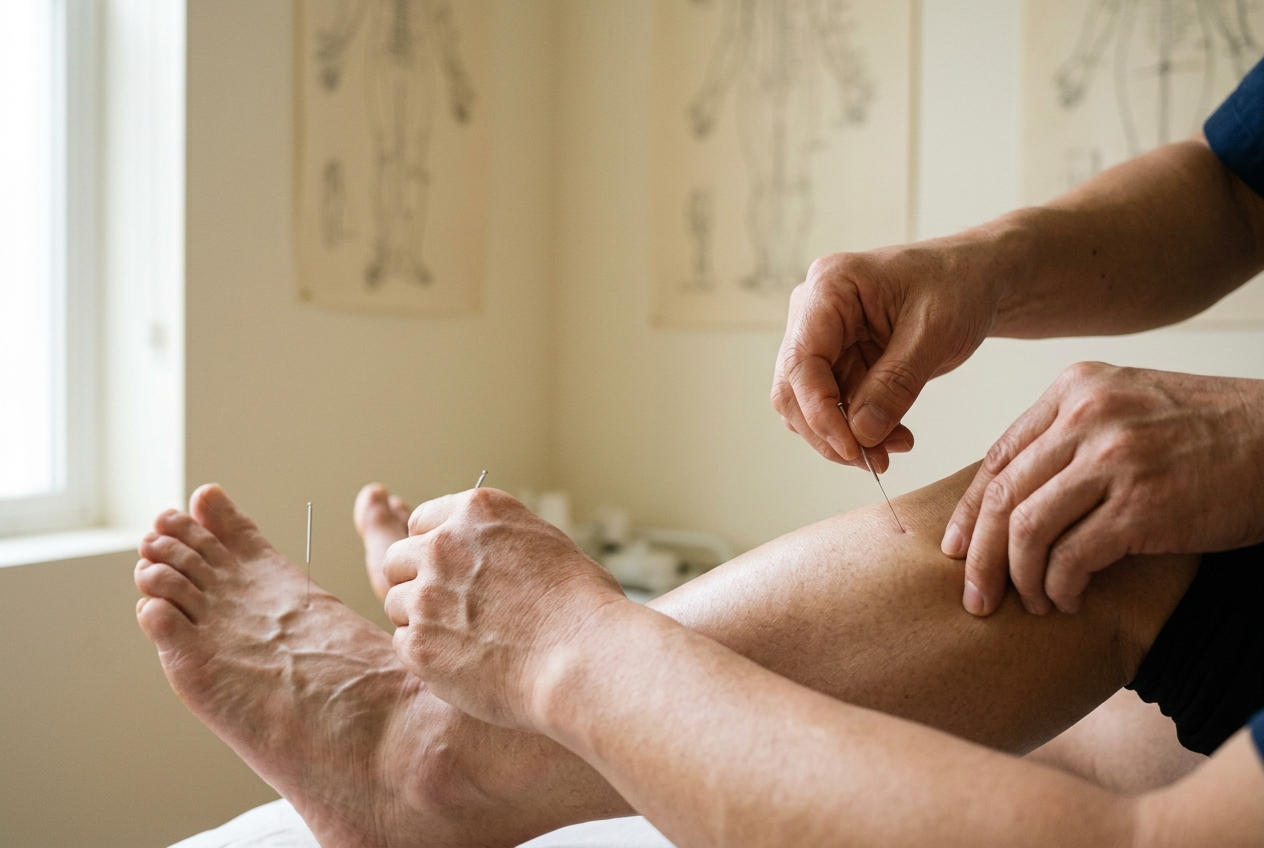
If you have ever sat at your desk late in the afternoon experiencing a constricting tightness behind your breastbone, a bloated, stalled sensation in your upper abdomen after lunch, and an agitated yet exhausted buzzing behind your eyes, you have experienced the somatic signature of functional dysregulation. In contemporary Western medicine, this state is frequently compartmentalised into disparate diagnostic buckets: functional dyspepsia, gastroesophageal reflux, sympathetic nervous system overdrive, or tension-type cephalalgia. We reach for proton-pump inhibitors to halt gastric acid secretion, ingest anxiolytics to blunt cortical hyperarousal, or swallow analgesics to mask myofascial trigger points. Yet these pharmaceutical interventions often leave the underlying visceral architecture unchanged, treating the biochemical smoke while ignoring the systemic hydrodynamic and neuromuscular stall.
Traditional Chinese Medicine (TCM) conceives of this state through an elegant biomechanical and energetic dynamic known as Qi Ji Shi Diao—the dysregulation of the organism’s innate directional movement. In classical physiological theory, life is maintained through the harmonious interplay of Sheng Jiang Chu Ru: the ascending (Sheng), descending (Jiang), exiting (Chu), and entering (Ru) of vital substances and physiological vectors. When this directional choreography fractures, the most common clinical presentation is "rebellious Qi" (Qi Ni), wherein physiological forces that should descend toward the earth instead surge upward toward the head and chest, while vital clearing forces that should ascend to nourish the brain stagnate in the lower viscera.
Centuries before modern imaging revealed the complex somato-visceral feedback loops connecting the peripheral fascia, the autonomic nervous system, and the enteric nervous system, classical acupuncturists codified precise manual vectors to reverse this counterflow. Foremost among these is the revered classical methodology known as Long Hu Sheng Jiang (龙虎升降)—the "Dragon and Tiger Ascending and Descending" technique. By marrying the dynamic directional physics of the celestial Green Dragon (representing leftward rotation, kinetic lift, and the ascent of Clear Yang) with the grounding force of the White Tiger (representing rightward rotation, downward compression, and the descending clearing of Turbid Yin), this ancient paradigm provides a sophisticated, reproducible therapeutic framework.
When translated from invasive filiform needling into nuanced, non-invasive manual acupressure, Long Hu Sheng Jiang offers modern individuals a powerful somatic tool to regulate their own autonomic tone, restore gastrointestinal motility, and clear somatic distress.
1. Classical Foundations: The Dynamic Architecture of Clear Yang and Turbid Yin
To understand the mechanics of Long Hu Sheng Jiang, one must first examine the classical literature that formalised its practice during the high watermark of Chinese medical development. The theoretical foundations of directional needling manipulation crystallized during the Ming Dynasty (1368–1644 CE), a period marked by rigorous systematisation of classical medical canons such as the Huangdi Neijing (The Yellow Emperor's Inner Classic).
The technique is detailed in the seminal Ming work Jin Zhen Fu (金针赋, Song of the Golden Needle), attributed to the master acupuncturist Xu Feng, and was later comprehensively anthologised in 1601 CE by Yang Jizhou in his encyclopedic masterpiece, Zhen Jiu Da Cheng (The Great Compendium of Acupuncture and Moxibustion). Xu Feng and Yang Jizhou recognised that pathology rarely presents as a static deficiency or excess; rather, it manifests as a vector imbalance.
In the classical canon, the human body operates as a vertical thermodynamic engine:
$$\text{Clear Yang (清阳, Sheng Qing)} \uparrow \quad \Longleftrightarrow \quad \text{Turbid Yin (浊阴, Jiang Zhuo)} \downarrow$$
According to Chapter 5 of the Huangdi Neijing Suwen (The Great Treatise on the Harmony of the Atmosphere of the Four Seasons and the Human Body):
"Clear Yang ascends to the upper orifices; Turbid Yin descends to the lower orifices. Clear Yang emanates from the pores; Turbid Yin flows through the five viscera. Clear Yang solidifies the limbs; Turbid Yin runs through the six bowels."
When the Spleen and Stomach—the central earth pivot—falter under chronic cognitive stress, poor dietary cadence, or emotional constraint, this vertical circulation collapses. The "Turbid Yin" (metabolic waste, unexpelled digestive contents, stagnant fluid, and inflammatory heat) cannot descend. It backs up into the thoracic cavity and cranium, manifesting as acid regurgitation, epigastric distension, nausea, esophageal spasm, hypertension, and cognitive fog. Concurrently, the "Clear Yang" (refined nutrients, oxygenated blood flow, and alert sensory awareness) fails to ascend to the sensory portals, causing chronic lethargy, postprandial stupor, dizziness, and low-grade depressive fatigue.
The Long Hu Sheng Jiang methodology was developed as an exact biomechanical intervention to re-establish this polarity. The Green Dragon (Qing Long, 青龙), associated in Five-Phase correspondence with the Wood element, the East, spring, and the dawn, governs generation and upward movement. Its manual expression is the leftward helical rotation paired with a lifting vector (Ti, 提), designed to draw Clear Yang upward through the fascial planes.
Conversely, the White Tiger (Bai Hu, 白虎), associated with the Metal element, the West, autumn, and the evening, governs astringency, clearing, and downward movement. Its manual expression is the rightward helical rotation paired with an intentional compressive pressing vector (An, 按), designed to drive Turbid Yin downward into the excretory pathways of the lower body.
2. The Meridian Path: A Tangible Journey Through the Living Body
To practice this methodology without invasive instruments, one does not need to memorize abstract diagrams. Instead, one can understand meridians as living, continuous pathways of functional fascial tension and neurovascular bundles that run across recognisable landmarks of the human frame.
The Downward Conduit: The Stomach Foot-Yangming Meridian
The primary downward pathway of the body begins directly beneath the eyes, sweeps through the jaw and neck, cascades across the pectoralis muscles, runs down the rectus abdominis over the stomach and intestines, and plunges through the anterior compartment of the thigh and leg.
On the lower leg, this conduit forms the anterior crural corridor. You can feel it right now: locate your shinbone (the sharp anterior border of the tibia) and slide your fingers approximately one finger-width outward into the fleshy, muscular groove of the tibialis anterior. This is the muscle that lifts your foot when you walk and that aches with dull exhaustion after a long day of standing. This muscular and fascial river carries physiological tension downward from the stomach to the tips of the second and third toes.
The Upward Conduit: The Spleen Foot-Taiyin Meridian
Operating in intimate functional polarity with the Stomach channel is the Spleen pathway, which ascends from the inner nail bed of the great toe, travels along the medial arch of the foot, passes directly behind the inner ankle bone, and tracks up the inner calf along the posterior border of the tibia.
This medial crural pathway forms the physical scaffold that lifts visceral contents against gravity, anchoring pelvic organs and conveying fluid dynamics upward toward the lymphatic return channels of the thoracic duct.
The Transverse Pivot: The Liver and Pericardium Jueyin Meridians
Connecting these vertical channels are the deep stabilizing conduits of the Jueyin axis. The Liver meridian begins on the dorsal surface of the big toe, traverses the soft web space between the first and second metatarsal bones, climbs the innermost aspect of the thigh, and enters the costal margin and diaphragm.
In the upper body, its paired meridian—the Pericardium channel—emerges from the center of the chest, traverses the inner arm down the midline of the bicep, passes across the inner wrist crease, and terminates in the middle fingertip. The forearm segment of this pathway runs between two pronounced, string-like tendons that stand out when you make a tight fist: the flexor carpi radialis and the palmaris longus. This anatomical corridor serves as the primary master gateway for regulating thoracic expansion and gastrointestinal counterflow.
3. Biophysical and Neurophysiological Mechanisms
Modern biomedical science has revealed that the classical tenets of Long Hu Sheng Jiang correspond to verified neuro-anatomical reflexes, mechanotransductive signaling cascades, and autonomic shifts. Far from being a mystical construct, manual manipulation of these conduits systematically engages the peripheral and central nervous systems.
Fascial Mechanotransduction and Connective Tissue Winding
Groundbreaking research led by Dr. Helene Langevin and published via NCBI PubMed on Connective Tissue Fibroblast Mechanotransduction has illuminated the cellular mechanisms of rotational point manipulation. When an acupressure practitioner or patient applies directional, rotational force into an acupoint, the subcutaneous loose connective tissue winds around the compressing digit or needle shaft like silk around a spindle.
This mechanical shear deforms interstitial fibroblasts, causing them to spread and flatten. This cytoskeletal remodeling activates stretch-sensitive ion channels, initiating intracellular signaling cascades that release adenosine triphosphate (ATP) into the extracellular space.
The ATP rapidly degrades into adenosine, an endogenous purine nucleoside that binds to local $A_1$ adenosine receptors to exert potent antinociceptive, vasodilatory, and anti-inflammatory effects. The leftward rotational lift (Dragon) versus rightward rotational compression (Tiger) imparts distinct shear-strain vectors across collagen bundles, generating measurable piezoelectric charges that propagate along low-resistance interstitial fluid pathways.
Somato-Visceral Reflexes and Autonomic Modulation
When mechanical stimulation is sustained at master points such as Zusanli (ST36), low-threshold myelinated $A\beta$ fibers, alongside high-threshold $A\delta$ and unmyelinated $C$ somatic sensory fibers, are recruited. These afferent signals travel via the dorsal root ganglia into the spinal cord, ascending through the spinothalamic tracts to synapse directly within critical autonomic processing centers of the brainstem, notably the Nucleus Tractus Solitarii (NTS) and the Dorsal Motor Nucleus of the Vagus (DMNV).
As demonstrated in pivotal neurophysiological investigations indexed in NCBI PubMed on Vagal Modulation and Somatosensory Reflexes, mechanical stimulation over the deep peroneal nerve branch beneath ST36 drives a somatosensory-autonomic reflex arc.
This reflex suppresses excessive splanchnic sympathetic tone (which normally clamps down on mesenteric arterial flow and freezes digestive motility) while simultaneously elevating parasympathetic efferent outflow through the Vagus Nerve.
The resulting release of acetylcholine at the enteric motor neurons enhances coordinated gastric peristalsis, normalises lower esophageal sphincter (LES) compliance, and suppresses systemic pro-inflammatory cytokines via the alpha-7 nicotinic acetylcholine receptor ($\alpha7\text{nAChR}$) anti-inflammatory pathway.
Further neuro-imaging evidence documented in NCBI PubMed on Neurobiological Mechanisms of Acupuncture demonstrates that dual stimulation of ST36 and PC6 significantly modulates functional connectivity in the limbic-paralimbic-neocortical network (including the amygdala, anterior cingulate cortex, and insular cortex). This central down-regulation silences the hyper-vigilant somatic feedback loop that characterizes visceral hypersensitivity, irritable bowel syndrome, and anxiety-induced digestive spasms.
4. Key Master Points: Anatomical Topography and Somatosensory Signatures
To execute the Long Hu Sheng Jiang methodology manually, five master points serve as the essential clinical chassis. Each point must be precisely identified using natural anatomical landmarks, tactile exploration, and subjective somatic feedback.
+---------------------------------------------------------------------------------------------------------+
|                                    MASTER ACUPOINT MATRIX OVERVIEW                                      |
+-----------+--------------------+----------------------------+-----------------------+-------------------+
| Point     | Classical Name     | Everyday Landmark          | Somatosensory Deqi    | Primary Dynamic   |
+-----------+--------------------+----------------------------+-----------------------+-------------------+
| ST36      | Zusanli            | 4 fingers below knee cap,  | Spreading ache, deep  | Descends Turbid   |
|           | (Leg Three Miles)  | 1 finger-width from shin   | warmth down to foot   | Earth, Fuels Spleen|
+-----------+--------------------+----------------------------+-----------------------+-------------------+
| PC6       | Neiguan            | 3 fingers above wrist,     | Distending tingle,    | Unbinds Thorax,   |
|           | (Inner Pass)       | between central tendons    | releases chest grip   | Descends Reversal |
+-----------+--------------------+----------------------------+-----------------------+-------------------+
| LV3       | Taichong           | Webbing valley between 1st | Deep bruised ache,    | Smooths Constrained|
|           | (Great Surge)      | and 2nd toe bones          | muscular letting-go   | Hepatic Qi Vector |
+-----------+--------------------+----------------------------+-----------------------+-------------------+
| LI4       | Hegu               | Muscular mound of thumb-   | Radiant heaviness,    | Clears Upper Head,|
|           | (Joining Valley)   | index web space            | facial relaxation     | Powerful Descender|
+-----------+--------------------+----------------------------+-----------------------+-------------------+
| SP6       | Sanyinjiao         | 4 fingers above inner      | Tender dull pressure, | Ascends Clear Yin,|
|           | (Three Yin Cross)  | ankle, behind shin bone    | systemic grounding    | Harmonises Blood  |
+-----------+--------------------+----------------------------+-----------------------+-------------------+
1. Zusanli (ST36 — "Leg Three Miles")
- Everyday Landmark: Sit with your knees bent at a 90-degree angle. Place the palm of your right hand over your right kneecap, fingers pointing downward. Your ring finger will naturally rest on a small muscular depression approximately four finger-widths beneath the lower edge of the kneecap, roughly one thumb-width lateral to the prominent ridge of your shinbone.
- The Deqi Sensation: When the point is accurately engaged, you will feel a heavy, dull, spreading ache (Zhong) or a subtle sensation of electrical fullness (Xuan) that often radiates downward into the dorsum of the foot or upward toward the knee.
- Biomechanical Vector: As the ultimate earthly descending point, ST36 responds supremely to the White Tiger Descending (Hu Jiang) protocol—firm downward compression combined with slow, rhythmic rightward (counter-clockwise on the right leg, clockwise on the left relative to anatomical orientation) rotations to drive rebellious stomach contents downward.
- Daily Indications: Functional dyspepsia, postprandial heaviness, gastroparesis, chronic lethargy, and systemic immune exhaustion, as benchmarked by the World Health Organization Guidelines on Basic Training and Safety in Acupuncture.
2. Neiguan (PC6 — "Inner Pass")
- Everyday Landmark: Turn your hand palm-up. Measure three finger-widths (index, middle, ring finger held together) up the forearm starting from the primary crease of your wrist. Place your thumb directly in the center of the forearm between the two prominent tendons (flexor carpi radialis and palmaris longus).
- The Deqi Sensation: A pronounced, tingling distension (Ma-Zhang) that can travel up the forearm to the inner elbow or radiate softly into the palm and middle finger.
- Biomechanical Vector: Operates as a dual-action harmonic pivot. Apply the Green Dragon Ascending (Long Sheng) leftward lift to expand constricted breathing and lift low emotional spirits, or the White Tiger Descending (Hu Jiang) rightward compression to halt acute nausea, hiccoughs, and acid regurgitation.
- Daily Indications: Motion sickness, nausea, globus sensation (a feeling of a lump in the throat), esophageal spasms, palpitations, and situational anxiety.
3. Taichong (LV3 — "Great Surge")
- Everyday Landmark: On the top of your bare foot, place your index finger in the soft webbing between your big toe and second toe. Slide your finger backward along the groove toward your ankle for approximately two inches until your finger drops into a distinct, sensitive depression just before the junction of the first and second metatarsal bones.
- The Deqi Sensation: Distinctly sharp or exquisitely tender upon initial contact, shifting into a deep, muscular release (Suan) that relieves tension in the temporal muscles and diaphragm.
- Biomechanical Vector: Master point for clearing trapped horizontal and upward tension. Best addressed through White Tiger Clearing mechanics—sustained deep compressive pressure combined with steady rightward dispersion vectors to drain pent-up vascular and emotional frustration.
- Daily Indications: Stress-induced tension headaches, temporal migraines, jaw clenching (bruxism), irritability, PMS-related emotional volatility, and intercostal tension.
4. Hegu (LI4 — "Joining Valley")
- Everyday Landmark: Look at the back of your hand. Bring your thumb and index finger close together; a small muscular mound will bulge upward in the webbing between them. Relax the hand, and locate the highest peak of that fleshy muscle on the dorsal side of the second metacarpal bone. Angle your pressing digit inward toward the bone rather than straight down into the web.
- The Deqi Sensation: A heavy, spreading ache (Zhong) that can radiate through the palm, along the radial edge of the index finger, and occasionally up the forearm into the jawline.
- Biomechanical Vector: As the primary command point for the face and head, LI4 is a dynamic expelling point. It utilizes White Tiger Descending (Hu Jiang) vectors to draw inflammatory heat and tension downward away from the cranium, sinuses, and dental arches.
- Daily Indications: Frontal headaches, sinus congestion, toothaches, facial tension, and mental stagnation.
5. Sanyinjiao (SP6 — "Three Yin Intersection")
- Everyday Landmark: Locate the highest, most prominent tip of your inner ankle bone (medial malleolus). Place four finger-widths flat across the inner calf, starting from that bony peak upward. The point lies just behind the posterior trailing edge of the shinbone (tibia), in a soft, often tender muscular depression.
- The Deqi Sensation: Deeply tender, grounding, dull pressure that evokes an immediate sensation of systemic softening and postural sinking.
- Biomechanical Vector: The intersection of the Spleen, Liver, and Kidney channels. Primarily addressed through Green Dragon Ascending (Long Sheng) mechanics—gentle leftward rotary circles coordinated with the inhale to lift pelvic energy, nourish fluids, and restore endocrine balance.
- Daily Indications: Lower abdominal cramping, menstrual irregularity, insomnia, pelvic venous congestion, and late-afternoon lower extremity edema.
5. The Step-by-Step Long Hu Sheng Jiang Acupressure Protocol
Translating needle-based techniques into manual acupressure requires precise finger mechanics, vector directionality, force modulation, and respiratory synchrony.
+----------------------------------------------------------------------------------------------------+
|                         BIOMECHANICAL VECTOR MANUAL EXECUTION RULES                                |
+------------------------------------+---------------------------------------------------------------+
| PARAMETER                          | SPECIFICATION & CALIBRATION                                   |
+------------------------------------+---------------------------------------------------------------+
| Contact Interface                  | Distal pad of thumb or curved proximal interphalangeal joint. |
+------------------------------------+---------------------------------------------------------------+
| Depth & Force Modulation           | Grade I: Light epidermal contact (Fascial glide).              |
|                                    | Grade II: Subcutaneous tissue engagement.                     |
|                                    | Grade III: Deep epimysial pressure (Deqi therapeutic window). |
+------------------------------------+---------------------------------------------------------------+
| Cadence (Rotational Frequency)     | 1.0 to 1.5 Hz (60 to 90 complete rotational cycles per min).  |
+------------------------------------+---------------------------------------------------------------+
| Breath Synchronization             | Inhalation: Long Sheng (Leftward lift & expansion).           |
|                                    | Exhalation: Hu Jiang (Rightward compression & grounding).     |
+------------------------------------+---------------------------------------------------------------+
| Duration                           | 120 to 180 seconds per point (minimum 9 to 18 full breath     |
|                                    | cycles per side).                                             |
+------------------------------------+---------------------------------------------------------------+
The Dual Vector Motions Explained:
-
The Green Dragon Ascending (Qing Long Sheng / 青龙升): * Rotational Vector: Rotate the pressing pad to the left (counter-clockwise when viewed looking directly down at the surface of the skin). * Dynamic Phase: During the first half of the rotation, compress inward to Grade II depth; as you complete the rotation circle, lighten your pressure upward (Ti), lifting the skin and fascia slightly away from the bone without breaking skin contact. * Breath Cadence: Synchronize this motion with a deep, 4-second diaphragmatic inhalation. Visualise Clear Yang rising like morning mist up the spinal axis to illuminate your brain.
-
The White Tiger Descending (Bai Hu Jiang / 白虎降): * Rotational Vector: Rotate the pressing pad to the right (clockwise when viewed looking directly down at the skin). * Dynamic Phase: As you turn to the right, press firmly inward and downward (An), driving the kinetic force into the deep epimysium to Grade III depth. * Breath Cadence: Synchronize this motion with a slow, elongated 6-second exhalation through relaxed lips. Visualise all rebellious heat, stuck food, gastric acid, and mental static draining down through the soles of your feet into the earth.
6. Targeted Protocol for Gastrointestinal Dysmotility and Emotional Constraint
This unified evening protocol resolves the modern syndrome of "desk-bound stagnation"—marked by post-work epigastric heaviness, acid reflux, clenched jaw, and sympathetic hyperarousal. Documented studies on functional dyspepsia indexed in NCBI PubMed on Functional Dyspepsia and Gastrointestinal Motility confirm that targeted multi-point somatosensory stimulation significantly accelerates gastric emptying and alleviates postprandial distress.
+-----------------------------------------------------------------------------+
|               EVENING REBELLIOUS QI & DIGESTIVE RESET PROTOCOL              |
|                                                                             |
|   Position: Semi-reclined or seated with feet flat on the floor             |
|   Total Duration: 8 to 10 Minutes                                           |
|                                                                             |
|   STEP 1: Unbinding the Thorax & Diaphragm (PC6 — Inner Pass)               |
|   • Duration: 2 minutes (1 min per arm)                                    |
|   • Action: White Tiger Descending (Rightward rotation + compressive press) |
|   • Purpose: Lowers esophageal counterflow, halts nausea, eases chest grip  |
|                                                                             |
|   STEP 2: Discharging Hepatic Constraint (LV3 — Great Surge)                |
|   • Duration: 2 minutes (1 min per foot)                                    |
|   • Action: White Tiger Clearing (Firm rightward kneading + press)          |
|   • Purpose: Unlocks diaphragmatic spasm, vents mental frustration          |
|                                                                             |
|   STEP 3: Driving the Gastric Plunge (ST36 — Leg Three Miles)               |
|   • Duration: 4 minutes (2 min per leg)                                    |
|   • Action: Alternating Long-Hu Vectors (9 Dragon cycles / 9 Tiger cycles)  |
|   • Purpose: Sparks peristalsis, clears epigastric bloating, anchors mind   |
+-----------------------------------------------------------------------------+
Detailed Protocol Instructions:
Step 1: Unbind the Diaphragm at PC6 (Neiguan)
- Execution: Sit in a quiet space with your spine comfortably elongated. Rest your left forearm on your thigh, palm up. Locate PC6 between the tendons. Apply your right thumb pad.
- Action: Execute the White Tiger Descending technique. Inhale quietly for 4 seconds; as you exhale for 6 seconds, apply firm compressive pressure into the inter-tendinous groove, rotating clockwise. Perform 9 to 12 complete breath cycles (approximately 90 seconds).
- Sensation: You should feel an immediate softening of tension in your throat, a reflexive deep sigh or yawning impulse, and a reduction in upper chest constriction. Repeat on the right forearm.
Step 2: Clear Emotional Stagnation at LV3 (Taichong)
- Execution: Cross your right ankle over your left knee. Locate LV3 in the metatarsal valley on the top of your right foot. Place your thumb pad securely into the valley.
- Action: Apply direct, deep compressive force angled slightly backward toward the ankle joint. Maintain a sustained White Tiger Clearing clockwise circular pressure at 1 Hz for 60 seconds, focusing entirely on long, tension-releasing exhales.
- Sensation: A distinct, sweet release of tension in your temples, forehead, and jaw. Switch feet and repeat on the left foot.
Step 3: Drive Visceral Motility at ST36 (Zusanli)
- Execution: Place both feet flat on the floor. Reach down to locate ST36 bilaterally on both shins. Use the reinforced pads of your thumbs or the rounded knuckles of your index fingers.
- Action: Perform the full integrated Long Hu Sheng Jiang cycle: 1. Phase A (Dragon Ascending): For 9 breath cycles (approx. 60 seconds), inhale while rotating leftward and gently lifting the fascial tension, awakening functional Spleen Qi. 2. Phase B (Tiger Descending): For 9 breath cycles (approx. 60 seconds), exhale while rotating rightward and pressing deeply inward and downward against the tibialis anterior, driving the stomach cascade downward into the intestines.
- Sensation: Within 60 to 120 seconds, you will typically experience audible abdominal borborygmi (stomach gurgling), an easing of upper abdominal distension, and a systemic sensation of postural weight settling comfortably into the ground.
7. Clinical Safety, Contraindications, and Somatosensory Discretion
While non-invasive acupressure represents an exceptionally safe therapeutic modality, applying deep vector-based mechanotransductive forces requires clear anatomical and physiological boundaries.
+-----------------------------------------------------------------------------+
|                     SAFETY, DOSAGE, AND CONTRAINDICATIONS                   |
|                                                                             |
|   1. OBSTETRIC CONTRAINDICATIONS (Pregnancy Precautions):                   |
|      • ABSOLUTELY AVOID LI4 (Hegu) and SP6 (Sanyinjiao) during pregnancy.   |
|      • Rationale: Strong descending motor reflexes can stimulate uterine    |
|        myometrial contractions and induce premature labor.                  |
|                                                                             |
|   2. FORCE CALIBRATION AND TISSUE BOUNDARIES:                               |
|      • The "Deqi Window": The sensation must remain a comfortable, dull,    |
|        distending, heavy ache.                                              |
|      • Stop immediately if pain becomes sharp, lancinating, burning, or     |
|        produces electrical shock sensations (indicates direct nerve impingement).|
|      • Never apply deep pressure over broken skin, acute cellulitis, open   |
|        wounds, active phlebitis, or deep vein thrombosis (DVT) sites.       |
|                                                                             |
|   3. BIOMEDICAL TRIAGE (Red Flag Clinical Symptoms):                        |
|      • Seek immediate professional emergency medical care for:              |
|        - Unexplained acute severe abdominal pain with rigidity (peritonitis)|
|        - Melena (black, tarry stools) or hematemesis (vomiting blood)       |
|        - Crushing substernal chest pain radiating to left arm/jaw (angina)  |
|        - Progressive, painless dysphagia (difficulty swallowing solids/fluids)|
+-----------------------------------------------------------------------------+
Force Calibration and Tissue Integrity
Acupressure is not an endurance test of pain tolerance. The therapeutic target is connective tissue and neural mechanoreceptors, not periosteal bruising.
If pressure feels sharp, bruising, or produces a localized "pinprick" sensation, you are applying force too aggressively or directly compressing an unprotected cutaneous nerve against bone.
Scale your pressure back until you inhabit the classical Deqi window: a deep, warm, agreeable, and satisfying somatic ache that invites you to breathe deeper rather than recoil.
8. Today's Takeaway: The Two-Minute Diaphragmatic Descending Reset
You do not need an hour of free time or specialized clinical equipment to shift your autonomic state and reverse rebellious counterflow. Before you finish reading this article, step away from cognitive rumination and perform this two-minute physiological reset right where you sit.
+-----------------------------------------------------------------------------+
|                      YOUR 2-MINUTE DESK PRACTICE                            |
|                                                                             |
|   1. LOCATE PC6 (Neiguan):                                                  |
|      Place your left palm up. Lay three fingers across your wrist crease.   |
|      Drop your right thumb into the soft channel between the two central    |
|      forearm tendons.                                                       |
|                                                                             |
|   2. ENGAGE THE TIGER DESCENDING VECTOR:                                    |
|      Inhale slowly through your nose for 4 seconds.                         |
|      As you exhale smoothly for 6 seconds, press your thumb firmly inward   |
|      and rotate it slowly clockwise.                                        |
|                                                                             |
|   3. REPEAT FOR 10 BREATH CYCLES:                                           |
|      With each extended out-breath, feel your shoulders drop away from      |
|      your ears, your diaphragm unclamp, and the pressure behind your eyes   |
|      recede.                                                                |
+-----------------------------------------------------------------------------+
By mastering the directional physics of the Green Dragon and White Tiger, you hold the capacity to harmonize the internal tides of your own physiology—bridging Ming Dynasty clinical insight with the cutting edge of contemporary neurogastroenterology.