Aromatic Orifice-Opening Herbs (Kai Qiao Yao) Pharmacodynamics: Governing Emergency Resuscitation, Sensory Orifice Awakening, Blood-Brain Barrier Permeability, and Turbid Phlegm Clearing in Traditional Chinese Medicine
1. Opening Scene — A Moment You'll Recognise
Imagine a sudden, impenetrable cognitive fog settling behind your eyes after an episode of severe sensory overload, or the alarming disorientation when an elderly relative experiences an acute transient ischemic event: the jaw tightens, the gaze locks, speech falters, and the conscious mind appears suddenly sequestered behind locked gates. In that harrowing instant, the world outside continues to move, but the neurological interface—the capacity to register sensory stimuli, articulate thought, and command motor output—has collapsed into profound sensory occlusion.
In the clinical epistemology of Traditional Chinese Medicine (TCM), this dramatic state is understood not merely as localized tissue hypoxia, but as the acute obstruction of the Shen (the organizing consciousness and cognitive spirit housed within the Heart) and the physical occlusion of the Qiao (the sensory orifices through which consciousness perceives and interacts with reality). When pathogenic heat, phlegm, or cold abruptly obstructs these conduits, the internal terrain enters a state of critical lock-in.
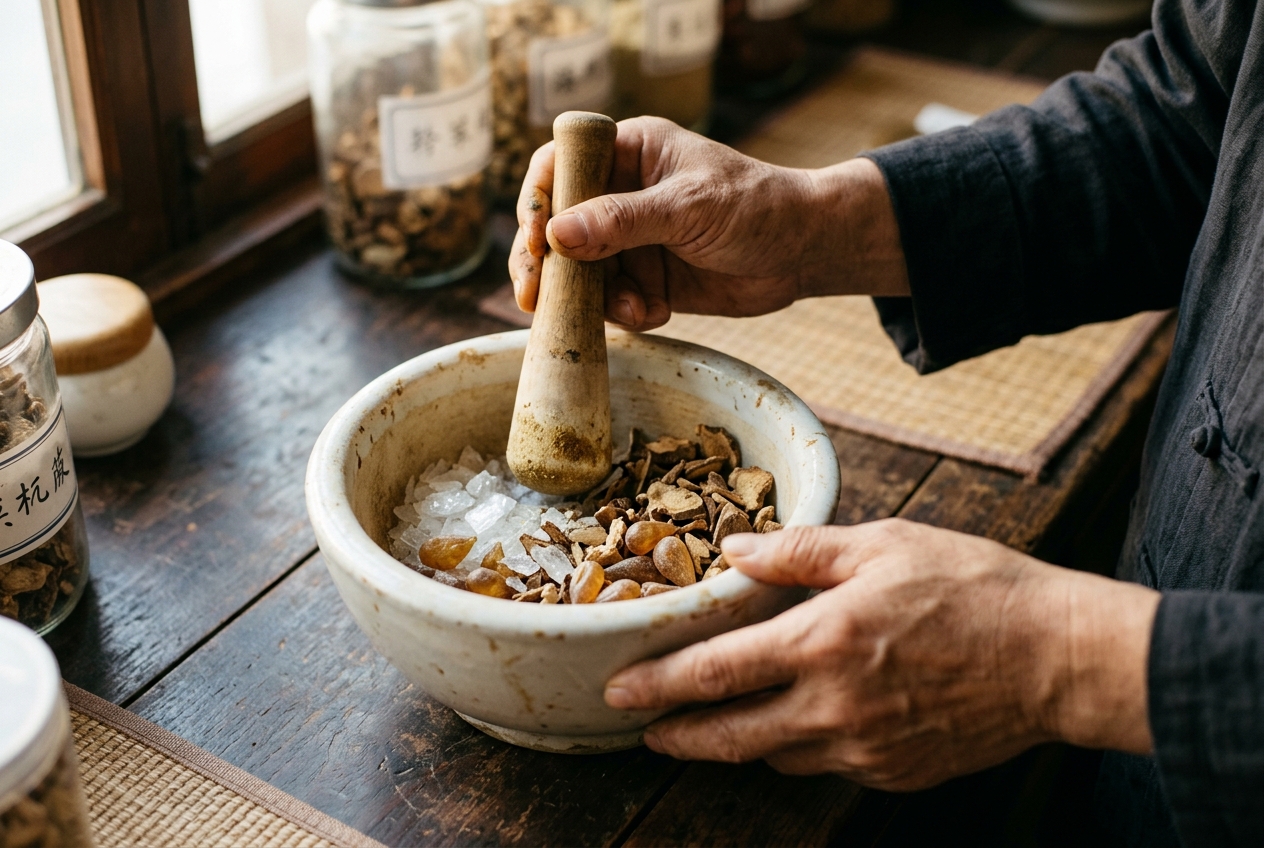
To breach this physiological barricade, classical medicine did not rely on gentle tonics. Instead, it deployed an elite, radical class of volatile pharmacopia known as Aromatic Orifice-Opening Herbs (Kai Qiao Yao, 开窍药). These aromatic, highly lipophilic substances act like pharmacological battering rams, engineered by nature to pierce the cerebral microcirculation, cross the blood-brain barrier, and shock the nervous system back into conscious alignment.
+-----------------------------------------------------------------------------------+
|                           THE NEUROVASCULAR CRISIS AXIS                           |
+-----------------------------------------------------------------------------------+
|  Pathogenic Surge (Heat / Phlegm / Cold) ---> Occlusion of Sensory Orifices (Qiao)|
|                                                        |                          |
|                                                        v                          |
|  Heart-Brain Conduit Blocked <---------------- Shen (Consciousness) Imprisoned   |
|         |                                                                         |
|         v                                                                         |
|  EMERGENCY PHARMACOTHERAPY: Aromatic Orifice-Opening Medicinals (Kai Qiao Yao)    |
|         |                                                                         |
|         +---> Pungent Dispersal & Volatile Terpene Penetration                    |
|         +---> Reversible Modulation of BBB Tight Junctions (ZO-1, Claudin-5)      |
|         +---> GABA/Glutamate Rebalancing & Anti-Excitotoxicity                    |
|         +---> Resuscitation: Awaken the Spirit & Restore the Senses (Xing Shen)   |
+-----------------------------------------------------------------------------------+
2. What This Organ System Does: The Heart-Brain Nexus and the Dynamics of Occlusion
In traditional physiological architecture, the Heart (Xīn, 心) is designated as the Monarch (Jūn Zhǔ zhī Guān), the sovereign organ responsible for housing the conscious spirit (Xīn Cáng Shén). While modern neurobiology localizes executive cognition and wakefulness to the reticular activating system, thalamocortical loops, and the prefrontal cortex, the classical paradigm conceptualizes this waking intelligence as radiating from the Heart-Pericardium axis outward through the seven sensory portals: the eyes, ears, nostrils, and tongue/mouth.
When this system functions harmoniously, the sensory orifices remain clear (Qīng Qī Qī Qī Qī Qiao), unimpeded by pathological debris, allowing perception and motor command to operate with fluid precision. However, when acute systemic crises occur—such as stroke, encephalopathy, high-grade febrile delirium, or severe toxic metabolic encephalopathy—the pathology manifests through two diametrically opposed mechanisms: Closed Patterns (Bì Zhèng, 闭证) and Abandon/Collapse Patterns (Tuō Zhèng, 脱证).
                       ACUTE LOSS OF CONSCIOUSNESS
                                    |
           +------------------------+------------------------+
           |                                                 |
           v                                                 v
  CLOSED PATTERN (Bì Zhèng)                      ABANDON PATTERN (Tuō Zhèng)
  [EXCESS / REPLETION STATE]                     [DEFICIENCY / COLLAPSE STATE]
  - Pathological Occlusion of Shen               - Exhaustion & Dissipation of Yang Qi
  - Clenched jaws (Trismus)                      - Flaccid, open mouth
  - Closed fists, rigid posture                  - Limp limbs, open hands
  - Retention of stool / urine                   - Incontinence of urine / feces
  - Coarse breathing, forceful pulse             - Shallow, faint breathing; thready pulse
           |                                                 |
           v                                                 v
  THERAPEUTIC DIRECTIVE:                         THERAPEUTIC DIRECTIVE:
  Open the Orifices (Kāi Qiào)                   Secure the Collapse & Rescue Yang
  *Strictly Indicated: Kai Qiao Yao*             *STRICTLY CONTRAINDICATED: Kai Qiao Yao*
  (An Gong Niu Huang Wan / Su He Xiang Wan)      (Shen Fu Tang / Du Shen Tang)
The Closed State (Bì Zhèng): The Domain of Orifice-Opening
A Closed Pattern represents an acute Excess (Repletion) state where external pathogens or endogenous turbid factors surge upward, locking the sensory portals and trapping the Shen. Clinically, Bì Zhèng is marked by hypertonic, locked presentations: * Trismus: Clenched jaws (Yáguān Jǐnbì) preventing speech or oral intake. * Motor Hypertonia: Tightly clenched fists and spastic posturing. * Visceral Retention: Constipation and urinary retention due to internal stagnation. * Dynamic Tension: Coarse, labored stertorous respiration accompanied by a full, forceful, wiry, or rapid slippery pulse.
The closed pattern bifurcates fundamentally into two distinct thermal variants:
- Hot Closed Pattern (Rè Bì, 热闭): Driven by extreme pathogenic heat, fire-toxin, and phlegm-fire invading the Pericardium (Rè Rù Xīnbāo). Clinical signs include high pyrexia, crimson or deep-red tongue with a dry yellow coating, intense delirium, flushed countenance, and a surging, rapid pulse.
- Cold Closed Pattern (Hán Bì, 寒闭): Driven by cold-phlegm, damp turbidity, or sudden stagnation obstructing the Qi dynamic. Clinical signs include a pale complexion, cold extremities, absence of high fever, white greasy tongue coating, and a deep, slow, or wiry-tight pulse.
The Abandon State (Tuō Zhèng): The Fatal Contraindication
In absolute contrast, an Abandon or Collapse Pattern (Tuō Zhèng) represents a critical Deficiency (Depletion) state where the fundamental primordial Qi (Yuán Qì) and Heart-Kidney Yang are dispersing and exhausting: * The mouth is flaccid and open (Kǒu Kāi). * The eyes are closed, glazed, and non-responsive. * The hands are limp and open (Shǒu Sǎ). * Spontaneous incontinence of urine and feces occurs. * Profuse, oily, cold perspiration pearls on the forehead (Jué Hàn). * Respiration is faint, feeble, and shallow, while the pulse is imperceptible, thready, and on the verge of extinction (Mài Wēi Yù Jué).
Because orifice-opening herbs are intrinsically pungent (Xīn), violently dispersing, aromatic (Xiāng), and rapid in their downward/outward movement, their administration in a patient suffering from Tuō Zhèng will violently scatter the remaining vestige of exhausted Yang Qi, accelerating cardiovascular collapse and precipitating immediate death. In Tuō Zhèng, the exclusive clinical imperative is to secure, astringe, and tonify using formulas like Shēn Fù Tāng (Ginseng and Aconite Decoction) or pure concentrated Dú Shēn Tāng.
3. Biophysical and Neurological Pharmacology of Key Substances
Modern neuropharmacology has validated the classical intuition behind Kai Qiao Yao. The unique efficacy of these medicinals stems from their low-molecular-weight, highly lipophilic volatile monoterpenes, sesquiterpenes, and macrocyclic ketones. These molecules traverse the restrictive blood-brain barrier (BBB) and profoundly modulate neurovascular unit signaling, tight junction architecture, cerebral microcirculation, and neurotransmitter equilibrium.
+-----------------------------------------------------------------------------------------+
|                MOLECULAR TARGETS OF KEY AROMATIC ORIFICE-OPENING AGENTS                 |
+-----------------------------------------------------------------------------------------+
|                                                                                         |
|       [ SHE XIANG / MUSCONE ]                     [ BING PIAN / BORNEOL ]               |
|       - Inhibits NF-kB & TLR4 signaling           - Reversibly disassembles ZO-1/       |
|       - Down-regulates MMP-9 (protects BBB)         Claudin-5 tight junctions           |
|       - Inhibits P-gp efflux transport            - Enhances brain delivery of co-drugs |
|       - Modulates NMDA excitotoxicity             - Suppresses iNOS & lipid peroxidation|
|                          \                               /                              |
|                           \                             /                               |
|                            v                           v                                |
|                        [ RESTORATION OF NEUROVASCULAR HOMEOSTASIS ]                     |
|                            ^                           ^                                |
|                           /                             \                               |
|                          /                               \                              |
|       [ SHI CHANG PU / ASARONES ]                 [ SU HE XIANG / STYRAX ]              |
|       - Alpha/Beta-Asarone BBB penetration        - Cinnamic acid & sesquiterpenes      |
|       - GABA-A receptor positive modulation       - Alleviates microvascular vasospasm  |
|       - Inhibits glutamate-mediated Ca2+ influx   - Preserves mitochondrial Complex I   |
|       - Up-regulates BDNF / TrkB cascade          - Clears cold-turbidity stagnation    |
+-----------------------------------------------------------------------------------------+
1. She Xiang (Moschus / Synthetic Muscone)
Derived historically from the glandular secretion of the male musk deer (Moschus berezovskii) and represented in modern clinical practice by synthetic (±)-muscone (3-methylcyclopentadecanone), Shè Xiāng is the most potent resuscitative medicinal in the East Asian pharmacopeia.
       CH3
        |
    HC--CH--(CH2)12
    ||         |
    C ---------C=O
  (Muscone: Macrocyclic Ketone)
- Blood-Brain Barrier Penetration & Modulation: Muscone possesses a low molecular weight ($238.41\text{ g/mol}$) and high lipophilicity ($\log P \approx 5.6$), permitting near-instantaneous passive diffusion across the cerebral capillary endothelium. Crucially, muscone transiently down-regulates the expression and efflux activity of P-glycoprotein (P-gp) and multidrug resistance-associated proteins (MRPs), attenuating the active extrusion of neuroprotective compounds from the brain parenchyma.
- Ischemia-Reperfusion & Tight Junction Preservation: In cerebral ischemia-reperfusion models (e.g., middle cerebral artery occlusion, MCAO), muscone suppresses the activation of matrix metalloproteinase-9 (MMP-9). By inhibiting MMP-9-mediated degradation of the endothelial tight junction proteins Claudin-5, Occludin, and Zonula Occludens-1 (ZO-1), it mitigates vasogenic brain edema and preserves neurovascular integrity.
- Neuroinflammatory Attenuation: Muscone impedes the toll-like receptor 4 (TLR4) / myeloid differentiation factor 88 (MyD88) / nuclear factor kappa B (NF-$\kappa$B) inflammatory signaling pathway, significantly decreasing downstream transcription of pro-inflammatory cytokines, including tumor necrosis factor-alpha (TNF-$\alpha$), interleukin-1 beta (IL-1$\beta$), and interleukin-6 (IL-6).
2. Bing Pian (Borneol / Synthetic vs. Natural d-Borneol)
Bīng Piàn is a bicyclic monoterpene extracted from Dryobalanops aromatica (natural d-borneol) or Cinnamomum camphora (l-borneol), or synthesized chemically (isoborneol mixture).
         CH3
        /
     ---C---
    /   |   \
   |  CH2--CH--OH
   |    |    |
    \---C---/
       / \
     CH3  CH3
  (Borneol: Bicyclic Monoterpene)
- The Biophysical "Chaperone" (Yǐn Jīng Yào) of the Brain: In TCM theory, Bīng Piàn acts as a guiding medicinal to direct other agents into the upper sensory orifices. Contemporary research published in PubMed Central has demonstrated that borneol acts as a reversible biological enhancer of BBB permeability. It fluidizes the lipid matrix of brain capillary endothelial cell membranes, facilitating the paracelullar and transcellular transport of co-administered macromolecules.
- Tight Junction Disassembly Mechanism: Borneol triggers a transient, physiological down-regulation and spatial redistribution of ZO-1 and Occludin via intracellular calcium ($[\text{Ca}^{2+}]_i$) signaling cascades and protein kinase C (PKC) activation. This effect peaks within 15–30 minutes and fully resolves within 2–4 hours, avoiding permanent endothelial toxicity or prolonged neurovascular breach.
- Anti-Oxidative & Neuroprotective Shield: Borneol directly scavenges reactive oxygen species (ROS), prevents lipid peroxidation in ischemic neuronal membranes, and up-regulates superoxide dismutase (SOD) and glutathione peroxidase (GSH-Px) activity in cortical tissue.
3. Shi Chang Pu (Rhizoma Acori Tatarinowii)
Shí Chāng Pú (sweetflag rhizome) is the definitive medicinal for dissolving "Turbid Phlegm" (Tán Zhuó) that clouds the intellect and sensory chambers. Its essential oil contains two primary phenylpropanoids: $\alpha$-asarone (trans-form) and $\beta$-asarone (cis-form).
   CH3O          OCH3
       \        /
        \------/
        |      |
        \------/-- CH=CH-CH3
           |
          OCH3
  (Asarone: Phenylpropanoid Scaffold)
- GABAergic Neurotransmission & Excitotoxicity Mitigation: Ischemic stroke and severe neurotrauma trigger massive, unregulated synaptic glutamate release, leading to destructive $\text{NMDA}$ receptor overactivation and fatal neuronal calcium overload. $\alpha$- and $\beta$-asarone act as positive allosteric modulators of the $\text{GABA}_A$ receptor, enhancing inhibitory chloride current ($\text{Cl}^-$ influx) and suppressing hyper-excitable neuronal firing. Concurrently, they down-regulate the NR1 and NR2B subunits of the $\text{NMDA}$ receptor, directly blunting glutamate excitotoxicity.
- Neurogenesis & Neurotrophic Upregulation: Shi Chang Pu constituents cross the BBB to stimulate the expression of brain-derived neurotrophic factor (BDNF) and activate the downstream TrkB/Akt/CREB pro-survival pathway in hippocampal and cortical neurons, fostering synaptic plasticity and cognitive recovery post-insult.
- Suppression of Microglial Pyroptosis: The asarones suppress NLRP3 inflammasome assembly, caspase-1 cleavage, and subsequent gasdermin-D-mediated pyroptosis in microglial cells, arresting secondary inflammatory damage in the ischemic penumbra.
4. Su He Xiang (Styrax / Liquidambar Orientalis Resin)
Sū Hé Xiāng is an aromatic balsamic resin harvested from the wounded trunk of Liquidambar orientalis. Rich in cinnamic acid, cinnamyl cinnamate, styrene, and sesquiterpenes, it serves as the foundation for warming and opening cold-type sensory obstructions (Wēn Kāi).
- Coronary & Cerebral Vasodilation: Su He Xiang exerts direct spasmolytic actions on vascular smooth muscle by blocking voltage-dependent calcium channels ($L\text{-type }\text{Ca}^{2+}$ channels), reversing cerebral arterial vasospasm and restoring focal perfusion.
- Mitochondrial Protection Against Hypoxic-Ischemic Apoptosis: Its constituents preserve mitochondrial membrane potential ($\Delta\Psi_m$), suppress the release of cytochrome c into the cytosol, and up-regulate the anti-apoptotic protein Bcl-2 while down-regulating pro-apoptotic Bax, halting the intrinsic apoptotic cascade in oxygen-glucose deprived neurons.
4. Deconstruction of Classic Emergency Resuscitative Formulas
+----------------------------------------------------------------------------------------------------+
|                         CLASSIC RESUSCITATIVE FORMULATION ARCHITECTURE                             |
+----------------------------------------------------------------------------------------------------+
|  FORMULA               THERMAL DYNAMICS    CORE CONSTITUENTS                 INDICATIONS           |
+----------------------------------------------------------------------------------------------------+
|  An Gong Niu Huang Wan Cold / Heat-Clearing Niuhuang, Shexiang, Bingpian,    High fever, coma,     |
|  (安宫牛黄丸)          (Qing Re Kai Qiao)  Huanglian, Zhizi, Xinjiao (Shuiniu) stroke, delirium    |
|                                                                                                    |
|  Zi Xue Dan            Cold / Antispasmodic Gypsum, Talcum, Musk, Borneol,   Convulsive spasms,    |
|  (紫雪丹)              (Zhen Jing Kai Qiao) Magnetitum, Antelope Horn/sub.    febrile twitching    |
|                                                                                                    |
|  Su He Xiang Wan       Warm / Aromatic     Su He Xiang, She Xiang, Bingpian, Cold stroke, coma,    |
|  (苏合香丸)            (Wen Kai Pi Hui)    Chen Xiang, Ding Xiang, Tan Xiang sudden chest pain     |
+----------------------------------------------------------------------------------------------------+
An Gong Niu Huang Wan (Pill of Cattle Gallstone for Calming the Palace)
Regarded as the paramount formula among the "Three Treasures of Cold-Warm Disease" (Wēn Bìng Sān Bǎo), Ān Gōng Niú Huáng Wán was formulated by Wu Jutong in the Qing dynasty (Wenbing Tiaobian, 1798). The "Palace" (Gōng) refers directly to the Pericardium enclosing the sovereign Heart.
- Formula Architecture:
- Monarch (Jūn): Niú Huáng (Calculus Bovis) clears the Heart, sweeps away toxic heat, and dissolves phlegm; Shè Xiāng (Moschus) provides violent, instantaneous aromatic penetration to clear the orifices.
- Minister (Chén): Shuǐ Niú Jiǎo (Cornu Bubali) cools blood and extinguishes fire-toxin; Huáng Lián (Rhizoma Coptidis), Huáng Qín (Radix Scutellariae), and Zhī Zǐ (Fructus Gardeniae) drain triple-burner heat-toxin.
- Assistant (Zuǒ): Bīng Piàn (Borneol) and Yù Jīn (Radix Curcumae) assist in mobilizing Qi and venting heat through the portals; historic recipes incorporated Zhū Shā (Cinnabar) and Xióng Huáng (Realgar) for heavy-settling sedation and toxic dampness resolution.
- Envoy (Shǐ): Refined honey and gold leaf (Jīn Bó) coat the pill to steady the spirit and harmonize delivery.
- Modern Clinical Integration: Applied in acute ischemic/hemorrhagic stroke within the therapeutic window, viral encephalitis, hepatic encephalopathy, and severe sepsis manifesting with hyperpyrexic delirium.
Zi Xue Dan (Purple Snow Elixir)
Where An Gong Niu Huang Wan targets profound coma and toxic heat, Zǐ Xuě Dān excels when toxic heat has scorched the liver network, generating internal wind, extreme restlessness, hyperpyrexic convulsion, and opisthotonos. * Mechanism: Leverages heavy mineral agents (Shí Gāo / Gypsum, Hán Shuǐ Shí, Cí Shí / Magnetitum) to ground ascending Yang, paired with Antelope Horn (Líng Yáng Jiǎo) substitutes to extinguish Liver wind, while Shè Xiāng and Bīng Piàn awaken the occluded portals.
Su He Xiang Wan (Liquid Styrax Pill)
Formulated in the Taiping Huimin Heji Jufang (Song dynasty), this is the quintessential representative of the Warm-Opening (Wēn Kāi) strategy. * Mechanism: Designed for "Cold Stroke" (Hán Zhòng), cold-phlegm syncope, or sudden toxic damp-turbidity suffocating the Heart-Yang. It synthesizes a powerhouse of aromatic woods and resins: Sū Hé Xiāng, Shè Xiāng, Bīng Piàn, Chén Xiāng (Aquilaria), Tán Xiāng (Sandalwood), Dīng Xiāng (Clove), Rǔ Xiāng (Frankincense), and Bái Dòu Kòu (Cardamom). It unblocks Qi stagnation, warms the middle burner, and blasts through cold-damp barrier states.
+--------------------------------------------------------------------------------------------------+
|                    THE CRITICAL PHARMACOKINETICS OF VEHICLE SELECTION                            |
+--------------------------------------------------------------------------------------------------+
|                                                                                                  |
|   STANDARD BOILED DECOCTION (Tang Ji)               PILLS & POWDERS (Wan / San)                  |
|   ===================================               ===========================                  |
|   - Aqueous extraction at 100 deg C                 - Cold-trituration and micro-pulverization   |
|   - Low-boiling-point terpenes boil off             - Wax-sealed honey-boluses or sealed cachets |
|   - Macrocyclic ketones undergo thermal loss        - Volatile lipophilic constituents preserved |
|   - RESULT: Loss of orifice-opening efficacy!       - RESULT: Rapid transmucosal/CNS penetration |
|                                                                                                  |
+--------------------------------------------------------------------------------------------------+
Carrier Vehicle Dynamics: The Imperative for Pills and Powders
A fundamental rule of Chinese herbal pharmacotechnology dictates that Aromatic Orifice-Opening medicinals must NEVER be boiled in standard water decoctions (Bù Kě Rù Tāng Jì Jiān Zhǔ).
- Thermolability & High Vapor Pressure: Active monoterpenes (such as borneol, which undergoes sublimation at elevated temperatures) and sesquiterpenes possess low boiling points and high vapor pressures. Boiling in an open or unsealed decoction vessel drives off these volatile fractions within minutes, stripping the formulation of its neuroactive and BBB-modulating capacity.
- Wax-Sealed Honey Boluses (Mì Wán): Classic formulations are compounded using cold-triturated, micro-pulverized powders suspended in refined honey (Mì Wán) or water-wax matrices, frequently sealed inside individual pure beeswax spheres (Là Ké). The wax shell creates an airtight barrier preventing oxidative degradation and evaporation of the volatile aromatic terpenes, ensuring extended shelf-stability for acute emergency deployment.
- Sublingual and Upper-GI Absorption: When crushed and administered sublingually, orally, or via nasogastric slurry, the lipophilic monoterpenes begin rapid transmucosal absorption, allowing immediate vascular access that bypasses protracted gastric processing.
5. Clinical Safety, Toxicity Mitigation, and Modern Integration
The clinical application of Kai Qiao Yao requires rigorous toxicological monitoring, contraindication awareness, and modern safety adaptation:
+----------------------------------------------------------------------------------------------+
|                     TOXICOLOGY AND REGULATORY COMPLIANCE PROTOCOLS                           |
+----------------------------------------------------------------------------------------------+
|  HISTORICAL CONSTITUENT  TOXICOLOGICAL BURDEN             MODERN MITIGATION PROTOCOL         |
+----------------------------------------------------------------------------------------------+
|  Zhu Sha (Cinnabar,      Inorganic Mercury (HgS);         REMOVED or substituted with        |
|  Mercuric Sulfide)       Chronic renal/CNS toxicity       Magnetitum, Amber, or Ziziphus     |
|                                                                                              |
|  Xiong Huang (Realgar,   Arsenic Sulfide (As4S4);         ELIMINATED in modern safety-grade  |
|  Tetra-Arsenic Sulfide)  Hepatotoxicity & carcinogenesis  manufacture; replaced with safe    |
|                                                           herbal detoxifiers                 |
|                                                                                              |
|  Natural Moschus         Endangered wildlife depletion;   SYNTHETIC (±)-MUSCONE approved;    |
|  (Musk deer harvest)     CITES international treaty ban   pharmacologically standardized     |
|                                                           and rigorously quality-controlled  |
+----------------------------------------------------------------------------------------------+
Heavy Metal Elimination and Modern Substitutions
Historic editions of formulas like An Gong Niu Huang Wan and Zi Xue Dan incorporated Zhū Shā (Cinnabar / $\text{HgS}$) and Xióng Huáng (Realgar / $\text{As}_4\text{S}_4$) for their heavy-settling sedation (Zhèn Qīn) and antimicrobial properties. * Toxicological Risk: When exposed to heat or metabolic transformation, these minerals liberate soluble mercury and arsenic ions, leading to acute tubular necrosis in the kidneys and central nervous system damage. * Modern Standards: Contemporary regulatory bodies (including the WHO Traditional Medicine Guidelines) have established strict limits on heavy metals. Modern pharmaceutical-grade iterations of these formulas either strictly control soluble ion thresholds through specialized processing or omit them entirely, substituting non-toxic sedatives like Cí Shí (Magnetitum), Hú Pò (Amber), or Suān Zǎo Rén (Ziziphus spinosa).
Wildlife Conservation and Synthetic Pharmacology
Natural Shè Xiāng is legally protected under Appendix I of the Convention on International Trade in Endangered Species of Wild Fauna and Flora (CITES). Modern pharmacology has completely resolved this ecological bottleneck via the synthesis of high-purity synthetic (±)-muscone, which delivers identical P-gp down-regulation, BBB permeability enhancement, and anti-inflammatory neuroprotection without ecological damage.
Absolute Contraindications: Pregnancy and Depletion
- Pregnancy: She Xiang and Bing Pian possess potent uterotonic and pelvic-circulatory stimulating properties. They vigorously induce uterine contractions and are strictly contraindicated in pregnancy (Yùnfù Jìnyòng), as administration carries a near-certain risk of abortion.
- Chronic Exhaustion: These medicinals are purely symptomatic, emergency resuscitation agents. Because they exhaust primordial Qi through sustained, violent dispersal, they must never be administered for prolonged daily maintenance. Once the patient regains consciousness and the clenched, excess state resolves, treatment must transition immediately to pattern-specific root therapy (tonification, phlegm-clearing, or blood-moving).
6. Mind-Body Integration: Qigong & Acupressure for Daily Sensory Maintenance
While emergency resuscitation requires potent pharmacological intervention, daily maintenance of the Heart-Brain axis and prevention of sensory clouding can be achieved through non-invasive physical cultivation.
Qigong Practice: "Awakening the Celestial Gate" (Xǐng Shén Kāi Qiào Gōng)
Step 1: Wu Ji Stance          Step 2: Ascending Pure Yang      Step 3: Descending Turbidity
   |                          ^                                |
   |                          | (Inhale: Hands Rise)           v (Exhale: Palms Press Down)
  [o]                        [o]                              [o]
  /|\                        /|\                              /|\
  / \                        / \                              / \
(Neutral alignment)     (Draw Qi to Upper Dan Tian)      (Sink Fire to Lower Dan Tian)
This gentle somatic sequence harmonizes the Heart-Pericardium meridian, lifts pure Yang to the brain (Qīng Yáng Shàng Shen), and drains turbid heat away from the upper orifices.
- Starting Posture: Stand with feet shoulder-width apart, knees slightly unlocked. Drop the tailbone, relax the chest, and touch the tip of the tongue to the upper palate (bridging the Ren and Du vessels). Breathe exclusively through the nose into the lower abdomen (Dān Tián).
- Ascending Phase (Inhale — 4 Seconds): Slowly raise both hands up along the centerline of the chest with palms facing upward, tracing the Pericardium meridian. Direct your visualization from the solar plexus upward through the crown of the head (Bǎi Huì), imagining clear, luminous energy unblocking the throat, sensory portals, and cerebral cortex.
- Awakening the Orifices (Hold — 2 Seconds): At the level of the throat, gently rotate the wrists so the palms face inward toward the face, pausing briefly at the height of the eyes to radiate warmth into the ocular and cranial circuits.
- Descending Phase (Exhale — 6 Seconds): Turn the palms downward and gently push down toward the ground, visualizing all turbid heat, agitation, and mental fog draining downward out through the soles of the feet (Yǒng Quán, KI-1) into the earth.
- Dosing: Perform 9 to 18 continuous cycles every morning or during episodes of acute mental fatigue.
Acupressure Points You Can Try Today
For subacute cognitive clouding, tension-type headaches, and midday sensory fatigue, stimulate these three vital acupressure points to mobilize Qi through the cranial orifices:
                      HEAD / FACIAL MOTOR POINT:
                      GV 26 (Rén Zhōng / Shuǐ Gōu)
                      Location: Upper 1/3 of the philtrum furrow
                      Action: Emergency sensory arousal & shock reversal
                                    |
                                    v
                                  ( o )
                                 /  |  \
                                /   |   \
                               /    |    \
                              /     |     \
                             v             v
       CRANIO-VASCULAR POINT:               CARDIOPROTECTIVE POINT:
       GV 20 (Bǎi Huì)                      PC 6 (Nèi Guān)
       Location: Vertex of the skull        Location: 2 finger-widths above wrist crease
       Action: Clears mental fog &          Action: Opens Heart-Pericardium conduit,
       lifts pure Yang                      relieves chest tightness & nausea
- GV 26 (Rén Zhōng / Shuǐ Gōu — Water Trough) * Location: Located on the midline of the upper lip, at the junction of the upper third and lower two-thirds of the philtral groove. * Application Technique: Using the tip of the thumb or fingernail, apply firm, upward-angled pressing with a sustained vibrating pressure for 1–2 minutes. * Clinical Indication: The primary single acupressure emergency point for acute syncope, dizziness, loss of mental focus, and awakening sensory responsiveness.
- GV 20 (Bǎi Huì — Hundred Convergences) * Location: At the apex of the skull, on the sagittal midline, directly aligned with the tips of the ears when folded forward. * Application Technique: Apply perpendicular, circular pressure using the middle finger for 2–3 minutes with moderate, comfortable force. * Clinical Indication: Clears the cranial orifices, alleviates heavy mental lethargy, lifts sunken pure Yang, and reduces stress-induced hypertensive tension.
- PC 6 (Nèi Guān — Inner Gate) * Location: On the palmar aspect of the forearm, two finger-widths proximal to the distal wrist crease, situated directly between the tendons of palmaris longus and flexor carpi radialis. * Application Technique: Press deeply with the thumb toward the bone for 2 minutes on each arm while breathing deeply into the chest. * Clinical Indication: Unbinds the chest, regulates Heart rhythm, calms acute anxiety and palpitations, and clears sensory agitation.
7. Food & Lifestyle: Cultivating Sensory Clarity
To maintain a resilient neurovascular environment without relying on potent emergency medicinals, incorporate mild, dietary-grade aromatic principles and lifestyle habits that prevent the accumulation of turbid phlegm:
- Incorporate Gentle Culinary Aromatics: While clinical orifice-openers are reserved for medical crises, everyday volatile herbs support healthy cerebral circulation and digestive clarity. Regularly cook with fresh mint (Bò Hé), cardamom (Bái Dòu Kòu), coriander, sweet basil, and aged citrus peel (Chén Pí). These aromatic culinary agents gently resolve middle-burner dampness and prevent heavy, sluggish turbidity from clouding the head.
- Eliminate Phlegm-Generating Foods: In TCM, the Spleen is the source of phlegm, which the Heart and vessels store. Significantly reduce ultra-processed dairy, deep-fried foods, refined sugars, and late-night heavy meals, which create the damp-phlegm substrate that predisposes the microvasculature to occlusion.
- Sensory Hygiene & Olfactory Reset: Protect the sensory portals by reducing continuous screen exposure and artificial acoustic stimulation. Practice daily olfactory stimulation with natural, clean essential oils (e.g., pure rosemary, sweet orange, or lavender) to stimulate the olfactory nerve pathways, promote mental alertness, and reduce central nervous system tension.
8. Today's Takeaway
The ancient doctrine of Aromatic Orifice-Opening herbs reveals a profound biomedical truth: the clarity of the conscious mind depends fundamentally on the free, unimpeded flow of Qi and blood through the neurovascular microcirculation. While extreme excess states of closed consciousness (Bi Zheng) require the targeted biophysical power of volatile terpenes to penetrate the blood-brain barrier and unblock sensory portals, daily cognitive vitality requires honoring the delicate boundary between clearing blockages and preserving systemic strength. By stimulating the sensory gateways through targeted acupressure and incorporating clean, aromatic principles into daily life, you can cultivate an internal terrain where the mind remains clear, responsive, and awake.