Jueyinshu Cavity Pericardium Shu: Upper Mid-Thoracic Fascial Decompression, Cardiac Shen Shielding, and Pericardium Kinetic Vectoring in Classical Neigong
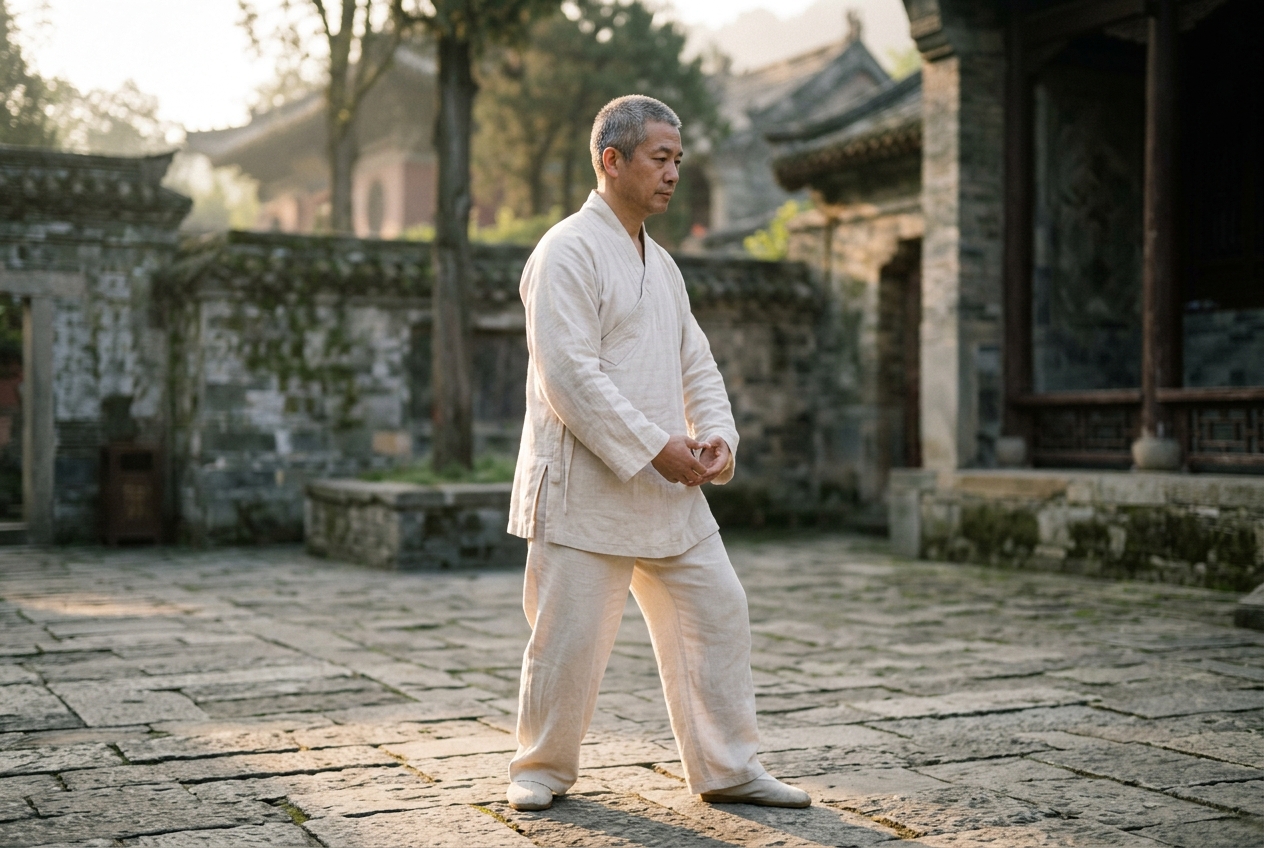
Rather than treating the body as a collection of isolated parts, internal martial arts and Daoyin practices view the thoracic spine as a dynamic hydraulic pump and tensegrity suspension system. When we consciously unbind Jueyinshu through targeted postural alignment and intention-driven respiration, we decompress the fourth thoracic spinal segment, soothe the sympathetic nerve chains governing cardiac rhythm, and restore the free flow of elastic mechanical force (Jin) from the spine through the inner arm to the palms.
The Anatomical and Fascial Architecture of BL14
To understand why this classical point commands such therapeutic reverence, one must examine its precise topographical and neurological architecture. Situated 1.5 cun (approximately two finger-widths) lateral to the lower border of the spinous process of the fourth thoracic vertebra (T4), Jueyinshu sits at a profound intersection of superficial, intermediate, and deep myofascial planes.
Superficially, the area is traversed by the descending fibers of the trapezius and the broad expanse of the rhomboid major. Beneath these structural powerhouses lie the intrinsic spinal stabilizers: the longissimus thoracis, iliocostalis thoracis, and the deeper semispinalis and rotatores muscles. Even deeper, nestled against the costovertebral articulations where the fourth ribs meet the vertebral body, rests the endothoracic fascia.
Crucially for somatic practitioners, modern biomechanical research documented through the National Center for Biotechnology Information (NCBI) demonstrates that this deep endothoracic fascia forms direct continuous ligamentous bands—specifically the superior and posterior vertebropericardial ligaments—that anchor the fibrous sheath of the pericardium directly to the anterior surfaces of the third, fourth, and fifth thoracic vertebrae.
Neurologically, the T4 dorsal gateway is innervated by the medial and lateral branches of the posterior ramus of the fourth thoracic spinal nerve. Directly anterior to the costovertebral joints at this level lies the paravertebral sympathetic trunk, from which preganglionic sympathetic fibers emerge (spanning T1 to T5) to form the deep and superficial cardiac plexuses.
When an individual collapses into a kyphotic, forward-head desk posture, the fourth thoracic segment undergoes chronic posterior subluxation and mechanical shear. The rhomboids and erectors become hypertonically ischemic, the costovertebral joints lock into an inspiratory or expiratory restriction, and the deep vertebropericardial ligaments are subjected to unrelenting tensile traction. This mechanical lock-down constantly irritates the sympathetic trunk, biasing the heart toward an elevated resting rate, diminished heart rate variability (HRV), and an imperceptible yet pervasive state of physiological alarm.
Step-by-Step Practice Guide: Unbinding the Dorsal Gateway
The following classical Daoyin sequence, known in traditional lineages as Kai Jueyin Tong Mai ("Opening the Jueyin Gateway and Clearing the Vessels"), is designed to systematically unbind the T4 junction, release pericardial fascial tension, and establish an unbroken elastic line from the thoracic spine to the hands.
1. Setting the Postural Matrix (Zhan Zhuang Root)
- Stand with your feet parallel and shoulder-width apart, knees softly unlocked so that your weight falls directly through the bubbling spring point (Yongquan, KI1) on the soles of your feet.
- Drop your tailbone vertically downward as if resting on a high stool, flattening the lumbar curve without tucking the pelvis aggressively.
- Suspend the crown of your head from above (Baihui, GV20), allowing the cervical spine to decompress.
- Adopt the classical martial posture of Han Xiong Ba Bei (含胸拔背)—"contain the chest and pluck the back." Rather than puffing the sternum outward, allow the front of your chest to soften inward by a mere half-inch. This gentle hollow naturally causes the shoulder blades to glide laterally outward across the ribcage, widening the space between the scapulae and exposing the Jueyinshu gateway.
2. Phase I: Inhalation and the Dorsal Breath
- Rest your hands in front of your lower abdomen, palms facing upward with the middle fingers lightly touching.
- Inhale slowly through your nose over a count of five seconds, initiating the expansion not in the belly or the upper clavicles, but precisely at the T4 segment between your shoulder blades.
- Mentally guide your breath (Yi) directly into the Jueyinshu points. Feel the fourth ribs pivot backward, causing the space between the spine and the medial borders of the shoulder blades to inflate like an expanding bellows.
- As you inhale, draw your hands upward along the midline of your torso until they reach the level of your heart.
3. Phase II: Exhalation and the Palmar Kinetic Line
- Rotate your wrists so that your palms turn downward, and then slowly push them outward and slightly forward at a 45-degree angle, extending the arms until they are softly curved without locking the elbows.
- Exhale smoothly through your nose over a count of six to seven seconds.
- As you exhale, maintain the widened, rounded state of your upper back at T4. Do not let the interscapular space collapse inward.
- Mentally project the accumulated hydraulic pressure at Jueyinshu around the axillary fold, down the deep medial line of your arms (traversing the biceps brachii, the pronator teres, and the flexor carpi radialis), passing directly through the carpal tunnel into the center of your palms—the Laogong point (PC8).
- Spread your fingers gently, maintaining slight extension in the middle finger, which serves as the terminal myofascial anchor for the Arm Jueyin channel.
4. Phase III: Micro-Articular Ribcage Unwinding
- After six repetitions of the primary movement, hold the extended arm position with palms facing outward.
- Keeping your hips completely stationary, initiate a tiny, quarter-inch micro-spiral of your thoracic spine. Rotate your sternum slightly to the left while keeping your right shoulder blade gliding forward and outward.
- Inhale into the newly created space around the right Jueyinshu cavity, feeling the deep costovertebral ligaments stretch gently away from the spine.
- Exhale, return to the center, and repeat to the opposite side.
5. Common Beginner Mistakes and Precise Calibrations
| Beginner Error | Biomechanical Mechanism of Fault | Somatic & Classical Correction |
|---|---|---|
| Scapular Pinching | Retracting the shoulder blades pinches the rhomboids and compresses the BL14 cavity. | Maintain Ba Bei (plucking the back): actively widen the space between the scapulae by wrapping the latissimus dorsi forward. |
| Lumbar Hyper-Lordosis | Arching the lower back to simulate chest opening breaks the vertical tensegrity column. | Sink the Kua (inguinal fold) and let the sacrum hang heavily like a plumb line. |
| Shoulder Elevation | Engaging the upper trapezius chokes the brachial plexus and prevents flow to the arm. | Mentally melt the clavicles downward; feel the inferior angles of the shoulder blades anchor toward the kidneys. |
| Forced Pushing | Using brute muscular tension (Li) contracts the forearm flexors and strangles circulation. | Relax the wrists; imagine warm water filling an elastic garden hose running from T4 to the palms. |
6. Proprioceptive Sensations and Markers of Release
As the Jueyinshu gateway unbinds, practitioners typically encounter a distinct progression of somatic sensations: * Thermal Flush: A sudden radiating warmth spreading from the interscapular region across the shoulders and down the inner arms, indicative of rapid capillary vasodilation and sympathetic relaxation. * Micro-Vibrations and Tingling: A distinct electrical tingling sensation in the middle fingers (Zhongchong, PC9) and palmar centers (Laogong, PC8), reflecting decompression of the median nerve track. * The "Drop" of the Diaphragm: A reflexive, deep somatic sigh or spontaneous swallow as the sternopericardial and phrenopericardial fascial tensions normalize, freeing the respiratory diaphragm for full excursions.
Why It Works: The Physiology of Thoracic Decompression
Modern neurobiology, fascia research, and cardiovascular physiology provide robust empirical frameworks that validate what classical Daoist masters understood through empirical somatic observation.
Autonomic Down-Regulation and Sympathetic Chain Modulation
The autonomic nervous system, as outlined in foundational clinical texts documented on Wikipedia's Autonomic Nervous System overview, relies on a delicate homeostatic balance between sympathetic excitation and parasympathetic rest.
The sympathetic preganglionic neurons that project to the cardiac plexus originate predominantly from the upper thoracic segments (T1–T5). When the fourth thoracic vertebra is chronically jammed due to postural collapse or psychological stress, the somatic afferent input from hypertonic intervertebral muscles and inflamed costovertebral joints creates sustained dorsal horn sensitization. This reflexively increases cardiac sympathetic tone, keeping the body in a low-grade fight-or-flight loop.
By physically mobilizing the costovertebral joints of T4 and relaxing the overlying rhomboid-trapezius complex, Neigong practice removes this noxious somatic input. This triggers immediate down-regulation of sympathetic firing, facilitating parasympathetic reinstatement via the vagus nerve (X cranial nerve), which dramatically improves baroreflex sensitivity and elevates high-frequency heart rate variability.
+-------------------------------------------------------------------------+
|                  CLINICAL PROOF & PHYSIOLOGICAL IMPACT                  |
|                                                                         |
|  * Sympathetic Tone: Reduces hyper-adrenergic spinal reflex arcs (T1-T4)|
|  * Vagal Tone: Facilitates parasympathetic cardiac modulation via CN X  |
|  * Hemodynamics: Enhances peripheral nitric oxide release via shear flow|
|  * Fascia: Restores sliding mechanics to the Deep Front Arm Line        |
+-------------------------------------------------------------------------+
Fascial Tensegrity and the Deep Front Arm Line
In the structural paradigm of biotensegrity—articulated extensively in fascia studies available through PubMed—the human body functions not as a compression-stack of bones, but as a continuous web of tensioned cables (fascia) and floating struts (bones).
The pathway of the Arm Jueyin Pericardium channel precisely corresponds to Thomas Myers' Deep Front Arm Line (DFAL). This myofascial continuity begins at the ribs and pectoralis minor, wraps through the axillary space, follows the medial intermuscular septum of the arm alongside the median nerve and brachial artery, encompasses the biceps brachii, passes through the pronator teres and deep digital flexors, travels across the carpal tunnel, and terminates in the thenar muscles and palmar fascia.
When the posterior anchor of this system at T4 (Jueyinshu) is locked, the entire tensegrity balance of the upper limb is compromised. Unbinding Jueyinshu restores optimal pre-stress to this deep fascial continuity. Mechanical elastic power generated in the legs and channeled through the spine can then travel unhindered through the torso and out of the arms without dissipating into localized joint strain.
Mediastinal Hemodynamics and Microcirculation
The heart and lungs reside within the central compartment of the thoracic cavity—the mediastinum. The pericardial sac is not an isolated bubble; it is physically suspended between the posterior surface of the sternum (via the sternopericardial ligaments), the central tendon of the diaphragm (via the phrenopericardial ligaments), and the upper thoracic spine (via the vertebropericardial ligaments).
Chronic interscapular bracing distorts this three-dimensional suspension bridge. This torsion mechanically impedes venous return through the superior and inferior vena cavae and constricts microvascular perfusion within the internal thoracic arteries. Opening the Jueyinshu gateway equalizes intrathoracic pressure differentials, promoting laminar blood flow, optimizing cardiac stroke volume, and enhancing systemic tissue oxygenation.
Classical Lineage and the Heart’s Gatekeeper
In the classical canon of Chinese medicine and internal alchemy (Neidan), the Pericardium is rarely discussed simply as a passive anatomical membrane. It is celebrated as the Xin Bao Luo (心包絡)—the "Palace Envoy" or "General of the Heart."
The seminal medical classic Huangdi Neijing (The Yellow Emperor’s Classic of Internal Medicine, c. 2nd century BCE) describes the Heart as the supreme sovereign (Jun Zhu Zhi Guan), housing the Shen—the radiant awareness, mental clarity, and spiritual poise of the individual. Because the sovereign must remain serene and unperturbed by external turbulence, the Pericardium acts as the imperial bodyguard, absorbing emotional shocks, relational stressors, and pathogenic climatic factors before they can injure the delicate core of the Heart.
By the Tang Dynasty (618–907 CE), the great alchemist and physician Sun Simiao detailed in his Beiji Qianjin Yaofang (Essential Formulas for Emergencies Worth a Thousand Gold Pieces) how chronic emotional grief, anxiety, and suppressed trauma become somatized in the dorsal Shu points, particularly at Jueyinshu. When a human experiences emotional heartbreak or sudden shock, the somatic nervous system reacts with an instinctive protective reflex: the shoulders round forward, the chest closes, and the interscapular muscles lock down to protect the heart center.
Over months and years, this protective armor hardens into permanent tissue architecture. The body remains trapped in a defensive brace, cutting the conscious mind off from the feeling center of the chest. Daoist internal martial lineages, including the ancient Ba Duan Jin ("Eight Pieces of Brocade") and the Yi Jin Jing ("Tendon-Changing Classic"), integrated specific postural spirals to manually unlock these dorsal gateways. As recorded by contemporary authorities such as the National Qigong Association and recognized within the broader integrative frameworks of the World Health Organization Traditional Medicine Programme, this deliberate de-armoring of the thoracic spine allows emotional stagnation to dissolve, releasing the Shen from its self-imposed cage.
Today’s Practice Commitment: The 7-Minute Awakening
To transform this anatomical and energetic understanding from theory into direct physiological reality, commit to the following structured protocol every morning before engaging with digital screens or breakfast:
+-------------------------------------------------------------------------+
|                  THE 7-MINUTE MORNING JUEYIN PROTOCOL                   |
|                                                                         |
|  * Minute 0:00 - 1:30 | Postural Rooting & Scapular Widening (Zhan Zhuang)|
|  * Minute 1:30 - 4:30 | 12 Repetitions of T4-to-Laogong Kinetic Wave    |
|  * Minute 4:30 - 6:00 | Micro-Articular Ribcage Unwinding               |
|  * Minute 6:00 - 7:00 | Standing Stillness: Lower Dantian Integration   |
+-------------------------------------------------------------------------+
- Minutes 0:00 to 1:30 — Postural Rooting: Stand in the Zhan Zhuang stance. Establish the root at your feet, tuck the chin gently, and consciously widen the space between your shoulder blades at T4 (Jueyinshu). Take five slow, deep nasal breaths directly into the dorsal spine.
- Minutes 1:30 to 4:30 — The Kinetic Wave: Perform twelve full repetitions of the Kai Jueyin breathing sequence. Inhale as your hands rise to heart level, expanding the T4 back-gate; exhale as you project the fascial wave down the inner arms and out through the Laogong point in the center of your palms.
- Minutes 4:30 to 6:00 — Micro-Articular Unwinding: Hold the extended arm posture and perform slow, microscopic rotations of your ribcage, gently liberating the costovertebral joints around the fourth thoracic vertebra.
- Minutes 6:00 to 7:00 — Stillness and Integration: Lower your hands to your lower abdomen, resting your right palm over your left (for men) or left palm over your right (for women) over the Dantian (two inches below the navel). Stand in complete silence. Observe the profound wave of warmth circulating down your arms, the natural drop of your resting heart rate, and the deep, unshakable calm settling over your mind.