Interior-Warming Formulas (Wen Li Ji) Prescription Dynamics: Governing Visceral Cold Dissipation, Yang Collapse Rescue, Middle Burner Warming, and Microvascular Recanalization in Traditional Chinese Medicine
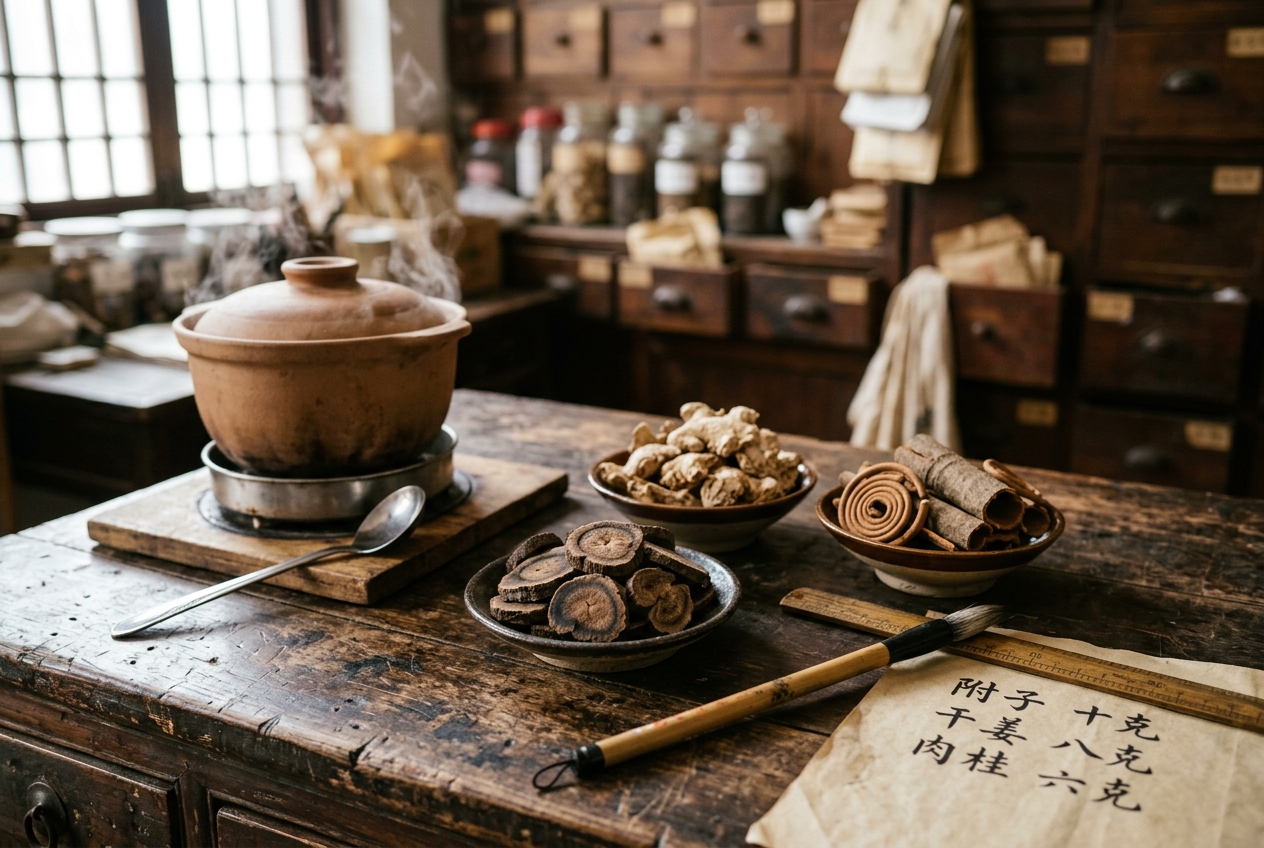
1. Opening Scene — A Moment You’ll Recognise
You have likely experienced a chill that no wool sweater, down duvet, or central heating could touch. It is not the superficial shiver of stepping into an autumn breeze, but a heavy, pervasive cold that seems to radiate outward from the pit of your stomach into your bones. Your hands and feet remain persistently icy; your digestion slows to a leaden halt, accompanied by dull abdominal cramps, abdominal distension, and a sudden urge for loose, watery stools. Along with this visceral chill comes a distinct exhaustion—a profound, draining fatigue where mental focus dissipates and physical vitality collapses.
In the diagnostic paradigm of Traditional Chinese Medicine (TCM), this state does not represent a simple external chill, but rather Li Han (Interior Cold)—a systemic insufficiency of Yang Qi, the fundamental bio-energetic furnace governing mitochondrial respiration, visceral motility, and hemodynamic warmth. While contemporary Western medicine often conceptualises this presentation through the fragmented lenses of peripheral vasospasm, hypothyroidism, gastrointestinal hypomotility, or autonomic dysregulation, classical East Asian medicine views it as a structural failure of the body's internal warming network. Restoring this biological flame requires far more than passive heat; it demands a targeted pharmacological and somatic reboot of the organism’s metabolic engine.
2. What This Organ System Does: The Metabolic Engine of Yang and the Interior-Warming Network
In classical Chinese physiology, the maintenance of core body temperature and kinetic vitality is governed by the coordinated interaction of two vital organ systems: the Spleen (Pí) and the Kidneys (Shèn). Rather than representing isolated anatomical structures, these systems denote integrated functional networks.
The Spleen serves as the primary engine of the Middle Burner (Zhong Jiao), tasked with Yun Hua—the extraction, transformation, and distribution of metabolic energy (Qi) and fluids from ingested food. When Spleen Yang is robust, nutrient absorption is efficient, gastrointestinal motility is synchronized, and visceral warmth is sustained. However, the Spleen cannot generate heat ex nihilo; its metabolic furnace is ignited and sustained by Kidney Yang (Shen Yang), anchored at the Gate of Vitality (Ming Men). Kidney Yang represents the organism's primal biological spark—comparable to basal endocrine output, adrenocortical tone, and central sympathetic regulation. When this primordial flame wanes, systemic thermogenesis falters, permitting interior cold to settle into the viscera, channels, and vascular beds.
To counteract these complex pathology patterns, Chinese herbal medicine developed the therapeutic class known as Interior-Warming Formulas (Wen Li Ji). Grounded in the ancient canons of the Shanghan Lun (Treatise on Cold Damage Diseases), these formulas are rigorously categorized across three major therapeutic strategies, each targeting a precise depth and manifestation of metabolic failure.
A. Warming the Middle Burner and Dispersing Cold (Wen Zhong Qu Han)
This category addresses cold-deficiency syndromes localized within the digestive sphere (the Middle Burner), marked by gastric pain, hypomotility, clear vomiting, and diarrhea. * Li Zhong Wan (Regulate the Middle Pill): The architectural exemplar for Middle Burner cold. It employs Gan Jiang (Dried Ginger) as the Sovereign (Jun) herb to directly warm the gastrointestinal tract and arrest diarrhea. Ren Shen (Ginseng) acts as the Minister (Chen) to reinforce Spleen Qi and restore bio-energetic capacity, while Bai Zhu (White Atractylodes) dries dampness, and Zhi Gan Cao (Honey-fried Licorice) harmonizes the formula and buffers spasms. * Wu Zhu Yu Tang (Evodia Decoction): Tailored for cold-inversion affecting the Liver and Stomach axes. It employs Wu Zhu Yu (Evodia fruit) to direct rebellious Qi downward, treating vertex migraines, violent acid regurgitation, and dry heaves triggered by cold exposure. * Xiao Jian Zhong Tang (Minor Construct the Middle Decoction): Formulated for spasmodic abdominal pain secondary to Middle Burner exhaustion. It establishes an elegant 2:1 ratio of Yi Tang (Maltose) and Bai Shao (White Peony) to Gui Zhi (Cinnamon Twig), harmonizing the nutritive (Ying) and defensive (Wei) layers while fueling cellular glycogen stores.
B. Rescuing Devastated Yang from Collapse (Hui Yang Jiu Ni)
This category represents classical emergency resuscitation therapeutics, deployed during critical states of circulatory shock, severe hypothermia, or terminal adrenal exhaustion characterized by imperceptible pulses, cold limbs extending above the elbows and knees, and profuse, oily cold sweat. * Si Ni Tang (Frigid Extremities Decoction): The classical sovereign prescription for Yang collapse. It unites Fu Zi (Processed Aconite) to restore systemic Kidney and cardiac Yang with Gan Jiang (Dried Ginger) to ignite Middle Burner thermogenesis, cushioned by Zhi Gan Cao (Licorice) to prevent metabolic exhaustion. * Shen Fu Tang (Ginseng and Aconite Decoction): Formulated for sudden cardiovascular collapse and critical hypotension, uniting high-potency Ren Shen and Fu Zi to rapidly augment central venous pressure and microvascular tone.
C. Warming the Channels and Dispersing Cold (Wen Jing Tong Mai)
Targeted at vascular insufficiency and microcirculatory stagnation where cold congeals blood within the peripheral channels. * Dang Gui Si Ni Tang (Tangkuei Decoction for Frigid Extremities): Modifies the classical Si Ni Tang archetype for blood deficiency complicated by cold-induced vasospasm (frequently correlated with Raynaud's phenomenon). It pairs Dang Gui (Angelica Sinensis) and Bai Shao to nourish blood volume with Gui Zhi and Xi Xin (Asarum) to dilate peripheral arterioles and dispel microvascular spasms.
Pharmacological Synergies, Cellular Mechanisms & Toxicology
Modern biomedical research has extensively validated the synergistic mechanisms underpinning these ancient prescriptions, particularly through the prism of neurovascular biology and thermogenic receptor signaling.
Sovereign-Minister Synergy: Fu Zi and Gan Jiang
The dynamic coupling of Fu Zi (Aconitum carmichaelii) and Gan Jiang (Zingiber officinale) forms the core physiological axis of interior-warming therapeutics. Classical theory asserts that "Fu Zi走而不守 (Fu Zi travels without staying—circulating dynamically to unblock all channels), while Gan Jiang守而不走 (Gan Jiang stays without traveling—anchoring metabolic fire in the Middle Burner)."
Pharmacologically, as documented in studies indexed on NCBI PubMed on TRP Channels, the active constituents of dried ginger (6-gingerol, 6-shogaol) act as potent agonists of Transient Receptor Potential Vanilloid 1 (TRPV1) and Ankyrin 1 (TRPA1) cation channels. Concurrently, higenamine and related benzylisoquinoline alkaloids derived from processed aconite exert targeted positive inotropic and chronotropic effects via beta-2 adrenergic receptor pathways, increasing intracellular cyclic adenosine monophosphate (cAMP) within cardiomyocytes. When administered together, Aconite-Ginger pharmacological synergism accelerates intestinal drug absorption, upregulates hepatic glycogenolysis, stimulates mitochondrial uncoupling protein-1 (UCP-1) in brown adipose tissue, and elevates peripheral cutaneous blood flow far beyond the capacity of either botanical agent in isolation.
Safety Protocols: Hydrolysis of Toxic Diester Diterpene Alkaloids
Raw Aconitum species contain highly toxic diester diterpene alkaloids (DDAs)—principally aconitine, mesaconitine, and hypaconitine—which bind with high affinity to voltage-gated sodium channels (Nav1.5), preventing their inactivation and triggering fatal ventricular arrhythmias, persistent depolarization, and neurotoxicity.
To eliminate this lethal toxicity while preserving therapeutic inotropic and anti-inflammatory properties, classical pharmacology requires rigorous pharmaceutical processing (Pao Zhi) followed by mandatory prolonged pre-decoction (Xian Jian).
Boiling aconite in an aqueous decoction for 45 to 90 minutes hydrolyzes the dangerous C-8 acetyl and C-14 benzoyl ester bonds, transforming lethal DDAs into relatively non-toxic monoester diterpene alkaloids (MDAs) like benzoylaconine, and ultimately into harmless amino-alcohol derivatives (aconine) as detailed in toxicological studies on Aconitum processing.
Rigorous Contraindications and Differential Diagnosis
Because Interior-Warming formulas are acutely thermal, desiccating, and stimulating, their clinical application requires meticulous differential diagnosis: 1. Yin Deficiency with Effulgent Fire (Yin Xu Huo Wang): Strictly contraindicated. Administering pungent, warming agents to a patient exhibiting night sweats, hot flashes, dry mucous membranes, a peeled red tongue, and a rapid, thready pulse will volatilize remaining bodily fluids and exacerbate heat toxicity. 2. True-Heat with False-Cold (Zhen Re Jia Han): A critical clinical pitfall wherein severe, deeply seated internal heat encases the exterior, manifesting as cold extremities, shivering, and a deep pulse. Crucially, such patients display unquenchable thirst for cold water, a foul breath odor, burning sensations in the anus, and a deep-red tongue with dry yellow fur. Administering Wen Li Ji in this setting can precipitate fatal thermal delirium.
3. How You Can Feel It: Signs of Balance and Imbalance
Assessing the status of your internal warming network does not require laboratory equipment; the body provides immediate, palpable feedback regarding the operational state of the Spleen-Kidney Yang axis.
Diagnostic Self-Assessment: Evaluating Your Core Temperature
Take a moment to observe your current physiological baseline against the following diagnostic checklist:
- Thermal Distribution: Place your bare palms against your abdomen below the umbilicus, then feel your nose, the nape of your neck, and your toes. Is there a stark disparity? Persistent coldness in these extremities signifies a failure of Yang Qi to circulate outward.
- Gastrointestinal Motility: Do cold beverages, raw salads, or iced water produce immediate abdominal distension, dull cramping, or loose stool within hours? This directly indicates a cold-induced decline in Spleen enzyme kinetics.
- Musculoskeletal Comfort: Does your lower back or knee joint feel structurally hollow, cold to the touch, or ache intensely during cold, rainy mornings, improving with the direct application of a heating pad? This points to Kidney Yang insufficiency at the Ming Men gate.
- Lingual Inspection: Observe your tongue in a mirror under natural light. A pale body with noticeable teeth-marks (scalloping) along the lateral margins and a thick, wet, slippery white coating confirms the stagnation of internal cold and unprocessed fluid accumulation.
4. Qigong & Movement Practice: Stirring the Cauldron and Awakening Ming Men
When internal cold stagnates, sedentary posture further impairs visceral capillary perfusion. The following classical medical Qigong sequence, Yun Zhuan Dan Tian Ji Ming Men (Orbiting the Dan Tian and Awakening the Vitality Gate), is designed to mechanically compress, mobilize, and thermogenically activate the deep viscera and lumbar-adrenal complex without triggering cardiovascular strain.
Step-by-Step Movement Sequence
-
Starting Position and Structural Alignment:
- Stand with your feet precisely shoulder-width apart, parallel to one another.
- Micro-flex your knees; do not lock the joints. Relax your sacrum downward as if resting against a high barstool, gently flattening the lumbar arch.
- Suspend the crown of your head from above (Baihui, GV-20), tuck your chin slightly, and rest the tip of your tongue against the hard palate behind the upper incisors to close the micro-cosmic energetic circuit.
- Place both palms flat over the lower abdomen: left palm resting directly over the Dan Tian (two inches below the navel), right palm stacked over the left.
-
Phase I: Activating the Visceral Furnace (Pelvic-Dan Tian Orbiting):
- Inhalation (Nasal, 4 seconds): Inhale slowly into the pelvic basin. Feel the lower abdomen, flanks, and lower back gently expand three-dimensionally.
- Movement: Begin tracing a smooth, continuous horizontal circle with your pelvis and hips. Shift your weight smoothly: forward over the balls of the feet, to the right hip, back toward the heels, and to the left hip. Keep the torso upright; do not lean.
- Exhalation (Nasal, 6 seconds): As you complete the rear half of the circle, gently draw the lower abdomen inward toward the spine, visualizing the physical compression of warmth directly into the Ming Men point on your lower back.
- Repetitions: Perform 18 slow, rhythmic revolutions clockwise, followed by 18 revolutions counter-clockwise.
-
Phase II: Rubbing the Gate of Vitality (Ming Men Mo Dong):
- Bring both hands behind your back. Vigorously rub the palms together until intense friction heat is generated.
- Place the warm fleshy bases of your palms directly over the lower back between the 2nd and 3rd lumbar vertebrae (directly opposite the navel).
- Rub up and down rapidly over the lumbar spine and renal margins for 1 to 2 minutes (approx. 80–100 rapid strokes) until a deep, penetrating sensation of radiant heat permeates the lumbar fascia.
-
Somatic Shift and Clinical Meaning: Within 5 to 10 minutes of completing this practice, you should feel a distinct rise in local core temperature, a flushing of warmth through the hands and feet (indicating the release of peripheral vasospasm via parasympathetic activation), and subtle gastrointestinal borborygmi (audible digestive sounds signaling the resumption of coordinated peristalsis).
5. Acupressure Points You Can Try Today
Acupressure offers a non-invasive, neuro-reflexive method for upregulating autonomic tone and restoring core visceral warmth. The following three acupoints are classical keystones in warming protocols.
1. Guanyuan (CV-4 / Ren-4) — "Gate of Origin"
- Anatomical Location: Located on the anterior midline of the lower abdomen, exactly 3 cun (the combined width of your four fingers held flat together) directly below the center of the umbilicus.
- Application Technique: Rest the pad of your right thumb or the heel of your palm over the point. Apply steady, perpendicular pressure inward and slightly downward toward the pelvic floor. Maintain a firm, soothing depth (firm enough to feel a distinct dull, warm distending sensation, but never sharp pain) for 2 to 3 minutes while practicing deep diaphragmatic breathing.
- Clinical Utility: As the primary front-collecting (Mu) point for the Small Intestine and the major confluence of the three leg Yin meridians with the Conception Vessel, stimulating Guanyuan directly tonifies Yuan Qi (Original Energy), warms the lower visceral organs, alleviates lower abdominal cramping, and combats chronic metabolic cold.
2. Zusanli (ST-36) — "Leg Three Miles"
- Anatomical Location: Sit with your knee bent at a 90-degree angle. Place your four fingers horizontally across the shin, starting immediately below the bottom edge of the kneecap. Zusanli is located four finger-widths below the kneecap, in the soft muscular groove approximately one finger-breadth lateral to the sharp anterior crest of the tibia bone.
- Application Technique: Using the tip of your thumb or a rounded knuckle, apply firm, rhythmic, pulsing pressure, driving the force slightly toward the bone. Maintain this deep pumping pressure for 2 minutes per leg. A characteristic radiating sensation (De Qi) traveling down the lateral shin into the foot confirms accurate stimulation.
- Clinical Utility: Zusanli is globally recognized in clinical trials supported by the WHO Traditional Medicine Programme for its profound ability to upregulate gastric peristalsis, modulate autonomic gastrointestinal tone, augment cellular ATP production, and dispel Middle Burner cold.
3. Mingmen (GV-4 / Du-4) — "Gate of Vitality"
- Anatomical Location: Located on the posterior midline of your lower back, in the depression directly below the spinous process of the 2nd lumbar vertebra (L2). A reliable landmark: it sits precisely horizontally opposite your navel.
- Application Technique: Make loose fists with both hands. Place the knuckles of your thumbs or index fingers firmly into the muscular depressions on either side of the Mingmen point. Apply firm, sustained circular pressure for 2 minutes, followed by 60 seconds of vigorous palm friction over the entire lumbar segment.
- Clinical Utility: Mingmen serves as the root of constitutional Yang in East Asian medicine. Regular stimulation warms the renal microvasculature, mitigates chronic lower back aching worsened by cold drafts, improves cold feet, and revives sluggish adrenal output.
6. Food & Lifestyle — Small Changes for Today
Dietary and environmental interventions provide the foundational thermal substrate for sustaining visceral Yang. No herbal formula or acupressure protocol can overcome a lifestyle that continuously floods the Middle Burner with exogenous cold.
Culinary Strategies: The Science of Kitchen Thermogenesis
- Incorporate Pungent, Warming Aromatics: Utilize fresh and dry-roasted ginger (Zingiber officinale), Ceylon cinnamon bark (Cinnamomum verum), star anise, black pepper, and scallion bulbs (Cong Bai). These common culinary staples contain volatile phenylpropanoids and gingerols that induce transient receptor potential channel activation (as detailed in research on TRPA1 Agonists and Thermoregulation), promoting localized visceral hyperemia and stimulating digestive secretions.
- Embrace the "Cooked and Warm" Rule: Cold and raw foods require significant endogenous caloric and enzymatic energy simply to be raised to the body's 37°C metabolic threshold. Transition from raw smoothies and cold salads to slow-simmered stews, congees (rice porridges), roasted squash, and root vegetables simmered with warming herbs.
- Thermal Hydration: Strictly replace iced water with warm or hot infusions throughout the day. Sipping water infused with two slices of fresh ginger and a crushed cardamom pod creates a continuous, gentle stimulation of Middle Burner digestive enzymes.
Thermal Lifestyle Protocols
- Protect the "Three Gates of Cold": Classical medicine warns against allowing external wind and drafts to penetrate three vulnerable somatic portals: the Nape of the Neck (Feng Chi, GB-20), the Lower Lumbar / Sacral Region (Ming Men, GV-4), and the Soles of the Feet (Yong Quan, KI-1). Wear protective scarves, ensure your lower back is fully covered when seated, and avoid walking barefoot on cold tile or hardwood floors.
- Evening Foot Soaking Ritual (Zu Yu): Immerse both feet in a basin of hot water (40°C–42°C) containing a tablespoon of Epsom salts and a few slices of boiled ginger for 15 to 20 minutes before sleep. This practice induces systemic vasodilation, draws excess cerebral blood flow down into the extremities, relieves cardiac afterload, and deepens slow-wave restorative sleep.
7. Today’s Takeaway
If you do only one thing today to rekindle your internal metabolic furnace, make it this simple five-minute ritual: prepare a mug of hot water steeped with three thick slices of freshly crushed ginger and a small stick of cinnamon, and while it steeps, stand in a relaxed stance with micro-flexed knees, rubbing your palms together until hot, and vigorously massage your lower back over the Ming Men point for two full minutes until a deep, radiant warmth spreads across your core. This effortless synergy of bio-thermal movement and thermogenic botanicals immediately arrests peripheral vasospasm, stimulates visceral perfusion, and signals your autonomic nervous system to shift from cold-induced stagnation into vibrant, warm equilibrium.