Houxi Cavity Back Stream: Hypothenar Fascial Decompression, Du Mai Vessel Activation, and Axial Spinal Kinetic Transmission in Classical Neigong
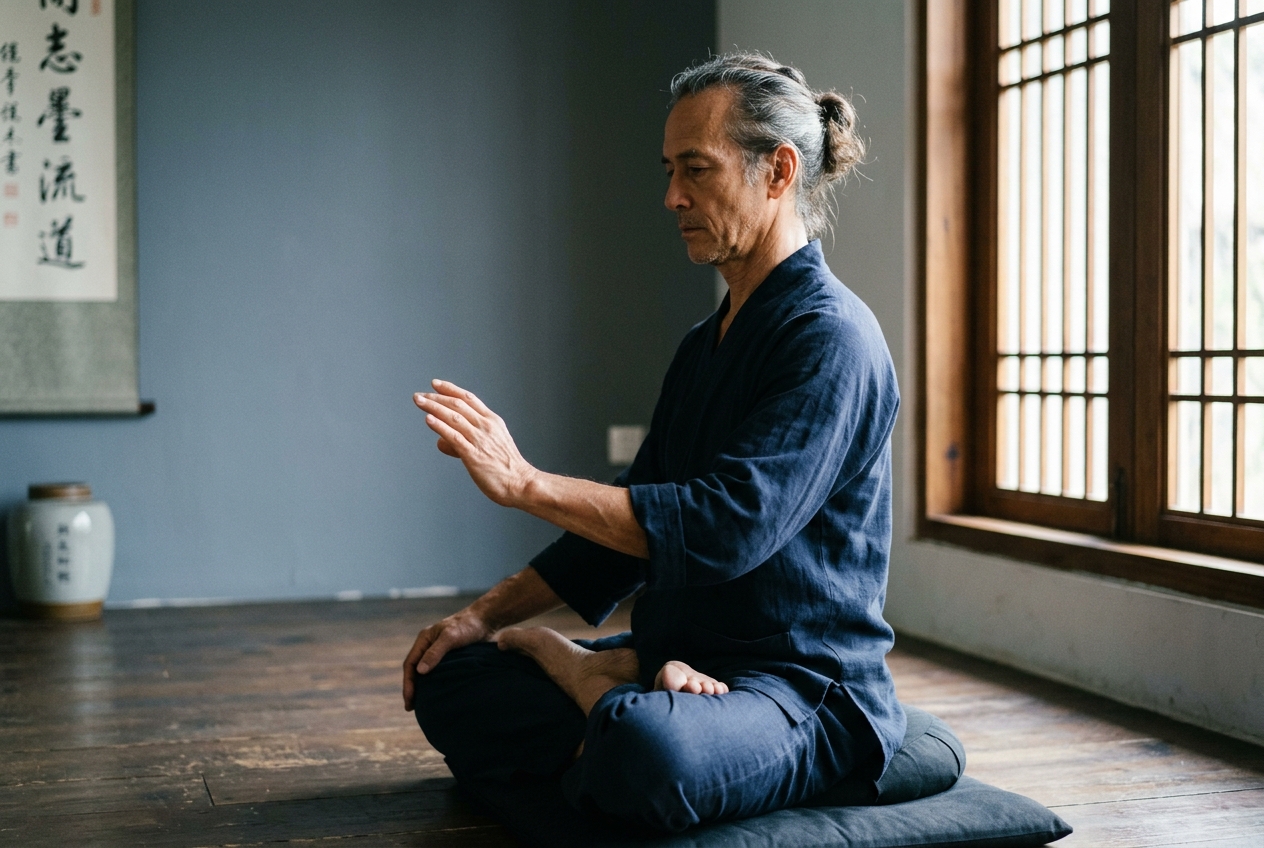
More importantly, traditional medical classics designate Houxi as the Confluent Master Point (Ba Mai Jiao Hui Xue / 八脈交會穴) of the Du Mai (督脈), the "Governing Vessel" that ascends directly along the posterior midline of the spine. When internal martial artists and meditators adjust the shape of their palms to open Houxi, they are not merely performing a cosmetic hand posture; they are engaging a living neurological and myofascial lever. This gentle adjustment decompresses the cervicothoracic junction—the heavily burdened pivot where the neck joins the upper back—and permits the unimpeded transmission of upright vitality, or Yang Qi, from the base of the pelvis up to the apex of the skull.
Anatomical Topography and Local Fascial Architecture
To understand the profound structural influence of Houxi, one must first examine its exact topographical and fascial anatomy. Situated on the ulnar aspect of the hand, Houxi lies immediately proximal to the head of the fifth metacarpal bone, nestled in the depression formed when the hand is shaped into a loose, relaxed fist. This boundary corresponds precisely to the classical dermatological landmark known as the Chibai Rouji (赤白肉際), the demarcation line separating the keratinized, highly innervated glabrous skin of the palm from the thinner, more elastic dorsum.
       [ Ulnar Border & Houxi (SI3) Structural Topography ]

( Fifth Digit / Pinky )
                                 ||
                                 ||
             [ 5th Metacarpophalangeal (MCP) Joint ]
                                 |
      ===========================x=========================== <- Chibai Rouji
         (Palmar Glabrous Skin)  |  (Dorsal Elastic Skin)       (Red/White Border)
                                 |
                            [* HOUXI *]  <-- Depressed Cavity (SI3)
                           /     |     \
    Hypothenar Fascia ----+      |      +---- Abductor Digiti Minimi
                                 |
                 [ Deep Antebrachial Fascia ]
                                 |
              [ Ulnar Nerve & Vascular Arcade ]
                                 |
                        ( Ascending Kinetic Chain )
Beneath the epidermal boundary lies a dense architectural matrix. Houxi penetrates the specialized hypothenar fascia, traversing the superficial fibers of the abductor digiti minimi muscle (musculus abductor digiti minimi) and lying adjacent to the flexor digiti minimi brevis. Within this localized tissue bed runs the dorsal cutaneous branch and the deep muscular branches of the ulnar nerve, along with the ulnar artery's dorsal digital branches and palmar vascular arches.
The hypothenar compartment is not an isolated muscular island; it is an anchored anchor-point for the deep antebrachial fascia of the forearm. Histological research compiled in the NCBI PubMed database demonstrates that the retinacular and fascial wrappings around the fifth metacarpal contain an extraordinarily dense population of mechanoreceptors—specifically Pacinian corpuscles and Ruffini endings—which are acutely sensitive to shear stress, axial tensile strain, and rotational torque.
When the ulnar border is actively elongated without isometric muscular squeezing, these mechanoreceptors discharge afferent proprioceptive signals directly to the central nervous system, establishing a baseline of structural tone that recalibrates the entire ipsilateral upper limb and axial skeleton.
The Myofascial Kinetic Chain: From Hypothenar Sheath to Axial Decompression
In classical internal martial arts (such as Taijiquan, Baguazhang, and Xingyiquan), movement is never organized around isolated muscular contractions. Instead, force is distributed across whole-body connective tissue continuities, termed Jin Jing (筋經, Sinew Channels) in Chinese medicine, and popularized in contemporary Western biomechanics as myofascial meridians.
The ulnar kinetic pathway originating at Houxi forms the foundational pathway of the Deep Back Arm Line and the Spiral Line. Tracing this continuous fascial continuum reveals how a minute adjustment at the fifth metacarpal reverberates through the core of the human spine:
- The Antebrachial and Brachial Continuity: From the hypothenar sheath and the insertion of the abductor digiti minimi, tensile load passes directly into the investing fascia of the flexor carpi ulnaris and extensor carpi ulnaris. This fascial sheath envelops the ulna and inserts robustly into the medial epicondyle of the humerus and the olecranon process of the elbow.
- The Triceps and Posterior Shoulder Interface: The force line ascends uninterrupted through the triceps brachii aponeurosis and the medial/lateral intermuscular septa of the arm, continuing over the posterior deltoid fascia to invest the dense epimysium of the infraspinatus and teres minor on the dorsal face of the scapula.
- Scapulothoracic and Spinal Integration: The infraspinatus fascia merges into the rhomboid major and minor, which anchor directly into the spinous processes of the upper thoracic and lower cervical vertebrae (C7–T5). Here, the chain interlaces with the serratus posterior superior and plunges deeply into the thoracolumbar fascia and spinal multifidus, the deep stabilizing muscles that span between adjacent vertebral segments.
+-------------------------------------------------------------------------+
|                THE MYOFASCIAL VECTOR CONTINUUM OF HOUXI                 |
+-------------------------------------------------------------------------+
|  [Houxi / 5th Metacarpal] -> [Antebrachial Ulnar Fascia]                 |
|            -> [Olecranon / Triceps Aponeurosis]                         |
|            -> [Infraspinatus & Posterior Rotator Cuff]                  |
|            -> [Rhomboid & Scapular Anchors]                             |
|            -> [Dazhui / C7-T1 Cervicothoracic Hinge]                    |
|            -> [Spinal Multifidi & Thoracolumbar Tensioning]             |
|            -> [Occipital Lift / Cranial Decompression at Baihui]        |
+-------------------------------------------------------------------------+
When an individual collapses the hand or grips with excessive flexor tension, this entire fascial continuum goes slack or becomes fractured by localized hypertonicity. Conversely, when the hypothenar border is micro-elongated in the classical posture of the "hollow palm" (Zhang Xin Kong / 掌心空), the slack is taken out of the myofascial line.
This tensile engagement exerts a downward, stabilizing pull on the inferior angle of the scapula while simultaneously preventing the shoulders from hiking upward toward the ears. As the shoulder blades settle naturally along the ribcage, the chronic compressive clamping at the cervicothoracic junction—known in acupuncture as Dazhui (GV14, Great Vertebra / 大椎)—is mechanically released.
The cervical spine elongates upward toward Baihui (GV20, Hundred Convergences / 百會) at the vertex of the skull, while the thoracic spine straightens and decompresses. In the physiological language of classical Daoyin, the "sluice gate" of the Du Mai is thrown open, allowing the dorsal kinetic forces and the warm bio-electric sensation of Yang Qi to surge unobstructed along the midline.
Step-by-Step Somatosensory Practice Guide
To cultivate the neurofascial integration of Houxi, practitioners rely on precise standing calibrations (Zhan Zhuang / 站樁) and seated Daoyin sequences. Follow these steps to build somatic awareness and integrate this pathway into your daily practice.
       +------------------------------------------------------+
       |   THE THREE ARCHITECTURAL ANCHORS OF THE PALM        |
       +------------------------------------------------------+
       |  1. HOUXI (SI3): Rooted, curved ulnar blade          |
       |  2. LAOGONG (PC8): Sunken, receptive palmar center   |
       |  3. HEGU (LI4): Broad, open thumb-index web          |
       +------------------------------------------------------+
Step 1: Establish the Axial Baseline (The Wuji Stance)
- Stand with your feet parallel, precisely hip-to-shoulder width apart.
- Unlock your knees without bending them deeply, allowing the kneecaps to float softly over the centers of your feet.
- Release the lower back by gently relaxing the inguinal creases (Song Kua / 鬆胯), letting your tailbone hang like a weighted plumb line toward the earth.
- Lightly touch the tip of your tongue to the hard palate just behind your front teeth to close the micro-cosmic circuit between the Governing and Conception vessels.
- Suspend the crown of your head (Baihui) as if suspended by an invisible thread from the heavens, drawing your chin slightly inward to level the base of your skull.
Step 2: Form the Classical "Hollow Palm" (Zhang Xin Kong)
- Bring both arms up in front of your chest as if lightly encircling the trunk of a broad cedar tree, maintaining a rounded shape at your armpits (Hu Kou hollow and open).
- Separate your fingers naturally. Do not allow them to splay with rigid tension, nor let them collapse into a limp, floppy shape.
- Soften the center of the palm—the acupuncture point Laogong (PC8, Palace of Weariness / 勞宮)—creating a subtle concave depression in the palm, reminiscent of holding a delicate quail egg.
- Gently extend the thumb away from the index finger to open the Tiger’s Mouth (Hukou / 虎口), activating Hegu (LI4).
Step 3: Calibrate the Ulnar Vector at Houxi
- Direct your inner awareness (Yi / 意) specifically to the outer margin of both hands, at the Houxi cavity proximal to the fifth knuckle.
- Without moving your wrists or turning your hands aggressively, subtly project the ulnar blade outward and slightly downward, as if gently pressing outward against the inner circumference of an expanding elastic sphere.
- Ensure the little finger maintains a soft, continuous spiral curve that mirrors the contour of your palm. Avoid cocking the wrist sideways (excessive ulnar deviation); the wrist must remain flat, open, and broad across the carpal tunnel.
Step 4: Synchronize with Diaphragmatic Respiration
- Inhalation (4–5 seconds): Inhale slowly through your nose into the lower abdomen (the lower Dantian, situated two inches below the navel and deep inside the pelvic basin). Feel the pelvic floor gently respond and the lower back (Mingmen / GV4) widen across the thoracolumbar junction.
- Exhalation (5–6 seconds): Exhale smoothly through the nose. As the breath releases, lightly amplify the outward intention along the ulnar border through Houxi. Sense the ground reaction force pushing up through the soles of your feet (Yongquan / KI1), traveling up your straightened spine, crossing Dazhui at the base of the neck, and filling the hands.
       +-------------------------------------------------------------+
       |             COMMON PITFALLS & CLINICAL REMEDIES             |
       +-------------------------------------------------------------+
       |  FAULT: Wrist Cocking (Over-deviation of the ulnar joint)   |
       |  FIX: Keep the wrist crease open and straight; project      |
       |       intention through the fascia, not joint pinching.     |
       |                                                             |
       |  FAULT: Clenched Flexor Tension (Rigid "iron" hands)        |
       |  FIX: Hollow the center of the palm (*Laogong*); imagine    |
       |       warm air filling the interior of the hand.            |
       |                                                             |
       |  FAULT: Scapular Elevation (Hiking the shoulders)           |
       |  FIX: Drop the elbows (*Chen Juan*); let the weight of the  |
       |       elbows sink the shoulder blades into the ribs.        |
       +-------------------------------------------------------------+
What Sensations to Look For
As you sustain this alignment for 5 to 10 minutes, specific neurological and vascular responses will manifest: - Warmth and Flushing (Re Gan / 熱感): A distinct sensation of radiating heat across the palm, wrists, and up the dorsal midline of the back. This indicates local vasodilation and a down-regulation of sympathetic vasoconstrictor tone. - Tingling and Micro-Vibration (Ma Gan / 麻感): A fine, effervescent tingling sensation along the path of the ulnar nerve and between the shoulder blades, confirming the release of fascial adhesions and decompression of peripheral nerve pathways. - Heaviness and Density (Zhong Gan / 重感): The arms feel remarkably heavy, as though filled with mercury or wet sand, while the spine feels suspended, buoyant, and light. This reflects the successful establishment of structural biotensegrity. - Decompressive Release (Song Gan / 鬆感): A sudden, palpable sensation of widening at the base of the neck (Dazhui) and across the upper thoracic spine, often accompanied by an involuntary, deep sigh of autonomic relief.
Why It Works — The Modern Physiological Science
The efficacy of opening Houxi is grounded in principles recognized across modern biomechanics, neuroanatomy, and autonomic neurobiology. Rather than viewing these phenomena as esoteric anomalies, contemporary research reveals the precise mechanisms at play:
                      [ SOIL: Lower Dantian & Foot Rooting ]
                                       |
                   [ Ground Reaction Force Transmission ]
                                       |
                   [ Pelvic Neutrality & Mingmen Expansion ]
                                       |
              [ Axial Biomechanical Biotensegrity Upward Path ]
                                       |
     +---------------------------------+---------------------------------+
     |                                                                   |
[ Dazhui Opening (C7-T1) ]                              [ Thoracolumbar Expansion ]
     |                                                                   |
[ Suboccipital Lift / Baihui ]                          [ Ulnar Kinetic Line (Houxi) ]
     |                                                                   |
     +---------------------------------+---------------------------------+
                                       |
                    [ Autonomic & Vagal Equilibrium ]
1. Biotensegrity and Myofascial Force Transmission
The human musculoskeletal system functions not as a system of rigid levers, but as a continuous prestressed biotensegrity dome, as detailed in modern fascia studies documented by the Wikipedia overview on fascia. Bones do not sit directly on top of one another like dead masonry; they float within a balanced, continuous web of tensile soft tissues.
By applying micro-extension to the hypothenar border at Houxi, the practitioner tensions the peripheral boundary of this tensegrity matrix. This tension immediately redistributes compressive loads away from the intervertebral discs of the cervical and thoracic spine, converting localized spinal shear into distributed, harmless tensile load throughout the thoracolumbar sheath.
2. Down-Regulation of Sympathetic Hyperarousal
Chronic mental stress and sedentary office ergonomics inevitably lead to the classic "upper crossed syndrome": rounded shoulders, forward head posture, chronically clenched palmar flexors, and a jammed cervicothoracic junction. This postural distortion compresses the vertebral arteries and mechanical receptors at the base of the neck, triggering chronic sympathetic nervous system activation (fight-or-flight).
Opening Houxi reverses this postural collapse. As the ulnar chain stabilizes the scapula and lifts the occiput, the thoracic cage opens, facilitating full diaphragmatic excursion. This diaphragmatic movement mobilizes the vagus nerve as it passes through the esophageal hiatus, rapidly increasing heart rate variability (HRV) and shifting the autonomic balance toward restorative parasympathetic dominance. Global health guidelines on somatic interventions from the World Health Organization Traditional Medicine Strategy emphasize the preventative and restorative value of these mind-body practices in countering chronic postural and autonomic stress.
3. Mechanotransduction and Cellular Signaling
When tensile force is transmitted along collagen-rich fascial sheets through the proper alignment of the ulnar margin, it exerts physical strain on the resident fibroblasts and interstitial cells. Through the biological process of mechanotransduction, these mechanical forces are converted into biochemical signals.
This mechanical loading stimulates the production of lubricating hyaluronic acid within the interfascial sliding layers, dissolves pathological collagen cross-links (adhesions), and restores fluid gliding between the trapezius, rhomboids, and erector spinae muscles.
Classical Lineage, Textual Foundations, and Internal Martial Arts
The systematic cultivation of Houxi is recorded across centuries of traditional medical treatises and martial lineage documents. Its classical designation as the Shu-Stream (Shu Xue / 輸穴) and Wood point of the Hand Taiyang channel originates in the foundational canon of East Asian medicine, the Huangdi Neijing Lingzhu (黄帝內經·靈樞, The Yellow Emperor's Inner Canon: Spiritual Pivot), composed over two millennia ago. As a Wood point, Houxi embodies the organic quality of spring: expanding, ascending, unblocking stagnation, and generating upward movement.
       ===============================================================
       CLASSICAL LINEAGE & CONFLUENT POINT CORRESPONDENCE
       ===============================================================
       Point:          Houxi (SI3 / 後溪 - "Back Stream")
       Classification: Shu-Stream Wood Point of Hand Taiyang
       Confluent Role: Master Point of the Du Mai (Governing Vessel)
       Paired Point:   Shenmai (BL62 / 申脈) - Master of Yang Qiao Mai
       Key Text:       Zhenjing Zhinan (指南) & Zhen Jiu Da Cheng (大成)
       Core Martial Function: Transmitting Ground Force via Peng Jin
       ===============================================================
During the Jin and Yuan dynasties, the celebrated physician Dou Hanqing (竇漢卿) codified the Ba Mai Jiao Hui Xue (Eight Confluent Points) in his seminal masterwork Zhenjing Zhinan (針經指南, Guide to the Classics of Acupuncture). In this system, Houxi was identified as the primary access key to the Du Mai. Later, in the Ming Dynasty, Yang Jizhou’s authoritative encyclopedia Zhen Jiu Da Cheng (針灸大成, Great Compendium of Acupuncture and Moxibustion) further established that when Houxi is paired with Shenmai (BL62, Extending Vessel / 申脈) on the lateral foot, it resolves conditions affecting the spine, neck, scapulae, and brain.
In the internal martial arts lineages developed throughout the Ming and Qing eras, this acupuncture knowledge was translated directly into combat biomechanics:
-
Taijiquan (Grand Ultimate Fist): The foundational energetic quality of Taiji is Peng Jin (掤勁, Ward-Off Force)—an expansive, buoyant, shock-absorbing structural integrity that permeates the entire body. Grandmasters of the Chen, Yang, and Wu styles emphasized that Peng Jin is anchored along the ulnar border. The classical manual dictates: "The force is rooted in the feet, developed in the legs, directed by the waist, and expressed through the fingers—particularly along the outer edge of the palm." When receiving an incoming strike, the practitioner does not resist with tense arm muscles; they open Houxi, allowing the shock wave to route cleanly down the spine into the earth.
-
Baguazhang (Eight Trigrams Palm): In the continuous circular walking of Baguazhang, the fundamental hand position is the Niu Zhuan Zhang (Twisting Millstone Palm). The thumb turns inward and upward while the pinky finger and Houxi extend outward in a powerful spiral wrap (Shen Jin Ba Gu / 伸筋拔骨, "Extending the Tendons and Pulling the Bones"). This dynamic ulnar spiral twists the deep fascia from the outer hand, through the latissimus dorsi, across the thoracolumbar junction, and down into the opposing hip, allowing the practitioner to generate sudden, devastating coiling power (Luo Xuan Jin).
-
Xingyiquan (Form and Intention Boxing): In Xingyiquan's Pi Quan (Chopping Fist) and Zuan Quan (Drilling Fist), the striking blade of the palm or fist is explicitly driven by the ulnar margin. The fist is never held with a white-knuckled grip; instead, it remains hollow inside until the instant of impact (Cun Jin / Inch Power), with Houxi acting as the forward structural wedge that transfers the full unyielding mass of the advancing torso into the opponent.
Organizations such as the National Qigong Association continue to preserve and teach these nuanced integrations, connecting historic lineage wisdom with modern experiential wellness protocols.
Integrating Houxi into Daily Movement: Actionable Checks
The structural benefits of Houxi are not meant to remain locked on the meditation mat or inside the martial arts training hall. The true power of internal cultivation lies in integrating these somatic checkpoints into your daily movement patterns, workspace ergonomics, and general posture.
+--------------------------------------------------------------------------+
|                  FIVE-MINUTE MORNING ALIGNMENT DRILL                     |
+--------------------------------------------------------------------------+
|  [0:00 - 1:00]  Wuji Stance: Drop tailbone, suspend Baihui at crown      |
|  [1:00 - 3:00]  Tree Hugging: Hollow palms (Laogong), soften shoulders    |
|  [3:00 - 4:30]  Houxi Vectoring: Micro-extend 5th metacarpal, feel       |
|                 cervicothoracic opening at Dazhui (GV14)                 |
|  [4:30 - 5:00]  Deep Abdominal Settling: Return awareness to Dantian     |
+--------------------------------------------------------------------------+
- The Desktop & Typing Calibration: When working at a computer keyboard or mouse, notice if your hands are chronically clenched into claw-like shapes with collapsed, cocked wrists. Every hour, pause for 30 seconds: rest the ulnar edges of your hands flat on the desk, hollow the centers of your palms, and feel the immediate release of tension in your upper traps and neck.
- Walking Integration: As you walk, let your arms swing naturally from your back rather than your chest. Keep your palms loosely facing inward toward your thighs, but maintain a soft, light intention along the Houxi border. You will notice that your torso naturally stays upright and tall without having to rigidly arch your lower back.
- Lifting and Carrying: When picking up groceries, a kettlebell, or a child, avoid gripping solely with the index finger and thumb, which tends to hike the shoulders and strain the neck. Instead, wrap your grip firmly starting from the little finger and ring finger, seating the load securely into the ulnar border. This instantly recruits the powerful latissimus dorsi and core stabilizers rather than overloading the delicate rotator cuff.
Today's Practice Commitment
Tomorrow morning, before you check your phone or drink your first cup of coffee or tea, commit exactly five minutes to this practice. Stand in a quiet room, assume the loose, natural posture of the Wuji stance, bring your arms into the gentle embrace of the hollow palm, and quietly activate the Houxi cavity along the outer edge of your hands.
As you breathe slowly into your lower belly, observe the steady rise of warmth up the dorsal midline of your spine, the widening of the base of your neck, and the quiet, centered clarity settling over your mind. Notice how this tiny, ancient anatomical gateway transforms your posture, mental focus, and physical ease throughout the remainder of your day.