Harmonizing Formulas (He Jie Ji) Prescription Dynamics: Governing Shaoyang Pivot Regulation, Liver-Spleen Reconciliation, Cold-Heat Harmonization, and Middle Burner Integration in Traditional Chinese Medicine
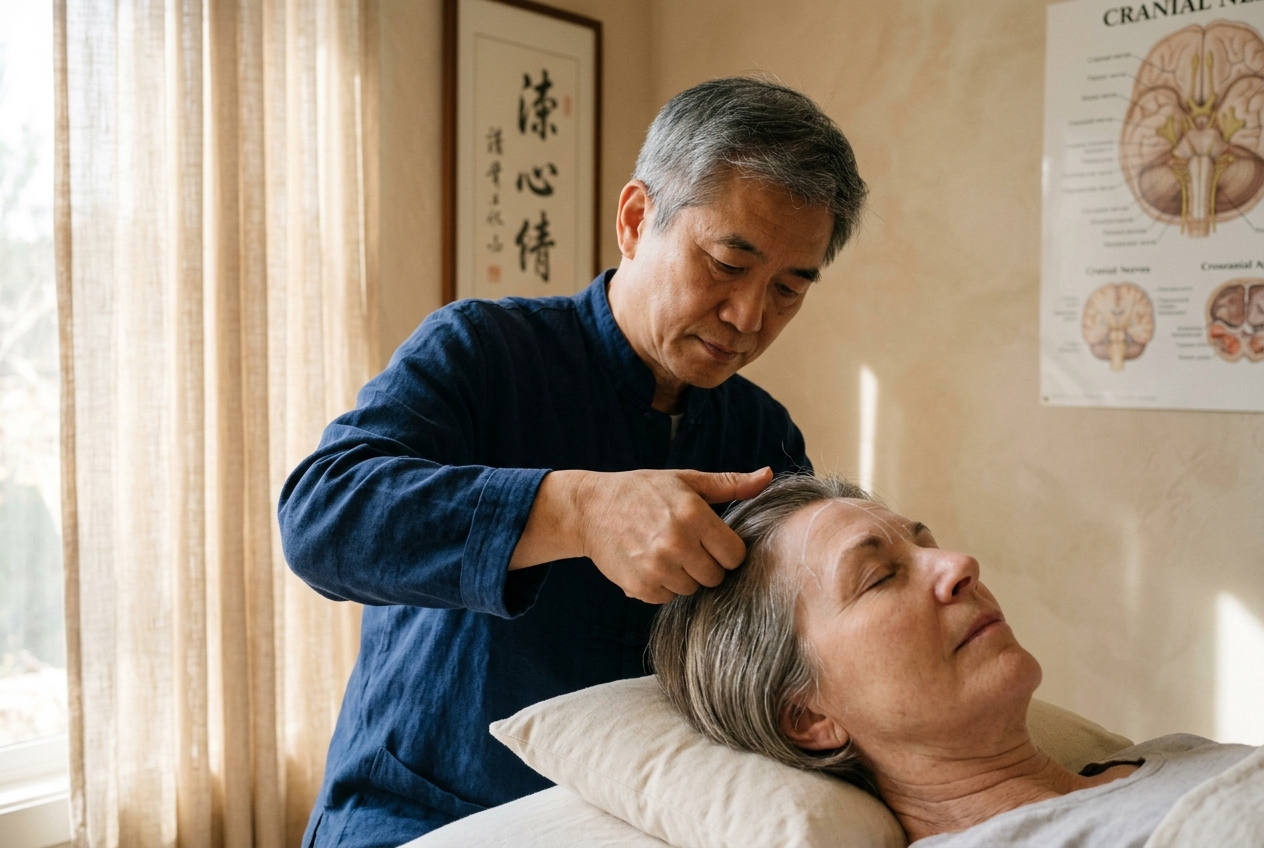
In the diagnostic and therapeutic canon of Traditional Chinese Medicine (TCM), Harmonizing Formulas (He Jie Ji, 和解劑) represent one of the most sophisticated conceptual frameworks for resolving multifaceted clinical pathologies. Derived from the broader therapeutic modality of Harmonization (He Fa, 和法)—one of the Eight Therapeutic Methods (Ba Fa, 八法) systematically classified by Cheng Zhongling in the Qing Dynasty treatise Yixue Xinwu (Medical Comprehension)—these formulas are neither purely eliminative (such as diaphoresis, emesis, or purgation) nor exclusively supplemental (tonification). Instead, harmonizing strategies operate upon dynamic pathological interfaces: intermediate anatomical zones, overlapping thermal states, and functional dysregulations between distinct visceral systems (Zang-Fu).
Classical Chinese medical epistemology, fundamentally codified in the Huangdi Neijing (Inner Canon of the Yellow Emperor) and operationalized clinically in Zhang Zhongjing’s 3rd-century foundational text, the Shanghan Lun (Treatise on Cold Damage Diseases), conceptualizes physiological balance as an ongoing equilibrium of Qi dynamic vectors (Qi Ji, 氣機)—namely ascending (Sheng), descending (Jiang), exiting (Chu), and entering (Ru). When pathogenic factors lodge at systemic boundaries or induce bidirectional dysfunction across the Five Elements (Wu Xing), standard unilateral therapeutic vectors fail. In such scenarios, harmonizing formulas establish physiological recalibration through multi-directional herbal pairings (Dui Yao), simultaneous thermal balancing, and neuro-visceral stabilization.
This treatise examines the architectural dynamics, sovereign-minister (Jun-Chen-Zuo-Shi) hierarchies, classical pathophysiology, and contemporary biomedical correlates of the three primary archetypes of Harmonizing Formulas:
- Reconciling the Shaoyang Stage (He Jie Shao Yang)
- Reconciling Wood and Earth Disharmonies (Tiao He Gan Pi / Gan Wei)
- Harmonizing Complex Cold and Heat in the Middle Burner (Tiao He Chang Wei)
1. Theoretical Framework & The Shaoyang Pivot (He Jie Shao Yang)
1.1 Classical Foundations: Half-Exterior, Half-Interior Pathology (Ban Biao Ban Li)
In the six-stage diagnostic ontology of the Shanghan Lun, the Shaoyang (Lesser Yang) conformation occupies the crucial functional threshold between the superficial exteriority of Taiyang (Greater Yang) and the fully consolidated internal heat of Yangming (Yang Brightness). Classical commentary designates Taiyang as the "opening" (Kai), Yangming as the "closing" (He), and Shaoyang as the "hinge" or "pivot" (Shu).
Pathologically, when an exterior pathogenic influence (Xie Qi) penetrates beyond the Taiyang defensive perimeter (Wei Fen) but lacks sufficient internalizing force or metabolic substrate to transform into a Yangming interior excess pattern, it becomes entrapped in the half-exterior, half-interior realm (Ban Biao Ban Li). Because this territory is intimately governed by the Gallbladder (Foot Shaoyang) and the Triple Burner (Hand Shaoyang, Sanjiao), normal systemic fluid transformation, metabolic distribution, and Gallbladder bile secretion are disrupted.
The struggle between the pathogen and the host’s upright resistance (Zheng Qi) at this structural hinge yields the classic Shaoyang pentad:
$$\text{Shaoyang Pathology} \implies \begin{cases} \text{Alternating chills and fever } (H\acute{a}n\ R\grave{e}\ W\check{a}ng\ L\acute{a}i) \ \text{Bitter taste in the mouth } (K\check{o}u\ K\check{u}) \ \text{Dryness of the throat } (Y\acute{a}n\ G\bar{a}n) \ \text{Dizziness and visual disturbance } (M\grave{u}\ Xu\acute{a}n) \ \text{Fullness / discomfort in chest and hypochondria } (Xi\bar{o}ng\ Xi\acute{e}\ K\check{u}\ M\check{a}n) \end{cases}$$
Diaphoresis is strictly contraindicated here because it would damage fluid metabolism in a non-exterior pattern; purgation is equally prohibited as it would plunge the pathogen deeper into the interior; emesis would violently damage stomach Qi. Thus, the clinician must deploy He Jie—harmonizing and resolving the pivot.
1.2 Canonical Formula Deconstruction: Xiao Chai Hu Tang (Minor Bupleurum Decoction)
Xiao Chai Hu Tang, documented in Clause 96 of the Shanghan Lun, serves as the paramount archetype of Shaoyang harmonization. Its seven-ingredient composition exemplifies the Jun-Chen-Zuo-Shi structural hierarchy:
| Botanical / Mineral Name | Pharmaceutical Name | Role | Thermal & Flavor Profile | Classical Physiological Vector |
|---|---|---|---|---|
| Chai Hu | Radix Bupleuri | Sovereign (Jun) | Acrid, Bitter, Cool | Vents the exterior-interior interface, dredges constrained Liver-Gallbladder Qi |
| Huang Qin | Radix Scutellariae | Minister (Chen) | Bitter, Cold | Drains fire and clears latent heat from the Shaoyang/Gallbladder channels |
| Ban Xia | Rhizoma Pinelliae | Assistant (Zuo) | Acrid, Warm, Toxic | Transforms phlegm-dampness, descends rebellious Stomach Qi, arrests vomiting |
| Sheng Jiang | Rhizoma Zingiberis Recens | Assistant (Zuo) | Acrid, Warm | Harmonizes the stomach, assists Ban Xia in anti-emetic actions, disperses cold |
| Ren Shen | Radix Ginseng | Assistant (Zuo) | Sweet, Slightly Warm | Tonifies Primordial Qi (Yuan Qi), fortifies Spleen, halts interior transmission |
| Da Zao | Fructus Jujubae | Assistant (Zuo) | Sweet, Neutral | Nourishes Middle Jiao fluids, buffers against harsh properties of dispersing herbs |
| Zhi Gan Cao | Radix Glycyrrhizae Prep. | Courier (Shi) | Sweet, Neutral | Harmonizes all constituents, tonifies Spleen Qi, moderates acute tension |
The clinical efficacy of Xiao Chai Hu Tang is centered on the synergistic Dui Yao pairing of Chai Hu and Huang Qin. Chai Hu possesses an ascending and out-thrusting nature, diffusing pathogenic latency from the interior to the exterior. Conversely, Huang Qin exhibits a bitter, cold, descending dynamic that clears Shaoyang heat downward and inward. This paired ascending-descending, venting-draining dynamic clears stagnation without injuring upright Qi, resolving the pivot mechanism.
1.3 Escalation to Da Chai Hu Tang (Major Bupleurum Decoction)
When a Shaoyang disorder is complicated by concurrent Yangming internal heat accumulation (manifesting with severe hypochondriac pain, persistent vomiting, epigastric hardness, constipation, and a yellow tongue coating), Xiao Chai Hu Tang is modified into Da Chai Hu Tang.
Zhang Zhongjing removed the tonifying agents (Ren Shen, Gan Cao) to avoid trapping pathogenic heat, and added: * Da Huang (Radix et Rhizoma Rhei): Purges accumulated Yangming heat and unblocks the bowels. * Zhi Shi (Fructus Aurantii Immaturus): Breaks up stagnant Qi and descends abdominal distension. * Bai Shao (Radix Paeoniae Alba): Relieves hepatic tension, astringes Yin, and alleviates spasmodic hypochondriac pain.
1.4 Modern Pharmacological Correlates: Neuroendocrine and Immunological Pivots
Contemporary biomedical research validates the multidirectional regulatory nature of Xiao Chai Hu Tang (known as Sho-saiko-to in Kampo medicine). Research published via the NCBI PubMed database on Bupleurum and Saikosaponins demonstrates that the bioactive triterpenoid saponins—predominantly Saikosaponins a, c, and d—exert direct anti-inflammatory, hepatoprotective, and immunomodulatory effects.
Furthermore, mechanistic investigations accessible via NCBI PMC on Xiao Chai Hu Tang and the HPA Axis reveal that this formula modulates the Hypothalamic-Pituitary-Adrenal (HPA) axis. Saikosaponin d enhances glucocorticoid receptor sensitivity and stimulates endogenous adrenocorticotropic hormone (ACTH) and corticosterone secretion without inducing adrenal atrophy.
Concurrently, Baicalin and Baicalein derived from Huang Qin (NCBI PubMed: Scutellaria baicalensis and Baicalin) selectively down-regulate Nuclear Factor-kappa B (NF-κB), inhibiting pro-inflammatory cytokine expression (TNF-$\alpha$, IL-1$\beta$, IL-6) and down-regulating inducible nitric oxide synthase (iNOS).
Together, these dual compounds mirror the classical concept of the "Shaoyang hinge" by rebalancing neuroendocrine-immune signaling cascades during persistent subacute and chronic inflammatory states.
2. Reconciling Wood and Earth Disharmonies (Tiao He Gan Pi / Gan Wei)
2.1 Pathophysiology of Wood-Earth Transgression (Gan Mu Ke Pi Tu)
In Five Phase (Wu Xing) systems biology, Wood (Liver/Gallbladder) and Earth (Spleen/Stomach) maintain a dynamic balancing relationship through the control/restraint cycle (Ke). The Liver is tasked with the smooth movement of Qi (Shu Xie), which ensures uninterrupted systemic circulation, promotes bile excretion, and facilitates the digestive dynamic of the Middle Burner. The Spleen governs the transformation and transportation of nutrients (Yun Hua) and directs Clear Yang upward, while the Stomach descends Turbid Yin downward.
When emotional duress, persistent psychological stress, or chronic systemic strain disrupts the free coursing of Liver Qi, the resultant stagnant Wood Qi (Gan Qi Yu Jie) overacts on Earth (Gan Mu Ke Pi or Gan Wei Bu He). This pathological transgression manifests in two distinct presentations:
- Liver Stagnation with Spleen Deficiency (Gan Yu Pi Xu): Abdominal fullness, borborygmi, loose stools, chronic fatigue, alternating constipation and diarrhea, exacerbated by emotional changes.
- Liver-Stomach Disharmony (Gan Wei Bu He): Epigastric and hypochondriac distension, acid regurgitation, belching, nausea, and spastic abdominal pain.
To resolve this bidirectional axis, harmonizing formulas utilize a triad of therapeutic vector flavors: Acrid Venting (Xin San), Sour Softening (Suan Rou), and Sweet Tonifying (Gan Bu).
2.2 Granular Prescription Deconstruction
1. Xiao Yao San (Free and Easy Wanderer Powder)
Originally recorded in the Song Dynasty imperial pharmacopeia, the Taiping Huimin Heji Jufang, Xiao Yao San provides the archetypal template for addressing Liver Stagnation with Blood Deficiency and Spleen Weakness.
- Chai Hu (Radix Bupleuri - Sovereign): Clears constrained Liver Qi and restores smooth flow.
- Bai Shao (Radix Paeoniae Alba - Minister): Sour and cold; nourishes Liver Yin, preserves hepatic Blood, and softens hyperactive Liver dynamics (Rou Gan).
- Dang Gui (Radix Angelicae Sinensis - Minister): Sweet, acrid, and warm; tonifies and activates blood, preventing stasis.
- Bai Zhu (Rhizoma Atractylodis Macrocephalae) & Fu Ling (Poria - Assistants): Strengthen Spleen Qi and drain internal dampness, securing Earth against Wood's invasion.
- Zhi Gan Cao (Radix Glycyrrhizae Prep. - Assistant/Courier): Supplements the Middle Burner and combines with Bai Shao to relax spasmodic tension (Shao Yao Gan Cao Tang dynamic).
- Bo He (Herba Menthae) & Sheng Jiang (Rhizoma Zingiberis Recens - Adjuncts): A pinch of Bo He assists Chai Hu in dispersing stagnant heat; Sheng Jiang warms the Middle Jiao and harmonizes the Stomach.
2. Si Ni San (Frigid Extremities Powder)
Found in Clause 318 of the Shanghan Lun, Si Ni San treats "Yang-inversion cold extremities" (Yang Jue), where internal Qi constraint traps Yang Qi inside, preventing peripheral perfusion.
$$\text{Si Ni San Blueprint} = \underbrace{\text{Chai Hu}}{\text{Ascends / Vents}} + \underbrace{\text{Zhi Shi}}{\text{Descends / Breaches}} + \underbrace{\text{Bai Shao}}{\text{Astringes / Nourishes}} + \underbrace{\text{Zhi Gan Cao}}{\text{Harmonizes / Relaxes}}$$
This minimalist four-herb structure establishes an elegant set of functional vectors: * The Chai Hu–Zhi Shi Axis: Chai Hu lifts and opens constrained Qi outward; Zhi Shi moves downward and breaks through interior Qi blockages. Together, they restart the body's internal Qi circulation. * The Bai Shao–Zhi Gan Cao Axis: Bai Shao (sour) and Zhi Gan Cao (sweet) form the classical Suan Gan Hua Yin (Sour and Sweet Generating Yin) pairing. This combination relieves muscular and visceral smooth-muscle spasms, protecting against the drying properties of acrid agents.
3. Tong Xie Yao Fang (Important Formula for Painful Diarrhea)
First published in Zhu Danxi's Danxi Xinfa (and codified in the Yifang Jijie), this prescription treats direct Liver-Spleen conflict characterized by painful abdominal cramping followed immediately by diarrhea, with pain subsiding post-evacuation.
- Bai Zhu (Radix Paeoniae Alba - Sovereign): Large doses strengthen Spleen Qi and dry intestinal dampness.
- Bai Shao (Radix Paeoniae Alba - Minister): Relaxes Liver tension, calms the autonomic surge, and alleviates enteric pain.
- Chen Pi (Pericarpium Citri Reticulatae - Assistant): Moves stagnant Qi, dries dampness, and balances the Middle Jiao.
- Fang Feng (Radix Saposhnikoviae - Assistant/Courier): As an acrid, sweet, wind-dispelling agent, Fang Feng performs three precise tasks: 1. It lifts Clear Spleen Yang upward to halt diarrhea; 2. It softens Liver Wood; 3. It acts as an envoy guiding the formula into the intestinal channels.
2.3 Mechanistic Vector Synthesis: Acrid Venting, Sour Softening, and Sweet Tonification
The thermodynamic and functional interactions across the Wood-Earth axis represent a carefully balanced biochemical strategy:
$$\mathcal{T}{\text{Wood-Earth}} = \sum \left[ \mathbf{V}{\text{Acrid}} (\text{Dispersal of Stagnation}) + \mathbf{V}{\text{Sour}} (\text{Hepatic Yin Consolidation}) + \mathbf{V}{\text{Sweet}} (\text{Pancreatic-Splenic Tonification}) \right]$$
- Acrid Venting (Xin San): Liver Qi requires open, unrestricted pathways. Acrid compounds (monoterpenes, volatile oils) break through stagnation, normalize smooth-muscle tone, and restore natural biliary and gastrointestinal motility.
- Sour Softening (Suan Rou): Pure acrid dispersal risks exhausting Liver Yin and Blood. Sour compounds (organic acids, paeoniflorin) preserve vascular and hepatic Yin, preventing hepatic hyperactivity.
- Sweet Tonifying (Gan Bu): In accordance with the Jingui Yaolue principle—"Seeing disease of the Liver, know that the Liver transmits to the Spleen, therefore first reinforce the Spleen"—sweet agents supply metabolic substrates, fortify digestive transport, and buffer against Wood-mediated injury.
2.4 Modern Biomedical Correlates: The Brain-Gut-Microbiome Axis
Contemporary gastrointestinal research provides a clear biological framework for Wood-Earth disharmony via the Brain-Gut-Microbiome Axis. Comprehensive reviews indexed in NCBI PMC on the Brain-Gut Axis and Xiao Yao San demonstrate that formulas like Xiao Yao San and Tong Xie Yao Fang modulate central neuroendocrine signaling and peripheral enteric function simultaneously.
Under psychological stress, elevated hypothalamic secretion of Corticotropin-Releasing Factor (CRF) triggers systemic autonomic dysfunction: 1. Sympathetic tone increases, compromising mesenteric perfusion and reducing mucosal barrier integrity. 2. Enterochromaffin cells increase secretion of 5-Hydroxytryptamine (5-HT / Serotonin), activating $5\text{-HT}_3$ and $5\text{-HT}_4$ receptors on enteric neurons. 3. Mast cells degranulate, releasing histamine and tryptase, which sensitizes primary afferent nerve fibers and produces visceral hypersensitivity and abdominal pain.
Xiao Yao San and Tong Xie Yao Fang reverse these changes by: * Down-regulating central and intestinal CRF expression; * Re-equilibrating mucosal 5-HT levels and normalizing serotonin reuptake transporter (SERT) density; * Inhibiting mast cell activation, reducing inflammatory markers (IL-1$\beta$, TNF-$\alpha$); * Restoring normal tight-junction protein expression (Claudin-1, Occludin, ZO-1), repairing intestinal barrier permeability.
3. Harmonizing Complex Cold and Heat in the Middle Burner (Tiao He Chang Wei)
3.1 The Epigastric Glomus Pattern (Pi Zheng) and Mixed Thermal Disharmonies
Module 3 focuses on the Epigastric Glomus Pattern (Pi Zheng, 痞證), a classic pathological state described throughout the Shanghan Lun (Clauses 149–158).
Pi translates as a subjective sensation of fullness, blockage, and tightness localized in the epigastrium beneath the heart (Xin Xia Pi). Crucially, this state presents with softness upon physical palpation, accompanied by an absence of sharp focal pain—distinguishing it from the structural accumulations seen in Jie Xiong (Chest Binding) patterns.
The classical etiology stems from iatrogenic or secondary mismanagement: in a patient with a mild Taiyang exterior presentation accompanied by underlying Middle Jiao deficiency, an erroneous purgative strategy is applied. This purges Middle Burner Yang Qi downward, causing the Spleen to collapse into deficient cold (Pi Han), while latent pathogen-heat becomes trapped in the Stomach cavity above (Wei Re).
The resultant pathology features: * Stomach Heat (Above): Manifests as nausea, retching, bitter taste in the mouth, dry lips, and a greasy yellow tongue coating. * Spleen Cold (Below): Manifests as borborygmi, undigested food in watery stool (Wan Gu Bu Hua), abdominal rumbling, and a pale tongue body.
This creates a state of complex cold and heat, with trapped dampness and impaired ascending-descending Qi pathways. Unilateral thermal treatment is ineffective: cold herbs aggravate the Spleen cold, while warm herbs exacerbate the Stomach heat. The only solution is the simultaneous deployment of Bitter-Cold Heat Purgers and Acrid-Warm Cold Dispersers.
3.2 Canonical Architecture: Ban Xia Xie Xin Tang (Pinellia Epigastric-Draining Decoction)
Ban Xia Xie Xin Tang is the definitive formula for complex cold and heat in the digestive tract. It uses seven ingredients structured into three complementary functional pairs:
$$\text{Ban Xia Xie Xin Tang} = \underbrace{\text{Ban Xia} + \text{Gan Jiang}}{\substack{\text{Acrid-Warm} \ \text{Disperses Cold \& Opens}}} + \underbrace{\text{Huang Lian} + \text{Huang Qin}}{\substack{\text{Bitter-Cold} \ \text{Drains Heat \& Dries}}} + \underbrace{\text{Ren Shen} + \text{Da Zao} + \text{Zhi Gan Cao}}_{\substack{\text{Sweet-Warm} \ \text{Nourishes Middle Jiao \& Harmonizes}}}$$
Detailed Herb Roles:
- Ban Xia (Rhizoma Pinelliae - Sovereign, 9–12g): Acrid, warm, and slippery. It disperses epigastric nodules, transforms damp-phlegm, descends rebellious Stomach Qi, and arrests vomiting.
- Gan Jiang (Rhizoma Zingiberis - Minister, 6–9g): Acrid and hot. It warms the Spleen, disperses interior cold, and assists Ban Xia in opening Middle Jiao stagnation.
- Huang Lian (Rhizoma Coptidis - Minister, 3–6g): Bitter and cold. It clears Stomach heat and drains fire directly from the epigastric cavity.
- Huang Qin (Radix Scutellariae - Minister, 6–9g): Bitter and cold. It works with Huang Lian to eliminate damp-heat from both the Stomach and intestines.
- Ren Shen / Dang Shen (Radix Ginseng / Codonopsis - Assistant, 6–9g): Sweet and warm. It supplements Spleen Qi, restores upward fluid movement, and protects healthy tissue from the harshness of the purging herbs.
- Da Zao (Fructus Jujubae - Assistant, 4–6 pieces): Sweet and warm. It nourishes Middle Jiao fluids and harmonizes nutrient Qi (Ying Fen).
- Zhi Gan Cao (Radix Glycyrrhizae Prep. - Courier/Assistant, 6g): Sweet and neutral. It coordinates the bitter and acrid vectors, buffers gastric mucosa, and tonifies Middle Qi.
3.3 The Xie Xin Lineage and Classical Variations
The Shanghan Lun provides two key modifications of this base formula to address subtle shifts in Middle Burner pathology:
- Sheng Jiang Xie Xin Tang: Indicated when water and food stagnation dominate, leading to firm epigastric distension, loud intestinal borborygmi, and sulfurous belching. Gan Jiang is reduced to 3g, and fresh Sheng Jiang (12g) is added to disperse fluid retention and clear food stagnation.
- Gan Cao Xie Xin Tang: Indicated when severe Spleen-Stomach deficiency allows prolonged mucosal injury, manifesting as mouth ulcerations, severe gastrointestinal distress, and emotional restlessness (the Huo Huo pattern in the Jingui Yaolue). The dose of Zhi Gan Cao is doubled to 12g to maximize tissue repair and nourish healthy Qi.
3.4 Modern Pharmacological Correlates: Gastrointestinal Kinetics, Mucosal Repair, and Cytoprotection
From a modern pharmacological perspective, Ban Xia Xie Xin Tang acts as a multi-target botanical preparation capable of bidirectional gastrointestinal regulation.
- Microbial and Inflammatory Control: As detailed in research on Berberine and Gastrointestinal Dynamics via NCBI PMC, Berberine (from Huang Lian) exerts strong antibacterial actions against Helicobacter pylori, reduces intestinal epithelial apoptosis, and down-regulates pro-inflammatory pathways (NF-κB, COX-2, TNF-$\alpha$). Concurrently, Baicalin protects tight-junction integrity and limits enterotoxin uptake.
- Dual Kinetic Regulation: The phenolic gingerols (6-Gingerol, 8-Gingerol, 6-Shogaol) from Gan Jiang and Ban Xia act on cholinergic and $5\text{-HT}_3 / 5\text{-HT}_4$ receptors in the enteric nervous system. This yields a dual kinetic effect: it speeds up delayed gastric emptying in the upper GI tract while simultaneously calming distal hyper-peristalsis and intestinal spasms.
- Cytoprotection and Mucosal Defense: Polysaccharide fractions from Ren Shen and Zhi Gan Cao stimulate endogenous gastric mucosal Prostaglandin E2 ($PGE_2$) synthesis, increase mucosal blood flow, and enhance protective bicarbonate secretion.
Together, these mechanisms align directly with the classical description of resolving mixed cold and heat: bitter compounds clear inflammatory fire, acrid compounds restore motility and circulation, and sweet tonics accelerate tissue repair.
4. Synthesis of Classical Harmonizing Archetypes
The following table summarizes the three fundamental harmonizing formula classes, outlining their diagnostic indicators, core actions, and target pathways:
| Classification Category | Classical Archetype | Key Herbal Pairings (Dui Yao) | Primary Tongue & Pulse Profiles | Modern Biomedical Indications |
|---|---|---|---|---|
| Shaoyang Pivot (He Jie Shao Yang) | Xiao Chai Hu Tang (Minor Bupleurum Decoction) | Chai Hu + Huang Qin (Venting & Clearing) |
Tongue: Thin white or yellow coat, unilateral coating. Pulse: Wiry (Xian), rapid or taut. |
Subacute infections, chronic Epstein-Barr/viral fatigue, pleurisy, lymphadenitis, otitis media, autoimmune flare-ups, HPA-axis dysregulation. |
| Wood-Earth Axis (Tiao He Gan Pi / Wei) | Xiao Yao San / Tong Xie Yao Fang | Chai Hu + Bai Shao Bai Zhu + Fang Feng |
Tongue: Pale-red, teeth-marks, thin white coat. Pulse: Wiry on left (Guan), weak or soft on right. |
Irritable Bowel Syndrome (IBS), functional dyspepsia, premenstrual dysphoric disorder (PMDD), generalized anxiety disorder, neuro-visceral hypersensitivity. |
| Middle Burner Flux (Tiao He Chang Wei) | Ban Xia Xie Xin Tang (Pinellia Epigastric Decoction) | Ban Xia + Gan Jiang (Acrid/Warm) vs. Huang Lian + Huang Qin (Bitter/Cold) |
Tongue: Red tip/edges, greasy yellow coat in middle. Pulse: Wiry, slippery, or soggy-rapid. |
Chronic atrophic and superficial gastritis, peptic ulcer disease, Helicobacter pylori infection, GERD, post-infectious gastroparesis, ulcerative colitis. |
5. Clinical Diagnostic Markers & Somatic Integration
To apply harmonizing strategies accurately in clinical practice, diagnostic evaluations must systematically assess the patient's underlying energetic vectors and structural tensions.
                         PHYSICAL ASSESSMENT MATRIX

              [ PALPATION ]                       [ TONGUE DIAGNOSIS ]
      • Subcostal Fullness (Shaoyang)        • Unilateral Coat: Shaoyang Pivot
      • Epigastric Soft Resistance (Pi)       • Red Sides / Pale Center: Wood-Earth
      • Abdominal Spasms (Wood-Earth)         • Greasy Yellow Center: Middle Burner
5.1 Palpatory Diagnostic Markers
- Subcostal / Hypochondriac Region: Tenderness, muscle guarding, or a sensation of fullness beneath the costal margin (Xiong Xie Ku Man) confirms Shaoyang or Wood-Qi constraint.
- Epigastrium (Xin Xia): Palpation distinguishes Pi Zheng (soft resistance without sharp focal pain) from structural Jie Xiong (rigid, painful abdominal guarding that worsens under pressure).
5.2 Tongue and Pulse Diagnostics
- Shaoyang Patterns: Characterized by a classically wiry pulse (Xian Mai) and a tongue that often displays a unilateral coating, reflecting an asymmetric or transitional pathological state.
- Wood-Earth Disharmonies: Typically present with a split pulse profile—wiry on the left wrist (Guan position, Liver) and deficient or soft on the right wrist (Spleen/Stomach position). The tongue often shows scalloped edges alongside red, slightly elevated margins.
- Middle Burner Cold-Heat Complex: Readily identified by a greasy, yellow coating across the central and posterior thirds of the tongue, often accompanied by a pale, swollen body.
5.3 Somatic and Channel Regulation (Acupoints & Mind-Body Integration)
Acupuncture and manual point stimulation act on the same functional vectors utilized by herbal harmonizing formulas:
- GB34 (Yanglingquan - He-Sea Earth Point of Gallbladder): Regulates the Shaoyang pivot, promotes bile secretion, and resolves hypochondriac fullness, mirroring the actions of Chai Hu and Huang Qin.
- LR3 (Taichong - Shu-Stream / Yuan-Source Point of Liver): Relieves systemic Liver Qi constraint, calms internal wind, and normalizes sympathetic tone.
- PC6 (Neiguan - Luo-Connecting Point of Pericardium, confluent with Yin Wei Mai): Regulates cardiac rhythm, calms the autonomic nervous system, descends rebellious Stomach Qi, and alleviates nausea.
- ST36 (Zusanli - He-Sea Earth Point of Stomach) & CV12 (Zhongwan - Front-Mu Point of Stomach): Strengthen Spleen-Stomach transport, up-regulate secretory immunity, and restore regular enteric motility, providing somatic support alongside Ban Xia Xie Xin Tang.
6. Practical Somatic Protocol: Shaoyang-Midline Reset
This structured somatic exercise supports the natural ascending, descending, and lateral vectors governed by the harmonizing channel networks.
- Target Frequency: 5 to 10 minutes daily, ideally practiced between 7:00 AM and 9:00 AM (Stomach Channel time) or during times of emotional or digestive tension.
- Clinical Intent: Decompresses lateral fascial tensions along the Gallbladder meridian, lowers sympathetic tone, and promotes coordinated diaphragmatic excursion to aid Middle Burner motility.
7. Dietary Guidelines for Mixed Thermal and Motility Disharmonies
To avoid counteracting harmonizing herbal formulas, dietary regimens must account for both cold and heat properties while avoiding digestive stagnation:
- Reduce:
- Highly greasy, deep-fried foods and heavy dairy (these generate damp-heat, worsening Pi Zheng and impairing Spleen transformation);
- Raw, cold salads and iced beverages (these consume Middle Jiao Yang, worsening Spleen cold and diarrhea);
- Excessively hot, pungent spices like chili pepper (these inflame trapped Stomach heat and aggravate Liver hyperactivity).
- Incorporate:
- Lightly steamed, aromatic, and easily digestible foods (such as ginger-infused rice congee, cooked squashes, and fennel);
- Mild digestive teas (such as orange peel / Chen Pi, peppermint / Bo He, or chamomile) to gently encourage Qi movement without exhausting bodily fluids;
- Fermented, low-sugar foods to help support healthy gut microbiome diversity.
8. Concluding Analytical Summary
Harmonizing Formulas (He Jie Ji) demonstrate the sophistication of classical Chinese medicine by moving beyond basic binary treatment paradigms (hot vs. cold, tonification vs. purgation). By structuring multi-vector formulas around coordinated herbal pairings—such as acrid-venting with bitter-clearing (Chai Hu and Huang Qin), sour-softening with sweet-tonifying (Bai Shao and Gan Cao), or bitter-purgative with acrid-dispersive (Huang Lian and Gan Jiang)—these prescriptions resolve systemic gridlock across key anatomical and functional interfaces.
Contemporary pharmacological research confirms that these multi-target preparations operate on systemic homeostatic pathways, including the HPA axis, the brain-gut-microbiome network, autonomic tone, and mucosal inflammatory cascades. The ongoing study and clinical integration of these harmonizing mechanisms underscores the enduring relevance of classical Chinese medical theory in modern integrative medicine.
Key Authoritative References & Further Reading
- World Health Organization (WHO) Traditional Medicine Global Centre — International standards and evidence-based frameworks for traditional medicine systems.
- NCBI PubMed: Saikosaponins and Hepato-Immunological Mechanisms — Pharmacological reviews on Bupleurum chinense active constituents.
- NCBI PMC: Neuroendocrine and HPA Axis Modulation by Xiao Chai Hu Tang — In-depth analysis of Sho-saiko-to on stress and endocrine signaling.
- NCBI PubMed: Scutellaria baicalensis and Baicalin Pharmacodynamics — Anti-inflammatory and cytokine regulatory profiles.
- NCBI PMC: Brain-Gut Axis Interactions and Xiao Yao San — Mechanistic evaluations of neuro-gastroenterological balance.
- NCBI PMC: Berberine, Alkaloids, and Gastrointestinal Motility — Modern studies on mucosal protection and enteric signaling.