Fu's Subcutaneous Needling: Navigating Fascial Sweeping Mechanics, Tightened Muscle Reperfusion, and Precision Acupressure Protocols
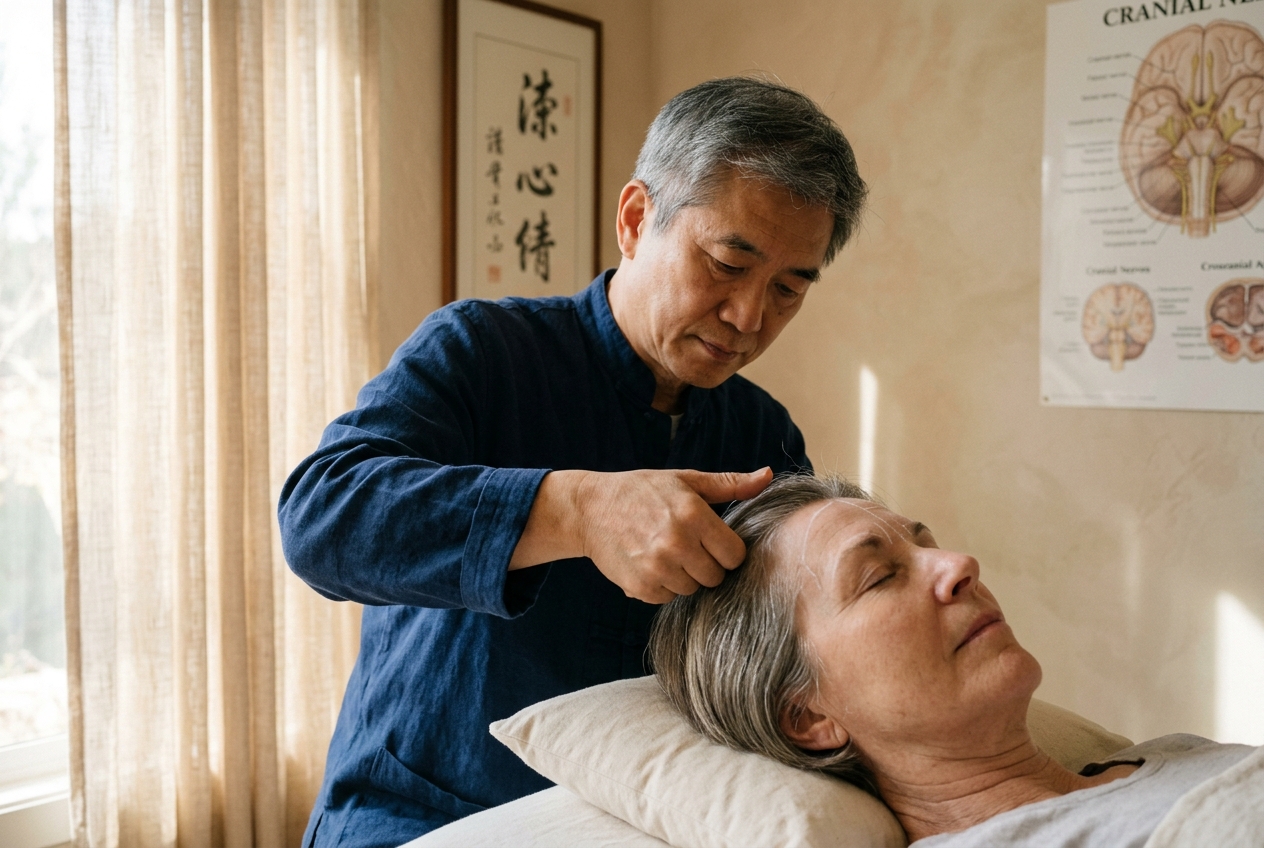
In the mid-1990s, an observant Chinese clinical researcher named Dr. Zhong-Hua Fu challenged the centuries-old assumption that musculoskeletal pain demands deep intramuscular invasion. While investigating the limitations of traditional acupuncture and trigger point dry needling, Dr. Fu discovered that the key to unlocking these hyper-contracted muscular states lay not within the belly of the muscle itself, but in the shimmering, fluid-filled layer of loose connective tissue resting immediately beneath the skin. This clinical breakthrough evolved into Fu's Subcutaneous Needling (FSN), an innovative therapeutic paradigm that abandons perpendicular intramuscular penetration in favor of horizontal, sector-like sweeping within the superficial areolar plane.
FSN bridges classical meridian theory with modern fascial biology, offering a scientific reinterpretation of the ancient Chinese medical concept of Cou Li (腠理)—the interstitial, superficial spaces through which defensive energy and interstitial fluids circulate. By understanding how localized microvascular strangulation locks muscle fibers into continuous spasm, and how mechanical shear strains in superficial fascia trigger systemic neuromuscular resets, clinicians and self-care practitioners can access a transformative method for pain resolution.
The Meridian Path and the Areolar Matrix: A Journey Through the Superficial Body
To understand how superficial interventions alter deep muscular states, one must first explore the landscape of the human subcutaneous layer. Directly beneath the epidermis and dermis lies the superficial fascia—a continuous, body-wide web of loose areolar connective tissue rich in collagen fibers, elastin, and unspecialized ground substance. Rather than acting merely as structural packing material, this layer represents an extensive, highly sensitive sensory organ and a continuous hydraulic continuum.
+-------------------------------------------------------------------------+
|                  EPIDERMIS & DERMIS (Cutaneous Plane)                   |
+-------------------------------------------------------------------------+
|    SUPERFICIAL LOOSE CONNECTIVE TISSUE (Cou Li / Areolar Layer)         |
|    - Low mechanical resistance                                          |
|    - Dense interstitial fluid & hyaluronan matrix                       |
|    - Unmyelinated C-fibers & free nerve endings                         |
|    - [ FSN Horizontal Sweep & Planar Shear Vector Applied Here ]        |
+-------------------------------------------------------------------------+
|                  DEEP INVESTING FASCIA (Epimysium)                      |
+-------------------------------------------------------------------------+
|                  SKELETAL MUSCLE BELLY (Intramuscular Zone)             |
|                  - Contracted Sarcomeres (Tightened Muscle / TM)        |
|                  - Localized Hypoxemia & ATP Depletion                  |
|                  - Microvascular Compression & Lactic Acidosis          |
+-------------------------------------------------------------------------+
In Traditional Chinese Medicine (TCM), the primary meridian pathways trace functional lines across the body that closely align with modern myofascial kinetic chains. Rather than thinking of meridians as esoteric energy conduits, we can conceptualize them as lines of mechanical transmission embedded within the subcutaneous matrix:
- The Anterior Pathway (The Stomach Meridian / Front Functional Line): Begins beneath the eyes, sweeps over the jaw, travels down the throat, descends through the center of the chest and abdomen, passes the crease of the hip, and runs along the outer ridge of the shinbone before terminating at the second toe. When this pathway tightens, the body is pulled into a slumped, forward-flexed posture that compromises deep diaphragmatic breathing and visceral motility.
- The Lateral Pathway (The Gallbladder Meridian / Lateral Line): Originates at the outer corner of the eye, weaves across the side of the skull, cascades over the top of the shoulder, descends the lateral ribcage in a zig-zag trajectory, travels over the prominent bony knob of the outer hip (greater trochanter), tracks down the outside of the thigh and calf, and ends at the fourth toe. This line stabilizes rotational movement; restriction here manifests as tension headaches, temporal throbbing, and locked outer-hip complexes.
- The Upper Limb Exterior Pathway (The Large Intestine Meridian / Superficial Arm Line): Starts at the radial tip of the index finger, crosses the fleshy web between thumb and forefinger, tracks along the lateral seam of the forearm and elbow crease, ascends the outer deltoid, crosses the upper shoulder blade, and ascends the neck to terminate beside the opposite nostril. Overuse of keyboard interfaces and smartphones locks this entire superficial pathway into chronic tension.
When we palpate these pathways, we are engaging the Cou Li layer. Because this loose connective tissue has remarkably low mechanical shear resistance compared to dense deep fascia, gentle, planar horizontal movements can propagate mechanical waves across substantial anatomical distances, communicating directly with underlying kinetic structures.
The Biophysics of Fu's Subcutaneous Needling: Tightened Muscles, Mechanotransduction, and Neural Remodeling
The clinical engine of FSN rests upon a precise physiological redefinition of myofascial dysfunction: the Tightened Muscle (TM) and the Remote Tightened Muscle (RTM).
The Pathophysiology of the Tightened Muscle
A Tightened Muscle is not merely a hypertonic muscle; it is a localized biochemical and biomechanical crisis. The condition initiates when sustained postural strain, repetitive microtrauma, or acute overload causes prolonged firing of acetylcholine at the neuromuscular junction. This persistent depolarization causes an excessive influx of calcium ions ($\text{Ca}^{2+}$) into the sarcoplasm.
Under normal physiological conditions, the sarcoplasmic reticulum uses ATP-driven pumps (the $\text{SERCA}$ pump) to actively resequester cytosolic calcium, allowing the actin and myosin filaments to disengage and the muscle fiber to relax. However, in a developing Tightened Muscle, sustained mechanical contraction compresses the local capillary bed. This microvascular strangulation leads to:
- Severe Local Hypoxemia: Deprived of continuous oxygen delivery, the local mitochondria can no longer sustain oxidative phosphorylation.
- ATP Starvation: Without adequate ATP, the $\text{SERCA}$ pumps fail, leaving calcium trapped in the sarcoplasm and locking the actin-myosin cross-bridges into sustained, involuntary contracture.
- Lactic Acidosis and Nociceptive Sensitization: The ischemic muscle shifts to anaerobic glycolysis, accumulating lactic acid, substance P, and Calcitonin Gene-Related Peptide (CGRP). This acidic, inflammatory milieu lowers the activation threshold of local nociceptive C-fibers, sending persistent nociceptive volleys to the dorsal horn of the spinal cord.
The Remote Tightened Muscle (RTM) occurs when chronic sensory input from a primary Tightened Muscle induces central sensitization within the spinal cord. Through segmental spinal cord reflex arcs, motor neurons supplying synergist or antagonist muscles in adjacent or distant segments become hyper-excitable, creating widespread secondary tightening along corresponding meridian tracks.
Biophysical Mechanics of FSN: The Shallow Sweep
Traditional acupuncture and trigger point dry needling target these dysfunctional zones by plunging needles directly into the tender, hyper-contracted muscle belly (Ah-Shi point needling). While this can evoke a localized twitch response that temporarily breaks the contraction, it induces mechanical micro-trauma, damages local muscle fibers, causes micro-hematomas, and frequently leaves the patient with post-needling soreness lasting 24 to 48 hours.
Dr. Fu’s subcutaneous paradigm takes the opposite approach. In FSN, a specialized disposable cannula needle is inserted at a shallow angle of 15 to 25 degrees, penetrating only the epidermis and dermis before immediately leveling out into the superficial loose subcutaneous tissue. The needle never touches the muscle belly or periosteum. Once positioned in the subcutaneous layer, the practitioner initiates the Sway Movement: a rhythmic, sector-like horizontal oscillation moving smoothly in a wide arc (typically 30 to 45 degrees) at a cadence of roughly 100 to 120 cycles per minute.
This horizontal oscillation produces profound physiological effects through cellular mechanotransduction:
- Collagen Fiber Winding and Interstitial Shear: As established in fascial research by Langevin and colleagues, lateral displacement of a needle within loose connective tissue catches and winds superficial collagen fibrils, generating lateral shear strain across the extracellular matrix.
- Fibroblast Remodeling and Purinergic Signaling: Mechanically stimulated subcutaneous fibroblasts respond within seconds by dynamically flattening, remodeling their cytoskeleton, and releasing extracellular adenosine triphosphate (ATP) and its breakdown product, adenosine. Adenosine acts on vascular receptors to induce rapid, widespread microvascular vasodilation.
- Sympathetic Down-Regulation: The low-threshold, non-nociceptive mechanical stimulation of superficial areolar mechanoreceptors sends afferent signals via large-diameter A-beta fibers into the dorsal horn, inhibiting nociceptive gate transmission (Melzack-Wall Gate Control Theory) and dampening sympathetic vasoconstrictor tone.
The result is rapid reperfusion: blood rushes back into the strangulated capillary beds of the underlying Tightened Muscle, delivering the oxygen and glucose required to restore oxidative phosphorylation, re-energize the $\text{SERCA}$ pumps, flush out lactic acid and inflammatory neuropeptides, and dissolve the contracture without causing structural muscle damage.
3 Key Acupressure Points for Planar Stimulation
While clinical FSN requires specialized sterile cannula needles in the hands of a licensed practitioner, its underlying biophysical principles can be translated into non-invasive, highly effective manual acupressure. By trading perpendicular, focal pressure for tangential shear forces across the subcutaneous plane, you can replicate the mechanotransductive signaling of the Sway Movement.
Below are three foundational points recognized by the World Health Organization (WHO) Standard Acupuncture Locations, translated here into anatomical landmarks and planar manual protocols.
1. Zusanli (ST36) – "Leg Three Miles" (Stomach Meridian)
- Location: Rest your palm over your kneecap on the same side of your body, with your fingers pointing downward. Your ring finger will naturally rest on a small depression roughly four finger-widths below the bottom of the kneecap and one thumb-width to the outside of your prominent shinbone (tibia).
- Sensory Confirmation: When palpated correctly with a rolling motion, you will feel a distinct, dull, spreading ache accompanied by a mild, warm sensation that travels down the outside of the shin toward the ankle.
- Manual Application: Do not press straight down into the bone. Instead, place your thumb flat against the skin at a 20-degree angle and execute a tangential shearing stroke, sliding the superficial skin and areolar layer over the underlying tibialis anterior fascia in a rhythmic, semi-circular arc for 2 to 3 minutes.
- Everyday Utility: Relieves digestive stagnation, restores systemic energy during late-afternoon fatigue slumps, and dissolves tightness along the anterior quadriceps and shin.
2. Hegu (LI4) – "Joining Valleys" (Large Intestine Meridian)
- Location: Bring your thumb and index finger together; a small muscle mound will rise in the web between them. Relax the hand, and find the highest point of that mound on the back of your hand, positioned just alongside the midpoint of the second metacarpal bone (the bone leading to your index finger).
- Sensory Confirmation: A deep, resonant tenderness, occasionally sending a tingling sensation along the radial nerve pathway toward the index finger or up the outer forearm.
- Manual Application: Angle your thumb flat against the back of the hand. Apply firm, sliding pressure directed tangentially toward the bone of the index finger rather than pressing down toward the palm. Sweep the superficial tissue back and forth across the bone's edge at 1 cycle per second for 1.5 to 2 minutes.
- Everyday Utility: Calms acute tension headaches, dissolves stubborn upper trapezius and levator scapulae knots, and reduces acute mental stress by modulating autonomic tone.
3. Yanglingquan (GB34) – "Yang Mound Spring" (Gallbladder Meridian)
- Location: Slide your fingers down the outside of your leg until you feel the small, distinct bony bump just below and outside the knee joint (the head of the fibula). Move your thumb roughly one finger-width forward and slightly downward into the soft depression just in front of and below that bony point.
- Sensory Confirmation: A characteristic spreading ache that radiates down the lateral calf and can occasionally be felt tracking up the iliotibial (IT) band toward the outer hip.
- Manual Application: Place the pad of your thumb into the depression at a low, planar angle. Mobilize the superficial tissue over the underlying peroneal tendons in a smooth, oscillating circular shear for 2 minutes per side.
- Everyday Utility: Known in classical medicine as the Hui-Meeting point of the sinews, GB34 alleviates stiffness along the outer kinetic chain (IT band tightness, sciatic tension) and restores mobility to restricted knee and hip joints.
Reperfusion Activities (RA) and Protocol Combinations
A cornerstone of modern FSN is the implementation of Reperfusion Activities (RA). Dr. Fu observed that while subcutaneous sweeping opens the microvascular bed, actively or passively contracting the affected muscle against resistance during or immediately following fascial stimulation supercharges recovery.
When a muscle contracts against moderate resistance, intramuscular pressure increases, temporarily emptying the venous plexus. Upon release, the dilated capillary beds pull in oxygenated arterial blood, clearing out metabolic waste products and flooding the sarcomeres with ATP to reset calcium balance.
Diagnostic & Treatment Matrix
The following matrix correlates common clinical presentations of Tightened Muscles with their corresponding meridians, superficial sweeping zones, and non-invasive acupressure parameters paired with Reperfusion Activities.
| Clinical Presentation / Tightened Muscle | Primary Meridian Pathway | Superficial Sweep / Acupressure Zone | Non-Invasive Acupressure Parameters | Specific Reperfusion Activity (RA) |
|---|---|---|---|---|
| Cervicogenic Tension & Upper Trapezius TM (Shoulder knots, base-of-skull headache) | Large Intestine (Hand Yangming) & Gallbladder (Foot Shaoyang) | Webbing of hand (LI4) and lateral neck/shoulder margin (GB20 / GB21) | Tangential thumb shearing; low-angle stroke parallel to clavicle; 2 mins at 1.5 Hz | Patient actively elevates and depresses shoulders against manual or strap resistance (5 reps). |
| Lower Lumbar / Quadratus Lumborum TM (Morning low back stiffness, locked hips) | Bladder (Foot Taiyang) & Gallbladder (Foot Shaoyang) | Lateral knee depression (GB34) and posterior popliteal crease (BL40) | Planar circular shear; wide oscillating thumb sweep; 3 mins with moderate firm pressure | In seated position, patient performs active lumbar extension and gentle pelvic tilts against resistance. |
| Anterior Tibial & Gastrocnemius TM (Shin splints, calf cramping, plantar tension) | Stomach (Foot Yangming) & Bladder (Foot Taiyang) | Four fingers below kneecap (ST36) and belly of calf (BL57) | Longitudinal skin rolling along the tibial crest; 2 mins per leg | Seated dorsiflexion and plantarflexion of the foot against resistance of a therapy band (10 reps). |
| Pectoralis Minor TM / Rounded Shoulder (Anterior shoulder impingement, shallow breathing) | Lung (Hand Taiyin) & Pericardium (Hand Jueyin) | Infraclavicular fossa (LU1 / LU2) and inner forearm (PC6) | Superficial horizontal rolling beneath the collarbone; 2 mins sweeping laterally | Horizontal arm abduction while squeezing shoulder blades together against mild resistance. |
| Iliotibial Band & Gluteus Medius TM (Lateral hip pain, outer knee dragging) | Gallbladder (Foot Shaoyang) | Lateral head of fibula (GB34) and posterior-lateral hip crease (GB30) | Tangential, broad thumb sweep across the gluteal fascia; 2.5 mins per side | Side-lying active leg abduction lifting the heel toward the ceiling against gravity (8 reps). |
Step-by-Step Evening Protocol: The Desk-Worker’s Cervical & Mental Reset
For individuals dealing with end-of-day neck tension, screen-induced headaches, and mental fatigue, execute this five-step sequence:
- Preparation (1 Minute): Sit comfortably on an upright chair with feet flat on the floor. Take three slow, diaphragmatic breaths, expanding the lower ribcage to down-regulate baseline sympathetic tone.
- Planar Mobilization of LI4 (2 Minutes per Hand): Rest your left hand on your thigh. Using your right thumb, locate LI4. Apply low-angle, tangential shear pressure toward the index finger bone, moving the superficial skin in a gentle oscillatory arc for two minutes. Switch and repeat on the right hand.
- Cervical Reperfusion Activity (1 Minute): Place both palms behind the back of your head. Gently push your head backward into your hands while your hands provide steady resistance (an isometric contraction of the posterior cervical muscles at roughly 30% maximum effort). Hold for 5 seconds, release for 3 seconds; repeat 5 times.
- Grounding Shear at ST36 (2 Minutes per Leg): Slide your hands down to ST36 on your lower legs. Use both thumbs to execute broad, downward-and-outward sweeping motions across the superficial tissue over the shin muscle for two minutes per side.
- Integration (1 Minute): Close your eyes, let your hands rest in your lap, and observe the sensation of warming reperfusion flushing across your upper shoulders, neck, and lower extremities.
Fascial Mechanics vs. Dry Needling: Safety and Sense
To practice planar acupressure and understand the clinical logic of FSN safely, one must appreciate the structural and physiological boundaries of the human body.
+-----------------------------------+-----------------------------------+
|         FSN / PLANAR SHEAR        |     TRADITIONAL DRY NEEDLING      |
+-----------------------------------+-----------------------------------+
| Target: Loose subcutaneous tissue | Target: Deep intramuscular knot   |
| Trajectory: Horizontal (15°–25°)  | Trajectory: Perpendicular (90°)   |
| Trauma: Zero muscle micro-injury  | Trauma: Micro-tears & soreness    |
| Mechanism: Matrix shear & ATP     | Mechanism: Mechanical twitch      |
| Sensation: Gentle ache / warmth   | Sensation: Sharp cramp / spasm    |
+-----------------------------------+-----------------------------------+
Navigating Pressure and Sensation
Planar acupressure works through mechanotransduction in the superficial fascia, meaning excessive force is counterproductive. If you press so deeply that you bruise tissue or trigger sharp, electric, or lancinating nerve pain, you trigger a sympathetic withdrawal reflex that causes the underlying Tightened Muscle to contract more fiercely. The sensation should always be a comfortable, spreading, dull ache—the classical signature of connective tissue mechanoreceptor activation (De Qi).
Contraindications and Red Flags
- Pregnancy Precautions: Certain points—most notably LI4 (Hegu) and SP6 (Sanyinjiao)—exert strong descending kinetic and neuro-hormonal effects that can stimulate uterine contractility. These points are strictly contraindicated during pregnancy, particularly during the first and second trimesters.
- Local Tissue Vulnerabilities: Never perform FSN or vigorous planar shearing over areas of active skin infection, open wounds, acute inflammatory rashes, severe varicose veins, or deep vein thrombosis (DVT).
- When to Seek Clinical Care: Planar acupressure is an excellent approach for functional, posture-related musculoskeletal strain. However, if your pain is accompanied by progressive numbness, loss of motor strength, bowel or bladder changes, fever, unexplained weight loss, or pain that worsens at rest, consult a qualified physician for a full diagnostic evaluation.
Today’s Takeaway: The 2-Minute Subcutaneous Shear
You do not need an entire afternoon to experience the benefits of subcutaneous mechanotransduction. Before closing this chapter, take two minutes to reset your cervicofacial axis:
+-------------------------------------------------------------------------+
|                  THE 2-MINUTE "JOINING VALLEYS" SHEAR                   |
+-------------------------------------------------------------------------+
|  1. PLACE: Rest your thumb flat on LI4 (webbing between thumb & index). |
|  2. ANGLE: Lower your thumb to a shallow 20-degree angle to the skin.   |
|  3. SWEEP: Move the superficial skin in a horizontal arc across the     |
|     edge of the index finger bone (1 sweep per second).                 |
|  4. BREATHE: Maintain for 60 seconds per hand while exhaling slowly.    |
|                                                                         |
|  RESULT: Immediate microvascular release across the neck and shoulders. |
+-------------------------------------------------------------------------+
By engaging the superficial loose connective tissue rather than fighting the muscle belly, you work in harmony with the body's fascial architecture—unlocking stubborn contractures through gentle, precise mechanobiology.