Ling Shu Five Needling Methods: Navigating Five-Tissue Depth Stratification, Zang Neuromuscular Resonance, and Precision Acupressure Protocols
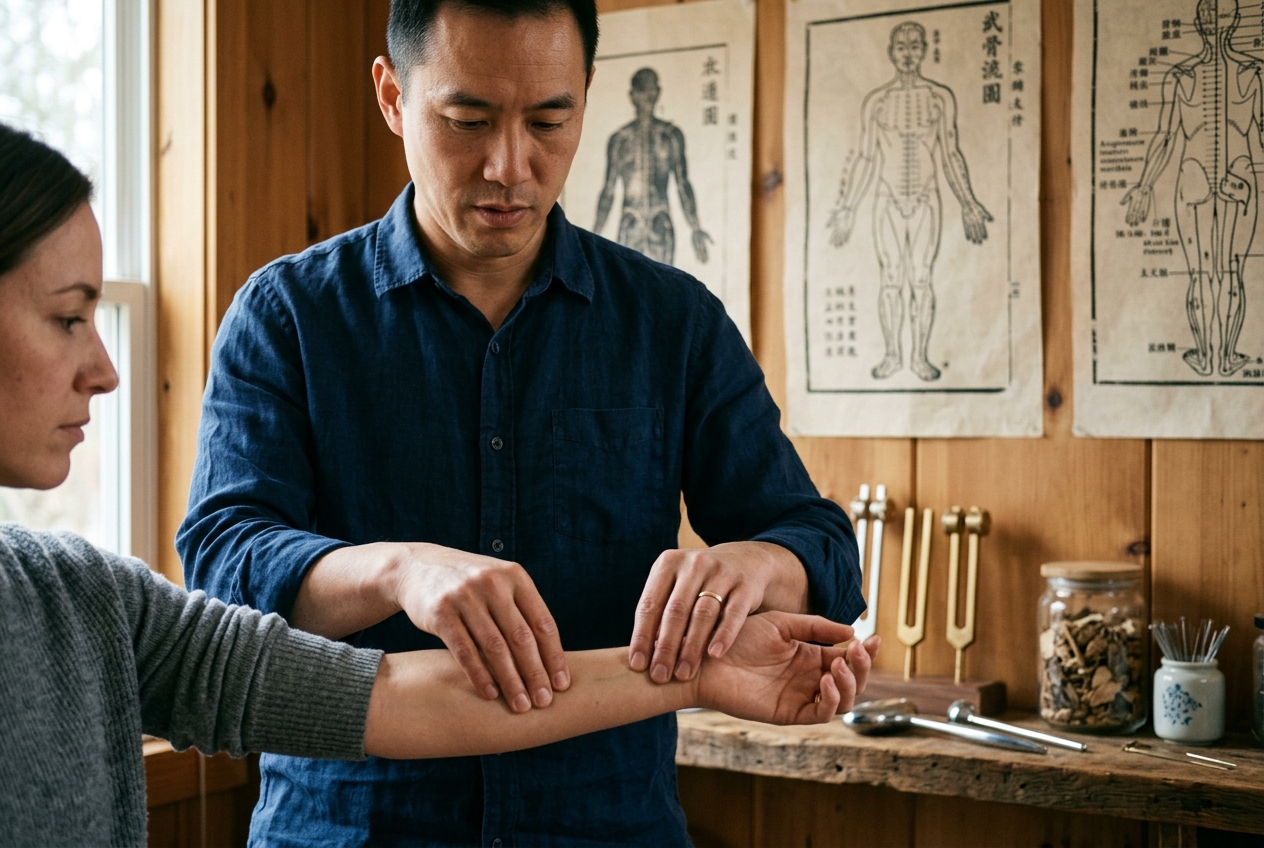
If you have ever spent a gruelling afternoon hunched over a backlit workstation, you will recognise the peculiar, layered geography of bodily distress. There is the superficial, buzzing irritation across the skin of your upper shoulders—a prickling sensitivity where even the collar of a shirt feels intrusive. Beneath that lies the congested, throbbing pulse behind your temples, synchronous with the rhythm of a racing heart. Deeper still, where muscle meets joint at the base of your skull and along the thoracic spine, sits a stubborn, leathery restriction that refuses to yield to ordinary stretching. And in the deepest recess, an intractable, dull ache seems embedded within the very marrow of your lower back.
Modern clinical medicine often treats these disparate discomforts with a blunt, homogenising taxonomy, categorising them broadly as tension, postural strain, or non-specific myofascial syndrome. Yet our lived experience tells us that somatic pain is not a two-dimensional photograph; it is a three-dimensional landscape stratified by depth, tissue density, and physiological tempo.
Two millennia ago, in the foundational text of East Asian medicine—the Huangdi Neijing (Spiritual Pivot / Ling Shu)—classical physicians codified an astonishingly sophisticated framework dedicated to this exact dimensional reality. In Chapter 7, titled Guan Zhen (官针, "The Official Needles"), the authors laid down the Wu Ci (五刺), or the Five Needling Methods. Rather than viewing the human body as an undifferentiated volume or a flat surface of energetic lines, the Wu Ci established that therapeutic intervention must strictly correspond to the Five Tissues (Wu Ti): the skin (Pi), the blood vessels (Mai), the tendons and fascial sheaths (Jin), the fleshy muscle bellies (Rou), and the periosteal bone (Gu). Each tissue layer was understood as the somatic mirror of one of the Five Organ Networks (Wu Zang): the Lung, Heart, Liver, Spleen, and Kidney.
THE FIVE TISSUE STRATA (WU TI) & NEUROLOGICAL RECEPTORS
========================================================================
[ STRATUM ]         [ CLASSICAL METHOD ]   [ ZANG ]   [ PRIMARY RECEPTOR ]
------------------------------------------------------------------------
1. Epidermis/Skin   Ban Ci (Half)          Lung       Merkel Discs / C-Tactile
2. Microvasculature Bao Wen Ci (Leopard)   Heart      Perivascular Sympathetic
3. Fascia/Entheses  Guan Ci (Joint)        Liver      Golgi Tendon Organs
4. Muscle Bellies   He Gu Ci (Valley)      Spleen     Muscle Spindles / Pacinian
5. Periosteum/Bone  Shu Gu Ci (Bone-Deep)  Kidney     Periosteal Nociceptors
========================================================================
Today, as contemporary biophysics unravels the mysteries of fascial mechanotransduction and sensory neurophysiology, the Wu Ci re-emerges not as an archaic relic of pre-scientific thought, but as a prescient biomechanical blueprint. By translating these invasive ancient needle trajectories into precise, non-invasive acupressure parameters—modulating depth, angle, shear frequency, and dwell time—we uncover a potent manual medicine capable of systematically unwinding chronic pain patterns from the epidermis down to the periosteum.
1. The Meridian Path: A Three-Dimensional Journey Through the Living Matrix
To grasp why tissue depth matters, one must first dismantle the prevailing misconception of an acupuncture meridian as an ethereal, one-dimensional line drawn upon the surface of the skin. In classical medical literature and modern fascia research alike, a channel (Jing Luo) is understood as a continuous, three-dimensional collagenous highway—a cleavage plane within the subcutaneous connective tissue that guides interstitial fluid, vascular networks, and peripheral nerve bundles.
Consider the somatic journey traced across the major functional axes of the body. When you trace the Lung and Pericardium pathways down the inner arm, you are not tracing an abstract energetic line; you are navigating the intermuscular septa separating the biceps brachii, brachialis, and forearm flexor compartments. The pathway begins near the clavicular hollow—the soft depression beneath your collarbone where breathing tension accumulates—travels down the muscular crease of the bicep, dives beneath the transverse carpal ligament of the wrist, and terminates at the vascular beds of the fingertips.
Descend further into the lower extremity, along the Gallbladder, Spleen, and Urinary Bladder channels, and the anatomical architecture deepens. The Gallbladder pathway navigates the lateral seam of the leg, following the thick, glistening band of the iliotibial tract down to the fibular head, anchoring into the fibrous joint capsules that stabilise every lateral step you take.
Concurrently, the Spleen pathway ascends the medial valley of the calf, gliding along the posterior border of the shinbone where dense myofascial compartments cradle the primary lymphatic and venous return pumps. Along the dorsal aspect, the Urinary Bladder meridian cascades through the massive postural muscular columns of the erector spinae, plunging directly through the soft, vulnerable neurovascular hollow behind the knee before anchoring into the calcaneus.
When mechanical force is applied to these pathways, it does not stop at the surface. Mechanical tension propagates through the continuous, hydrated extracellular matrix (ECM), bending cellular membranes, opening stretch-activated ion channels, and initiating cascades of biochemical signalling. The critical variable is not merely where you press, but at what depth the mechanical signal resonates.
2. Deconstructing the Five Needling Methods (Wu Ci): From Classical Canon to Cellular Physics
Chapter 7 of the Ling Shu presents the Wu Ci as an operational manual for tissue-specific therapeutics. Each method engages a distinct anatomical layer, activates specialized neurobiological mechanoreceptors, and elicits a tailored autonomic and immunomodulatory response.
I. Ban Ci (半刺 · Half Needling): The Epidermal Frontier and the Pulmonary Network
"Ban Ci involves shallow insertion and rapid extraction without injuring the flesh, resembling the plucking of a fine hair. It governs the skin and expels pathogens from the Lung network."
— Ling Shu, Chapter 7
Classical Context & Pathophysiology
The classical designation "Half Needling" derives from its rapid, superficial nature; the needle barely penetrates the dermis and is withdrawn immediately, treating acute external invasions, thermal dysregulation, and surface hypersensitivity. In Five Phase correspondence, the skin and body hair (Pi Mao) belong to the metal element and the Lung (Fei), which disperses Wei Qi (defensive energy) across the organism’s outer boundary.
Neurobiology & Mechanotransduction
The epidermal and superficial dermal layers contain a dense array of specialized sensory structures: * Merkel Cell-Neurite Complexes: Slowly adapting type I (SA-I) mechanoreceptors located in the basal layer of the epidermis, sensitive to static light touch, micro-displacement, and tissue sustained indentation. * Meissner Corpuscles: Rapidly adapting mechanoreceptors responding to light fluttering, low-frequency oscillations (10–50 Hz), and dynamic skin slip. * Unmyelinated C-Tactile (CT) Afferents: Low-threshold mechanoreceptive fibers that process gentle, slow stroking touch, directly driving parasympathetic tone and down-regulating amygdala-mediated threat responses.
       Skin Surface  ~~~~~~~~~~~~~~~~~~~~~~~~~~~~~~~~~~~~ (Light Shear / 3-5 Hz)
       Epidermis     [ Merkel Discs ] -> SA-I Afferents -> Dorsal Horn Gating
       Papillary     [ C-Tactile ]    -> Insular Cortex  -> Vagal Upregulation
       Dermis        [ Capillary Loops & Mast Cells ]     -> Transient Histamine / Sub-P
When applying manual Ban Ci stimulation, mechanical shear stress across the keratinocyte layer stimulates the local release of adenosine triphosphate (ATP) and beta-endorphins, while simultaneously triggering mast cell degranulation that regulates local microcirculation without systemic stress.
Translation: Non-Invasive Acupressure Protocol for LU7 (Lieque)
- Precise Anatomical Landmark: On the radial margin of the forearm, roughly 1.5 finger-widths proximal to the principal wrist crease, resting in the subtle groove between the tendons of brachioradialis and abductor pollicis longus.
- The "Right Spot" Somatosensory Feedback: A delicate, electric, radiating sensation tracing along the radial border of the thumb, accompanied by a subtle local skin warmth.
- Acupressure Execution:
- Vector & Angle: Tangential, 15-degree angle tracking proximally toward the elbow.
- Depth & Force: Extremely light, epidermal feathering (100–200 grams of pressure; do not compress subcutaneous tissue).
- Oscillation & Dwell: High-frequency, low-amplitude vibration (3–5 Hz) for 90 seconds.
- Daily Clinical Indications: Acute scratchy throat, environmental sensory overload, tension headaches centered across the occiput and temples, and acute nasal congestion.
II. Bao Wen Ci (豹文刺 · Leopard Spot Needling): Micro-Vascular Collateral Decompression and the Heart
"Bao Wen Ci utilizes multiple puncturing around congested vessels, bleeding them to drain the network. It mirrors the spots of a leopard and targets the Blood Vessels to communicate with the Heart."
— Ling Shu, Chapter 7
Classical Context & Pathophysiology
Bao Wen Ci historically involved circumferential micro-puncturing around visible, engorged venules (Luo Mai) to clear microvascular stasis, systemic inflammation, and emotional agitation. In classical physiology, the Blood Vessels (Mai) house the Shen (the conscious spirit) and are governed by the Heart (Xin).
Neurobiology & Mechanotransduction
Blood vessels are enveloped by a complex network of perivascular unmyelinated sympathetic fibers and sensory C-fibers containing substance P and calcitonin gene-related peptide (CGRP). * When venous blood stagnates within terminal micro-collaterals, local interstitial fluid pressure spikes, causing local tissue hypoxia, acidosis, and sensitization of surrounding polymodal nociceptors. * Rhythmic manual compression creates pulsed shear stress across the vascular endothelium. This biomechanical trigger upregulates endothelial nitric oxide synthase (eNOS), releasing nitric oxide (NO) which induces local smooth-muscle relaxation, washes out inflammatory cytokines (TNF-α, IL-1β), and reduces sympathetic perivascular tone.
Translation: Non-Invasive Acupressure Protocol for PC6 (Neiguan)
- Precise Anatomical Landmark: On the palmar aspect of the forearm, two thumb-widths proximal to the distal wrist crease, nested directly between the prominent, cord-like tendons of palmaris longus and flexor carpi radialis.
- The "Right Spot" Somatosensory Feedback: A distinct, spreading ache carrying a mild, non-painful tingling sensation that migrates through the palm into the middle finger.
- Acupressure Execution:
- Vector & Angle: Perpendicular, with a slight distal tilt toward the palm.
- Depth & Force: Moderate, vascular-depth compression (approx. 500–800 grams; firm enough to blanch capillary beds without structural bruising).
- Oscillation & Dwell: Rhythmic, pulsatile decompression (1–2 Hz, synchronized to slow, deep respiration) for 2 to 3 minutes.
- Daily Clinical Indications: Situational palpitations, work-induced anxiety, nausea or motion sickness, and tight, constrictive chest sensation caused by prolonged sitting.
III. Guan Ci (关刺 · Joint Needling): Tenosynovial Entheses, Golgi Afferents, and the Liver
"Guan Ci involves needling directly into the tendons near the joints to treat chronic tendon contracture and stiffness. It governs the Tendons and communicates with the Liver."
— Ling Shu, Chapter 7
Classical Context & Pathophysiology
Guan Ci targets the dense fibrous connective tissues where tendons and ligaments coalesce around major articular junctures (Guan). In the Five Zang framework, the Liver (Gan) rules the Sinews (Jin), controlling the smooth, unrestricted kinetic gliding of the musculoskeletal system. Pathologically, when the Liver network is exhausted or blood-deficient, the sinews desiccate, resulting in joint fixation, tenosynovitis, and snapping tendons.
Neurobiology & Mechanotransduction
Periarticular insertions (entheses) are populated by specialized mechanoreceptive endings: * Golgi Tendon Organs (GTOs): Encapsulated structures woven in series with collagen fibers at the musculotendinous junction, innervated by fast-conducting group Ib sensory afferents. When sustained, non-damaging mechanical tension is applied, GTOs fire, inducing an autogenic inhibitory reflex in the spinal cord that forces the chronically shortened muscle belly to relax. * Ruffini Endings (Type II Mechanoreceptors): Slowly adapting receptors embedded within the deep articular capsules and ligamentous sheets that monitor mechanical stretch, lateral strain, and joint position.
Applying sustained ischemic compression across these entheses reorganizes disorganized collagen fibrils, stimulates hyaluronan synthesis by specialized fascial fibroblasts, and restores sliding-plane mechanics between adjacent fascial layers.
Translation: Non-Invasive Acupressure Protocol for GB34 (Yanglingquan)
- Precise Anatomical Landmark: In the tender, cup-shaped depression situated just anterior and inferior to the bony head of the fibula on the outer lateral aspect of the leg.
- The "Right Spot" Somatosensory Feedback: A deep, spreading, dull ache that can be felt tracking down the lateral compartment of the calf into the ankle.
- Acupressure Execution:
- Vector & Angle: Oblique, directing pressure posterior-medially toward the fibular neck.
- Depth & Force: Deep, structural entheseal pressure (1.5 to 2.5 kg of force; firmly engaging the fibrous insertion).
- Oscillation & Dwell: Static, sustained ischemic compression with zero oscillation for 45–60 seconds, accompanied by active, gentle ankle rotation (dorsiflexion and circumduction).
- Daily Clinical Indications: Chronic lateral knee stiffness, tight hip flexors and IT band syndrome, shoulder blade pinching, and side-body rib cage restriction.
IV. He Gu Ci (合谷刺 · Valley Needling): Multi-Directional Myofascial Vectoring and the Spleen
"He Gu Ci requires puncturing deep into the thick flesh, vectoring the needle in multiple directions like the talons of a chicken, to treat muscular cold and generalized spasm. It governs the Flesh and communicates with the Spleen."
— Ling Shu, Chapter 7
Classical Context & Pathophysiology
He Gu Ci is the classical antecedent to modern trigger point dry needling and deep myofascial release. It commands puncturing into voluminous muscle groups and fanning the needle diagonally across multiple tissue vectors. The Spleen (Pi) rules the Flesh and the Four Limbs (Rou), governing muscle bulk, metabolic nourishment, and structural tone. Weakness or stagnation in the Spleen yields heavy, weak limbs, myofascial trigger point development, and boggy, fluid-infiltrated muscles.
Neurobiology & Mechanotransduction
Thick skeletal muscle bellies house distinct mechanoreceptive sensors: * Pacinian Corpuscles: Rapidly adapting, lamellated mechanoreceptors situated in the deep epimysium and intermuscular septa, responding dynamically to rapid changes in mechanical pressure and directional shearing vectors. * Myofascial Trigger Nodes (MTrPs): Focal hyperirritable spots within taut bands of skeletal muscle fibers, characterized by sustained acetylcholine leakage at the motor endplate, persistent sarcomere contraction, local ischemia, and an acidic metabolic environment rich in inflammatory biomarkers.
By utilizing a multi-directional fanning vector (cross-fiber friction followed by longitudinal shear), the clinician mechanically disrupts dysfunctional actin-myosin cross-bridges, resets the resting tone of intrafusal muscle spindle fibers, and mechanically forces stagnant interstitial fluid out of the ischemic knot, inviting fresh, oxygenated arterial blood upon release.
Translation: Non-Invasive Acupressure Protocol for SP9 (Yinlingquan)
- Precise Anatomical Landmark: On the inside of the lower leg, in the pronounced hollow directly beneath the large medial condyle of the tibia, level with the lower curve of the tibial tuberosity.
- The "Right Spot" Somatosensory Feedback: A sharp, intense, highly characteristic soreness that radiates down the inner border of the shin toward the arch of the foot.
- Acupressure Execution:
- Vector & Angle: Multi-directional fanning. Press directly into the posterior border of the tibia, then sweep the thumb angle 45 degrees superiorly, followed by a 45-degree sweep inferiorly into the soleus attachment.
- Depth & Force: Deep, structural intramuscular force (2.0 to 3.5 kg of calibrated pressure).
- Oscillation & Dwell: Cross-fiber mobilization at 1 Hz for 60 seconds, followed by deep static compression for 60 seconds.
- Daily Clinical Indications: Heavy, swollen legs after prolonged standing, post-meal lethargy, abdominal distension, and inner knee medial collateral strain.
V. Shu Gu Ci (输骨刺 · Bone-Deep Needling): Periosteal Mechanoreceptors and the Renal Network
"Shu Gu Ci requires deep perpendicular entry directly onto the bone, scraping neither left nor right, to clear deep bone Bi syndromes and cold deep within the marrow. It governs the Bones and communicates with the Kidney."
— Ling Shu, Chapter 7
Classical Context & Pathophysiology
Shu Gu Ci represents the ultimate depth of classical intervention. The instrument penetrates through skin, vasculature, fascia, and muscle until its tip firmly encounters the periosteal surface of the bone. In Five Phase medicine, the Kidney (Shen) rules the Bones and Marrow (Gu Sui). Pathologies reaching this layer are chronic, structural Bi syndromes—intractable, deep-seated conditions involving degenerative joint changes, osteoarthritic aches, and systemic depletion of vital reserves.
Neurobiology & Mechanotransduction
The periosteum—the fibrous sheath covering the outer cortical bone surface—is one of the most richly innervated tissues in the human body: * It is saturated with unmyelinated and thinly myelinated Group III and Group IV free nerve endings, functioning as high-threshold mechanoreceptors and nociceptors. * Mechanical stimulation of the periosteum triggers Diffuse Noxious Inhibitory Control (DNIC), a potent descending analgesic pathway mediated by the periaqueductal gray (PAG) and rostral ventromedial medulla (RVM) in the brainstem. This descending pathway floods the spinal dorsal horn with endogenous opioids and serotonin, systematically dampening wide-dynamic-range (WDR) neuron hyperexcitability across the entire neuraxis. * Furthermore, cortical bone exhibits remarkable piezoelectric properties: mechanical micro-deformation generates small electrical currents that stimulate osteoblast differentiation and accelerate tissue repair.
Translation: Non-Invasive Acupressure Protocol for BL40 (Weizhong)
- Precise Anatomical Landmark: In the dead center of the popliteal crease on the posterior knee, situated squarely between the biceps femoris and semitendinosus tendons, accessing the deep popliteal fossa.
- The "Right Spot" Somatosensory Feedback: A deep, electrical, radiating pulse that travels both upward through the hamstrings and downward into the center of the heel.
- Acupressure Execution:
- Vector & Angle: Strict perpendicular pressure directed anteriorly toward the posterior surface of the distal femur.
- Depth & Force: Very deep, gradual compression (3.0 to 4.0 kg of pressure; must be applied progressively over 10 seconds to allow superficial tissues to relax).
- Oscillation & Dwell: Static compression for 90 seconds while performing deep, 4-second diaphragmatic inhalations and 6-second exhalations.
- Daily Clinical Indications: Severe lower back spasm, sciatica, persistent morning stiffness in the spine, and deep, cold-weather knee ache.
========================================================================================
             SYNOPTIC MATRIX: LING SHU CHAPTER 7 "WU CI" TO MODERN PROTOCOL
========================================================================================
Method      Organ   Target Tissue   Receptor Focus       Key Point  Angle / Dynamic
----------------------------------------------------------------------------------------
Ban Ci      Lung    Epidermis/Skin  Merkel / C-Tactile   LU7        15° Tangential, 3-5 Hz
Bao Wen Ci  Heart   Blood Vessels   Sympathetic / NO     PC6        Perpendicular, 1-2 Hz
Guan Ci     Liver   Tendon/Enthesis Golgi / Ruffini      GB34       Oblique-Post., Static
He Gu Ci    Spleen  Muscle Belly    Pacinian / Trigger   SP9        Tri-Vector Fan, 1 Hz
Shu Gu Ci   Kidney  Periosteum/Bone Grp III/IV Free End  BL40       Strict Perp., Sustained
========================================================================================
3. Comparative Neuro-Biomechanical Summary
To understand how these stratified interventions interact with the nervous system, consider the differential signaling pathways recruited at each discrete anatomical depth.
Depth Tier        Tissue Substrate             Primary Mechanoreceptor      Spinal / Supraspinal Target
---------------------------------------------------------------------------------------------------------
Tier 1: 0.1-0.5mm Epidermal-Dermal Matrix      Merkel Discs, CT Afferents   Dorsal horn gate / Insula
Tier 2: 1.0-3.0mm Perivascular Sheaths         Unmyelinated Sympathetics    eNOS release / Hypothalamus
Tier 3: 5.0-10mm  Periarticular Entheses       Golgi Tendon Organs (Ib)     Spinal autogenic inhibition
Tier 4: 10-25mm   Deep Intramuscular Septa     Muscle Spindles, Pacinian    Motor endplate / Sensorimotor
Tier 5: >25mm     Periosteum / Cortical Bone   Group III/IV Nociceptors     Descending PAG-RVM / DNIC
The clinical genius of the Ling Shu lies in recognizing that an intervention targeting Tier 1 produces a fundamentally different systemic state than an intervention targeting Tier 5. Using heavy, deep force on an acute, superficial skin disorder will exacerbate inflammation, while superficial tickling over an arthritic, periosteal bone stagnation will yield zero therapeutic return.
4. A Multi-Depth Clinical Protocol for Daily Restoration
To illustrate how these stratified depths work in clinical synergy, let us construct an evidence-based evening protocol to resolve one of the most ubiquitous modern ailments: Cervicocranial Tension and Postural Exhaustion following a long day of screen-based cognitive work.
       ===========================================================
       EVENING 7-MINUTE CERVICOCRANIAL DECOMPRESSION PROTOCOL
       ===========================================================
       [STAGE 1: 00:00-02:00]  Deep Periosteal Anchoring (BL40)
                               -> Activate Descending Analgesia (DNIC)
       [STAGE 2: 02:00-04:00]  Entheseal Joint Unwinding (GB34)
                               -> Inhibit Kinetic Chain Spasm
       [STAGE 3: 04:00-05:30]  Microvascular Decompression (PC6)
                               -> Lower Sympathetic Arterial Tone
       [STAGE 4: 05:30-07:00]  Epidermal Gating & Wei Qi Sweep (LU7)
                               -> Balance Sensory Afferent Input
       ===========================================================
Stage 1: Grounding the Axis (Bone-Deep / Shu Gu Ci at BL40)
- Execution: Sit comfortably on the edge of a firm chair. Place both thumbs directly into the center of the popliteal creases behind your knees (BL40). Lean forward slightly to allow your torso's weight to gradually sink your thumbs through the hamstring tendons toward the posterior femoral surface.
- Dwell Time: Hold firm, unmoving, deep pressure for 90 seconds. Breathe deeply, extending your exhalations.
- Mechanism: Activates deep periosteal mechanoreceptors, triggering the brainstem's descending inhibitory pain pathway to quiet neuromuscular guarding throughout the entire spine.
Stage 2: Releasing the Lateral Kinetic Chain (Entheseal / Guan Ci at GB34)
- Execution: Move your thumbs down to the outside of your upper calves, landing in the pocket just below the bony fibular head (GB34). Press firmly back against the bone, and while holding this deep ischemic pressure, slowly trace 5 slow circles with your foot.
- Dwell Time: 60 seconds on each leg.
- Mechanism: Engages the Golgi tendon organs at the peroneal enthesis, inducing autogenic reciprocal relaxation that travels up the lateral myofascial line into the neck and jaw.
Stage 3: Venting Vascular Heat and Anxiety (Vascular / Bao Wen Ci at PC6)
- Execution: Shift your attention to the inner forearm. Place your right thumb between the two tendons two inches above your left wrist crease (PC6). Apply a rhythmic, gentle pumping action—pressing firmly for 3 seconds, then softening for 1 second—synchronizing with a slow, relaxed breathing cadence.
- Dwell Time: 90 seconds per arm.
- Mechanism: Stimulates perivascular autonomic plexuses, boosting nitric oxide release and slowing the heart rate to transition the nervous system out of sympathetic overload.
Stage 4: Superficial Field Integration (Epidermal / Ban Ci at LU7)
- Execution: Hook your index finger over the lateral edge of the opposite wrist into the small groove near the radial bone edge (LU7). Do not press deeply. Instead, use the soft pad of your index finger to execute a light, rapid, fluttering brushstroke upward toward the elbow.
- Dwell Time: 60 seconds per side.
- Mechanism: Stimulates low-threshold C-tactile afferents and Merkel complexes, soothing cutaneous hypersensitivity and promoting whole-body sensory coherence.
5. Safety, Clinical Boundaries, and the Phenomenology of Deqi
Acupressure is fundamentally non-invasive, but applying high-precision biomechanical force requires clear clinical discernment. Understanding anatomical safety corridors and respecting contraindications ensures therapy remains safe and restorative.
+-----------------------------------------------------------------------------------+
|                           CRITICAL SAFETY CORRIDORS                               |
+-----------------------------------------------------------------------------------+
| 1. PREGNANCY CAUTIONS:                                                            |
|    - Strictly avoid deep, descending acupressure on points known to stimulate     |
|      uterine contractility: LI4 (Hegu), SP6 (Sanyinjiao), and GB21 (Jianjing).    |
|                                                                                   |
| 2. VASCULAR & NERVE TRUNKS:                                                       |
|    - When working in the popliteal fossa (BL40) or femoral triangle, always use   |
|      broad, steady thumb contact. NEVER use sharp, pointed tools that could       |
|      pinch the tibial nerve or popliteal artery.                                  |
|                                                                                   |
| 3. LOCAL DERMAL PATHOLOGY:                                                        |
|    - Do NOT perform acupressure over acute open wounds, active infections,        |
|      phlebitis, unhealed scar tissue, or advanced varicose veins.                 |
+-----------------------------------------------------------------------------------+
The Sensory Boundary: Deqi versus Mechanical Trauma
In both acupuncture and clinical acupressure, the hallmark of correct tissue engagement is the sensation of Deqi (得气, "the arrival of vital influence"). Research documented in the World Health Organization Acupuncture Guidelines and modern NCBI neuroimaging studies characterizes Deqi as a constellation of unique subjective sensations: * A deep, dull, spreading ache (Suan) * A heavy, spreading distension (Zhang) * A comfortable, radiant warmth (Re) * A mild, traveling electrical tingling (Ma)
Deqi indicates successful mechanoreceptor engagement and autonomic neural recruitment. By contrast, sharp, lancinating, knife-like pain or immediate electric-shock paresthesia signals mechanical nerve impingement or excessive, damaging pressure. If sharp pain occurs, immediately decrease your depth and soften the vector.
When to Seek Professional Consultation
Self-administered acupressure is designed to manage functional strain and restore daily equilibrium. It is not a substitute for comprehensive medical evaluation. You should promptly consult a physician or licensed practitioner if you experience: * Severe, unremitting nocturnal pain or unexplained weight loss * Sudden motor weakness, foot drop, or loss of bowel/bladder sensation * Acute, severe joint swelling accompanied by heat and systemic fever * Pain originating from direct, high-impact mechanical trauma
6. Today's Takeaway: The Two-Minute Reset You Can Do Right Now
You do not need an entire clinic or an hour of free time to put the principles of Ling Shu Chapter 7 into practice. If you are sitting at your desk right now, experiencing the mid-afternoon cognitive slump accompanied by tight breathing and a stiff neck, perform this 120-Second Bilateral Hemodynamic Reset:
========================================================================
          THE 120-SECOND VASCULAR & EPIDERMAL COMMUTE RESET
========================================================================
[00:00 - 01:00]  Vascular Pumping at PC6 (Decompress the Chest)
                 - Depth: 2-3mm (Moderate firm blanching)
                 - Cadence: 1 Hz rhythmic pulse
                 - Benefit: Lowers heart rate, eases chest tension

[01:00 - 02:00]  Epidermal Fanning at LU7 (Clear the Head & Eyes)
                 - Depth: 0.1mm (Featherlight surface stroking)
                 - Cadence: 4 Hz rapid sweeping
                 - Benefit: Calms mental fatigue, releases neck tension
========================================================================
- Minute 1 (Vascular Depth - Bao Wen Ci at PC6): Place your thumb between the two central tendons of your inner wrist, two thumb-widths up from the crease. Press down firmly until you feel a satisfying, spreading ache. Pulse your pressure rhythmically—firm for two seconds, softer for one second—while taking three long, deep breaths down into your lower abdomen. Feel the tension around your chest and temples begin to ease.
- Minute 2 (Epidermal Depth - Ban Ci at LU7): Shift your thumb to the outer thumb-side edge of the same wrist, resting in the soft groove next to the radial bone. Without pressing deeply, sweep your thumb lightly and rapidly upward toward your elbow in a quick, brushing motion. Maintain this light, fluttering contact for 60 seconds.
By changing not just where you touch, but the depth and quality of the mechanical signal you deliver, you step out of vague physical distress and enter the intelligent, stratified architecture of the body. Two thousand years after the Ling Shu was brushed onto bamboo slips, its fundamental insight remains clear: when we touch the body at the proper depth, the nervous system readily remembers how to heal.
Authoritative References & Further Academic Reading
- Huangdi Neijing Ling Shu (The Spiritual Pivot) — Chapter 7, Guan Zhen (官针). Wikipedia Reference & Historical Context.
- Langevin, H. M., et al. (2007). Biomechanical response to acupuncture needling in humans: the role of connective tissue and mechanotransduction. NCBI PubMed PMID: 18054721.
- World Health Organization (2008). WHO Standard Acupuncture Point Locations in the Western Pacific Region. WHO Publication Guidelines.
- Hui, K. K., et al. (2010). Acupuncture, the deqi response, and the regulation of the human brain's default mode network. NCBI PubMed PMID: 24930171.
- Gerwin, R. D. (2015). Myofascial Trigger Points and Neurobiological Mechanoreceptors in Musculoskeletal Pain. NCBI PubMed PMID: 26359686.