Emetic Formulas (Yong Tu Ji) Prescription Dynamics: Governing Acute Toxic Evacuation, Phlegm-Drool Emetic Expulsion, Upper Orifice Clearance, and Gastric Decontamination in Traditional Chinese Medicine
1. Opening Scene — A Moment You'll Recognise
Imagine the sudden, overwhelming sensation of an acute thoracic blockage: a thick, suffocating glair of phlegm trapped high in the larynx that no amount of clearing can dislodge, or the violent, distending fullness of toxic food stagnation lodged high in the cardiac orifice of the stomach after consuming a tainted meal. Your chest tightens, your breathing turns labored and shallow, cold perspiration beads along your forehead, and your entire body enters a visceral crisis of stasis. Every natural reflex screams that the obstruction is sitting right at the threshold of the throat and upper chest, completely inaccessible to downward digestion, yet stubbornly refusing to clear on its own.
In modern emergency medicine, this state represents acute upper gastrointestinal intoxication or severe upper respiratory mechanical occlusion. In the classical framework of Traditional Chinese Medicine (TCM), this acute dilemma is the precise domain of the Emetic Method (Tu Fa 吐法)—the most dramatic and rapid-acting of the canonical Eight Therapeutic Methods (Ba Fa 八法).
Where contemporary medicine relies on gastric lavage tubes or synthetic emetics, classical physicians recognized that the human body possesses an innate, highly coordinated neuromuscular ejection vector. When an acute pathogen is trapped above the diaphragm, attempting to force it downward through the intestines via purgation is not only ineffective; it invites catastrophic interior penetration. The only viable path to restoration is to mobilize the upward and outward physiological surge of the body, violently dislodging the stagnation at its anatomical point of origin.
2. What This Organ System Does: The Mechanics of Upper Burner Qi and the Emetic Method (Tu Fa)
To understand how emetic formulas work, one must first grasp the physiological polarity of the Upper Burner (Shang Jiao 上焦) and the Stomach (Wei 胃). Under normal, healthy physiological conditions, the Qi of the Stomach is fundamentally characterized by downbearing (Wei Qi Zhu Jiang 胃气主降). It receives ingested food, rots and ripens it (Fu Shu Shui Gu 腐熟水谷), and propels the chyme downward into the Small Intestine. Simultaneously, the Spleen governs the ascending of clear essence (Pi Qi Zhu Sheng 脾气主升), sending nutritional vapor upward to the Lung and Heart.
However, when acute pathogenic factors—such as severe undigested food mass (Shi Zhi 食滞), tenacious phlegm-drool (Tan Xian 痰涎), or ingested toxic poisons (Du Wu 毒物)—lodge obstinately in the upper stomach, thoracic cavity, or pharyngeal vault, this delicate descending vector is entirely obstructed. The pathogen sits suspended above the diaphragm (Ge Shang 膈上).
In this unique clinical state, the physician employs the strategic principle of guiding according to natural momentum (Yin Shi Li Dao 因势利导). Formulated systematically in the foundational medical canon, the Huangdi Neijing Suwen, Chapter 74 declares:
$$\text{"What is high should be brought out upward; what is overflowing should be drained."}$$
Emetic formulas (Yong Tu Ji 涌吐剂) are pharmacological agents deliberately engineered with powerful ascending (Sheng 升) and outwardly dispersing (San 散) vectors. Rather than combating the pathology with gentle harmonisation, these formulas ignite an intense, temporary therapeutic counterflow (Qi Ni 气逆). By surging upward through the stomach and esophagus, Yong Tu Ji clears the throat, purges the pericardial and thoracic spaces of turbid mucus, and evacuates noxious substances before they can sink into the Middle and Lower Burners to create systemic septic heat or enter the blood.
3. How You Can Feel It — Signs of Balance and Imbalance in Upper Burner Obstruction
The clinical presentation requiring emetic intervention is never subtle. It represents a critical, acute state of excess (Shi Zheng 实证) where the upper orifices are mechanically or energetically occluded.
Hallmarks of Severe Upper Burner Obstruction
When pathogenic fluids and toxins accumulate above the diaphragm, the patient exhibits distinct somatic, psychological, and physiological markers:
- Acute Phlegm Syncope (Tan Jue 痰厥) & Thoracic Rattling: The airway is choked with excessive, frothy, or viscous phlegm-drool. The patient produces loud, rattling rales (Tan Ming 痰鸣) in the throat, accompanied by sudden dyspnea, sensation of suffocation, and potential loss of consciousness due to phlegm blocking the sensory orifices of the Heart.
- Severe Epigastric Food Stagnation (Shi Zhi Gao Wei 食滞高位): Intense, unyielding epigastric distension occurring shortly after a heavy or corrupted meal. The patient experiences continuous dry retching (Gan Ou 干呕), putrid sulfurous belching, severe nausea, and a suffocating fullness centered directly beneath the xiphoid process.
- Phlegm-Fire Mania (Dian Kuang 癫狂): Sudden onset of manic behavior, incoherent speech, or catatonic stupor caused by turbid phlegm-fire misting the Heart-Mind (Tan Huo Rao Xin 痰火扰心).
- Diagnostic Tongue and Pulse Presentation:
- Tongue: Covered by an extremely thick, greasy, turbid coating (white and slippery for cold-phlegm; yellow, slimy, and dry for phlegm-heat) that appears glued to the tongue body.
- Pulse: Typically floating and slippery (Fu Hua Mai 浮滑脉) or tight, wiry, and forceful (Xian Jin Mai 弦紧脉) in the inch (Cun 寸) and barrier (Guan 关) positions, indicating acute excess pathogen surging upward against the thoracic perimeter.
+-----------------------------------------------------------------------------------+
|                           CLINICAL SELF-ASSESSMENT GRID                           |
+------------------------------+----------------------------------------------------+
| HEALTHY UPPER BURNER DYNAMICS| Free chest breathing, clear phonation, natural     |
|                              | post-prandial descent, bright sensory orifices.    |
+------------------------------+----------------------------------------------------+
| ACUTE PHLEGM-DROOL BLOCKAGE  | Glottic rattling, choking sensation, heavy chest,  |
|                              | thick slimy tongue coat, slippery bounding pulse.  |
+------------------------------+----------------------------------------------------+
| HIGH GASTRIC FOOD STAGNATION | Agonizing subxiphoid pressure, putrid belching,    |
|                              | failed downward motility, unrelenting nausea.      |
+------------------------------+----------------------------------------------------+
4. Classical Formula Mechanics & Neuro-Biomedical Correlations
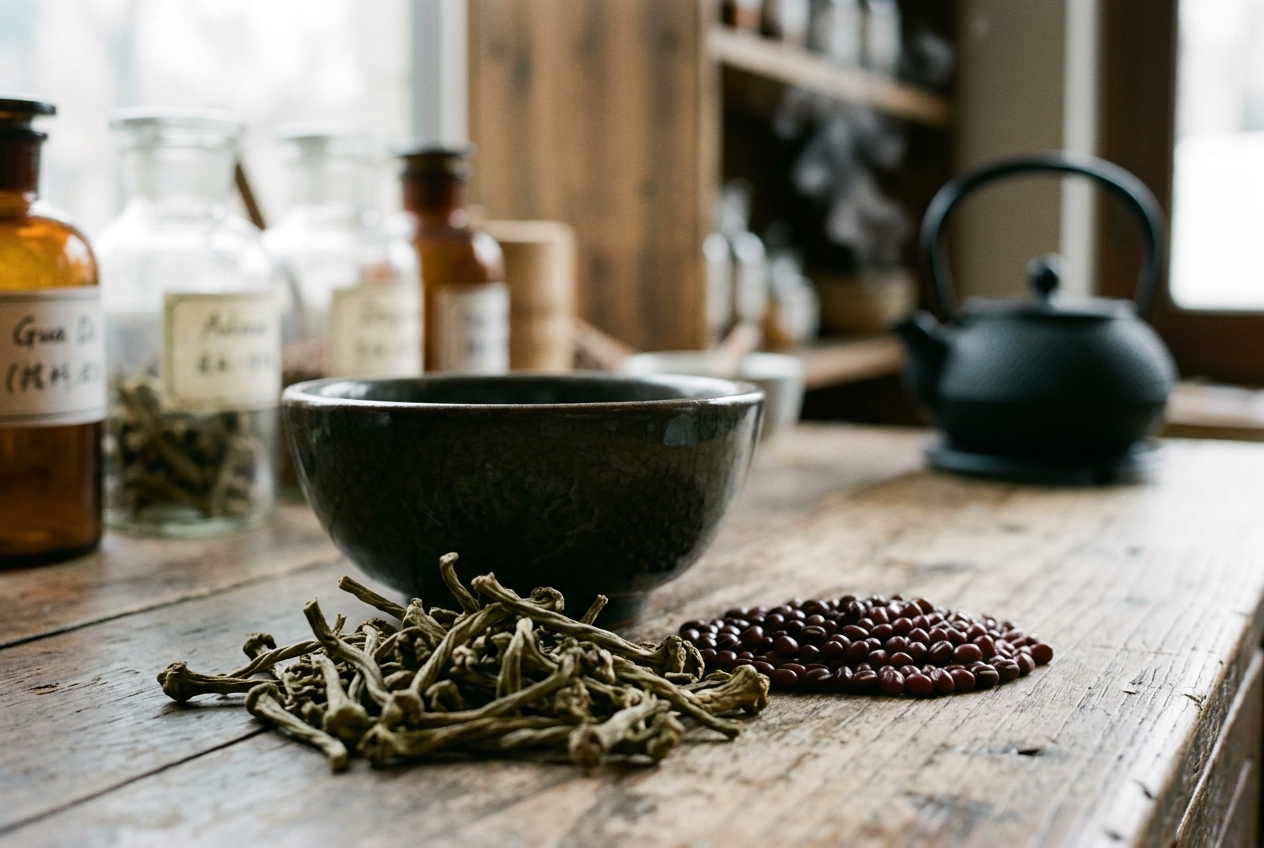
To fully appreciate the pharmacological brilliance of Yong Tu Ji, we must dissect the foremost archetype of the category: Gua Di San (Melon Pedicle Powder 瓜蒂散), recorded in both the Shanghan Lun (Treatise on Cold Damage) and Jinkui Yaolüe (Essential Prescriptions from the Golden Cabinet) by the master clinician Zhang Zhongjing.
Exhaustive Structural Analysis of Gua Di San
$$\text{Gua Di San} = \text{Gua Di (Pedicellus Melo)} + \text{Chi Xiao Dou (Semen Phaseoli)} + \text{Xiang Chi Tang (Fermented Soybean Broth)}$$
- The Sovereign Herb (Jun Yao 君药): Gua Di (Pedicellus Melo / Muskmelon Base)
- Properties: Bitter (Ku 苦), Cold (Han 寒), Toxic (You Du 有毒).
- Energetic Dynamic: Intensely bitter and surging upward. It possesses the most pronounced ascending and dispersing property in the classical materia medica. It directly targets the stomach fundus and thoracic cavity, forcibly wrenching phlegm-drool and stagnant toxins free from the mucous membranes.
- The Minister Herb (Chen Yao 臣药): Chi Xiao Dou (Semen Phaseoli / Adzuki Bean)
- Properties: Sweet, Sour, Neutral.
- Energetic Dynamic: Sourness collects and astringes, while sweetness harmonizes. Chi Xiao Dou assists Gua Di by unblocking water passages, draining dampness, and clearing toxic heat. Crucially, its bitter-sour synergy with Gua Di creates a profound chemical tension: the sourness concentrates the pathogenic phlegm, while the bitterness drives it upward into the esophagus.
- The Assistant & Vehicle (Zuo Shi Yao 佐使药): Xiang Chi Tang (Fermented Soybean Broth)
- Properties: Sweet, Acrid, Light, Diffusive.
- Energetic Dynamic: Prepared from fermented black soybeans (Dan Dou Chi), this warm decoction acts as the delivery medium. It relaxes the chest, harmonizes the middle burner, moistens the pharyngeal passage, and prevents the harsh bitterness of Gua Di from scorching the delicate stomach lining.
Modern Biomedical Correlations & Neuro-Vagal Reflex Pathways
Modern gastroenterology and neurophysiology elucidate the exact pathways through which the botanical constituents of Gua Di San trigger controlled emesis:
- Cucurbitacins as Peripheral Mucosal Triggers: The primary bio-active compounds in Gua Di are tetracyclic triterpenoids known as Cucurbitacins (primarily Cucurbitacin B, D, and E), detailed in botanical and pharmacological profiles of Cucumis melo. These molecules act as potent, localized irritants on the gastric and duodenal mucosa.
- Vagal Afferent Signaling & the Area Postrema: Upon contact with the gastric lining, cucurbitacins stimulate 5-$\text{HT}_3$ (serotonin) receptors on sensory vagal afferent nerve fibers. These high-frequency action potentials travel up the nodose ganglion directly to the Nucleus Tractus Solitarii (NTS) in the brainstem. Concurrently, absorbed traces trigger the Chemoreceptor Trigger Zone (CTZ) located within the Area Postrema, a circumventricular organ situated on the floor of the fourth ventricle outside the blood-brain barrier, as documented across NCBI PubMed studies on the neurobiology of emesis.
- The Somatic Motor Cascade of Vomiting: Once the emetic threshold is crossed in the central pattern generator:
- Retroperistalsis (Reverse Peristalsis): A giant retrograde contraction originates in the middle jejunum and sweeps upward through the duodenum into the stomach, completely emptying the upper small intestine back into the relaxed gastric body.
- Cardio-Esophageal Relaxation: The lower esophageal sphincter (LES), crural diaphragm, and esophageal body relax completely to form an unobstructed, low-resistance conduit.
- Diaphragmatic-Abdominal Muscular Coordination: Powerful, synchronised contractions of the rectus abdominis, internal/external obliques, and transversus abdominis occur in phase with an intense downward spasm of the costal diaphragm. This creates a massive spike in positive intra-abdominal pressure ($>100\text{ mmHg}$) and negative intrathoracic pressure, forcefully ejecting the gastric contents upward through the pharynx.
- Airway Protection: The vocal cords adduct (glottic closure), the soft palate elevates to seal the nasopharynx, and the hyoid bone elevates, completely preventing broncho-pulmonary aspiration of the acidic, pathogen-laden vomitus.
Somatic Qigong Practice: "Harmonizing the Diaphragm and Clearing Rebellious Qi"
To support patients recovering from post-emetic tension or mild upper-burner stagnation where full emesis is not warranted, the classical medical tradition utilizes gentle regulating breathwork:
- Starting Position & Stance: Stand with feet parallel, shoulder-width apart, knees softly unlocked. Drop your weight into the soles of your feet (Yongquan KD1). Rest your tongue lightly against the hard palate behind the upper incisors.
- Phase I — Gathering the Clear Vapor (Xuan Qi): Inhale smoothly through the nose for 4 counts, expanding the lower abdomen (Dantian). Slowly float both hands upward along the midline (Conception Vessel) with palms facing upward, fingers loosely pointing toward one another, drawing energy up to the mid-chest level (Danzhong CV17).
- Phase II — Expanding the Thoracic Space: Rotate the wrists outward and press the palms forward and upward at a 45-degree angle. Gently extend the spine, lifting the ribcage away from the pelvis to decompress the stomach and stretch the crural diaphragm. Hold the breath effortlessly for 2 counts without straining.
- Phase III — Guiding the Rebellious Qi Downward (Jiang Qi): Exhale slowly through slightly parted lips over 6 counts while making the quiet, guttural "He" (呵) or "Xu" (嘘) sound. Simultaneously, turn the palms downward and press slowly toward the earth, visualizing turbid, stuck heat and stagnant fluids dissolving downward through the legs into the ground.
- Dosage & Somatic Markers: Perform 8 to 12 slow repetitions once or twice daily. You should experience a pleasant warmth spreading across the epigastrium, spontaneous burping or swallowing that relieves throat tightness, and an opening of the chest cavity.
5. Acupressure Points You Can Try Today
For acute nausea, post-emetic residual spasms, or moderate upper-burner fullness, targeted mechanical acupressure can modulate neuro-enteric signaling along the stomach and pericardium meridians.
1. Neiguan (PC6 / Pericardium 6 — Inner Gate 内关)
- Anatomical Landmark: Locate on the palmar surface of the forearm, exactly two cun (approximately three finger-widths) proximal to the distal wrist crease, situated directly between the tendons of the flexor carpi radialis and palmaris longus.
- Application Technique: Apply firm, perpendicular thumb pressure while executing micro-rotations. Maintain constant pressure for 2 to 3 minutes per side until a distinct radiating sensation of distension (De Qi 得气) travels up the forearm toward the chest.
- Clinical Utility: As the Luo-connecting point of the Pericardium and the confluent point of the Yin Linking Vessel (Yin Wei Mai), PC6 directly unbinds the chest, regulates Heart-Stomach Qi, and modulates central emetic circuits to halt unproductive dry retching and soothe cardiac anxiety.
2. Zhongwan (RN12 / CV12 — Middle Epigastrium 中脘)
- Anatomical Landmark: Located on the anterior midline of the upper abdomen, precisely 4 cun superior to the center of the umbilicus (halfway between the navel and the sternocostal angle / xiphisternal joint).
- Application Technique: Use the soft pads of the middle three fingers to exert gentle, steady downward pressure while tracing slow, clockwise circles. Press firmly but comfortably without causing guarding, synchronized with deep exhalations, for 3 minutes.
- Clinical Utility: The Front-Mu point of the Stomach and the Influential Point of the Fu Organs. It harmonizes the middle burner, promotes the downward transmission of stagnant food mass, and relieves subxiphoid oppression.
3. Zusanli (ST36 / Stomach 36 — Leg Three Miles 足三里)
- Anatomical Landmark: Situated on the anterolateral aspect of the lower leg, exactly four finger-widths (3 cun) inferior to the lateral eye of the patella (Dubi ST35), one finger-breadth lateral to the anterior crest of the tibia in the tibialis anterior muscle belly.
- Application Technique: Apply deep, invigorating pressure using your thumb or knuckle. Press with a firm rotary motion for 3 to 5 minutes, pausing if muscle twitching occurs.
- Clinical Utility: The He-Sea and Earth point of the Stomach Channel. It is the premier point in Chinese medicine to tonify Stomach Qi, reinforce healthy downward gastrointestinal motility, alleviate abdominal fullness, and rehabilitate post-emetic metabolic exhaustion, as validated in PubMed gastrointestinal neuro-stimulation studies.
6. Food & Lifestyle — Post-Emetic Recovery, Stomach Yin Preservation, and Critical Safety Protocols
Because Tu Fa is an intensive, violent therapeutic intervention that forcibly expels fluids, electrolytes, and pathogenic matter upward, the post-emetic period requires meticulous clinical stewardship. The primary danger following therapeutic vomiting is the severe depletion of Stomach Yin (Wei Yin 胃阴) and stomach fluids (Jin Ye 津液).
+------------------------------------------------------------------------------------+
|                         POST-EMETIC GASTRIC REHABILITATION                         |
+--------------------------+---------------------------------------------------------+
| IMMEDIATE POST-EMESIS    | Warm salt water or green tea mouth rinse to clear acid. |
| (0–30 Minutes)           | Total fasting; complete vocal and physical rest.        |
+--------------------------+---------------------------------------------------------+
| INITIAL REHYDRATION      | Warm, thin rice water (Mi Zhi / Xi Zhou).               |
| (1–6 Hours Post-Emesis)  | Small, frequent sips to coat gastric mucosa.            |
+--------------------------+---------------------------------------------------------+
| DIETARY REBUILDING       | Steamed squash, cooked pear, mild broth.                |
| (24–48 Hours)            | STRICTLY AVOID: Raw, greasy, cold, or spicy food.       |
+--------------------------+---------------------------------------------------------+
The Post-Emetic Congee Protocol (Mi Zhou Yang Wei)
Immediately following emesis: 1. Immediate Rinse: The patient must rinse their mouth with lukewarm water or a dilute green tea rinse to wash away corrosive hydrochloric gastric acid, protecting dental enamel and pharyngeal mucosa without swallowing. 2. Administration of Thin Rice Congee (Mi Zhi 米汁 / Xi Zhou 稀粥): Once the vomiting has ceased and the pulse has stabilized, administer small, warm sips of strained, well-cooked white rice water. White rice (Oryza sativa) boiled in a 1:10 ratio with water until the starch fully breaks down produces a bland, sweet, and soothing mucilaginous broth. This liquid: * Directly coats and lubricates the irritated gastric mucosa. * Replenishes depleted extracellular fluid and essential electrolytes. * Nourishes Stomach Qi without imposing any mechanical digestive burden on the spleen. 3. Dietary Restrictions for 48 Hours: * Strictly Avoid: Iced beverages, raw salads, citrus fruits, dairy products, deep-fried foods, chili, alcohol, and fibrous coarse grains. Cold foods contract the freshly traumatized gastric capillaries, while spicy and fatty foods ignite rebound inflammation in the depleted stomach lining.
Absolute Clinical Contraindications and Toxicity Management
- Pregnancy (Ren Shen 妊娠): The violent contraction of the abdominal wall and diaphragm directly compresses the uterus, creating high risk of placental abruption, cervical dilation, and miscarriage.
- Severe Constitutional Debility & Elderly Weakness (Lao Nian Ti Ruo 老年体弱): In frail patients or those suffering from chronic consumptive illness, Tu Fa can trigger sudden collapse of True Qi (Qi Tuo 气脱), fatal hypovolemic hypotension, or acute cardiac arrest.
- Active Hematemesis & Gastrointestinal Hemorrhage (Tu Xue 吐血 / Bian Xue 便血): In patients with gastric ulcers, esophageal varices, or portal hypertension, emesis can cause fatal hemorrhage from mechanical tearing of submucosal veins (Mallory-Weiss syndrome).
- Severe Cardiovascular Disease, Aneurysm & Stroke History: The massive spike in central venous pressure and arterial pressure during emesis can cause immediate rupture of intracranial or aortic aneurysms.
- Postpartum Exhaustion (Chan Hou Xu Ruo 产后虚弱): Following childbirth, blood and vital fluids are severely depleted; inducing vomiting will further exhaust the primordial qi (Yuan Qi).
+------------------------------------------------------------------------------------+
|                         SUMMARY OF ABSOLUTE CONTRAINDICATIONS                      |
+---------------------------+--------------------------------------------------------+
| CLINICAL CONDITION        | BIOMECHANICAL / PHYSIOLOGICAL RISK                     |
+---------------------------+--------------------------------------------------------+
| Pregnancy                 | Uterine compression, fetal distress, miscarriage.      |
+---------------------------+--------------------------------------------------------+
| Active Bleeding / Ulcers  | Esophageal rupture, Mallory-Weiss tears, hemorrhage.   |
+---------------------------+--------------------------------------------------------+
| Aortic / Brain Aneurysm   | Vascular rupture from acute intra-thoracic spikes.     |
+---------------------------+--------------------------------------------------------+
| Severe Qi/Blood Collapse  | Irreversible vasomotor shock, heart failure.           |
+---------------------------+--------------------------------------------------------+
7. Today's Takeaway
The Emetic Method (Tu Fa) and its core representative formulas, such as Gua Di San, stand as an enduring testament to the sophisticated physiological pragmatism of Traditional Chinese Medicine. Rather than viewing the body as a passive vessel to be chemically suppressed, classical medicine recognizes the raw power of coordinating natural ascending and dispersing vectors (Yin Shi Li Dao) to rapidly evacuate acute, life-threatening obstructions from the Upper Burner.
For your daily health maintenance, you do not need to induce vomiting—simply respecting the natural downward path of your Stomach Qi is enough: take 3 minutes today to firmly massage Neiguan (PC6) and Zusanli (ST36), avoid consuming heavy meals late at night that cause upper gastric stagnation, and preserve your vital Stomach Yin with warm, hydrating foods.
Authoritative References & Scientific Links
- World Health Organization (WHO) Traditional Medicine Strategy & Nomenclature
- NCBI PubMed Central — Neurobiology and Reflex Pathways of the Emetic Circuit
- PubMed: Mechanistic Analysis of Chemoreceptor Trigger Zone and Vagal Afferents
- Wikipedia: Area Postrema and Neuro-Emetic Architecture
- Wikipedia: Shanghan Lun and Classical TCM Therapeutic Formulas
- Wikipedia: Cucumis melo Phytochemistry and Cucurbitacin Pharmacology