Electroacupuncture Techniques (Dian Zhen Fa) Meridian Dynamics: Governing Waveform Frequency Modulation, Endogenous Opioid Neuropeptide Secretion, Neuromuscular Facilitation, and Analgesic Channel Conduction in Traditional Chinese Medicine
1. Foundational Biophysics & Historical Integration
The Evolution from Classical Deqi to Microcurrent Transduction
For over two millennia, the therapeutic efficacy of classical acupuncture has hinged upon the elicitation of Deqi (得气)—a complex composite of subjective somatosensory experiences reported by the patient (soreness, numbness, heaviness, and distension; Suān, Má, Zhòng, Zhàng) paired with the practitioner’s biomechanical perception of needle grasp ("like a fish biting upon a hook," as described in the Zhen Jiu Jia Yi Jing). In classical acupuncture, this mechanical grasp arises from the micro-torsional winding of perivascular and perineural collagenous connective tissue around the shaft of the filiform needle.
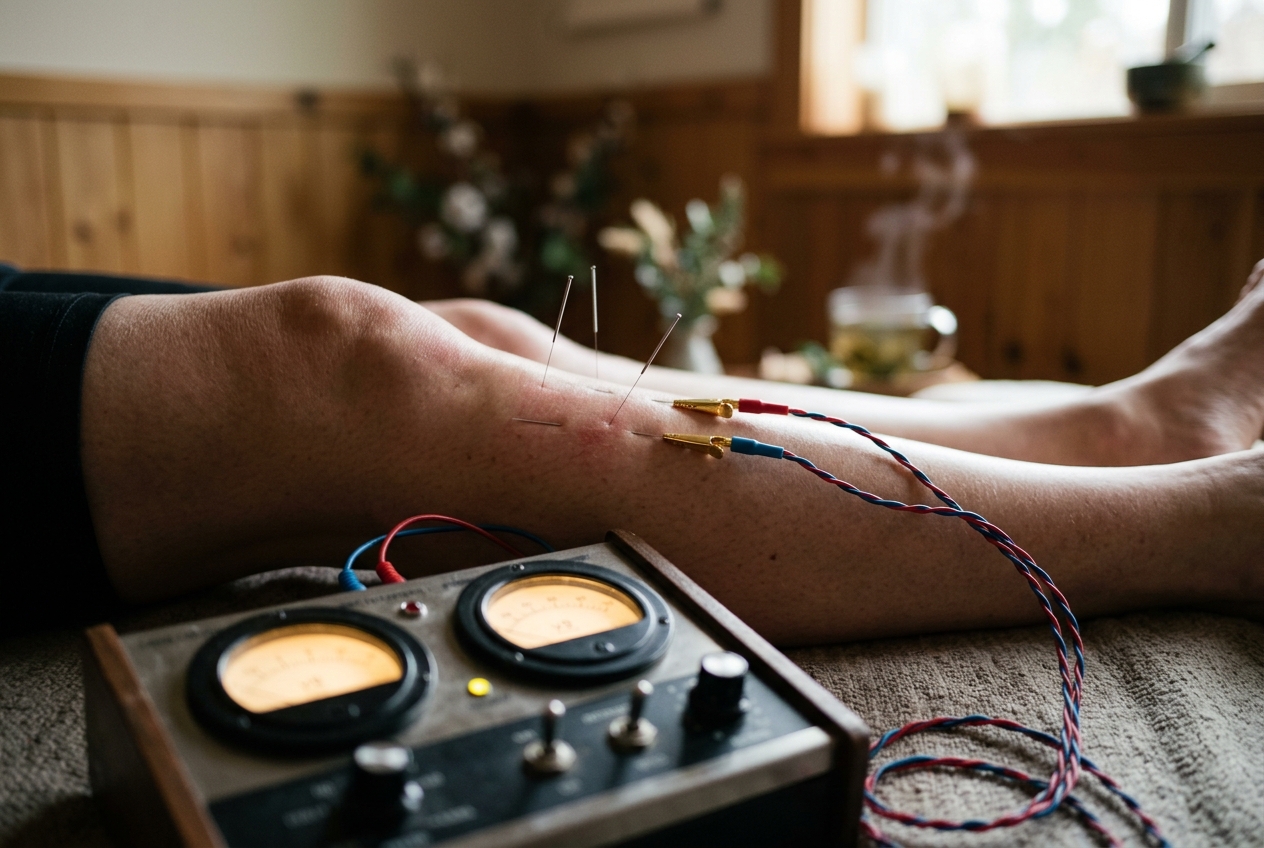
The mid-twentieth-century advent of Electroacupuncture (Dian Zhen Fa, 电针法)—pioneered by clinical researchers in China seeking objective, reproducible, and continuous needle stimulation—systematically transformed this biomechanical coupling into a quantifiable biophysical interface. By delivering standardized, oscillating electrical current directly to the needle tip, modern electroacupuncture bypasses the physical fatigue and operator variability inherent to manual manipulation (Ti, Cha, Nian, Zhuan). In doing so, it translates the ephemeral sensations of Deqi into measurable neurophysiological depolarization events, establishing a continuous bridge between traditional channel theory and contemporary electrophysiology.
+-------------------------------------------------------------------------------------------------------+
| BIOPHYSICAL FOUNDATION: BIO-IMPEDANCE AT THE ACUPOINT LOCUS                                           |
|                                                                                                       |
|  Transcutaneous Current                                                                               |
|          |                                                                                            |
|          v                                                                                            |
|  [ Low Electrical Resistance Point ] ---> [ Perivascular & Perineural Sheath ]                        |
|    (Elevated Gap-Junction Density,            (Rich in Unmyelinated C-fibers,                         |
|     High Interstitial Fluid/Electrolytes)      Myelinated A-beta/A-delta Mechanoreceptors)            |
|          |                                            |                                               |
|          +--------------------+-----------------------+                                               |
|                               |                                                                       |
|                               v                                                                       |
|                [ Piezoelectric Collagen Matrix ]                                                      |
|           (Mechanotransductive Current Amplification                                                  |
|            & Interstitial Proton Conduction)                                                          |
+-------------------------------------------------------------------------------------------------------+
The Meridian as a Low-Resistance Bio-Conductive Highway
Classical meridian (Jingluo, 经络) pathways correlate strongly with anatomical cleavage planes of interstitial loose connective tissue, fascial septa, and neurovascular bundles. Modern bio-impedance mapping reveals that classical acupuncture points exhibit significantly lower electrical skin resistance ($R$) and higher electrical capacitance ($C$) compared to surrounding non-channel cutaneous zones.
This low-impedance phenomenon is governed by several structural hallmarks: 1. High Interstitial Fluid and Electrolyte Density: Acupoints are characterized by an enriched microvascular bed and higher concentrations of interstitial free water, sodium ($\text{Na}^+$), potassium ($\text{K}^+$), and calcium ($\text{Ca}^{2+}$) ions, facilitating rapid ionic current carrier propagation. 2. Gap Junction Aggregations: Cellular structures at acupoints demonstrate dense expressions of Connexin 43 ($\text{Cx43}$) hemichannels, forming low-resistance intercellular conduits that facilitate metabolic and electrotonic synchronization across tissue planes. 3. Piezoelectric Properties of Fascial Collagen: The triple-helical structure of type I and type III collagen fibrils within the perineural fascial sheaths exhibits distinct piezoelectricity and streaming potentials. When mechanical needle rotation or electrical microcurrents distort these collagen bundles, an endogenous direct-current (DC) electric field is generated, altering local membrane potentials and triggering long-range downstream cellular cascades.
According to global research frameworks cataloged by the World Health Organization (WHO) Traditional Medicine Strategy, this low-resistance interface allows electrical current delivered during electroacupuncture to flow with minimal dissipation along low-impedance fascial highways, directly recruiting both peripheral sensory fibers ($A\beta$, $A\delta$, and $C$ fibers) and underlying autonomic plexuses.
2. Waveform Architecture & Frequency-Specific Neurochemistry
The therapeutic versatility of electroacupuncture lies in the precise mathematical modulation of its output pulse trains. Variations in pulse width, waveform geometry, and cycle frequency recruit distinct populations of spinal afferents and trigger specific neurochemical cascades across the central nervous system (CNS).
========================================================================================================================
WAVEFORM TYPOLOGY & PHYSIOLOGICAL CHARACTERISTICS
========================================================================================================================
1. CONTINUOUS DISPERSE (LOW FREQUENCY: 1–5 Hz)
   [|]    [|]    [|]    [|]    [|]    [|]    [|]    [|]
   - Physiological Effect: Vasodilation, tonic muscle twitching, parasympathetic activation.
   - Primary Indication: Chronic neuropathic pain, flaccid motor paralysis, visceral dysmotility.

2. CONTINUOUS DENSE (HIGH FREQUENCY: 50–100 Hz)
   [||||||||||||||||||||||||||||||||||||||||||||||||||||||]
   - Physiological Effect: Rapid tetanic muscle spasm, acute pain gating, membrane stabilization.
   - Primary Indication: Acute spasticity, severe musculoskeletal spasms, intraoperative analgesia.

3. DENSE-DISPERSE / ALTERNATING (2 Hz / 100 Hz CYCLING)
   [|]  [|]  [|]  [||||||||||||]  [|]  [|]  [|]  [||||||||||||]
   - Physiological Effect: Bypasses central opioid receptor desensitization; simultaneous multi-receptor binding.
   - Primary Indication: Complex regional pain syndromes, fibromyalgia, post-stroke spastic hemiplegia.

4. INTERMITTENT (PULSE BURST WITH REST PHASES)
   [|||||]       (Rest)       [|||||]       (Rest)       [|||||]
   - Physiological Effect: Prevents neuromuscular junction fatigue; evokes rhythmic motor contractions.
   - Primary Indication: Severe muscle atrophy, peripheral nerve regeneration, Bell's palsy.
========================================================================================================================
Neurochemical Dissection: The Frequency-Opioid Receptor Axis
Decades of systematic neuropharmacological mapping—led fundamentally by the work of Professor Ji-Sheng Han and documented across NCBI PubMed biomedical literature—have elucidated the exact frequency-dependent release of endogenous endorphins and their cognate G-protein-coupled opioid receptors within the arcuate nucleus of the hypothalamus, the periaqueductal gray (PAG), and the spinal dorsal horn.
+-------------------------------------------------------------------------------------------------------------+
| FREQUENCY-DEPENDENT NEUROCHEMICAL SPECIFICITY MATRIX                                                        |
+--------------------+-------------------------------------------+--------------------------------------------+
| Frequency Domain   | Neuropeptide / Endogenous Ligand          | Receptor Specificity & Primary CNS Locus   |
+--------------------+-------------------------------------------+--------------------------------------------+
| Low Frequency      | - Beta-Endorphin                          | - Mu (μ) Opioid Receptors                  |
| (2 Hz to 4 Hz)     | - Met-Enkephalin & Leu-Enkephalin         | - Delta (δ) Opioid Receptors               |
|                    | - Endomorphin-1 & Endomorphin-2           | (Arcuate Nucleus, PAG, Dorsal Horn)        |
+--------------------+-------------------------------------------+--------------------------------------------+
| High Frequency     | - Dynorphin A                             | - Kappa (κ) Opioid Receptors               |
| (80 Hz to 100 Hz)  | - Dynorphin B                             | (Spinal Cord Dorsal Horn Interneurons)     |
+--------------------+-------------------------------------------+--------------------------------------------+
| Dense-Disperse     | - Synergistic Release of:                 | - Concurrent Activation of:                |
| (2 Hz / 100 Hz)    |   Beta-Endorphin, Enkephalins, Dynorphins |   μ, δ, and κ Receptors (Cross-Opioid)     |
+--------------------+-------------------------------------------+--------------------------------------------+
1. Low-Frequency Stimulation (2 Hz)
Delivering 2 Hz electrical stimulation recruits thicker $A\beta$ and moderately myelinated $A\delta$ afferent fibers, propagating signals ascending through the ventrolateral funiculus of the spinal cord to the arcuate nucleus of the hypothalamus. This stimulus promotes the transcription and enzymatic cleavage of pro-opiomelanocortin (POMC) and pro-enkephalin, triggering the sustained secretion of $\beta$-endorphin and enkephalins.
These ligands bind with high affinity to $\mu$-opioid and $\delta$-opioid receptors in both supraspinal pain-modulating circuits and the substantia gelatinosa of the dorsal horn. This pathway produces a systemic, long-lasting analgesic effect with cumulative anti-inflammatory benefits that outlast the treatment session by hours.
2. High-Frequency Stimulation (100 Hz)
In contrast, high-frequency stimulation at 100 Hz exerts its primary activity at the local spinal level. Propagating primarily along fast $A\beta$ and high-threshold $C$-fiber networks, 100 Hz pulses stimulate local spinal interneurons to release dynorphin, a potent neuropeptide that selectively binds to $\kappa$-opioid receptors in the dorsal horn.
Dynorphin binding hyperpolarizes presynaptic nociceptive terminals, inhibiting the exocytotic release of Substance P, Calcitonin Gene-Related Peptide (CGRP), and glutamate from primary afferent terminals. This yields rapid, potent segmental analgesia ideal for acute muscle spasms, surgical anesthesia, and post-traumatic injury.
3. Dense-Disperse (2/100 Hz) Cycling
Sustained single-frequency stimulation (whether pure 2 Hz or pure 100 Hz) induces down-regulation and desensitization of opioid receptors within 30 to 45 minutes due to continuous ligand occupancy and G-protein uncoupling.
Dense-disperse stimulation automatically alternates between a 2 Hz train (lasting approximately 3–5 seconds) and a 100 Hz train (lasting approximately 3–5 seconds). This cycling: - Recruits $\mu$, $\delta$, and $\kappa$ opioid receptors simultaneously. - Elicits a cross-receptor synergistic analgesic effect that is clinically superior to either frequency alone. - Prevents central neurochemical tolerance, allowing sustained therapeutic efficacy throughout prolonged clinical applications.
3. Acupoint Selection & Channel Polarity Dynamics
Electroacupuncture utilizes an external direct-current power supply transformed into asymmetrical, biphasic square pulses. The directional orientation of the circuit leads across target acupoints introduces critical biophysical polarity dynamics that govern cellular excitability and physiological response.
Cathode (-) [Electron Emitter]                       Anode (+) [Electron Sink]
Local Membrane Depolarization                         Local Membrane Hyperpolarization
Lowers Threshold for Action Potential                 Raises Threshold for Action Potential
Motor Excitatory / Nerve Depolarizing                 Sedating / Membrane Stabilizing / Anti-Spastic
        |                                                     |
        \=====================[ BIO-CURRENT ]=================/
+----------------------------------------------------------------------------------------------------+
| POLARITY DYNAMICS IN BIOLOGICAL TISSUES                                                            |
+------------------------------+---------------------------------------------------------------------+
| Cathode (Negative / Black)   | - Electron accumulation at the needle-tissue interface.             |
|                              | - Induces local membrane depolarization (inward Na+ flux).          |
|                              | - Excites motor axons; stimulates peripheral nerve regeneration.   |
|                              | - Promotes local vasodilation and tissue remodeling.                |
+------------------------------+---------------------------------------------------------------------+
| Anode (Positive / Red)       | - Electron extraction from local tissue.                            |
|                              | - Induces local membrane hyperpolarization (outward K+ flux).       |
|                              | - Stabilizes irritable nociceptive membranes.                       |
|                              | - Yields potent analgesic, anti-edematous, and sedative actions.   |
+------------------------------+---------------------------------------------------------------------+
Strategic Segmental and Channel Electrode Pairings
To maximize both local bio-electric field gradients and meridian flow dynamics, electrode leads must be positioned along precise anatomical pathways:
========================================================================================================================
CANONICAL CHANNEL-SEGMENTAL PAIRINGS & CIRCUIT VECTORS
========================================================================================================================

1. ST36 (Zusanli) <---> SP6 (Sanyinjiao) [Crural Autonomic & Somatosensory Axis]
   - Segmental Innervation: L4–S1 dermatomes / Peroneal and Tibial nerve branches.
   - Circuit Architecture: Cathode (-) at ST36; Anode (+) at SP6.
   - Physiological Target: Sympathovagal balance, gastrointestinal propulsion, systemic anti-inflammatory cascades.

2. LI4 (Hegu) <---> LI11 (Quchi) [Brachial Yangming & Corticomotor Axis]
   - Segmental Innervation: C5–C8, T1 dermatomes / Radial and Median nerves.
   - Circuit Architecture: Cathode (-) at LI11 (motor point); Anode (+) at LI4.
   - Physiological Target: Upper-extremity motor recovery, neuroplastic reorganization, central thermal regulation.

3. GB30 (Huantiao) <---> GB34 (Yanglingquan) [Sciatic-Peroneal Radicular Axis]
   - Segmental Innervation: L4–S2 nerve roots / Sciatic trunk and Common Peroneal bifurcation.
   - Circuit Architecture: Cathode (-) at GB30 (proximal root); Anode (+) at GB34 (fibular neck).
   - Physiological Target: Sciatic radiculopathy, foot drop, lower extremity flaccidity and spasticity.

4. BL23 (Shenshu) <---> BL40 (Weizhong) [Dorsal Spinal Reflex Loop]
   - Segmental Innervation: L2–L3 posterior rami <---> S1–S2 tibial branch.
   - Circuit Architecture: Anode (+) at BL23 (stabilize dorsal root ganglion); Cathode (-) at BL40.
   - Physiological Target: Chronic discogenic lumbago, spinal stenosis, facilitation of descending inhibitory paths.
========================================================================================================================
4. Clinical Indications & Neuromuscular Protocols
Electroacupuncture parameters must be tailored to the chronicity, underlying pathology, and neurofunctional state of the target tissue. The table below delineates comprehensive clinical parameters across five major neuromuscular and autonomic conditions:
+-----------------------------------------------------------------------------------------------------------------------+
| CLINICAL PROTOCOL MATRIX: PARAMETER SPECIFICATIONS BY PATHOLOGY                                                       |
+----------------------+--------------------+--------------------+--------------------+---------------------------------+
| Pathology            | Primary Points     | Frequency / Wave   | Current Intensity  | Duration / Clinical Titration   |
+----------------------+--------------------+--------------------+--------------------+---------------------------------+
| Peripheral Facial    | ST4 (Dicang) to    | 1–3 Hz             | Sub-motor / Subtle | 15–20 min;                      |
| Paralysis            | ST6 (Jiache),      | Intermittent or    | Fasciculation      | Micro-amperage in acute phase;  |
| (Bell's Palsy)       | GB14 (Yangbai)     | Disperse Wave      | (0.5–1.5 mA)       | Avoid strong spasm (prevents    |
|                      | to Yuyao           |                    |                    | axonal synkinesis/contracture). |
+----------------------+--------------------+--------------------+--------------------+---------------------------------+
| Post-Stroke Hemiplegic| Upper: LI11, LI4,  | 2/100 Hz           | Rhythmic Motor     | 25–30 min;                      |
| Motor Rehabilitation | SJ5, PC6;          | Dense-Disperse or  | Twitch (Grade 2–3  | Titrate to clear motor contraction|
|                      | Lower: GB34, ST36, | Intermittent       | Contraction)       | without antagonist spastic      |
|                      | SP10, GB30         |                    | (2.0–5.0 mA)       | overflow.                       |
+----------------------+--------------------+--------------------+--------------------+---------------------------------+
| Neuropathic Lumbar   | Huatuojiaji (L4-S1)| 2/100 Hz           | Sensory-to-Motor   | 20–30 min;                      |
| Radiculopathy        | to GB30, BL40,     | Dense-Disperse     | Threshold          | Establish tingling radicular    |
| (Sciatica)           | BL57, GB34         |                    | (1.5–3.5 mA)       | pathway; relieve root ischemia. |
+----------------------+--------------------+--------------------+--------------------+---------------------------------+
| Chronic Visceral /   | BL32 (Ciliao),     | 2 Hz Continuous or | Deep Pelvic        | 20–30 min;                      |
| Pelvic Pain          | BL33 (Zhongliao),  | 2/100 Hz           | Paresthesia /      | Modulates pudendal and pelvic   |
| (Endometriosis / CPPS)| SP6, CV4 (Guanyuan)| Dense-Disperse     | Motor Threshold    | splanchnic parasympathetic arcs.|
+----------------------+--------------------+--------------------+--------------------+---------------------------------+
| Gastrointestinal     | ST36 (Zusanli),    | 2 Hz Disperse or   | Visible Gentle     | 20–25 min;                      |
| Dysmotility & Post-Op| PC6 (Neiguan),     | 10 Hz Continuous   | Epigastric / Crural| Modulates vagal-enteric axis;   |
| Ileus                | ST25 (Tianshu)     |                    | Fasciculation      | drives Interstitial Cells of    |
|                      |                    |                    | (1.0–2.5 mA)       | Cajal pacemaker activity.       |
+----------------------+--------------------+--------------------+--------------------+---------------------------------+
Detailed Protocol Mechanics
========================================================================================================================
TITRATION METHODOLOGY: STEPWISE CURRENT ADVANCEMENT
========================================================================================================================
1. BASELINE DEQI (得气): Insert filiform needles to required anatomical depth; elicit traditional manual Deqi.
2. CIRCUIT CONNECTION: Ensure the stimulator is powered OFF with amplitude dials set to absolute zero before clipping.
3. SENSORY THRESHOLD: Slowly advance amplitude until the patient reports a distinct tingling or buzzing sensation.
4. MOTOR TWITCH THRESHOLD: Advance further until rhythmic, painless fasciculations appear in the target muscle belly.
5. HABITUATION RE-TITRATION: At 5 and 15 minutes, re-evaluate amplitude to compensate for neural accommodation.
========================================================================================================================
1. Peripheral Facial Paralysis (Bell's Palsy)
During the acute inflammatory phase (Days 1–7), the facial nerve ($CN\ VII$) is edematous within the rigid fallopian canal. High-frequency or high-intensity electroacupuncture is strictly contraindicated during this window, as it risks triggering excitotoxic axonal injury or subsequent aberrant nerve regeneration (synkinesis).
In the subacute and restorative phases, low-frequency (1–3 Hz) intermittent waves are connected along motor tracts (e.g., crossing from ST4 to ST6 through the buccinator, or GB14 to Yuyao through the frontalis). Current intensity must remain low ($<1.5\text{ mA}$), producing gentle fibrillations rather than forceful contractions.
2. Post-Stroke Motor Rehabilitation
For central hemiplegia, electroacupuncture is paired with active rehabilitation to facilitate neuroplasticity and corticomotor map re-expansion: - Flaccid Phase (Brunnstrom Stages I–II): Use 2/100 Hz dense-disperse or intermittent stimulation to excite lower motor neurons, recruit dormant anterior horn cells, and re-establish neuromuscular transmission. - Spastic Phase (Brunnstrom Stages III–IV): Connect high-frequency (50–100 Hz) stimulation across the antagonist muscle group to leverage reciprocal Ia-inhibitory interneurons, suppressing hyperactive stretch reflexes and breaking spastic synergies.
5. Contraindications, Safety Precautions & Biophysical Hazards
While electroacupuncture is exceptionally safe when administered within clinical parameters, improper application introduces biophysical hazards ranging from tissue necrosis to cardiac dysrhythmias.
========================================================================================================================
CRITICAL CLINICAL BOUNDARIES & SAFETY CLEARANCES
========================================================================================================================
[!] ABSOLUTE CONTRAINDICATIONS
    - Implanted Cardiac Pacemakers & Implantable Cardioverter-Defibrillators (ICDs)
    - Transthoracic Current Paths Crossing the Cardiac Vector Axis (Bilateral Thorax or Ventral-to-Dorsal Chest)
    - Deep Brain Stimulators (DBS), Vagus Nerve Stimulators (VNS), and Spinal Cord Stimulators (SCS)
    - Direct Needle Insertion over Malignant Tumors or Acute Uncontrolled Hemorrhagic Sites

[!] PREGNANCY CONTRAINDICATIONS
    - Forbidden Acupoints: LI4, SP6, BL60, BL67, GB21
    - Regional Exclusions: All lower abdominal, lumbosacral, and pelvic regions throughout all trimesters

[!] BIOPHYSICAL HAZARDS & PREVENTATIVE ENGINEERING
    - Galvanic Electrolytic Corrosion: Never use pure monophasic Direct Current (DC); always use biphasic pulses.
    - Muscle Spasm & Needle Fracture: Avoid placing paired electrodes across major joints subject to violent flexion.
========================================================================================================================
+-----------------------------------------------------------------------------------------------------+
| ELECTROLYTIC CORROSION MECHANISMS & RISK MITIGATION                                                 |
|                                                                                                     |
|  Unbalanced Monophasic DC Current:                                                                  |
|    Anode (+) Reactions:    Fe -> Fe2+ + 2e-  (Electrochemical Anodic Dissolution of Stainless Steel)|
|    Cathode (-) Reactions:  2H2O + 2e- -> H2 + 2OH- (Alkaline Hydroxide Ion Accumulation)            |
|                                                                                                     |
|  Clinical Result:          Severe Needle Pitting, Brittleness, High Risk of Needle Fracture in Vivo.|
|  Safety Imperative:        Use ONLY Symmetrical / Charge-Balanced Asymmetrical Biphasic Waveforms! |
+-----------------------------------------------------------------------------------------------------+
1. Cardiac Pacemakers and ICDs
Current leakage or electromagnetic interference (EMI) from electroacupuncture can be falsely interpreted by sensing algorithms in cardiac pacemakers and ICDs as ventricular fibrillation or asystole. This can trigger inappropriate defibrillation shocks or inhibit demand-pacing mode.
Furthermore, passing an electrical current across the mediastinum (e.g., bilateral PC6, or anterior CV17 paired with posterior BL15) risks inducing microcurrent ventricular arrhythmias. Transthoracic current pathways crossing the heart axis are strictly contraindicated for all patients.
2. Galvanic Electrolytic Needle Degradation
When continuous direct current (DC) passes through stainless steel acupuncture needles in an electrolytic environment (interstitial fluid containing $\text{NaCl}$), electrochemical corrosion occurs at the metal-electrolyte interface: - At the anode, oxidation causes iron and chromium dissolution ($\text{Fe} \to \text{Fe}^{2+} + 2e^-$). - At the cathode, reduction generates hydrogen gas and localized alkalinity ($\text{OH}^-$ ions).
This electrochemical stress can cause severe pitting, needle thinning, and subsurface embrittlement within 10–15 minutes, dramatically increasing the risk of in vivo needle breakage. Clinical electrostimulators must therefore utilize charge-balanced asymmetrical biphasic waveforms, in which a brief positive voltage phase is immediately followed by a compensatory negative reversal, keeping the net direct-current component at zero.
6. Modern Research & Mechanotransductive Synthesis
Contemporary neuroscience has increasingly validated the systemic effects of electroacupuncture, revealing how peripheral electrical stimulation translates into central nervous system remodeling and neuro-immune modulation.
========================================================================================================================
SOMATOSENSORY-VAGAL-ADRENAL ANTI-INFLAMMATORY AXIS
========================================================================================================================
                                    High-Density ST36 Stimulation
                                                  |
                                                  v
                              Recruitment of Prokr2-Cre Sensory Afferents
                                                  |
                                                  v
                               Ascending Dorsal Column Pathway
                                                  |
                                                  v
                         Solitary Nucleus (NTS) / Dorsal Motor Vagal Nucleus
                                                  |
                                                  v
                                Efferent Vagus Nerve (CN X)
                                                  |
                                                  v
                         Celiac-Superior Mesenteric Ganglion Complex
                                                  |
                                                  v
                                     Splenic Nerve Terminal
                                                  |
                                                  v
                                Choline Acetyltransferase (ChAT)+
                                         T-Lymphocytes
                                                  |
                                                  v
                               Acetylcholine (ACh) Synthesis
                                                  |
                                                  v
                          alpha-7 Nicotinic ACh Receptors (alpha7nAChR)
                                    on Splenic Macrophages
                                                  |
                                                  v
                        [ SUPPRESSION OF SYSTEMIC CYTOKINE STORM ]
                          Inhibition of TNF-alpha, IL-6, HMGB1, IL-1beta
========================================================================================================================
1. Functional Neuroimaging (fMRI) & Pain Matrix Modulation
Functional magnetic resonance imaging (fMRI) reveals that electroacupuncture at specific acupoints systematically modulates the "central pain matrix." Unlike sham or superficial tactile stimulation, genuine electroacupuncture at LI4 and ST36 induces: - Marked functional deactivation of limbic structures associated with the affective-cognitive processing of pain, including the rostral Anterior Cingulate Cortex (rACC), amygdala, and medial prefrontal cortex. - Concomitant activation of the Periaqueductal Gray (PAG), raphe nuclei, and locus coeruleus, initiating descending pain modulation via endogenous serotonergic and noradrenergic spinal pathways.
+-------------------------------------------------------------------------------------------------------+
| NEUROVASCULAR & MECHANOTRANSDUCTIVE COUPLING                                                          |
|                                                                                                       |
|  Electro-Stimulation Pulse ---> Transient Depolarization of Perivascular Primary Afferents (C-Fibers)  |
|                                            |                                                          |
|                                            v                                                          |
|                                Axon Reflex Degranulation:                                             |
|                     [ Calcitonin Gene-Related Peptide (CGRP) & Substance P ]                          |
|                                            |                                                          |
|                                            v                                                          |
|                    Endothelial Nitric Oxide Synthase (eNOS) Phosphorylation                           |
|                                            |                                                          |
|                                            v                                                          |
|                                Nitric Oxide (NO) Synthesis                                            |
|                                            |                                                          |
|                                            v                                                          |
|               Smooth Muscle Relaxation & Local Capillary Perfusion Enhancement                        |
|                     (Confirmed via Microvascular Laser Doppler Imaging)                               |
+-------------------------------------------------------------------------------------------------------+
2. Laser Doppler Microvascular Perfusion and Local Mechanotransduction
High-resolution Laser Doppler Perfusion Imaging (LDPI) demonstrates that low-frequency electroacupuncture triggers a dramatic, sustained increase in local cutaneous and deep-muscle blood perfusion (ranging from 150% to 300% above baseline).
This response is mediated by the electrical stimulation of local sensory $C$-fibers, which triggers antidromic axon reflexes that release Calcitonin Gene-Related Peptide (CGRP) and Substance P. These neuropeptides stimulate endothelial cells to activate endothelial nitric oxide synthase (eNOS), producing nitric oxide (NO) and driving downstream vasodilation and tissue oxygenation.
In parallel, high-resolution studies in cellular mechanotransduction indicate that the microcurrent oscillations of electroacupuncture activate stretch-activated ion channels (Piezo1 and Piezo2) and integrin signaling complexes on resident fibroblasts, orchestrating focal adhesion kinase (FAK) signaling and downstream gene expression.
3. The Somatotopic Vagal-Adrenal Axis: The Prokr2-Cre Landmark
Groundbreaking neuroanatomical research published by Ma et al. (Nature, 2021) has characterized the neuroanatomical substrate underlying the classical anti-inflammatory effects of electroacupuncture.
The study demonstrated that low-intensity electroacupuncture at crural acupoints with a high density of sensory innervation—specifically ST36 (Zusanli)—selectively activates $\text{Prokr2-Cre}$-marked sensory afferents innervating deep fascial sheaths rather than superficial cutaneous layers.
This sensory signal ascends through spinal pathways to the dorsal motor nucleus of the vagus nerve (DMV), driving efferent vagal outflow to the splenic nerve. Within the spleen, this pathway stimulates specialized $\text{ChAT}^+$ T-lymphocytes to release acetylcholine (ACh). This ACh binds to $\alpha 7$-nicotinic acetylcholine receptors ($\alpha7\text{nAChR}$) on resident macrophages, suppressing systemic pro-inflammatory cytokines ($\text{TNF}-\alpha$, $\text{IL}-1\beta$, and $\text{IL}-6$).
Crucially, when electroacupuncture is applied to abdominal regions such as ST25 (Tianshu) where $\text{Prokr2-Cre}$ deep fascial innervation is sparse, this specific anti-inflammatory vagal-splenic reflex is absent. This finding provides a rigorous neuroanatomical explanation for the distinct systemic physiological actions observed across traditional acupoints.
7. Synthesis and Clinical Takeaway
========================================================================================================================
CORE CLINICAL TAKEAWAY: SUMMARY FOR INTEGRATIVE PRACTICE
========================================================================================================================
- Low Frequency (2 Hz): Drives systemic beta-endorphin / enkephalin pathways via mu- and delta-opioid receptors;
  optimizes vagovagal reflexes, organ perfusion, and long-term tissue repair.
- High Frequency (100 Hz): Drives segmental dynorphin release via kappa-opioid receptors;
  induces rapid spinal pain gating, anti-nociception, and muscle spasm resolution.
- Dense-Disperse Cycling (2/100 Hz): Bypasses central opioid desensitization through synergistic multi-receptor
  activation; serves as the gold-standard waveform for chronic pain syndromes and motor neuro-rehabilitation.
- Engineering Integrity: Strictly apply charge-balanced asymmetrical biphasic waveforms to eliminate the risk of
  galvanic corrosion and in vivo needle degradation.
========================================================================================================================
Electroacupuncture integrates traditional channel theory with modern electrophysiology, biophysics, and neuropharmacology. Far from acting as a non-specific electrical counter-irritant, Dian Zhen Fa operates as a frequency-dependent, somatotopically organized neuromodulation therapy.
By applying precise waveform geometries, matched channel polarities, and tailored frequencies, the modern practitioner can selectively engage specific opioid receptor subtypes, activate autonomic reflexes, and stimulate corticomotor neuroplasticity—bridging ancient acupuncture traditions with contemporary, evidence-based neurotherapeutics.