Chou Tian Fa: Navigating Extraction-Addition Dynamics, Neuromuscular Paralysis Remodeling, and Precision Acupressure Protocols
1. Opening — A Problem This Solves Today: Reclaiming Movement from Neurological Paralysis and Intractable Flaccidity
If you have ever watched a loved one struggle to lift an arm after an ischemic stroke, or felt a profound, leaden heaviness in your own limbs after months of chronic inflammatory exhaustion, you have brushed against the clinical frontier known in classical medicine as Wei Zheng (痿证 — flaccidity syndrome). In contemporary neurology, this manifests as hemiparesis, peripheral neuropathy, motor neuron degradation, and refractory post-viral fatigue syndromes. The subjective experience is universal and harrowing: the brain issues a motor command, but the kinetic impulse dissolves into a physiological void. The limb feels detached, heavy as wet clay, and drained of vitality, while the underlying tissues develop an intractable stiffness punctuated by muscular atrophy.
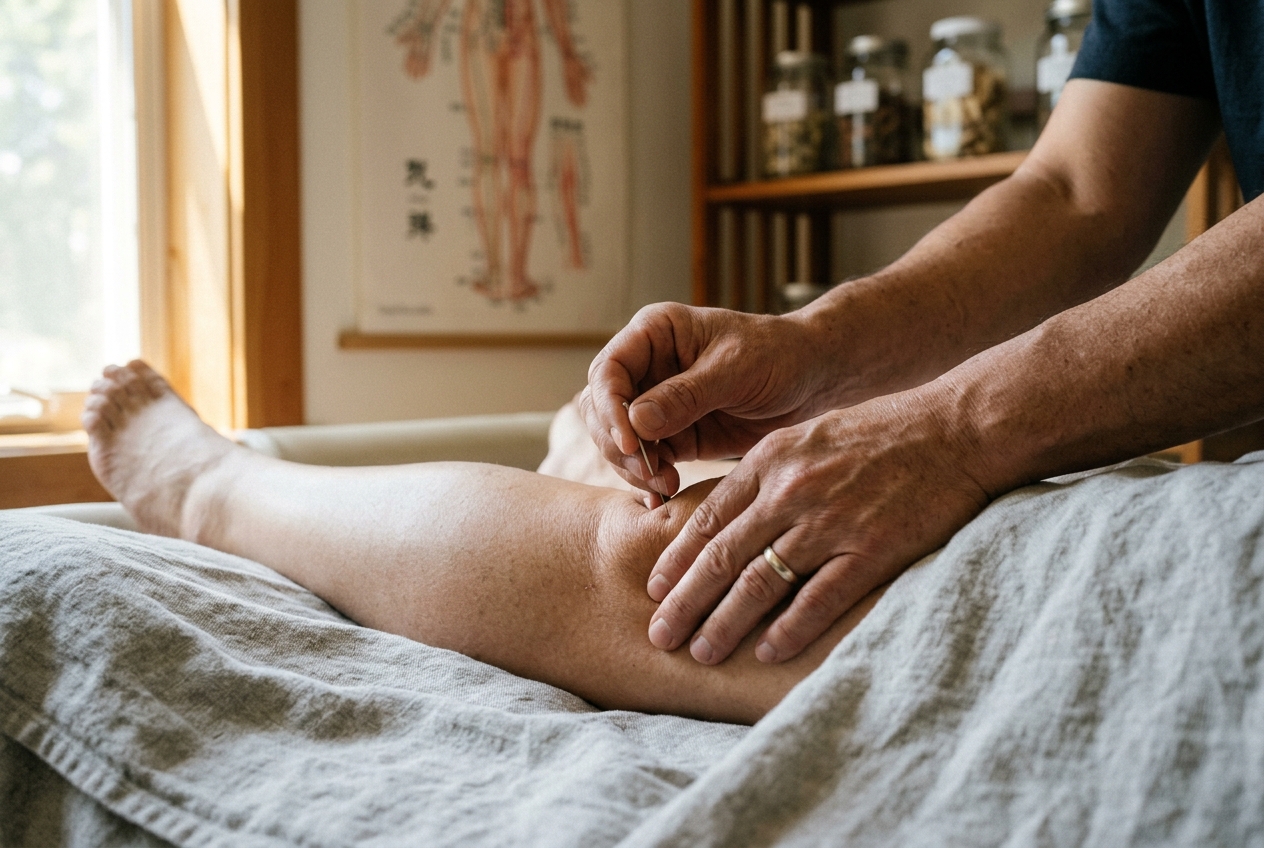
Standard rehabilitation protocols often face an uphill battle against such deep-seated neuromuscular inhibition. When motor pathways fall dormant and local fascial beds become fibrotic, conventional surface-level therapies frequently reach a frustrating plateau. Traditional Chinese Medicine (TCM) resolved this therapeutic impasse over five centuries ago through a sophisticated biomechanical intervention: Chou Tian Fa (抽添法 — The Extraction-Addition Needling Method).
Modern translational medicine reveals that this Ming Dynasty technique anticipated contemporary principles of fascial mechanotransduction, spinal interneuron gating, and corticomotor neuroplasticity. By understanding the layered architecture of the human somatic matrix, clinicians and individuals alike can utilize this protocol—both with fine filiform needles and through targeted manual digitopressure—to bridge the gap between neurological intention and physical movement.
Historical Lineage and Theoretical Architecture of Chou Tian Fa
To understand the genius of Chou Tian Fa, one must contrast it with single-phase tonification (Bu) and sedation (Xie) techniques. In classical clinical doctrine, uncomplicated pathologies present as either pure deficiency (Xu)—requiring gentle, unidirectional supplementation—or pure excess (Shi)—demanding rapid dispersion. However, severe chronic conditions such as post-stroke hemiplegia, complex regional pain syndromes, and longstanding Bi syndromes (intractable channel obstruction) present a paradoxical pathology: Deficiency of the Root (Ben Xu) intertwined with Excess of the Branch (Biao Shi).
In these complex clinical presentations, the body's genuine primordial energy (Yuan Qi) is severely depleted, leaving the motor pathways devoid of functional perfusion. Concurrently, stagnant blood, metabolic waste, inflammatory exudates, and pathogenic phlegm-turbidity solidify within the deep myofascial planes. Administering a simple sedating technique risks collapsing the patient’s remaining constitutional reserves; conversely, applying a single-phase tonifying technique risks driving pathogenic stagnation deeper into the periosteal tissue.
       CHOU TIAN FA: COMPOUND TRI-LEVEL MANIPULATION DYNAMICS
       =======================================================

       DEPTH LAYERS                  BIOMECHANICAL VECTOR & PHASE
       ------------                  ----------------------------

  [HEAVEN / Tian]  <-- Superficial -> (1) Needle Insertion & De Qi Acquired
         |                                 |
         | (Tian - Addition Vector)        | (Chou - Extraction Vector)
         | 9 Thrusts: Heavy Down,          | 6 Withdrawals: Heavy Up,
         | Light Up                        | Light Down
         v                                 ^
  [HUMAN / Ren]    <-- Intermediate -> Fascial Winding Zone
         |                                 |
         | Synchronized with Inhalation    | Synchronized with Exhalation
         v                                 ^
  [EARTH / Di]     <-- Deep Perimysium -> (2) Perfusion of Yuan Qi / Purging Pathogen
Master Xu Feng resolved this dilemma within the Jin Zhen Fu by orchestrating a dynamic tri-level manipulation based on the cosmological and anatomical tripartite division of San Cai (三才 — The Three Powers): * Heaven (Tian 天): The superficial epidermal and subcutaneous layer. * Human (Ren 人): The intermediate muscular and fascial layer. * Earth (Di 地): The deep subfascial, epimysial, and periosteal plane.
The term Chou (抽) denotes deliberate extraction, traction, and lifting—drawing forth deep-seated pathogenic toxins, cellular debris, and stagnant blood from the Earth depth and venting them outward toward the superficial vascular networks. The term Tian (添) signifies intentional addition, thrusting, and compacting—propelling the refined, circulating Yuan Qi from the environmental and superficial reservoirs down into the marrow and deep neuromuscular junctions.
+---------------------------------------------------------------------------------------+
|                THEORETICAL FOUNDATION: BU/XIE VS. CHOU TIAN FA                        |
+=======================================================================================+
| Technique Type   | Mechanical Vector     | Energetic Target      | Clinical Indication|
+------------------+-----------------------+-----------------------+--------------------+
| Simple Bu        | Gentle, unidirectional| Deficient Yuan Qi     | Acute exhaustion,  |
| (Tonification)   | thrusting; slow speed | (Supplementation)     | mild blood vacuity |
+------------------+-----------------------+-----------------------+--------------------+
| Simple Xie       | Rapid, aggressive     | Pathogenic Excess     | Acute inflammation,|
| (Sedation)       | lifting; outward vent | (Dispersion)          | high fever, sprain |
+------------------+-----------------------+-----------------------+--------------------+
| Chou Tian Fa     | Compound 9-thrust /   | Simultaneous Purging  | Post-stroke palsy, |
| (Extraction-     | 6-withdrawal cycles   | of Toxins & Deep      | chronic Wei Zheng, |
| Addition)        | across 3 depth strata | Infusion of Yuan Qi   | stubborn Bi atrophy|
+------------------+-----------------------+-----------------------+--------------------+
Biomechanical Execution: The Precision Geometry of Jin Zhen Fu
The clinical execution of Chou Tian Fa demands rigorous tactile sensitivity, spatial discipline, and precise respiratory entrainment. The classical protocol proceeds through four defined biomechanical phases:
- Initial Stratification and De Qi Induction: The practitioner inserts the needle into the superficial Heaven level (typically 0.2 to 0.3 cun beneath the epidermis). Gentle rotational twirling is applied until De Qi (得气) is obtained—characterized subjectively by the patient as a dull ache, distension, heaviness, or electrical propagation, and objectively by the practitioner as a firm, mechanical "fish-bite" fascial grip on the needle shaft.
- The Addition Phase (Tian) — The Ninefold Yang Dynamic: Leveraging the maximal Yang number Nine (associated in Daoist numerology with dynamic generation and fullness), the needle is driven from Heaven, through Human, into the deep Earth level. This is executed as a compound cycle: nine distinct, rapid, heavy downward thrusts paired with subtle, gentle upward lifts. This mechanical downward vector forces microvascular perfusion into ischemic deep muscular compartments, driving fresh oxygenated arterial blood and electro-chemical charge into denervated motor units.
- The Extraction Phase (Chou) — The Sixfold Yin Dynamic: Once the needle reaches the deep Earth level, the energetic intent shifts from replenishment to elimination. Utilizing the Yin number Six (signifying structural clearing, consolidation, and shedding), the practitioner executes six distinct, firm, rapid upward extractions paired with gentle downward returns. This action mechanically tugs the deep fascial sheath, encouraging interstitial fluid clearance, dislodging micro-adhesions, and venting metabolic toxins back toward the superficial lymphatic and venous beds.
- Respiratory Synchronization and Directional Retention: The nine downward thrusts of Tian are executed during the patient’s Inhalation, utilizing the diaphragmatic vacuum to draw vital perfusion deep into the visceral and somatic core. The six upward withdrawals of Chou are performed during the patient’s Exhalation, utilizing systemic somatic release to purge muscular hypertension and inflammatory stasis.
Neurophysiology and Fascial Mechanotransduction
Modern medical science provides a compelling empirical substrate for the clinical efficacy of Master Xu Feng’s methodology. Research indexed across the National Center for Biotechnology Information (NCBI) demonstrates that acupuncture needle manipulation induces mechanical shear stress within interstitial connective tissue.
As highlighted by pioneering connective tissue research, when an acupuncture needle is rotated and thrust through tissue planes, subcutaneous collagen fibrils wrap tightly around the needle shaft—a phenomenon known as fascial winding. In Chou Tian Fa, the alternating 9:6 thrusting and lifting vectors generate rhythmic mechanical strain across the endomysial and epimysial sheets. This cellular deformation activates mechanosensitive ion channels (such as TRPV1 and TRPV4) on interstitial fibroblasts, stimulating the immediate paracrine release of adenosine, adenosine triphosphate (ATP), and nitric oxide (NO).
According to peer-reviewed findings on the Neurobiological Mechanisms of Acupoint Stimulation (NCBI PMC), this surge in extracellular adenosine acts on local A1 receptors to silence peripheral pain transmission while generating sustained microcirculatory vasodilation.
Concurrently, at the central neurological level, the dense afferent signaling from A-delta and group III/IV muscle afferents ascends via the anterolateral system to the thalamus and somatosensory cortex. In post-stroke hemiplegia and motor flaccidity syndromes, rigorous trials documented by NCBI PubMed on Acupuncture in Stroke Rehabilitation confirm that compound high-intensity point manipulation triggers the secretion of Brain-Derived Neurotrophic Factor (BDNF) and nerve growth factors. This promotes synaptic sprouting, reduces peri-infarct neuronal apoptosis, and accelerates the functional reorganization of dormant motor cortical pathways.
2. The Meridian Path — A Journey Through the Body
To understand how Chou Tian Fa restores movement, one must trace the somatic highways through which these mechanical signals travel. In classical physiology, motor strength and the nourishment of all four limbs are governed by the Yangming (Stomach and Large Intestine) and Taiyin (Spleen) systems. The ancient maxim from the Huangdi Neijing states clearly: "To treat flaccidity, treat the Yangming exclusively" (治痿独取阳明).
The Leg Yangming (Stomach) Meridian: The Anterior Perfusion Line
The Stomach channel represents the human body’s primary architectural pillar for postural stability and locomotion. It begins directly beneath the pupil of the eye, descends over the cheek, wraps around the jawline, and plunges through the collarbone. From here, it travels straight down the chest and abdomen, passes through the crease of the groin, and traverses the heavy anterior belly of the quadriceps muscle.
Crossing the knee joint, the pathway runs directly along the outer muscular ridge of the shinbone—the fleshy band of the tibialis anterior muscle that burns with fatigue when you walk up a steep incline or stand on hard concrete for hours. It cascades over the dynamic flexion crease of the ankle, travels along the bridge of the foot, and terminates at the lateral edge of the second toe nail. When this pathway stagnates, the leg drops, the ankle loses dorsiflexion, and the knee buckles under the weight of the torso.
The Hand Yangming (Large Intestine) Meridian: The Upper Motor Conduit
Mirroring the lower limb, the Large Intestine channel governs the fine motor coordination, extensor tone, and reach of the upper extremity. Originating at the corner of the index fingernail, it tracks through the fleshy, muscular webbing between the thumb and first finger. It ascends along the outer edge of the forearm, passes through the lateral hinge of the elbow crease, and scales the anterior crest of the deltoid muscle.
After crossing over the top of the shoulder blade, it meets the base of the neck, dives internally to nourish the lungs, and re-emerges on the face, crossing over the upper lip to terminate beside the opposite nostril. When this channel is obstructed, the shoulder freezes, the wrist flexes spastically inward, and the fingers lose their capacity to grasp and release.
3. Key Points You Can Press Right Now
While classical Chou Tian Fa utilizes sterile filiform needles, its fundamental bio-mechanical principles—tri-level depth descent, fascial tensioning, and 9:6 rhythmic force alternation—can be fully translated into modern non-invasive clinical acupressure. The following three motor-hub points form the essential triad for channel clearing and neuromuscular re-education.
Point 1: ST36 (Zusanli — Leg Three Miles)
- Living Anatomical Location: Sit with your knees bent at a 90-degree angle. Locate the bottom edge of your kneecap. Measure four finger-widths downward along the front of your leg, starting just below the lateral indentation (the "outer eye" of the knee). Move your finger one thumb-width outward from the prominent, sharp crest of your shinbone. You will land directly in the soft, thick belly of the anterior tibialis muscle. Explore details via the authoritative Wikipedia Reference on Zusanli (ST36).
- The Somatosensory De Qi Sensation: When direct mechanical pressure is applied, you should not feel sharp surface skin pain. Instead, you will elicit a distinct, deep, spreading, dull ache that frequently radiates down the front of the shinbone into the ankle and outward to the lateral edge of the foot.
- Biomechanical Manual Technique:
- Apply the reinforced tip of your thumb perpendicularly (90 degrees) to the tissue plane.
- Phase 1 (Tian / Addition): Press firmly down through the superficial skin (Heaven) and middle muscle (Human) into the deep periosteal margin (Earth). Perform nine distinct downward compressions, pressing deeply into the muscle belly on each cycle.
- Phase 2 (Chou / Extraction): Without breaking skin contact, perform six gentle, partial decompression releases, lifting back toward the middle muscular stratum to draw interstitial fluid outward.
- Execute this 9-thrust / 6-lift cycle for 2 to 3 minutes per leg.
- Primary Daily Indications: Chronic lower limb flaccidity, foot drop, post-exertional motor exhaustion, systemic lethargy, and gastrointestinal stagnation.
Point 2: LI4 (Hegu — Joining Valleys)
- Living Anatomical Location: Bring your thumb and index finger together flat against one another. A prominent muscular bulge will immediately rise in the webbing between them. Relax the hand. Place the thumb of your opposite hand on this muscular peak, just off the midpoint of the second metacarpal bone (the bone leading to the index finger). Further anatomical detail is accessible on Wikipedia on Hegu (LI4).
- The Somatosensory De Qi Sensation: A profound, spreading, systemic numbness, mild electrical tingling, or heavy aching sensation that travels up the radial edge of the forearm toward the lateral elbow.
- Biomechanical Manual Technique:
- Angle your thumb at a 45-degree vector, aiming the force underneath the second metacarpal bone rather than pressing straight down into the soft webbing.
- Phase 1 (Tian): Drive your thumb vector inward and slightly upward toward the wrist across nine rhythmic, sustained compression pulses, anchoring deep into the interosseous fascia.
- Phase 2 (Chou): Ease the vector back across six slow, deliberate micro-releases, allowing capillary refill.
- Maintain this alternating sequence for 90 to 120 seconds on each hand.
- Primary Daily Indications: Upper limb weakness, hemiparetic hand spasticity, tension headaches, facial muscle paralysis (Bell's palsy), and deep autonomic stress.
Point 3: SP6 (Sanyinjiao — Three Yin Intersection)
- Living Anatomical Location: Locate the highest, most prominent peak of your inner ankle bone (medial malleolus). Place four finger-widths flat across the inside of your lower leg, directly above this landmark. At the top edge of your fourth finger, slide your thumb just behind the rear, smooth edge of the shinbone into the tender groove between the bone and the calf muscle.
- The Somatosensory De Qi Sensation: Extreme tenderness, a damp, heavy sensation, and an upwardly ascending warm ache tracking along the inner aspect of the calf and thigh.
- Biomechanical Manual Technique:
- Hook your thumb behind the posterior tibial border.
- Apply an oblique compressive vector inward and forward against the bone.
- Perform nine firm inward additions (Tian), holding each compression for two seconds, followed by six light extractions (Chou), easing the mechanical shear.
- Maintain continuous, rhythmic application for 2 minutes per limb.
- Primary Daily Indications: Lower extremity circulatory stasis, neuromuscular flaccidity, insomnia, pelvic floor rehabilitation, and systemic metabolic stagnation.
Master Point Protocol Comparison
+----------------------------------------------------------------------------------------------------+
|                         CLINICAL MANUAL APPLICATION MATRIX                                         |
+====================================================================================================+
| Acupoint Name & Code | Primary Anatomical Landmark | Vector & Depth Target   | Sensory Target      |
+----------------------+-----------------------------+-------------------------+---------------------+
| Zusanli (ST36)       | 4 finger-widths below outer | 90° Perpendicular into  | Deep, heavy,        |
|                      | knee, 1 thumb-width lateral | tibialis anterior bed   | descending ache     |
|                      | to shinbone crest           | (Earth stratum: 15mm)   | into foot bridge    |
+----------------------+-----------------------------+-------------------------+---------------------+
| Hegu (LI4)           | Midpoint of 2nd metacarpal  | 45° Oblique underneath  | Radiant tingling,   |
|                      | bone in first dorsal        | second metacarpal bone  | traveling up radial |
|                      | interosseous muscle         | (Human/Earth: 8-12mm)   | forearm boundary    |
+----------------------+-----------------------------+-------------------------+---------------------+
| Sanyinjiao (SP6)     | 4 finger-widths above the   | Oblique hook behind     | Intense tenderness, |
|                      | medial inner ankle bone,    | posterior border of     | ascending warming   |
|                      | posterior to tibia          | tibia (Earth: 10-15mm)  | heavy pulse         |
+----------------------+-----------------------------+-------------------------+---------------------+
4. A Point Combination for One Common Issue
The Clinical Problem: Post-Exertional Motor Exhaustion & Lower Limb Heaviness
This protocol addresses the common clinical challenge of profound neurological fatigue, chronic limb heaviness, and sluggish motor responsiveness—whether stemming from post-stroke recovery phases, peripheral neuropathy, or deep physical burnout.
+----------------------------------------------------------------------------------------+
|                     DO THIS TONIGHT: STEP-BY-STEP SEQUENCE                             |
+========================================================================================+
| Sequence Order | Point Selection | Body Position & Breathing | Duration & Cycle Count  |
+----------------+-----------------+---------------------------+-------------------------+
| 1. Preparation | Whole Body      | Seated upright in a quiet | 1 Minute:               |
|                | Alignment       | room, feet flat on floor  | 5-second in / 5-sec out |
+----------------+-----------------+---------------------------+-------------------------+
| 2. Upper Motor | LI4 (Hegu)      | Forearm resting on thigh, | 90 Seconds per hand:    |
|    Priming     | Bilateral       | palm down; synchronized   | 3 cycles of (9 Tian /   |
|                |                 | with natural breathing    | 6 Chou pulses)          |
+----------------+-----------------+---------------------------+-------------------------+
| 3. Primary Leg | ST36 (Zusanli)  | Knees bent 90°; hands     | 2 Minutes per leg:      |
|    Perfusion   | Bilateral       | braced on shins; thumbs   | 4 cycles of (9 Tian /   |
|                |                 | driving perpendicularly   | 6 Chou deep vectors)    |
+----------------+-----------------+---------------------------+-------------------------+
| 4. Systemic    | SP6 (Sanyinjiao)| Cross one ankle over      | 2 Minutes per leg:      |
|    Clearing    | Bilateral       | opposite knee; thumb      | 4 cycles of (9 Tian /   |
|                |                 | hooked behind tibia       | 6 Chou hook vectors)    |
+----------------+-----------------+---------------------------+-------------------------+
Detailed Procedural Execution:
- Initial Somatosensory Centering (1 Minute): Sit comfortably on the edge of a firm chair with both feet planted parallel on the floor. Allow your shoulders to drop away from your ears. Close your eyes and establish four conscious respiratory cycles: inhale through the nose for a count of four, allowing the lower abdomen to expand; exhale smoothly through the mouth for a count of six.
- Step 1 — Cortical Priming at LI4 (90 Seconds per hand): Begin on your left hand. Anchor the thumb of your right hand into the muscular junction of LI4. Close your eyes. As you inhale, deliver nine deliberate, deep additions (Tian) angled toward the bone. As you exhale, execute six gentle extractions (Chou). Repeat this sequence twice, feeling the warmth spread through your palm. Switch hands and repeat on the right side.
- Step 2 — Motor Highway Perfusion at ST36 (2 Minutes per leg): Place both thumbs simultaneously on the ST36 points of your left and right legs. Incline your torso forward slightly to leverage your upper body weight. Inhale deeply as you press firmly downward into the Earth layer with nine progressive compressive thrusts. Exhale slowly as you perform six lifting micro-releases, allowing the fascial tension to recoil. Complete four full 9:6 rounds. You will experience an unmistakable surging warmth traveling toward your ankles.
- Step 3 — Structural Consolidation at SP6 (2 Minutes per leg): Rest your left ankle across your right knee. Support the outer lower leg with your fingers and sink your left thumb into SP6 behind the inner shinbone. Execute four complete rounds of the ninefold downward compression and sixfold upward decompression, breathing in synchronization with each phase. Lower the leg and repeat the exact protocol on the right limb.
- Post-Protocol Kinetic Integration (1 Minute): Return both feet to the floor. Stand up slowly. Walk ten paces across the room. Observe the immediate changes in your somatic perception: your feet will feel more stably anchored to the floor, your knee flexors will demonstrate increased spring and buoyancy, and the chronic heaviness in your thighs will have lifted significantly.
5. Safety & Sense: Clinical Boundaries and Best Practices
While manual acupressure based on Chou Tian Fa is intrinsically safe, non-invasive, and restorative, its physiological potency requires clinical mindfulness and adherence to clear safety boundaries:
+---------------------------------------------------------------------------------------+
|                       SAFETY AND CLINICAL TRIAGE MATRIX                               |
+=======================================================================================+
| Boundary Category | Sensation / Clinical Finding       | Required Clinical Action     |
+-------------------+------------------------------------+------------------------------+
| Correct Pressure  | Deep, dull, satisfying ache,       | Continue protocol; maintain  |
| Threshold         | spreading warmth, localized pulsing| dynamic 9:6 breath cycling   |
+-------------------+------------------------------------+------------------------------+
| Excessive Force   | Sharp, lancinating, pinching pain; | Reduce pressure immediately; |
| / Tissue Trauma   | surface bruising; reflex guarding  | remain in superficial Heaven |
+-------------------+------------------------------------+------------------------------+
| Vasovagal Alert   | Sudden dizziness, pallor, cold     | Cease immediately; lie flat, |
| (Needle/Press Shock)| sweat, nausea, lightheadedness   | elevate legs, drink warm water|
+-------------------+------------------------------------+------------------------------+
| Red-Flag Medical  | Acute focal deficits, sudden facial| STOP self-treatment; call    |
| Referral          | droop, arm weakness, slurred speech| Emergency Services (911/999) |
+-------------------+------------------------------------+------------------------------+
Recognizing Optimal Pressure vs. Mechanical Trauma
Acupressure should never feel like traumatic blunt-force impact. The target sensation is De Qi—a profound, deep, visceral ache that feels therapeutic and resolving. If you encounter sharp, stinging pain, or if your muscles tense involuntarily in reflex guarding, you have applied excessive surface force. Back out of the tissue immediately, establish a lighter contact at the Heaven level, and sink more gradually using your body weight rather than raw muscular force.
Understanding Clinical Scope and Professional Consultation
This manual self-care protocol is an adjunctive neuromuscular conditioning tool; it does not replace urgent medical evaluation. In cases of acute neurological impairment—such as the sudden onset of unilateral weakness, difficulty speaking, severe asymmetric numbness, or unexplained loss of motor control—self-treatment must be bypassed in favor of immediate emergency hospital assessment. For comprehensive standards on acupuncture training, clinical protocols, and point safety, consult the World Health Organization Guidelines on Basic Training and Safety in Acupuncture.
6. Today's Takeaway
+---------------------------------------------------------------------------------------+
|                     YOUR TWO-MINUTE RESCUE PRACTICE: ST36                             |
+=======================================================================================+
| Target Point     | ST36 (Zusanli — Leg Three Miles)                                   |
| Common Problem   | Mental fog, afternoon energy collapse, heavy legs                  |
| Execution Time   | Exactly 2 Minutes (60 seconds per leg)                             |
| Biomechanical Key| 9 Deep Downward Compressions (Inhale) / 6 Light Releases (Exhale) |
+---------------------------------------------------------------------------------------+
Before you close this article, you can immediately test the physiological reality of the Jin Zhen Fu on your own body in under two minutes:
- Locate ST36 (Zusanli) on your left leg: four finger-widths below your outer kneecap, one thumb-width outside the shinbone crest.
- Place the firm pad of your thumb onto the point. Rest your other fingers around the calf to anchor your hand.
- Inhale smoothly for four seconds while delivering nine progressive downward pulses, sinking your thumb vector deep into the muscle belly until you encounter a rich, dull ache.
- Exhale smoothly for six seconds while performing six gentle, partial upward releases, maintaining firm skin contact.
- Repeat this exact sequence three times on the left leg (60 seconds), then switch to the right leg and repeat (60 seconds).
As you stand up, note the distinct sensation of lightness along the front of your shins, the warm perfusion across your feet, and the sharp clarity returning to your mind. You have just engaged a 600-year-old lineage of neuro-fascial engineering, bridging classical wisdom with the living architecture of your body.